
A kinked pipe isn’t just a failed bend — it’s a wasted section of tubing, a lost fitting, and a trip back to the supply house. Whether you are running HVAC line sets, fabricating a roll cage, or routing conduit in a tight electrical panel, the tool you choose to shape metal determines whether the job looks professional or gets scrapped. A true hydraulic bender applies controlled, even force through a die and follower system, eliminating the crushing or wrinkling that manual hacks produce on thick-wall or hard-temper tubing.
I’m Min — the co-founder and writer behind Gadgets Feed. I’ve spent hundreds of hours cross-referencing tonnage ratings, die compatibility charts, and frame rigidity specs to separate the benders that deliver true hydraulic leverage from those that merely look the part.
This guide ranks the top contenders to help you choose the best hydraulic pipe bender for your shop or service van, based on real build quality and repeatable bend accuracy.
How To Choose The Best Hydraulic Pipe Bender
Selecting a hydraulic pipe bender involves more than just picking the highest tonnage. You need to evaluate the tool’s frame design, die availability, and whether its hydraulic system is built for sustained use on your specific material wall thickness.
Die Count and Center-Line Radius
The number of included dies determines how many pipe diameters the bender can handle out of the box. More important than raw count is the center-line radius (CLR) of each die — a tighter CLR (e.g., 1.5 inches) suits instrument tubing, while a larger CLR (e.g., 7 inches) is needed for roll cage fabrication to prevent material collapse.
Frame Construction and Follower Design
A stamped steel frame can flex under high tonnage, causing the die to drift and produce uneven bends. Look for a machined or heavy-gauge welded frame with a guided follower that keeps the tubing pressed evenly into the die groove throughout the bend arc. This is especially critical for stainless steel and chromoly, which spring back harder than copper.
Hydraulic System Quality and Portability
An integrated hydraulic cylinder with a built-in release valve offers smoother control than a separate bottle jack that can shift during operation. Weight matters: a compact shop bender under 50 pounds can be moved between a truck bed and a workbench, while a 68-pound unit is better suited for a dedicated fabrication station.
Quick Comparison
On smaller screens, swipe sideways to see the full table.
| Model | Category | Best For | Key Spec | Amazon |
|---|---|---|---|---|
| Speedway Motors 3rd Gen Hydraulic | Heavy-Duty Fabrication | Roll cages & chassis | 8-ton hydraulic jack, 68 lbs | Amazon |
| Hilmor Compact Bender Kit | Professional HVAC | Residential line sets | 7 dies (1/4″-7/8″), 10.8 lbs | Amazon |
| TEMCo TH3031 Hydraulic Offset | Conduit Offset | 1″ & 3/4″ EMT offsets | Hydraulic powered, 30.5 lbs | Amazon |
| Yellow Jacket 63331 | Ratchet Hand Bender | Copper HVAC lines | Ratchet mechanism, 9.4 lbs | Amazon |
| RIDGID 38048 Model 608 | Instrument Bender | 1/2″ steel/stainless | Carbon steel, 6.6 lbs | Amazon |
| CPS BLACKMAX BTB300 | Ratcheting Tube Bender | Mini-split line sets | 7 mandrels (1/4″-7/8″), alloy steel | Amazon |
| RIDGID 38043 Model 606 | Heavy-Duty Instrument | 3/8″ stainless tubing | Two-stage, 4.1 lbs, 16″ handles | Amazon |
| VEVOR Hydraulic Tubing Bender | Hydraulic Kit | HVAC & refrigeration | 7 aluminum dies, 14.7 lbs | Amazon |
| VEVOR Manual Pipe Tube Bender | Manual Entry | Thin-wall copper/aluminum | 7 carbon steel dies, 50.6 lbs | Amazon |
In‑Depth Reviews
1. Speedway Motors 3rd Generation Hydraulic Tubing Bender

This dedicated hydraulic bender from Speedway Motors is the clear choice for fabrication work on mild steel up to 0.110-inch wall or chromoly up to 0.096-inch wall. Its 8-ton jack is housed in a heavy-duty frame that resists the flex common in cheaper press-style benders, and the machined steel follower keeps the tubing tracked into the die groove for consistent 90-degree bends.
The incremental degree marks cast into the included aluminum die let you repeat the same bend angle across multiple pieces — critical for roll cage or bumper fabrication where symmetry matters. At 68 pounds, this is a stationary or truck-bed tool, not something you carry up a ladder, but the trade-off is the rigidity needed for thick-wall bends without distortion.
Additional dies in different tubing sizes and radii are available separately, so the system can grow with your projects. The manufacturer notes the actual center-line radius is 7.5 inches rather than the advertised 7 inches, so account for that in your layout calculations, especially on tight chassis geometry.
Why it’s great
- True hydraulic power with an 8-ton jack for thick-wall steel and chromoly
- Machined steel follower and rigid frame produce repeatable, kink-free bends
- Interchangeable die design allows expansion to multiple tubing sizes
Good to know
- Actual die CLR is 7.5 inches, not 7 — verify your layout
- Paint on the frame can peel with heavy use
- At 68 pounds, it is best suited for a stationary shop or truck bed
2. Hilmor Compact Bender Kit with Reverse Bending Attachment

The Hilmor Compact Bender Kit is purpose-built for HVAC technicians who need to bend copper line sets inside tight attic or crawlspace constraints. Its ratcheting mechanism and compact 16.4-inch length allow one-handed operation, and the reverse bending attachment — included in the kit — lets you correct a bend or work in areas where you cannot swing a full 180-degree arc.
The kit comes with seven color-coded mandrels covering 1/4-inch through 7/8-inch tubing, and the ball-detent attachment system lets you swap dies without tools. Users report clean 90-degree bends on 3/8-inch and 7/8-inch copper with no kinking, though reverse bends on 7/8-inch can produce minor inner ripples — still acceptable for line-set work where the tube will be covered.
Weighing only 10.8 pounds and packed in a molded case, this kit travels easily between service van and job site. The price sits in the premium range for a hand bender, but the combination of portability, reverse-bend capability, and clean results on residential tubing makes it a strong value for the professional HVAC market.
Why it’s great
- Reverse bending attachment is included, saving extra cost
- Compact and lightweight at 10.8 lbs for easy transport
- Color-coded mandrels and tool-free die changes speed up workflow
Good to know
- Reverse bends on 7/8-inch tube may produce minor inner ripples
- Premium pricing for a hand-operated ratchet bender
- Not designed for steel or thick-wall tubing
3. TEMCo TH3031 Dual Size Hydraulic Conduit Offset Bender

The TEMCo TH3031 is the only hydraulic bender on the market designed exclusively for creating box offsets in 1-inch and 3/4-inch EMT conduit. Its two-in-one design uses reversible bending dies to handle both sizes with one tool, eliminating the need for separate offset benders or manual bending that often produces doglegs.
The hydraulic pump delivers smooth, even force, making offset bends that look uniform across dozens of pieces — a major advantage for electricians running surface-mounted EMT where appearance matters. At 30.5 pounds, it is heavier than a hand bender but still manageable for site-to-site transport, and the included carrying case protects the dies and cylinder.
Users consistently report that this tool pays for itself by eliminating the cost of store-bought offset connectors and reducing rework from inconsistent bends. It is a niche tool — it only does offsets — but for electricians who bend hundreds of offsets per job, the time savings and consistency are substantial.
Why it’s great
- World’s only dedicated hydraulic offset bender for 1″ and 3/4″ EMT
- Reversible dies eliminate the need for two separate tools
- Consistent, professional-looking bends every time
Good to know
- Limited to box offsets — cannot do 90-degree sweeps or saddles
- Hydraulic mechanism adds weight and complexity for one specific task
- Not suitable for steel pipe or tubing other than EMT
4. Yellow Jacket 63331 Alloy Ratchet Tube Bender Kit
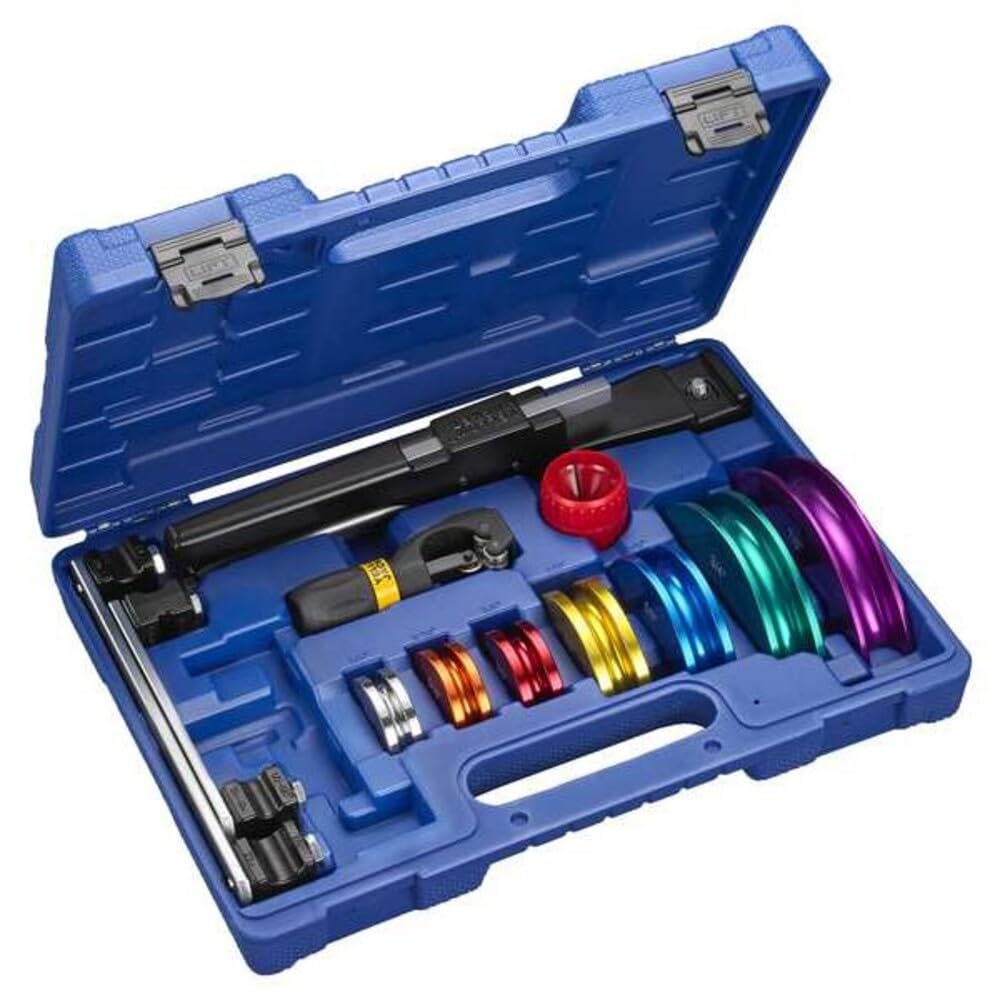
Yellow Jacket has a reputation among HVAC professionals for building tools that last through years of daily use, and the 63331 kit lives up to that standard. The ratchet mechanism produces smooth, consistent bends on copper tubing without the marring or kinking that cheaper benders leave behind, and the ball-detent mandrel attachments make die changes quick and secure.
The kit includes a reverse bending mandrel, a feature often sold as an add-on by other brands, which allows the user to make tight 180-degree bends or correct an over-bend without cutting the line. Users who upgraded from spring benders report that this tool pays for itself in reduced fitting counts and fewer braze joints.
At 9.4 pounds, it is light enough for ladder-top use, yet the alloy-steel construction feels substantial in hand. Multiple reviewers mention buying a second set after a decade of service, which speaks to the build quality that makes it a mid-range investment with long-term value.
Why it’s great
- Smooth ratchet action produces kink-free bends on copper
- Includes reverse bending mandrel for tight 180-degree work
- Lightweight at 9.4 lbs and durable enough for daily professional use
Good to know
- Premium pricing for a hand-operated ratchet bender
- Not designed for steel or stainless tubing
- Limited die range — check included sizes against your common diameters
5. RIDGID 38048 Model 608 Heavy-Duty Pipe and Tubing Bender
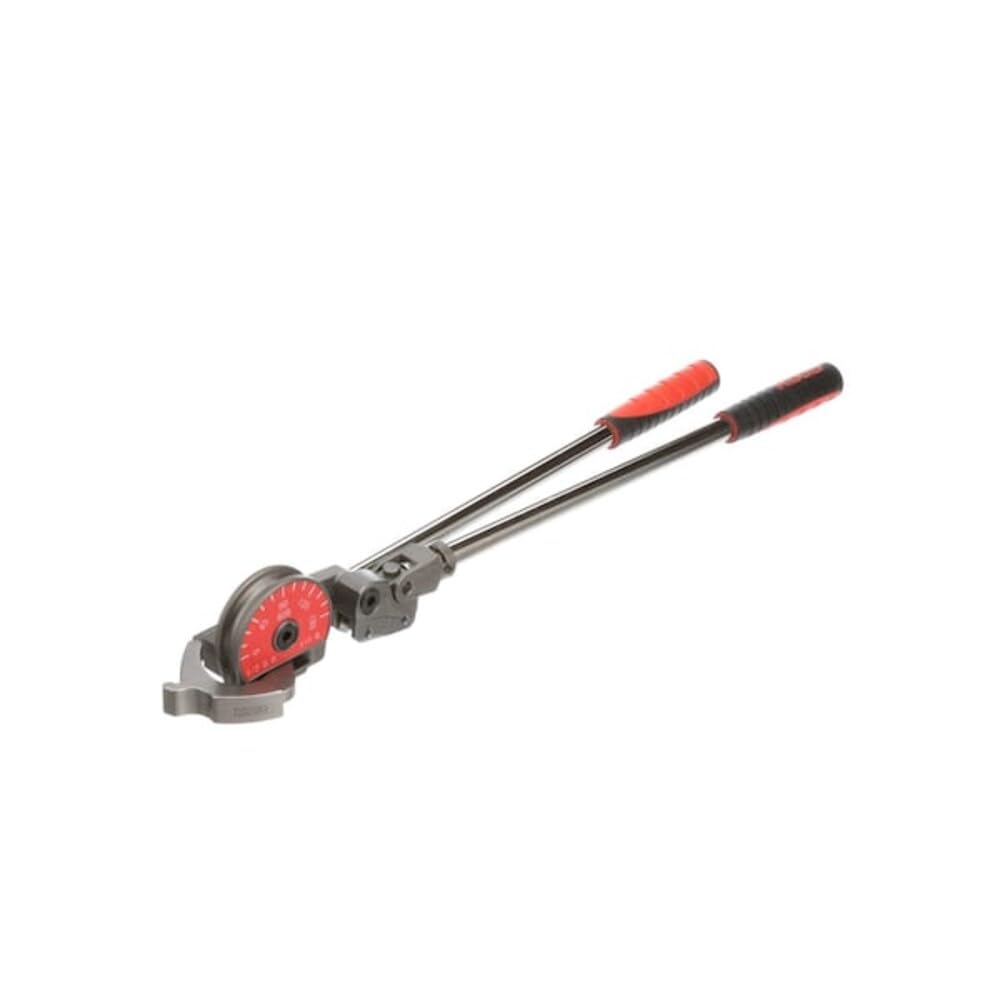
The RIDGID 38048 Model 608 is the tool to reach for when you need to bend 1/2-inch steel or stainless steel tubing without deformation. Its roller-assisted design reduces the pulling force required, and the cast-in angle gauge includes spring-back compensation marks so your final bend lands exactly at the intended angle — critical for instrumentation or hydraulic line work.
Users report successful bends on 0.500-inch by 0.028-inch soft temper stainless with minimal flattening, as well as 0.065-inch and 0.090-inch mild steel wall tubing. The extra-long handles provide the leverage needed for hard-tube materials without requiring a cheater bar, and the carbon steel construction ensures the bender itself won’t flex under load.
At 6.6 pounds, it is heavier than a basic hand bender but still easily portable, and the lack of a hydraulic system means zero maintenance. If your work involves stainless or steel tube in the 1/2-inch range, this is the most reliable manual option on the market.
Why it’s great
- Roller-assisted design reduces effort on stainless and steel tubing
- Angle gauge with spring-back compensation for precise bends
- Rigid carbon steel frame resists flex under heavy loads
Good to know
- Designed for 1/2-inch tube only — no die interchangeability
- Premium pricing for a single-size manual bender
- Not suited for copper or thin-wall aluminum
6. CPS BLACKMAX BTB300 Premium Ratcheting Tube Bender

The CPS BLACKMAX BTB300 is a ratcheting tube bender designed specifically for HVAC and refrigeration technicians who work with soft copper and aluminum tubing from 1/4-inch to 7/8-inch. The kit includes seven color-coded mandrels and the necessary inserts for reverse bending, a feature often sold separately by other manufacturers.
The ratchet mechanism allows incremental bending without needing to reposition the tool, and the compact head fits into tight spaces where a full-swing manual bender cannot reach. Users who switched from spring benders report cleaner installs with fewer couplings and brazed joints, reducing potential leak points.
The molded plastic carrying case keeps everything organized, though some users note the mandrels are aluminum rather than steel, which may wear faster under heavy daily use on steel or stainless. For its intended use on copper and aluminum, however, the BLACKMAX delivers professional results at a mid-range price point.
Why it’s great
- Seven color-coded mandrels with reverse bend capability included
- Ratcheting mechanism for incremental, easy bends in tight spaces
- Saves on fittings and brazed joints in HVAC line-set installs
Good to know
- Mandrels are aluminum, not steel — may wear with heavy use
- Ratchet mechanism requires careful slow operation to avoid wear
- Not suitable for steel or stainless tubing
7. RIDGID 38043 Model 606 Heavy-Duty Instrument Bender

The RIDGID 38043 Model 606 is the go-to tool for 3/8-inch stainless steel and other hard tubing where budget-friendly benders under the mid-range price threshold kink or break. Its two-stage design allows in-place bending from 90 to 180 degrees, and the extra-long 16-inch handles give you the leverage needed to avoid distortion on thin-wall stainless.
The roll dies in the bending form reduce friction during the pull, making the operation smoother than fixed-form benders, and the built-in vise clamp provides extra stability when working at a bench. Users specifically call out its performance on stainless steel, where cheaper tools fail catastrophically.
At 4.1 pounds, it is the lightest tool in this lineup, making it ideal for instrumentation work where you carry the bender to the pipe rather than bringing the pipe to the bender. The single-size limitation means you need a separate bender for each tube diameter, but the precision on 3/8-inch stainless justifies the approach.
Why it’s great
- Specifically designed for stainless and hard tubing without kinking
- Two-stage design enables 180-degree in-place bending
- Lightweight at 4.1 lbs and extremely portable
Good to know
- Single-size bender for 3/8-inch tube only
- Sticker price reflects the premium RIDGID brand
- No hydraulic assist — relies on manual leverage
8. VEVOR Hydraulic Tubing Bender Kit
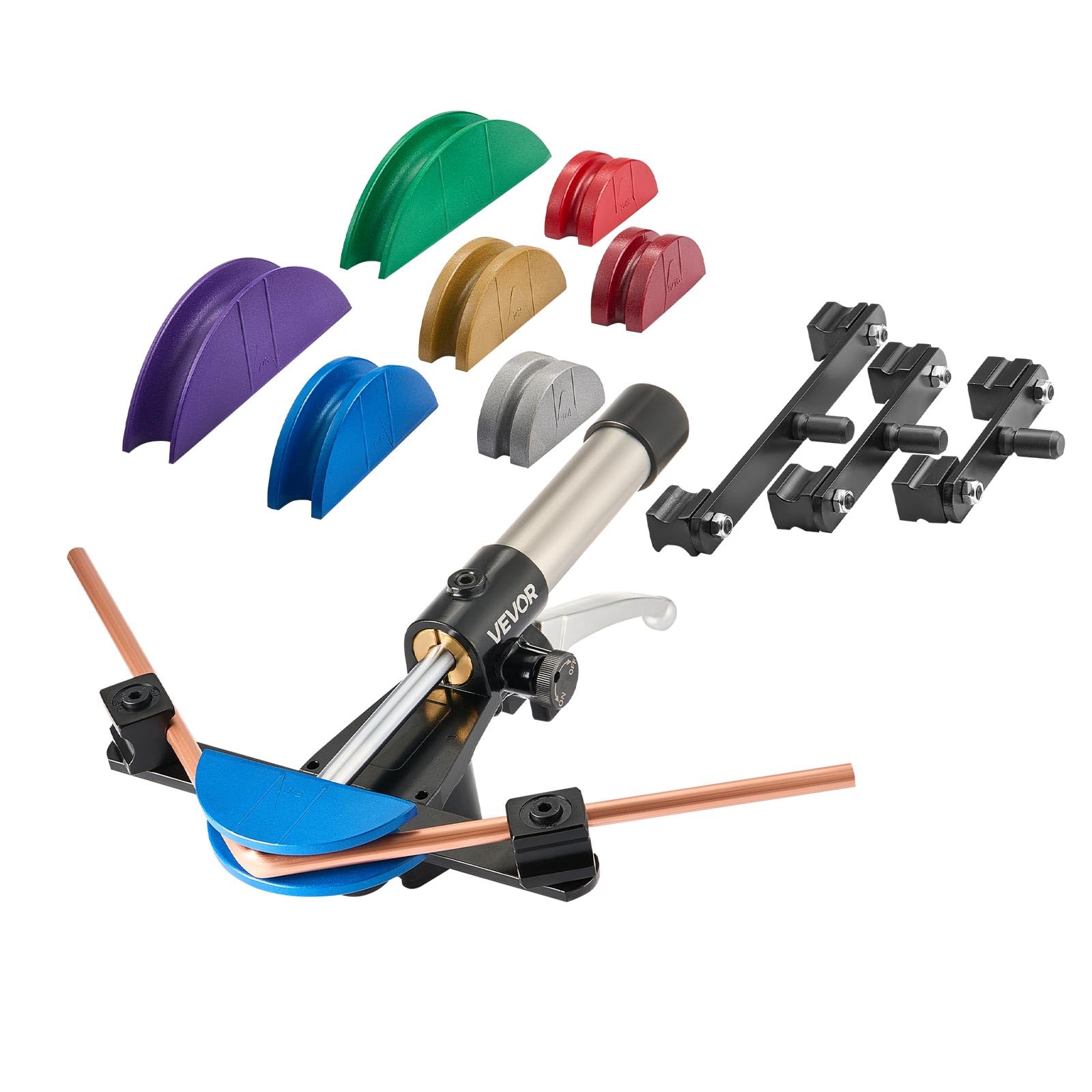
The VEVOR Hydraulic Tubing Bender brings a true built-in hydraulic system to the entry-level price range, delivering smooth, labor-saving force for bending copper and aluminum tubing from 1/4-inch to 7/8-inch. The aluminum alloy dies have a treated surface for corrosion resistance, and the 90-degree bending capability covers most HVAC and refrigeration layout needs.
Users report that the hydraulic system works well for the price, producing fast bends without the manual effort of a ratcheting bender. However, some units have issues with die-to-roller alignment that can deform tubing, and the rollers themselves may not spin freely out of the box — a fixable issue for a DIYer but a frustration on a job site.
At 14.7 pounds and packed in a compact kit, this bender is portable enough for service van use. If you are a homeowner or weekend mechanic who needs occasional hydraulic bending for copper line sets and can tolerate some quality-control variability, this is the most affordable entry point to true hydraulic bending.
Why it’s great
- True hydraulic system reduces bending effort significantly
- Seven aluminum-alloy dies cover a wide range of tubing sizes
- Lightweight and portable at 14.7 pounds
Good to know
- Some units have die-to-roller alignment issues that can deform tubing
- Rollers may not spin freely out of the box
- Hydraulic system is less refined than premium competitors
9. VEVOR Pipe Tube Bender, 3/8″ to 1″ OD

The VEVOR manual pipe bender is the most budget-conscious option in this guide, offering seven carbon steel dies for 3/8-inch through 1-inch OD tubing at a price well below the category median. It is a manual lever-action bender, not hydraulic, intended for thin-wall copper, aluminum, and brass up to 2 mm wall thickness.
Users report accurate, kink-free bends on 3/4-inch and 1-inch steel tubing for fabrication projects, though the 1-inch thick-wall tube requires a cheater bar. The biggest compromise is weight — at 50.6 pounds, this is a workshop tool, and the manual action requires significant upper-body effort for larger diameters.
The carbon steel frame and dies feel robust for the price, and the 180-degree bending capability is useful for U-bends in HVAC work. If your budget is tight and you primarily bend thin-wall copper or aluminum at a stationary bench, this VEVOR delivers functional results without breaking the bank.
Why it’s great
- Seven carbon steel dies provide broad size coverage for the price
- Capable of 180-degree bends on thin-wall tubing
- Sturdy carbon steel frame resists deformation
Good to know
- Manual lever action requires significant effort on larger diameters
- Heavy at 50.6 pounds — not portable for site work
- Bend point can leave a small indentation from the clamp eye
FAQ
Can a hydraulic pipe bender handle stainless steel tubing without kinking?
What is the difference between a ratcheting tube bender and a true hydraulic bender?
How do I choose the correct die size for my tubing?
Final Thoughts: The Verdict
For most users, the best hydraulic pipe bender winner is the Speedway Motors 3rd Generation Hydraulic Tubing Bender because its 8-ton jack and rigid frame deliver repeatable, distortion-free bends on steel and chromoly for fabrication projects. If you want a portable kit for clean copper line sets, grab the Hilmor Compact Bender Kit. And for electricians who bend hundreds of EMT offsets, nothing beats the dedicated TEMCo TH3031.