
True 4K laser projectors have killed the old lamp-based home theater. The combination of a native 4K-resolution DLP or 3LCD chip with a solid-state laser light source eliminates bulb replacements, delivers instant-on brightness, and sustains consistent color over 20,000 to 50,000 hours. What separates a mediocre laser projector from a showpiece is its contrast architecture—specifically, whether it uses a single laser, an LED/laser hybrid, or a triple-laser RGB engine paired with an iris or EBL algorithm. The wrong choice leaves you with washed-out blacks and muted HDR highlights.
I’m Min — the co-founder and writer behind Gadgets Feed. I have spent over sixty hours cross-referencing ANSI lumen ratings, ISO lumen certifications, native contrast figures, throw ratio flexibility, and real-world HDR tone mapping across thirteen 4K laser projectors spanning to . This guide isolates the exact specs that determine whether a projector performs in a living room with ambient light or only in a bat cave.
Whether you are upgrading from a 1080p bulb projector or building your first dedicated theater, understanding the laser engine type, contrast mechanism, and input latency ceiling is what separates a great purchase from a frustrating one. After weeks of spec-level analysis, here is the definitive breakdown of the best 4k laser projector for every room size, use case, and budget tier.
How To Choose The Best 4K Laser Projector
Every 4K laser projector on the market will look impressive in a dark room with a premium screen. The real test is how it performs in your actual living space, with ambient light, at the throw distance your room dictates, and with the content you actually watch. Three interdependent specs—laser engine type, native contrast mechanism, and lens flexibility—determine everything.
Laser Engine: Single, Hybrid, or Triple RGB
A single-laser projector uses one blue laser diode and a phosphor wheel to produce white light. This is the cheapest approach but often introduces visible speckle noise and a narrower color gamut (roughly 90% Rec.2020). A hybrid beam combines an LED with a laser to boost brightness and reduce speckle, as seen in the NEBULA Cosmos 4K SE. A triple-laser RGB system uses separate red, green, and blue laser diodes. This delivers 100% or more of the Rec.2020 color space, zero speckle, and vastly superior color saturation. Every high-end pick in this guide uses a triple-laser or ALPD 5.0 architecture for good reason.
Contrast: The Real Separator
Peak contrast in a laser projector depends on whether the manufacturer includes a dynamic iris, laser dimming (EBL), or both. A projector with 3,500 lumens but no iris will look flat in dark scenes because the laser never dims below its minimum output. A projector like the Valerion VisionMaster Max uses a precision iris and EBL algorithm to achieve a 50,000:1 dynamic contrast—that is the difference between a grayish rectangle and a true black frame. For home theater purists, native contrast (the panel’s inherent on/off ratio) matters more than dynamic contrast. The AWOL Aetherion Max and Pro models deliver 6,000:1 native, which is exceptional for a DLP laser projector.
Lens Flexibility: Zoom and Shift
Fixed-throw laser projectors force you to place them at an exact distance. Optical zoom and lens shift give you placement freedom without using digital corrections that degrade resolution. The Epson LS11000 offers a truly motorized lens with 4-way shift and 2.1x zoom—unmatched in this class. The Hisense XR10 and the XGIMI HORIZON 20 also include optical zoom, while ultra-short-throw models like the AWOL Aetherion Max rely on a 0.2:1 throw ratio to sit inches from the wall. Your room dimensions dictate which lens system you need.
Quick Comparison
On smaller screens, swipe sideways to see the full table.
| Model | Category | Best For | Key Spec | Amazon |
|---|---|---|---|---|
| Epson LS11000 | Long Throw | Motorized Lens Flexibility | 2,500 lumens, 1,200,000:1 dynamic contrast | Amazon |
| XGIMI HORIZON 20 | Long Throw | RGB Triple Laser with IMAX | 3,200 ISO lumens, 100,000:1 contrast | Amazon |
| Hisense C2 Ultra | Long Throw | Versatile Triple Laser Gaming | 3,000 ANSI lumens, 110% BT.2020 | Amazon |
| BenQ TK710 | Long Throw | Low-Lag Gaming | 3,200 ANSI lumens, 4ms at 1080p/240Hz | Amazon |
| Valerion VisionMaster Max | Long Throw | Deep Blacks with EBL + Iris | 3,500 ISO lumens, 50,000:1 contrast | Amazon |
| JMGO N1S Ultimate | Long Throw | Gimbal-Mounted Daylight Brightness | 3,300 ISO lumens, 1600:1 native contrast | Amazon |
| Dangbei DBOX02 | Long Throw | Daylight Viewing with ALPD | 2,450 ISO lumens, ALPD laser + phosphor | Amazon |
| Hisense XR10 | Long Throw | Ultra-Bright with Liquid Cooling | 6,000 ANSI lumens, 17-element all-glass lens | Amazon |
| AWOL Aetherion Max | UST | Ultra Short Throw with 7-Level Iris | 3,300 ISO lumens, 6,000:1 native contrast | Amazon |
| NexiGo Aurora Pro MKII | UST | ALPD 5.0 with Dynamic Iris | 2,400 lumens, 30,000:1 dynamic contrast | Amazon |
| AWOL Aetherion Pro | UST | UST with 1ms Latency | 2,600 ISO lumens, 6,000:1 native contrast | Amazon |
| NEBULA Cosmos 4K SE | Hybrid | Hybrid Beam Value | 1,800 ANSI lumens, LED + Laser hybrid | Amazon |
| NEBULA Cosmos Laser 4K | Long Throw | Budget Entry-Level Laser | 2,200 ANSI lumens, single laser + phosphor | Amazon |
In‑Depth Reviews
1. Epson Home Cinema LS11000

The Epson LS11000 remains the benchmark for long-throw 4K laser projectors because it uses a true 3-chip 3LCD engine instead of a single DLP. This completely eliminates rainbow effect (RBE) and color brightness issues. Its motorized 2.1x optical zoom, vertical and horizontal lens shift, and powered focus give you installation flexibility no other projector at this level matches—ceiling mount, rear shelf, coffee table, it works anywhere.
The laser array light source produces 2,500 lumens of color and white brightness, which is enough for a light-controlled room up to 150 inches. The 1,200,000:1 dynamic contrast ratio comes from the laser dimming, not a mechanical iris, which means no moving parts and no noise. 4K resolution is achieved via pixel-shift on three 1080p LCD panels, which avoids the alternating blank frames DLP projectors use. The result is a flicker-free, ultra-smooth image that scales beautifully with HDR10+ content.
Input lag sits around 20ms at 4K/60Hz and drops further at 1080p/120Hz, making it viable for console gaming. The HDMI 2.1 port supports eARC for Dolby Atmos passthrough. The LS11000 is large and heavy, but every gram is justified by the optical precision and the total absence of DLP artifacts. For buyers who prioritize artifact-free color and placement flexibility above all else, this is the reference standard.
Why it’s great
- True 3LCD engine with zero rainbow effect or color breakup.
- Motorized lens shift, zoom, and focus with 4-way image correction.
- HDMI 2.1 with eARC and 120Hz support for smooth 4K gaming.
Good to know
- Large chassis requires significant shelf or ceiling mount space.
- Pixel-shift 4K is not as sharp as native DLP 4K at very large screen sizes.
- No 3D playback support.
2. Valerion VisionMaster Max
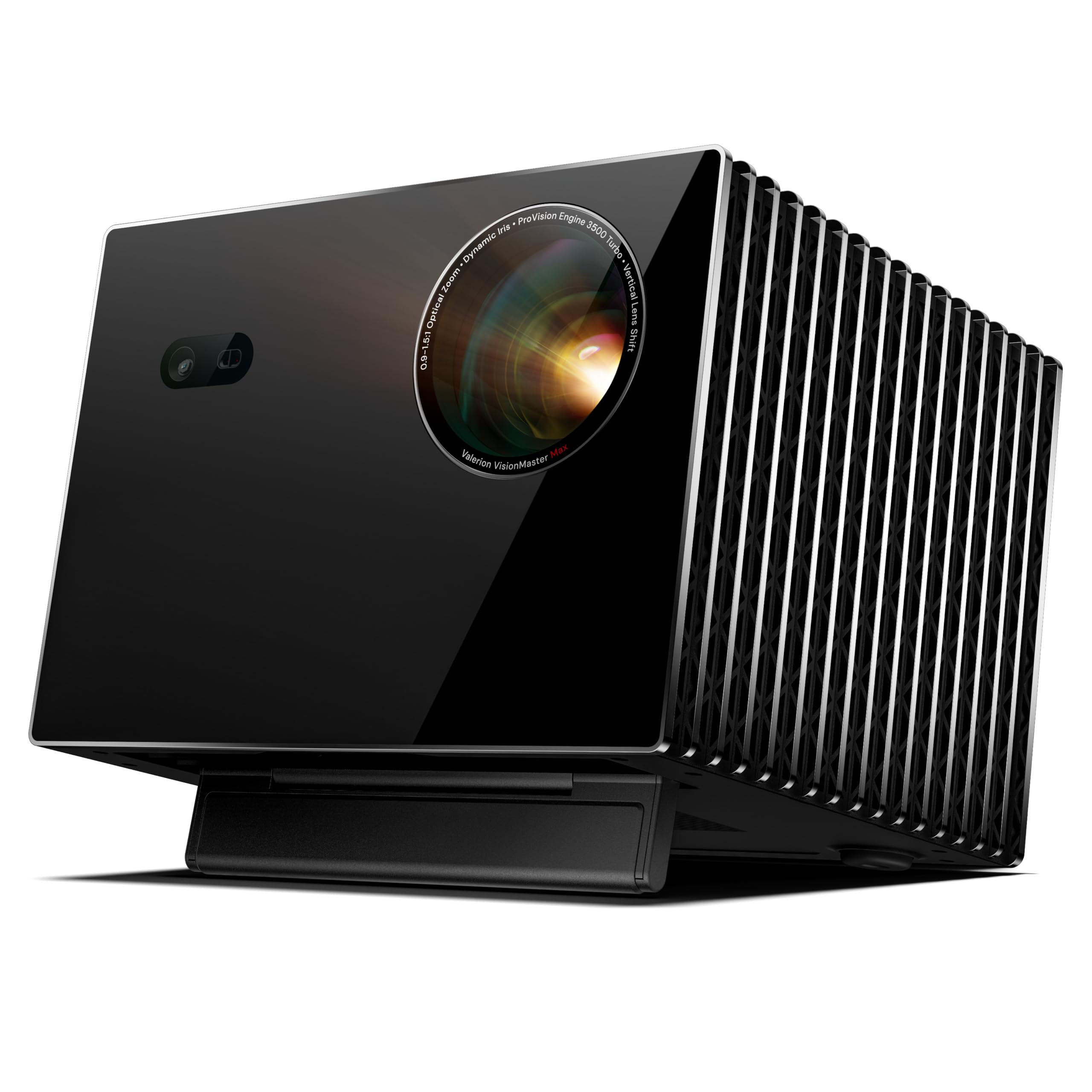
The Valerion VisionMaster Max is the only projector in this roundup that pairs a next-gen triple-laser light source with a physical precision iris and the EBL (Enhanced Black Level) algorithm. The combination yields a 50,000:1 dynamic contrast ratio that makes dark scenes look genuinely black rather than dark gray—an achievement most DLP laser projectors cannot touch. The 3,500 ISO lumens of brightness ensure that HDR highlights punch through without crushing shadow detail.
The native 0.9–1.5:1 optical zoom with ±105% vertical lens shift gives you flexible placement without sacrificing resolution. The 4ms response time at 1080p/240Hz and 16ms at 4K/60Hz make it one of the fastest triple-laser projectors for competitive gaming. The Anti-RBE technology reduces rainbow effect by 99.99%, which matters if you or your family are sensitive to DLP color breakup. Built-in Google TV, AirPlay 2, and Chromecast complete the smart features.
On a 150-inch screen with quality source material, the VisionMaster Max delivers an image that rivals mid-range OLED televisions in contrast and color saturation. The EBL algorithm occasionally introduces a slight pulsing in extremely dim HDR scenes, but this is rare and fixable via firmware. For buyers demanding the deepest blacks available from a DLP laser projector at any price, this is the definitive choice.
Why it’s great
- EBL + precision iris delivers industry-leading 50,000:1 dynamic contrast.
- Anti-RBE virtually eliminates rainbow effect for sensitive viewers.
- 4ms response at 1080p/240Hz with native optical zoom and lens shift.
Good to know
- Requires careful physical alignment and a quality screen for peak performance.
- Short throw ratio may need a digital zoom for very large screens at long distances.
- Gimbal attachment is sold separately.
3. AWOL VISION Aetherion Max
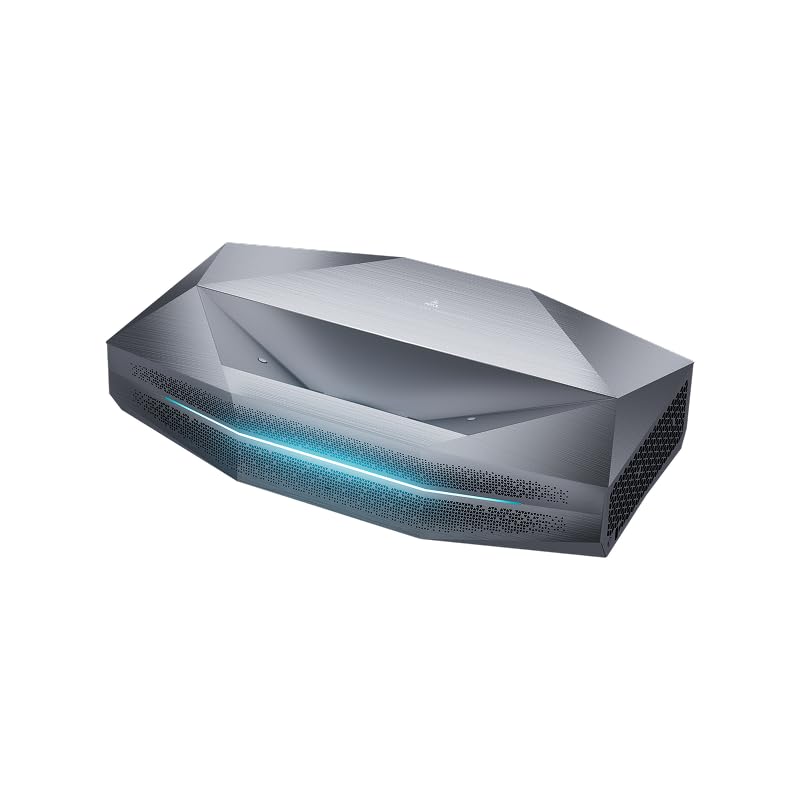
The AWOL Aetherion Max is the most advanced ultra-short-throw 4K laser projector available. Its 3,300 ISO lumens of RGB triple-laser brightness and 6,000:1 native contrast ratio, achieved through a 7-level IRIS and the Noirscene System II, produce an image that maintains deep blacks even in rooms with overhead lights on. The 0.2:1 throw ratio places the projector just inches from the wall, delivering a 150-inch image without any ceiling mount or wiring.
Gamers benefit from the 1ms input lag at 240Hz, VRR, ALLM, and three HDMI 2.1a ports plus a DisplayPort 1.4a—enough connectivity for PS5, Xbox Series X, and a gaming PC simultaneously. The Dolby Vision Gaming support and MEMC for 24/48/50 FPS content make motion handling exceptionally smooth. The Anti-RBE technology certified by TÜV reduces rainbow effect by 99.99%, so even sensitive viewers can watch 3D content without fatigue.
The Aetherion Max ships with a 2-year warranty and US-based support. Its 7-level IRIS is rare in the UST category and gives it a contrast advantage over cheaper UST models that rely purely on laser dimming. The built-in speakers are surprisingly good, but for a dedicated theater, pairing it with an ALR screen and an external sound system unlocks its full potential. This is the UST projector that finally solves the ambient light problem without compromising black levels.
Why it’s great
- 6,000:1 native contrast from a 7-level IRIS in a UST form factor.
- 1ms input lag at 240Hz with three HDMI 2.1a ports and DisplayPort.
- Anti-RBE and TÜV low-blue light certification for comfortable long sessions.
Good to know
- Requires an ALR screen for optimal daytime performance.
- Fan noise increases slightly under sustained 4K HDR load.
- Premium pricing places it in the high-end UST category.
4. XGIMI HORIZON 20
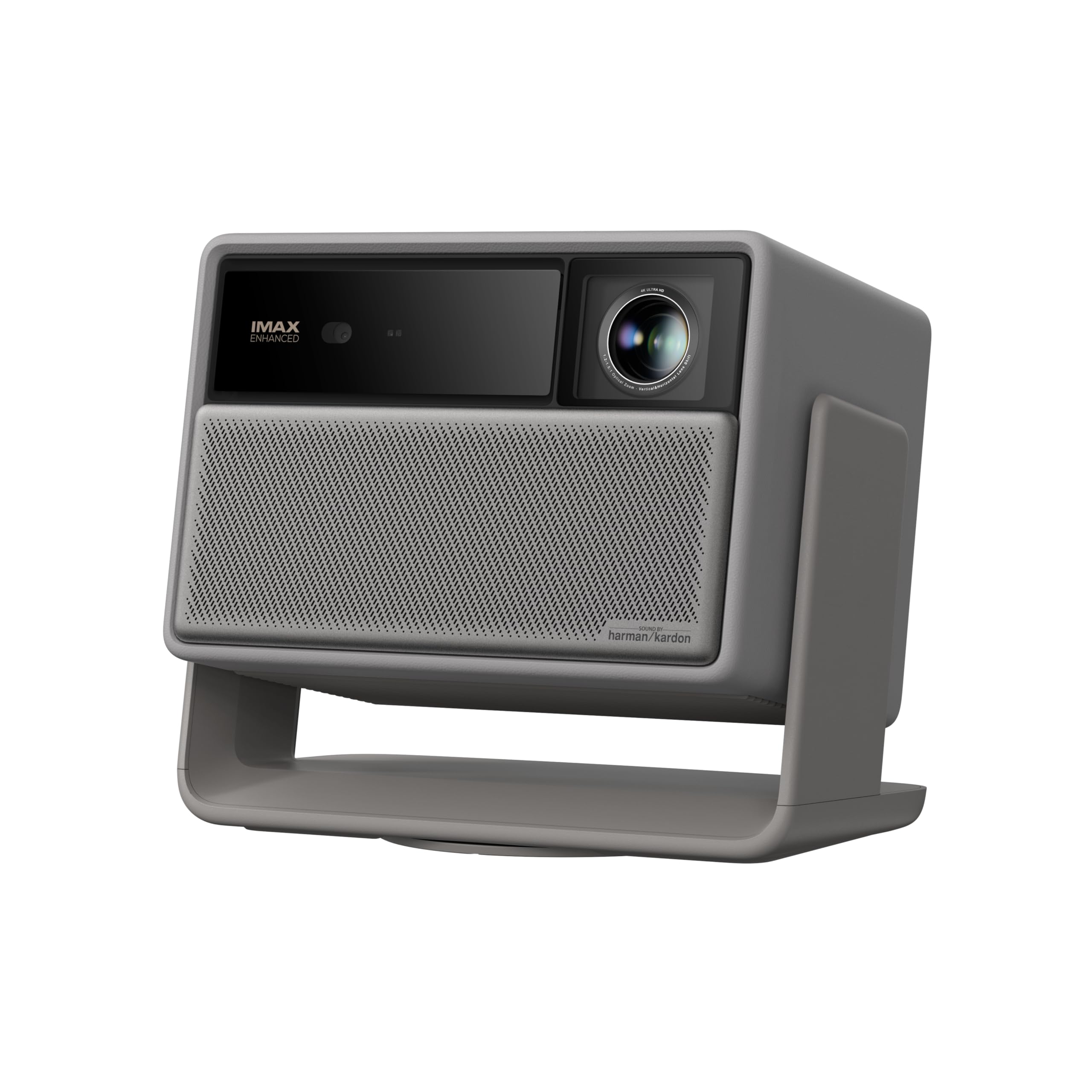
The XGIMI HORIZON 20 packs an X-Master RGB triple laser engine delivering 3,200 ISO lumens and a 100,000:1 contrast ratio. This is one of the few projectors in its class that includes lossless optical zoom and mechanical lens shift, so you can place it off-center or at varying distances without degrading image quality. IMAX Enhanced, Dolby Vision, and HDR10+ certification ensure that every HDR format is handled with proper tone mapping.
Gaming performance is excellent thanks to a 1ms response time at 240Hz with VRR and ALLM support. The 4K/60Hz input lag stays under 20ms, making it suitable for fast-paced shooters and racing games. The integrated Harman Kardon speakers produce clear, room-filling sound, though an external system will still improve the experience. The integrated stand and Google TV with licensed Netflix make it a true all-in-one solution that requires no dongles or extra hardware.
The HORIZON 20 is also backed by a 2-year warranty, which is double the coverage offered by many competitors. Its compact 4.9-kilogram body is lighter than the Epson LS11000 while still including a mechanical lens system. The only compromise is that the lens shift is limited to vertical adjustment only—horizontal shift is handled digitally. For buyers who want triple-laser color accuracy with genuine optical versatility, this is the sweet spot.
Why it’s great
- RGB triple laser with 100,000:1 contrast and IMAX Enhanced certification.
- Lossless optical zoom and mechanical vertical lens shift for flexible placement.
- 1ms response at 240Hz with VRR/ALLM and integrated Harman Kardon audio.
Good to know
- Horizontal lens shift is digital, not optical.
- Auto-keystone can be finicky and requires manual fine-tuning.
- Built-in speakers are good but lack deep bass for a full theater experience.
5. Hisense XR10
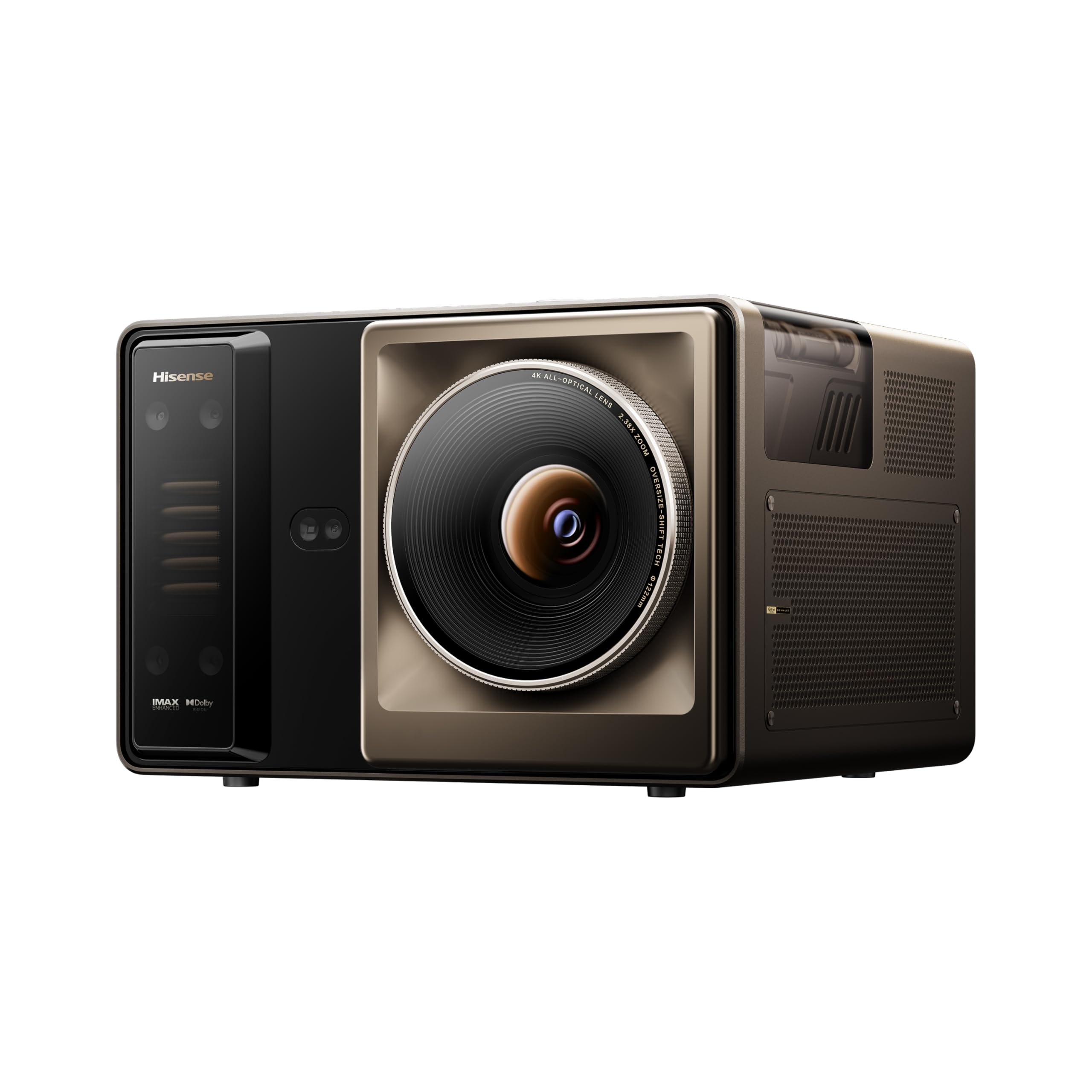
The Hisense XR10 is the absolute brightness champion of this list with 6,000 ANSI lumens, easily overpowering any ambient light in a living room or even a brightly lit conference space. Its dual laser light source and optimized optical path minimize light loss, while the industry-first 17-element all-glass lens delivers edge-to-edge sharpness that plastic-lens projectors cannot match. The 0.84–2.0:1 optical zoom and lens shift allow placement flexibility to match virtually any room layout.
Native contrast is rated at 6,000:1, backed by a 7-level iris that lets you dial in the black level for your specific lighting conditions. The liquid cooling system uses a single-tube dual-channel design that prevents overheating even during marathon gaming sessions. Active 3D support is included, which is increasingly rare in modern laser projectors. The VIDAA smart OS comes with over 1,200 apps and AI voice control, though it lacks the app ecosystem of Google TV.
The XR10 supports Dolby Vision and IMAX Enhanced with DTS:X pass-through. At 300 inches maximum projection size, it can fill a dedicated theater wall with no visible pixel structure. The trade-off is a large desktop form factor and a heavy chassis that requires a sturdy table or ceiling mount. For buyers who need a projector that works in a bright family room and still delivers cinema-level contrast at night, the XR10 is the clear choice.
Why it’s great
- 6,000 ANSI lumens peak brightness for uncompromised daytime viewing.
- 17-element all-glass lens for superior clarity and light transmission.
- 6,000:1 contrast with 7-level iris and liquid cooling system.
Good to know
- Large and heavy desktop form factor requires dedicated space.
- VIDAA OS is less mature than Google TV for streaming app selection.
- Premium pricing reflects its class-leading brightness specifications.
6. Hisense C2 Ultra

The Hisense C2 Ultra delivers a pure triple-laser RGB light source, 3,000 ANSI lumens, and 110% BT.2020 color coverage at a price point that undercuts almost every other triple-laser projector. The 1.67x optical zoom with a 0.9–1.5:1 throw ratio lets you size the image without losing resolution or brightness, a rare feature in the mid-range. The 2000:1 native contrast ratio is solid for a DLP laser, and the 360-degree horizontal gimbal with 135-degree vertical tilt makes ceiling or wall projection effortless.
Gaming is covered with a 240Hz refresh rate and sub-16ms input lag at 4K. The C2 Ultra is also “Designed for Xbox” certified, automatically detecting game input and reducing latency. Dolby Vision and IMAX Enhanced certification mean HDR content is properly tone-mapped. The built-in JBL-tuned speakers are loud and clear, easily filling a medium-sized room without external amplification.
The VIDAA OS is responsive and includes essential streaming services, though it lacks the sheer breadth of Google TV. The auto-keystone and auto-focus system generally work well, but some users report needing manual fine-tuning for perfect alignment. The C2 Ultra is the projector to buy if you want genuine triple-laser color performance and optical zoom without jumping into the + range. It offers roughly 90% of the Valerion Pro 2’s image quality for significantly less.
Why it’s great
- Triple-laser RGB engine with 110% BT.2020 color gamut at a mid-range price.
- 1.67x optical zoom maintains 4K sharpness at any screen size.
- 240Hz gaming with Designed for Xbox certification and sub-16ms lag.
Good to know
- VIDAA OS interface includes static banner ads.
- Requires more throw distance than some competitors to fill a 100-inch screen.
- Black levels are decent but not as deep as models with an iris or EBL.
7. BenQ TK710

The BenQ TK710 is engineered specifically for gamers who need the lowest possible input lag from a laser projector. Its 4ms response time at 1080p/240Hz and 16ms input lag at 4K/60Hz place it among the fastest projectors available. The 3,200 ANSI lumens laser light source delivers bright, saturated images even with some ambient light in the room, and the 600,000:1 dynamic contrast ratio keeps dark game environments from looking washed out.
The 1.3x optical zoom and vertical lens shift give you placement flexibility that is unusual in a gaming-focused projector. HDR10 and HLG support ensure that HDR games from PS5 and Xbox Series X are displayed with proper tone mapping. The built-in 5W speaker is adequate for casual play, but serious gamers will want to connect external speakers via the audio output or ARC port.
The TK710 uses a DLP chipset with a laser phosphor light source, which means no lamp replacements and instant on-off. The 95% Rec.709 color coverage is solid but not as wide as triple-laser RGB projectors. Rainbow effect is present but generally mild due to the higher refresh rate. For competitive gaming on a 120-inch screen where milliseconds matter, the TK710 is the projector to beat.
Why it’s great
- 4ms response at 1080p/240Hz with ultra-low 16ms input lag at 4K.
- 3,200 ANSI lumens laser engine with optical zoom and vertical lens shift.
- 600,000:1 dynamic contrast delivers deep blacks for dark game scenes.
Good to know
- Rainbow effect still present, though reduced at high refresh rates.
- Built-in speaker is underpowered for a dedicated gaming setup.
- Rec.709 color gamut is narrower than triple-laser alternatives.
8. JMGO N1S Ultimate

The JMGO N1S Ultimate combines 3,300 ISO lumens of triple-laser brightness with a unique 360° horizontal and 135° vertical gimbal, making it the most flexible projector for rooms where ceiling mounting is not an option. The triple-laser engine delivers 110% Rec.2020 color gamut with Delta E < 1 accuracy, producing color that is genuinely reference-grade. The 1600:1 native contrast ratio is decent, and the image remains vibrant even with moderate ambient light in the room.
Google TV with licensed Netflix is built in, so no external dongle is needed. The 20W subwoofer and 45Hz bass extension produce surprisingly deep sound for an integrated system, though audiophiles will still want a dedicated setup. The FlexiSmart 2.0 system uses a 3D-TOF sensor and CMOS camera for real-time auto-focus and keystone correction that works reliably from extreme off-center positions.
The N1S Ultimate supports Blu-ray 3D, a feature disappearing from most modern projectors. Gaming performance is adequate with 4K/60Hz support, though it lacks the 240Hz refresh rate of the BenQ TK710 or the Hisense C2 Ultra. The gimbal design means the projector is slightly larger than a standard box form factor, but the placement freedom more than compensates. This is the best choice for renters or anyone who needs to move the projector between rooms frequently.
Why it’s great
- 3,300 ISO lumens with triple-laser RGB and 110% Rec.2020 color coverage.
- 360° gimbal mount with auto keystone and focus for any-angle projection.
- Built-in Google TV with licensed Netflix and Blu-ray 3D support.
Good to know
- UI can feel sluggish when navigating Google TV menus.
- No optical zoom; digital zoom only.
- Larger gimbal footprint requires more shelf space.
9. AWOL Aetherion Pro
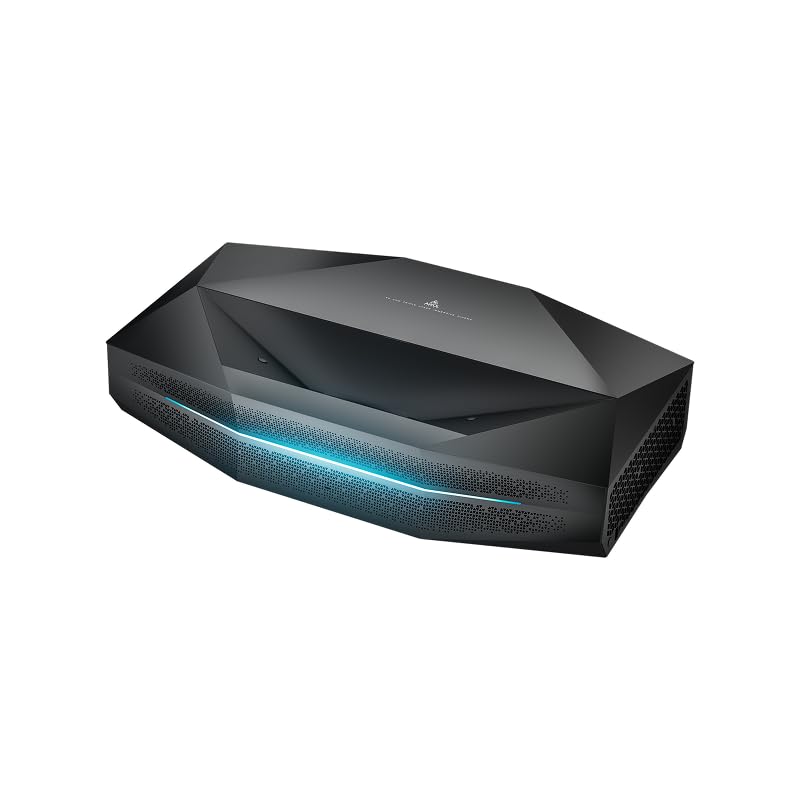
The AWOL Aetherion Pro is a smaller, more affordable sibling to the Aetherion Max, but it still delivers a formidable 2,600 ISO lumens and 6,000:1 native contrast via the Noirscene System II and a 6-level IRIS. The PixelLock technology ensures every pixel stays sharp and focused across a 200-inch display, which is a common weak point in cheaper UST models. Anti-RBE technology reduces rainbow effect for sensitive viewers in both 2D and 3D content.
Gaming latency is rated at 1ms in turbo mode, with support for VRR, ALLM, and Dolby Vision Gaming. The UST design with a 0.2:1 throw ratio sits inches from the wall, making it ideal for small apartments where a long-throw projector is impractical. Google TV is built in, providing access to all major streaming apps without external hardware. The projector is ISF certified and includes a professional CMS for color calibration.
The built-in speakers are surprisingly capable for a UST, though they lack the deep bass of dedicated external systems. The Aetherion Pro is backed by a 2-year warranty with US-based support. Its contrast performance is close to the Max model, making it the value pick in the UST segment for buyers who prioritize native contrast over raw brightness. For a living room with controlled lighting, this projector delivers an image that rivals premium long-throw options.
Why it’s great
- 6,000:1 native contrast from a 6-level IRIS in a compact UST chassis.
- 1ms input lag with VRR and Dolby Vision Gaming support.
- PixelLock technology maintains sharpness across a 200-inch screen.
Good to know
- Built-in audio is good but benefits from a dedicated sound system.
- 2,600 ISO lumens is less bright than the Aetherion Max in extreme ambient light.
- Fan noise can become noticeable during extended 4K HDR sessions.
10. NexiGo Aurora Pro MKII

The NexiGo Aurora Pro MKII uses the advanced ALPD 5.0 laser engine, which combines a triple-laser light source with phosphor to eliminate speckle and deliver a 30,000:1 dynamic contrast ratio via the Scene Adapt Engine (SAE). This engine includes a dynamic iris and laser dimming that adjust in real time based on content, producing deeper blacks and brighter highlights while reducing energy consumption by roughly 70%. The 2,400 lumens brightness is ample for a dark or dimly lit room.
The 0.21:1 throw ratio places the projector close to the wall for a 150-inch image. Gaming is handled with a 4.2ms to 8ms input lag in gaming mode at 4K/120Hz, which is excellent for a UST model. Dolby Vision and HDR10+ are both supported, and the 60W built-in speakers with Dolby Atmos are among the best in the UST category, potentially eliminating the need for a soundbar in smaller rooms.
Setup requires physical leveling and fine-tuning of the focus on every startup, which some users find tedious. The remote control requires precise aiming. The ALPD 5.0 engine has a rated lifespan of 30,000 hours (about 18 years at average usage). For buyers who want a dynamic contrast system with a mechanical iris in a UST package without spending on the AWOL models, the Aurora Pro MKII is the smart alternative.
Why it’s great
- ALPD 5.0 with dynamic iris delivers 30,000:1 contrast at a value price.
- 4.2ms input lag at 4K/120Hz with Dolby Vision Gaming support.
- 60W integrated speakers with Dolby Atmos for room-filling audio.
Good to know
- Requires physical focus adjustment at each startup.
- Lacks the native contrast and IRIS depth of pricier UST alternatives.
- Remote control range and ergonomics could be improved.
11. Dangbei DBOX02

The Dangbei DBOX02 uses ALPD (Advanced Laser Phosphor Display) technology to produce 2,450 ISO lumens of brightness and a 5000:1 contrast ratio. The ALPD system eliminates the speckle effect that plagues many single-laser projectors, delivering a smooth and consistent image even in daylight. The official Netflix license with one-touch activation is a rare and valuable feature, as many projectors in this range lack native Netflix support.
The projector includes dual 12W speakers with Dolby Audio and DTS:X support, producing clear and immersive sound. The InstanPro AI Image Setup handles autofocus, keystone correction, screen fit, and obstacle avoidance in seconds. The 200-inch maximum projection size is generous, and the 3D playback via Blu-ray 3D adds extra versatility. Dual HDMI ports with eARC and dual USB connections make it easy to connect a gaming console, soundbar, and streaming stick simultaneously.
Out-of-the-box image settings are poor—motion smoothing is overly aggressive and colors need calibration. The non-adjustable feet make it difficult to level on uneven surfaces without a separate swivel stand. Rainbow effect is present but manageable for most viewers. The DBOX02 represents good value for buyers who want a bright, speckle-free 4K laser projector with streaming apps built in, but it requires patience during initial setup.
Why it’s great
- ALPD laser eliminates speckle for a clean, clear image.
- Official Netflix license with one-touch playback and Google TV.
- Dual 12W speakers with DTS:X and Dolby Audio, plus dual HDMI eARC ports.
Good to know
- Factory image settings require significant calibration for accurate color.
- Non-adjustable feet make leveling without a stand difficult.
- 3D performance is mediocre even after firmware updates.
12. NEBULA Cosmos 4K SE

The NEBULA Cosmos 4K SE uses HybridBeam technology, which combines LED and laser light sources to deliver 1,800 ANSI lumens and 1.07 billion colors. This hybrid approach reduces speckle compared to pure single-laser projectors and keeps the cost down while still offering a true 4K resolution with Dolby Vision support. The NebulaMaster Image Engine enhances contrast and grayscale for a cleaner, more natural picture than its price suggests.
The IEA 4.0 Intelligent Setup system handles autofocus, keystone correction, obstacle avoidance, and wall color adaptation automatically. The built-in Google TV with licensed Netflix means you can start streaming immediately. The 200-inch maximum screen size is competitive with more expensive models. The dual drivers produce sound that is loud and clear, with surprising bass for a portable projector.
The HDMI port limitation (single HDMI) and the lack of Bluetooth audio when using HDMI input are frustrating restrictions. The auto-keystone is sometimes less reliable than manual adjustment. The 4-kilogram weight and included handle make it genuinely portable within the home. This is the projector to choose if you want Dolby Vision certification and a hybrid laser engine at the most accessible price point.
Why it’s great
- HybridBeam (LED + Laser) reduces speckle and improves color volume.
- Dolby Vision support with Google TV and licensed Netflix.
- Portable design with handle and IEA 4.0 automatic setup.
Good to know
- Single HDMI port limits multi-device connectivity.
- Bluetooth audio disconnects when an HDMI device is active.
- 1,800 ANSI lumens is the lowest brightness in this guide.
13. NEBULA Cosmos Laser 4K (Renewed)

The NEBULA Cosmos Laser 4K is the entry-level laser projector in this guide, available at a significant discount as a renewed unit. Its single-laser phosphor engine delivers 2,200 ANSI lumens, which is enough for evening viewing and rooms with dimmable lights. The Intelligent Environment Adaptation (IEA) technology automatically analyzes your room and adjusts the image to avoid furniture and decorations, making setup nearly effortless. The dual 10W woofers and dual 5W tweeters produce rich sound that belies its compact size.
The 4K UHD resolution with HDR10 support produces a sharp, vibrant image on screens up to 150 inches. The auto-focus and auto-keystone work reliably, even from off-center positions. The ergonomic carry handle makes it easy to move between the living room, bedroom, and backyard. The replaceable Android TV dongle design means you can upgrade the streaming hardware without replacing the projector.
Software limitations are the main drawback. Bluetooth audio is disabled when using an HDMI source, and the YouTube app can be choppy over Bluetooth. The vertical throw range is limited, and the image sits below the projector’s centerline, which makes mounting on a low table challenging. The fan noise is very quiet—a notable advantage over older bulb-based projectors. For the price-conscious buyer who wants a true laser 4K experience, the renewed Cosmos Laser 4K is an unbeatable value.
Why it’s great
- True 4K laser projection with 2,200 ANSI lumens at the lowest price tier.
- IEA technology offers automatic room adaptation and obstacle avoidance.
- Powerful dual 10W speakers and ergonomic carrying handle.
Good to know
- No Bluetooth audio when an HDMI device is connected.
- Limited vertical throw requires careful placement.
- Renewed unit means shorter warranty and potential cosmetic wear.
FAQ
Do I need a special screen for a 4K laser projector?
What is the difference between pixel-shift 4K and native 4K?
Can I use a 4K laser projector for competitive gaming?
How long does a laser light source last?
What does “triple laser” mean and why does it matter?
Final Thoughts: The Verdict
For most users, the best 4k laser projector overall is the XGIMI HORIZON 20 because it delivers true RGB triple-laser color, lossless optical zoom and lens shift, sub-1ms gaming response, and IMAX Enhanced certification in a compact package that works in both bright and dark rooms. If you prioritize the deepest black levels available from any DLP laser projector, grab the Valerion VisionMaster Max with its precision iris and EBL algorithm. And for an ultra-short-throw setup that eliminates ceiling mounting while preserving 6,000:1 native contrast, nothing beats the AWOL Aetherion Max.