
A 500-watt bass amp head is a specific promise: clean, authoritative stage volume that punches through a live mix without breaking a sweat or your back. The real test isn’t the wattage number on the spec sheet—it’s whether that head delivers its rated power into your cab’s impedance without thermal sag, fan noise, or that thin, anemic low-end that undoes every good note you play. This category lives at the intersection of headroom, portability, and tonal flexibility, and the wrong choice will leave you fighting your rig all night.
I’m Min — the co-founder and writer behind Gadgets Feed. I’ve spent hundreds of hours dissecting the output stages, preamp architectures, and real-world thermal limits of Class-D and hybrid bass heads to separate the genuine stage tools from the spec-sheet fictions.
Whether you’re after a compact backup rig or a main-stage workhorse, this guide to the best 500 watt bass amp head options will help you find a head that actually holds its ground in the mix.
How To Choose The Best 500 Watt Bass Amp Head
Selecting a bass amp head in this power class isn’t about finding the biggest number—it’s about matching real-world output, preamp character, and build reliability to your gigging or studio reality.
Real Power vs. Rated Power
A 500W rating typically refers to RMS power at 4 ohms. If your cabinet is 8 ohms, that same head will output roughly 250–300W. A 2-ohm stable head can push around 800W—but the amp must be specifically designed to handle that load without thermal shutdown. Always read the minimum impedance spec and test your cab’s actual impedance curve.
Preamp Architecture: Solid-State vs. Tube vs. Hybrid
Solid-state preamps offer clean headroom and consistency at any volume. Tube-driven preamps (like 12AX7 stages) add compression, warmth, and a bloom that responds to your playing dynamics. Hybrid designs blend a tube preamp with a Class-D output for weight savings—this is the dominant architecture in modern 500W heads because it delivers tube tone without a 30-pound chassis.
Thermal Management and Fan Noise
Class-D amps are efficient, but they still generate heat under sustained low-frequency loads. A loud fan that ramps up mid-set can ruin in-ear monitor mixes and silent-stage recordings. Look for temperature-controlled variable-speed fans or passive convection designs if silent operation is a priority.
DI Output and Effects Loop Flexibility
A balanced XLR DI output with pre/post switching lets you send your tone directly to the front-of-house. An effects loop with a series/parallel switch allows you to integrate time-based pedals without phase issues. For modern players, USB audio output for direct recording is a significant bonus.
Quick Comparison
On smaller screens, swipe sideways to see the full table.
| Model | Category | Best For | Key Spec | Amazon |
|---|---|---|---|---|
| Darkglass Alpha-Omega AO500 | Premium | Modern metal & prog, studio-grade DI | 6-band graphic EQ + IR cab sim | Amazon |
| Blackstar U700 Elite | Premium | Max headroom & versatility | 700W, 3 voicings, 3 tube responses | Amazon |
| Hartke LH500 | Mid-Range | Warm tube preamp, classic rock tone | 12AX7 Class-A tube preamp, 27 lbs | Amazon |
| Hartke LX5500 | Mid-Range | Compact hybrid with tube warmth | 500W @ 4Ω, tube preamp, XLR DI | Amazon |
| Peavey MiniMAX | Mid-Range | High-value, high-power stage work | 600W @ 4Ω, TransTube preamp, tuner | Amazon |
| Ampeg Venture V3 | Mid-Range | Classic Ampeg tone with modern features | 300W @ 4Ω, SVT/B15 voicings, FX loop | Amazon |
| Seymour Duncan PS700 | Premium | Stereo power amp for modelers | 700W, stereo operation, cab-emulated out | Amazon |
| Ampeg Micro VR | Entry-to-Mid | Ultra-portable backup/practice head | 200W @ 4Ω, MOSFET power amp, 3 lbs | Amazon |
| Trace Elliot ELF | Entry-to-Mid | Pedalboard-mountable, ultra-light gigging | 200W @ 4Ω, 1.6 lbs, 3-band EQ | Amazon |
| WAudio SUA-500 | Budget | Subwoofer plate amp / DIY builds | 500W @ 4Ω, variable LPF, phase switch | Amazon |
| Fender Rumble 500 V3 | Mid-Range | All-in-one combo, light & loud | 500W, 2×10 Eminence speakers, 36.5 lbs | Amazon |
In‑Depth Reviews
1. Darkglass Electronics AO500 Alpha-Omega 500W

The Darkglass AO500 is the modern standard for bassists who need a single head that covers everything from pristine jazz clean tones to crushing modern metal distortion. Its 500W Class-D output is stable into 4 ohms, delivering tight, articulate low-end without the weight of a traditional rack unit—at just 6.4 pounds, it lives comfortably in a backpack.
The preamp pairs a 6-band graphic EQ with the Alpha-Omega distortion circuit, giving you two distinct clipping voicings plus a built-in compressor. The IR cabinet simulation on the XLR DI output means your FOH tone is consistent whether you’re running a 4×10 or a 1×15, and the headphone output with aux input makes silent practice dead simple.
Customer feedback consistently praises the build quality and tonal flexibility, though the premium price reflects the studio-grade feature set. The 3 cab-model selection on the DI is a game-changer for direct recording, and the compressor adds just enough glue without squashing your attack. This head is the benchmark for the category.
Why it’s great
- Studio-grade IR cab simulation on XLR DI
- Built-in compressor and dual distortion voicings
- Extremely lightweight at 6.4 lbs
- Intuitive 6-band graphic EQ
Good to know
- Premium pricing
- No built-in tuner
- Fan can be audible in quiet rooms
2. Blackstar U700 Elite

The Blackstar U700 Elite pushes past the 500W ceiling with a 700W Class-D output that provides immense clean headroom for the largest stages. Its preamp features three distinct voicings—Classic, Modern, and Flat—plus a Response control that emulates three power tube feels: Linear, 6L6, and 6550, letting you dial in the compression characteristic of classic tube amps.
Built-in effects include compressor, chorus, octaver, and three types of overdrive, all controllable via the included two-button footswitch. The balanced XLR DI, jack output, and USB audio output give you complete connectivity for live and studio use. The lightweight metal chassis stays cool in operation.
User reviews highlight the incredible tonal versatility and build quality, but a few buyers reported DOA units and expensive return shipping costs. If you buy, ensure the seller handles warranty directly. For bassists who need more than 500W of clean power with onboard effects, the U700 Elite is an uncompromising choice.
Why it’s great
- 700W of massive clean headroom
- Three tube response emulations
- Built-in compressor, chorus, octaver, overdrive
- USB audio output for recording
Good to know
- Quality control reports in some batches
- Customer support can be slow
- Heavier than some Class-D heads
3. Peavey MiniMAX 600-Watt

The Peavey MiniMAX delivers 600 watts into 4 ohms, with a TransTube preamp that provides natural tube-like saturation and compression at higher gain settings. The Psycho-Acoustic Low End Enhancement circuit adds sub-woofer-like depth without overwhelming the mids, a feature that’s genuinely useful for filling out a 4×10 cabinet.
The 3-band EQ includes punch, mid-shift, and bright controls, giving you broad tonal shaping without menu-diving. The built-in chromatic tuner with mute function is a convenience that stage players appreciate. DDT speaker protection prevents the output stage from clipping into your cab.
Reviews consistently note that the MiniMAX is louder than many 500W heads, and the tone shaping switches are genuinely effective. The downside: the fan is loud and can be problematic in quiet theater gigs or recording sessions. Some early units had Speakon output issues, so ensure your unit’s output jack is tested at purchase.
Why it’s great
- 600W of real output, very loud
- TransTube preamp with natural breakup
- Built-in chromatic tuner with mute
- Psycho-Acoustic Low End Enhancement
Good to know
- Fan is quite loud
- Reported quality control on Speakon jacks
- No XLR DI output
4. Hartke LH500 Bass Amplifier Head

The Hartke LH500 is a throwback to the era of high-voltage Class-A tube preamps, using a single 12AX7 to deliver that warm, blooming, harmonically rich sound that solid states struggle to emulate. The 500W output is delivered by a Class-D section, but the preamp is the star, with bass and treble shelving controls plus a mid-peak EQ that lets you carve your frequency niche.
The front-panel XLR balanced output is a rare feature that simplifies connecting to a PA without flipping the rack around. The selectable brite switch adds high-frequency snap, and the limiter with LED indicator keeps your signal from clipping destructively. The steel faceplate and two-rack space chassis are built to survive years of loading and unloading.
Owners report a uniquely warm, round punch with excellent note bloom, but the head is heavy at 27.35 pounds—a significant weight for modern Class-D alternatives. The EQ is less sensitive than a graphic, but responsive enough once you find your sweet spot. For players who want 12AX7 tube tone without a tube output section, this is a compelling option.
Why it’s great
- Warm, blooming 12AX7 tube preamp tone
- Front-panel XLR DI output
- Musical limiter compresses naturally
- Steel chassis built for the road
Good to know
- Heavy at 27.35 lbs
- EQ less responsive than graphic models
- Speaker output labeled only for 8Ω
5. Hartke LX5500 500W Bass Head

The Hartke LX5500 brings a tube preamp into a compact, lightweight Class-D chassis, delivering 500W in a package that weighs roughly 8 pounds. The 3-band EQ is straightforward and effective, while the XLR direct out gives you a clean signal for the PA or recording interface.
The effects loop allows you to integrate your pedalboard without clipping the preamp, and the front-panel lighting makes the controls visible on dark stages. The build quality feels robust compared to previous Hartke failures reported, with quality knobs and connectors.
Users note that the compression feature is subtle to the point of being unremarkable, but the overall tone is fat and clear at any volume. A few buyers reported DOA units, so testing upon arrival is wise. For the balance of tube shine and Class-D weight, the LX5500 is a solid mid-range contender.
Why it’s great
- Tube preamp tone in a light chassis
- Clean XLR DI output
- Sturdy build with quality knobs
- Effects loop for pedal integration
Good to know
- Compression feature is subtle
- Some quality control issues reported
- Limited input/output options due to small size
6. Ampeg Venture V3

The Ampeg Venture V3 channels the iconic B-15 tone in a compact, lightweight head. It is rated at 300W into 4 ohms—below the 500W mark—but the preamp’s Legacy circuit with sweepable mids and Ultra Hi/Lo switches gives you the classic Ampeg sound that has defined decades of bass recordings. The footswitchable SGT overdrive offers both SVT and B15 voicings.
The effects loop, headphone output, aux input, and balanced XLR DI make it a practical modern pedalboard companion. The Neutrik SpeakON/combo jack is a reliable connector. At 6 pounds, it is one of the lighter Ampeg heads.
Customer feedback is split: many love the B15 voicing and floor-shaking lows, but a significant number report defective units that required lengthy warranty service. Some units arrive dead on arrival. If you get a working unit, it is a superb small-rig head; the reliability reputation, however, gives pause.
Why it’s great
- Authentic B15 and SVT voicings
- Sweepable mids for precise EQ
- Lightweight at 6 lbs
- Includes headphone and aux inputs
Good to know
- Only 300W—less than category norm
- Frequent reliability complaints
- Warranty service is reported as slow
7. Seymour Duncan PowerStage 700

The Seymour Duncan PowerStage 700 is a 700-watt solid-state power amp designed as a clean canvas for modelers and pedalboards. It includes a 3-band EQ on the front panel, a cab-emulated XLR output, and the ability to run in stereo with a second unit. At 8.69 pounds, it is rackmountable and road-ready.
Its design philosophy is purity: no DSP, no preamp coloration—just clean, high-headroom power that faithfully amplifies whatever signal you feed it. The built-in EQ is effective for quick stage adjustments without your modeler, and the cab-emulated output is a reliable backup for DI.
Users love the nearly silent operation and the absence of tube maintenance. It runs cool even at four hours of solid playing. It is not a standalone bass amp head in the traditional sense but is an ideal solution for players who rely on amp modeling for their core tone.
Why it’s great
- 700W clean power, nearly silent operation
- Stereo capable with a second unit
- Cab-emulated XLR output
- Compact rackmountable chassis
Good to know
- No built-in preamp—requires external modeler/pedal
- Single-channel design
- Premium price for a power amp
8. Ampeg MICRO VR Head

The Ampeg Micro VR is a 200W solid-state head that captures the classic Ampeg sound in a chassis so small it fits in a laptop bag. The MOSFET power amp delivers a warm, round tone reminiscent of vintage SVT circuits at a fraction of the weight. The balanced XLR output lets you send your sound to FOH.
This head is best suited for practice, small clubs, or as a backup rig. It lacks the 500W pocket but compensates with portability and the iconic Ampeg punch. The EQ section is versatile, though the preamp can sound slightly compressed when pushed hard.
Reviewers consistently highlight the great tone-to-size ratio, but the fan is described as loud enough that you’d think it’s preparing for takeoff. Perfect for players who need a reliable backup or a silent-stage rig where weight is the primary constraint.
Why it’s great
- Iconic Ampeg tone in a tiny footprint
- Only 3 pounds
- XLR DI output for direct connectivity
- MOSFET power amp for warm sound
Good to know
- Only 200W—limited headroom for loud bands
- Fan is very loud
- XLR output is preamp only
9. Trace Elliot ELF Ultra Compact

The Trace Elliot ELF is the ultimate ultra-portable bass head, weighing only 1.6 pounds. It is designed to mount onto a pedalboard, and its 200W of clean power into 4 ohms is enough to drive a 1×15 cabinet for rehearsals and small gigs. The 3-band rotary EQ emulates the classic Trace Elliot graphic filter curve.
The ultra-high input impedance from the preamp ensures passive pickups maintain their natural character, and the gain control with signal level indicator makes it easy to dial in clean or slightly overdriven tones. The included carry bag adds to its portability.
Users report that this head sounds honest—it reproduces your bass’s voice without adding unwanted color, though it lacks the deep low-end thump of a 500W head. The fan is described as not noisy at all, a major win for quiet stage setups. It fills a specific niche for pedalboard enthusiasts and fly rigs.
Why it’s great
- Phenomenally light at 1.6 lbs
- Pedalboard-mountable design
- Clean, true sound with high input impedance
- Quiet fan operation
Good to know
- 200W output—not a stage monster
- Limited low-end depth at volume
- No XLR DI output
10. WAudio SUA-500
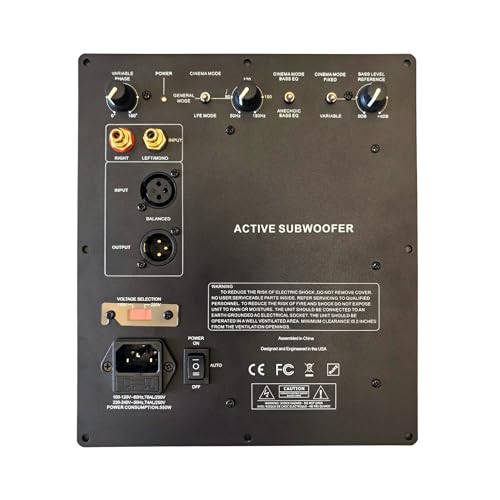
The WAudio SUA-500 is a Class-D plate amplifier designed for DIY subwoofer builders rather than traditional bassists. It delivers 500W at 4 ohms with less than 1% THD, making it capable of driving a subwoofer enclosure with authority. Variable low-pass filter from 25Hz to 180Hz and a bass boost at 45Hz allow precise tuning.
Its connectivity includes balanced XLR and unbalanced RCA inputs, a phase switch, and auto power-on/off. The compact design (10.24 x 8.66 x 6.69 inches) fits into standard subwoofer cutouts.
Real-world reviews from buyers upgrading their subwoofers report good initial performance, but there are reliability concerns: one owner reported the amplifier failing after a month, and the plastic back deforms easily. It is a budget-friendly solution for DIY box builders, not a primary live bass rig.
Why it’s great
- True 500W output for DIY sub builds
- Variable low pass filter and bass boost
- XLR and RCA input options
- Auto power on/off for energy savings
Good to know
- Plastic back plate is fragile
- Some units fail after short use
- Not intended as a bass guitar amp head
- Poor heat dissipation
11. Fender Rumble 500 V3
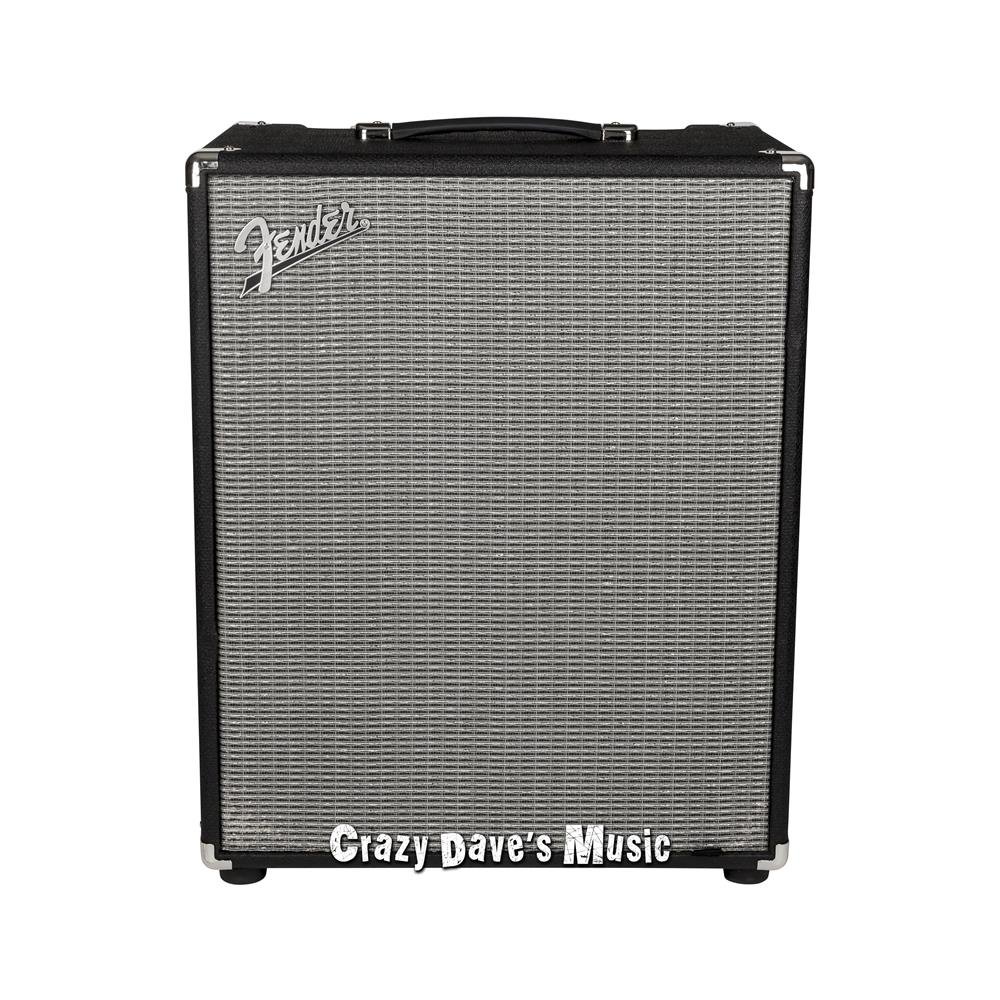
The Fender Rumble 500 V3 is a 500-watt combo amplifier that packs a 2×10 Eminence speaker array and a compression horn into a lightweight 36.5-pound chassis. The Class-D output delivers punchy, articulate low-B reproduction, and the overdrive circuit is controllable via footswitch or front panel. The rear-panel XLR DI with ground lift gives you a clean line out for PA integration.
The tone is pure Fender: round, musical, with that signature midrange bark. The contour and bright voicings are less inspiring, but the basic EQ is effective. The 2-year warranty gives reassurance.
Users rave about the weight reduction compared to older combos and the surprising volume for a 2×10 setup. It outperforms older Hartke and Ampeg combos in direct comparisons. The overdrive channel is functional but not the selling point. For a one-trip rig that delivers 500W of clean, reliable Fender tone, the Rumble 500 is the best combo in class.
Why it’s great
- 500W in a lightweight 36.5 lb combo
- Class-D power with punchy lows
- Eminence 2×10 + compression horn
- XLR DI with ground lift
Good to know
- Contour and bright voicings are weak
- No mute switch
- Overdrive channel is just okay
FAQ
Can I run a 500W bass head into an 8-ohm cabinet safely?
Why does my 500W head sound quiet compared to a friend’s 300W head?
What is a hybrid bass amp head and why choose one?
Is a 500W bass head enough for live gigs with a loud drummer?
What does the DI output on a bass head do?
Final Thoughts: The Verdict
For most bassists, the 500 watt bass amp head winner is the Darkglass Alpha-Omega AO500 because it combines studio-grade IR cabinet simulation, a versatile distortion circuit, and a lightweight 6.4-pound chassis. If you want the most raw power and headroom for large stages, grab the Blackstar U700 Elite. And for the best value without sacrificing tone, nothing beats the Peavey MiniMAX 600—it out-louds many 500W heads while staying under 5 pounds.