
Every side sleeper knows the camping dread: you roll onto your hip, and within an hour, the hard ground is punishing your shoulder and hip bone through a pad that simply wasn’t built for your sleeping style. The standard 1-inch foam slab or under-inflated air mattress leaves your hips and knees to bear the brunt of the rocky terrain, turning what should be a restful night into a restless battle against pressure points.
I’m Min — the co-founder and writer behind Gadgets Feed. After analyzing dozens of specs sheets, customer reviews, and technical build details for the thickest foam densities, R-values, and side-sleeper-specific support structures, I’ve narrowed the field to the seven pads that genuinely solve the hip-sinking problem.
Whether you’re car-camping with the family or building out a van, finding the right support means waking up without that familiar ache. This guide is built to help you find the very best camping pad for side sleepers that delivers real pressure relief through the night.
How To Choose The Best Camping Pad For Side Sleepers
Side sleepers face a unique challenge that back and stomach sleepers simply don’t: the widest, heaviest parts of your body — hips and shoulders — concentrate all your weight onto a very small surface area. If your pad can’t conform and support those points, you’ll feel every root and rock beneath you. Here’s what to look for.
Thickness Is the Deciding Factor
At minimum, a side sleeper needs 3 inches of thickness to prevent bottoming out. Four inches is the sweet spot for most body types. When you compress a pad’s foam or air chamber, the remaining distance between your hip bone and the ground is what keeps you comfortable. Anything under 3 inches will have you feeling the floor.
Foam Density vs. Air Support
Pure memory foam pads offer plush, body-conforming support but can be heavy and bulky. Self-inflating pads combine foam cores with air chambers, giving you the contouring benefit of foam with adjustable firmness. Hybrid designs (like the Y-shaped telescopic foam structures) reduce pack size while keeping that critical hip support.
R-Value and Seasonal Suitability
Cold ground saps heat faster than cold air. An R-value of 4 or higher is the benchmark for three-season use; 6 or above keeps you warm into winter. Side sleepers already have less body contact with the pad due to their position, so adequate insulation is vital to avoid waking up cold on the bottom side.
Quick Comparison
On smaller screens, swipe sideways to see the full table.
| Model | Category | Best For | Key Spec | Amazon |
|---|---|---|---|---|
| Acacia 4″ Self-Inflating | Hybrid Foam/Air | Premium comfort & packability | 4.3in thick / R-Value 6 / 5.3 lbs | Amazon |
| Hikenture 4″ Self-Inflating | Memory Foam Hybrid | Wide sleeping area & warmth | 4in thick / R-Value 9.5 / 28in wide | Amazon |
| Gaialoop 4″ Memory Foam | Pure Memory Foam | Luxury car camping comfort | 4in thick / 30D+40D foam / 30in wide | Amazon |
| Sea to Summit Camp Plus | Self-Inflating Foam | Durable backpacking alternative | 2.6in thick / R-Value 4.3 / 3 lbs | Amazon |
| Wevelel Memory Foam Pad | Self-Inflating Foam | Ultra-high insulation | 3.1in thick / R-Value 9.5 / 50D foam | Amazon |
| CYMULA 3″ Memory Foam | Pure Memory Foam | Budget-friendly cot pad | 3in thick / Waterproof bottom / 6.4 lbs | Amazon |
| HomeMate Memory Foam Pad | Pure Memory Foam | Entry-level value for cots | 3in thick / Waterproof / 7.8 lbs | Amazon |
In‑Depth Reviews
1. Acacia 4″ Thick Self Inflating Sleeping Pad with Foam

The Acacia hits the sweet spot of side sleeper support with a 4.3-inch thickness and a unique Y-shaped telescopic foam core that reduces packed volume by 60% compared to traditional foam pads. At 5.3 pounds, it’s lighter than most pure memory foam alternatives, yet still delivers the cushioning needed to prevent hip and shoulder pressure points. The R-Value of 6 means you’re warm well into shoulder-season camping without overheating in summer.
The two-way valve does most of the work during inflation, and the included pump sack lets you fine-tune firmness without bending over. The rugged 30D polyester fabric with TPU coating holds up well against abrasions, and the heat-molded seams keep air locked in reliably. Side buckles allow you to connect two pads together if you’re camping as a couple.
The only real trade-off is that deflation and packing takes a little practice to get the roll tight enough to fit back in the bag. Once you’ve done it a couple of times, though, the process becomes a consistent two-minute routine. For car campers and van dwellers who want premium comfort without the bulk, this is the pad to beat.
Why it’s great
- 4.3 inches of foam is thick enough to eliminate hip bottoming out
- Y-shaped foam core packs significantly smaller than comparable thick pads
- R-Value 6 provides genuine three-season insulation
Good to know
- Initial setup requires a learning curve for the pump sack technique
- At 5.3 lbs, it’s still too heavy for backpacking
2. Hikenture 4 INCH Thick Self Inflating Sleeping Pad

Hikenture delivers serious warmth with an R-Value of 9.5, making this pad a genuine four-season option for side sleepers who camp in cold conditions. At 4 inches thick and 28 inches wide, it offers generous real estate that accommodates broad shoulders without your arm hanging off the edge. The combination of memory foam and air chambers provides the plush contouring that side sleepers need while keeping the packed size relatively manageable for car camping.
The patented two-way valve simplifies both inflation and deflation — self-inflation takes a few minutes, and the included pump sack puts in the final puff without any lung effort. Deflation is equally smooth: flip the valve to the one-way setting, and air exits without sneaking back in. The 80-inch length comfortably fits sleepers up to 6-foot-3. Fabric quality feels dense and durable, with no crinkling noise during movement.
A few users noted that the first unit developed a tear and the company replaced it without requiring a return — good warranty behavior. The main compromise is that deflation still takes some muscle to roll up tight, and at 6.5 pounds it’s firmly in car-camp territory. For cold-weather side sleepers who prioritize warmth, this is a compelling choice.
Why it’s great
- R-Value 9.5 insulates against sub-freezing ground temperatures
- 28-inch width provides critical arm and torso room for side sleeping
- Patented valve makes inflation and deflation genuinely easy
Good to know
- Rolling up and re-packing requires effort due to foam density
- Heavier than hybrid foam/air competitors at 6.5 pounds
3. Gaialoop 4 Inch Memory Foam Camping Mattress
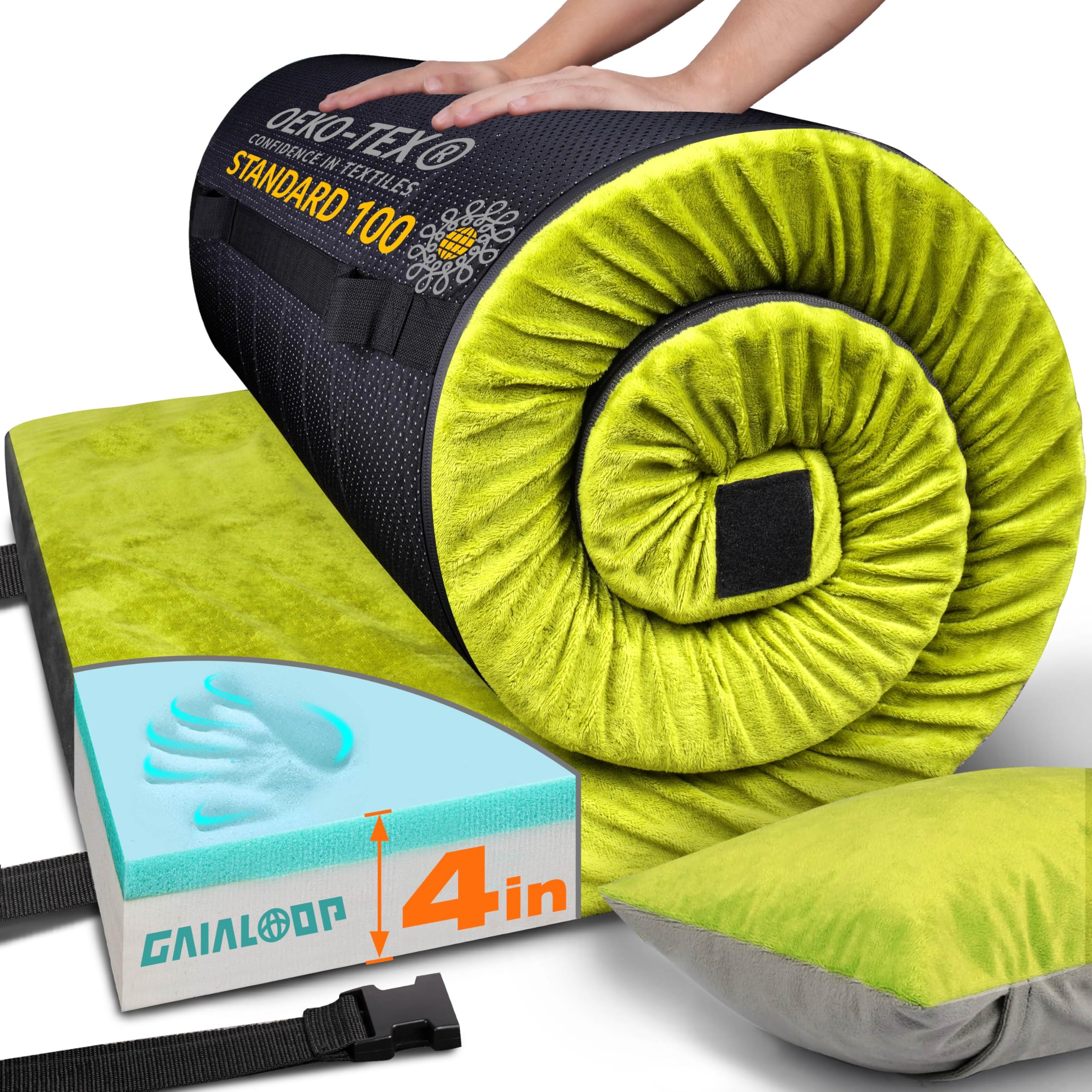
The Gaialoop is the closest thing to sleeping on your home memory foam mattress while camping. At 4 inches thick and 30 inches wide, it offers the most generous sleeping surface in this lineup — critical for side sleepers who toss and turn and need room to sprawl. The dual-layer construction pairs 30D support foam underneath with 40D memory foam on top, creating a plush initial feel that doesn’t bottom out under hip pressure. The OEKO-TEX certification means no off-gassing odors, and the removable avocado-green cover is machine-washable.
Side sleepers who have tried this pad consistently report that the thickness eliminates shoulder and hip discomfort entirely, even on rocky or uneven ground. The waterproof coating on the top and bottom cover interiors protects the foam core from moisture, and the non-slip bottom keeps the pad in place on tent floors and cot surfaces. The included foam pillow is a thoughtful bonus, though it’s chunkier than an inflatable pillow would be.
The trade-off is sheer bulk: at 13 pounds and rolling up to roughly 2 feet in diameter, this pad is strictly for car, van, or RV use. It cannot be backpacked. Some users also found the stuff sack zipper prone to failure under the stress of a full-size mat. For dedicated car campers who refuse to compromise on comfort, the Gaialoop delivers a genuinely luxurious night’s sleep.
Why it’s great
- 4 inches of dual-density memory foam provides exceptional pressure relief for hips and shoulders
- 30-inch width is the widest option here — ideal for restless side sleepers
- Removable, machine-washable cover keeps gear clean on long trips
Good to know
- Extremely bulky when rolled — needs significant vehicle space
- Stuf sack zipper and strap stitching reported as weak points by some users
4. Sea to Summit Camp Plus Self-Inflating Foam Sleeping Mat
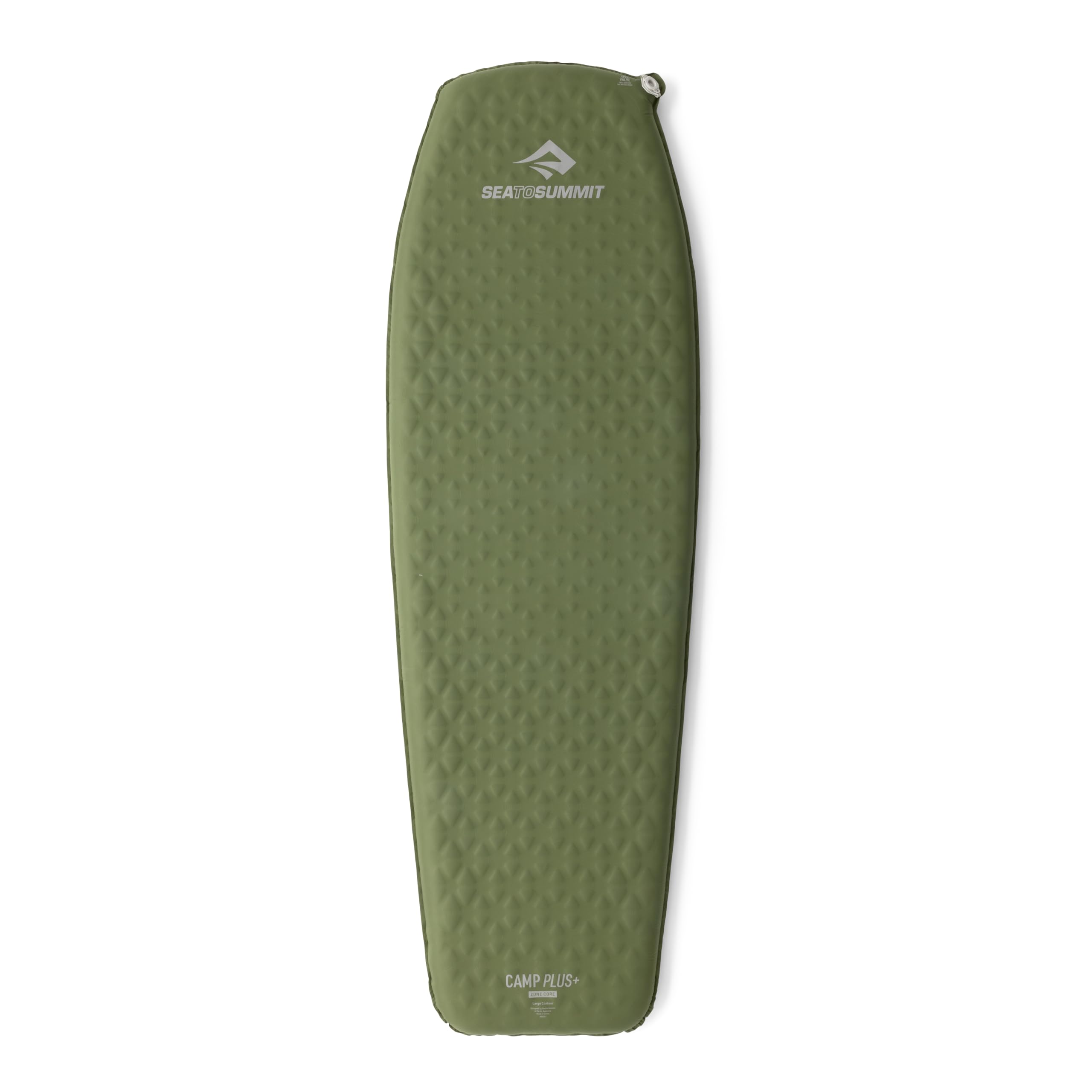
The Sea to Summit Camp Plus sits in a different category from the thick foam pads above: at 2.6 inches and 3 pounds, it’s a self-inflating mat that trades maximum plushness for portability. The 4.3 R-Value keeps you warm in three-season conditions, and the patented XPEL valve allows for tighter rolls and faster deflation. The body-mapped air zone construction places support where your core needs it and reduces weight in less-critical areas — a smart engineering trade-off for side sleepers who also want to carry their gear.
For side sleepers on the lighter side (under 160 lbs), the 2.6-inch thickness provides adequate hip relief without bottoming out, especially if you inflate it firmly. The tapered large size (78 x 25.2 inches) adds 12% more sleep surface area than a standard rectangular pad, giving your shoulders room to breathe. The 75D polyester face fabric is notably durable — users report surviving direct sun and rocky terrain without punctures or abrasion.
The biggest drawback is that the foam takes days to fully expand out of the box, and for heavier side sleepers, 2.6 inches may not be enough to keep your hip off the ground. Manual inflation typically requires 10–15 breaths unless you let it self-inflate for hours. This pad is best suited for car campers who value durability and packability over maximum thickness.
Why it’s great
- Excellent build quality from a trusted brand — withstands rough terrain
- Compact and light enough for shorter carries from vehicle to site
- XPEL valve enables one-way deflation for fast, tight rolling
Good to know
- 2.6-inch thickness may be insufficient for heavier side sleepers
- Initial foam expansion takes several days to reach full thickness
5. Wevelel Memory Sleeping Pad, 3.1″ Ultra-Thick

The Wevelel delivers a remarkable R-Value of 9.5 at a thickness of 3.1 inches, making it one of the warmest mid-range options available for side sleepers. The 50D high-density memory foam is significantly more resilient than the 19D foams found in cheaper pads, which translates to better weight distribution and less sagging under your hips and shoulders. At 6.59 pounds and 77 x 26.98 inches, it offers a generous sleeping area that fits most body types without feeling cramped.
The self-inflating mechanism is fast — the foam expands within 30 seconds, and the upgraded dual-use valve makes both inflation and deflation notably easier than most competitors. The 50D stretch knit fabric cover is breathable and silent, so there’s none of the crinkling that disrupts light sleepers. The built-in pillow foam is functional but low-profile, and some side sleepers may want to supplement it with a taller inflatable pillow.
A few users found that the listed width of 30 inches actually measures closer to 26 inches, which could be an issue for larger side sleepers who need room for their arms. The pad also carries some bulk when deflated, making it better suited for car camping than backpacking. At this price point, the combination of extreme insulation and 3.1-inch thickness is an outstanding value for cold-weather side sleepers.
Why it’s great
- R-Value 9.5 with 3.1-inch foam is a rare combination at this price
- High-density 50D foam prevents hip bottoming out effectively
- Quiet, noiseless fabric; no crinkling during movement
Good to know
- Actual width may be slightly less than advertised
- Built-in pillow is too low for many side sleepers
6. CYMULA 3 Inch Memory Foam Camping Pad
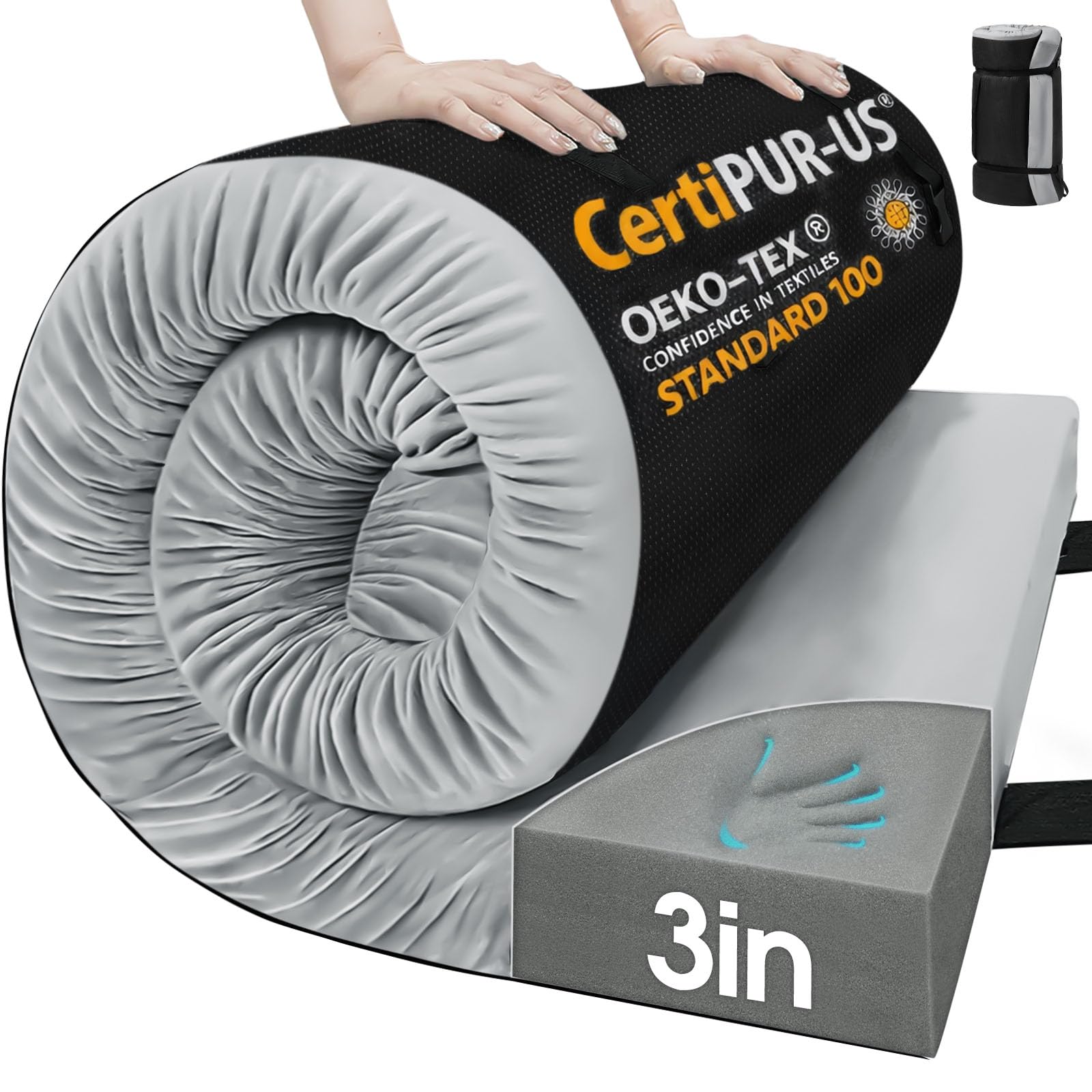
The CYMULA offers a solid entry point for side sleepers who primarily use a camp cot and need additional cushioning. At 3 inches thick with a dual-layer construction of carbon-fiber memory foam and high-density base foam, it provides noticeable pressure relief that standard cot pads lack. The waterproof non-slip bottom with rubberized dots keeps the pad anchored, and the removable machine-washable cover is a practical feature for keeping gear clean after muddy trips.
For side sleepers, this pad works best as a cot topper — the cot’s rigid frame provides the base support, while the 3-inch memory foam layer cushions your hips and shoulders. On the ground directly, some users found that 3 inches can still feel firm under heavier sleepers, especially if the ground is uneven. The pad rolls up with included straps, though at 6.4 pounds and a rolled diameter of roughly 18 inches, it’s not compact.
The built-in retaining straps are reported as weak by some users and may require reinforcement. Several reviews noted a strong initial odor that needed a day or two of airing out. For the price, the CYMULA is a reasonable choice for occasional car campers who need a cot pad upgrade but aren’t ready to invest in a premium self-inflating model.
Why it’s great
- 3-inch memory foam layer significantly improves comfort on standard cots
- Removable, machine-washable cover extends product lifespan
- Waterproof non-slip bottom prevents shifting on cot surfaces
Good to know
- May not provide enough ground clearance for heavier side sleepers
- Initial odor requires ventilation before first use
7. HomeMate CertiPUR-US Memory Foam Camping Mattress Pad
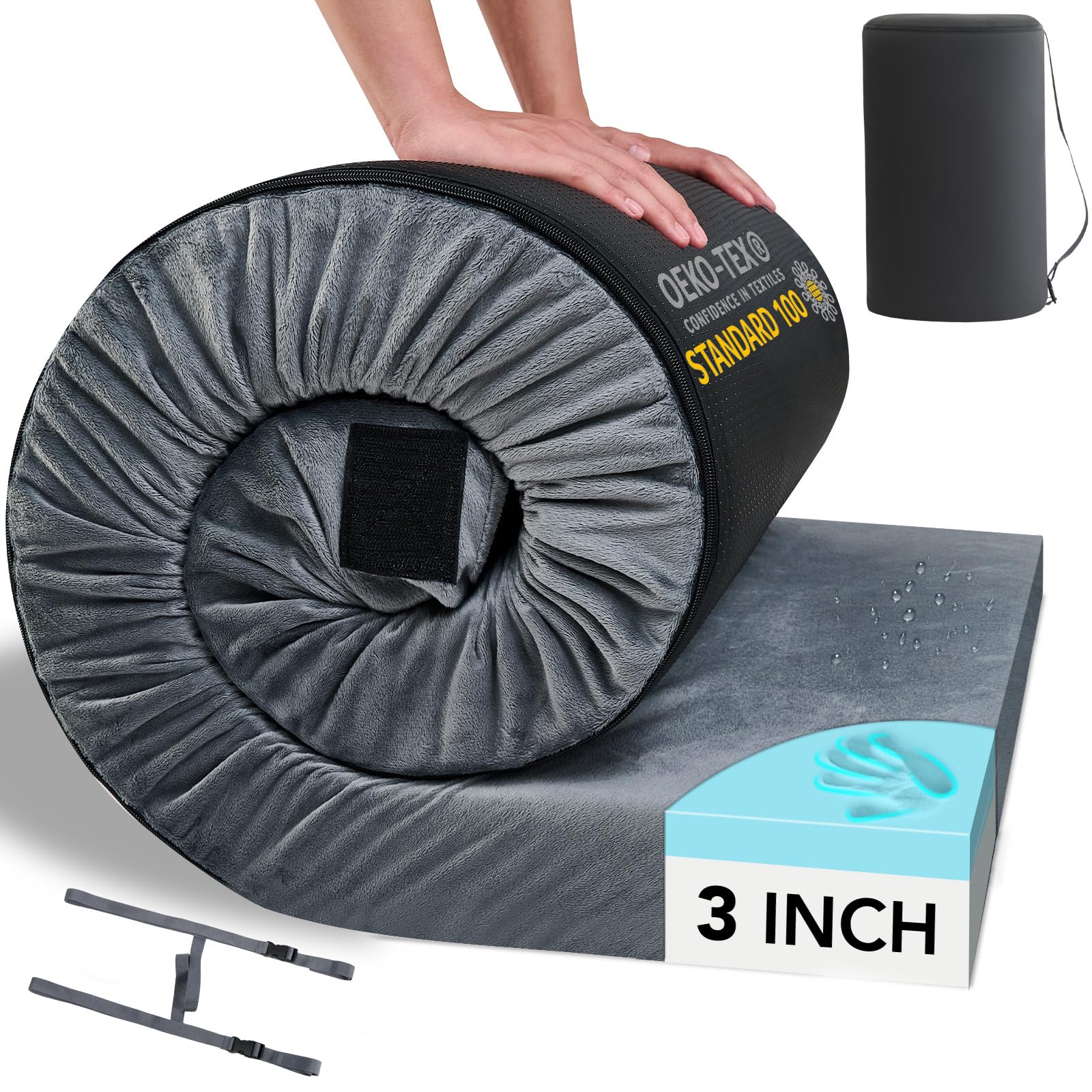
The HomeMate pad is the most affordable option in this roundup, and it delivers exactly what a budget-minded side sleeper needs: 3 inches of memory foam on top of high-density support foam, all wrapped in a waterproof grey cover. At 7.8 pounds, it’s not light, but it’s comfortable enough that side sleepers report waking up without the usual joint stiffness. The cover has a soft sleeping side and a sturdy waterproof bottom, plus a zipper for easy removal and cleaning — impressive attention to detail at this price.
For side sleepers, the key limitation is that these 3 inches compress noticeably under the hips if you’re sleeping directly on the ground. The pad works best paired with a cot, where the cot’s frame keeps you elevated and the foam handles the pressure points. The Velcro connectors allow you to attach multiple pads together for larger sleeping areas. The included storage bag is generously sized and even has backpack straps, making transport manageable despite the bulk.
Rolling the pad back up takes some effort and the straps are functional rather than elegant. A few users noted the pad is significantly bulkier than air mattress alternatives. For the entry-level price, the HomeMate delivers the core comfort that side sleepers need — just plan to use it on a cot rather than on hard ground.
Why it’s great
- 3-inch thickness with memory foam offers genuine pressure relief for side sleepers
- Waterproof bottom and removable washable cover are practical upgrades
- Multiple size options fit cots, tents, and SUV setups
Good to know
- Best used on a cot — ground sleeping compresses the foam significantly
- Bulky when rolled; not suitable for backpacking or minimalist packing
FAQ
Can a side sleeper use a 2.5-inch thick camping pad?
Do side sleepers need a wider camping pad?
Final Thoughts: The Verdict
For most users, the camping pad for side sleepers winner is the Acacia 4″ Self-Inflating Pad because it combines the ideal 4.3-inch thickness with a clever telescopic foam core that packs smaller than any competing thick pad. If you camp in sub-freezing temperatures and need extreme warmth, grab the Hikenture 4″ Pad with its R-Value 9.5. And for uncompromising, bed-like luxury in your car or van, nothing beats the Gaialoop 4″ Memory Foam Pad — it’s the closest you’ll get to sleeping on your home mattress in the woods.