
That grinding sound of sandpaper hitting bare metal is the only way to know if your filler hid the dent or just masked it. Automotive body filler is a sculpting medium, not a cover-up — the difference between a wavy mess and a straight panel comes down to the viscosity, working time, and shrinkage rate of the compound you choose. Using the wrong filler on a modern aluminum panel or a fiberglass crack will leave you with adhesion failure and pinholes that scream for attention.
I’m Min — the co-founder and writer behind Gadgets Feed. I’ve spent hundreds of hours cross-referencing cure times, sanding properties, and adhesion specs on polyester and epoxy-based fillers to separate the skim-coat winners from the sagging disappointments.
This guide breaks down the best options for metal, fiberglass, SMC, and wood substrates so you can stop guessing and start feathering. My goal is to help you find the perfect automotive bondo body filler for your specific repair project.
How To Choose The Best Automotive Bondo Body Filler
Choosing the right filler means matching the substrate — bare steel, galvanized metal, aluminum, SMC, or fiberglass — with a compound that chemically bonds and expands and contracts at a similar rate. Using a standard polyester filler on flexible plastic panels guarantees cracking. Here are the critical factors to nail down before you mix a single dab.
Working Time vs. Cure Time
Working time (pot life) is the minutes you have to spread, shape, and skim before the exothermic reaction turns the paste into a rubbery brick. Cure time is when it’s hard enough to sand. Fast-curing fillers (10–15 minutes) are ideal for small patching in warm shops but become unmanageable above 80°F. Slower formulas (20–30 minutes) suit large panels or first-timers who need extra sculpting time. Always read the manufacturer’s hardener ratio — too much catalyst shortens working time and causes brittle cracking.
Lightweight vs. Standard Formula
Lightweight fillers contain microspheres or glass beads that reduce density, making them easier to sand and less prone to sagging on vertical panels. Standard fillers pack more resin and filler particles per cubic inch, offering higher impact resistance and less shrinkage over large dents. For deep fills over a quarter-inch, step up to a fiberglass-reinforced formula to prevent the filler from cracking under vibration.
Substrate Compatibility
Read the label for “adhesion to aluminum”, “SMC-safe”, or “fiberglass compatible”. Polyester fillers bond aggressively to bare steel but can corrode untreated aluminum. Epoxy-based fillers (like J-B Weld) are waterproof and bond to nearly anything, including wet surfaces. Fiberglass-filled fillers (Duraglas) are non-porous and excel on boat hulls or rust-through patches where moisture wicking is a concern.
Quick Comparison
On smaller screens, swipe sideways to see the full table.
| Model | Category | Best For | Key Spec | Amazon |
|---|---|---|---|---|
| Bondo Original Formula | Premium Polyester | Classic metal dent repair | Cure time: 20 min | Amazon |
| Evercoat Z-Grip | Mid-Range Polyester | Aluminum & galvanized steel | Non-sag on vertical panels | Amazon |
| Duraglas Fiberglass Filled | Premium Fiberglass | Rust-outs & fiberglass hulls | Short strand fiberglass loaded | Amazon |
| J-B Weld Body Filler (Gallon) | Premium Epoxy | Multi-substrate waterproof repair | Waterproof & 30 min cure | Amazon |
| U.S. Chemical Special Lite | Mid-Range Lightweight | Smooth finish on vertical panels | Lightweight, creamy texture | Amazon |
| 3M Bondo Wood Filler | Budget Wood-Only | Exterior wood rot repair | Cure time: 15 min | Amazon |
| J-B Weld Multi-Purpose Putty | Budget Quick-Fix | Small home & auto patches | Dries in 20 min, waterproof | Amazon |
In‑Depth Reviews
1. Bondo Body Filler, Original Formula

This is the benchmark that every other automotive filler gets compared to — 3M Bondo Original Formula has been standard in collision shops for decades because the two-part polyester system spreads like cold butter and cures rock-hard in exactly twenty minutes. The salmon-pink color is intentional: it helps you see where you’ve applied the skim coat and where bare metal still shows through. The non-shrink formula means you can fill a dime-sized ding and trust that after sanding, the depression won’t ghost back through the paint.
Customers consistently report using it on cast iron sewer pipes, wooden door frames, and fiberglass fenders with excellent adhesion, though it’s technically optimized for steel and aluminum. The 6.3-pound can comes with a 2.75-ounce tube of hardener — enough for multiple small jobs. Reviewers warn that the can often arrives only 75% full by volume, which is standard headspace for mixing, but be aware if you are counting ounces for a large project.
On vertical body panels, it doesn’t sag if you keep the spread coats under ¼-inch thick. Sanding with 80-grit produces a fine dust that feathers beautifully into the surrounding paint. It does not bond well to bare aluminum without etching primer, and working time drops to under 8 minutes if the shop temperature is above 85°F. For a one-gallon standard that every body man knows, this remains the default pick.
Why it’s great
- Proven non-shrink formula for reliable dent repair
- Works on steel, wood, and fiberglass
- Fast 20-minute cure for same-day sanding
Good to know
- Can volume is smaller than the container suggests
- Working time plummets in hot weather
2. U. S. Chemical & Plastics Special Lite Lightweight Filler

U.S. Chemical & Plastics Special Lite is a lightweight polyester filler designed to sand faster and resist sagging on vertical body panels. The creamy formula spreads over large areas without dragging, and the microsphere-filled blend cuts sanding time by roughly 30% compared to standard polyester fillers. The blue activator paste is not included but is widely available and preferred over the standard red hardener because it blends more evenly without streaking.
The 0.8-gallon can is a generous volume for the price point. Reviewers mention using this for sculpture and mold making because the cured resin is dense enough to hold fine detail yet sands easily with 120-grit for a smooth finish before primer. The pot life is roughly 10 minutes at 70°F, giving you enough working time for a full quarter-panel skim coat before it kicks. Full cure to sanding hardness takes about 4 hours, which is slower than Bondo, but the trade-off is a smoother, pinhole-free surface.
Several customers received damaged cans because Amazon ships the gallon without padding and the lid pops off in transit. The filler has no lid clips from the manufacturer, so consider transferring the contents to a sealed container upon arrival. This filler works best on steel and properly prepped fiberglass — it does not list compatibility with bare aluminum or SMC panels. For a lightweight option that sands like butter, this is tough to beat.
Why it’s great
- Lightweight formula sands faster than standard fillers
- Excellent non-sag performance on vertical panels
- Good value with the 0.8-gallon bulk size
Good to know
- Blue activator purchased separately
- Shipping packaging is inadequate — risk of spills
3. Duraglas Fiberglass Filled Filler
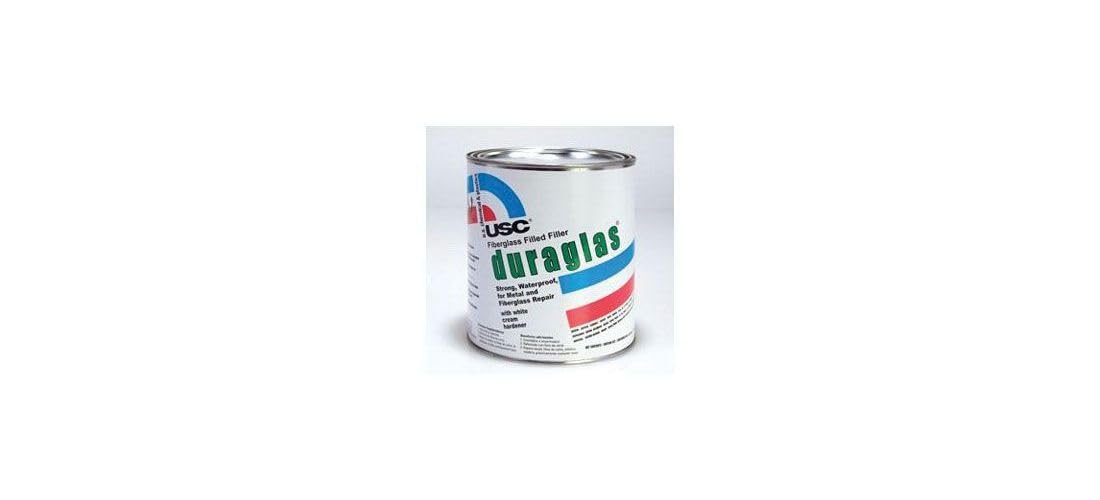
Duraglas is short-strand fiberglass-loaded polyester filler that acts as a bridging compound for rust-through holes and thin fiberglass laminates. Unlike standard fillers that need a backing mesh, Duraglas spans a quarter-inch hole without collapsing if you mix on the stiff side. The blue-green color makes it easy to distinguish from body filler during sanding, so you know exactly when you’ve hit filler vs. primer. The 15-minute cure time is aggressive — perfect for warm-weather boat repairs where you need to apply multiple coats in a day.
Boat builders and RV repairers praise this formula for fairing fiberglass hulls and smoothing over old gelcoat. The fiberglass strands resist cracking under vibration, making it a better choice for trailer fenders and motorcycle side covers than standard lightweight fillers. Reviewers note that it kicks especially fast in direct sunlight or above 80°F, so mix in 8-ounce batches to avoid waste. After 15 minutes, wet-sand with 80-grit while the filler is still partially green — it cuts cleanly without clogging the paper.
The 1-gallon can weighs 11.1 pounds, reflecting the dense fiberglass content. It is not designed for bare metal adhesion on its own — use an epoxy primer or matching metal conditioner before applying. Some customers received cans that were 20% low by volume, and customer service was slow to respond. For structural repairs where standard Bondo would crack, Duraglas fills the gap literally and figuratively.
Why it’s great
- Short strand glass fibers bridge holes without backing mesh
- Ideal for fiberglass hulls and vibrating panels
- Aggressive 15-minute cure for quick layering
Good to know
- Not a direct-to-metal filler — primer required
- Volume complaints about container fill level
4. Evercoat Z-Grip Lightweight Body Filler

Evercoat Z-Grip is a premium lightweight filler with a Hattonite additive that reduces heat and friction during sanding, meaning you get fewer clogged sanding discs and less dust build-up. This matters when you are blocking an entire quarter-panel and the sandpaper loads up after three passes. The formula is specifically engineered for superior adhesion to galvanized steel and aluminum — a legitimate pain point because many standard fillers delaminate from aluminum within months. It applies as a creamy paste straight from the can and spreads with minimal drag.
Professional body men use Z-Grip for its pinhole resistance. The blend is tight enough that after a skim coat, primer, and block sanding, the number of tiny air pockets (pinholes) is drastically lower than with standard Bondo. The 128-fluid-ounce (1-gallon) can is a standard shop size. Customers note the filler does not sag on vertical panels even at ⅜-inch thickness, but it does require thorough mixing to avoid hard spots in the cured filler.
Several buyers reported that Amazon shipping caused the lid to loosen and spill filler into the box — not a product flaw but a packaging frustration. The material works on steel, aluminum, and fiberglass but is not rated for SMC or plastic bumpers. If you work with aluminum panels or galvanized steel regularly, this formula saves you the step of etching primer and delivers a smoother final sand.
Why it’s great
- Clog-free sanding formula with Hattonite additive
- Strong adhesion to aluminum and galvanized steel
- Low pinhole count after sanding and primer
Good to know
- Shipping packaging often causes lid leaks
- Requires thorough mixing to prevent hard spots
5. J-B Weld Body Filler – 1 Gallon

J-B Weld Body Filler is a two-component epoxy-based filler system that delivers waterproof, durable repairs on metal, wood, fiberglass, SMC, and even some plastics. The 30-minute cure time gives you a full half-hour of working time — forgiving for first-timers or large panel repairs where you cannot rush the spread. After cure, the filler can be sanded, drilled, routed, and painted just like the surrounding substrate. The waterproof nature makes it a strong candidate for outdoor auto repairs, boat patches, or any area exposed to moisture.
The 1-gallon pail includes resin and hardener, and J-B Weld’s reputation for tenacious bonding carries over here. The filler does not shrink or crack when applied in layers up to ½-inch thick, and it bonds aggressively to sanded fiberglass without delamination. Reviewers report using it for countertop repairs, woodworking, and even masonry patching due to its multi-substrate compatibility. The off-white color matches most light body panels, reducing the amount of primer needed to hide filler lines.
Some customers were disappointed that the 1-gallon can was only half-full, though this is partially the headspace required for mixing epoxy components. The filler is denser than lightweight polyester options, so sanding requires more effort and a coarser grit (80-grit) to move material. If you need a waterproof, multi-surface filler that sands well and doesn’t shrink, this gallon-size J-B Weld is a versatile workshop staple.
Why it’s great
- Waterproof and bonds to nearly every substrate
- Long 30-minute working time for large repairs
- Zero shrinkage and good adhesion on SMC panels
Good to know
- Heavier and harder to sand than lightweight fillers
- Container headspace means less volume than expected
6. 3M Bondo Wood Filler – 30 fl oz

3M Bondo Wood Filler is a two-part polyester formula specifically engineered for repairing rotted, damaged, or missing wood on interior and exterior surfaces. It cures rock-hard in 15 minutes, which is fast for a wood filler but expected from the Bondo lineage. The brown color blends nicely with stained wood, and the filler accepts stain and paint without blotching. It is ideal for fixing exterior door jambs, window sills, and deck boards where moisture resistance matters.
Customers praise its ability to be shaped with sandpaper, drilled for hardware, and routed for decorative edges just like real wood. The formula resists shrinking and cracking even on large fills, and it works well as an adhesive to bond new wood pieces to rotted sections. The 30-fluid-ounce can is a generous size for multiple repairs. The primary caution is the fast set time — reviewers earnestly warn to mix in small batches (golf-ball sized lumps) to avoid wasting material that hardens in the mixing cup.
The red hardener can tint the filler pink if too much is added, which shows through light paint. Use the manufacturer’s recommended ratio (14:1 by volume) to avoid this cosmetic issue. This product is specifically a wood filler — do not use it on automotive body panels. For wood trim, rot repair, and furniture restoration, this is the category’s standard bearer.
Why it’s great
- Transforms rotted wood into a drillable, paintable surface
- Cures in 15 minutes for fast project turnaround
- Accepts stain and paint for seamless blending
Good to know
- Hardener can tint repair pink if overused
- Must work in small batches due to fast cure
7. J-B Weld Multi-Purpose Putty – Quart

J-B Weld Multi-Purpose Putty is a hand-mixable epoxy putty that cures in 20 minutes and can be sanded, painted, and drilled after full cure. This is not a traditional automotive body filler — it is a repair putty designed for smaller, detailed fixes on wood, metal, drywall, and concrete. It comes in a quart-sized resealable can, and the two components are a single continuous ribbon of putty that you knead together until the color is uniform. This eliminates the liquid hardener mess and guesswork of traditional fillers.
Customers have used it successfully for repairing rotted RV trim, filling holes in ceramic pots, and patching garage door dents. The waterproof nature makes it reliable for exterior applications. The putty can be applied in thin or thick layers and bonds tightly to sanded surfaces without shrinking. The off-white color is neutral and takes paint well. The trade-off is that it is not designed for large panel repairs — it lacks the spreadability and open time of a gallon of polyester filler.
Multiple reviewers warn that the putty sets up “very fast” in under 5 minutes once kneaded, so you must apply immediately and work small batches. The smell is strong, and the manufacturer recommends outdoor use or good ventilation. For the price point, this filler punches above its weight for small auto trim repairs, household patching, and emergency fixes where you need a waterproof bond fast.
Why it’s great
- No liquid hardener — just knead and apply
- Waterproof and bonds to wood, metal, and concrete
- Sandable and paintable in under 30 minutes
Good to know
- Sets up in under 5 minutes — mix tiny batches
- Strong smell requires good ventilation
FAQ
Can I use Bondo body filler directly on aluminum?
Why does my Bondo have pinholes after sanding?
What is the difference between lightweight and standard body filler?
Final Thoughts: The Verdict
For most users, the automotive bondo body filler winner is the Bondo Original Formula because it has the fastest working time to sanding readiness, proven non-shrink performance on steel and fiberglass, and a cost-per-pound that makes it the default for home and professional shops alike. If you want to sand faster with fewer pinholes, grab the Evercoat Z-Grip. And for waterproof, multi-substrate repairs on wood, metal, and SMC, nothing beats the J-B Weld Body Filler.