
A cracked concrete patio, a muddy path to the shed, or a barren patch of dirt next to the driveway — these are the problems a smart 12×12 concrete block or paver solves in one afternoon. The category has quietly split into two camps: the affordable plastic interlocking tiles you snap together in minutes and the premium load-bearing grid systems designed to support actual vehicles.
I’m Min — the co-founder and writer behind Gadgets Feed. I analyze load ratings, material composition, and interlocking designs to separate the flimsy from the truly permanent, so you don’t waste time or money on a surface that shifts underfoot.
After sifting through hundreds of customer builds — from basement floors to RV pads — I’ve assembled a vertical breakdown of the best options available today. This is the definitive guide to finding the right 12×12 concrete block alternative for your project.
How To Choose The Best 12X12 Concrete Block
Not every 12×12 block is built the same. Your choice hinges on three variables: the surface traffic you expect, the base material underneath, and your tolerance for maintenance. Go cheap on load rating and you’ll be replacing broken tiles within a season.
Load Capacity — The Only Number That Matters
The real concrete block carries about 1,500 psi compressive strength, but every plastic or rubber alternative has a published load limit. For decorative patios and foot traffic, anything above 500 lbs per tile is adequate. For driveways, RV pads, or shed bases, you need a grid system rated for 10,000 lbs or more — check the spec sheet before ordering.
Interlocking Mechanism vs. Base Preparation
Snap-together tiles work perfectly on flat, hard surfaces like existing concrete or plywood. On dirt, grass, or gravel, the tiles will shift unless you use a deeper grid system with anchoring spikes. Stomp stones are the exception — they rely on friction and soil compaction rather than mechanical locks.
Drainage and UV Stability
Solid plastic tiles trap water underneath, leading to mold in shaded areas. Open-grid designs let rainwater pass through, which is essential for pool surrounds or high-moisture zones. UV stabilizers prevent polypropylene tiles from becoming brittle after two summers of direct sunlight — always confirm the material contains additives like HALS (hindered amine light stabilizers).
Quick Comparison
On smaller screens, swipe sideways to see the full table.
| Model | Category | Best For | Key Spec | Amazon |
|---|---|---|---|---|
| Vodaland HexPave | Premium Grid | Driveways & Shed Bases | 27,000 lbs load capacity | Amazon |
| TRUEGRID PRO LITE | Premium Grid | RV Pads & Paths | 120,000 lbs load class | Amazon |
| Yaheetech 27PC | Wood Composite | Patio Makeovers | Acacia wood top, PP base | Amazon |
| Topeakmart 27PC | Wood Composite | Balcony Refinishing | Fir wood with anti-skid lines | Amazon |
| Happybuy 55PC | Wet-Area Mat | Pool & Shower Floors | Polypropylene, 0.5″ thick | Amazon |
| Multy Home Stomp Stone | Stepping Stone | Garden Walkways | 98% recycled rubber, 1.9 lbs | Amazon |
| Goovilla 9PC Deck Tile | Budget Tiles | Basement Floor Covering | High-density plastic, 0.75″ | Amazon |
In‑Depth Reviews
1. Vodaland Permeable HexPave System

The HexPave system is engineered for projects where weight is the primary concern — driveways, shed bases, and erosion-prone slopes. Each unit covers roughly 3 square feet, and the honeycomb geometry distributes vehicle loads evenly across the subgrade. The 1-inch depth is shallow enough to avoid significant excavation but deep enough to lock gravel in place.
Installation requires no tools beyond a saw for edge trimming, and the interlocking tabs connect with an audible click. Customers report the grids remain stable under heavy pickup trucks after two years of use, provided the base was properly compacted. The polypropylene material includes UV stabilizers, so fading is minimal even in full-sun applications.
One limitation is the lack of included anchoring stakes — on slopes or soft soil, you’ll want to purchase separate ground staples. For flat, well-drained areas, the weight of the gravel fill alone is sufficient to hold the system in place. The 22-unit pack covers 65 square feet, making it ideal for medium-scale projects.
Why it’s great
- Extraordinary load capacity for a plastic grid
- Permeable design eliminates puddling
- Snap-together assembly with no glue or fasteners
Good to know
- Anchoring stakes not included
- Shallow 1-inch depth may require extra base prep for heavy vehicles
2. TRUEGRID PRO LITE Permeable Paver
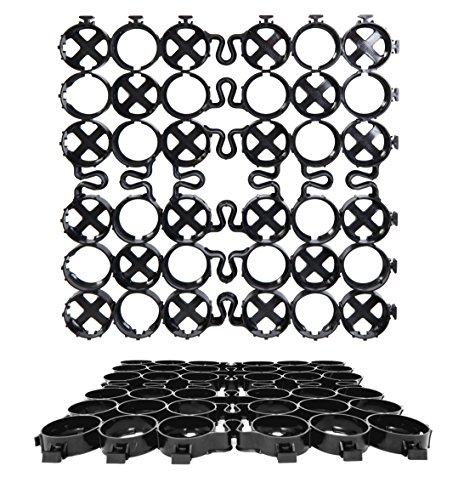
The TRUEGRID PRO LITE is built for extreme duty — snow plows, dump trucks, and daily RV parking. Made from 100% post-consumer recycled HDPE, each grid measures 24 x 24 inches and weighs only 2.5 pounds, yet the system carries a 120,000-pound load rating per square foot when properly installed. The 1-inch depth requires a minimum gravel fill, but the real magic is in the interlocking mechanism: the grids connect with sturdy clips that resist lateral movement even under turning vehicles.
DIY users praise the ease of cutting with a standard circular saw for custom shapes. The grids are snow-plowable, meaning you can run a blade over them without popping tiles loose. On soft soil, a geotextile fabric base is recommended to prevent sinkage over time. The 18-pack covers 72 square feet — enough for a single driveway lane or a substantial patio.
The main drawback is the cost per square foot, which is among the highest in this list. For light foot traffic only, you are overpaying for a capability you won’t use. But for anyone who needs a permanent, maintenance-free surface that supports heavy loads, the PRO LITE justifies its premium position.
Why it’s great
- Industry-leading load capacity for residential use
- Snow plow compatible and 100% permeable
- Made from recycled materials in the USA
Good to know
- Premium price reflects heavy-duty engineering
- Requires geotextile fabric for soft subsoils
3. Yaheetech 27PCS Wooden Flooring Patio Deck Tiles
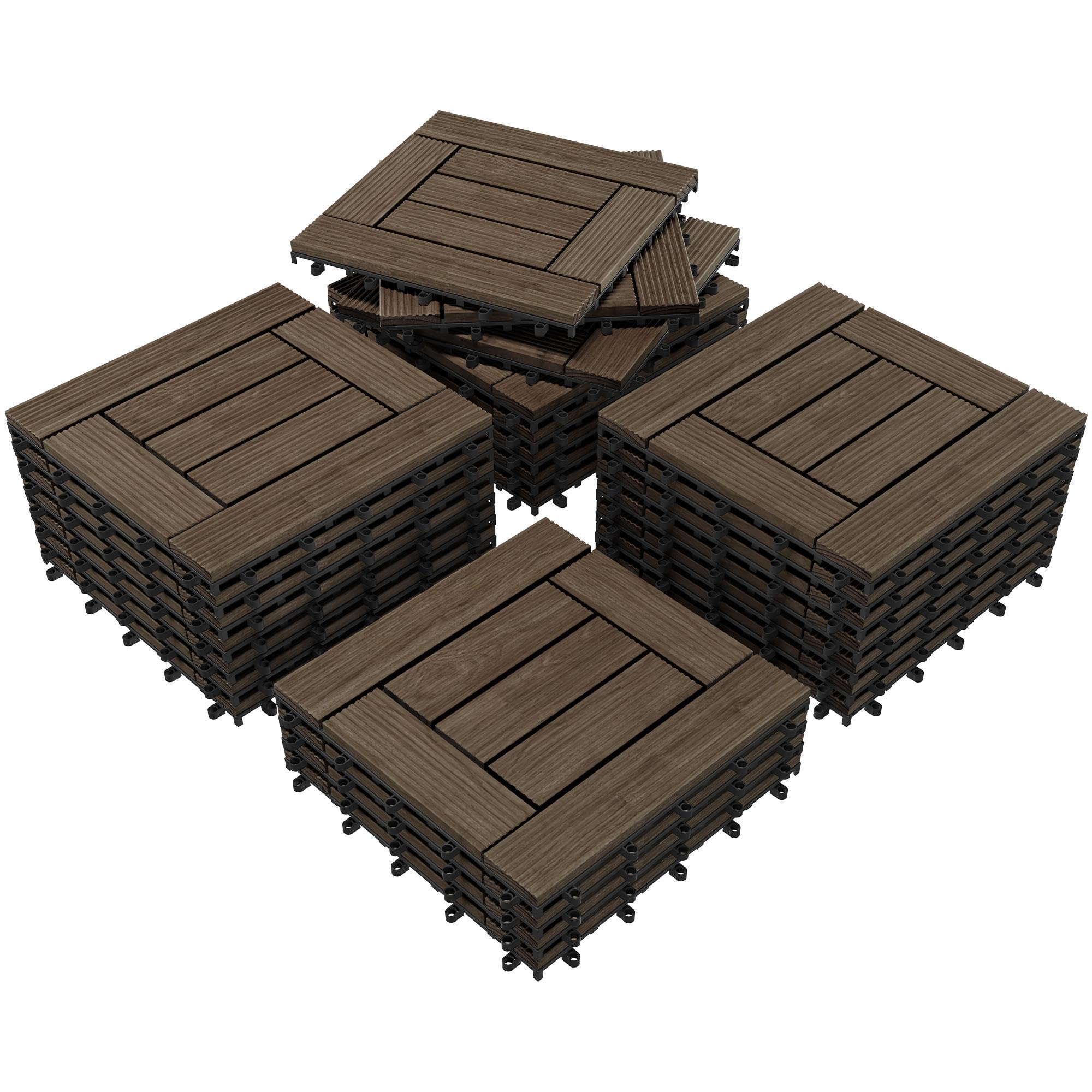
If aesthetics are your priority — covering an ugly concrete balcony or resurfacing a screened-in porch — the Yaheetech 27-pack delivers a natural wood look that beats plastic tiles every time. The surface is real acacia wood, a dense hardwood known for water resistance, bonded to a PVC plastic base that lifts the wood off the ground for airflow. Each tile measures 12.13 x 12.13 inches square and 0.87 inches thick, with anti-skid lines routed into the wood for wet-weather traction.
Installation is a true snap-together affair; no nails, glue, or special tools are needed for most layouts. Customers note that the wood requires an annual sealant treatment to maintain color after a season of rain and sun exposure. Without treatment, the natural stain wears off within 12 months, especially in high-traffic paths. The bottom plastic base includes drainage channels, so water never pools against the wood grain.
The pack covers 27 square feet, which is enough for a small seating area or a narrow walkway. For larger projects, you will need multiple packs, and the inability to purchase individual tiles is a frustration for those who need just a few more to finish a border. Overall, this is the best choice for anyone prioritizing appearance over raw load capacity.
Why it’s great
- Real acacia wood provides a warm, natural look
- Anti-skid lines improve wet traction significantly
- Drainage channels prevent moisture damage
Good to know
- Wood stain requires annual reapplication
- Individual tiles not sold separately
4. Topeakmart 27PCS Patio Deck Tiles
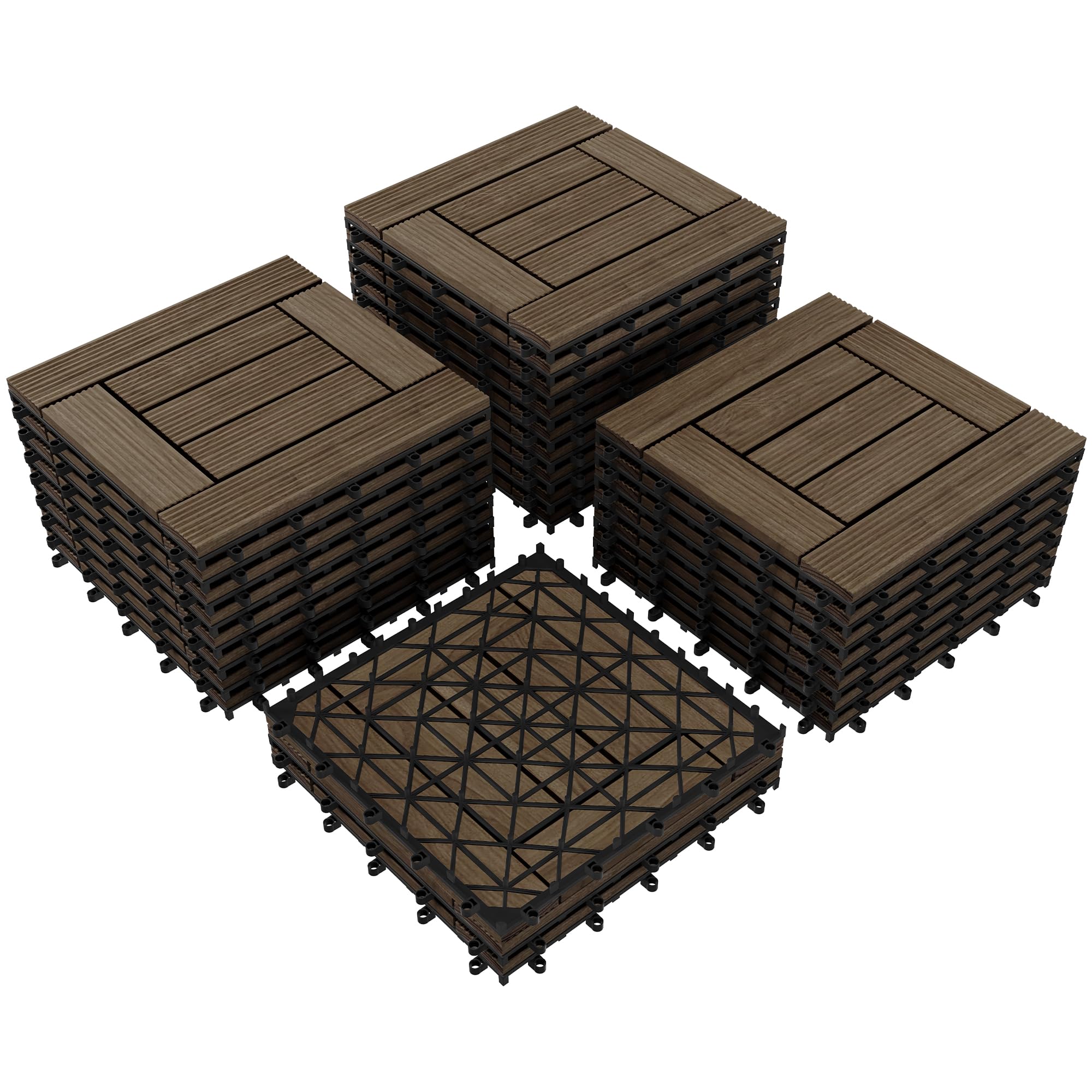
The Topeakmart 27-pack is nearly identical to the Yaheetech in construction — a 12.13 x 12.13-inch square with a fir wood surface attached to a black PVC base. The key difference is the wood species: fir is lighter in weight and grain than acacia, resulting in a slightly lower cost per tile. The anti-skid lines are present, and the drainage channels are the same design, so water management is comparable.
Customers report that the natural wood color stays cooler underfoot than concrete, which is a noticeable advantage on sun-baked patios. The snap system is identical to competitor tiles, meaning you could theoretically mix brands in a pinch, though color matching is not guaranteed. After three years of use, some tiles show fading, but the structural integrity remains intact — the plastic base does not crack or warp.
The same limitation applies: you must buy full packs, and cutting for borders is required on non-square layouts. For the price, this pack represents the best intersection of wood aesthetics and cost efficiency, especially for renters who want a temporary upgrade that can be disassembled and moved.
Why it’s great
- Lower price point than acacia wood alternatives
- Cool surface temperature in direct sunlight
- Snap system allows easy disassembly for relocation
Good to know
- Fir wood is softer and may dent under heavy furniture
- Color fades after 2-3 years without sealing
5. Happybuy Interlocking Tiles 55 PCS Blue

The Happybuy 55-pack is built for environments where water is a constant presence — pool decks, shower floors, sauna rooms, and boat docks. The tiles are made from high-impact polypropylene with a grid-style open surface that allows water to drain straight through. At 0.5 inches thick, they are the thinnest tiles in this comparison, but the material is rigid enough to support SUVs and large pickups without flexing.
Installation is a peg-and-loop system that connects all four sides, creating a unified mat that resists shifting on smooth concrete. Customers appreciate that the tiles can be trimmed with scissors or a utility knife, eliminating the need for power tools. The blue color is UV-stable and does not fade significantly, even after multiple seasons of direct sun exposure.
The thin profile means these tiles work best on a flat, hard subfloor — on uneven ground, the tiles may rock or flex. After two years of use in a semi-finished basement, one customer reported that some interlocking snaps cracked, creating slight depressions. For dry areas with heavy furniture, consider a thicker alternative. For wet zones, this is the most effective option per square foot.
Why it’s great
- Excellent drainage for wet environments
- UV-resistant polypropylene resists fading
- Easy to cut with scissors for irregular spaces
Good to know
- Thin profile may crack under heavy point loads on uneven subfloor
- Grid pattern allows weed growth if used over dirt
6. Multy Home Stomp Stone 4-Pack

The Stomp Stone is the simplest product in this lineup — you place it on grass or dirt, stomp on it, and it sinks into the soil, creating an instant stepping stone. Each stone measures 12 x 12 inches and weighs only 1.9 pounds, making them easy to carry and position. The rubber composition is scratch, stain, and moss resistant, and the slate texture provides decent traction even when wet.
Customer feedback is consistent: these work wonderfully on soft, moist ground where the stomp action compresses the soil around the edges. On dry, hard-packed earth, they sit on top and may shift under heavy foot traffic. The lightweight nature is a double-edged sword — some users report tiles blowing away in strong winds before the rubber has time to settle.
The pack contains only four stones, covering about four square feet. For a proper garden path, you will need multiple packs. The thin rubber profile means they will not support heavy objects like planters or furniture without flexing. For the intended use — a quick, no-tool walkway across a lawn — they are an elegant solution that blends into the landscape naturally.
Why it’s great
- Installation takes seconds with no tools
- Natural slate appearance blends into gardens
- 98% recycled rubber is environmentally considerate
Good to know
- Too light for heavy traffic or windy locations
- Not suitable for hard, dry ground without anchoring
7. Goovilla Plastic Interlocking Deck Tiles 9-Pack

The Goovilla 9-pack is the entry-level option for covering a damp basement floor or a small balcony on a tight budget. Made from high-density plastic with a 0.75-inch thickness, these tiles snap together with rectangular interlocking tabs that feel more secure than the standard round snaps. The top surface has eight flats with six drainage slots, channeling moisture away from anything placed on top.
Customers warn that the material feels cheap compared to rubber or wood composite alternatives — it is hard plastic that can crack if a heavy object is dropped sharply on a single point. The tiles are not designed for high-traffic areas; after two years, the plastic may become brittle in direct sunlight if used outdoors. Color variation between production lots is a common complaint, so ordering all tiles at once is recommended.
The 9-pack covers a mere 9 square feet, limiting its use to small projects or as a protective mat under a piece of equipment. For the price, it solves the immediate problem of cold, damp concrete without requiring a permanent commitment. Think of it as a temporary floor covering rather than a long-term surface solution.
Why it’s great
- Very low cost for small-space coverage
- Drainage slots prevent moisture pooling
- Tool-free snap assembly with rectangular tabs
Good to know
- Hard plastic is brittle and may crack under impact
- Not UV-stable for long-term outdoor use
FAQ
Can 12×12 plastic tiles really replace concrete blocks?
How do I prevent weeds from growing through open-grid tiles?
Do interlocking deck tiles require a perfectly flat subfloor?
Final Thoughts: The Verdict
For most users, the 12×12 concrete block alternative winner is the Vodaland HexPave System because it combines a 27,000-pound load capacity with simple snap-together assembly at a reasonable price per square foot. If you want a natural wood aesthetic for your patio, grab the Yaheetech 27PC tiles. And for wet-area applications like pool surrounds or boat docks, nothing beats the drainage performance of the Happybuy 55PC polypropylene tiles.