
A bathroom exhaust fan rated at 300 CFM moves enough air to clear steam, odors, and humidity from large master bathrooms, home gyms, or finished basements in minutes. The challenge is finding one that delivers this power without sounding like a jet engine — most builders install weak 50–80 CFM units, so upgrading to a 300 CFM fan requires understanding sones, duct size, and motor type before you cut a hole in your ceiling.
I’m Min — the co-founder and writer behind Gadgets Feed. I’ve analyzed hundreds of product specs, cross-referenced real owner experiences, and compared noise ratings, airflow designs, and build quality to separate the quiet performers from the loud failures in this specific high-CFM category.
After sorting through dozens of models and filtering by actual decibel levels, motor reliability, and installation flexibility, only nine units earned a spot on this list of the best 300 cfm bathroom exhaust fan options available right now.
How To Choose The Best 300 CFM Bathroom Exhaust Fan
Selecting a 300 CFM exhaust fan isn’t about picking the cheapest option with the highest number. You need to weigh noise output, motor technology, and whether the fan can actually move that 300 CFM through your existing or planned ductwork. A fan that claims 300 CFM but ships with a 4-inch duct collar will never deliver that airflow in real conditions — physics wins every time.
Noise Rating (Sones) Is Your Real Enemy
A 300 CFM fan that runs at 3.0 sones or higher will dominate conversation, disrupt TV audio, and make you think twice before flipping the switch. Look for 2.0 sones or lower — those units use larger blower wheels, better insulation, or DC motors to move air without the roar. The difference between 1.5 and 3.0 sones is dramatic, and for a master bathroom, quieter is always better.
Duct Size Determines Real-World Performance
Every 300 CFM fan needs at least a 6-inch duct to actually deliver its rated airflow. A 4-inch duct creates a bottleneck that can reduce effective CFM by 30–40% and increase noise noticeably. Before buying, check whether the fan has a 6-inch or larger outlet, and make sure your ceiling and wall cavity can accommodate that diameter. If you already have 4-inch ductwork buried in the walls, an inline fan with a reducer is the smarter retrofit path.
DC Motors vs AC Motors
DC motors use less electricity, run quieter, and often allow continuous operation at lower speed settings without overheating. AC motors are cheaper upfront but louder and less efficient over the fan’s lifetime. For a 300 CFM fan running daily in a primary bathroom, the small premium for a DC model pays back in lower electric bills and better comfort within the first year.
Quick Comparison
On smaller screens, swipe sideways to see the full table.
| Model | Category | Best For | Key Spec | Amazon |
|---|---|---|---|---|
| Panasonic WhisperCeiling FV-30VQ3 | Ceiling-Mount | Whisper-quiet operation | 290 CFM, 1.0 sones | Amazon |
| breez Delta BreezProfessional Pro300 | Ceiling-Mount | Energy efficiency (DC motor) | 300 CFM, 2.0 sones | Amazon |
| Broan-NuTone L300 | High-Capacity | Commercial or large rooms | 308 CFM, 2.9 sones | Amazon |
| Broan-NuTone L250 | High-Capacity | Garage or workshop exhaust | 259 CFM, 2.2 sones | Amazon |
| MIDCVFRUN Inline Fan | Inline | Retrofit with remote mounting | 330 CFM, 1.7 sones | Amazon |
| Apexicalo RTR300-CV | Wall Transfer | Moving air between rooms | 300 CFM, 5 speeds | Amazon |
| ALORAIR RTR300CV | Wall Transfer | Heating/cooling between rooms | 300 CFM, thermostatic | Amazon |
| ALORAIR VentirMax 300SD | Crawlspace / Utility | Basement or crawlspace moisture | 300 CFM, 40 dBa | Amazon |
| Akicon Bathroom Fan | Light Combo | Aesthetic upgrade with lighting | 110 CFM, 1.5 sones | Amazon |
In‑Depth Reviews
1. Panasonic WhisperCeiling FV-30VQ3
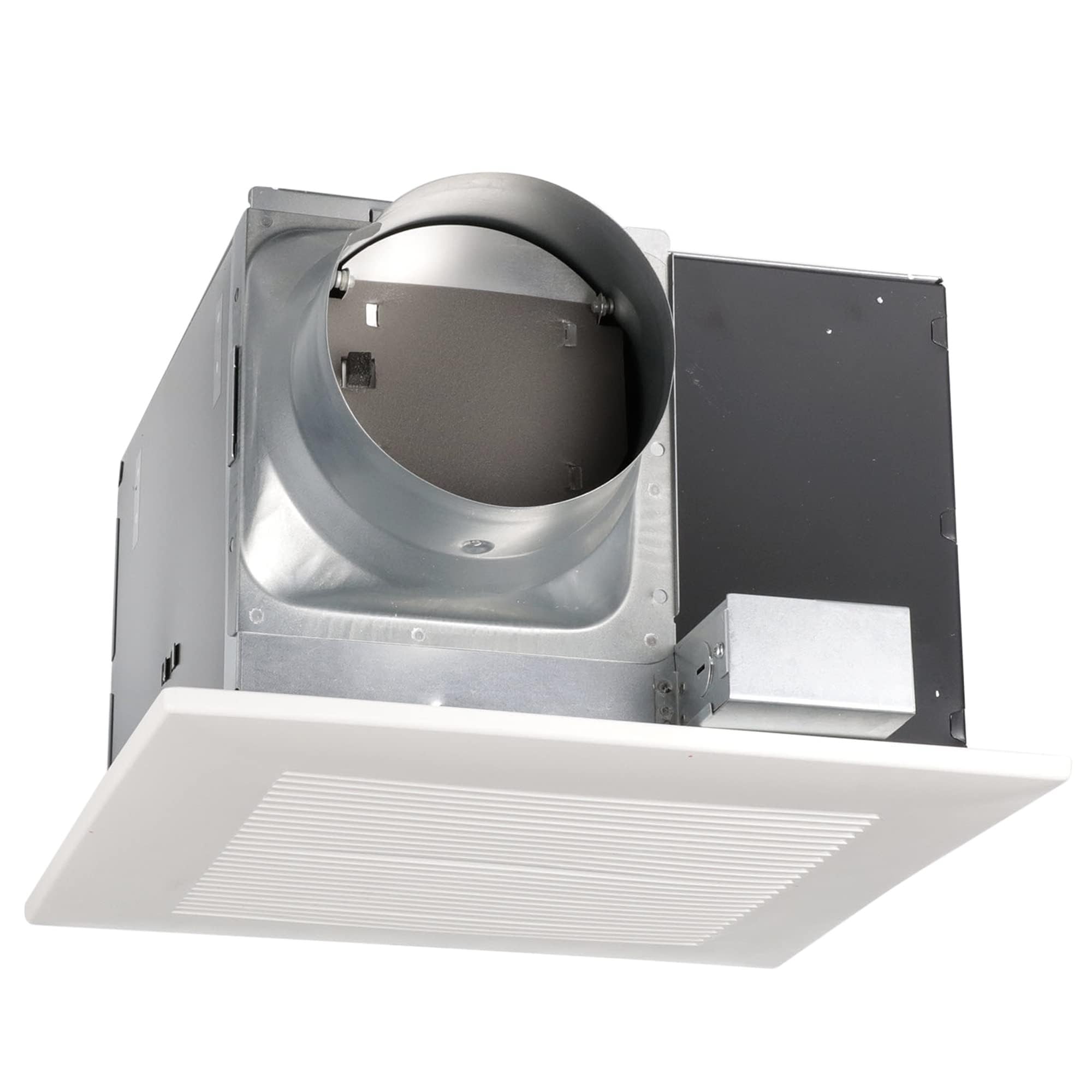
The Panasonic WhisperCeiling FV-30VQ3 delivers 290 CFM at an exceptionally low noise level — it operates so quietly you may forget it’s running. Its double-tapered blower wheel and permanently lubricated DC motor produce a sound profile closer to a gentle breeze than a mechanical fan, making it ideal for master bathrooms where noise is a primary concern.
The housing is built from heavy-gauge zinc galvanized steel with a built-in backdraft damper, and the 6-inch duct adapter ensures the fan can actually flow near its rated capacity without choking. Owners report that this fan clears steam from large bathrooms in minutes and even handles kitchen odors effectively when installed with proper ducting.
Installation requires a 2×4 frame and attic access — this is not a drop-in retrofit for existing 4-inch ductwork. The fan motor unit detaches from the housing for easier wiring, and adjustable mounting brackets (up to 24 inches) add flexibility for joist spacing. For those building new or doing a full remodel, this is the quietest 300 CFM-class fan available.
Why it’s great
- Extremely quiet operation at sub-1.0 sone levels
- Rust-resistant galvanized steel housing
- Built-in backdraft damper included
Good to know
- Requires framing and attic access for installation
- 290 CFM — slightly under 300 CFM threshold
- No humidity sensor or light built in
2. breez Delta BreezProfessional Pro300

The Delta BreezProfessional Pro300 uses a brushless DC motor that achieves 7.3 CFM per watt — making it one of the most energy-efficient 300 CFM fans on the market. It runs at 2.0 sones, which is quiet enough for conversation while delivering full-rated airflow. The included green LED indicator confirms power is on, a subtle but useful feature for remote attic installations.
This fan is rated for continuous operation, meaning you can run it 24/7 without risk of motor burnout — a key advantage for homes in humid climates where constant ventilation prevents mold growth. The ceiling-mount design fits standard 2×8 construction and includes a 6-inch duct collar for unrestricted flow.
Owners praise its ability to move large volumes of air quietly, with several using it in unconventional applications like inflatables or workshop ventilation. The trade-off is that installation is best suited for new construction or gut renovations — retrofitting into an existing ceiling requires cutting new framing and accessing joists from above.
Why it’s great
- Energy Star rated with DC motor technology
- Rated for continuous 24/7 operation
- Quiet 2.0 sone noise level at 300 CFM
Good to know
- Requires new construction or major retrofit
- No humidity sensor or light included
- Higher upfront cost than AC motor fans
3. Broan-NuTone L300
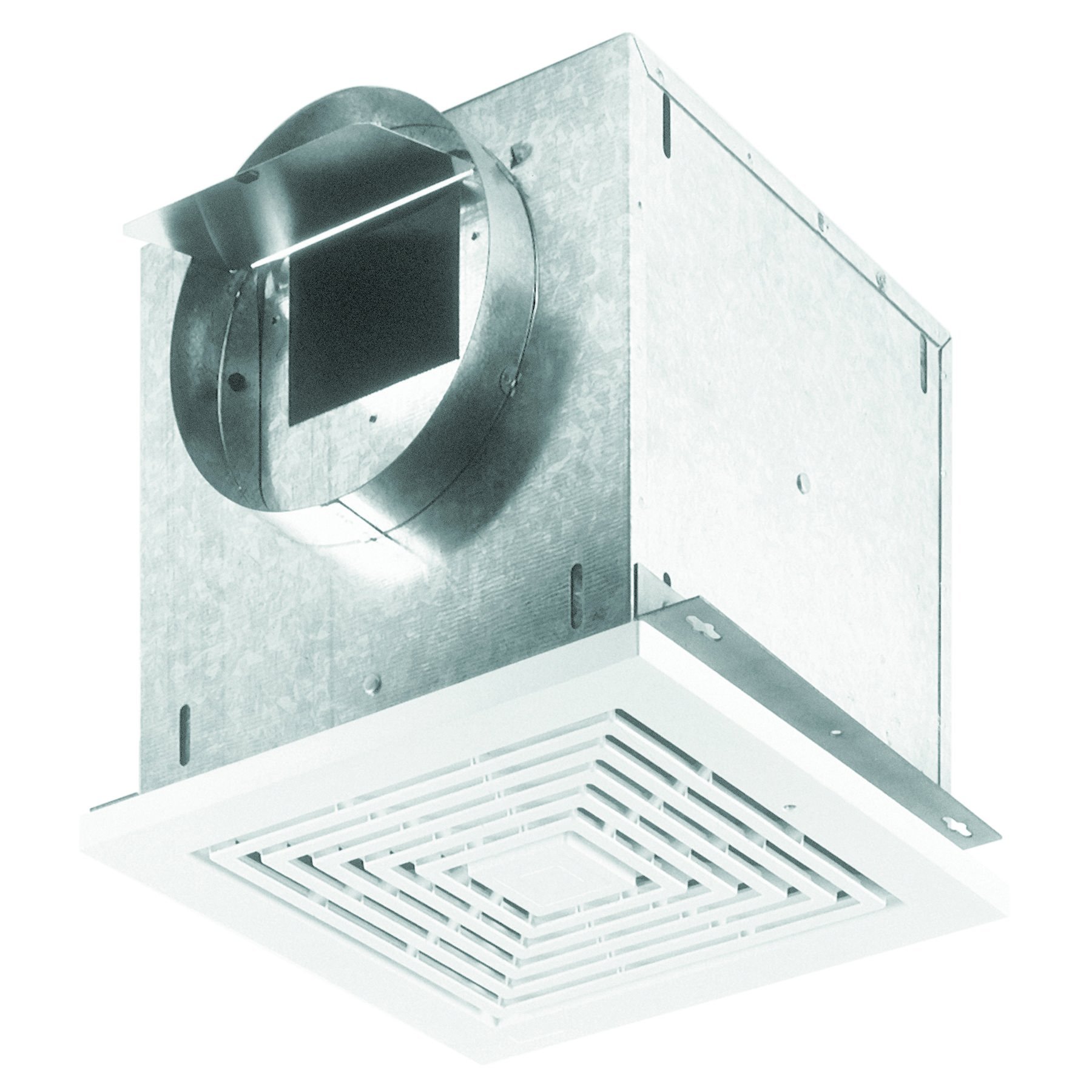
The Broan-NuTone L300 is built for raw power — 308 CFM through an 8-inch round metal duct connector, housed in 20-gauge galvanized steel. This is not a bathroom fan for light use; it’s a commercial-grade ventilator designed for conference rooms, public restrooms, garages, and any space where rapid air exchange is critical. At 2.9 sones, it’s audible but not offensive for short-duration use.
The motor is permanently lubricated and the blower wheel is impact-resistant, meaning this fan will run reliably for years even with heavy daily use. It offers flexible ducting options: horizontal, vertical, or inline with a separate adapter. This versatility makes it a favorite for contractors who need one fan to work across different installation layouts.
Owners confirm it moves massive amounts of air and solves condensation problems that quieter, lower-CFM fans failed to fix. The main caveats are the noise level (noticeably louder than Panasonic or Delta Breez) and the requirement for 8-inch ductwork, which many residential ceilings cannot accommodate without significant modification.
Why it’s great
- True 308 CFM through 8-inch duct
- Heavy-duty 20-gauge steel housing
- Flexible horizontal/vertical ducting options
Good to know
- Noisy at 2.9 sones — not for quiet bathrooms
- Requires 8-inch duct, not common in homes
- Best suited for commercial or large utility spaces
4. Broan-NuTone L250

The Broan-NuTone L250 is a scaled-down version of the L300, delivering 259 CFM at 2.2 sones with the same rugged construction. The 21-gauge galvanized steel housing and 8-inch round metal duct connector give it the same commercial durability, making it a solid choice for workshops, garages, and finished basements where moderate noise is acceptable.
Its permanently lubricated motor supports horizontal or vertical ducting, and the impact-resistant centrifugal blower wheel handles dust and debris better than open-blade designs. Owners report it sucks napkins against the cover plate — a fun visual indicator of its real pulling power — and clears smoke or fumes effectively from large rooms.
At this price point, the L250 offers exceptional value for spaces that need high CFM but don’t require whisper-quiet operation. The 8-inch duct requirement means you need to plan for larger wall or ceiling openings, and the fan housing protrudes below the drywall line, so a custom cover or return air grill may be needed for a finished look.
Why it’s great
- Commercial-grade build at a mid-range price
- Quieter than L300 at 2.2 sones vs 2.9
- Flexible ducting — horizontal or vertical
Good to know
- 259 CFM is below the 300 CFM threshold
- 8-inch duct required — not a drop-in upgrade
- Housing protrudes, needs custom cover
5. MIDCVFRUN 2-Speed Inline Fan
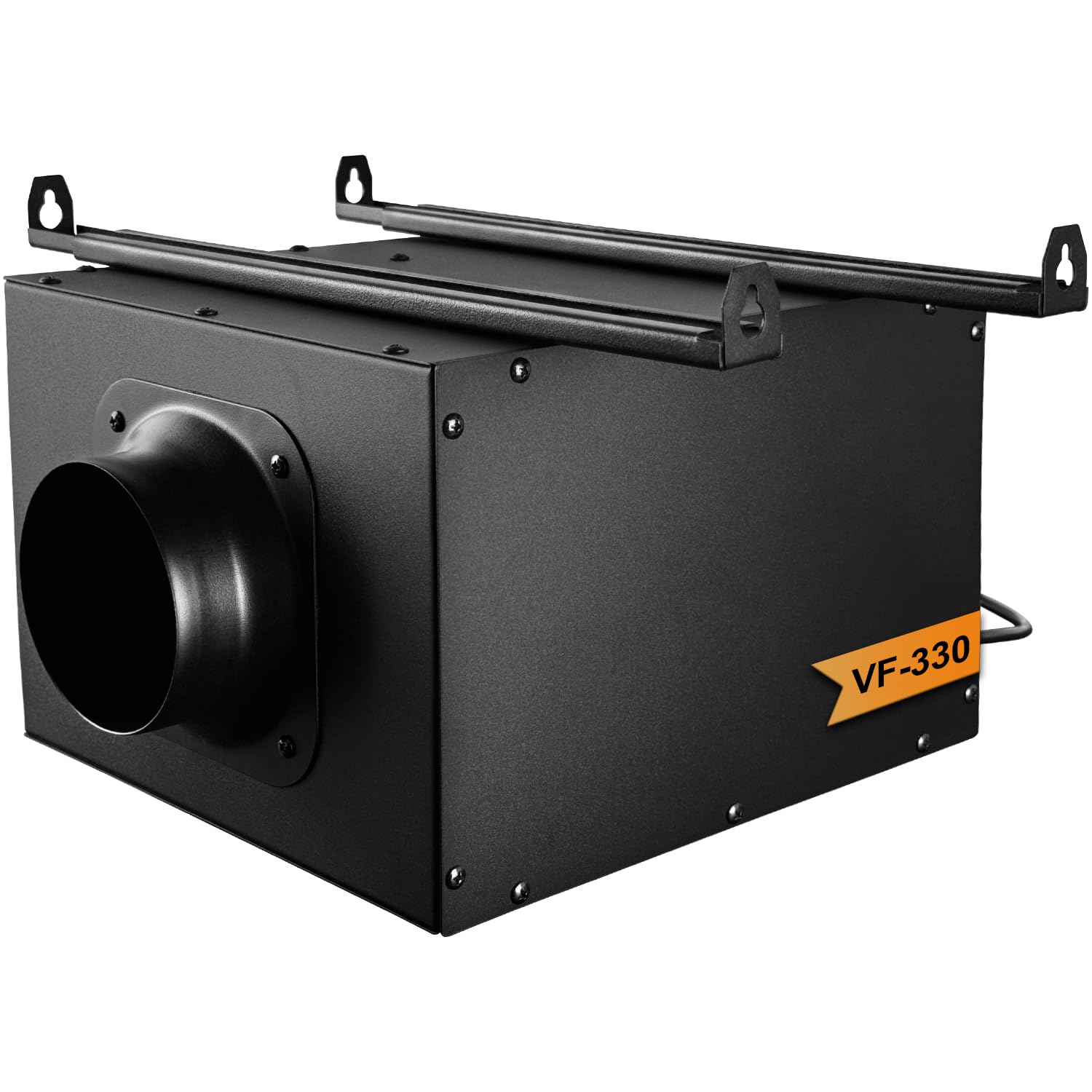
The MIDCVFRUN inline fan solves the retrofit problem beautifully. Instead of replacing the ceiling grille, you mount this fan remotely in the attic and connect it to your existing ductwork. At high speed it moves 330 CFM at 1.7 sones; at low speed it drops to 240 CFM at just 1.5 sones — quieter than most 50 CFM builder fans. The noise stays in the attic, leaving only gentle airflow sound in the room below.
It uses a centrifugal blower design with galvanized steel construction and includes a built-in backdraft damper. The 6-inch duct ports require an adapter if you’re connecting to 4-inch duct, but the mounting bracket and expansion hardware make installation straightforward for anyone comfortable in an attic. The fan also comes with a 3-year warranty, which indicates confidence in the motor and bearing quality.
Owners consistently mention how quiet the in-room experience is — the fan unit itself produces a soft hum, but the airflow noise at the register is far less than ceiling-mount alternatives. The main trade-off is that you need attic space to mount it, and the 2-speed switch is located on the unit itself, so you must plan for remote switching or leave it on one setting.
Why it’s great
- Quietest option — noise stays in the attic
- 2-speed operation for flexibility
- Works with existing ceiling grilles
Good to know
- Requires attic access for installation
- Speed control on unit, not remote
- 6-inch ports, needs adapter for 4-inch duct
6. Apexicalo RTR300-CV

The Apexicalo RTR300-CV is a through-wall ventilator designed to transfer 300 CFM between adjacent rooms. It’s ideal for moving wood stove heat from a living room to a cold bedroom, or sharing conditioned air from a mini-split between two zones. The dual seven-blade fans create a push-pull effect — one fan draws from one side while the other blows into the adjacent space, achieving real air circulation rather than just exhaust.
It offers three operating modes (cooling trigger, heating trigger, and continuous) plus five fan speeds, giving you fine control over airflow strength. The temperature sensor lets you set a trigger between 35°F and 99°F so the fan activates automatically when conditions change. The remote control works from anywhere in the room, adding convenience for daily use.
Owners report it effectively warms or cools a secondary bedroom from a single source, and note that installation is straightforward for anyone with basic wall-cutting skills. The noise level is acceptable but not sleep-friendly at higher speeds — users on lowest setting find it unobtrusive for daytime use. The metal housing and painted finish hold up well, and the adjustable wall thickness accommodates most interior walls.
Why it’s great
- Dual-fan design for real air circulation
- 5 speeds and thermostatic trigger modes
- Remote control for convenient operation
Good to know
- Not designed for bathroom moisture exhaust
- Audible at higher speed settings
- IR remote can conflict with other devices
7. ALORAIR RTR300CV
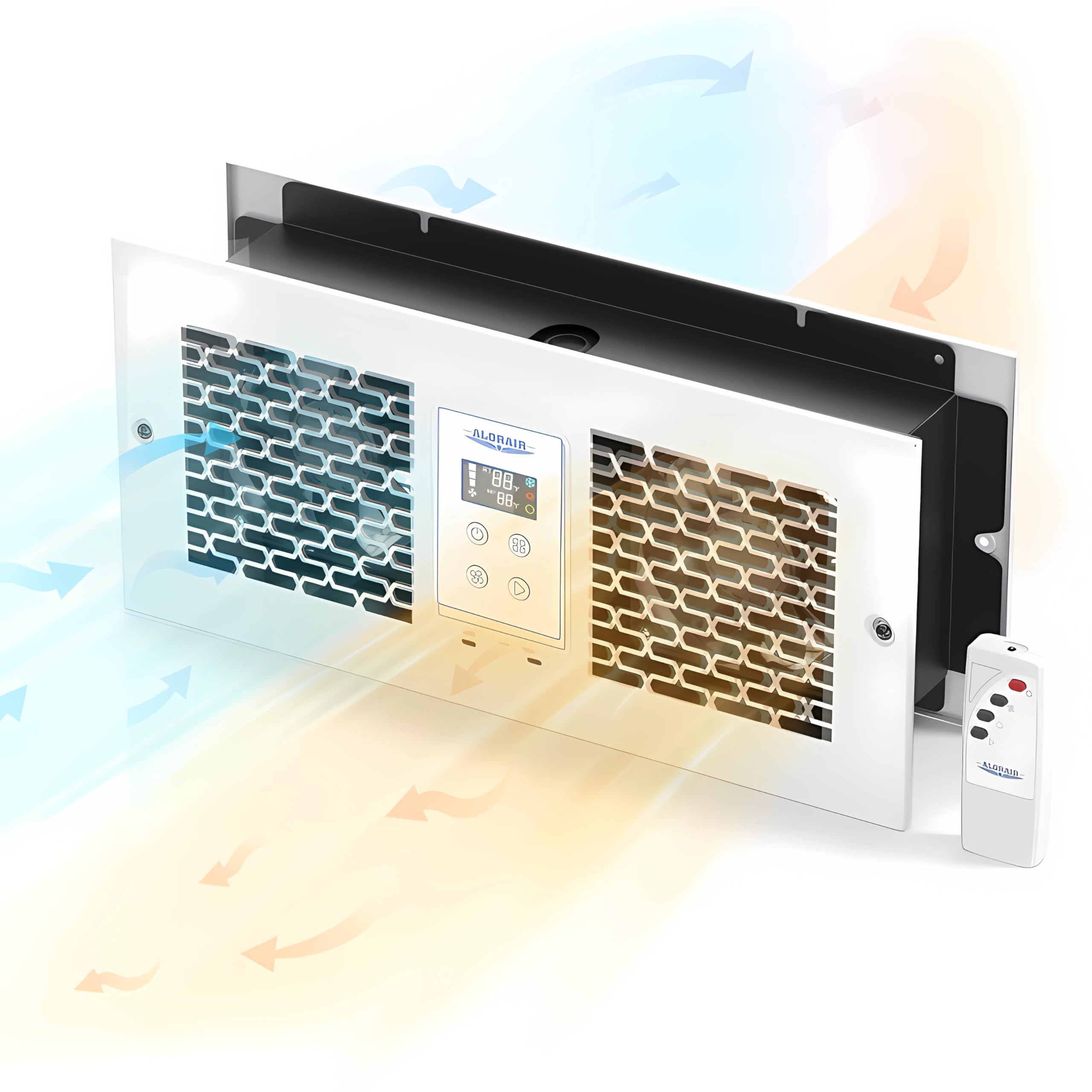
The ALORAIR RTR300CV stands out because it doesn’t just move air — it actively heats or cools it. With independent active cooling and heating functions, this wall-mounted unit works as a mini room air conditioner while transferring 300 CFM between two connected spaces. Three modes (Cooling, Heating, and Fan-only) make it a year-round solution for rooms that suffer from temperature imbalance.
The thermostat is adjustable from 23°F to 104°F, and the built-in temperature sensor monitors conditions 24/7 to automatically modulate airflow. Dual 7-blade fans push air in opposite directions for effective circulation, and the low-noise curved blade design keeps operation comfortable even during overnight use. The all-metal casing resists rust and improves internal heat dissipation.
Installation fits wall openings 3.7 to 7.6 inches thick with no extra cutting required — it uses the same steps as a standard one-way through-wall fan. The IR remote controls direction, speed, timer, and mode. Owners praise its effectiveness at balancing temperatures between rooms without running two separate AC units, which translates to real energy savings. The 1-year warranty covers factory defects.
Why it’s great
- Built-in active heating and cooling
- Accurate thermostat control 23°F–104°F
- Durable all-metal housing
Good to know
- Not a standard bathroom exhaust fan
- Requires wall opening between rooms
- IR remote conflicts reported with some TVs
8. ALORAIR VentirMax 300SD

The ALORAIR VentirMax 300SD is built for crawlspaces, basements, garages, attics, and grow tents — anywhere moisture and stagnant air cause problems. Its stainless steel construction and IP55-rated fan blades resist dust, liquids, and rust, making it suitable for damp environments where standard bathroom fans would quickly fail. The 5-blade fan moves 300 CFM at a moderate 40 dBa noise level.
The built-in digital controller with LCD display manages temperature, humidity, and timing schedules. Freeze protection automatically stops the fan when outside temperature drops below 37°F, preventing cold air from entering your crawlspace in winter. The memory restart function means it remembers your settings after a power outage — no re-programming required.
Owners install it to keep garage temperatures down (especially when bedrooms are above), reduce crawlspace moisture, and even cool battery banks in solar-powered sheds. The 6-foot power cord and included power adapter make installation simple: mount it on the wall, plug it in, and set your parameters. The trade-off is that this is not an aesthetic bathroom fixture — it looks and functions like the utility tool it is.
Why it’s great
- Stainless steel with IP55 water/dust resistance
- Freeze protection thermostat built-in
- Digital LCD with programmable timer and memory
Good to know
- Not a ceiling-mount bathroom fan
- Utility appearance — not decorative
- 40 dBa noise, not silent
9. Akicon Bathroom Exhaust Fan with Starry Light
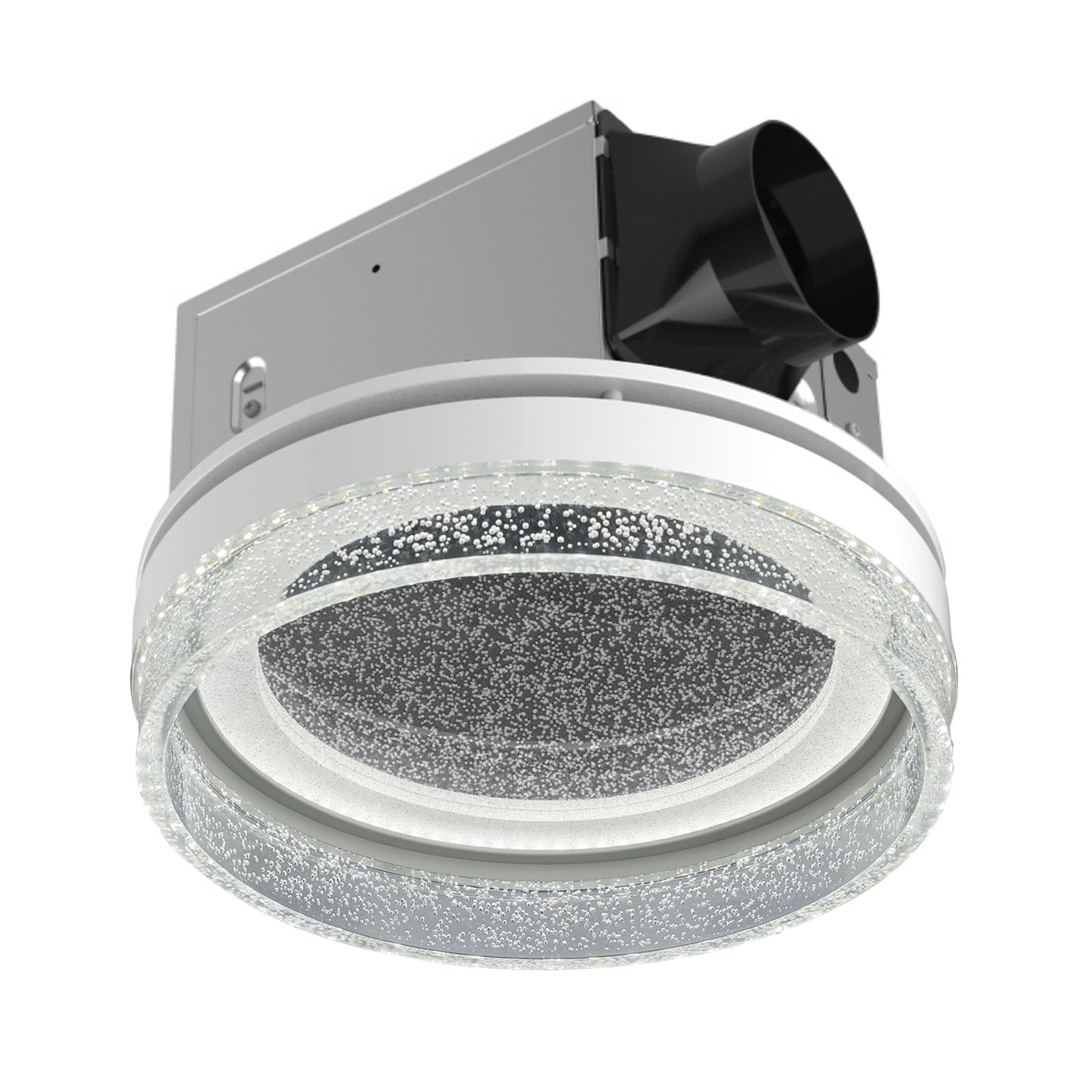
The Akicon bathroom fan is a 110 CFM unit that trades raw airflow for aesthetic charm — its starry sky light panel and multi-color LED options make it a visual upgrade for small bathrooms. At 1.5 sones, it’s genuinely quiet, making it suitable for powder rooms, half baths, or secondary bathrooms where 300 CFM is overkill but style matters.
The fan includes four selectable LED light colors (warm white 2700K, natural white 5000K, purple, and blue) with dimming control, plus a soft 2700K nightlight ring that doesn’t glare. The acrylic trim ring with bubble texture creates a starry effect when illuminated, and the memory function recalls your last lighting choice after the light has been off for more than 7 seconds.
ETL and HVI listed with Energy Star certification, the Akicon uses a compact 9x9x5.75-inch housing with a 4-inch duct. Installation is ceiling-mount without attic access — it fits between standard joists. Owners love the quiet operation and stunning light effect, noting it elevates the bathroom’s feel far beyond typical builder-grade fans. The 3-year warranty adds peace of mind.
Why it’s great
- Beautiful starry sky light with 4 color modes
- Very quiet at 1.5 sones
- No attic access needed for installation
Good to know
- 110 CFM — not suitable as a 300 CFM option
- 4-inch duct limits real-world airflow
- Light and fan share same switch by default
FAQ
Can I replace my existing 50 CFM fan with a 300 CFM unit using the same duct?
Is a 300 CFM bathroom fan too powerful for a standard bathroom?
What’s the difference between a ceiling-mount and an inline bathroom exhaust fan?
Do I need a humidity sensor on my 300 CFM bathroom fan?
Will a 300 CFM fan work with a digital timer or smart switch?
Final Thoughts: The Verdict
For most users, the best 300 cfm bathroom exhaust fan winner is the Panasonic WhisperCeiling FV-30VQ3 because it delivers near-silent operation with reliable DC motor efficiency and a proven track record. If you want active heating and cooling between rooms, grab the ALORAIR RTR300CV. And for retrofit installations where attic noise must be eliminated, nothing beats the MIDCVFRUN inline fan.