
Forget running cables through your attic or paying an installer hundreds of dollars to drill into your walls. A modern wireless alarm system puts total control of your home’s perimeter — doors, windows, motion zones — into your smartphone and a few peel-and-stick sensors. The real challenge isn’t installation anymore; it’s picking the right mix of siren loudness, sensor range, and monitoring flexibility from dozens of kits on the market.
I’m Min — the co-founder and writer behind Gadgets Feed. I’ve spent weeks dissecting the technical specifications, customer experiences, and real-world performance data for the most popular wireless alarm systems on the market to help you find the perfect fit for your home or small business.
After analyzing dozens of kits ranging from budget-friendly DIY sets to premium professional-grade hubs, these seven models represent the absolute best wireless alarm system configurations you can buy for reliable, round-the-clock protection.
How To Choose The Best Wireless Alarm System
A wireless alarm system is a long-term investment for your home’s safety. The right choice depends on balancing siren volume, sensor types, monitoring preferences, and how much you want to spend upfront versus monthly. Here are the key factors to evaluate before clicking buy.
Siren Loudness and Deterrent Power
The primary job of any alarm is to scare off an intruder before they get far inside your home. Sirens in this category range from 95 decibels (dB) up to 120 dB. The difference is massive: 95 dB is comparable to a motorcycle engine at close range — loud enough to annoy neighbors — while 120 dB sits at the threshold of physical pain and is far more effective at forcing an intruder to flee immediately. Always check the dB rating if audible deterrence is your top priority.
Connectivity: Wi-Fi, Cellular, and App Control
Most modern systems rely on your home Wi-Fi network for notifications and remote arming. However, a power outage or cut Ethernet cable can disable a Wi-Fi-only system completely. Look for models with cellular backup (4G LTE or GSM) that keep your alarm online even when the internet goes down. Also verify whether the app supports push notifications, remote arm/disarm, and scene scheduling — these features define how responsive your security actually is when you’re away.
Sensor Count and Expandability
Every kit includes a specific number of contact sensors (for doors/windows) and motion detectors. A two-bedroom apartment might only need four contact sensors and one motion detector. A larger house with multiple entry points and a garage requires a system that supports 30 to 160 wireless zones. If you plan to add window sensors, glass break detectors, or flood/water sensors down the road, choose a hub that doesn’t cap your expandability at a low number.
Monitoring: Self-Monitoring vs Professional Service
Self-monitoring means you and your family receive push alerts and must respond — call police yourself or rush home. Professional monitoring (usually – per month) connects your alarm to a central station that dispatches emergency services on your behalf. Some systems (like Ring and SimpliSafe) offer flexible tiers where you can start with self-monitoring and upgrade later. Others, like OSI, offer optional 24/7 monitoring without a long contract.
Quick Comparison
On smaller screens, swipe sideways to see the full table.
| Model | Category | Best For | Key Spec | Amazon |
|---|---|---|---|---|
| Ring Alarm 8-Piece Kit | Premium | 1-2 bedroom homes with Alexa | 120 dB siren (base station) | Amazon |
| OSI Alarm Gen 2 (4G) | Premium | Expansive DIY with touchscreen | 160 zones, 7″ HD touchscreen | Amazon |
| Arlo Home Security System | Premium | Multi-sensor versatility | 8-in-1 sensors, SecureLink | Amazon |
| SimpliSafe 11pc Gen 3 | Mid-Range | All-in-one with indoor camera | 95 dB, 24h backup battery | Amazon |
| REOLINK E1 Outdoor Pro | Mid-Range | 4K PTZ camera + smart alerts | 4K, 3X optical zoom, Wi-Fi 6 | Amazon |
| Splenssy WiFi GSM 10pc | Budget | SMS/call alerts on a budget | 110 dB, 100 wireless zones | Amazon |
| TOWODE WiFi Alarm 120dB | Budget | Garage/apartment with loud siren | 120 dB, 30 detectors max | Amazon |
In‑Depth Reviews
1. Ring Alarm 8-Piece Kit (newest model)
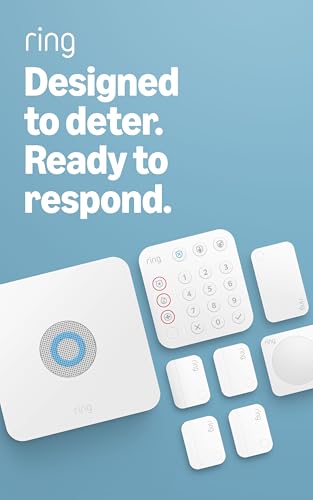
The Ring Alarm 8-Piece Kit strikes the perfect balance between approachable DIY setup and serious professional-grade hardware. The base station houses a powerful 120 dB siren, cellular backup via AT&T, and a backup battery that keeps the system running through power outages. The kit includes one base station, one keypad, four contact sensors, one motion detector, and one range extender — sufficient coverage for most one to two bedroom homes.
Setup is guided entirely through the Ring app, which walks you through naming each component and testing signal strength. The keypad features dedicated emergency buttons for fire, police, and medical response, and the system integrates seamlessly with Ring cameras and Schlage smart locks. For those who want 24/7 professional monitoring, Ring Protect starts at a competitive monthly fee and includes cellular backup so you stay protected even if your Wi-Fi drops.
Customer feedback highlights the intuitive software and reliable performance of the sensors, which use common CR2032 batteries and report open/close status instantly through the app. The design is slim enough to mount on any door frame without looking obtrusive. For a homeowner who wants a polished, expandable system that just works, this is the benchmark.
Why it’s great
- Incredibly easy setup with app-guided walkthrough for each sensor
- 120 dB base station siren is loud enough to deter any intruder
- AT&T cellular backup keeps system online during power/Wi-Fi outages
Good to know
- Professional monitoring requires a paid subscription after trial
- Glass break sensor not included and must be purchased separately
2. OSI Alarm System Gen 2 (4G), 11pc
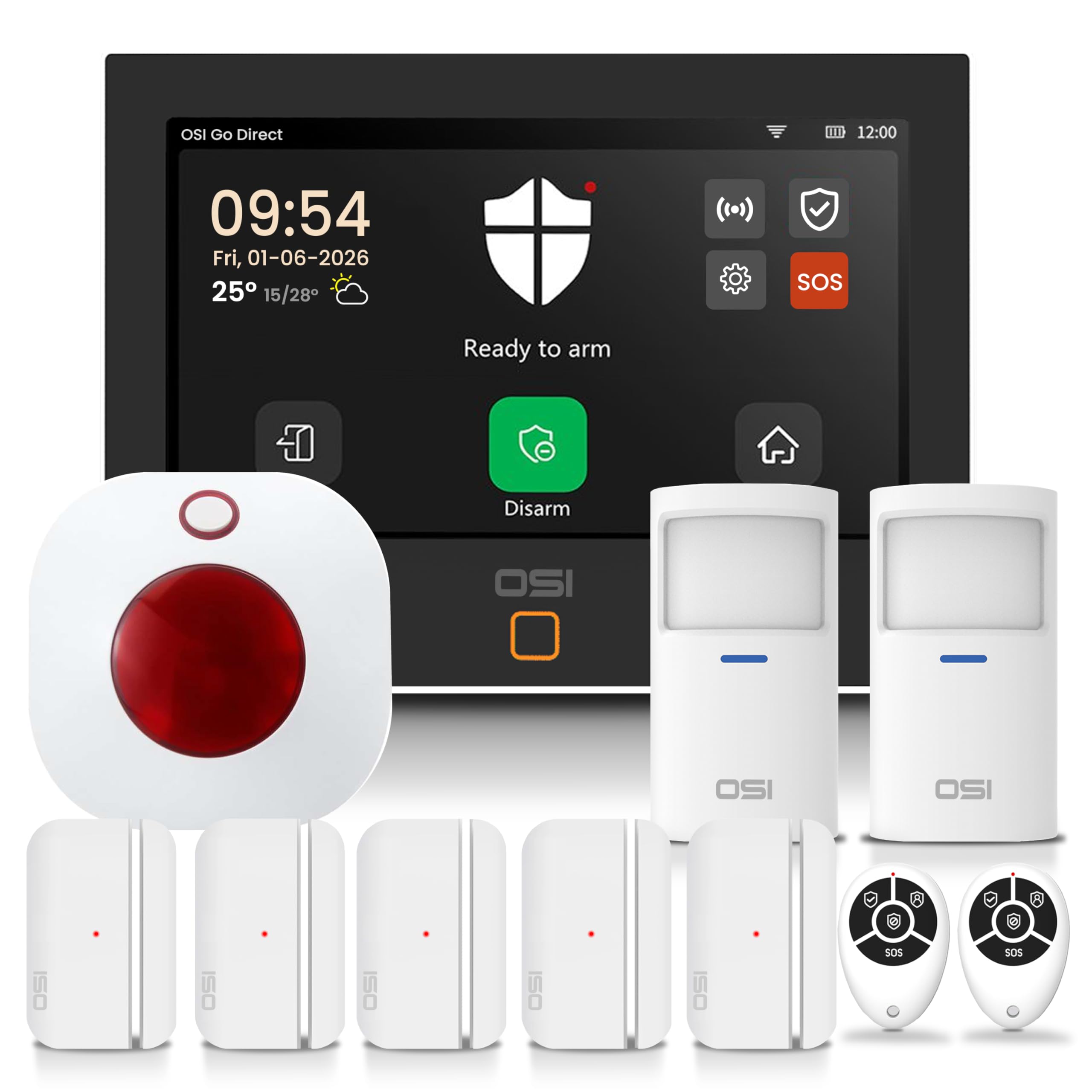
The OSI Alarm Gen 2 redefines what a DIY security hub looks like. Its 7-inch high-definition touchscreen with an anti-fingerprint coating delivers a responsive, tablet-like interface that makes programming zones and arming the system feel natural. This 11-piece kit comes with a control panel, two motion sensors, five contact sensors, one wireless strobe siren, and two remote controllers — a comprehensive start for most houses or small businesses.
What sets OSI apart is its scalability. The panel supports up to 160 wireless sensors, six controllers, six doorbells, and six keypads, making it the most future-proofed hub in this lineup. It also includes a 24-hour backup battery and an optional 4G SIM card slot for SMS alerts and cellular communication. The setup wizard guides you step-by-step through configuration, and the Smart Life app offers scene modes for arming, disarming, and home mode control.
Users consistently praise the immediate responsiveness of the 433MHz sensors, even through dense construction materials like cement and rebar. The SOS panic button on both the display and the remote is a smart safety feature, and the ability to create up to five limited-access user accounts is ideal for landlords managing an Airbnb or rental property.
Why it’s great
- Large 7-inch HD touchscreen with an intuitive, responsive UI
- Expandable to 160 zones — enough for a large house
- Optional 4G cellular connectivity for off-network alerts
Good to know
- Siren plug-in design occupies two outlets on a power strip
- SIM card for SMS alerts is not included and requires a separate plan
3. Arlo Home Security System SS1501
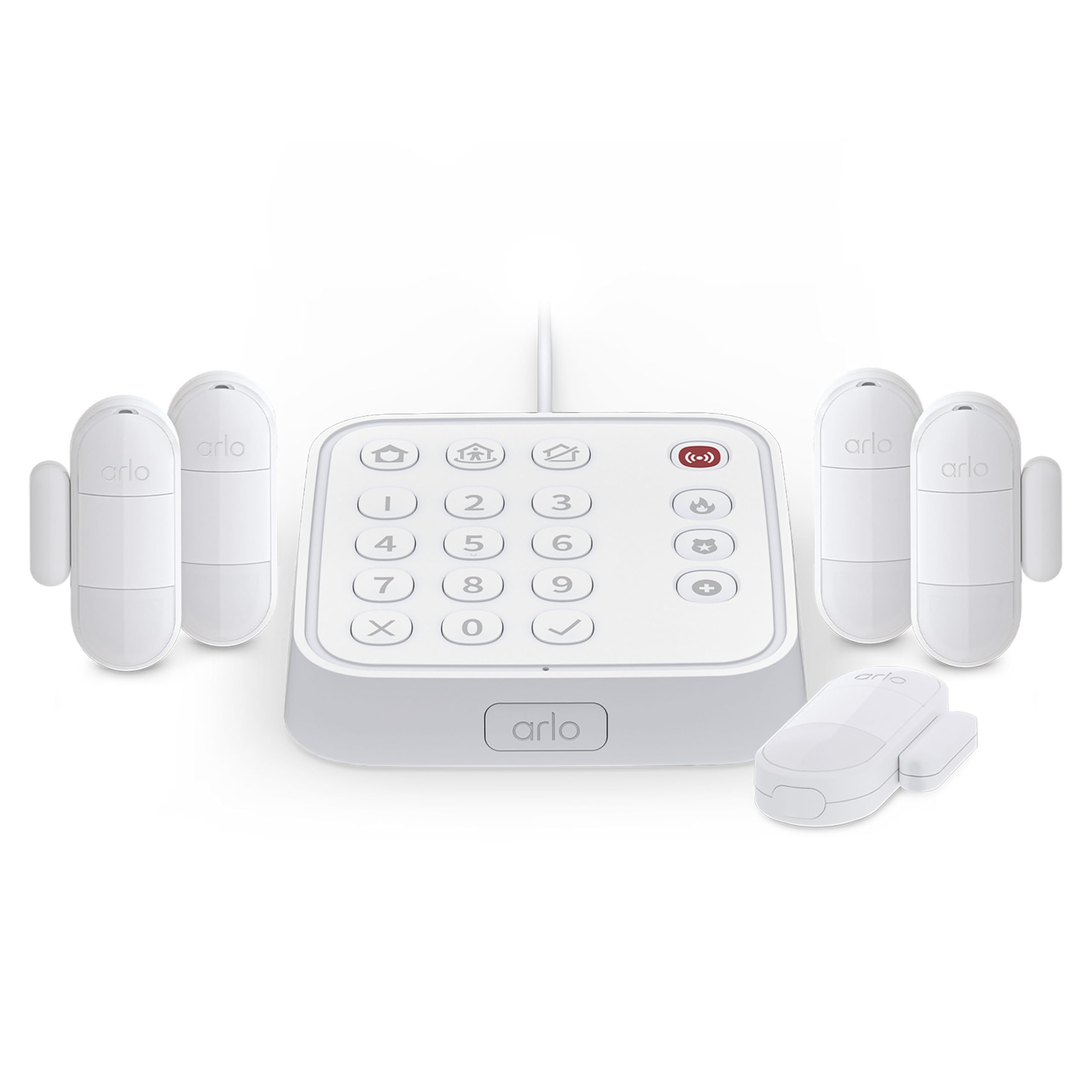
The Arlo Home Security System takes a radically different approach to sensor design. Instead of separate devices for doors, motion, and environmental hazards, each All-In-One Sensor packs eight detection functions into a single compact unit — capable of serving as a motion sensor, door alarm, and more depending on where you place it. This kit includes five such sensors plus a Keypad Sensor Hub that combines a wired keypad, integrated siren, motion detection, and smoke/CO alarm listening into one wall-mounted unit.
The system uses Arlo’s proprietary SecureLink technology, which provides extended wireless range and a more stable encrypted connection between the hub and sensors. The hub connects to your router via Ethernet and includes backup batteries for both the hub and sensors. Through the Arlo Secure App, you can arm/disarm remotely, set modes, and receive instant notifications. Professional monitoring is available on an opt-in subscription basis with no long-term contract required.
Real-world users highlight the incredible battery life of the sensors (lasting months on a single charge) and the flexibility of mounting them anywhere without worrying about a specific type. The keypad’s one-tap emergency response buttons for fire, police, and medical are a standout safety feature. If you want a future-proof system where one sensor can do the work of three, this is the most versatile option available.
Why it’s great
- Each sensor detects motion, open/close, temperature, leaks, and more
- SecureLink wireless technology offers extended range and encryption
- Wired keypad with one-tap emergency response buttons
Good to know
- Professional monitoring and cloud storage require a subscription
- Keypad hub must be plugged into Ethernet; not fully wireless
4. SimpliSafe 11pc Gen 3 with Indoor Camera
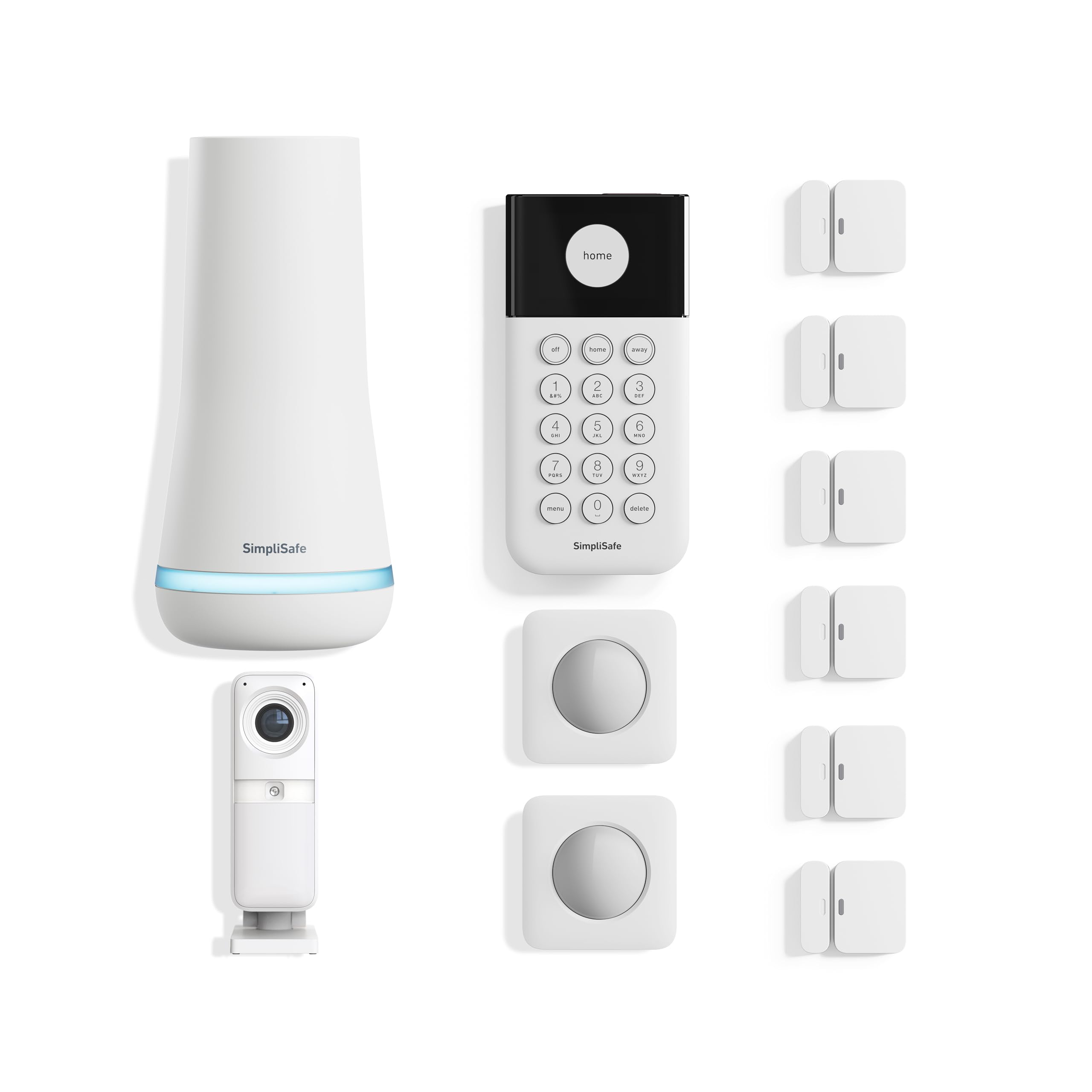
The SimpliSafe Gen 3 is the only kit in this roundup that bundles an indoor security camera directly with the alarm system. This 11-piece set includes one base station, one wireless indoor HD camera, one keypad, two motion sensors, and six entry sensors — enough to cover the perimeter of a mid-sized home while also keeping a watchful eye on a primary living area. The base station features a 24-hour backup battery and cellular backup when paired with a professional monitoring plan.
Setup is genuinely plug-and-play: peel the adhesive backing off the entry sensors, mount them on door frames, and pair them with the base station via the SimpliSafe app. The indoor camera offers two-way audio and 1080p HD video, and when enabled with the Fast Protect monitoring plan, SimpliSafe agents can use live eyewitness video to verify an alarm and request priority police dispatch. The keypad features a smash-safe design with backlit buttons and works wirelessly anywhere in the home.
Users consistently report zero false alarms and a setup process that takes under an hour even for non-tech-savvy homeowners. The motion sensors have a 35-foot range with a 90-degree field of view and ignore pets under 60 pounds. The system is compatible with Alexa and Google Assistant for voice arming. For those who want a camera-integrated solution from a single brand, SimpliSafe delivers the most polished experience.
Why it’s great
- Includes a wireless indoor HD camera with two-way audio
- Video verification enables priority police dispatch with Fast Protect plan
- Base station battery lasts 24 hours and supports cellular backup
Good to know
- Professional monitoring plan required for cellular backup feature
- Camera quality is only 1080p, not 4K
5. REOLINK 4K Outdoor E1 Outdoor Pro

While technically a PTZ security camera rather than a traditional alarm panel, the REOLINK E1 Outdoor Pro earns its place in this guide because of its intelligent alarm response capabilities. The 4K sensor captures crisp, detailed footage even in low light, and the 3X optical zoom lets you zoom in on license plates or faces without pixelating — a massive advantage over digital-zoom-only cameras. It also supports Wi-Fi 6 for faster, more stable throughput over both 2.4 GHz and 5 GHz bands.
Motion detection here goes beyond simple area alerts. The camera can distinguish between persons, vehicles, and animals, and auto-tracks movement across its 355° pan and 50° tilt range. You can set customizable motion zones and schedules so you only receive relevant push notifications. The camera stores footage locally on a microSD card (up to 512 GB) or to a Reolink NVR, with zero mandatory cloud subscription fees. It also supports RTSP/RTMP for streaming to YouTube or Blue Iris.
Users praise the build quality and the reliability of the infrared night vision, which reaches up to 100 feet. The camera requires a wired power connection but connects to your network wirelessly, making it a good hybrid option for outdoor areas where you want both deterrence and evidence-grade video. If your security plan includes a camera as the primary alert source, the E1 Outdoor Pro is the best imaging sensor available.
Why it’s great
- 4K resolution with 3X optical zoom for identifying details up to 100 feet
- Wi-Fi 6 support with dual-band 2.4/5 GHz for reliable streaming
- Smart person/vehicle/animal detection reduces false alarms
Good to know
- Requires a power outlet; not battery-operated
- No built-in siren or entry sensor integration on its own
6. Splenssy WiFi GSM Home Alarm 10pc

The Splenssy WiFi GSM Alarm System proves that effective security doesn’t require a three-figure investment. This 10-piece kit includes a central panel with a 2.4-inch TFT LCD screen, remote controls, RFID cards, and wireless detectors covering up to 100 defense zones. The panel supports both SMS text alerts and phone call dialing to up to five preset numbers — a dual-channel communication method that ensures you get notified even if your internet goes down.
The system offers multiple arming modes: away arm, home arm, remote control arm, and even telephone arm via a phone call. The LCD screen provides voice prompts for every operation, and the 110 dB siren is loud enough to be heard clearly throughout a typical home. The panel is compatible with both the Tuya Smart app for iOS and Android, allowing for remote arm/disarm, intercom, and voice monitoring features.
User experiences are mixed but largely positive for the price point. Many report easy programming and reliable GSM dialing, though a few note that the setup instructions are sparse and that the digital screen can freeze during motion sensor configuration. The wired siren connection to the panel also limits where you can place the siren. For budget-conscious buyers who prioritize a cellular dialing backup, this kit offers tremendous value.
Why it’s great
- Supports SMS text alerts and phone call dialing to 5 preset numbers
- 110 dB siren with voice prompt for all panel operations
- Accepts up to 100 wireless defense zones for expandability
Good to know
- Siren is wired directly to panel, limiting placement flexibility
- Setup instructions lack detail; some users report screen freezing
7. TOWODE WiFi Alarm System 120dB

The TOWODE WiFi Alarm System focuses on raw audible deterrence. The included 120 dB speaker is the loudest siren in this comparison, and the kit comes with six infrared motion sensors, two remote controls, and a power cord — everything you need to cover a garage, workshop, apartment, or small house with an earsplitting alarm that no intruder will ignore. The system uses a 120VAC plug-in siren that stays in a fixed location rather than a battery-powered unit.
The system connects to your 2.4 GHz Wi-Fi network and pairs with the Tuya Smart app for push notifications when a sensor is triggered. The motion sensors claim a three-year battery life using standard alkaline cells, and the remote controls work through walls for convenient arming/disarming. The slide cover on the key fobs prevents accidental trigger activations, which is a thoughtful design touch.
Customer feedback is very strong on ease of installation and the immediate loudness of the alarm. Several users noted that all components come pre-paired out of the box, so setup takes minutes rather than hours. The main limitation is that this system does not include built-in cellular backup and relies entirely on 2.4 GHz Wi-Fi for remote notifications. If your priority is the most ear-shattering siren at the lowest total cost, this kit delivers without compromise.
Why it’s great
- 120 dB siren is the loudest alarm in this entire guide
- Six motion sensors included — wide coverage for the price
- Pre-paired components for true plug-and-play installation
Good to know
- No cellular backup; requires constant 2.4 GHz Wi-Fi connection
- No built-in siren in the hub; external speaker must be placed nearby
FAQ
Can a wireless alarm system work without internet or power?
How many contact sensors do I need for my home?
What is the difference between self-monitoring and professional monitoring?
Will my wireless alarm system interfere with other smart home devices?
Final Thoughts: The Verdict
For most users, the best wireless alarm system winner is the Ring Alarm 8-Piece Kit because it combines a polished app experience, loud 120 dB siren, cellular backup, and flexible monitoring plans without requiring a long-term contract. If you want the most expandable touchscreen hub with 160-zone support, grab the OSI Alarm Gen 2. And for the loudest possible siren at the absolute lowest entry point, nothing beats the TOWODE WiFi Alarm System with its 120 dB external speaker.