
That subtle inward roll of the foot with every step might not feel like much, but over miles it translates into shin splints, plantar fasciitis, and nagging knee pain that derails your training. The right stability shoe doesn’t just cushion your foot—it actively guides your gait through a supportive frame that corrects overpronation without feeling like a rigid orthopedic device.
I’m Min — the co-founder and writer behind Gadgets Feed. I spent hundreds of hours cross-referencing medial post technologies, dual-density midsole foams, and proprietary frame systems across the latest releases to find the builds that genuinely keep your foot aligned through every stride.
This guide breaks down the top engineering solutions in overpronation support, from structured guidance to max-cushion frames, so you can pick the pair that actually matches your arch type and mileage. Read on for the definitive breakdown of the best athletic shoes for stability.
How To Choose The Best Athletic Shoes For Stability
Not all stability shoes attack overpronation the same way. Some use a firm medial post, others rely on a wider platform and higher sidewalls, and a few integrate a full-frame geometry that wraps the midfoot. Your choice depends on your arch type, the severity of your pronation, and whether you need the shoe for daily training, long runs, or all-day walking.
Understanding Stability Mechanisms: Medial Post vs. Guide Rails vs. Frame Technology
The classic approach uses a medial post—a denser block of foam on the inner side of the midsole that resists compression to slow down inward roll. The newer alternative is a guide rail system (like Brooks’ GuideRails) that sits above the midsole and keeps the foot centered without altering the foam feel. Frame technology, used by Hoka in the Arahi line, wraps the foot in a firmer cradle that creates stability through geometry rather than density. Beginners often assume a stiffer post provides more correction, but many runners find a well-designed frame or rail offers better long-run comfort without knee strain.
Stack Height, Drop, and Weight: The Hidden Trade-Offs
Stability shoes historically trended heavy and low-to-the-ground, but modern builds are breaking that mold. A higher stack height (30mm+) adds cushioning but can reduce ground feel and lateral stability if the chassis isn’t wide enough. Heel-to-toe drop matters because a higher drop (10-12mm) shifts load toward the heel and can aggravate plantar fasciitis, while a lower drop (4-6mm) encourages midfoot striking but demands more from the Achilles. Weight is the third variable—max-stability shoes like the Brooks Beast GTS 26 tip the scales at over 12 ounces, which is fine for recovery walks but tiring for speed work.
Quick Comparison
On smaller screens, swipe sideways to see the full table.
| Model | Category | Best For | Key Spec | Amazon |
|---|---|---|---|---|
| ASICS GT-1000 14 | Structured Stability | Daily training and overpronation correction | 8mm drop, 9.3 oz | Amazon |
| Saucony Hurricane 24 (Men’s) | Max Cushion Stability | Long runs and recovery miles | 6mm drop, 10.6 oz | Amazon |
| Saucony Hurricane 24 (Women’s) | Max Cushion Stability | Long runs and daily wear | 6mm drop, 38/32mm stack | Amazon |
| New Balance Fresh Foam X 860 v13 (Women’s) | Supportive Neutral-Stability | Everyday miles with medial post support | Medial post, Fresh Foam X | Amazon |
| Hoka Arahi 7 (Men’s) | Frame Stability | Lightweight guidance for overpronators | H-Frame, flat knit upper | Amazon |
| Hoka Arahi 8 (Women’s) | Frame Stability | All-day wear and gait cycle support | H-Frame, dual density EVA | Amazon |
| Brooks Beast GTS 26 (Men’s) | Max Support Stability | Orthotics, wide feet, heavy mileage | 12mm drop, 12.4 oz | Amazon |
| Hoka Arahi 7 (Women’s) | Frame Stability | Recovery and posterior tibial tendon support | Frame tech, flat knit upper | Amazon |
| Brooks Glycerin GTS 23 (Women’s) | Plush Stability | Plush cushioning with GuideRails support | 8mm drop, 9.8 oz | Amazon |
In‑Depth Reviews
1. ASICS Men’s GT-1000 14 Running Shoes
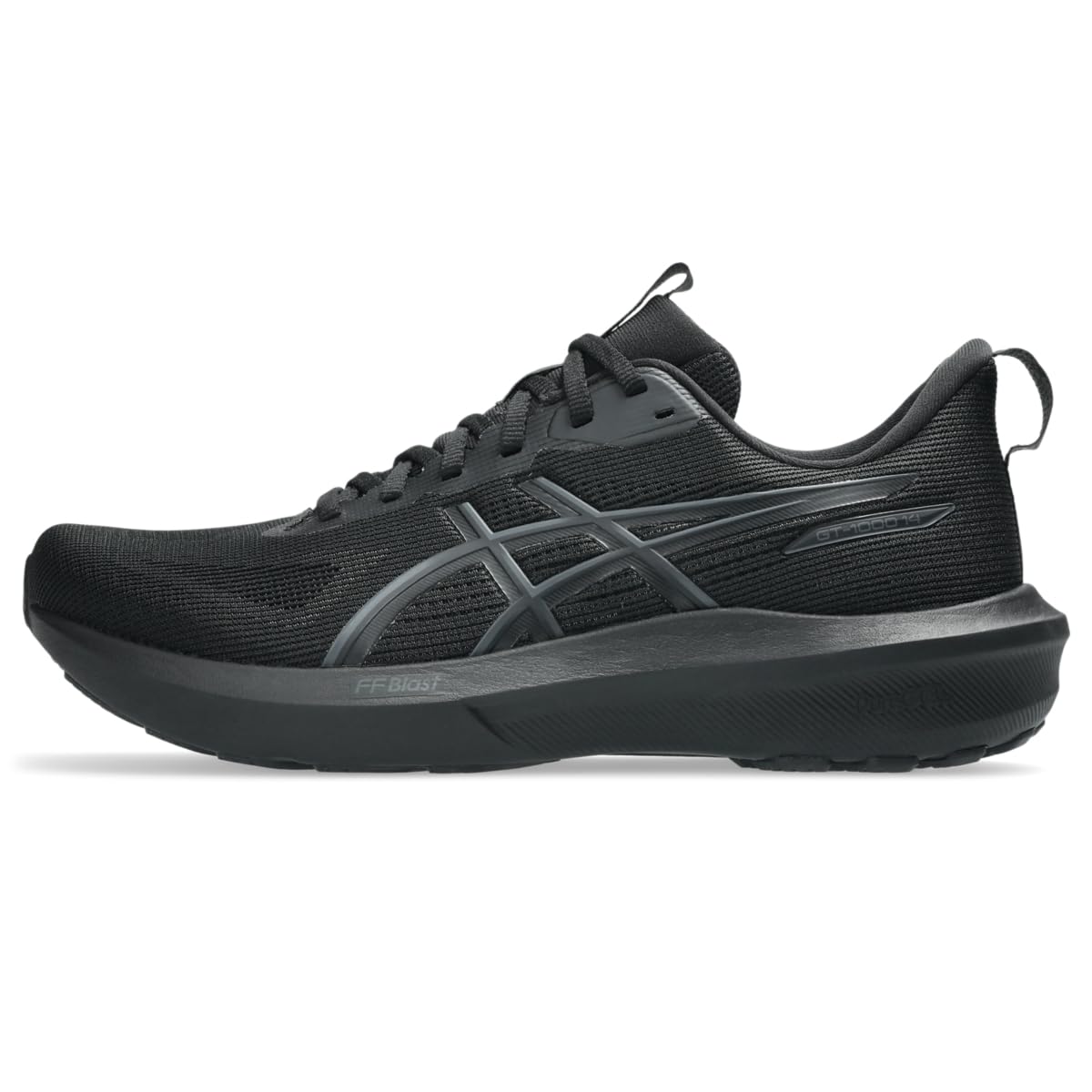
The GT-1000 14 is the entry point into ASICS’ structured stability lineup, but it delivers far beyond its price tier. The FF Blast midsole foam provides a lively, energetic ride that doesn’t bottom out on longer runs, and the engineered mesh upper is breathable enough for warm-weather training without sacrificing structural hold. At 9.3 ounces, it’s lighter than most stability shoes in this class, making it a rare do-everything option for runners who overpronate but don’t want a heavy-duty tank.
Reviewers with neuropathy and fallen arches specifically note how the medial support gently corrects inward roll without creating pressure points around the arch. The 8mm drop is a versatile middle ground that works for both heel-strikers and midfoot runners, and the stack height (26.5mm forefoot / 34.5mm heel) offers enough cushioning for daily road miles without feeling overly soft. Multiple wide-width options (2E, 4E) are available straight from the product line, which is rare at this price point.
The trade-off is longevity: several customers report the midsole loses its bounce after about a year of consistent use, which is typical for entry-level foam compounds. The tongue also tends to slide laterally during runs, so you’ll want to pay extra attention to lace tension. For the price, however, you’re getting a legitimate stability platform that punches well above its weight.
Why it’s great
- Lightweight construction (9.3 oz) for a stability shoe
- Effective medial support for mild to moderate overpronation
- Available in 2E/4E wide sizes with no extra cost penalty
Good to know
- Midsole foam compresses noticeably after 300+ miles
- Tongue migration requires careful lacing technique
2. Brooks Men’s Beast GTS 26 Supportive Running & Walking Shoe
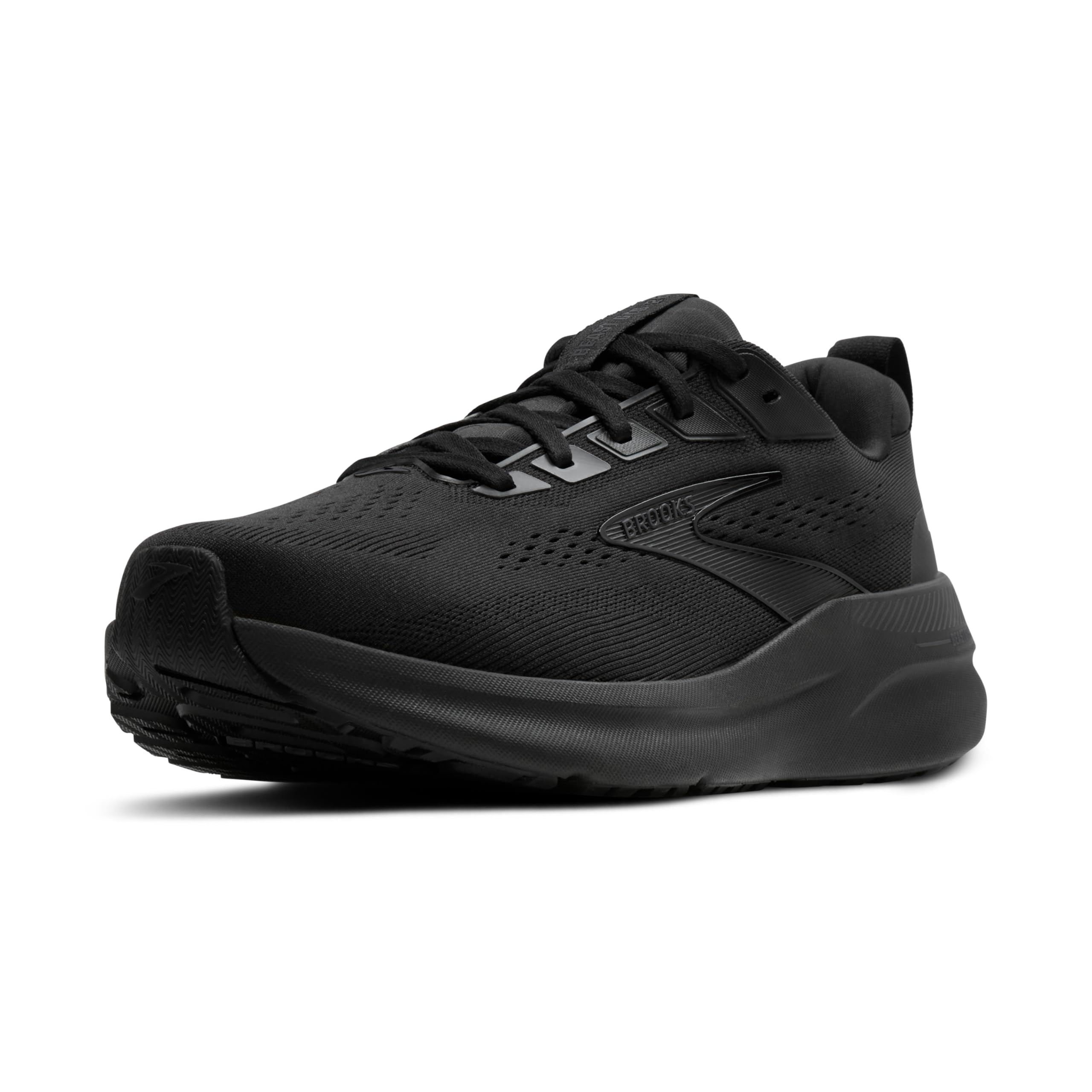
The Beast GTS 26 is Brooks’ most maximal stability shoe, designed for runners and walkers who need heavy-duty pronation control plus room for orthotics. The GuideRails holistic support system uses firmer foam along the medial and lateral sides of the heel to keep the foot tracking straight, and the APMA-accredited design makes it a go-to for diabetic users and post-surgery recovery. The 12mm drop is one of the highest in the stability category, which strongly encourages a heel-first gait pattern.
Customer feedback highlights the spacious toe box and 4E wide sizing as a lifesaver for bunions and swollen feet. The balanced cushioning—Soft but with a dynamic return—absorbs impact well on concrete and rough terrain, and the PDAC A5500 diabetic shoe certification adds a layer of medical credibility. One 84-year-old reviewer reported doing 45-minute power walks with zero discomfort the next morning, which speaks to the forgiving nature of the midsole.
At 12.4 ounces, this is not a shoe you’ll want for interval training or speed workouts. The standard laces (48 inches) are too short for a heel-lock tie on extra-wide sizes, so you’ll need to swap in 57-inch laces. If you’re a moderate pronator who doesn’t need max support, the weight and stiffness may feel like overkill for daily runs.
Why it’s great
- APMA and PDAC A5500 certified for medical orthotic use
- Extremely durable construction for high-mileage walking
- Excellent wide toe box accommodates bunions and orthotics
Good to know
- Heavy at 12.4 oz, not suitable for speed work
- Stock laces too short for heel-lock on 4E sizes
3. Saucony Men’s Hurricane 24 Sneaker
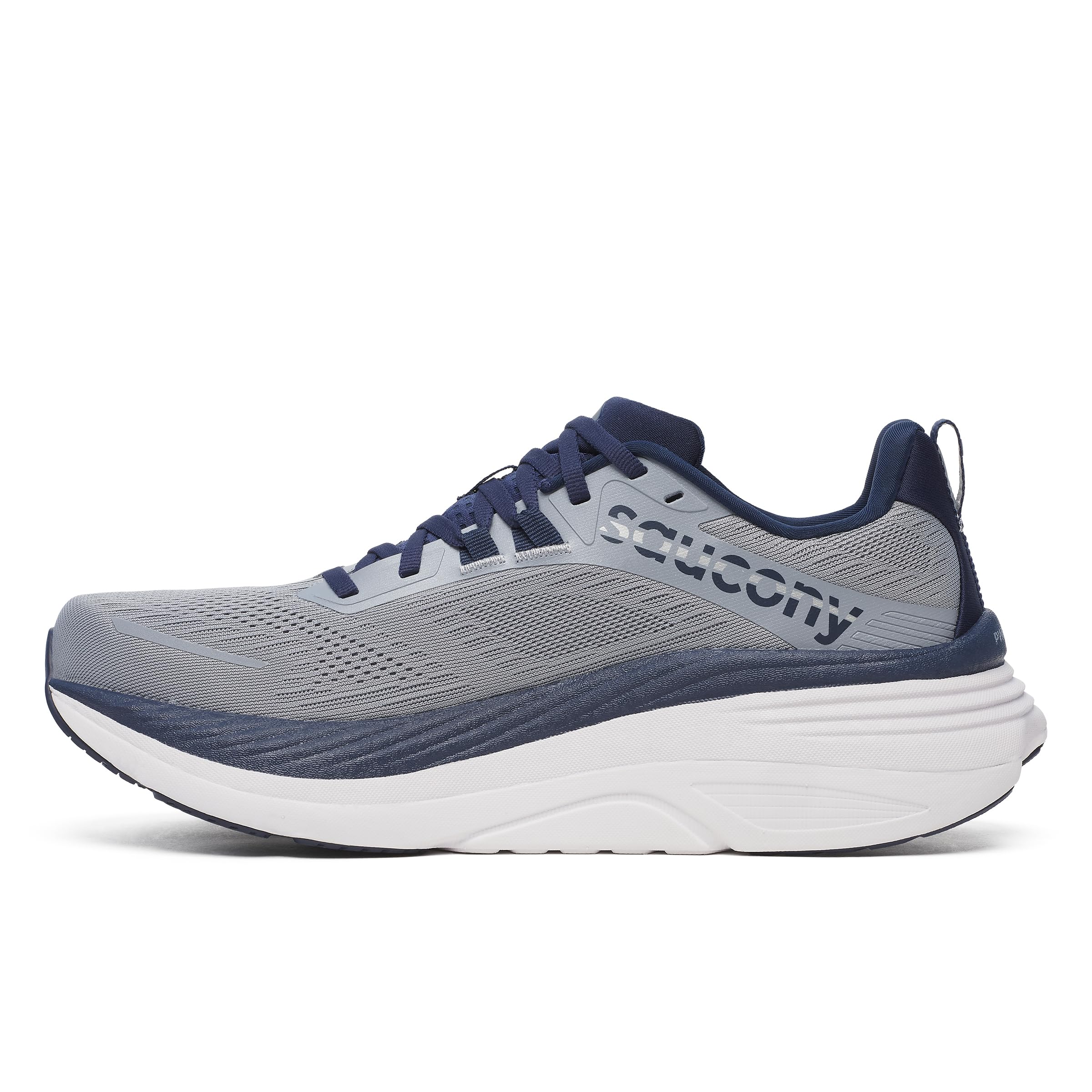
The Hurricane 24 layers PWRRUN PB (a soft, bouncy Pebax-based foam) on top of a PWRRUN frame that provides the stability structure—essentially giving you a max-cushion neutral shoe with a built-in guidance system. The 38mm heel stack is generous, but the broader base and higher sidewalls create what Saucony calls CenterPath Technology, which cradles the foot rather than relying on a firm medial post. This makes it an excellent choice for runners who want plush landings without sacrificing pronation control.
Multiple long-distance runners report using the Hurricane 24 for 20+ mile zone 2 runs and finding it comfortable straight out of the box with zero break-in. The dual-cushioning system absorbs shock well on pavement and packed gravel, and the weight (10.6 oz) is competitive for a max-cushion stability shoe. The roomy forefoot and toe box also make it a solid walking shoe for flat feet and patellar tendonitis recovery.
Quality control is a noted concern: some users report inconsistencies between pairs manufactured in Vietnam (narrower, more comfortable) versus China (wider, firmer midsole). The shoe is also heavier and softer than ideal for tempo runs or 5K PR attempts. If you prioritize a responsive, fast-feeling ride, consider a lighter option like the Arahi 7.
Why it’s great
- PWRRUN PB + PWRRUN frame offers plush-yet-stable ride
- CenterPath geometry provides non-intrusive guidance
- Excellent for long runs and recovery days
Good to know
- Inconsistent sizing between manufacturing batches
- Too heavy and soft for speed workouts
4. New Balance Women’s Fresh Foam X 860 V13
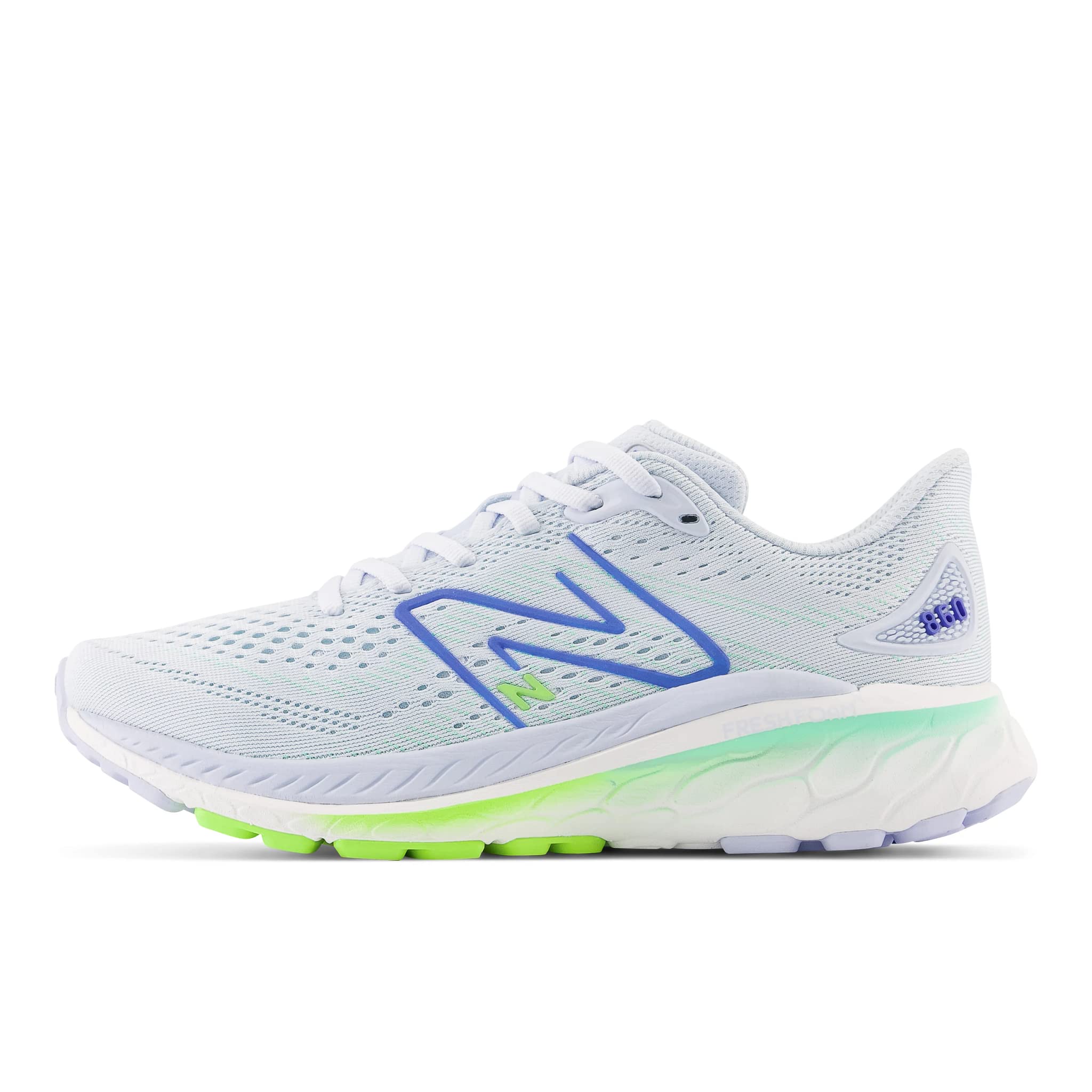
The Fresh Foam X 860 v13 is a classic stability trainer that uses a traditional medial post embedded into a plush Fresh Foam X midsole. Unlike the dual-density frame systems used by Saucony and Hoka, the 860’s medial post is a denser wedge of foam that physically resists compression on the inside edge, providing clear, predictable pronation control. The Fresh Foam X top layer keeps the ride comfortable enough for daily training without feeling harsh.
Reviews from users with plantar fasciitis and post-surgery ankles are overwhelmingly positive, noting that the arch support is firm without being intrusive. The outsole traction is excellent on wet pavement and light trails, and the shoe fits true to size for most foot shapes—though several reviewers recommend sizing up half a length if you have a wider forefoot. The styling is understated enough for casual wear, which is a bonus for those who want one shoe for both gym and errands.
The 860 runs slightly narrow compared to other New Balance models, and some users found the toe bed uncomfortably tight at their usual size. The medial post creates a noticeable transition point underfoot during the first few wears, so a short break-in period is expected. The cushioning is also on the firmer side compared to the Hurricane 24, which some runners prefer for ground feedback.
Why it’s great
- Firm medial post provides reliable, predictable pronation control
- Fresh Foam X top layer adds plushness without losing support
- Excellent traction on wet pavement and mixed terrain
Good to know
- Runs narrow; size up for wider forefeet
- Noticeable medial post transition during initial break-in
5. Hoka Men’s Arahi 7
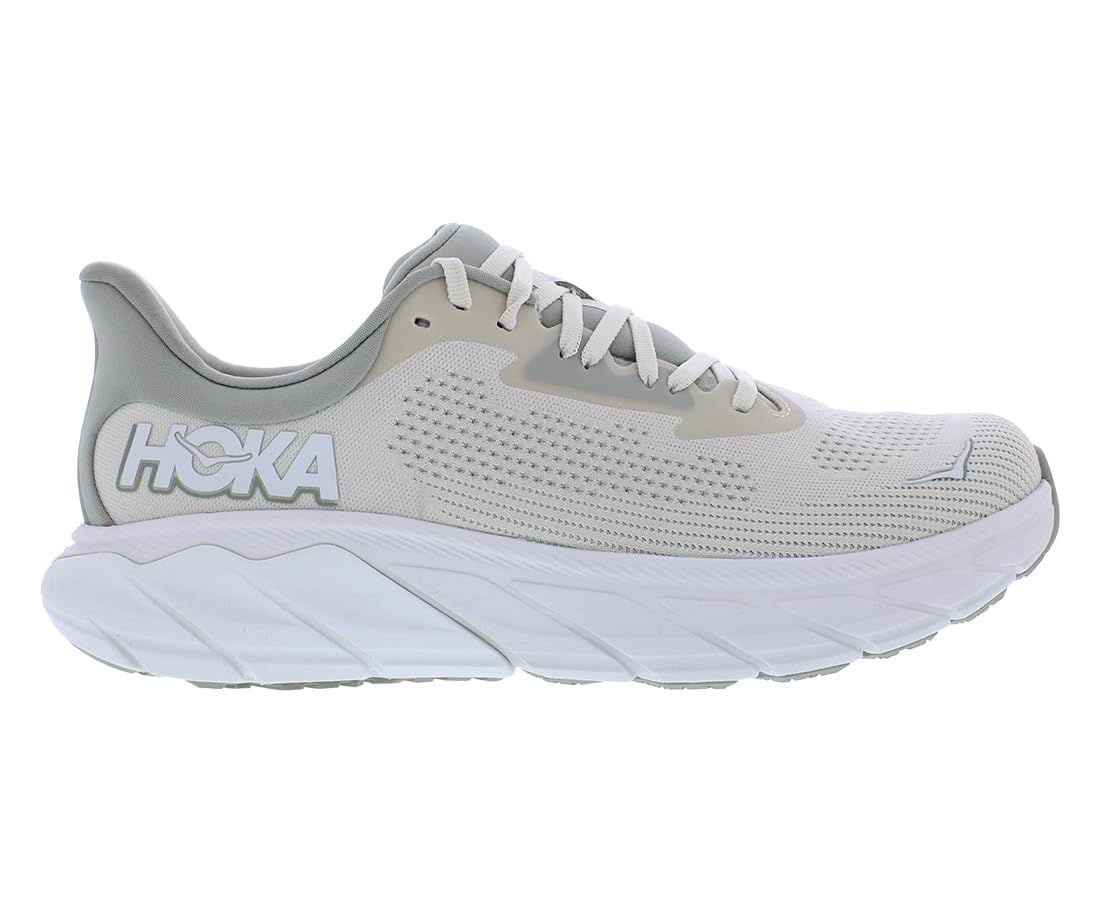
The Arahi 7 uses Hoka’s patented J-Frame (now evolved into an H-Frame pattern) that wraps the medial side of the heel and midfoot with a firmer density foam to counteract pronation without a traditional post. The result is a stability shoe that feels remarkably neutral—there’s no hard ridge under the arch, just a subtle guiding sensation that kicks in during the gait cycle. The flat knit upper improves midfoot lockdown compared to earlier versions, and the dual gusset beneath the lace line prevents tongue migration.
Users consistently describe the Arahi 7 as the most comfortable stability shoe they’ve worn, especially for all-day standing and walking. The heel counter has a firm plastic backing that some find uncomfortable when sitting, but it provides excellent rearfoot hold during dynamic movement. At a weight well under 10 ounces, it’s one of the lightest stability options on the market, making it viable for both daily training and longer runs.
The trade-off is that the H-Frame system offers less aggressive pronation control than a dedicated medial post shoe like the Brooks Beast or the New Balance 860. If you have severe overpronation or very flat feet, you may need the additional support of a posted design. The Arahi also runs narrow—users with wide feet consistently report that it’s too snug, even in the wide sizing.
Why it’s great
- Lightweight frame provides non-intrusive stability
- Excellent midfoot lockdown with updated flat knit upper
- Great for all-day wear and long-distance walking
Good to know
- Not suitable for severe overpronation needs
- Narrow fit, even in wide size options
6. Hoka Women’s Arahi 8
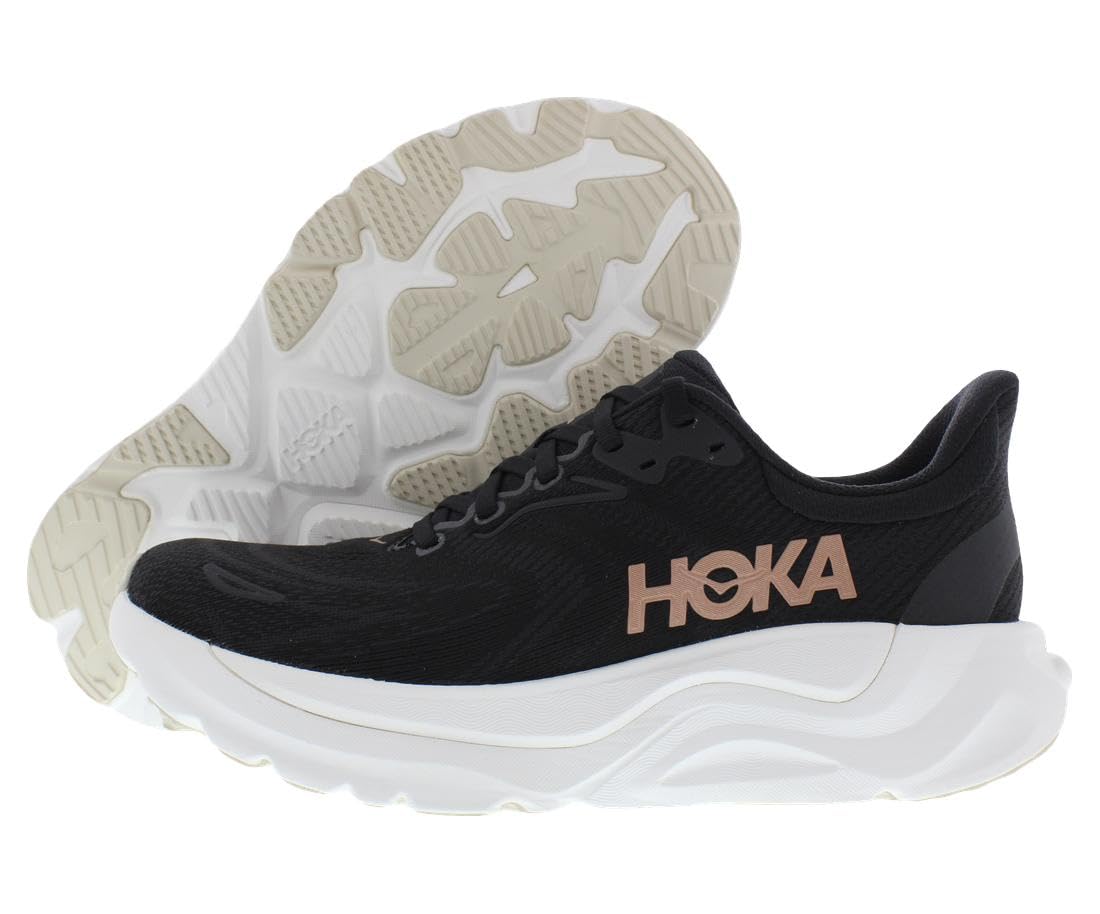
The Arahi 8 builds on the previous generation by using softer dual-density compression-molded EVA in the midsole while keeping the H-Frame stability system intact. The result is a noticeably plusher feel underfoot compared to the Arahi 7, without losing the streamlined guidance that makes the line popular. The double jacquard mesh upper is constructed from 62% recycled nylon, 25% recycled CDP polyester, and reflective detailing, making it an environmentally considered choice that doesn’t sacrifice structure.
Customer feedback from users with balance issues—including Guillain-Barré recovery—highlights the Arahi 8’s wide base and low-profile tooling as confidence-inspiring. The shoe feels stable during lateral movement and provides a smooth transition through the gait cycle. Multiple reviewers noted zero break-in time, with one describing a 10-day trip to England where the shoes required no foot adjustments despite all-day walking. The true-to-size fit is consistent across most foot shapes, though narrow-footed users find it more accommodating than the Arahi 7.
The softer midsole compound may compress faster than the firmer EVA used in the Arahi 7, so heavy runners or high-mileage users might see diminished return after 300-400 miles. The outsole rubber coverage is good on roads but lacks aggressive lugs for trail use. If you prefer a more responsive, less cushioned ride, the Arahi 7 is still the better option.
Why it’s great
- Softer, plusher midsole without sacrificing H-Frame stability
- Sustainable mesh upper with reflective detailing
- Zero break-in required for all-day wear
Good to know
- Softer midsole may compress faster under heavy loads
- Outsole not designed for trail or uneven terrain
7. Brooks Women’s Glycerin GTS 23 Supportive Running Shoe
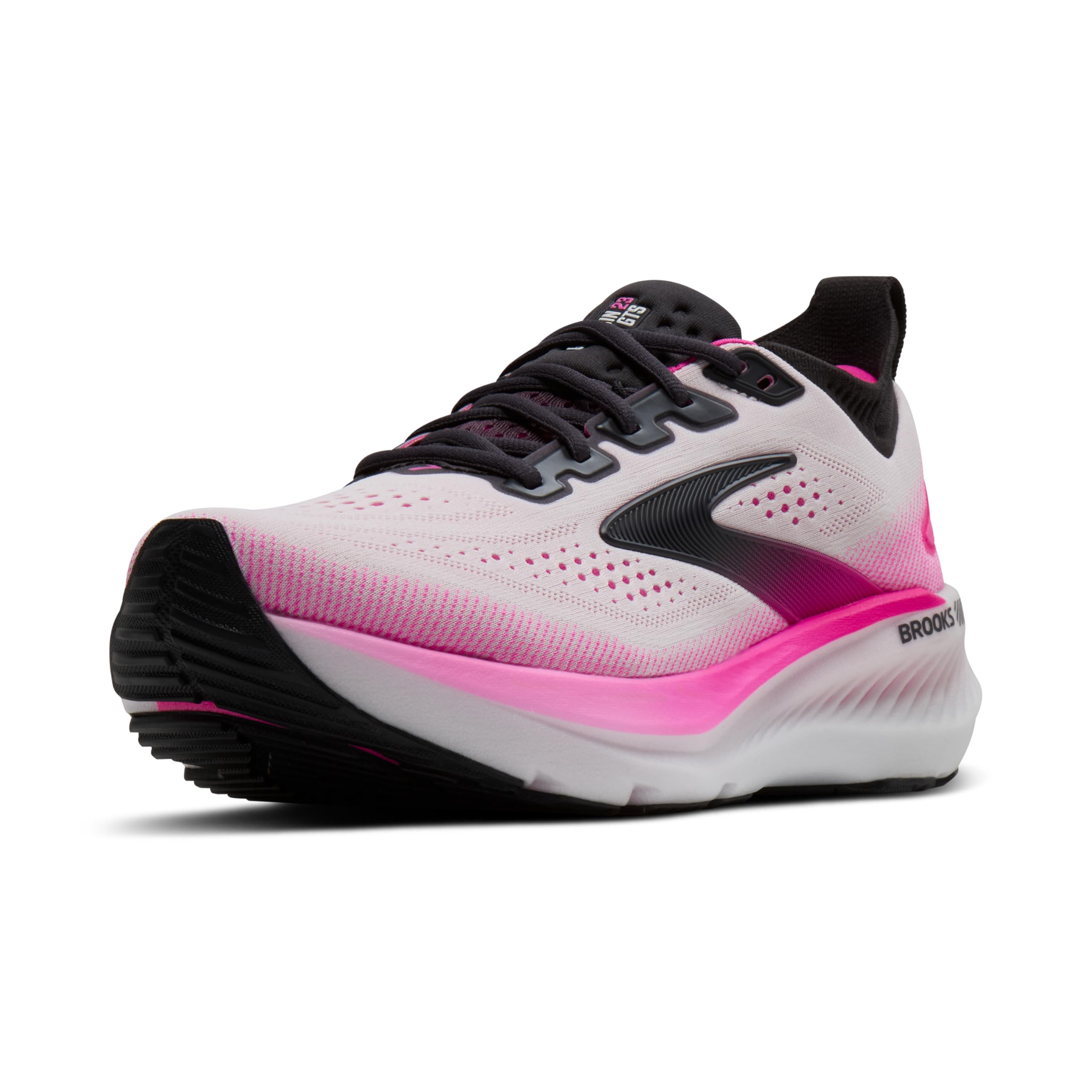
The Glycerin GTS 23 pairs the famously plush Glycerin midsole with Brooks’ GuideRails support system, creating a stability shoe that feels luxurious underfoot without being mushy. The GuideRails sit above the midsole foam and use firmer density blocks along the medial and lateral heel to keep the foot aligned, which means you get the full Glycerin softness with no hard medial post. The 8mm drop is lower than the Beast GTS 26, making it better suited for midfoot strikers and runners who want a smoother transition.
Users with plantar fasciitis and plus-size builds report excellent arch support and bounce, noting that the shoe accommodates orthotics without distorting the fit. The wide width option (available in multiple colors) provides enough room for swollen feet, though some reviewers wish the wide selection was more extensive. The shoe is certified by both the APMA and the PDAC A5500 diabetic shoe program, adding credibility for those with medical foot needs.
Some long-distance walkers found that the shoe causes toe and heel rubbing after 9,000+ daily steps, suggesting it’s better suited for everyday wear than ultra-high-volume walking days. The knit upper is also prone to showing dirt quickly, especially in lighter colorways. If you prioritize a truly soft, stationary cushion feel over dynamic energy return, this is an excellent choice.
Why it’s great
- Plush Glycerin midsole with non-intrusive GuideRails support
- APMA and PDAC A5500 certified for medical use
- Excellent arch support for plantar fasciitis relief
Good to know
- May cause toe/heel rubbing on very high-mileage days
- Light-colored uppers show dirt easily
8. Hoka ONE ONE Women’s Arahi 7
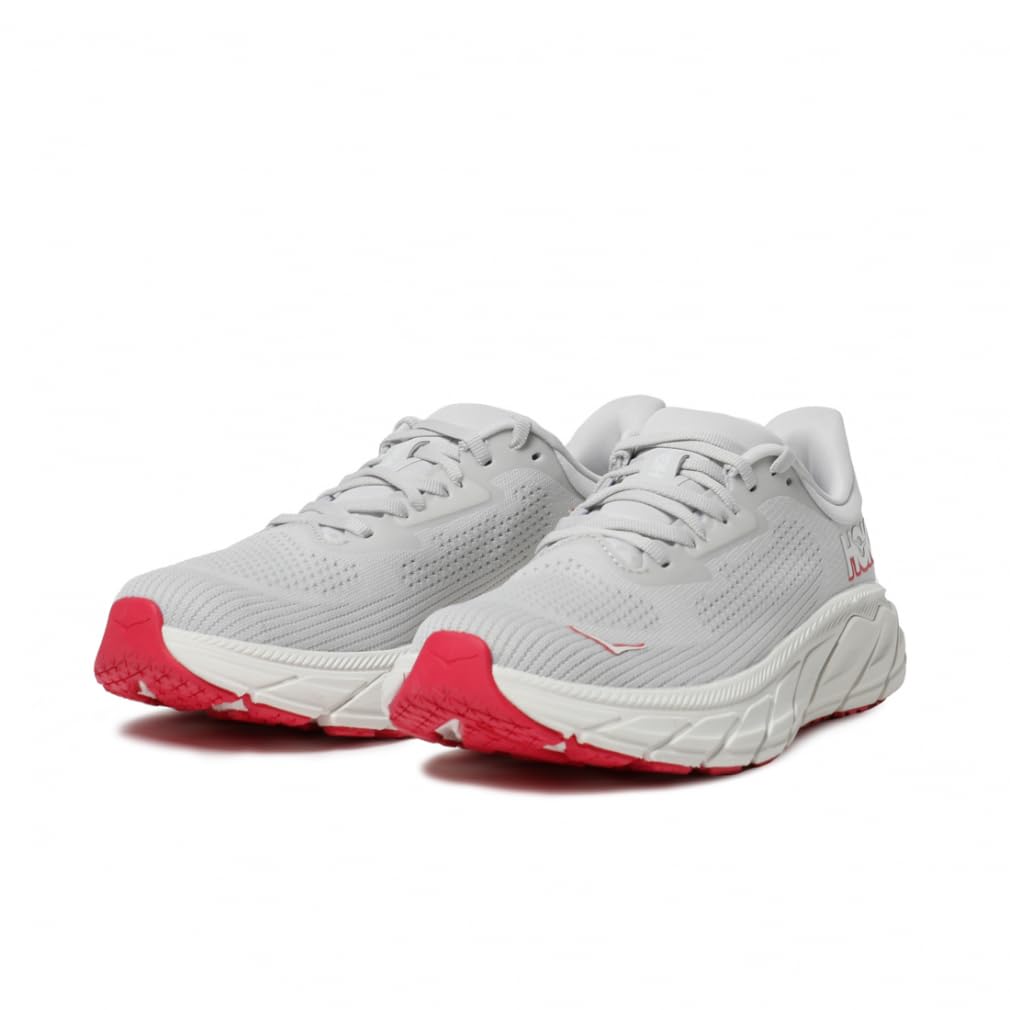
The women’s Arahi 7 shares the same J-Frame stability technology as the men’s version, using a firmer foam cradle that wraps the medial side of the foot rather than a discrete post. This creates a smooth, uninterrupted feel underfoot that many runners prefer over traditional stability constructions. The flat knit upper is zonally engineered for midfoot lockdown, and the stretchy dual gusset beneath the lace line effectively prevents the tongue from shifting during runs.
One reviewer recovering from posterior tibial tendon injury described the Arahi 7 as a game-changer, noting that it provided full support without aggravating the injury. Another user with balance issues from Guillain-Barré found the wide base and low-profile tooling gave her the confidence to walk without fear of falling. The shoe runs true to size for most foot shapes and is comfortable for both daily wear and treadmill sessions.
At a weight slightly under the men’s version, the women’s Arahi 7 is light enough for everyday use but may not provide enough structured support for severe overpronation. The heel counter has a noticeable plastic backing that some users find uncomfortable during seated wear. The outsole lacks aggressive tread, so it’s best kept on roads and groomed paths.
Why it’s great
- Lightweight frame provides gentle, intuitive stability
- Excellent for injury recovery and posterior tibial support
- True-to-size fit with comfortable upper construction
Good to know
- Not aggressive enough for severe overpronation
- Heel counter plastic can be uncomfortable when sitting
9. Saucony Women’s Hurricane 24 Sneaker
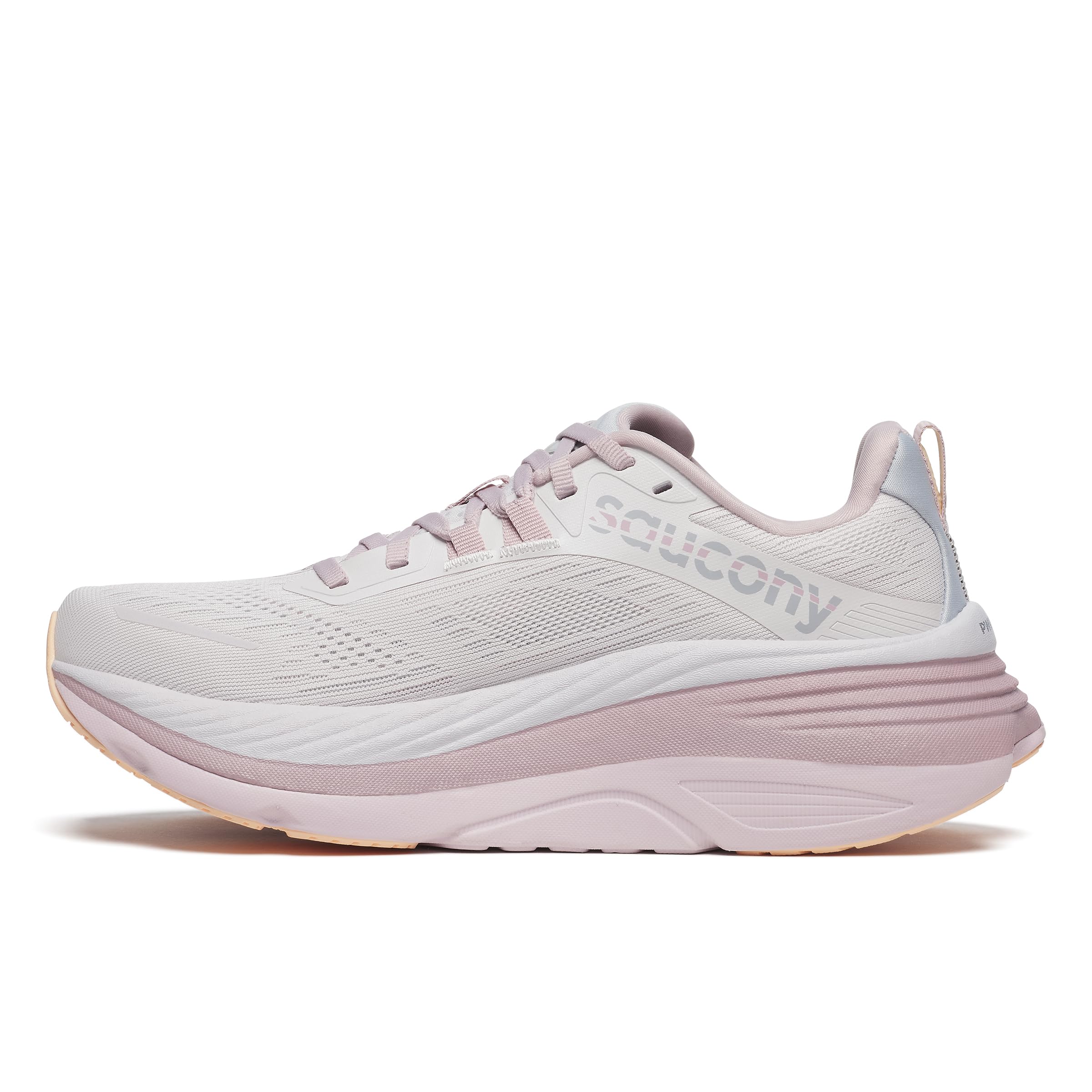
The women’s Hurricane 24 delivers the same dual-cushioning system as the men’s version—PWRRUN PB on top of a PWRRUN frame—with a design tuned for the female foot geometry. The aggressive toe rocker and wide platform create a chunky, stable base that feels supportive without being clunky. The 38mm heel stack and 32mm forefoot stack (6mm drop) provide generous cushioning that absorbs shock effectively on long walks and recovery runs.
Users with hammer toe, tendon pain, and plantar fasciitis report significant pain reduction after switching to the Hurricane 24. The wide toe box and narrow heel design is praised by runners who need forefoot splay without heel slippage. One reviewer noted that the shoe resolved her hammer toe issues completely, and another described the cushioning as “walking on clouds” during daily wear with a heavy toddler.
Quality issues are a consistent concern: the mesh upper stains easily and the reflective strip on some units started peeling within the first week. The shoe is also notably heavy (9.8 oz for women’s), which caused one runner to switch to the lighter New Balance 1080x v14. If durability and weight are your top priorities, consider the Brooks Glycerin GTS 23 instead.
Why it’s great
- Aggressive toe rocker aids forward motion and reduces fatigue
- Wide platform provides excellent stability for flat feet
- Effective pain relief for hammer toe and tendon issues
Good to know
- Mesh upper stains easily and reflective trim may peel
- Heavier than many competitors at 9.8 oz
FAQ
Can I wear stability shoes if I have neutral pronation?
What’s the difference between mild, moderate, and severe stability shoes?
How often should I replace stability running shoes?
Final Thoughts: The Verdict
For most runners, the best athletic shoes for stability winner is the ASICS GT-1000 14 because it delivers effective medial support at a lightweight build and accessible price, making it a versatile daily trainer for mild to moderate overpronation. If you want max cushioning with non-intrusive guidance, grab the Saucony Hurricane 24. And for heavy-duty support with orthotic compatibility, nothing beats the Brooks Beast GTS 26.