
Raw cast iron delivers legendary heat but demands constant seasoning and careful drying to avoid rust. Enameled cast iron removes that labor while keeping the same thermal mass and even heat distribution. The vitreous enamel coating bonds directly to the iron, creating a non-reactive surface that handles tomatoes, wine, citrus, and vinegar sauces without metallic taste transfer.
I’m Min — the co-founder and writer behind Gadgets Feed. I filter through thousands of spec sheets and verified customer reports to map the thermal, ergonomic, and durability differences that actually change how a dish turns out.
The best enameled cast iron cookware balances thick iron walls with chip-resistant porcelain, giving you restaurant-grade heat control without the upkeep of bare cast iron.
How To Choose The Best Enameled Cast Iron Cookware
Enameled cast iron looks uniform on a shelf but the difference between a pot and a pot comes down to three variables: the iron recipe, the number of enamel coats, and the firing temperature. A thin enamel layer chips faster and stains deeper. A porous iron body creates hot spots. You need to reconcile the spec sheet and the construction method to predict real-world longevity.
Enamel Coating Thickness and Application
Premium brands like Le Creuset apply three wet coats of porcelain enamel and fire each layer above 800°C. Budget options often use a single spray-and-fire process that leaves the enamel thin at the rim and bottom edges. The rim ring — where the lid metal contacts the pot metal — is the first failure point. Run your fingernail around the lip: a recessed rim means the iron is exposed and will likely show rust flecks within a year.
Interior Finish and Patina Behavior
There are two dominant interior enamel styles. A cream or sand-colored finish stays bright and shows browning residue immediately, making cleaning more urgent but giving you visual feedback on heat distribution. A matte black finish hides scorch marks and develops a natural oil-absorbed patina over time, similar to seasoned bare cast iron. Black interiors are standard on Staub and some Lodge lines; cream interiors dominate Le Creuset and Cuisinart. Neither is superior — they suit different cooking philosophies.
Lid Architecture — Basting Versus Dome
Lid design dictates moisture management. Flat lids with concentric condensation rings — found on classic Dutch ovens — drip return moisture evenly across the food surface. Domed lids, common on bread ovens, create a taller steam chamber that encourages oven spring in sourdough. Some braisers use a shallow dome with tiny interior spikes to increase surface area for condensation. Match the lid shape to your primary use: basting for braises, dome for bread, shallow for skillet-style searing.
Quick Comparison
On smaller screens, swipe sideways to see the full table.
| Model | Category | Best For | Key Spec | Amazon |
|---|---|---|---|---|
| Le Creuset Signature Oval Bread Oven | Premium | Sourdough with maximum oven spring | 1.5 qt, oval, domed lid | Amazon |
| Cuisinart Chef’s Classic Chicken Fryer | Premium | Shallow frying and braising | 4.5 qt, teal, 12-inch | Amazon |
| Tramontina Bestow 12-Inch Skillet | Premium | Everyday searing and sautéing | 12-inch, HT150 alloy, 5.7 kg | Amazon |
| Lodge Essential 6-Quart Dutch Oven | Mid-Range | Budget-friendly all-purpose Dutch oven | 6 qt, blue, 500°F oven | Amazon |
| Overmont 3.8-Quart Braiser | Mid-Range | One-pan weeknight dinners | 3.8 qt, white, shallow design | Amazon |
| CAROTE 3.4-Quart Braiser | Mid-Range | Self-seasoning patina development | 3.4 qt, matte black interior | Amazon |
| VORRINGARD 5-Quart Bread Oven | Mid-Range | Loaf-shaped bread with crisp crust | 5 qt, blue, 14.2-inch length | Amazon |
In‑Depth Reviews
1. Le Creuset Enameled Cast Iron Signature Oval Bread Oven
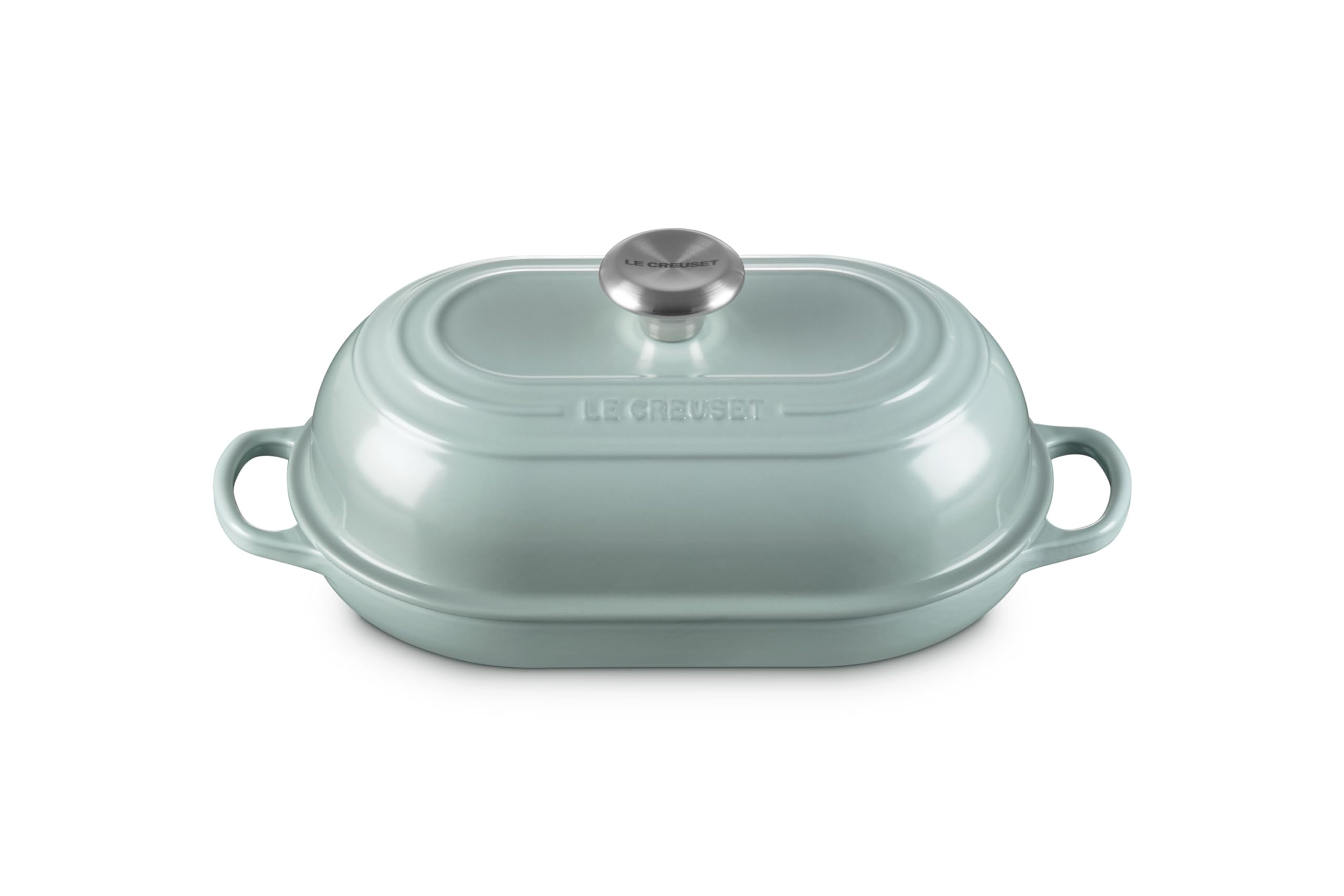
The Le Creuset Signature Oval Bread Oven is built around a specific geometry that solves a real problem in sourdough baking: loaf height. The domed lid rises over the dough, giving the bread headroom to expand upward rather than spreading sideways. The three-rib embossing on the base eliminates the need for parchment paper and leaves a signature ring pattern on the bottom crust. The satin black interior enamel is deliberately matte — it absorbs oil over time and builds a release patina that makes the second year of use noticeably better than the first.
The Sea Salt exterior is part of Le Creuset’s wider color system, so the piece integrates with existing collections. The base has raised ridges that create even browning across the bottom surface, addressing a common complaint with flat-bottom bread ovens where the center stays pale. The low-profile base makes it accessible for loading and unloading compared to a deep Dutch oven. The global trade identification number confirms genuine factory production without reseller confusion.
At 1.5 quarts, this is a single-purpose tool — it excels at batards and longer loaves but is too shallow for stews or braises. The three-ring embossing limits its utility as a general-purpose casserole because liquid would pool in the channels. Buyers who already own a standard round Dutch oven will find this complements their setup rather than replacing it. The tight-fitting domed lid traps steam efficiently, producing the crust blistering and oven spring that serious bakers seek.
Why it’s great
- Domed lid creates superior steam circulation for crisp crust and high oven spring
- Three-ring embossed base eliminates parchment paper waste and produces even browning
- Satin black interior builds a natural patina that improves release with repeated use
Good to know
- 1.5-quart capacity limits use beyond bread baking — not suitable for stews or braises
- Raised ridges on base restrict versatility when cooking with liquids
- Premium tier pricing reflects brand and construction, not material volume
2. Cuisinart Chef’s Classic Enameled Cast Iron Chicken Fryer
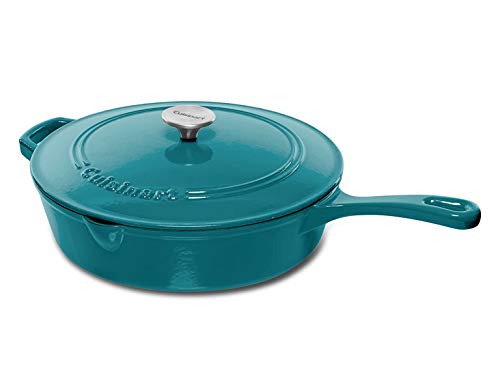
The Cuisinart Chef’s Classic chicken fryer is wider than a standard Dutch oven, measuring 12 inches across the rim, which gives you the surface area to shallow-fry chicken thighs, dredge cutlets, or batch-sear vegetables without overcrowding. The flared walls reduce splatter and make flipping easier than a straight-sided pot. The porcelain enamel interior is cream-colored, so any browning residue is immediately visible — you scrub when you see it rather than letting carbon build up. The 4.5-quart capacity sits right between a skillet and a stockpot, handling most one-pot meals for a family of four.
Cuisinart backs this piece with a lifetime warranty, which is rare in the enameled cast iron space below the threshold. The exterior teal finish uses a fired porcelain coat, not painted enamel, so it resists yellowing from oven heat. The lid has cast iron condensation rings that circulate moisture back into the food, and the stainless steel knob is oven-safe without a temperature cap. The overall weight of 7.58 kilograms means the pan is substantial but still liftable for one-handed pouring if you use your core.
The chicken fryer shape sacrifices depth — the walls are lower than a Dutch oven, so you cannot fully submerge a whole chicken or a large roast. Users who primarily cook soups and stocks will find the 4.5-quart volume limiting once vegetables and liquid fill the pot. The cream interior stains easily from turmeric, tomato, and dark braising liquids, and the manufacturer explicitly recommends hand washing despite listing it as dishwasher safe. The price point undercuts Le Creuset and Staub by a wide margin while delivering comparable thermal performance.
Why it’s great
- 12-inch wide cooking surface gives room for shallow frying without overcrowding
- Lifetime warranty provides long-term protection at a mid-premium price point
- Flared walls reduce oil splatter and make food flipping easier than straight-sided pots
Good to know
- Shallow profile unsuitable for deep braising or large-volume soups
- Cream interior shows turmeric and tomato stains quickly and requires manual scrubbing
- Dishwasher-safe claim is contradicted by manufacturer hand-wash recommendations
3. Tramontina Bestow Enameled Cast Iron Skillet with Lid
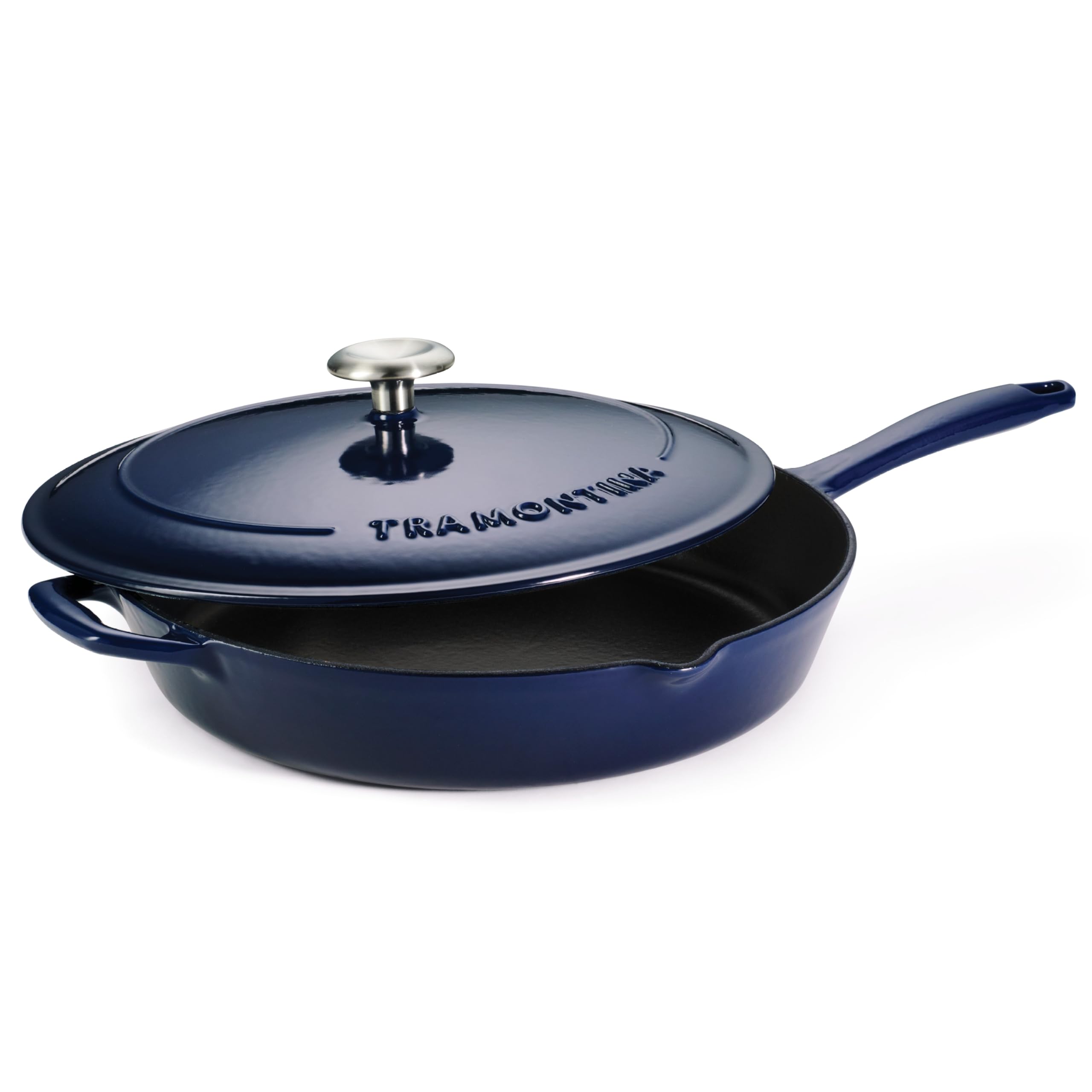
The Tramontina Bestow skillet uses HT150 cast iron, a proprietary alloy formulation with higher carbon content than standard Lodge-grade iron. Higher carbon density translates to faster thermal conductivity — the pan reaches searing temperature about one minute sooner than comparable enameled skillets in the same thickness class. The matte black interior enamel is rough-finished on purpose, mimicking the texture of seasoned cast iron to create more surface area for browning reactions. The lid is cast iron with self-basting condensation spikes built into the dome, so moisture cycles back into the food without you needing to tilt or baste manually.
At 5.7 kilograms, the 12-inch skillet is heavy enough that you will use both hands to move it. The integral cast iron handles are short and thick, distributing the weight close to the pan body rather than creating leverage. The stainless steel lid knob is oven-safe to 450°F, which is slightly lower than the 500°F rating on Lodge, but the thermal limitation rarely matters for skillet use — most stovetop searing and oven finishing happens well below 450°F. The exterior finish uses a sprayed porcelain coat that resists chipping better than painted enamel but is still vulnerable to hard knocks on metal stovetop grates.
The rough interior texture is a minor cleanup trade-off: food releases well after oil has polymerized into the micro-porous surface, but acidic sauces like tomato or vinegar will strip that seasoning and expose the uncoated enamel. Users who deglaze frequently with acidic liquids should expect immediate visible discoloration on the matte black surface. The skillet is too shallow for deep braising, and the lid is not designed for liquid submersion cooking. For searing, sautéing, and stovetop-to-oven finishing, the HT150 alloy gives this pan a performance edge over most competitors under .
Why it’s great
- HT150 alloy delivers faster heat-up time than standard enameled cast iron irons
- Self-basting lid spikes return moisture without manual intervention during cooking
- Rough matte black interior develops seasoning patina for progressively better release
Good to know
- Short handles reduce leverage, making two-handed carries mandatory when hot
- Rough interior discolors rapidly from acidic deglazing and requires immediate cleaning
- 450°F oven limit is below some competitors’ 500°F ratings
4. Lodge Essential Enamel Cast Iron Dutch Oven 6 Quart
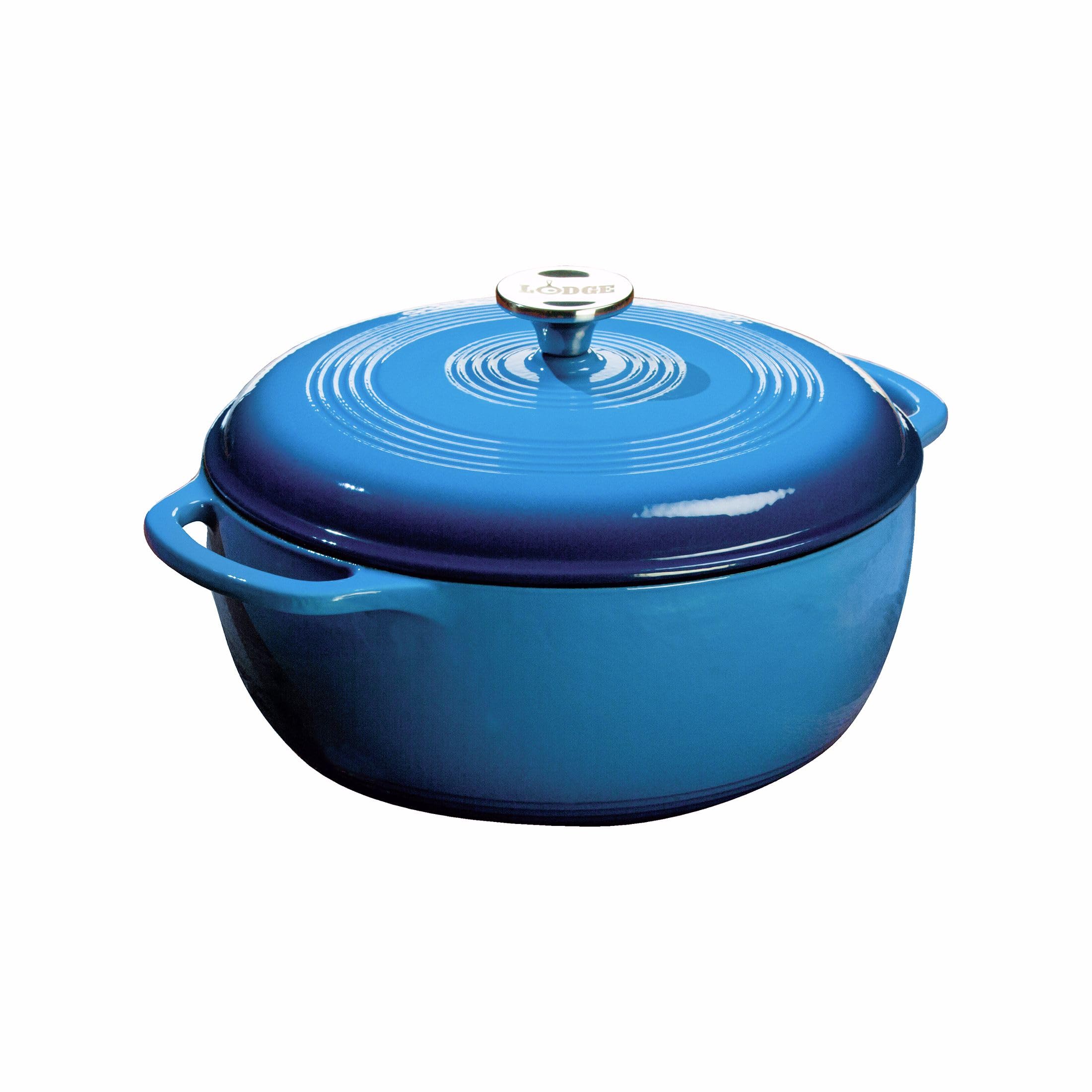
The Lodge Essential Dutch oven is the benchmark for entry-level enameled cast iron. The 6-quart capacity is large enough for a 5-pound chuck roast, a whole chicken, or two loaves of bread baked side by side. The Caribbean Blue exterior uses a sprayed enamel finish that is less glossy than Le Creuset’s fired porcelain but still cleans up well with warm soapy water and a nylon brush. The interior is a cream-colored enamel that is non-reactive and does not require seasoning, so you can go straight from unboxing to simmering a tomato-based Bolognese without any metallic taste. The oven-safe rating of 500°F covers nearly all braising, roasting, and bread applications.
Lodge includes six pot protectors — a detail rarely found at this price tier — that prevent the enamel from chipping during storage and absorb moisture when the lid is sealed. The dual handles are cast integrally with the pot and provide a stable grip even with oven mitts. The lid is heavy cast iron with condensation rings that return moisture evenly across the cooking surface. The weight of 13.52 pounds is distributed well across the handles, making one-handed pouring feasible for smaller cooks. The lid knob is stainless steel and oven-safe at the full 500°F without discoloration.
The cream interior is prone to staining from turmeric, saffron, and dark braising liquids, and the enamel at the rim edge is thinner than premium brands — users who bang the lid against the pot during placement risk micro-chipping. The skillet depth is standard for a Dutch oven, so the pot works for shallow frying but not as a low-walled braiser. The lid fit is snug but not airtight, meaning moisture loss is slightly higher than Staub or Le Creuset during long braises. For the volumetric capacity and thermal performance, the price-to-value ratio is unmatched in the enameled cast iron market.
Why it’s great
- 6-quart capacity provides room for large roasts, whole chickens, and multiple bread loaves
- Included pot protectors prevent storage chipping and moisture buildup
- 500°F oven safety supports high-heat bread baking and deep braising
Good to know
- Cream interior stains visibly from deeply pigmented ingredients like turmeric and tomato
- Rim enamel thickness is thinner than premium brands, increasing chip risk with rough handling
- Lid closure is not completely airtight, allowing slightly higher moisture loss during long simmering
5. VORRINGARD Enameled Cast Iron Sourdough Bread Oven 5 Quart

The VORRINGARD bread oven uses an oval geometry that matches the natural shape of a batard or sandwich loaf, eliminating the squished ends that round Dutch ovens produce. The 5-quart capacity translates to a cooking surface of 14.2 inches in length, giving you enough room for a full-size sourdough boule or a 2-pound meatloaf. The enamel coating is thick enough to resist scratching from metal dough scrapers, and several user reports show no surface damage after months of weekly bread baking. The lid is heavy cast iron and seals tightly, trapping the steam that creates the blistered, crisp crust characteristic of artisan bakery loaves.
The blue exterior finish uses a multi-coat sprayed process that holds up to repeated 500°F oven cycles without crazing or discoloration. The looped side handles are substantial enough to grip with thick oven mitts, and the lid knob is stainless steel that does not require a temperature cap. At 5.86 kilograms, the pan is heavy but manageable — lighter than an equivalent Lodge by about a pound, which matters when transferring a hot bread oven from counter to oven rack. The interior is cream-colored enamel that releases baked-on bread residue easily after a 15-minute warm water soak.
The oval shape limits versatility for round foods like whole braised cabbage, spherical roasts, or circular cakes. Users who want a dual-purpose pot for bread and stew will need a second round unit. The manufacturer explicitly advises against dishwasher use and metal utensils, which aligns with standard enameled cast iron care but means the three-year durability depends entirely on user discipline. The price sits in the upper mid-range tier, directly competing with Lodge on capacity while offering a more bread-optimized shape profile.
Why it’s great
- Oval shape produces authentic batard and sandwich loaf geometry without squished ends
- Thick enamel coating resists scratching from metal dough scrapers during bread handling
- Tight-sealing lid traps steam effectively for artisan crust blistering and oven spring
Good to know
- Oval footprint limits use for round roasts, spherical vegetables, and circular cakes
- Cream interior requires prompt cleaning to prevent polymerized bread residue from bonding
- Hand-wash-only recommendation adds maintenance overhead for daily bread bakers
6. Overmont Enameled Cast Iron Dutch Oven Braiser 3.8 Quart

The Overmont braiser solves a specific space problem: it is shallower than a standard Dutch oven at 5.12 inches tall, which means it fits under low overhead cabinets and sits compactly on a packed stovetop. The 3.8-quart capacity paired with a 13-inch wide base gives you the surface area to sear four chicken thighs without overlap while maintaining low sidewalls for easy access with tongs or a spatula. The triple-layer enamel coating is applied over the entire outer surface, including the bottom, so the pan slides across ceramic and induction cooktops without scratching. The included heat-resistant silicone handle caps protect your grip when moving the pan from stove to table.
The white exterior finish has a subtle gloss that resists yellowing from oven heat up to 500°F. The lid is cast iron with a tight fit that minimizes moisture loss during covered braises. The shallow depth means the braiser excels at tasks that need more surface area than volume: searing steaks, sautéing vegetables, simmering pasta sauces, and baking frittatas. The weight is noticeably lighter than a 6-quart Dutch oven, making the Overmont a practical choice for cooks who struggle with the 13-pound heft of larger enameled pieces. The included cookbook provides recipe inspiration tailored to the braiser shape.
The shallow sides limit liquid capacity — a full 3.8 quarts of liquid would overflow during vigorous simmering, so the practical working volume is closer to 2.5 quarts. Users who attempt deep-frying or large-batch soups will find the braiser too shallow for safe oil containment. The silicone handle caps are rated for oven use up to 350°F, which creates a potential burn risk if you forget to remove them before placing the pan in a 500°F oven. The price point is competitive with entry-level braisers but the smaller capacity must be weighed against the surface-area advantage for weeknight cooking.
Why it’s great
- Shallow 5.12-inch profile fits under low cabinets and provides wide searing surface for stovetop use
- Triple-layer bottom enamel prevents scratching on ceramic and induction cooktops during sliding
- Lighter weight than standard Dutch ovens makes one-handed pouring and moving easier
Good to know
- Practical liquid capacity is 2.5 quarts due to shallow sides preventing safe simmering at full volume
- Silicone handle caps are limited to 350°F and must be removed before high-heat oven use
- 3.8-quart capacity is too small for large-batch soups, stocks, or deep-frying
7. CAROTE Enameled Cast Iron Braiser Pan 3.4 Quart
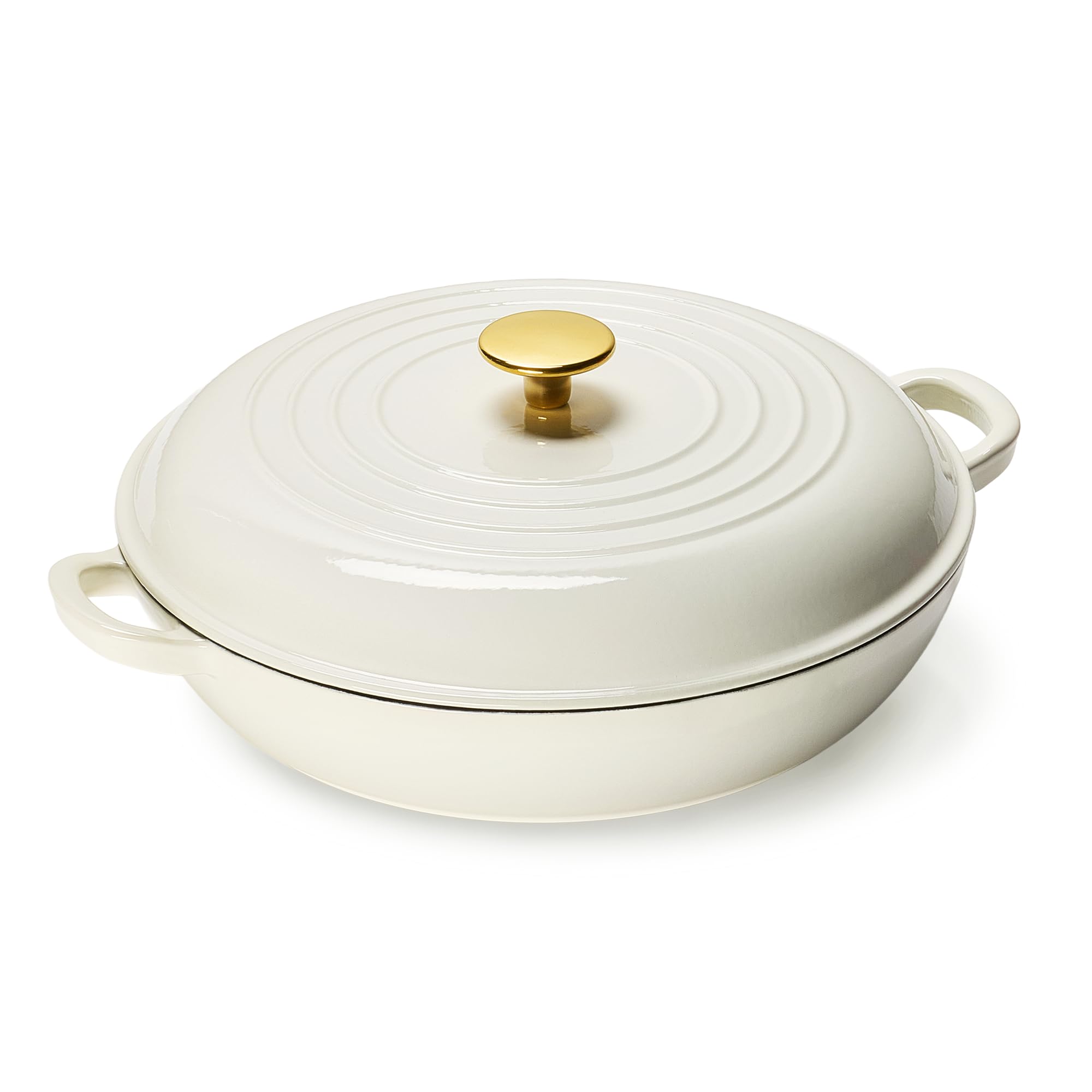
The CAROTE braiser introduces a hybrid concept in the enameled cast iron space: a matte black interior that is deliberately micro-porous. Unlike the glossy cream enamel found on most budget pieces, this textured surface absorbs a thin layer of oil during cooking, gradually building a natural non-stick patina similar to seasoned bare cast iron. The manufacturer does not apply a synthetic non-stick coating, so there is no PFOA or PTFE to degrade over time. The 3.4-quart capacity fits a 12-inch base, giving you the searing area of a standard skillet with the depth of a shallow casserole. The condensation-ring lid design collects moisture and returns it evenly across the food surface during covered cooking.
The white exterior finish is sprayed porcelain that holds up to 502°F oven heat — the extra two degrees above the common 500°F threshold is negligible in practice but reflects the manufacturer’s QA tolerance range. The double handles are cast iron and provide a stable two-handed grip system. The pan is dishwasher-safe by specification, but the manufacturer recommends hand washing with warm soapy water and periodic oil application to maintain the patina-building surface. The price point undercuts most braisers of similar capacity by a wide margin, positioning the CAROTE as an entry point for cooks curious about enameled cast iron without committing to a premium budget.
The micro-porous interior behaves differently from standard enamel: sticky sauces like caramelized onions and cheese fondue will release better after the patina develops, but the first few uses require more oil and lower heat to prevent bonding. The textured surface is harder to visually assess for cleanliness — you cannot see residual food as easily as on a white interior. The size is small for batch cooking: a single large pork shoulder or whole chicken will exceed the 3.4-quart volume. Users who want a true set-and-forget braiser for weekly meal prep should consider larger options in the same price tier.
Why it’s great
- Micro-porous matte black interior builds a natural oil-based non-stick patina over time
- No synthetic non-stick coatings — PFOA and PTFE free for a safer cooking surface
- 502°F oven rating and double cast-iron handles support versatile stovetop-to-oven cooking
Good to know
- Textured interior requires more oil and lower heat during initial uses before patina develops
- 3.4-quart capacity limits batch cooking for large roasts or whole birds
- Visual assessment of cleanliness is harder on the textured black surface than on white enamel
FAQ
Can enameled cast iron go from the refrigerator directly to the stovetop?
How do I remove burnt-on food from a cream enamel interior?
Why does my enameled cast iron have a rough texture on the cooking surface?
Final Thoughts: The Verdict
For most users, the best enameled cast iron cookware winner is the Le Creuset Signature Oval Bread Oven because its domed lid geometry and three-ring embossed base eliminate parchment paper while producing bakery-grade crust and oven spring. If you want a versatile everyday piece for frying and braising, grab the Cuisinart Chef’s Classic Chicken Fryer. And for a budget-friendly workhorse that handles sourdough, stews, and roasts equally well, nothing beats the Lodge Essential 6-Quart Dutch Oven.