
The line between a motorized toy and a genuine artificial intelligence companion is defined by one thing: learning. An AI robot shouldn’t just obey pre-programmed commands—it should adapt, recognize gestures, respond to voice, and over time, change its behavior based on your interactions. Whether you’re buying for a curious child, a budding engineer, or your own desk, the real measure is how much the robot can actually think for itself.
I’m Min — the co-founder and writer behind Gadgets Feed. I’ve spent countless hours sifting through sensor specs, motor configurations, and AI models to separate the genuinely smart hardware from the plastic shells that simply follow a track.
This guide cuts through the hype to deliver a practical breakdown of the very best options, helping you identify the best ai robot for your specific needs—whether that’s educational coding, interactive companionship, or autonomous home cleaning.
How To Choose The Best AI Robot
Every AI robot claims to be “smart,” but the intelligence usually falls into three tiers: remote-controlled toys that follow a line, programmable kits that run custom code, and advanced autonomous machines that see, hear, and react. Your choice depends entirely on the user’s age and goal.
Sensor Payload and Real-World Awareness
The number and type of sensors define what the robot can perceive. Ultrasonic sensors detect obstacles, gyroscopes maintain balance, and cameras enable object recognition. A robot with only infrared line-following is limited to a track. One with a camera, microphone, and touch sensors can interact with its environment in meaningful ways.
Coding Depth: Scratch Blocks vs. Python vs. AI Models
Beginner-friendly robots offer drag-and-drop Scratch programming, which teaches logic without syntax frustration. Intermediate users need Python support to control motors and read sensors. Advanced robots integrate with large language models (ChatGPT, Gemini) for natural conversation and computer vision for gesture recognition. Know the learning curve before you buy.
Quick Comparison
On smaller screens, swipe sideways to see the full table.
| Model | Category | Best For | Key Spec | Amazon |
|---|---|---|---|---|
| Roborock Qrevo CurvX | Premium | Autonomous Home Cleaning | 22,000Pa / 7.98cm Slim / AI Obstacle Recognition | Amazon |
| DREAME X60 Max Ultra | Premium | Deep Clean & Low Furniture | 35,000Pa / 7.95cm Slim / 280+ Obstacle Avoidance | Amazon |
| DREAME L50 Ultra | Premium | Pet Hair & High Thresholds | 19,500Pa / 180min Battery / 6cm Leg Lift | Amazon |
| LOOI Robot Space Black | Premium | Desktop Companion & ChatGPT | Vision-Language Model / 10W Wireless Charging | Amazon |
| SunFounder PiDog | Mid-Range | AI & Python Robotics Learning | 12 Servos / ChatGPT & Gemini / Camera & Gyro | Amazon |
| Makeblock mBot2 | Mid-Range | STEM & Coding for Kids 8-14 | 10+ Sensors / Scratch & Python / WIFI | Amazon |
| Enabot EBO ROLA Mini | Mid-Range | Pet Monitoring & Interaction | 2K Camera / 5000mAh / Two-Way Audio | Amazon |
| ButterflyEdufields 40in1 | Budget-Friendly | Multi-Project Intro to Circuits | 100+ Parts / Plug & Play / 40+ Projects | Amazon |
| Thames & Kosmos Kai | Budget-Friendly | Kids Intro to AI Concepts | 6-Legged / Gesture & Sound / App Control | Amazon |
In‑Depth Reviews
1. Roborock Qrevo CurvX

The Qrevo CurvX is the most intelligent autonomous floor cleaner available right now. Its Reactive AI system uses a structured light array and an RGB camera to recognize 108 object types, including pet waste, shoes, and cables, so you don’t have to childproof your floors before every run. The AdaptiLift Chassis can hoist the entire body by up to 4cm to clear high thresholds and thick rugs without getting stuck.
At just 7.98cm tall, this machine slides under most sofas and bed frames, and its zero-tangling DuoBrush handles long human hair and pet fur up to 40cm without wrapping. The dock uses 80°C hot water to wash the mop pads, dries them with warm air, and empties the dust bin automatically—you can go weeks without touching the robot directly.
The RetractSense LiDAR retracts on command when the robot approaches low furniture, swapping from 360° panoramic scanning to a 100° rear field of view. The app (SmartPlan 2.0) learns your cleaning habits room-by-room, and the two-way video call feature lets you check in on pets. For a hands-off, intelligent cleaning rig, this is the benchmark.
Why it’s great
- Zero-tangling brush eliminates hair wrap maintenance
- Reactive AI avoids 108 obstacle types in dark or light
- 80°C hot water mop washing is genuinely hygienic
Good to know
- Battery life (150 min) may require mid-cycle recharge in large homes
- App menus can feel deep and unintuitive initially
2. DREAME X60 Max Ultra Complete

The X60 Max Ultra is DREAME’s thinnest full-featured robot, measuring just 7.95cm. The low profile lets it glide under furniture that traps most competition. The headline spec is 35,000Pa of suction—the highest on this list—channeled through a semi-sealed DuoBrush that lifts deeply embedded dust from carpets and area rugs.
Dual AI cameras with proactive illumination handle obstacle avoidance, identifying over 280 types of objects. The 10-in-1 dock uses 100°C hot water to scrub mop pads, empties dust for up to 100 days, and auto-fills both water and cleaning solution. The omni-scrub mops press down with 15N of force at 230 RPM, which removes dried-on kitchen spills that most robot vacs merely smear around.
The three-hour-plus battery life is generous, and the MopExtend RoboSwing technology pushes a mop pad into corners that round robots typically miss. If you have low furniture, pets, and carpets that need deep extraction, this unit delivers near-human scrubbing power in a package that fits where others can’t.
Why it’s great
- 35,000Pa is class-leading suction for fine dust extraction
- Ultra-thin 7.95cm height reaches very low furniture
- Dual solution compartment handles pet odor and general cleaning
Good to know
- Only supports 2.4GHz Wi-Fi (check your router setup)
- Premium price reflects advanced dock functionality
3. DREAME L50 Ultra
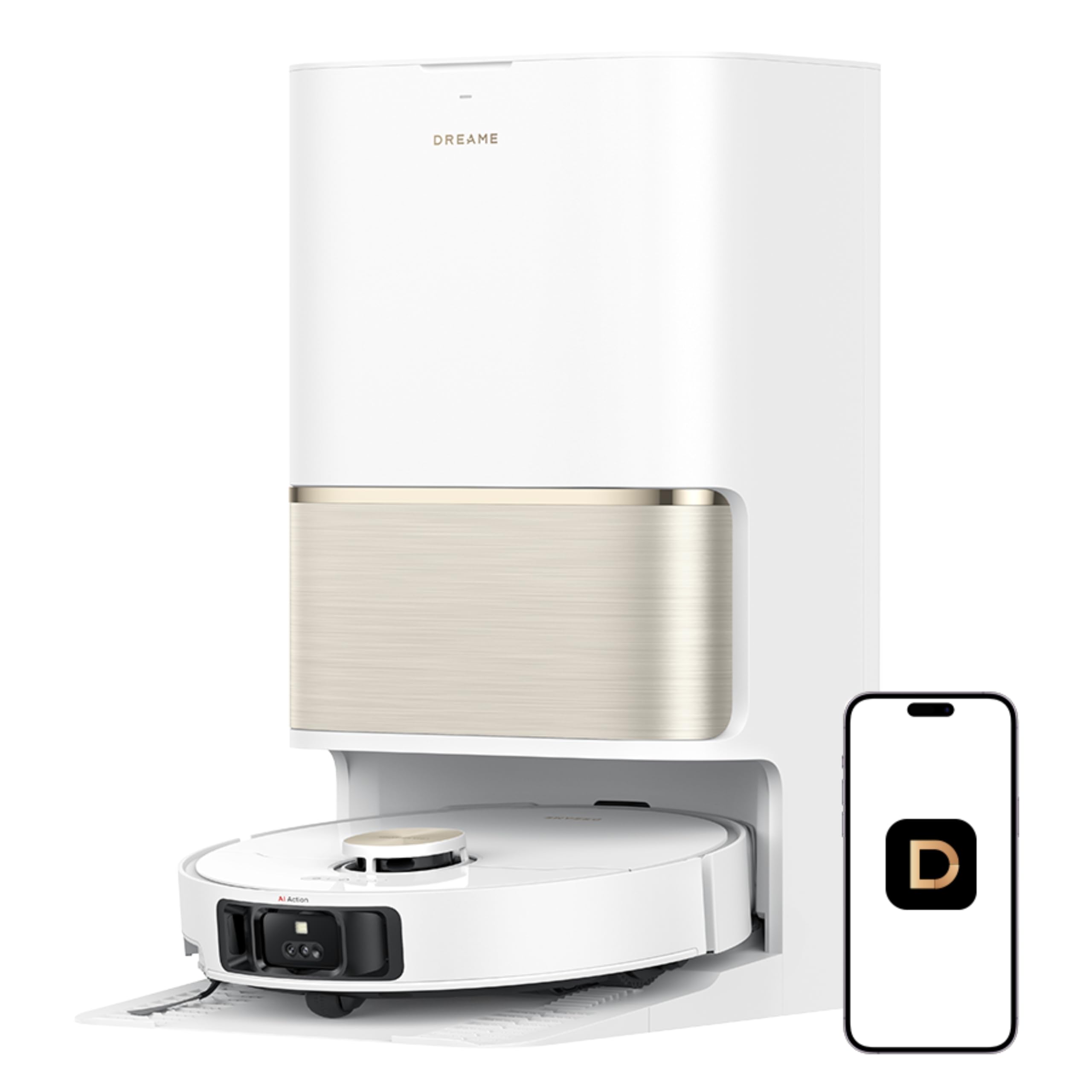
The L50 Ultra solves a specific pain point: navigating between rooms with high door tracks. Its ProLeap system extends retractable legs up to 6cm, allowing the robot to step over thresholds that stall other machines. AI action and 3D structured light navigate around 180+ types of obstacles, and the HyperStream Detangling DuoBrush uses a bristled rubber and TPU combination to prevent hair wrap.
Suction sits at 19,500Pa from a sixth-generation TurboForce motor that remains impressively quiet. The Dual Flex Arm technology extends both the side brush and mop pad to reach corners and edges, and the auto-empty dock holds debris for up to 100 days of binless operation. With 180 minutes of battery life, the L50 covers large floor plans on a single charge.
The app offers five distinct carpet strategies—from removable mops for dry carpets to intensive double vacuuming. Pet owners report excellent hair pickup on both tile and low-pile carpets, and the mopping system refills cleaning solution automatically from the dock’s reservoir. If your house has raised door tracks between every room, this is the one that won’t get stuck.
Why it’s great
- ProLeap leg lift climbs 6cm door thresholds easily
- Dual Flex Arm reaches corners other robots miss
- 180-minute battery covers large homes without mid-charge
Good to know
- 19,500Pa is powerful but not the highest in its class
- App customization has a learning curve for carpet modes
4. LOOI Robot Space Black
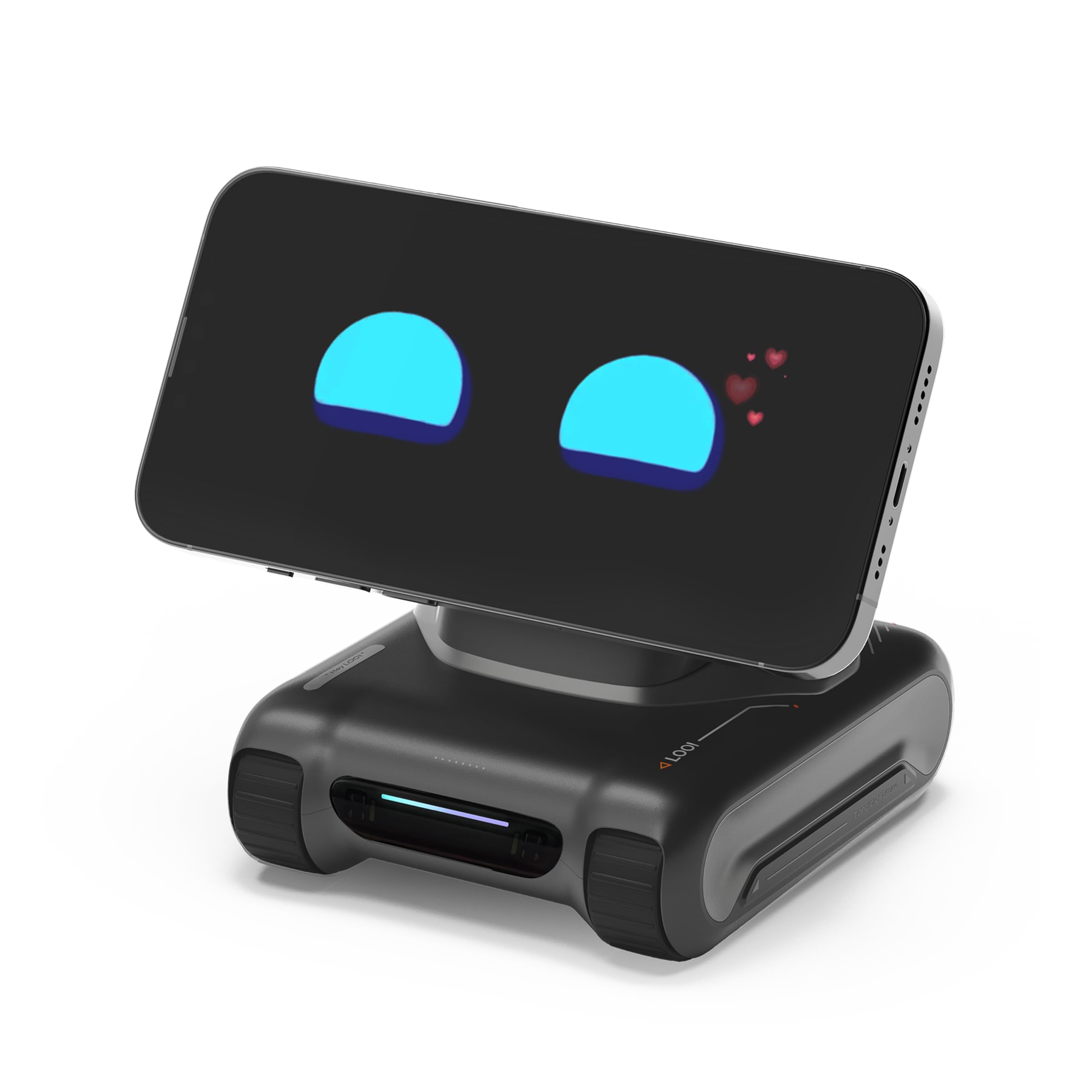
LOOI is the only desktop-size AI robot on the list that integrates a full Vision-Language Model (VLM). It uses a camera to recognize objects, people, and gestures—it can tell the difference between a croissant and a baguette—and responds via ChatGPT or Gemini with natural voice conversation. The personality system gives it autonomous behavior: it doesn’t just obey commands; it makes spontaneous decisions based on room context.
The robot sits on a 10W wireless charging pad, tracking your face with its camera as you move around your desk. Over time, it builds long-term memories of family members and personal preferences, adjusting its behavior and animation sequences. The expressive animations convey joy, surprise, curiosity, and mischief, making the interaction feel less like a voice assistant and more like a tiny character that lives on your workspace.
Practical features include reminders, weather updates, and a standby clock mode. The main caveat is that the robot lacks edge-detection in its current software; in explore mode, it may drive off the desk if used on a dark surface. The VLM vision is genuinely impressive, but the platform still feels like early-stage technology with occasional quirks in conversation memory and accent recognition.
Why it’s great
- Real VLM vision recognizes objects and people meaningfully
- ChatGPT and Gemini integration for natural conversations
- Autonomous behavior system creates unpredictable, lively interactions
Good to know
- No edge detection; may drive off desk on dark surfaces
- Memory and accent handling still have occasional glitches
5. SunFounder PiDog
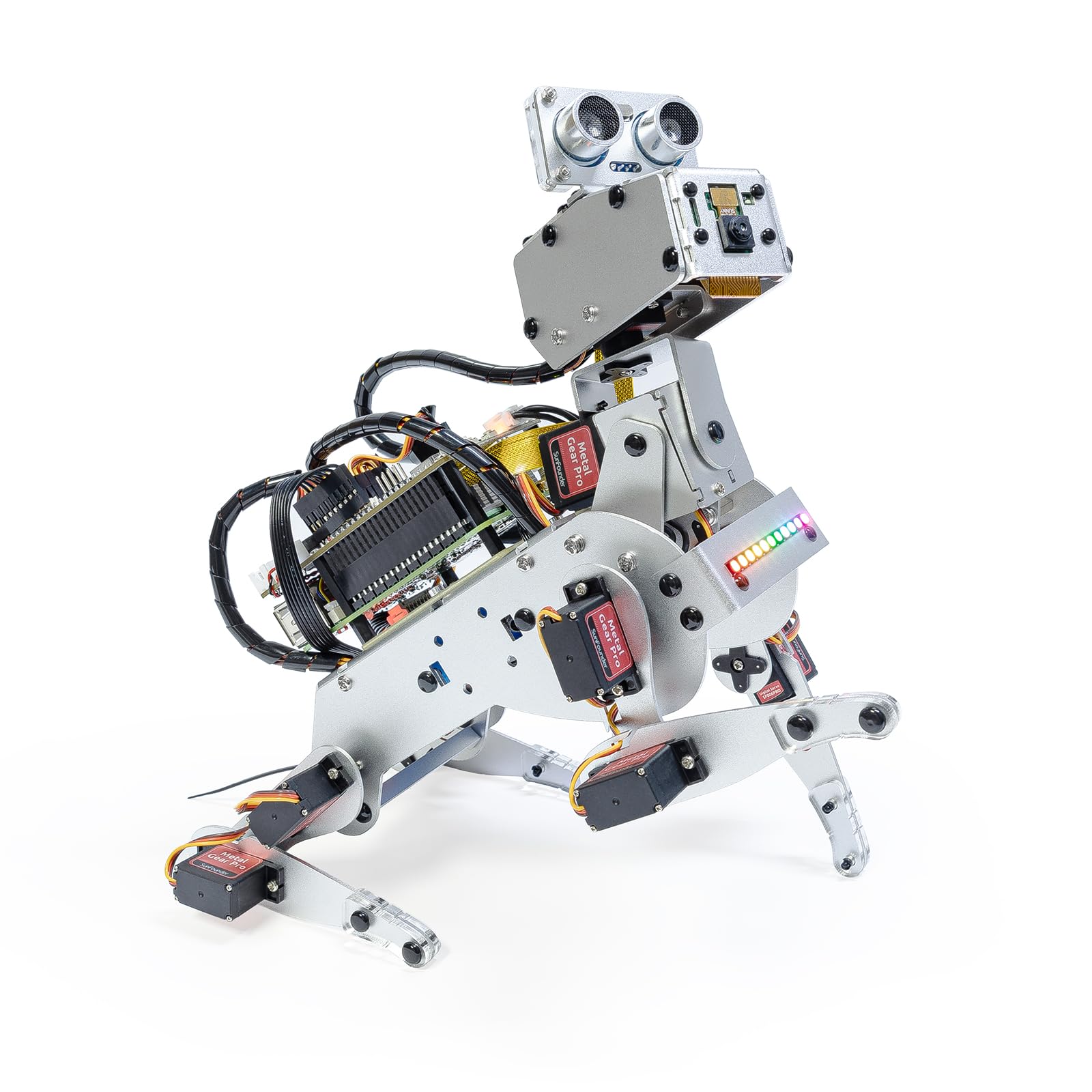
The PiDog is the most advanced open-platform robot dog under . It runs on a Raspberry Pi (5, 4B, 3B+, or Zero 2W) and can connect to multiple large language models including ChatGPT, Gemini, Grok, and even local Ollama instances. Twelve powerful servos enable 32 dog-like actions—walking, sitting, wagging, shaking, and performing tricks—mimicking a real canine’s range of motion.
The sensor suite is comprehensive: ultrasonic for obstacle detection, dual touch sensors on the head and back, a gyroscope for balance, a camera for computer vision (OpenCV, MediaPipe), and a microphone array for voice recognition and STT/TTS. The PiDog can recognize hand gestures, read math problems aloud, and hold conversations through its integrated speaker. The OpenClaw platform allows users to write custom Python scripts to create new behaviors.
Assembly is not trivial—it involves approximately 70 steps, tiny screws, and careful wiring. Several early adopters reported a small speaker failure rate, though SunFounder’s customer service shipped replacement boards quickly. This is not a toy for casual play; it’s a robotics engineering project designed for teenagers and adults who want to learn how AI and hardware integrate in the real world.
Why it’s great
- Multi-LLM integration (ChatGPT, Gemini, Grok, Ollama)
- 12 servos deliver realistic quadruped motion
- Open-source Python platform for custom AI behaviors
Good to know
- Requires separate Raspberry Pi purchase and assembly expertise
- Assembly takes several hours; reported speaker quality issues
6. Makeblock mBot2
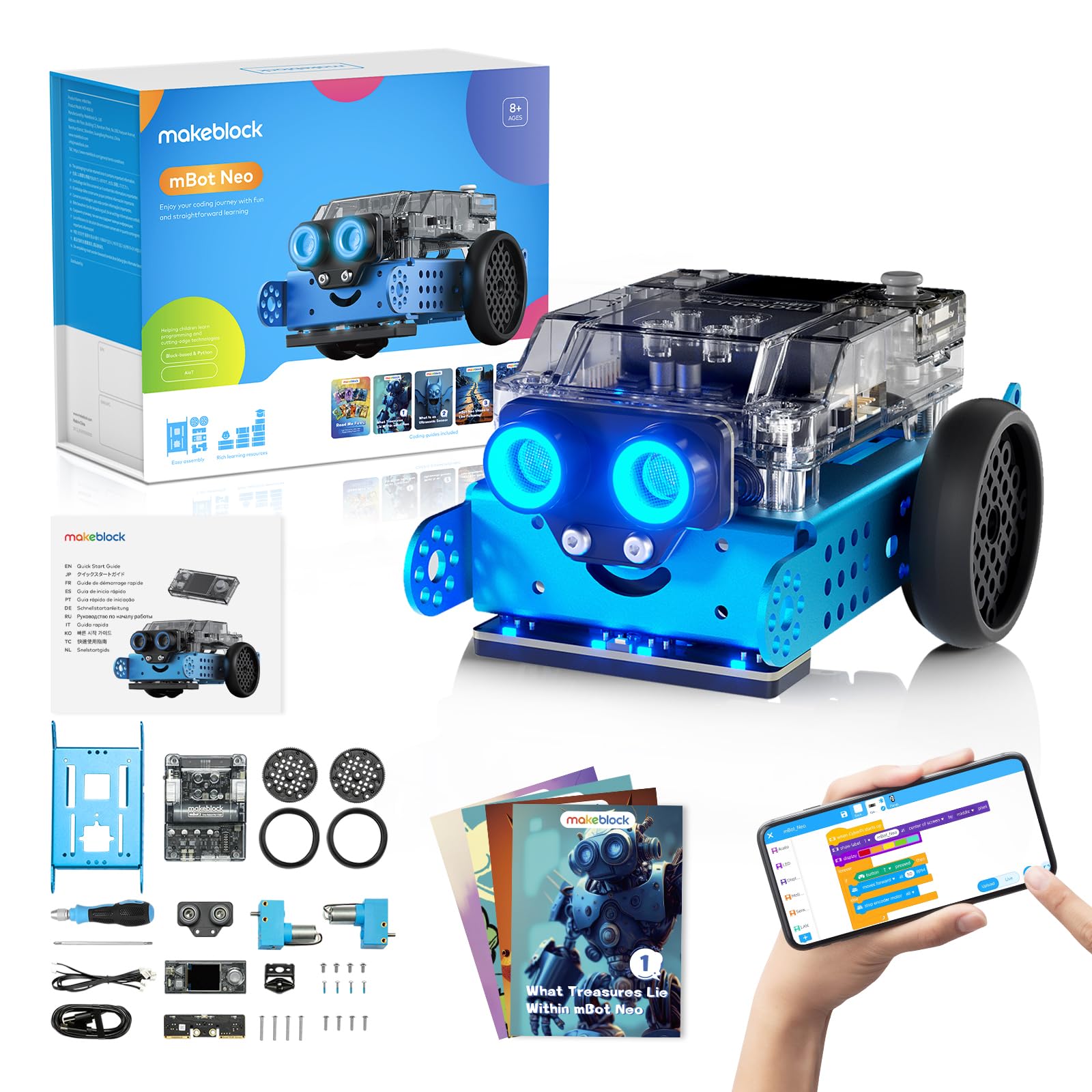
The mBot2 is the gold standard for classroom and home STEM education. It comes with over 10 advanced sensors including ultrasonic, line-following, color identification, and a gyroscope, all mounted on a sturdy blue anodized aluminum chassis. Assembly takes about 30 minutes and does not require soldering or coding knowledge upfront, making it accessible for kids aged 8 and up.
The learning path is thoughtfully structured. Beginners start with block-based Scratch programming in the Makeblock app, controlling the robot’s movement, lights, and sounds through drag-and-drop logic. As skills grow, users transition to Python, accessing the same sensor data and motor control through code. The Wi-Fi module enables Internet of Things (IoT) projects where multiple mBot2 units can share programming and tasks simultaneously.
A built-in rechargeable battery delivers up to 5 hours of playtime, and the robot features voice control and music modes that keep younger children engaged while they absorb the underlying logic. The platform is expandable with 30 additional modules, spanning from servo packs to environmental sensors, giving the kit a growth path that can last through several years of learning.
Why it’s great
- Scratch-to-Python progression is perfect for ages 8-14
- Aluminum construction is robust and kid-durable
- 5-hour battery with Wi-Fi connectivity for IoT lessons
Good to know
- Python syntax can be tricky for newcomers without adult help
- Some advanced sensors require separate purchase
7. Enabot EBO ROLA Mini

The EBO ROLA Mini is a mobile indoor camera robot designed for pet owners and remote family connection. It rolls around your home on small treads, controlled via a smartphone app, streaming 2K video with night vision. The 5,000mAh battery lasts about 2.5 days of intermittent use, and the magnetic USB-C charging cable (though not auto-docking) makes power-up simple.
Two-way audio is crisp, and the one-touch call feature lets family members initiate contact from the robot itself. The ROLA Mini is lightweight but sturdy, and the app supports route creation and automated patrols. Notable features include the ability to play fun sounds (meows, wolf howls) that pets react to, and a built-in 32GB micro-SD card for recording video locally.
The robot supports both 5GHz and 2.4GHz Wi-Fi, though setup is smoother on 5GHz. Some users noted the controls require practice, and the charging mechanism is a weak point—it lacks a self-docking base. The chassis is slightly heavy for its size, and the track speed is moderate. For a dedicated pet-tracking robot camera with real mobility, it delivers reliable performance at a mid-range price point.
Why it’s great
- 2K video with effective night vision for dark room monitoring
- 5000mAh battery provides days of standby per charge
- Two-way audio with one-touch call for remote family connection
Good to know
- No auto-charging dock; magnetic USB cable is finicky
- Weight and small treads limit speed and carpet mobility
8. ButterflyEdufields 40in1
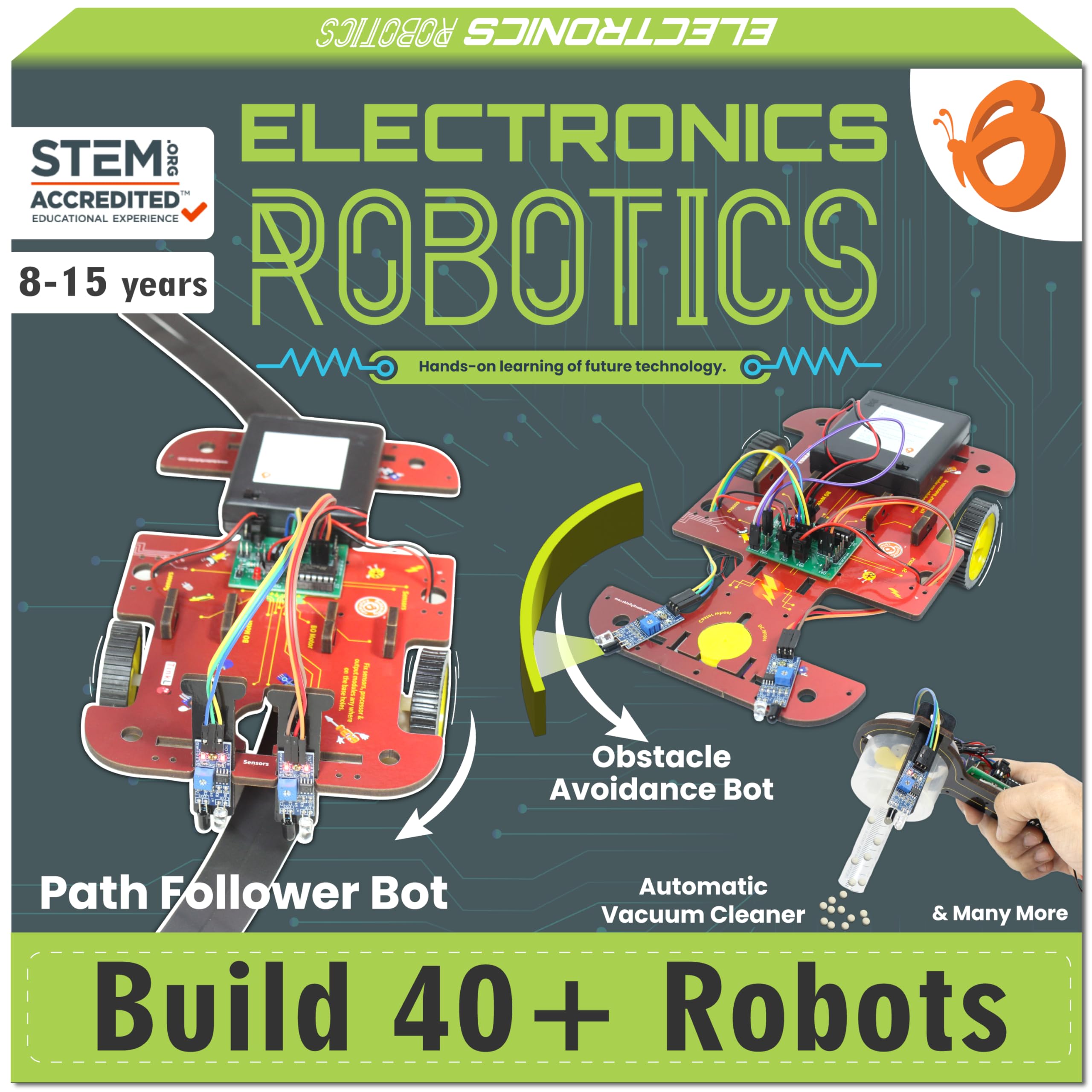
The ButterflyEdufields 40in1 is a plug-and-play robotics kit that prioritizes range over raw processing power. With over 100 electronic components—sensors, motors, processor brain, wheels, cables, LEDs, and a pump—kids can build more than 40 different projects including a line-following car, a flame extinguisher robot, a drawing robot, and a hand water dispenser. No soldering, tools, or coding experience is required.
The “artificial intelligence” here comes from the reuse of multiple sensors: infrared, flame, touch, LDR, and motion detectors can be plugged into the brain board in different configurations to detect fire, touch, magnetic fields, and light changes. The kit uses a wooden chassis and comes with a detailed manual that explains the function of every component.
The major limitation is the quality of materials—some connectors are fragile, and the instructions assume basic familiarity with breadboard-style connections. The kit’s educational value is high, offering over 50 hours of project-building, but it teaches circuit design and sensor logic rather than machine learning or autonomous decision-making. For total beginners on a budget, it’s a dense, versatile starter set.
Why it’s great
- 40+ different projects from a single kit (huge variety)
- No coding or soldering required for assembly
- Teaches real sensor logic (IR, flame, touch, LDR)
Good to know
- Components feel less durable than premium kits
- Does not support Scratch or Python programming
9. Thames & Kosmos Kai

Kai is a six-legged hexapod robot that introduces kids to the core concept of machine learning: pattern recognition. It reacts to gestures and sounds, and over time, learns to associate specific audio or visual patterns with assigned movements. The included 64-page full-color manual and comic book explain how AI training data works and why machines “learn” rather than just follow instructions.
The robot is controlled via a companion app for iOS and Android, where users assign custom movement sequences to gestures or voice inputs. The assembly is moderately complex—several reviews note a 3-4 hour build time—and some plastic parts are delicate. It won the 2023 Specialty Toy of the Year and landed on Purdue University’s INSPIRE Engineering Gift Guide, indicating solid educational pedigree.
Kai is strictly an intro to conceptual AI rather than a programmable development platform. The machine learning is pre-bundled into the app, so kids observe the learning process rather than writing the algorithms themselves. For ages 10+ with adult help, it provides a visual, hands-on way to understand how AI systems are trained rather than programmed, which is a genuinely unique offering at this price.
Why it’s great
- Teaches machine learning concepts through gesture/sound training
- Comic-book manual makes AI history engaging for kids
- Award-winning educational design from Purdue’s INSPIRE list
Good to know
- 3-4 hour assembly with fragile plastic parts
- ML is app-based; no custom code or Python access
FAQ
Does an AI robot need Wi-Fi to function?
What is the difference between a toy robot and an AI robot?
Final Thoughts: The Verdict
For most users, the best ai robot winner is the Roborock Qrevo CurvX because of its seamless integration of autonomous navigation, deep AI obstacle recognition, and a self-maintaining dock that genuinely eliminates floor cleaning labor. If you want a dedicated learning platform that teaches both hardware engineering and Python, grab the SunFounder PiDog. And for a unique desktop companion that uses real computer vision and ChatGPT to hold conversations, nothing beats the LOOI Robot.