
Choosing the wrong 1/4 inch stainless steel tubing means fighting kinks, dealing with rust spots, or compromising the integrity of a fuel, brake, or cooling line. The difference between a successful custom fabrication and a frustrating failure often comes down to the alloy grade, the wall thickness, and whether the tube is seamless or welded.
I’m Min — the co-founder and writer behind Gadgets Feed. I spent dozens of hours cross-referencing ASTM standards, burst pressure ratings, and real user reports across hydraulic, automotive, and homebrew applications to separate the tubing that delivers from the tubing that frustrates.
Whether you need corrosion resistance for a marine environment or precise dimensions for a compression fitting, choosing the right 1/4 inch stainless steel tubing determines whether your project holds up under pressure or fails at the first bend.
How To Choose The Best 1/4 Inch Stainless Steel Tubing
The ideal 1/4 inch tubing for your project balances corrosion resistance, pressure handling, formability, and cost. Overlooking any of these parameters leads to premature failure or installation headaches.
Alloy Grade: 304 vs 316/316L
304 stainless steel offers strong corrosion resistance for indoor, automotive, and general industrial use at a lower price point. 316/316L contains molybdenum, providing superior resistance to chlorides, saltwater, and chemical exposure — essential for marine brake lines, coastal applications, or food-grade fluid systems.
Wall Thickness and Burst Pressure
The wall thickness determines both the pressure rating and the ease of bending. A 0.028″ wall (common in coil brake line) is easier to flare and bend without kinking but has a lower burst pressure than 0.035″ or 0.039″ walls. Thicker walls like 0.039″ offer higher structural rigidity for framing but require more force to shape.
Seamless vs Welded Construction
Seamless tubing is drawn from a solid billet — no weld seam means no weak point under high pressure or cyclic stress. Welded tubing starts as a flat strip rolled and welded; it is cheaper but can split along the seam when flared or subjected to vibration. For brake lines, fuel injection, or any pressure-critical application, seamless is the safer choice.
Straight Sticks vs Coils
Straight tubing sections are ideal for structural projects, framing, or short runs where precise alignment matters. Coiled tubing is designed for long continuous runs — brake lines from chassis to caliper, fuel lines, or wort chiller coils — where bending around obstacles without joints is critical.
Quick Comparison
On smaller screens, swipe sideways to see the full table.
| Model | Category | Best For | Key Spec | Amazon |
|---|---|---|---|---|
| FITOK 316/316L Seamless | Seamless | High-pressure fluid systems | 0.035″ Wall, Annealed | Amazon |
| 4LIFETIMELINES 316L Coil | Marine Brake | Brake & fuel lines | 11,070 psi Burst | Amazon |
| MorningRo 304 Coil | Multi-Purpose | Cooling & fuel coils | 2 Rolls, 50 ft Total | Amazon |
| Tynulox 304 Stick 12″ | Straight Cut | Custom framing & spacers | 0.039″ Wall, 5-Pack | Amazon |
| Tynulox 304 Stick 10″ | Value Pack | DIY crafting & fixtures | 0.039″ Wall, 5-Pack | Amazon |
| A-KARCK 304 Stick | General Use | Furniture & repair | 1 mm Wall, 5-Pack | Amazon |
| Vigorous 304 Coil | Welded Coil | General plumbing & fuel | 50 ft Welded | Amazon |
In‑Depth Reviews
1. FITOK 316/316L Seamless Tubing 1/4″ OD × 0.035″ Wall × 40″

The FITOK seamless tube is engineered to a higher standard than ASTM A269, with controlled ovality and a maximum hardness of 80 HRB ensuring leak-tight connections with compression fittings. The 0.035″ wall thickness provides a strong middle ground — enough burst resistance for petrochemical and hydraulic systems while remaining formable for flaring without splitting.
Being 316/316L dual-certified, this tubing resists pitting and crevice corrosion far better than 304, making it the right call for offshore, chemical, or food-processing environments where a weld seam could become a failure point. The annealed condition means the metal arrives soft enough for bending but retains high mechanical strength in service.
This single 40-inch piece costs more than multi-pack 304 sticks, but the material and manufacturing tolerances justify the premium for critical applications. Users confirm the OD/ID specs match advertised values and the finish supports reliable sealing with Swagelok-style fittings.
Why it’s great
- Seamless construction eliminates weld-seam failure risk
- 316/316L dual grade offers top-tier corrosion resistance
- Close OD tolerances enable leak-free compression fittings
Good to know
- Single 40-inch piece only — no multi-pack economy
- Not polished; matte surface may not suit visible decorative work
2. 4LIFETIMELINES 1/4″ x 25 ft 316L Marine Grade Brake Line Coil

This coil is purpose-built for hydraulic brake and fuel systems, meeting SAE JI677 and ASTM A249 specifications. The 0.028″ wall thickness (0.7 mm) strikes a proven balance: thin enough to bend by hand without kinking using a quality bender, yet rated for a burst pressure of 11,070 psi and a working pressure of 2,214 psi.
The 316L marine-grade alloy includes molybdenum for chloride resistance, critical for saltwater environments where standard 304 would pit within months. The seamless drawn construction and anti-kinking manufacturing technology mean the tube retains its shape after bending and double-flares without cracking — a failure mode common with cheaper welded coils.
Twenty-five feet provides enough material for a full vehicle brake line replacement or multiple shorter runs. Users report successful tight-radius bends and double flares on vintage motorcycle suspensions and boat trailers, though a professional flaring tool is recommended for stainless due to its work-hardening properties.
Why it’s great
- Specific SAE and ASTM compliance for brake/fuel safety
- Seamless 316L resists saltwater corrosion effectively
- Annealed coil bends and flares without cracking
Good to know
- Requires a quality flaring tool — cheap tools struggle with stainless
- 25 ft coil uncoils with spring memory; straightening takes effort
3. MorningRo 1/4″ x 50 ft 304 Stainless Steel Tubing Coil (2 x 25 ft)
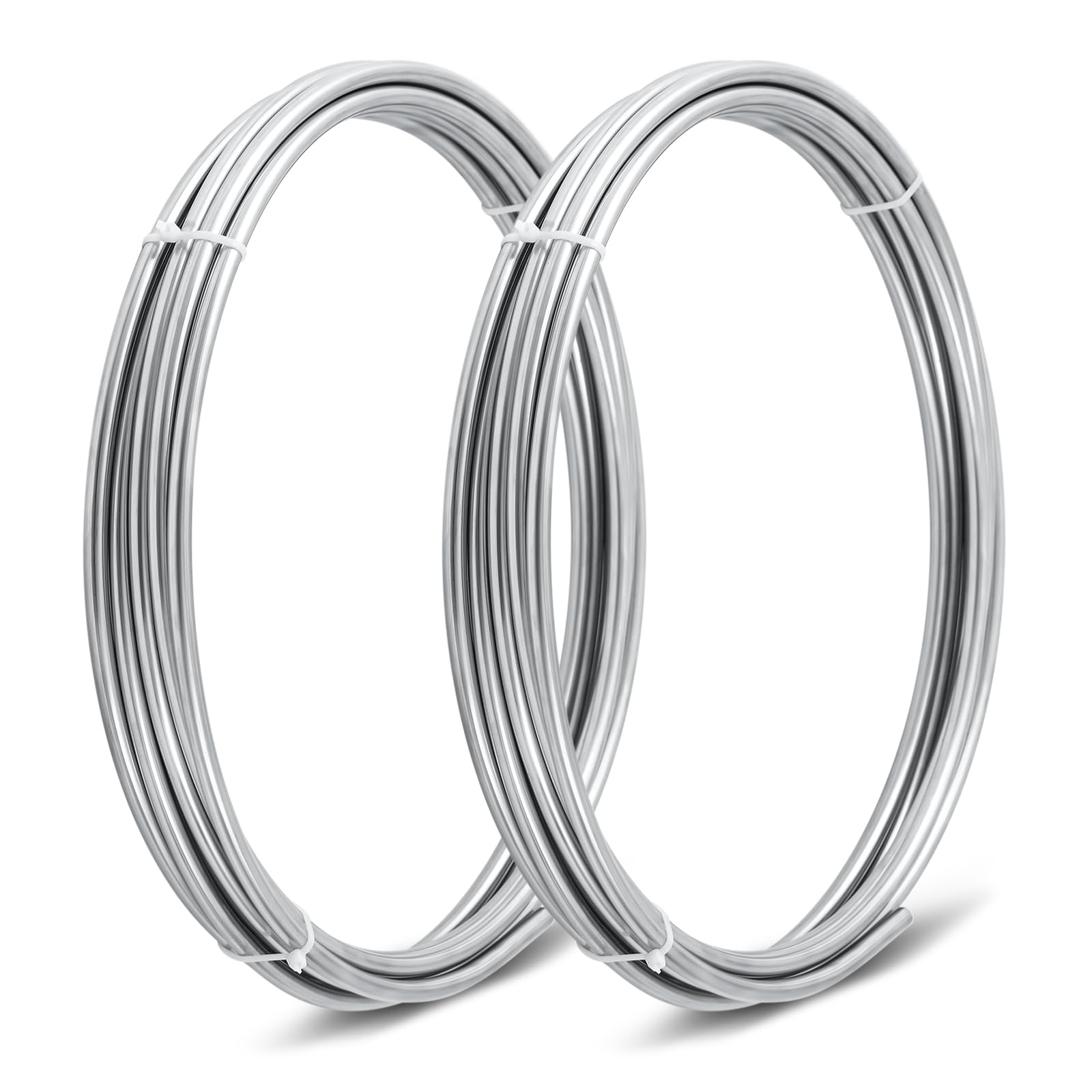
The MorningRo package delivers two 25-foot coils for the price of many single 25-foot competitors, making it the clear choice when total run length matters more than exotic alloy content. The 304 stainless construction handles standard automotive fuel lines, wort chiller coils for homebrewing, and general agricultural plumbing without corrosion issues in normal environments.
With an outer diameter of 0.64 cm and a wall thickness around 0.05 cm, this tubing is on the thinner side — adequate for low-pressure gravity-fed or pump-assisted lines but not suitable for high-pressure brake or fuel injection systems. The welded construction means the seam can be a weak point if aggressively flared or subjected to vibration cycles.
Users confirm the coils work well for fuel line replacement and cooling applications. The two-roll format means one can be cut for a primary run while the second remains reserved for future repairs or expansion, adding to the practical value.
Why it’s great
- Two 25-ft coils provide exceptional total length per dollar
- 304 stainless is adequate for fuel, cooling, and agricultural use
- Flexible enough for hand-bending wort chillers and return lines
Good to know
- Welded construction — not safe for critical brake or high-pressure hydraulic systems
- Thin wall may kink if bent without a proper tubing bender
4. Tynulox 1/4″ OD 304 Stainless Steel Tube, 12″ Length, Pack of 5

These 12-inch sticks from Tynulox feature a thicker 0.039″ (1 mm) wall than most entry-level tubing, giving them added rigidity for structural applications like custom framing, railing sections, furniture legs, or garden trellises. The 304-grade polished surface resists corrosion in indoor and covered outdoor settings while providing a clean aesthetic for visible projects.
The wall thickness makes these tubes harder to bend by hand — that is by design for applications needing straight, non-collapsible supports. They cut cleanly with a standard pipe cutter and accept threading or welding for permanent joints. The five-stick pack provides enough material for small fabrication runs without overspending on surplus.
Customer feedback confirms the stainless holds up outdoors without rust formation, and the dimensions are consistent enough for use as spacers with #14 wood screws or as axle pins for kinetic sculpture projects.
Why it’s great
- Thicker 0.039″ wall offers high structural rigidity for framing
- Polished finish improves appearance for visible installations
- Five sticks per pack supports multi-use fabrication
Good to know
- Thick wall resists hand bending — use a bender or heat for curves
- 304 grade — avoid prolonged saltwater or chemical exposure
5. Tynulox 1/4″ OD 304 Stainless Steel Tube, 10″ Length, Pack of 5
Essentially the same 304 stainless tubing specification as the 12-inch version but cut to 10-inch lengths at a lower entry price. The 0.039″ wall thickness and polished surface mirror the larger sibling, making these suitable for spacers, small fixtures, fishing rod bell holders, and art projects where shorter segments are more practical.
The five-stick pack at this price point represents the lowest cost per unit in the entire lineup, attractive for hobbyists and DIYers who need several identical pieces without committing to premium marine-grade materials. The 304 alloy handles normal humidity, interior moisture, and occasional outdoor exposure without visible rust.
Users report cutting these into 1.5-inch segments for fishing rod attachments and using them as corrosion-resistant spacers on outdoor wood screws. The few negative mentions involve occasional sizing inconsistencies, though the majority confirm dimensions match the listing.
Why it’s great
- Lowest per-unit cost in the guide — ideal for budget builds
- Thick 0.039″ wall resists crushing under compression loads
- Polished surface works well for decorative and crafting projects
Good to know
- Limited to 10-inch lengths — not suitable for long runs
- Rare sizing variance reported — measure before final assembly
6. A-KARCK 1/4″ OD 304 Stainless Steel Tube, 10″ Length, 5 Pcs
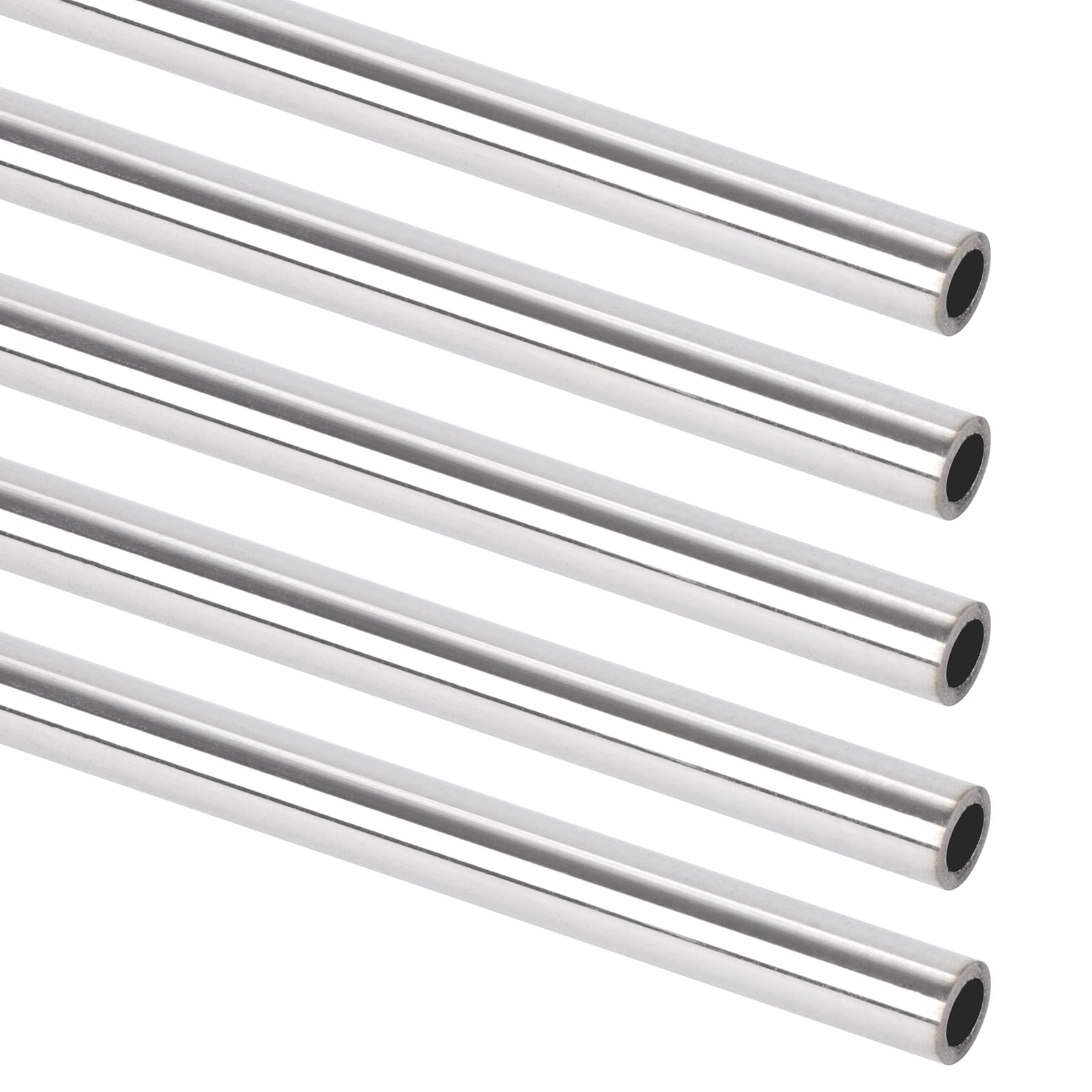
The A-KARCK tubing offers the same 1/4″ OD and 1 mm wall thickness as the Tynulox sticks, but with a notably smooth polished finish that users describe as ideal for visible projects. The 10-inch length and five-piece count align with the budget tier while maintaining a consistent 304 stainless composition for general-purpose durability.
DIYers find this tubing easy to cut with pipe cutters and functional for creative applications like metal wind chimes, small furniture brackets, or repair sleeves. One user successfully cut 4-inch sections, added bronze bushings, and rebuilt a fitness machine’s rear suspension using a 16 mm bolt through the tube — demonstrating the strength of the 1 mm wall.
A minority of users note the outside diameter can run slightly oversized (0.63″ reported in one case), so if your project involves tight tolerances with bushings or compression fittings, verify the fit before committing to a full assembly.
Why it’s great
- Smooth polished finish enhances appearance for crafts and decor
- 1 mm wall provides good strength for repair and structural uses
- Easy to cut and drill for custom fabrication projects
Good to know
- Minor OD variance reported — check fit with bushings beforehand
- Budget 304 grade — not meant for marine or chemical environments
7. Vigorous Stainless Steel Tubing Coil, 1/4″ x 50 Ft 304 Welded

The Vigorous coil provides 50 continuous feet of 1/4″ 304 welded tubing, suitable for long fuel line replacements, plumbing runs, or custom metalwork where multiple joints would be impractical. The 304 alloy offers reliable corrosion resistance for general automotive, agricultural, and indoor use without the premium cost of 316L.
Being welded rather than seamless, this tubing is more affordable per foot than the 4LIFETIMELINES or FITOK options, but the weld seam can present challenges under aggressive flaring or tight-radius bending — one user noted it did not flare cleanly and another found it too thin for brake line duty. The tubing is semi-rigid, stiffer than brake-line coils but shapeable with a bender for custom routes.
For non-critical applications like return fuel lines, water cooling, or structural wire management, this coil delivers the length needed at a competitive price. The 50-foot spool eliminates the need for multiple splices, and the stainless composition ensures long-term durability in normal environments.
Why it’s great
- 50 ft continuous length reduces joints and potential leak points
- 304 stainless provides durable corrosion resistance for most environments
- Semi-rigid material holds shape after bending for clean routing
Good to know
- Welded seam can split during flaring — not recommended for brake systems
- Wall thickness reported as thin by some users; verify gauge for pressure applications
FAQ
Can I use 304 stainless coil tubing for automotive brake lines?
How do I cut 1/4 inch stainless steel tubing without crushing it?
What is the difference between 304 and 316L for a wort chiller or homebrew application?
Why does my stainless tubing crack when I try to flare it?
Final Thoughts: The Verdict
For most users, the 1/4 inch stainless steel tubing winner is the FITOK 316/316L Seamless because it delivers the highest material integrity with seamless construction, dual-certification corrosion resistance, and tolerances built for leak-tight compression fittings. If you need a full brake or fuel line run with a lifetime warranty, grab the 4LIFETIMELINES 316L coil. And for budget-friendly multi-stick structural work or crafting, nothing beats the value of the Tynulox 304 10-inch pack.