
The right pair of ski boots is the single most important piece of gear you’ll own. A boot that’s too narrow pinches your foot until you can’t feel your toes, while one that’s too soft robs you of control the moment you try to carve. For women with a 24.5 mondo size, the margin for error is razor-thin — get the flex wrong, and your afternoon in the lodge starts two runs too early.
I’m Min — the co-founder and writer behind Gadgets Feed. I’ve spent countless hours analyzing the construction materials, flex indices, last widths, and anatomical features that separate a boot that makes you a better skier from one that makes you quit by lunch.
Whether you’re a beginner finding your edges or an intermediate ready to link turns with confidence, this guide breaks down the 24.5 women’s ski boots that deliver the right balance of warmth, comfort, and power transfer for your progression.
How To Choose The Best 24.5 Women’s Ski Boots
A 24.5 mondo boot fits a foot roughly 24.5 cm long — roughly a women’s US size 7.5 to 8. But length is only half the equation. The three numbers that define a ski boot are its last width (how wide the forefoot is), its flex rating (how stiff the shell is front-to-back), and its liner construction (how the boot wraps your foot). Prioritize these three specs, and you’ll eliminate 90% of the wrong options.
Flex Rating: Soft for Learning, Stiff for Driving
A flex rating of 50 to 60 is ideal for beginners and light intermediates — it permits a forgiving range of motion that makes it easy to tip the skis onto their edges without fighting the boot. A flex of 70 to 80 suits heavier intermediates or stronger skiers who need more resistance to transfer power cleanly from leg to ski. If your 24.5 boot is too stiff, you’ll struggle to bend your ankles; too soft, and you’ll feel sloppy the moment you push the skis hard.
Last Width: The 102 vs. 104 Decision
The last width is measured in millimeters across the widest part of the forefoot. A 100mm last feels snug through the ball of the foot and suits slim, low-volume feet. A 102mm last works for average-width women’s feet, while a 104mm last offers a relaxed or wide fit that accommodates broader forefeet or high-volume insteps without pinching. In the 24.5 size range, the difference of 2mm is the line between all-day comfort and a pressure point that forces you to unbuckle between every run.
Calf Fit and Cuff Shape
Women’s ski boots often feature a lower cuff volume and a tulip-shaped rear contour that mirrors the angle of a woman’s calf. If you have larger calf muscles, this feature alone can eliminate the painful gap at the top of the cuff that causes shin bang and circulation loss. A boot with a customizable or heat-moldable cuff lets you adjust this fit without needing a shop visit.
Quick Comparison
On smaller screens, swipe sideways to see the full table.
| Model | Category | Best For | Key Spec | Amazon |
|---|---|---|---|---|
| Atomic Hawx Magna 75 | Women’s | Wide forefoot, intermediate | 102mm last, 75 flex | Amazon |
| Rossignol Kelia 50 | Women’s | Beginners, wide calves | 104mm last, 50 flex | Amazon |
| K2 BFC 80 | Men’s | Very wide feet, comfort seekers | Heat-moldable shell, 80 flex | Amazon |
| Nordica Cruise S W | Women’s | Easy entry/exit, beginners | 104mm last, Dual Soft Flap | Amazon |
| Nordica The Cruise 80 | Men’s | Instep volume control, all-mountain | 104mm last, 80 flex, IVC | Amazon |
| Nordica The Cruise 80 Men’s | Men’s | Extra-wide fit, intermediate | 104mm last, micro-adjustable buckles | Amazon |
| KULKEA Thermal Trekker | Bag | Warming boots before skiing | 3 heat settings, 62L capacity | Amazon |
In‑Depth Reviews
1. Atomic Hawx Magna 75 Women’s Ski Boots
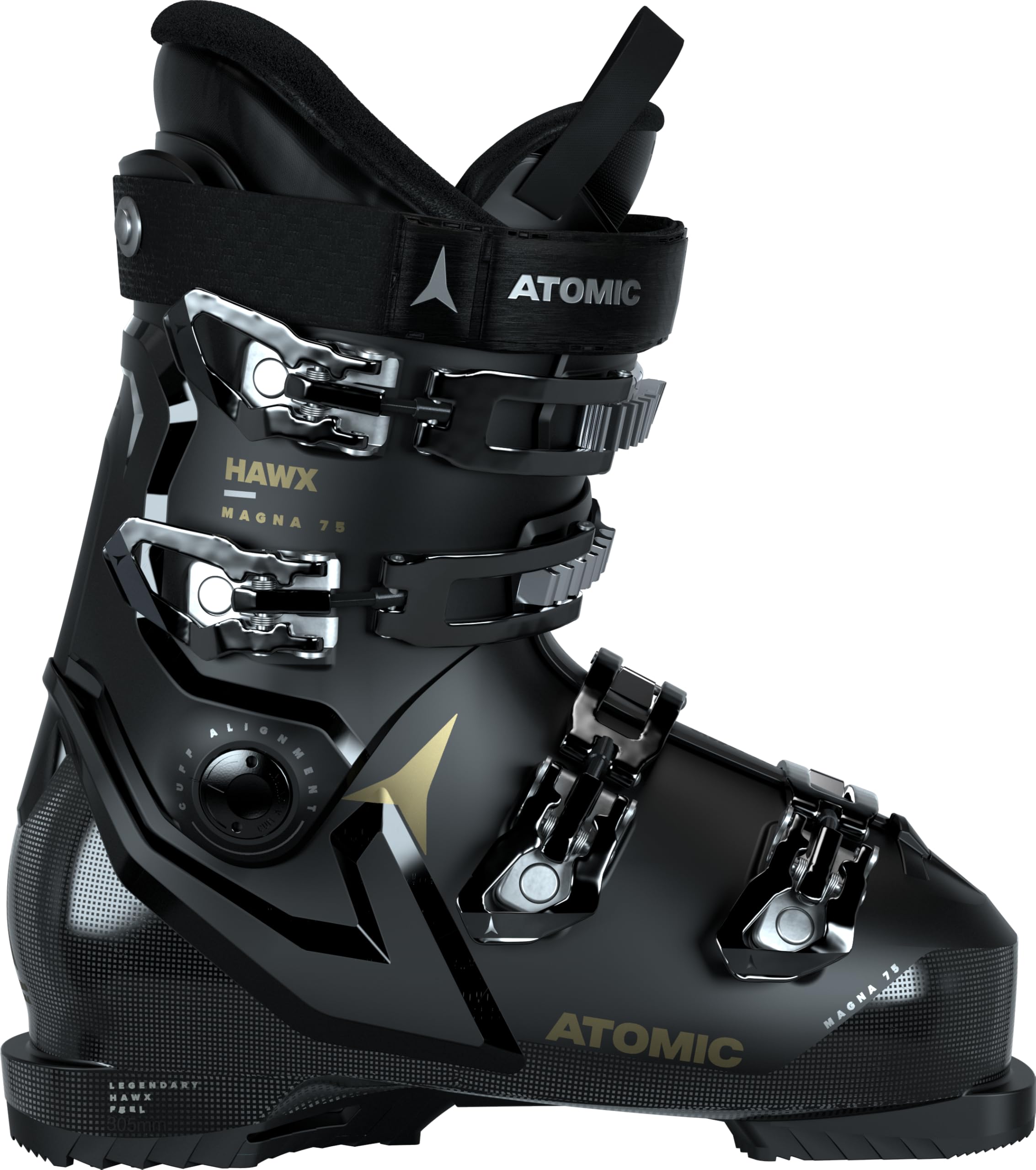
The Atomic Hawx Magna 75 is built on a 102mm last, making it the premium choice for women with wider forefeet who still want a responsive 75 flex. The Energy Link between cuff and shell creates a powerful connection that reduces shin pressure while improving edge-to-edge response. At 8.4 pounds per boot (size 24.5), it’s not the lightest, but the material density translates into durability and consistent flex across many days of skiing.
The heat-moldable liner conforms to your foot shape after a quick shop session, eliminating the break-in period that often plagues stiffer boots. The polyurethane shell resists flex softening in cold temperatures, meaning the 75 rating stays consistent even when the thermometer drops below freezing. Women with a high instep will appreciate the smooth tongue entry that avoids the pinching found on narrower designs.
GripWalk soles are compatible out of the box — a meaningful upgrade if you hike across parking lots or walk into lodges between runs. The 102mm last provides that sweet spot between a locked-in heel pocket and enough forefoot room to keep circulation flowing. If you’re an intermediate looking to own a single pair of boots for the next four seasons, this is the one to beat.
Why it’s great
- 75 flex offers progressive power transfer for intermediate skiers
- 102mm last fits wide forefeet without sloppy heel hold
- GripWalk soles improve walking safety and grip on ice
Good to know
- Requires heat molding for optimal out-of-box comfort
- Weight is on the heavier side for lift-served resort skiing
2. Rossignol Kelia 50 Women’s Ski Boots
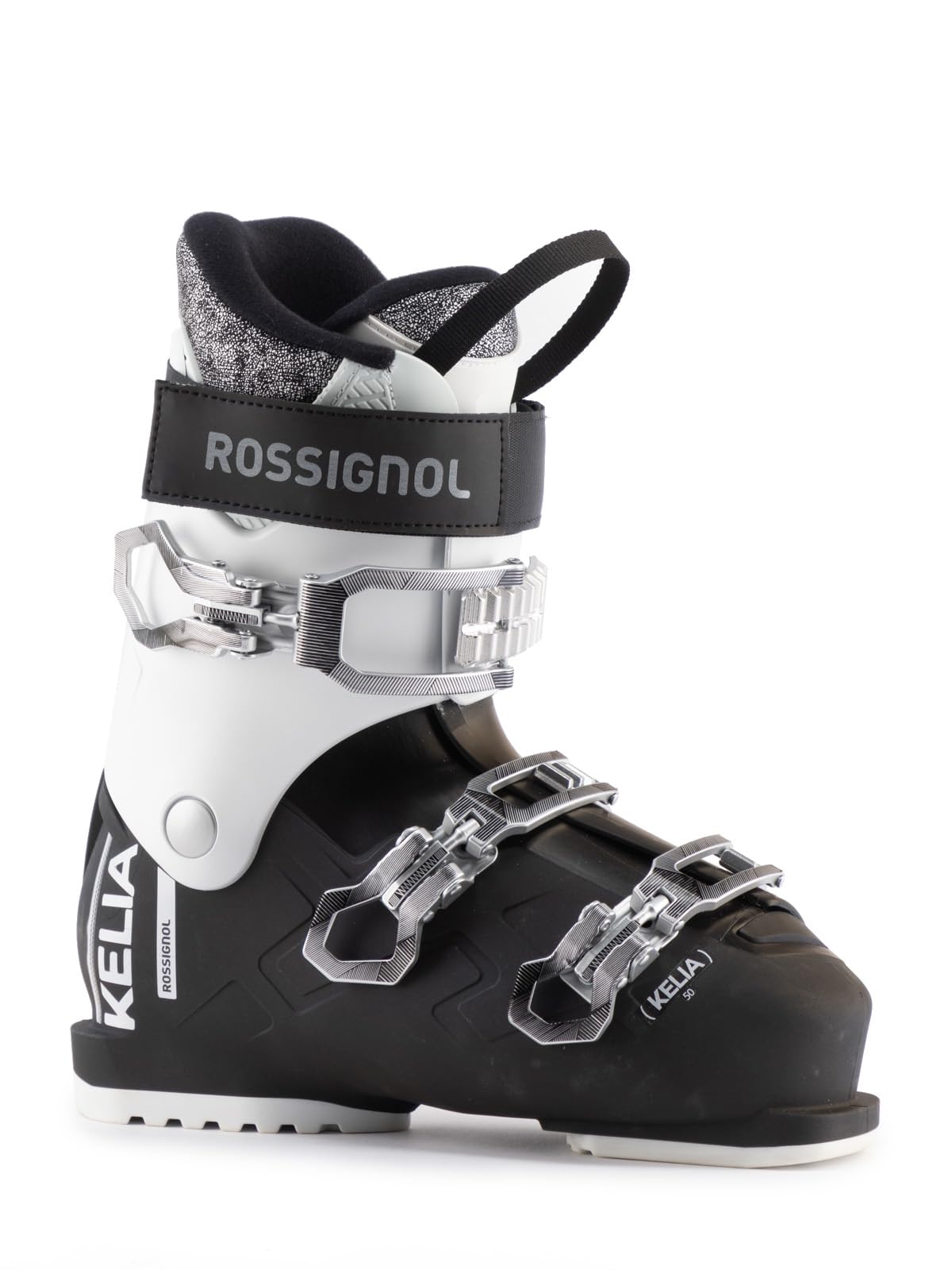
The Rossignol Kelia 50 is engineered with a 104mm last and a forgiving 50 flex rating, making it the gentlest option on this list for first-time skiers. The Sensor Matrix shell reduces overall weight while maintaining enough rigidity for controlled turns at slower speeds. The three-buckle closure system is simpler than a four-buckle design, which speeds up the process of getting your boots snugged down on a cold morning.
Rossignol’s tulip-shaped cuff is tailored to women’s anatomy — the rear contour angles inward to follow the natural curve of a woman’s calf, reducing pressure behind the shin. This is a meaningful detail for skiers with thicker calves who find standard cuffs pinch or create a painful gap. The soft plastic around the instep allows the boot to open wider for easy entry, even when the shell is cold and stiff.
The Kelia 50 is compatible with GRIPWALK soles, so you can upgrade later if you want better off-snow grip. Several users with wide calves reported that this boot eliminated the rubbing and circulation loss they experienced in other models. If you’re learning to parallel turn and enjoy full-day comfort without fighting your equipment, this boot’s 104mm last and forgiving flex give you a wide margin of error.
Why it’s great
- 104mm last provides generous forefoot room for wide feet
- 50 flex is ideal for beginner progression and low-speed control
- Tulip-shaped cuff relieves pressure on women’s larger calves
Good to know
- 50 flex may feel too soft for heavier or more aggressive skiers
- GRIPWALK soles are sold separately, not included
3. K2 BFC 80 Men’s All-Mountain Ski Boots
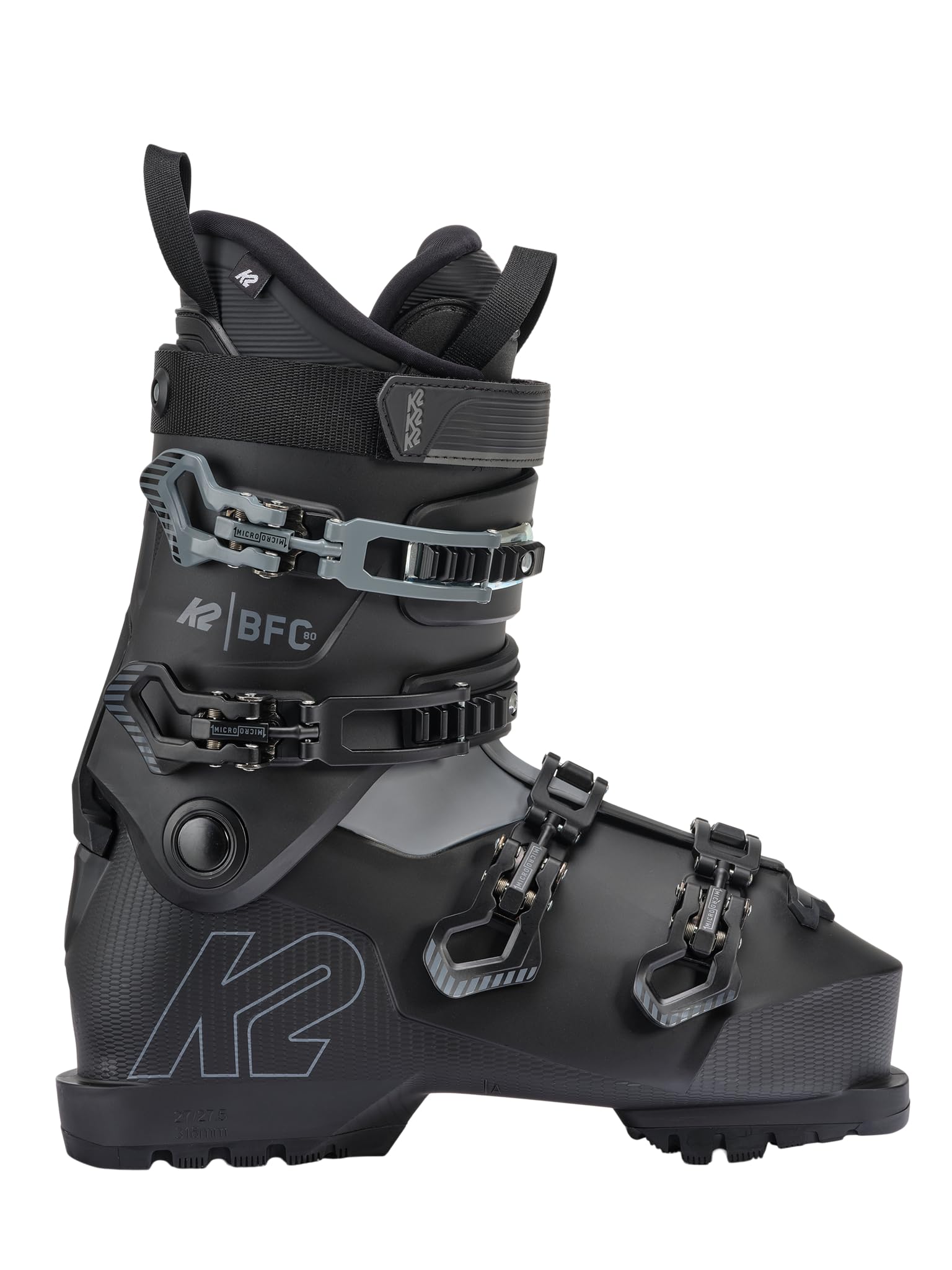
The K2 BFC 80 stands apart because the entire shell and cuff are capable of being heat-molded — not just the liner. This means a boot fitter can expand the shell in specific pressure points to accommodate bunions, bone spurs, or very wide forefeet that would normally require going up a shell size. The 80 flex rating is stiffer than the typical beginner boot, suiting intermediates who want a more direct feel from boot to ski edge.
The Hands Free Entry dual-material overlap opens the throat wide, making it easy to slide your foot in without fighting the tongue. The Cushfit Comfort liner adds extra foam around the ankle and heel pocket for a plush, padded feel that reduces pressure during long days. At 6 pounds per boot, it’s lighter than the Atomic Hawx Magna, which matters if you carry your gear from the car to the lodge.
GripWalk soles come standard, and the 104mm last is comfortable for buyers who have struggled with narrow boots in the past. Some customers noted that the delivered color may not match the listing photo, but the shell performance is consistent. If you have problem feet — wide, high-volume, or bunions — the heat-moldable shell makes this the most adaptable 24.5 option on the list.
Why it’s great
- Full shell and cuff are heat-moldable for custom fit
- 80 flex delivers responsive power for intermediate skiers
- Hands Free Entry simplifies getting in and out of the boot
Good to know
- Color in photo may differ from delivered unit
- Men’s sizing runs wider; women with low-volume feet may need extra liner fill
4. Nordica Cruise S W Women’s Ski Boots

The Nordica Cruise S W is purpose-built for beginner and intermediate women who prioritize comfort and ease of use above all else. Its 104mm last offers a relaxed fit through the forefoot, while the Dual Soft Flap Instep design creates an exceptionally wide opening that allows the foot to slide in without wrestling with the tongue. This is a meaningful feature if you have a high instep, arthritis in your hands, or simply want to minimize the struggle of booting up in a cold parking lot.
The softer shell construction makes the boot forgiving — you can flex it easily at low speeds, which reduces the chance of catching an edge during your first turns of the day. Both the shell and liner are customizable: the liner can be heat-molded for a personal fit, and the shell can be adjusted by a boot fitter to relieve pressure points. Multiple customers noted that these boots were the “most comfortable” they had ever owned, with no toe pain after full-day skiing.
The Cruise S W weighs 7.7 pounds per boot, putting it mid-pack for weight. The micro-adjustable aluminum buckles provide secure closure without the slop found on plastic buckles at this tier. Some users felt the buckle durability is worth monitoring, but for the price, the combination of easy entry, wide last, and heat-moldable liner is hard to beat for a beginner who wants to avoid the rental line.
Why it’s great
- Dual Soft Flap provides the widest opening for easy entry
- 104mm last suits wide feet and high-volume insteps
- Heat-moldable liner personalizes fit without expensive shop work
Good to know
- Buckle quality feels less robust than premium metal alternatives
- Soft flex limits performance for aggressive skiers
5. Nordica The Cruise 80 Men’s Ski Boots (24.5)

Nordica’s Cruise 80 brings Instep Volume Control (IVC) to the table, a feature that lets you adjust the height of the boot board by plus or minus 4mm. That may sound small, but for skiers with a high instep, that 4mm of extra vertical space is the difference between a comfortable wrap and a crushing pinch across the top of the foot. The 104mm last and 80 flex rating make it a solid middle-ground boot for intermediate men or women with larger foot volume who want more stiffness than a 50-flex boot.
The infrared customization technology allows a boot fitter to heat-target specific zones of the shell for fine-tuning, which pairs well with the IVC system to solve both length and volume misfits. The Easy Entry Soft Flap integrates soft plastic inserts into the throat, keeping the entry smooth without requiring you to crank the buckles loose every time. At 7.7 pounds, the weight is comparable to the women’s Cruise S W, but the construction is rated for more aggressive skiing.
Customer feedback is split: skiers with larger calves and wide feet praised the comfort, while a smaller number reported ankle pain and blistering. This suggests the boot’s volume profile works best for medium-to-high volume feet rather than low-volume, skinny-ankle shapes. If you need instep room in a 24.5 boot and want the adjustability to fine-tune it, the Cruise 80 is worth the extra attention from a boot fitter.
Why it’s great
- Instep Volume Control adjusts fit by +/- 4mm for high insteps
- 104mm last accommodates wider feet in a 24.5 shell
- Infrared customization allows precision shell modifications
Good to know
- May cause pressure points for low-volume, narrow feet
- Some users reported blistering before molding adjustments
6. Nordica The Cruise Men’s Ski Boots (24.5)

This version of the Nordica Cruise is listed as a men’s boot, but its 24.5 sizing and 104mm last make it a strong candidate for women with extra-wide feet who need the most room possible in the forefoot and toe box. The Dual Soft Flap Instep works the same way as the women’s Cruise S W — the throat opens wide for effortless entry. The micro-adjustable aluminum buckles provide finer closure increments than standard plastic ratchets, helping you dial in the tightness across the instep without over-cranking one zone.
The infrared technology insert promises customization at sensitive points, and the 104mm last is labeled as “Extra Wide Comfort” by Nordica. Multiple reviewers described the fit as “perfect” for medium-width feet and noted they could ski all day without pain. The polyurethane shell is durable and holds its flex well over multiple seasons, making this a budget-friendly option for skiers who want a forgiving fit without sacrificing shell quality.
Customer feedback on this boot was overwhelmingly positive — “Great price super comfortable boots” and “Very comfortable. Correct sizing” were common refrains. The caveat: this is a men’s last, so the cuff is higher and the overall volume is slightly larger than a women’s-specific model. Women with lower-volume calves may find the cuff too roomy, but for skiers who need maximum width in a 24.5 shell, this boot delivers a relaxed fit at a budget-friendly price point.
Why it’s great
- 104mm last offers a generous fit for wide feet
- Micro-adjustable aluminum buckles allow precise fit tuning
- Infrared shell customization adapts to pressure points
Good to know
- Men’s cuff may feel tall or loose for women with smaller calves
- Overall shell volume is higher than women’s-specific models
7. KULKEA Thermal Trekker Heated Ski Boot Backpack
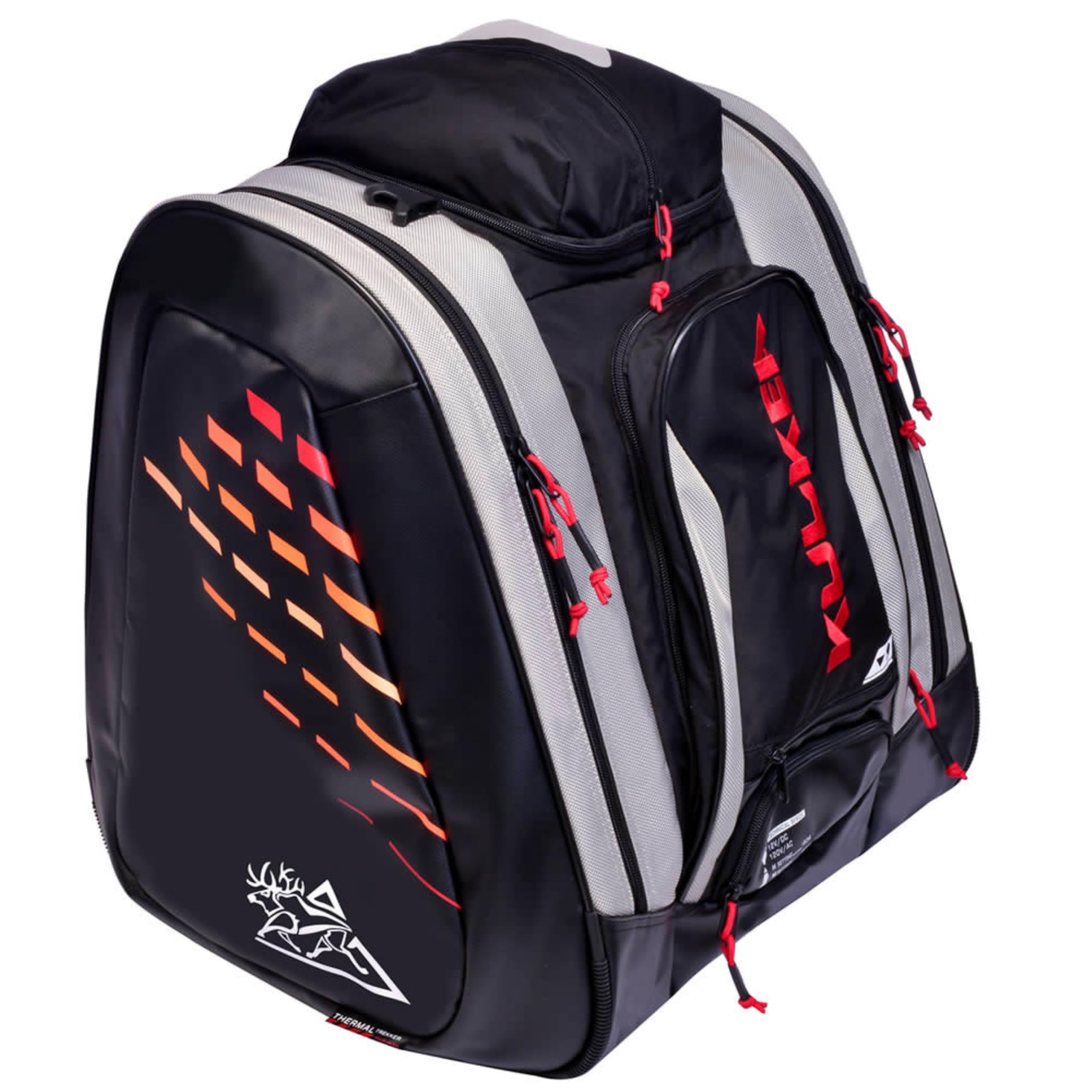
The KULKEA Thermal Trekker isn’t a ski boot — it’s an insulated, heated backpack designed to carry and warm your 24.5 boots before you hit the slopes. The separate side pockets direct heat to both sides and the bottom of each boot, using three settings (Low, Medium, High) with a maximum pad temperature of 140°F. Boots reach a toasty warmth within 90 minutes, which makes slipping into stiff shells dramatically easier on cold mornings.
The 62-liter interior compartment fits boots, helmet, goggles, gloves, base layers, and a lunch, effectively replacing a separate gear bag. The padded, adjustable shoulder straps and sternum strap distribute the weight well, even when fully loaded. The bag works with a 120V wall plug (standard household outlet) and a 12V auto plug, meaning you can heat the boots during the car ride to the mountain. Many ski racers and frequent skiers reported that the heating system lasts about two seasons with normal use.
One notable limitation: some adult race helmets did not fit inside the main compartment. If you wear a large helmet, you may need to carry it separately or use the included helmet sling attachment on the outside. If your focus is maximizing on-snow time and you hate putting on cold, stiff boots in the parking lot, this bag eliminates that friction entirely.
Why it’s great
- Heats boots to 140°F in 90 minutes for easy entry
- 62L capacity fits full ski kit in one backpack
- Works with 12V car plug for pre-heating on the drive
Good to know
- Large race helmets may not fit inside the main compartment
- Heating element lifespan is approximately two regular seasons
FAQ
What last width should I pick for a 24.5 women’s ski boot?
Can I use a men’s 24.5 ski boot if I’m a woman?
Do I need to heat-mold the liner of a new 24.5 ski boot?
Final Thoughts: The Verdict
For most women shopping for 24.5 ski boots, the winner is the Atomic Hawx Magna 75 because its 102mm last, 75 flex, and energy-link cuff deliver the best balance of comfort, control, and durability for an intermediate skier. If you want the most forgiving fit and easiest entry as a beginner, grab the Rossignol Kelia 50. And for the widest possible forefoot room paired with a heat-moldable shell, nothing beats the K2 BFC 80 among the 24.5 women’s ski boots options that also accommodate wide men’s sizing.