
An air conditioner disconnect box is the critical safety link between your breaker panel and your outdoor HVAC unit. This fused or non-fused switch allows technicians to perform service with zero risk of live voltage at the condenser, yet a surprising number of homeowners overlook ampacity, weather resistance, and enclosure material when choosing one.
I’m Min — the co-founder and writer behind Gadgets Feed. My buying guides are built on hours of cross-referencing manufacturer datasheets, analyzing real-world customer durability feedback, and comparing terminal lug quality, enclosure corrosion resistance, and pull-out handle mechanisms across dozens of models to surface the best options for every install scenario.
The right choice depends on matching amp rating to your system, understanding whether local codes require a fused or non-fused box, and confirming the NEMA rating matches your exposure. This guide targets the best air conditioner disconnect box for residential mini-splits, central AC, and heat pump installations.
How To Choose The Best Air Conditioner Disconnect Box
Selecting the right disconnect box isn’t difficult once you isolate three variables: the type of overcurrent protection your local code demands, the physical environment where the box will live, and the electrical load your AC unit requires. Every box in this guide serves the same basic function, but small differences in material, handle design, and terminal quality determine which one will still be functional after a decade of seasonal cycling.
Fused vs. Non-Fused Disconnects
A non-fused disconnect — the most common type for residential AC units — is simply a heavy-duty switch that isolates power with no integral overcurrent protection. The breaker at your main panel handles fault currents. A fused disconnect includes a built-in fuse holder that provides local overcurrent protection, typically required when the disconnect is more than a certain distance from the main panel according to NEC guidelines. For most homeowners installing a mini-split or replacing an existing box, a non-fused 60-amp unit is the straightforward choice.
NEMA Rating and Enclosure Material
NEMA 3R is the baseline for outdoor disconnect boxes — it protects against rain, sleet, and ice formation. Standard galvanized steel enclosures with a powder-coat finish handle this well. Moving to a NEMA 4X stainless steel or high-grade plastic enclosure buys you extra corrosion resistance in coastal environments where salt spray attacks exposed metal. The Diversitech DDS-60U uses stainless steel internals and a side-opening door that keeps water away from the switching mechanism.
Ampacity and Voltage Compatibility
Nearly every residential AC disconnect box is rated for 60 amps at 240 volts. That covers virtually all central air conditioners, heat pumps, and mini-splits up to 5 tons. A few smaller units (like some through-the-wall or window ACs) can use a 30-amp disconnect, but the cost difference is minimal and oversizing to 60 amps gives you headroom and future flexibility. Check your equipment nameplate for minimum circuit ampacity and maximum overcurrent protection to ensure the box you choose doesn’t limit performance.
Quick Comparison
On smaller screens, swipe sideways to see the full table.
| Model | Category | Best For | Key Spec | Amazon |
|---|---|---|---|---|
| Leviton MS302-DS | Manual Motor Controller | Motor and pump disconnect | 30A / 600V, oscillating toggle | Amazon |
| Square D QO200TRCP | Non-Fused Switch | Outdoor AC disconnect | 60A, QO breaker compatible | Amazon |
| ABB TFN60RCP | Weatherproof Disconnect | Harsh outdoor installs | 60A, G90 galvanized steel | Amazon |
| Wells DDH-60A | Pull Out Switch | Near-condenser mounting | 60A, pull-out handle design | Amazon |
| CNAODUN 60A | Metal Enclosure | General outdoor reliability | 60A, powder-coated steel | Amazon |
| WeCooper DB60N | Safety Switch | Tech-friendly installation | 60A, visible blade action | Amazon |
| Diversitech DDS-60U | Stainless Steel | Coastal / high-corrosion zones | 60A, side-opening door | Amazon |
In‑Depth Reviews
1. Square D by Schneider Electric QO200TRCP

Square D’s QO200TRCP is the 60-amp residential disconnect against which everything else is measured. It’s a rainproof, double-pole, non-fusible switch with a molded case that resists weather exposure even when mounted directly on the exterior wall beside your condenser unit. The switch internals use the same QO breaker platform that electricians know, making on-site troubleshooting intuitive if you ever need to swap in a two-pole breaker.
This unit ships with a ground bar installed, saving a trip to the supply house for mini-split and heat pump installs. The push-button actuator provides unmistakable on-off feedback — no half-switch ambiguity. Several verified buyers note the lid screw arrives impossibly tight, requiring a wide thin flat-blade screwdriver and moderate force to loosen before mounting. That single annoyance aside, the UL listing and 60-amp capacity at 240 volts cover nearly every residential AC application without overcomplicating things.
The QO200TRCP also accepts X-10 connectivity protocols, which is an unusual bonus for homeowners who want to integrate their HVAC disconnect into a home automation system. If you want a single-product solution that ticks the code-compliance box and leaves room for future breaker conversion, this is the disconnect to start with.
Why it’s great
- Rainproof NEMA 3R case requires no additional weather cover
- QO breaker compatible if you need to convert to fused protection
- Includes ground bar, no separate purchase needed
Good to know
- Lid screw can be extremely stiff; have a proper screwdriver ready
- Does not provide overcurrent protection (not a breaker)
- 10AWG UF cable may need a ferrule to make solid contact with input lugs
2. Diversitech DDS-60U
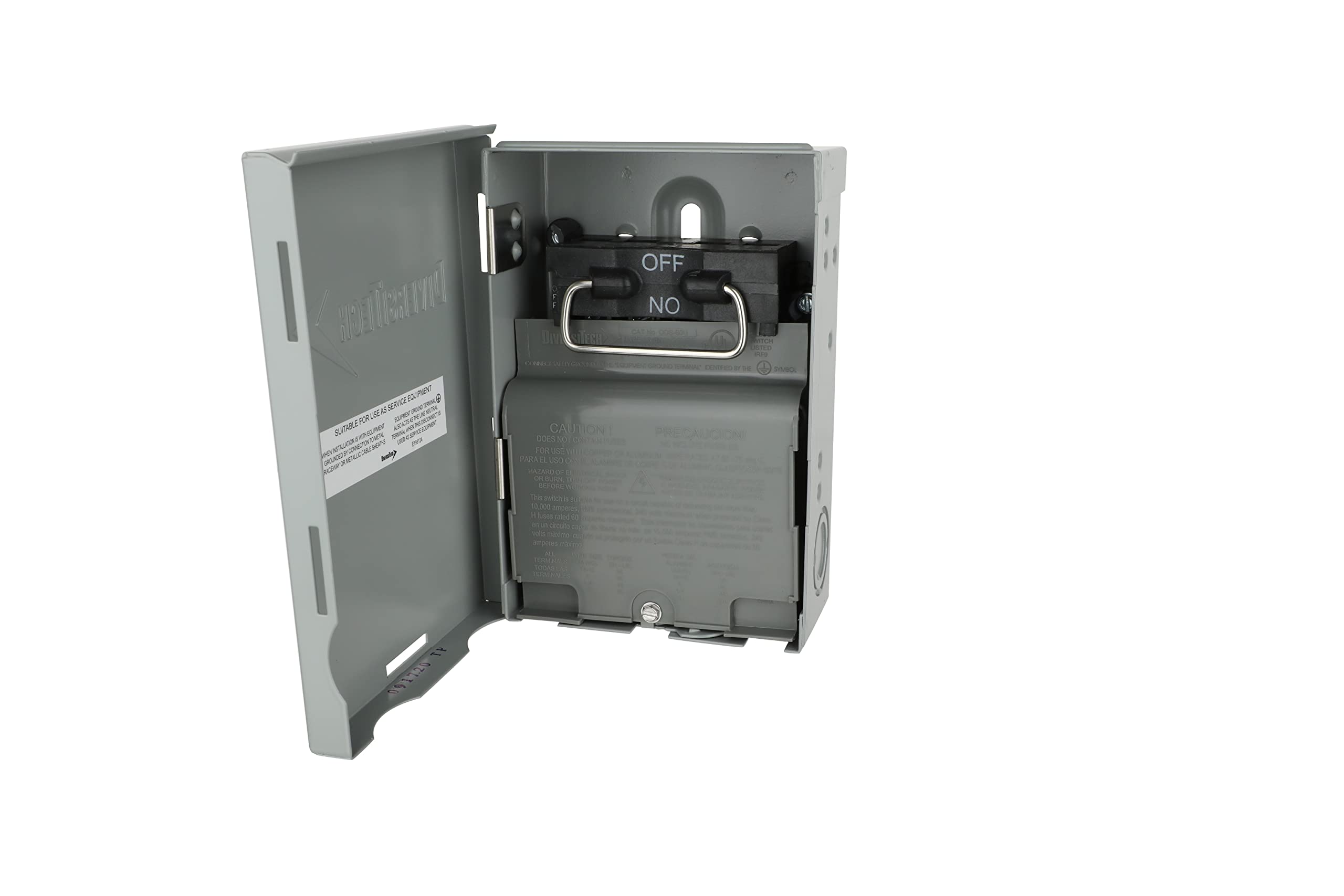
The Diversitech DDS-60U stands apart from the crowd with its stainless steel contact material and a patented side-opening door that should be standard on every outdoor disconnect. Instead of a door hinged at the bottom (which requires you to bend down to see inside), this unit swings open from the side, giving you full visibility into the lug area and the pull-out handle position. The folding pull-out handle tucks flush for a low-profile finish.
This box uses a full dead-front design — a safety barrier that prevents accidental contact with live terminals when the door is open. The internals install without removal, which reduces the number of loose screws and parts that can drop into the grass during a DIY swap. The NEMA 3R-rated plastic enclosure resists corrosion far better than coated steel in coastal climates, making this the right call for beachfront installs or any location near salt spray.
At 2.5 inches deep, the DDS-60U is among the shallowest boxes here, fitting tight spaces where a deeper enclosure won’t clear a window trim or brick ledge. Electricians appreciate that the line, load, and ground terminals are spaced for easy wiring without jamming 6 AWG conductors into a cramped cavity. For longevity in wet environments, nothing in this list beats the Diversitech’s corrosion-proof approach.
Why it’s great
- Patented side-opening door improves wiring visibility and access
- Stainless steel terminals resist rust in coastal or humid climates
- Full dead front adds an extra safety layer during service
Good to know
- Plastic enclosure can feel less robust than heavy-gauge steel
- Not designed for fused applications — non-fusible only
- Some users report knockouts require careful deburring before wire entry
3. ABB TFN60RCP (formerly GE)

The ABB TFN60RCP — originally a GE Industrial Solutions design — has been a contractor favorite for years because it balances low price with genuine NEMA 3R weather resistance. The enclosure is formed from G90 galvanized steel with a durable powder coat, offering better corrosion protection than many generic unbranded boxes. The three-piece construction separates the mounting back plate from the interior switching module and the front cover, making rough-in easier when you’re working solo.
This unit accepts solid 14–8 AWG copper or 12–8 AWG aluminum conductors on the line and load sides, plus stranded 14–3 copper or 12–3 aluminum — flexible enough for both new Romex installations and retrofitting older UF cable runs. The straight-in, straight-out wiring path keeps conductor bends to a minimum, which matters when you’re cramming 6 AWG aluminum into the compartment. Padlock provisions on the door allow lockout/tagout compliance for professional service agreements.
It’s rated for 10kAIC short-circuit current, which is the standard for residential service. The 60-amp non-fused design works perfectly for central AC units and mini-splits up to roughly 5 tons. If you need multiple disconnects for a zoning project (one buyer bought eight for a property with multiple condensers), the ABB’s price point makes it the logical choice without sacrificing UL compliance.
Why it’s great
- G90 galvanized steel with powder coat for weather resistance
- Three-piece design simplifies mounting and wiring
- Padlock-compatible for professional lockout/tagout procedures
Good to know
- Plastic housing may crack if overtightened on uneven siding
- No integral fuse holder — non-fused only
- Some knockouts require pliers to fully remove
4. Leviton 30 Amp MS302-DS

Where most disconnect boxes are outdoor enclosures with pull-out handles, the Leviton MS302-DS is a manual motor controller designed to fit inside a standard wall box. That distinction opens up indoor and semi-protected installations where you need a disconnect for a well pump, workshop compressor, or large motor load — not necessarily an outdoor air conditioner. The oversize toggle switch delivers crisp tactile actuation with a taut, positive snap that users describe as good for two decades of service.
This unit is rated for 30 amps at 600 volts with a double-pole, single-phase layout. It handles resistive and motor loads up to 18 kilowatts, making it suitable for 5HP compressors and large submersible pumps. The nickel-plated #10 triple-combination terminal screws resist corrosion better than standard brass screws, and the back or side wiring options give you flexibility when retrofitting old conduit boxes. The dielectric strength of 2200 VAC adds an extra margin for transient spikes.
It’s important to note that this is not a NEMA 3R outdoor enclosure — it’s a switch mechanism that you install into an appropriate box. Buyers commonly use it inside crawl spaces, garages, and basements for motor isolation. If your install requires an outdoor AC disconnect box, skip this and go with one of the enclosed units above. But if you need a heavy-duty motor-rated switch in a dry location, the Leviton is the best-engineered option here.
Why it’s great
- UL-listed as a motor disconnect, not a generic light switch
- Nickel-plated terminal screws for long-term corrosion resistance
- Fits standard wall box, no special enclosure required
Good to know
- Not weatherproof — requires a separate NEMA-rated box for outdoor use
- 30-amp rating may underserve larger central AC units
- No pull-out handle, toggle switch design only
5. WeCooper DB60N Disconnect Switch

The WeCooper DB60N brings a visible-blade design to the budget-friendly end of the market — meaning you can physically see the switch contacts separate when the pull-out handle is removed. That visual confirmation is a safety feature electricians appreciate when verifying that a circuit is fully disconnected before touching line-side terminals. The housing is formed from heavy-gauge steel with a UV-resistant powder-coat finish that holds up to direct sun exposure without fading or chalking.
This unit is rated for 60 amps, 240 volts, 2-pole, 3-wire, single-phase operation. The pull-out handle has an ON/OFF indicator embossed in the steel door rather than printed on a sticker, eliminating the risk of the label fading or scratching off after a few seasons of weather exposure. The double-break switch action ensures both poles open simultaneously with no chance of a stuck contact leaving one leg energized.
Some users noted that the interior pull-out switch uses aluminum rather than copper contacts — a reasonable cost-saving measure that still meets UL standards but could be a factor for extremely high-cycle installations. Most residential AC systems cycle the disconnect only when servicing, not daily, so this distinction rarely matters in practice. The knockouts are tight and may require a sharp tap from a hammer and screwdriver to free them, but once wired, the box performs reliably.
Why it’s great
- Visible-blade design for positive visual confirmation of disconnect
- Steel door with embossed ON/OFF markings that won’t wear off
- Double-break switch action for reliable simultaneous pole opening
Good to know
- Aluminum contacts rather than copper in the pull-out mechanism
- Knockouts can be stubborn to remove without marring the finish
- No fuse holder — strictly non-fusible design
6. Wells DDH-60A

The Wells DDH-60A aims squarely at the homeowner who wants a UL-certified metal disconnect box without the brand markup. It’s a 60-amp, 120/240-volt, single-phase, 3-wire, 2-pole non-fused pull-out switch housed in a powder-coated alloy steel enclosure measuring 8.9 by 5.4 by 2.6 inches. The grey metallic finish blends well with standard exterior wall colors and conduits.
The pull-out handle stores inside a closed compartment when not in use, preventing accidental removal during mowing or yard work. A protective cover interlocks with the handle position — you cannot open the cover until the handle is pulled out to the OFF position, which forces a safe work sequence during service. Buyers have used this box for mini-split installs at 120 volts (using just one pole) as well as full 240-volt central AC setups.
A few users reported that the internal blade contacts measured slightly short, causing intermittent pitting after repeated cycles — potentially a QC issue with earlier production units. Later buyers described the box as “solid” and “just what I wanted,” with one specifically noting it was an exact replacement for their original failed manufacturer unit. If you land a well-made sample, it’s a fine budget option. If reliability concerns you, stepping up to the Square D or ABB eliminates the uncertainty.
Why it’s great
- UL certified for code compliance on residential AC installs
- Interlocked cover enforces safe handle-position sequence
- Works for both 120V and 240V mini-split applications
Good to know
- Intermittent QC reports of short blade contacts causing pitting
- No instructions included with some units
- Metal enclosure may dent more easily than thicker-gauge alternatives
7. CNAODUN 60A Non-Fused Disconnect
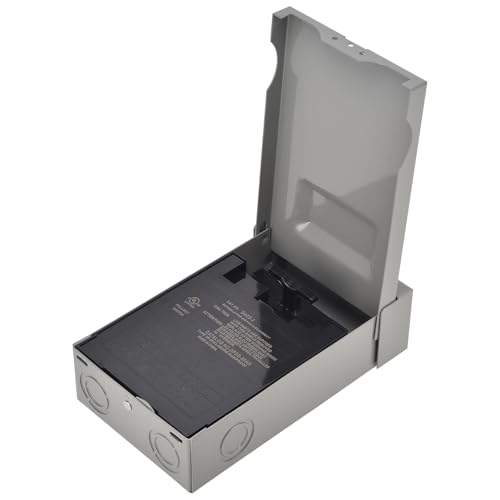
The CNAODUN 60-amp disconnect is a workmanlike non-fused pull-out switch that covers the basics without any surprising flaws. The enclosure is powder-coated galvanized steel in a neutral grey, with a standard pull-out handle mechanism that inserts into the switching block. It’s UL listed, so local inspectors won’t flag it on new construction or replacement work. The labeling on the inside cover clearly maps which terminals are LINE and which are LOAD, reducing confusion during hookup.
At 1.32 kilograms (roughly 2.9 pounds), this box feels substantial without being excessively heavy. The screw-in installation is straightforward: mount the back plate to the wall, land your conductors under the brass set screws, insert the pull-out block, and snap on the front cover. Buyers report using three or four of these on mini-split projects without a single failure. The knockouts pop cleanly with a standard knockout punch or a careful tap from a flat-blade screwdriver.
The CNAODUN doesn’t try to be innovative — there’s no side-opening door here, no visible-blade gimmick, no QO-breaker compatibility. It’s a solid, predictable, code-compliant disconnect at a reasonable price. The absence of included instructions is a minor annoyance for novice DIYers, but a quick search for “60 amp pull-out disconnect wiring” resolves the uncertainty in under a minute. For a straightforward install where you don’t need specialty features, this box gets the job done.
Why it’s great
- UL listed for code compliance without breaking the budget
- Clear LINE/LOAD labeling inside the cover reduces wiring errors
- Galvanized steel with powder coat resists typical outdoor weather
Good to know
- No printed instructions included in the box
- Not suitable for fused installations — non-fusible only
- Pull-out handle feels slightly less robust than Square D equivalents
FAQ
What is the difference between a fused and non-fused AC disconnect box?
Can I install a 60 amp disconnect on a 30 amp AC unit?
Do I need a dedicated pull-out handle for an outdoor disconnect?
Final Thoughts: The Verdict
For most users, the best air conditioner disconnect box winner is the Square D QO200TRCP because it pairs a trusted QO breaker platform with a rainproof NEMA 3R enclosure, ground bar included, at a price that undercuts big-box retailers. If you want stainless steel corrosion resistance and a side-opening door for easier wiring, grab the Diversitech DDS-60U. And for budget-minded multi-unit installs where UL compliance is the only must-have, nothing beats the ABB TFN60RCP for sheer dollar-per-switch value.