
A 7.3L Powerstroke diesel that cranks slow on a cold morning isn’t just an inconvenience — it’s a sign your starter is struggling against the massive compression of a direct-injection V8. The factory-style gear-reduction units often lose their magnetic field over time, leaving you with that dreaded single-click or labored turnover that tests your batteries and your patience. Replacing a tired starter with the right spec can transform how your truck fires up, cutting cranking time from a painful five-second grind to a confident one-and-done roar.
I’m Min — the co-founder and writer behind Gadgets Feed. I’ve spent hundreds of hours cross-referencing OEM part numbers, tooth counts, and real-world user reports across Ford’s 7.3 and 6.0 diesel platforms to isolate which starters actually deliver reliable engagement and sustained torque without burning up after a few months.
This guide walks through nine distinct options for the 7.3 powerstroke starter, from direct-drive units that restore factory performance to high-torque gear-reduction models built for heavy cranking duty.
How To Choose The Best 7.3 Powerstroke Starter
The wrong starter for a 7.3L not only cranks slowly but can also damage the flywheel ring gear over time. Three factors separate a starter that lasts 150,000 miles from one that burns out at 20,000.
kW Rating and Torque Output
The factory 7.3 starter typically delivers around 2.5 to 3.0 kW. Upgrading to a 3.6 kW or even 4.0 kW unit provides noticeably faster cranking speed, which helps the high-pressure oil pump (HPOP) build pressure faster and gets the engine firing in fewer revolutions. Higher kW doesn’t mean higher amp draw on most gear-reduction models — it means more efficient torque delivery to the pinion gear.
Mounting Pattern: 2-Bolt vs 3-Bolt
Early 7.3 engines (1994–1997) use a 3-bolt mounting flange, while many later Super Duty applications (1999–2003) shifted to a 2-bolt pattern. Installing a 2-bolt starter on a 3-bolt block is possible with adapter plates, but the reverse isn’t straightforward. Always verify the bolt count on your engine block before ordering, or you’ll be returning a starter that physically won’t bolt up.
Pinion Tooth Count and Engagement Depth
Every 7.3 Powerstroke starter uses 12 teeth on the pinion gear. What varies is the engagement depth — the distance the pinion travels before contacting the flywheel ring gear. A pinion that engages only halfway wears both the starter drive and the ring gear prematurely. Look for OEM-spec engagement profiles and avoid units where the pinion visibly sits shallow in the bellhousing.
Quick Comparison
On smaller screens, swipe sideways to see the full table.
| Model | Category | Best For | Key Spec | Amazon |
|---|---|---|---|---|
| DB Electrical 410-52057 | Premium | Fastest crank on cold mornings | NipponDenso copy, high torque | Amazon |
| RAREELECTRICAL 4kW | Premium | Heavy-duty winter cranking | 4.0 kW gear reduction | Amazon |
| Powermaster Ultra Duty 9051 | Premium | Ultimate replacement for frequent cranking | 18.5 lbs, black wrinkle | Amazon |
| Motorcraft SA1024 | Premium | OEM fit for 1999-2003 | 45 Amp, genuine Ford | Amazon |
| Gladiator 17578N | Mid-Range | Planetary gear reduction upgrade | 3.6 kW, 22 Amps | Amazon |
| DB Electrical 410-48076 | Mid-Range | Silver/copper windings for 1994-2001 | 12V, clockwise rotation | Amazon |
| Ezexpreze 410-48076 | Mid-Range | IATF 16949 certified build | 3.6 kW, 12-tooth | Amazon |
| OEG Parts PP6670N | Budget-Friendly | 6.0L Powerstroke compatibility | 3.0 kW, 12-tooth | Amazon |
| Powermaster 9100 | Budget-Friendly | Chevy V8 performance builds | 120 Amp, gear reduction | Amazon |
In‑Depth Reviews
1. DB Electrical 410-52057

This DB Electrical unit is widely considered the closest aftermarket equivalent to the NipponDenso 228000-8420, the starter most 7.3 owners wish Ford had put on from day one. It weighs about 2.5 times the factory starter and spins the engine dramatically faster — users report a 1-2 second start even without glow plugs in moderate weather. The 2-bolt pattern fits 1999-2003 Super Duty trucks and Excursions, along with earlier vans, and the solenoid is mounted for easier wiring access compared to the factory three-bolt units.
The increased cranking speed directly benefits the high-pressure oil system, helping the injectors fire sooner. Some owners needed to grind about 1/4 inch off the cross member on earlier chassis for clearance, and a few report that the small wire terminal uses a Phillips screw instead of a stud and nut, which required a minor wiring modification. The top bolt install remains tricky — plan for multiple extensions and a swivel socket.
Longevity reports are mixed but generally positive: many units pass the 8-year mark without issues, though a small number of failures occur within weeks. The design delivers the fastest crank of any starter on this list for the 1999-2003 platform, and the price undercuts premium competitors by a wide margin.
Why it’s great
- Cranks faster than any factory-style starter tested
- Denso-derived design with proven gear-reduction geometry
- Weighs significantly more, indicating heavier windings and bearings
Good to know
- May require grinding cross member on pre-2000 chassis
- Small wire terminal uses screw instead of stud — modify wiring
- 2-bolt pattern only; does not fit early 3-bolt blocks
2. RAREELECTRICAL 4kW Starter
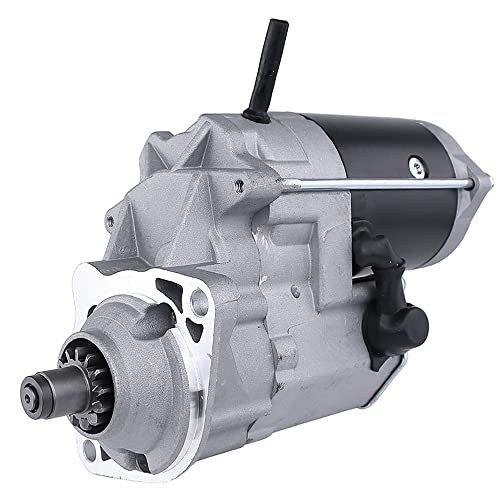
With a 4.0 kW power rating, this RAREELECTRICAL unit pushes beyond the standard 3.6 kW aftermarket offering, providing a tangible cranking speed advantage for 7.3L engines that see heavy winter use or have higher internal resistance from age. It replaces NipponDenso, Bosch, and Mitsubishi OEM numbers across the full 1994-2003 range, including F-250, F-350, F-450, F-550, and Excursion applications. The 13-spline drive gear engages deeply into the flywheel, reducing the risk of skipping under load.
Installation is slightly more involved than a direct OEM swap — the unit uses a 2-bolt pattern even on vehicles that originally had three bolts, and owners report needing to clean bolt holes thoroughly, substitute a hex bolt for the supplied Phillips screw on the small terminal, and straighten the main battery lead for a clean fit. The rubber drain tube supplied tends to fall off and may need a zip tie to stay in place. The motor housing is visibly heavier than factory, and the gear-reduction whine is noticeably more aggressive on engagement.
Reviews are polarized on lifespan: several owners report 6+ years of flawless cold-weather starting, while a few experienced complete failure within 11 months — including an Excursion owner whose original starter lasted 17 years. The torque on initial installation is undeniable: the engine spins twice as fast as a tired factory unit. For owners comfortable with minor wiring tweaks, this is the highest-torque option in its price tier.
Why it’s great
- 4.0 kW rating provides the fastest spin speed among aftermarket units
- Fits the widest model-year range of any starter reviewed
- Heavy-duty housing and copper windings for sustained output
Good to know
- Intermittent quality control — some units fail under 12 months
- Rubber drain tube is poorly secured and may detach
- Small terminal requires hex bolt replacement for reliable connection
3. Powermaster Ultra Duty 9051

Powermaster’s Ultra Duty starter for the 7.3L is built in the United States and targets owners who want the absolute heaviest-duty rotating assembly available for the platform. At 18.5 pounds, it outweighs a factory starter by nearly 50 percent, with a black wrinkle finish that resists oil and corrosion. The 3-bolt pattern mirrors the factory mounting for 1994-2003 models, and the wiring harness exits downward — a thoughtful design choice that makes cable routing far easier than stock.
Owners consistently report that this starter spins the engine with authority even at 27°F, starting as quickly as a modern 6.7L Powerstroke. The gear-reduction ratio delivers quiet engagement without the high-pitched whine some gear-reduction units produce. Installation is straightforward except for the infamous top bolt, which requires a modified 15mm wrench or a u-joint socket setup. The unit also helps the HPOP reach operating pressure faster because the engine reaches cranking RPM sooner — a critical factor when diagnosing cold-start issues on a 7.3.
There is a documented failure pattern where the drive gear can skip or stop engaging after several months, and one buyer reported significant flywheel ring gear damage from a failed unit. Customer support experience has been inconsistent, with some owners directed back to the seller with no resolution. When it works — which appears to be the majority of cases — it delivers the fastest and most confident crank of any 3-bolt starter on the market. The premium price reflects the US manufacturing and materials, but the failure rate is something to weigh carefully.
Why it’s great
- Fastest cranking speed of any 3-bolt starter tested
- American-made build with corrosion-resistant wrinkle finish
- Downward wiring exit simplifies battery cable routing
Good to know
- Documented drive-gear engagement failures reported
- Top bolt installation remains difficult without modified tools
- Premium price tier with inconsistent warranty support
4. Motorcraft SA1024

Motorcraft’s SA1024 is the genuine OEM service replacement for 1999-2003 Ford Super Duty trucks with the 7.3L. It is built to the exact Ford engineering specifications, meaning the mounting flange alignment, pinion engagement depth, and solenoid positioning all match the factory original. The 45-amp draw is consistent with the original direct-drive design, and the unit weighs 5 pounds — significantly less than gear-reduction aftermarket units because it lacks the additional planetary gearing.
The biggest argument for purchasing Motorcraft is longevity predictability. Multiple owners report replacing the original starter at 140,000 to 250,000 miles with this exact unit and expecting similar service life. The installation is the most straightforward of any option because every hole and wire aligns exactly as the factory intended — no grinding, no wiring modifications, no adapter plates. The cranking speed will match what the truck did when new, but it will not be dramatically faster than a worn factory unit simply because the design is identical.
If your 7.3 still has its original starter and you want a drop-in replacement with zero guesswork, this is the safest choice. The trade-off is clear: you sacrifice the upgraded cranking speed that gear-reduction units provide. For owners whose only issue is a dead starter rather than a chronically slow crank, the Motorcraft restores reliable starting without introducing fitment variables. However, the higher price compared to aftermarket 3.6 kW units with better specs makes it hard to recommend as a performance upgrade.
Why it’s great
- Perfect factory fitment — no modifications required
- Proven 140,000+ mile service life in real-world use
- Genuine Ford engineering eliminates compatibility doubts
Good to know
- Higher price with no cranking speed improvement over factory
- Direct-drive design draws more amps than gear-reduction units
- Heavier than aftermarket mini-starters of equivalent power
5. Gladiator 17578N
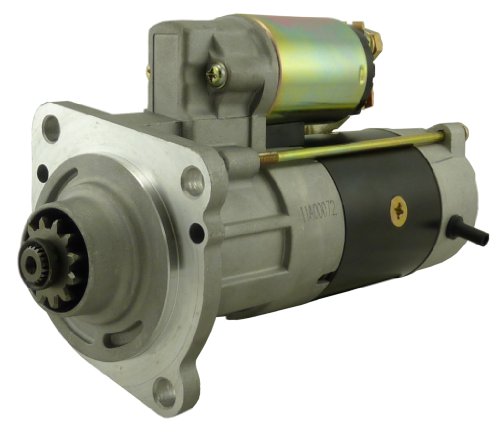
The Gladiator 17578N is a planetary gear-reduction starter that delivers the same 3.6 kW output as many premium competitors but at a noticeably lower price point. It replaces a broad set of OEM numbers including M8T50071, M8T50072, F4TZ-11002-A, and TM000A19101, covering 1994-2001 Ford trucks and vans. The 12-tooth clockwise rotation design is computer load-tested at the factory, which theoretically catches defects before shipping. The 22-amp draw is low for its power output, a direct benefit of the planetary gearing.
Owners with high-mileage 7.3L engines — including one with 302,000 miles — report that this starter spins the motor noticeably faster than the original unit, eliminating the slow crank that had become a daily annoyance. The installation follows the standard pattern: the top bolt is difficult to reach and requires extensions and a swivel socket. The unit replaces the direct-drive factory setup with a more compact gear-reduction housing, which gives more clearance around the exhaust manifold on some chassis.
There is a concerning failure pattern where the starter can burn up after several months or freeze after as few as 10 uses. One owner had two failures in quick succession and described the quality as unacceptable. The one-year warranty provides some protection, but the labor cost of replacing a failed starter on a 7.3 is not trivial. This is a budget-friendly 3.6 kW option that performs well initially, but the longevity data suggests you should be prepared for a potentially shorter service life than premium alternatives.
Why it’s great
- Substantial cranking speed improvement over direct-drive factory units
- Lightweight planetary gear design reduces battery amp draw
- Covers a wide range of OEM cross-references for broad fitment
Good to know
- Multiple reports of premature failure within months
- Inconsistent quality control between different units
- Labor cost of replacement may offset initial savings
6. DB Electrical 410-48076

This DB Electrical unit covers the earlier 7.3L applications including 1994-2001 F-Series trucks and 1995-2000 E-Series vans, using copper and silver windings that provide consistent electrical conductivity through the armature. It replaces Bosch, Delco, and Denso OEM numbers — notably SR7529N and 280-4204 — and carries a 12-volt clockwise rotation with 12-tooth pinion. The housing dimensions are near-identical to the factory Motorcraft unit, making this a direct replacement for trucks that still have the original three-bolt pattern.
Customer feedback is overwhelmingly positive from 7.3 owners with high mileage. A 1999 F-250 with 350,000 miles saw dramatic improvement over the original, with the engine turning over much faster than it had in years. Another owner with 380,000 miles reported that the starter arrived quickly and made the truck start faster than when it was new. The only consistent criticism is the location of the top bolt — common to all 7.3 starter replacements — requiring extensions and a flex socket for removal.
The unit is built to meet OEM performance specifications rather than exceed them, which means you get factory-level cranking speed without the dramatic improvement of a high-torque gear-reduction unit. For owners who simply need a reliable replacement for a failed starter and want to avoid the risk of fitment issues, this DB Electrical model sits in the sweet spot of proven reliability and reasonable cost. The silver/copper winding material is a durability detail that matters in high-heat diesel engine compartments.
Why it’s great
- Direct OEM replacement with zero modification needed
- Copper and silver windings improve heat resistance
- Thousands of positive installations across high-mileage trucks
Good to know
- Does not provide the faster crank of gear-reduction units
- Top bolt access remains the standard 7.3 installation challenge
- Single-phase design limits peak torque compared to 3-phase units
7. Ezexpreze 410-48076
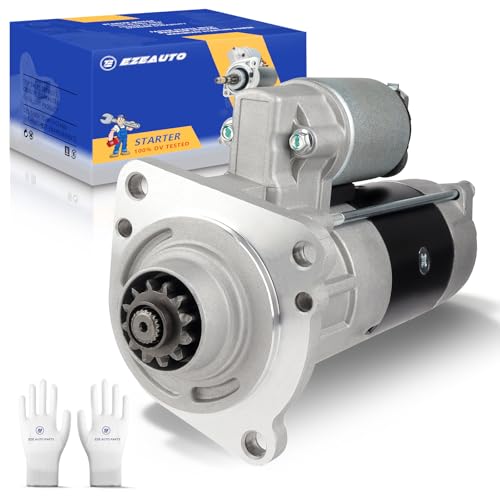
The Ezexpreze 410-48076 stands out in the mid-range category because of its manufacturing certifications — ISO 9001 and IATF 16949 — which indicate the factory follows automotive-grade quality management processes. It delivers 3.6 kW at 12 volts with a 12-tooth clockwise rotation, designed to replace OEM numbers including 410-48076, TM000A19101, and 17578N. The application list covers 1994-2001 F-250 and F-350 trucks along with the 1999-2001 Super Duty chassis, making it a direct competitor to the DB Electrical 410-48076.
Each unit undergoes 100 percent DV testing before shipping, which is a level of quality assurance rarely advertised at this price level. Owners report that the starter bolts up cleanly without grinding or modification, and the 3.6 kW output provides a clear improvement over the factory 3.0 kW units that originally shipped on early 7.3 engines. The 7.22-kilogram weight reflects substantial materials — heavier than budget alternatives but slightly lighter than the densest gear-reduction units.
While the quality certifications and testing protocol are reassuring on paper, the real-world sample size is smaller than established brands like DB Electrical or Motorcraft. Long-term durability reports are limited, and the one-year warranty is standard rather than exceptional. For buyers who want a properly built 3.6 kW starter with documented quality control processes and a clean fit for 1994-2001 trucks, this Ezexpreze unit offers a strong value proposition. The pricing falls between the lowest-cost options and the premium US-built starters.
Why it’s great
- IATF 16949 certified manufacturing for consistent quality
- 100% DV tested before shipping to reduce defect risk
- Clean fitment on early 7.3L applications without modification
Good to know
- Smaller user base means less long-term durability data
- Standard one-year warranty with no extended coverage
- Heavier than some direct-drive alternatives at 7.22 kg
8. OEG Parts PP6670N
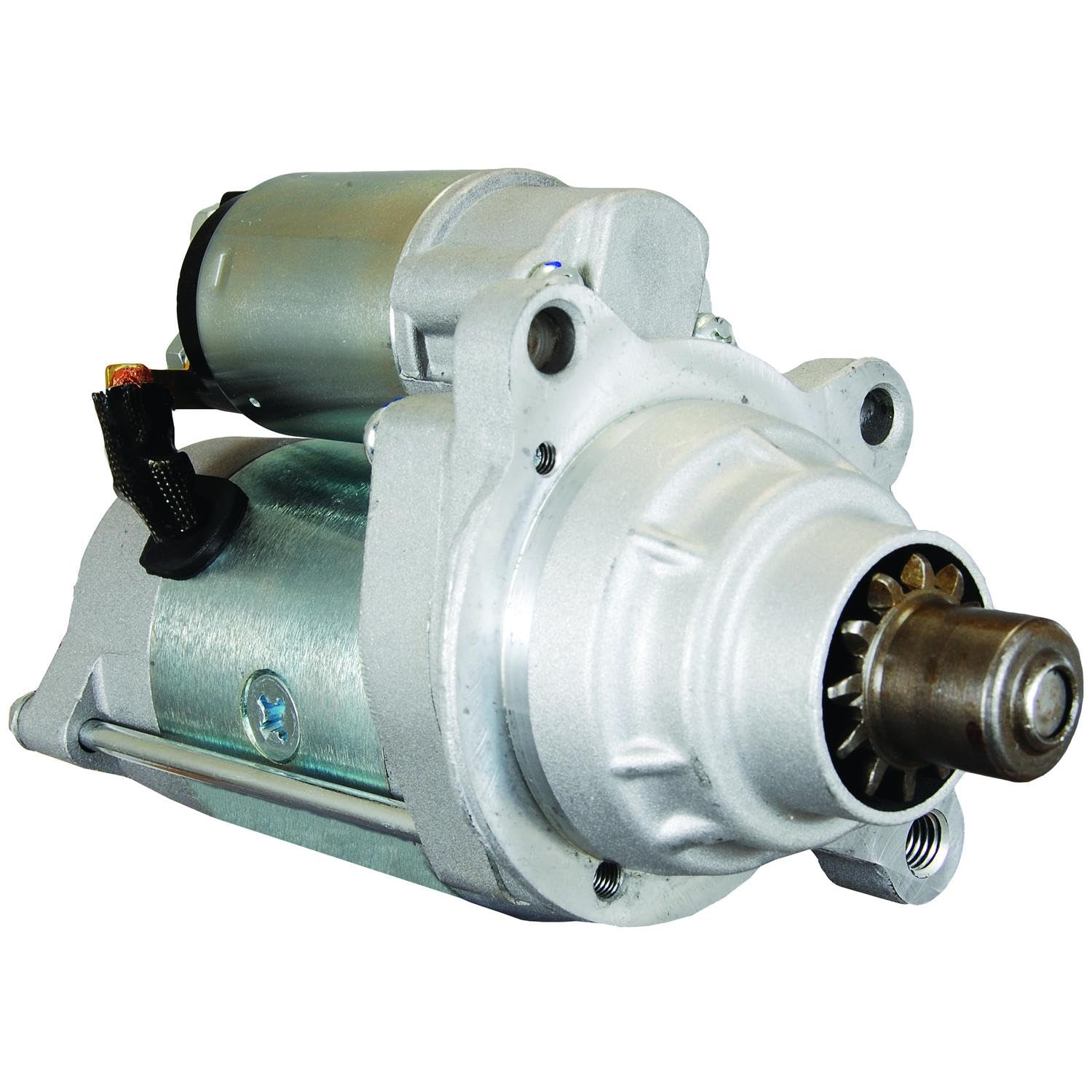
The OEG Parts PP6670N is a 3.0 kW starter designed for Ford 6.0L Powerstroke engines from 2003-2007, along with 2003-2006 F-450 and F-550 Super Duty trucks and 2004-2010 E-Series vans. It is not a direct 7.3L replacement, but it is listed alongside the other options because many owners cross-reference it for applications where the physical mounting pattern matches. The 12-volt clockwise rotation with 12-tooth pinion is consistent with Ford diesel starter specifications. The unit weighs 13.05 pounds and measures 12.4 inches in length.
Installation reports from 6.0L owners indicate a straightforward 30-minute swap, with the starter providing strong cranking power for the high-compression 6.0. The 3.0 kW rating is adequate for a healthy 6.0 but may feel underwhelming on a modified or high-mileage 7.3 where the compression is higher due to carbon buildup. Several owners report perfect fitment and strong starting, though one experienced catastrophic failure after only seven starts, suggesting inconsistent quality across production batches.
This starter belongs in the budget tier because the lower power output and narrower fitment window make it a niche choice rather than a universal recommendation. If you specifically need a starter for a 6.0L Powerstroke and want the lowest entry price, the PP6670N fits the bill and has enough positive reviews to suggest most units work as intended. For 7.3L owners, this should be a last-resort option only if the physical mounting and pinion depth have been verified against your specific block.
Why it’s great
- Budget-friendly entry point for 6.0L Powerstroke owners
- Simple installation in approximately 30 minutes
- Strong performance in the majority of installations
Good to know
- Designed for 6.0L — verify compatibility with 7.3L blocks
- 3.0 kW output is lower than 7.3L upgrade options
- Quality inconsistency with some units failing quickly
9. Powermaster 9100
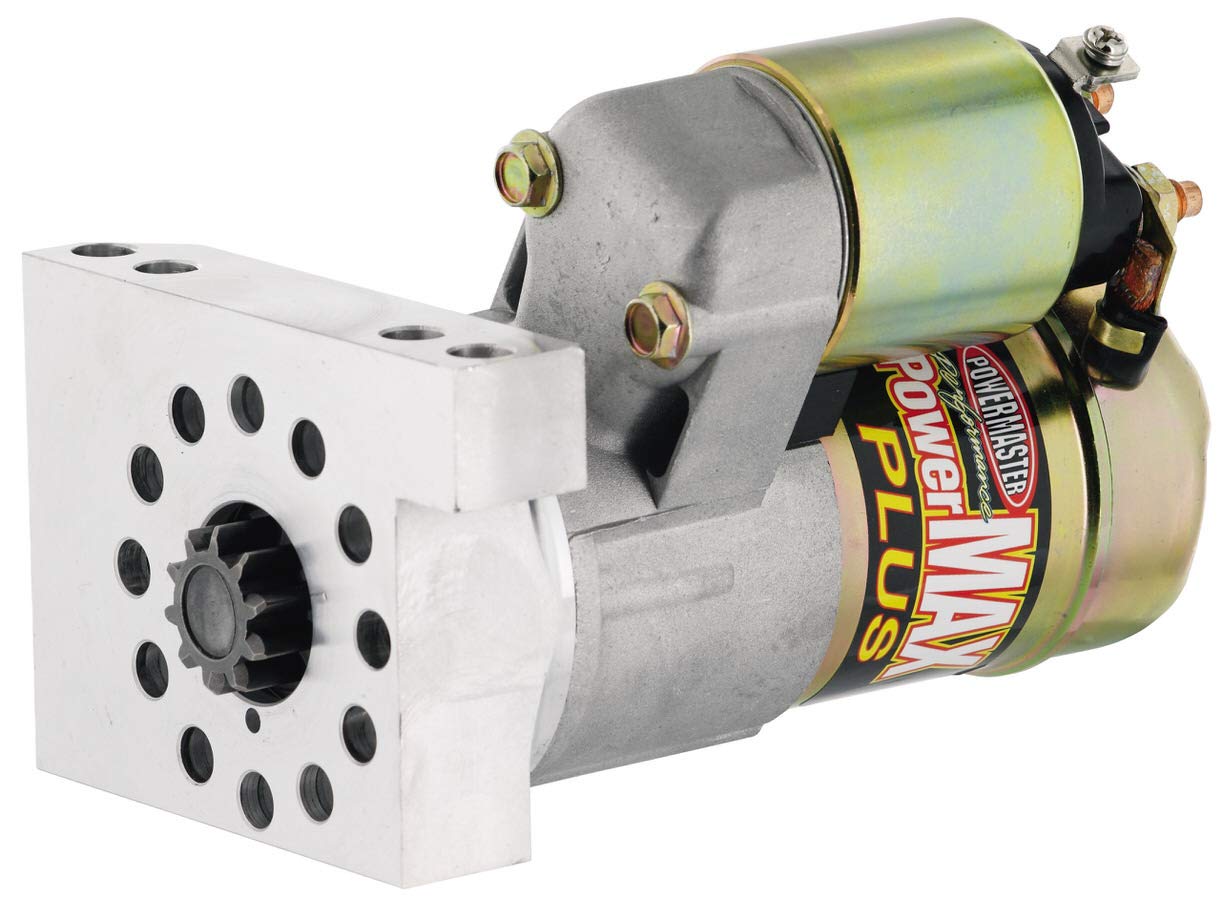
The Powermaster 9100 PowerMAX Plus is a gear-reduction mini-starter designed for Chevrolet small-block and big-block V8 engines with 153 or 168 tooth flywheels. It is included here for reference because it represents the same Powermaster engineering philosophy applied to a different engine family. The 120-amp rating and 6.1:1 gear reduction deliver strong cranking torque in a compact package that weighs 8 pounds. The natural (unpainted) finish and straight bolt pattern fit standard GM blocks.
Owners of Chevy-powered vehicles report excellent performance on engines with 11:1 compression ratios, with the gear-reduction design allowing the motor to spin freely even with stiff mechanical resistance. The clockable solenoid housing is a useful feature for custom installations where wiring clearance is limited. Some users note that the pinion gear is shorter than the factory GM unit, engaging only approximately 50 percent of the flywheel teeth, which could lead to accelerated wear on the ring gear over extended use.
This starter is not intended for the 7.3 Powerstroke, and attempting to install it on a Ford diesel would require custom brackets and bellhousing modifications that are not practical. It serves as a comparison point for buyers who are familiar with Powermaster’s reputation from other builds and want to understand the brand’s quality. For a Powerstroke-specific application, the Powermaster 9051 is the correct choice. The 9100’s budget-friendly price reflects its narrower application range rather than any reduction in build quality.
Why it’s great
- Proven Powermaster gear-reduction design with 120-amp output
- Clockable solenoid for custom wiring clearance
- Compact and lightweight at 8 pounds
Good to know
- Designed for Chevy V8 — not a 7.3 Powerstroke part
- Short pinion engagement may accelerate flywheel wear
- Plastic solenoid arm can become brittle near exhaust heat
FAQ
Will a 6.0L Powerstroke starter work on a 7.3L?
What causes a 7.3 starter to whine but not engage?
How do I know if my 7.3 has a 2-bolt or 3-bolt starter pattern?
Final Thoughts: The Verdict
For most owners, the 7.3 powerstroke starter that delivers the best balance of cranking speed, reliability, and value is the DB Electrical 410-52057 because its NipponDenso-derived design provides the fastest spin speed for 1999-2003 trucks and Excursions at a price well below premium competitors. If you need a 3-bolt starter with maximum torque and are willing to pay for US manufacturing, grab the Powermaster Ultra Duty 9051. And for a straightforward OEM replacement that guarantees perfect fitment with zero modification, nothing beats the Motorcraft SA1024.