
Nitrogen dioxide (NO₂) is a notoriously aggressive gas that seeps into your indoor space from gas stoves, traffic exhaust, and unvented heaters. Unlike dust or pollen, this gas requires a chemically active carbon or zeolite media to be neutralized—standard HEPA alone is useless against it. Finding an air purifier that reliably targets NO₂ means looking beyond particle filtration to the specific weight and volume of gas-phase adsorbent materials packed inside the machine.
I’m Min — the co-founder and writer behind Gadgets Feed. I’ve spent hundreds of hours analyzing air purifier filter formulations, carbon bed depths, and independent gas-removal testing data to isolate the models that genuinely tackle NO₂ rather than just marketing it.
Every unit in this guide was selected for its ability to handle gas-phase pollutants, and this deep dive will help you choose the best air purifier for nitrogen dioxide based on real filtration hardware, not vague claims.
How To Choose The Best Air Purifier For Nitrogen Dioxide
Selecting a purifier that actually reduces indoor NO₂ levels isn’t like shopping for a standard dust or pollen filter. The deciding factor is the type and amount of sorbent media in the gas-phase stage. You need a machine with a substantial carbon bed—ideally weighing at least several pounds—or a carbon/zeolite blend. Impregnated media (with potassium permanganate) can chemically break down NO₂ into harmless compounds, offering an even faster reaction rate for this specific gas.
Carbon Bed Weight and Depth
The volume of activated carbon or zeolite directly determines how much NO₂ the filter can adsorb before saturating. Lightweight carbon sheets found in many consumer purifiers exhaust quickly against continuous gas sources. Look for canister-style filters containing 5 to 15 pounds of media—these units sustain gas removal for months in real-world conditions. Deeper beds also increase the contact time between airflow and adsorbent, improving capture efficiency.
Pre-Filtration and Media Protection
Gas-phase media gets clogged by dust and particles, which blocks its ability to trap NO₂. A machine with a washable pre-filter or a dedicated particle stage (HEPA or UltraHEPA) placed before the carbon extends the life of the expensive gas-removal media. Without this, you pay to replace the carbon far more often than necessary.
Sealed Airflow and Bypass Prevention
If air leaks around the filter frame, NO₂ passes through untreated. The best gas-targeting purifiers use gasketed, sealed filter assemblies that force all intake air through the sorbent media. Flimsy filter trays with gaps defeat the purpose of having high-quality carbon—verify that the filter housing is compression-sealed against the frame.
Quick Comparison
On smaller screens, swipe sideways to see the full table.
| Model | Category | Best For | Key Spec | Amazon |
|---|---|---|---|---|
| Austin Air HealthMate Plus | Premium | Heavy NO₂ & gas loads | 15 lbs activated carbon + zeolite | Amazon |
| AirDoctor AD2000 | Premium | Bedroom gas & VOC removal | Premium Activated Carbon + KMnO₄ | Amazon |
| Dyson Purifier Cool TP09 | Premium | NO₂ monitoring + cooling | HEPA + catalytic formaldehyde filter | Amazon |
| Levoit EverestAir-P | Mid-Range | Large room + smart control | 60% more carbon than Vital 200S | Amazon |
| Nuwave OxyPure ZERO | Mid-Range | Zero-waste gas filtration | Washable Bio-Guard + ozone removal | Amazon |
| Nuwave Forever | Mid-Range | No filter replacements | 7-stage washable system | Amazon |
| PuroAir 400 | Mid-Range | VOC + smoke in large rooms | HEPA + CarbonTech filter | Amazon |
| WINIX 5520 | Budget-Friendly | Entry-level gas assist | Advanced Odor Control Carbon | Amazon |
| AirDoctor AD1000 | Budget-Friendly | Small room gas protection | UltraHEPA + Carbon VOC filter | Amazon |
In‑Depth Reviews
1. Austin Air HealthMate Plus Air Purifier

The Austin Air HealthMate Plus is the definitive gas-phase workhorse, packing 15 pounds of an activated carbon and zeolite blend into a single canister—more adsorbent media than any other unit in this comparison. That mass translates directly to sustained NO₂ capture: the zeolite component is especially effective at trapping nitrogen dioxide molecules through a molecular sieve mechanism, while the carbon handles broader VOCs and odors. The sealed, gasketed filter assembly ensures zero bypass, forcing every cubic foot of air through the full depth of the media bed.
Covering up to 1,500 square feet, this machine runs on a whisper-quiet setting for bedrooms and ramps up to a powerful high speed for whole-home gas challenges. The 4-stage design includes a pre-filter that protects the expensive carbon/zeolite blend from dust loading, extending its lifespan to up to five years. Users report complete elimination of neighbor smoke seepage and persistent cooking smells—both scenarios that involve NO₂ mixed with other combustion byproducts.
The unit is heavy at 47 pounds and physically large, so placement planning matters. The carbon bed is so substantial that even after a year of 24/7 use in a gas-stove-heavy kitchen, the filter continues to adsorb incoming NO₂ without noticeable degradation. For anyone serious about removing nitrogen dioxide at the molecular level, this is the benchmark.
Why it’s great
- 15 lbs of gas-adsorbing media—best-in-class for NO₂ removal
- Sealed, zero-bypass filter design
- Up to 5-year filter life reduces long-term cost
Good to know
- 47-pound weight makes relocation cumbersome
- Loud on highest setting, comparable to a small vacuum
2. AirDoctor AD2000 Air Purifier
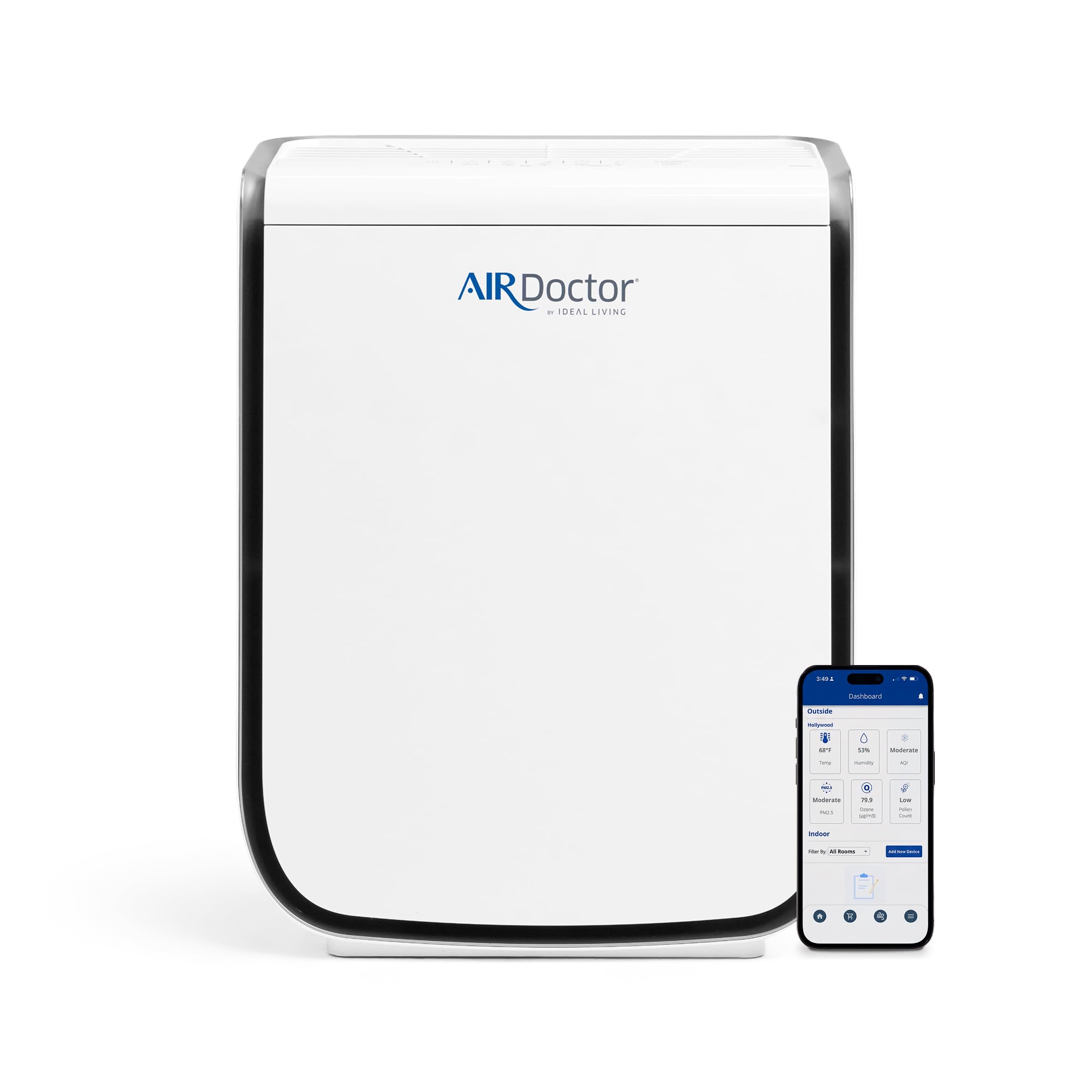
The AirDoctor AD2000 separates itself from standard carbon-filter purifiers by using a premium activated carbon filter impregnated with potassium permanganate—a reactive chemical that chemically oxidizes NO₂ into harmless nitrates rather than merely adsorbing it. This chemisorption mechanism is faster and more reliable for gases like nitrogen dioxide, which react well with KMnO₄. The AD2000’s 3-stage system places this treated carbon behind a pre-filter and before a hospital-grade UltraHEPA capture stage that grabs particles down to 0.003 microns.
Covering up to 1,220 square feet with two air changes per hour, the unit features an Auto Mode driven by the AirDoctor Halo PM2.5 sensor that displays color-coded air quality. Users noticed immediate reduction of VOC odors from new furniture and elimination of cooking fumes—scenarios where NO₂ is a known component. The sealed filter frame prevents untreated air from bypassing the reactive carbon stage.
The filter replacement schedule asks for new carbon every 6 months and UltraHEPA every 12 months, so consumable costs are higher than the Austin Air’s multi-year media. At 7.34 pounds, it’s far more portable. The potassium permanganate chemistry gives the AD2000 a distinct advantage against NO₂ compared to plain carbon filters of similar size.
Why it’s great
- KMnO₄-impregnated carbon chemically oxidizes NO₂
- Quiet operation suitable for bedrooms
- Real-time PM2.5 sensor with adaptive Auto Mode
Good to know
- Carbon filter needs replacement twice per year
- Initial units had sensor calibration issues
3. Dyson Purifier Cool Formaldehyde TP09
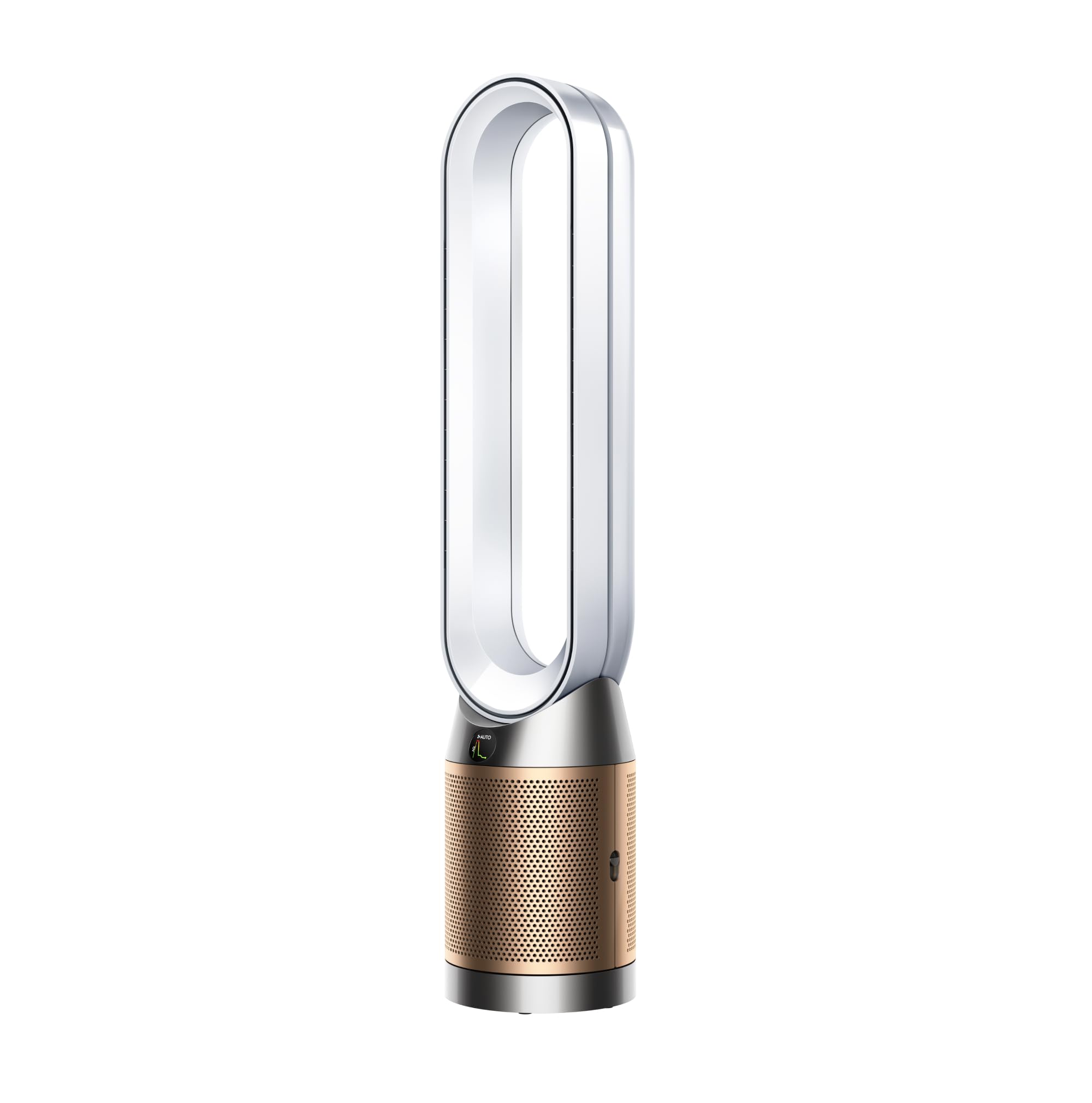
The Dyson Purifier Cool TP09 is the only unit in this guide with a dedicated NO₂ sensor that displays real-time nitrogen dioxide levels on its LCD screen—a unique feature that lets you see the problem before it’s solved. The machine uses a catalytic filter to continuously destroy formaldehyde, but its 360° HEPA filter and activated carbon layer also capture NO₂ and other gases. While its carbon mass is modest compared to the Austin Air, the real-time monitoring allows you to verify gas reductions and correlate them with the cooking or traffic events that spike NO₂.
Air Multiplier technology projects purified air across the room, and the 0 to 350° oscillation covers wide areas. In Backwards Airflow mode, the unit purifies without a cooling breeze—ideal for winter use. The companion MyDyson app logs gas sensor data, giving you a timeline of NO₂ exposure throughout the day.
Some units have reported motor noise issues after several months, and the relatively small carbon bed means it’s better suited for supplemental gas filtration in smaller spaces (up to 101 square feet per its spec) rather than whole-home NO₂ challenges. The combination of an NO₂-specific sensor and the fan function makes it a versatile choice for spot-treatment near gas stoves or attached garages.
Why it’s great
- Real-time NO₂ level display and logging
- Dual function as purifier and cooling fan
- 360° HEPA + catalytic gas filtration
Good to know
- Limited carbon mass for heavy gas loads
- Some units develop motor hum after 6 months
4. Levoit EverestAir-P

The Levoit EverestAir-P packs 60% more activated carbon than the brand’s Vital 200S-P, translating to a visibly thicker carbon pellet bed that adsorbs NO₂ and other combustion gases more effectively. Its 3-channel laser sensor scans for PM10, PM2.5, and PM1.0 simultaneously, feeding data to an Auto Mode that ramps fan speed when particulate levels rise—a correlated indicator of nearby gas release from cooking or traffic. The adjustable air outlet (45° to 90°) lets you direct cleaned air toward a gas stove or garage door entry point.
AHAM Verifide certification confirms the CADR of 354 CFM, covering up to 2,655 square feet in one hour on high speed. The washable pre-filter extends the life of the main carbon-activated filter, and Sleep Mode automatically dims the display and slows the fan when the room darkens. Users consistently report that cooking odors vanish within minutes, indicating effective gas capture.
The replacement filter (LRF-E551-WUS) costs around and lasts up to 6-12 months depending on usage. Off-brand replacements are not recommended as they lack the sealed frame alignment that prevents gas bypass. The EverestAir-P’s smart app integration and Alexa/Google Home compatibility make it the most connected option for NO₂-conscious households.
Why it’s great
- 60% more carbon than previous Levoit models
- Large coverage area with AHAM-verified performance
- Adjustable air outlet directs purified flow
Good to know
- Replacement filters are expensive at ~
- Not a true sealed HEPA—uses one-piece combo filter
5. Nuwave OxyPure ZERO Smart Air Purifier

The Nuwave OxyPure ZERO stands out with its washable, reusable Bio-Guard filters that eliminate the recurring cost of replacements—a major consideration when running a purifier 24/7 to combat NO₂. The dual 4-stage system includes dedicated ozone emission removal filters that reduce ozone to under 1 ppb, which is relevant because some NO₂-focused purifiers can generate ozone as a byproduct. The stainless-steel pre-filters trap large particles before they reach the electrostatic Bio-Guard media, which captures particles down to 0.1 microns.
Covering 2,002 square feet with one air change per hour, the OxyPure ZERO uses adjustable 30°, 60°, and 90° air vents to direct treatment toward known NO₂ sources like kitchen ranges or garage doors. Intertek Lab certification confirms 100% capture of airborne particles at 0.1 microns. A Night-Time Sleep Mode drops fan noise to 21.41 dB—near-silent for bedrooms.
The electrostatic filter technology does not rely on carbon for every gas, so its NO₂ removal depends more on the ozone removal filter’s reactive media. It is less effective against heavy NO₂ loads than a thick carbon bed, but the zero-waste aspect makes it attractive for ongoing, low-level gas management. The app-based WiFi control adds remote monitoring convenience.
Why it’s great
- Washable filters—no replacement costs
- Ozone removal filter prevents secondary pollution
- Near-silent Sleep Mode at 21.41 dB
Good to know
- Electrostatic media less effective on NO₂ than thick carbon
- Does not auto-restart after power outage
6. Nuwave Forever Smart Air Purifier

The Nuwave Forever extends the zero-replacement philosophy with a patented 7-stage washable system that includes stainless-steel prefilters, Bio-Guard filters, ozone removal filters, and the Bio-Guard 360 filter—all designed to be rinsed and reused. Its claim of capturing 100% of particles down to 0.1 microns is backed by Intertek Lab certification. For NO₂ removal, the ozone removal filters use reactive media that breaks down gas-phase pollutants, and the Bio-Guard 360 captures microparticles that may carry adsorbed NO₂.
Covering up to 2,002 square feet, the Forever unit is slightly smaller than its OxyPure sibling but retains the same fan architecture. The Auto Mode responds to real-time air quality changes, and users report that the unit dramatically reduces dust and pet dander while also eliminating wet dog smell—a combination of particulate and gas capture. The washable filters require a 24-hour drying period after cleaning, so you’ll need to rotate or plan downtime.
The upfront investment is higher than disposable-filter models, but the total cost of ownership over five years is significantly lower. For NO₂ specifically, the chemical ozone removal stage provides a reactive surface for gas neutralization, though it lacks the high-volume carbon bed of dedicated gas scrubbers. Ideal for users who want to avoid recurring consumable purchases.
Why it’s great
- Complete washable system—zero consumable filter costs
- Broad 2,002 sq ft coverage
- Ozone removal stage addresses gas-phase pollutants
Good to know
- Filters require 24 hours to dry after washing
- Loud on fan setting 4 and above
7. PuroAir 400 HEPA Air Purifier
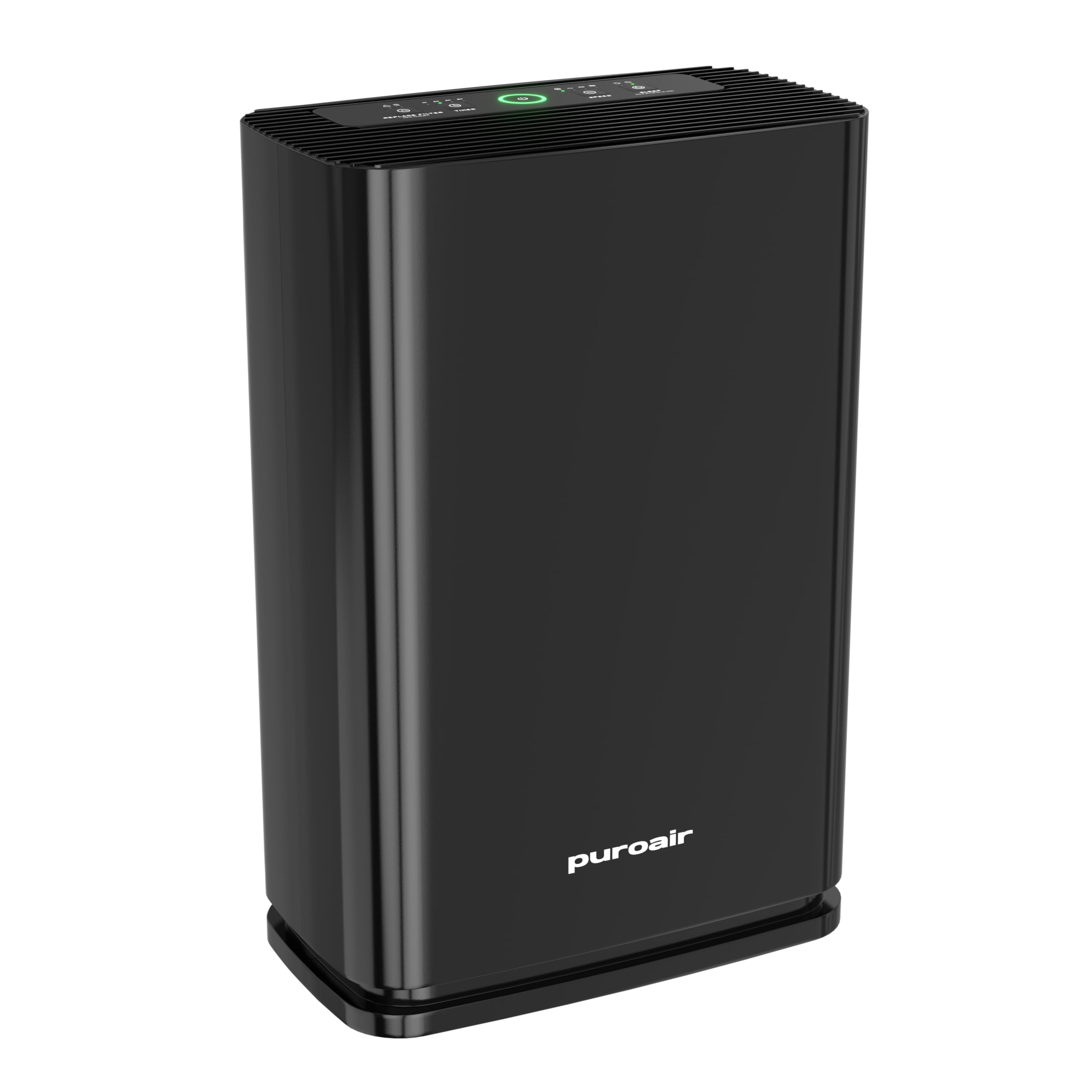
The PuroAir 400 uses a 3-layer system with a pre-filter, HEPA filter, and activated carbon—formulated as a CarbonTech matrix that the manufacturer claims is up to 500X stronger than standard carbon sheets. For NO₂, the activated carbon layer provides adsorption capacity, and the CarbonTech claim suggests a higher density of active sites per gram. Independent ISO 17025 testing backs particle performance, with the unit capturing up to 99.9% of pollutants including dust, smoke, pet dander, and VOCs.
Coverage reaches 2,000 square feet in one hour, and the built-in particle sensor automatically adjusts fan speed when it detects PM spikes—which often accompany NO₂ release from combustion sources. Sleep Mode operates at 35 dB, making it a viable bedroom companion. The automatic air quality sensor with color-coded indicator gives visual feedback on improvement.
Some users report that the unit is audible on higher settings during nighttime quiet periods. Its carbon layer is more substantial than entry-level purifiers but doesn’t rival the 15-pound adsorbent mass of the Austin Air. It occupies a strong mid-range position for those who need gas-phase removal without the premium price tag of heavy canister filters.
Why it’s great
- Dense CarbonTech media for improved gas capture
- Large 2,000 sq ft coverage capacity
- Smart auto mode with real-time sensor feedback
Good to know
- Noise level noticeable on higher settings at night
- Filter replacement schedule adds recurring cost
8. WINIX 5520 Air Purifier
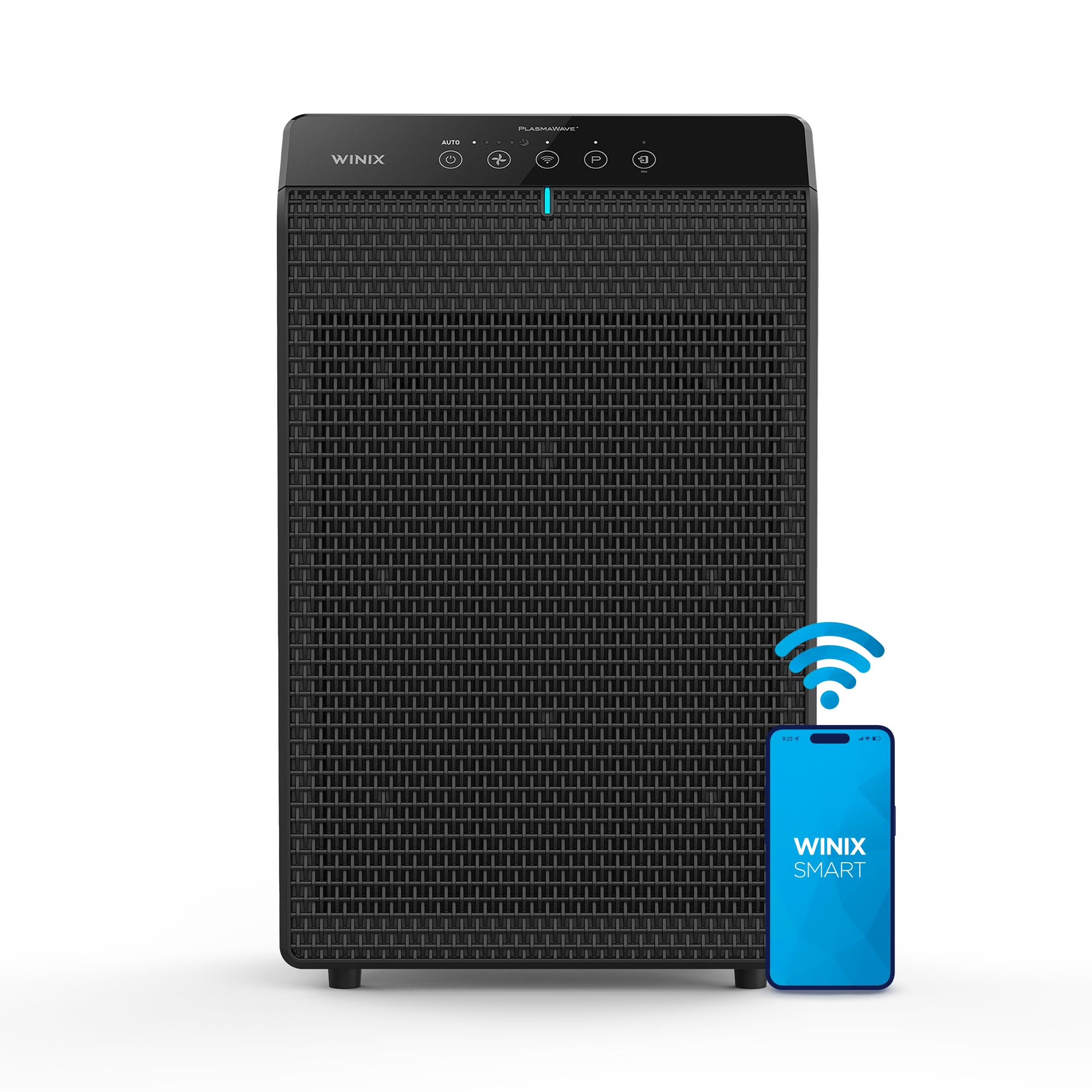
The WINIX 5520 is an entry-level defender against NO₂, featuring an Advanced Odor Control (AOC) carbon filter that reduces VOCs and household odors including those from cooking and smoke—common NO₂ sources. While its carbon bed is nowhere near as deep as premium units, the AOC filter is specifically formulated for gas-phase odor reduction rather than just particle capture. The True HEPA stage captures 99.99% of airborne allergens down to 0.01 microns.
AHAM Verifide at 392 square feet, this unit also delivers rapid cleaning for larger spaces: up to 1,882 sq ft in one hour at maximum fan speed. The built-in air quality sensor with color-coded LED display adjusts the Auto Mode in real time. A Sleep Mode automatically activates in darkness, dropping noise to 23.5 dB on the slowest speed—virtually silent.
Filter replacements are reasonably priced at around annually, making long-term ownership affordable. The Winix Smart App adds WiFi control and Alexa/Google Home compatibility. For budget-conscious buyers in apartments or condos with gas stoves, the 5520 provides a functional first line of gas-phase defense without the premium spend.
Why it’s great
- AOC carbon filter targets cooking and smoke odors
- Very quiet operation at 23.5 dB on low
- Affordable filter replacements ~/year
Good to know
- Limited carbon mass reduces heavy NO₂ load handling
- Alexa integration reported as unreliable
9. AirDoctor AD1000 HEPA Air Purifier
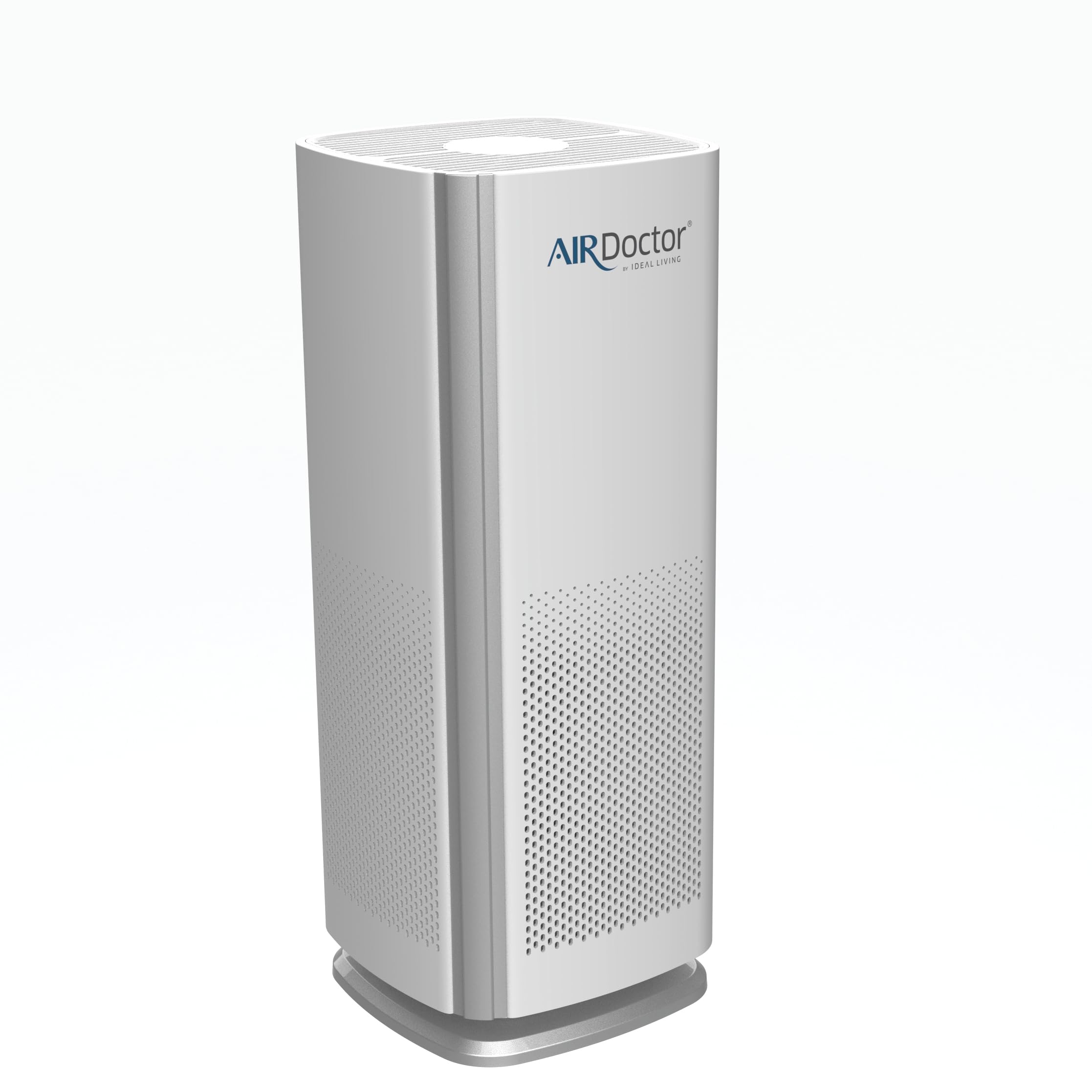
The AirDoctor AD1000 brings the brand’s UltraHEPA and Carbon VOC filtration into a compact tower designed for smaller spaces up to 285 square feet (with 4 air changes per hour). Its dual-action Carbon VOC filter uses activated carbon to adsorb NO₂ and other gases, while the UltraHEPA stage captures particles as small as 0.003 microns—100 times smaller than the HEPA standard. This two-pronged approach ensures that both the gas and the particulate carriers of NO₂ are addressed.
Four fan speeds range from whisper-quiet to boost, and Auto Mode uses an air quality sensor to adjust filtration levels instantly. The compact footprint (3.33 kg) makes it easy to place on a nightstand or desk near a NO₂ source like a gas range or an attached garage passage. Users report significant allergy relief and reduced pet dander, indicating effective overall air cleaning.
The AD1000 is specifically engineered for smaller rooms, so it won’t keep up with whole-home NO₂ loads. Replacement filters (UltraHEPA + Carbon VOC) require scheduled changes every 6-12 months. For targeted NO₂ reduction in a bedroom, home office, or nursery near a known gas source, this unit offers proven AirDoctor filtration science in a much smaller package.
Why it’s great
- UltraHEPA captures 0.003 micron particles
- Carbon VOC filter specifically targets gas-phase pollutants
- Compact size fits small spaces near NO₂ sources
Good to know
- Coverage limited to 285 sq ft at 4 ACH
- Filter replacement adds periodic cost
FAQ
Can a HEPA filter alone remove nitrogen dioxide?
How often should I replace the carbon filter for NO₂ removal?
What is the best placement for an NO₂ purifier in a home?
Final Thoughts: The Verdict
For most users, the best air purifier for nitrogen dioxide winner is the Austin Air HealthMate Plus because its 15-pound carbon/zeolite blend provides unmatched gas-adsorption endurance for real-world NO₂ loads. If you want active chemical oxidation of nitrogen dioxide, grab the AirDoctor AD2000 with its KMnO₄-impregnated carbon. And for budget-conscious buyers who need gas-phase defense in smaller spaces, nothing beats the cost-to-performance ratio of the WINIX 5520.