
An air die grinder chews through rusted bolts, port-matches cylinder heads, and deburrs sharp aluminum edges in seconds—but only if the motor can sustain its rated RPM under load. The wrong pick bogs down the moment you lean into a weld seam, forcing you to swap bits and waste air. Finding one that balances raw torque, ergonomic reach, and long-term reliability separates a shop tool from a frustrating toy.
I’m Min — the co-founder and writer behind Gadgets Feed. This guide is the result of analyzing dozens of technical datasheets, cross-referencing real-world user experiences, and distilling the air consumption, collet compatibility, and housing durability metrics that actually determine whether a pneumatic grinder earns its spot on your bench.
After comparing free speeds, horsepower ratings, and exhaust designs across seven contenders, the best air die grinder for most workshops is the Ingersoll Rand 307B for its proven balance of compact size, reliable ball-bearing construction, and steady 28,000 RPM performance.
How To Choose The Best Air Die Grinder
Selecting a pneumatic die grinder is a balance of motor output, physical size, and air supply capability. Beginners often overvalue peak RPM while ignoring the real-world torque that prevents the tool from stalling on tougher materials. Focus on these three critical factors to avoid a purchase that collects dust after the first heavy job.
Horsepower and Sustained Torque
Free speed listed in RPM is the number the tool hits with no load, but the horsepower rating (HP) tells you how much grinding force remains when you apply pressure. A 0.25 HP straight grinder is fine for light deburring on aluminum, but a 0.63 HP unit like the Chicago Pneumatic CP872 maintains its speed on steel and thick weld seams. Match HP to the material you grind most often.
Collet Size and Bit Versatility
Most die grinders accept a 1/4-inch collet as standard, which is ideal for mounted stones and carbide burrs. A second 1/8-inch collet (or 6mm collet) opens access to fine engraving bits and Dremel-style accessories. Check whether the tool ships with both collets—buying them separately adds cost and hassle. Pencil-type grinders with a 1/8-inch-only collet are specialized for detail work and less suited for aggressive material removal.
Exhaust Direction and Ergonomics
Rear exhaust directs air and noise away from the workpiece and the operator’s face, making long sessions more tolerable. Front exhaust blows debris directly onto the surface you are grinding, which can obscure your view and create a mess. For one-handed use in tight engine bays or confined corners, a right-angle head with a compact body reduces fatigue, but the 90-degree gearbox absorbs some power compared to a straight design.
Quick Comparison
On smaller screens, swipe sideways to see the full table.
| Model | Category | Best For | Key Spec | Amazon |
|---|---|---|---|---|
| Ingersoll Rand 307B | Straight | All-around shop work | 0.25 HP / 28,000 RPM | Amazon |
| Chicago Pneumatic CP872 | Straight | Heavy material removal | 0.63 HP / 27,000 RPM | Amazon |
| Ingersoll Rand 308B | Straight | Extended grinding sessions | 0.33 HP / 25,000 RPM | Amazon |
| AIRCAT 6255 | Angle | Quiet operation in tight spots | 0.4 HP / 18,000 RPM | Amazon |
| NEIKO 10649A | Pencil | Detail engraving and cleanup | 54,000 RPM / 0.25 lb | Amazon |
| TOOLPEAK Kit | Angle | Entry-level versatility | 0.32 HP / 20,000 RPM | Amazon |
| WORKPRO Angle | Angle | Budget right-angle grinding | 20,000 RPM / 1 lb | Amazon |
In‑Depth Reviews
1. Ingersoll Rand 307B 1/4” Air Die Grinder
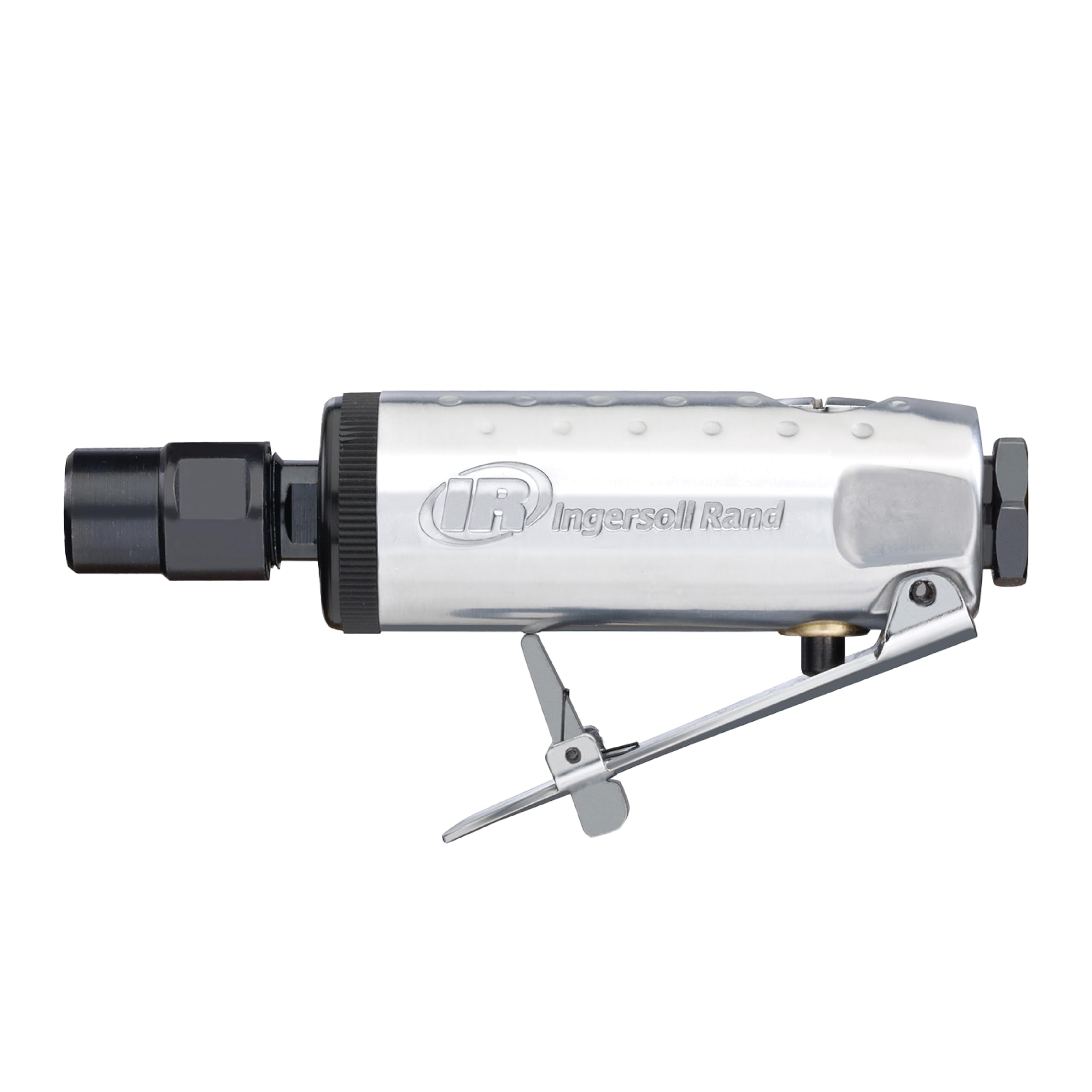
The Ingersoll Rand 307B delivers a compact straight-body design that measures only 5.19 inches long and weighs 11 ounces, making it one of the most pocket-friendly die grinders that still punches a 28,000 RPM free speed. Its ball-bearing construction and aluminum housing reduce vibration noticeably compared to composite-bodied tools, and the built-in lubricating wick extends gear life beyond what entry-level models offer.
Users consistently report years of reliable service with only occasional air tool oiling, though the two-wrench collet system and safety-lock throttle lever create a minor learning curve for quick bit changes. The front exhaust keeps chips away from the operator but can blow debris across the workpiece surface. Included 1/4-inch and 6 mm collets provide immediate compatibility with standard burrs and mounted stones.
For a mid-range price point, the 307B offers the best return on investment for a shop that needs one reliable straight grinder for porting, deburring, and light polishing across steel and aluminum. Its reputation for longevity under frequent use makes it the strongest all-around recommendation in this lineup.
Why it’s great
- Very compact at 11 oz for one-handed work in tight bays
- Ball-bearing motor and aluminum housing dampen vibration
- Dual collets (1/4 in and 6 mm) offer immediate bit flexibility
Good to know
- Two-wrench bit change system is cumbersome on the go
- Safety lock throttle requires modification for comfortable use
- Front exhaust blows dust onto the workpiece
2. Chicago Pneumatic CP872 Air Die Grinder

The Chicago Pneumatic CP872 is the torque king of this roundup, with a 0.63 HP motor that maintains speed under heavy load where lesser 0.25 HP grinders stall. Its 27,000 RPM free speed, combined with a built-in speed regulator, gives the operator granular control from a near-idle crawl to full output—ideal for switching between delicate deburring and aggressive porting on the same part.
A rear diffused exhaust design keeps air and chips directed away from the operator, a significant improvement over front-exhaust models for long welding prep sessions. The trade-off is high air consumption at 20 CFM under load, which will drain a small portable compressor quickly. Users report that the right-angle chuck wrench allows one-handed collet tightening, a practical detail that speeds up bit swaps.
Professional welders note that the CP872 remains smooth after hundreds of hours, though the head can develop slight wobble after extended daily use. For any shop that regularly grinds steel and needs a tool that does not bog down, this is the strongest choice in the premium bracket.
Why it’s great
- 0.63 HP provides outstanding sustained torque on steel and welds
- Rear exhaust keeps chips away from the operator and workpiece
- Built-in speed regulator offers wide RPM flexibility
Good to know
- High air consumption (20 CFM) requires a large compressor tank
- Head alignment may degrade after heavy daily professional use
- Noisier than composite-bodied alternatives due to metal housing
3. Ingersoll Rand 308B Air Die Grinder

The Ingersoll Rand 308B steps up from the 307B with a slightly larger composite housing that resists cold-air handling issues and weighs just over one pound. Its 0.33 HP motor delivers 25,000 RPM, offering a modest power increase for users who need more headroom than the 307B without jumping to the high air consumption of the CP872.
Rear exhaust directs air away from the work surface, and the tool is compatible with piped-away exhaust kits for shops that require external venting. The integral safety-lock throttle lever and ball-bearing construction mirror the 307B’s reliability, though some users note that the trigger spring feels stiff and the composite bearings can feel gritty until broken in. Includes both 1/4-inch and 6 mm collets plus two wrenches.
For fabricators and welders who run their grinder for hours and want a straight tool that stays comfortable in cold weather, the 308B’s composite grip and rear exhaust make it a refined choice. It does not match the raw torque of the CP872, but its lower air consumption pairs better with mid-size shop compressors.
Why it’s great
- Composite housing stays warm in cold shop environments
- Rear exhaust and piped-away compatibility improve air quality
- Balanced weight at 1 lb reduces hand fatigue over long sessions
Good to know
- Trigger safety spring is overly stiff for fine speed control
- Some units arrive with gritty bearings that require break-in
- Composite body feels less durable than aluminum housing
4. AIRCAT Pneumatic Tools 6255 Composite Right Angle Die Grinder

The AIRCAT 6255 is the standout choice for anyone who works in a noise-sensitive environment or shares a shop space. Its patented tuned exhaust system drops the noise level to 82 dBA, significantly quieter than the typical metal-housed grinders that push into the high 90s. The 0.4 HP motor spins at 18,000 RPM, which is lower than straight models but perfectly adequate for a right-angle head that prioritizes access over outright speed.
The composite body prevents the cold-hand freezing problem in unheated garages, and the ergonomic handle design fits comfortably for extended sessions. Users appreciate the short-throw paddle trigger that enables variable speed control, though some find the constant pressure required to hold the safety button tiring compared to a flip-switch design. The right-angle gearbox delivers a 90-degree drive for reaching exhaust manifold bolts and brake caliper brackets.
For automotive technicians and DIYers who primarily use a right-angle grinder for gasket scraping, porting, and blending in confined engine spaces, the AIRCAT 6255 combines genuinely quieter operation with sufficient torque for mild steel and aluminum. Its 2-year warranty also exceeds the standard 1-year coverage of most competitors.
Why it’s great
- Patented silenced exhaust at 82 dBA is noticeably quieter than rivals
- Composite body stays warm in cold weather and dampens vibration
- Short-throw paddle trigger enables smooth variable speed control
Good to know
- Safety button must be held continuously, causing hand fatigue
- 18,000 RPM free speed is lower than straight die grinders
- Right-angle head adds bulk for ultra-tight access situations
5. NEIKO 10649A Micro Air Die Grinder

The NEIKO 10649A is a pencil-type micro grinder that operates at a blistering 54,000 RPM, making it the only tool in this guide suitable for fine engraving, carburetor deburring, and jewelry cleanup. Its 5.25-inch slim body weighs just 0.25 pounds, allowing the same precision fingertip control you would expect from a Dremel but driven by pneumatic power for sustained high-speed operation.
The variable-speed textured throttle lever gives the operator reasonable control, though the speed adjustment is not granular and the tool can get hot during extended use. It ships with a 5-foot flexible nylon hose, two collet wrenches, and a 1/4-inch nipple, but the 1/8-inch collet capacity limits bit selection to smaller shank sizes. Users who work on hardened die steel report that daily oiling and clean compressed air are mandatory to prevent the pencil grinder from seizing.
For metalworkers who need to reach into small cavities with a carbide burr or clean up machined edges on aluminum and stainless without overshooting, the NEIKO 10649A delivers astonishing speed in a tiny package. It is not a replacement for a full-size grinder, but as a dedicated detail tool it punches well above its price point.
Why it’s great
- 54,000 RPM free speed provides ultra-fine finishing capability
- Pencil-thin 5.25-inch body offers excellent detail control
- Includes 5-ft hose, two wrenches, and nipple for immediate setup
Good to know
- Requires daily oiling with clean, dry air to avoid seizing
- 1/8-inch collet only — limits bit compatibility
- Runs hot during extended use and needs hearing protection
6. TOOLPEAK 1/4 Inch Angle Air Die Grinder Kit

The TOOLPEAK angle die grinder kit includes 22 assorted 2-inch quick-change sanding discs alongside the tool itself, making it the most turnkey option for someone who needs to start grinding immediately without buying accessories separately. The 90-degree head and 0.32 HP motor spin at 20,000 RPM, adequate for light grinding, lawnmower blade sharpening, and grill grate cleaning tasks that do not demand sustained industrial torque.
An aluminum body with low-vibration design and rear exhaust keeps the tool comfortable for short jobs, and the built-in speed regulator adds some control flexibility. The polished color finish looks sharp on the bench, but the price-constrained construction means the collet can allow attachments to spin loose when the trigger is released. Users note that regular oiling is essential for longevity, but several report years of satisfactory hobby-level service.
For the home mechanic who needs a versatile angle grinder for occasional porting, polishing, and sanding, the TOOLPEAK kit delivers surprising capability at an entry-level investment. The included disc assortment alone reduces the hidden cost of starting from scratch, making this the most practical budget-friendly bundle in the list.
Why it’s great
- 22-piece disc kit provides immediate sanding and polishing ability
- Lightweight aluminum body with low-vibration design
- Rear exhaust keeps debris away during use
Good to know
- Attachments can spin loose when trigger is released
- 0.32 HP is moderate — not ideal for heavy steel work
- Budget construction may not survive sustained daily use
7. WORKPRO Air Angle Die Grinder

The WORKPRO angle die grinder delivers a 90-degree head design for reaching tight spots, coupled with a free speed of 20,000 RPM at 90 PSI. Its standout feature at the entry-level price is the inclusion of both 1/4-inch and 1/8-inch collets, giving the buyer immediate access to both standard burrs and small engraving bits without an extra purchase.
At just 16 ounces and 6.3 inches long, the WORKPRO is easy to maneuver one-handed in confined engine compartments or behind brake rotors. The rear exhaust and integral safety-lock throttle lever match the safety features of higher-end tools, though the non-linear trigger makes fine speed control difficult when working at high line pressure. Users report that the tool maintains good power on a 10-gallon compressor and survives occasional drops without damage.
For the cost-conscious buyer who needs a right-angle grinder for occasional gasket removal, bolt cutting, and light deburring, the WORKPRO offers genuine dual-collet flexibility at the lowest entry point. It is not a daily driver for a pro shop, but as a backup or starter tool it covers the essential functions without breaking the bank.
Why it’s great
- Ships with both 1/4-inch and 1/8-inch collets for bit versatility
- Lightweight 16-oz body is easy to handle in tight spaces
- Rear exhaust design improves operator comfort
Good to know
- Non-linear trigger limits precise speed modulation
- Moderate power output is best suited for light-duty tasks
- Dust plug must be removed before connecting air line
FAQ
Can I use a 1/8-inch collet in a standard 1/4-inch die grinder?
How often should I oil an air die grinder?
What is the difference between a straight and an angle die grinder?
Why does my die grinder stall when I apply pressure?
Final Thoughts: The Verdict
For most users, the best air die grinder winner is the Ingersoll Rand 307B because it combines a compact 11-ounce body with proven ball-bearing reliability and a 28,000 RPM free speed that handles 90 percent of shop tasks without breaking the bank. If you need raw torque for heavy steel grinding, grab the Chicago Pneumatic CP872. And for precision detail work in tight cavities, nothing beats the NEIKO 10649A.