
Prescription AR glasses bridge the gap between your vision needs and the next wave of wearable computing. Trying to hold a phone up to your face while wearing smart glasses feels absurd, and squinting at a floating screen that was never designed for your eyesight defeats the purpose of immersive tech. The real breakthrough is a pair that corrects your vision while projecting a crisp, stable virtual display that actually stays in focus.
I’m Min — the co-founder and writer behind Gadgets Feed. My deep-dive analysis of optical engines, diopter adjustments, and spatial tracking specs has quantified exactly which AR glasses deliver on their promises for prescription wearers.
After analyzing dozens of specs and real-user feedback, this guide isolates the specific models that solve the vision-correction puzzle without compromising display quality or comfort, helping you find the best prescription ar glasses for your lifestyle.
How To Choose The Best Prescription AR Glasses
Choosing the right pair comes down to how you correct vision — either through built-in diopter dials, magnetic snap-on prescription lenses, or custom inserts. Each method impacts the optical path differently, so understanding the tradeoffs is critical.
Built-in Diopter vs. Prescription Inserts
Some AR glasses offer a physical diopter adjustment wheel on the frame, typically ranging from 0.00D to -6.00D. This is convenient for single-vision nearsightedness but does not correct astigmatism. For astigmatism or prescriptions stronger than the dial’s range, you will need custom snap-on or clip-in lenses from the manufacturer or a third party. The key spec here is whether the optical engine accommodates an insert without distorting the virtual image.
Field of View (FOV) and Eye Relief
Prescription lenses or inserts push your eye slightly further from the optical module. A narrow FOV below 50° may feel constrained when your prescription adds distance from the display. Models with a wider 52° to 57° FOV generally provide a more immersive experience and are more forgiving of the slight offset created by corrective lenses.
Native 3DoF and Spatial Stability
If you plan to use AR glasses for productivity — reading text, coding, or managing multiple virtual monitors — native 3DoF (three degrees of freedom) tracking is essential. Without it, the screen drifts with your head movements, causing motion sickness. The best prescription AR glasses integrate the spatial chip directly into the glasses so the experience remains smooth without relying on an external puck or phone app.
Quick Comparison
On smaller screens, swipe sideways to see the full table.
| Model | Category | Best For | Key Spec | Amazon |
|---|---|---|---|---|
| XREAL One Pro | Premium | Immersive gaming & productivity | 57° FOV, 171″ virtual screen | Amazon |
| VITURE Luma Ultra | Premium | Spatial computing with 6DoF | 1500 nits, triple-camera 6DoF | Amazon |
| VITURE Luma Pro | Premium | Sharpest display & media | 1200p, diopter to -4.0D | Amazon |
| XREAL 1S | Mid-Range | Plug-and-play 3DoF | Native 3DoF, Bose audio | Amazon |
| INAIR 2 Pro | Mid-Range | Multi-screen productivity | 49 PPD edge clarity | Amazon |
| Rokid Max 2 (Black) | Mid-Range | Myopia dial up to -6.0D | 50° FOV, 215″ virtual display | Amazon |
| Meta Ray-Ban (Gen 2) | Mid-Range | AI assistant & hands-free capture | 12 MP ultra-wide camera | Amazon |
| RayNeo Air 4 Pro | Mid-Range | Budget-friendly display quality | 120Hz, 1200 nits Micro-OLED | Amazon |
| Meta Oakley Vanguard | Premium | Athletic AI & video capture | 122° FOV camera, IP67 | Amazon |
| Rokid Max 2 (Silver) | Mid-Range | Myopia dial up to -6.0D | 75g, lightweight frame | Amazon |
| TOZO VIZO Z1 Pro | Mid-Range | Detachable frame for lenses | 3840×1080 resolution | Amazon |
In‑Depth Reviews
1. XREAL One Pro AR Glasses

The XREAL One Pro delivers the widest field of view at 57° in this roundup, projecting a 171-inch virtual screen that feels genuinely cinematic. The built-in X1 spatial computing chip provides native 3DoF tracking with a low 3ms motion-to-photon latency, meaning the screen stays locked in place without external software or a separate puck. This makes it the strongest candidate for productivity tasks where text readability and screen stability are non-negotiable.
For prescription users, the XREAL One Pro ships with a prescription frame included in the box — you simply take it to an optician for lens fitting. The dual IPD design offers two size ranges (M: 57–66mm, L: 66–75mm) to accommodate over 95% of users, and the spring hinge design with three-stage adjustable arms and zero-pressure nose pads minimizes pressure points during extended sessions.
Sound by Bose engineers adds another layer of immersion with a dedicated acoustic chamber that delivers spatial audio without blocking ambient noise. At 700 nits peak brightness with advanced electrochromic dimming, the display remains usable outdoors, and the anti-glare prism optics reduce reflections that can degrade image quality for users who wear prescription inserts behind the lenses.
Why it’s great
- Industry-leading 57° FOV for maximum immersion
- Native 3DoF with ultra-low 3ms latency, no external processing needed
- Prescription frame included, dual IPD sizes for broad compatibility
Good to know
- No built-in diopter adjustment — requires custom lenses or prescription frame
- Some users report occasional screen drift in anchored mode after extended use
- Sound quality is adequate but external headphones recommended for critical listening
2. VITURE Luma Ultra XR Glasses
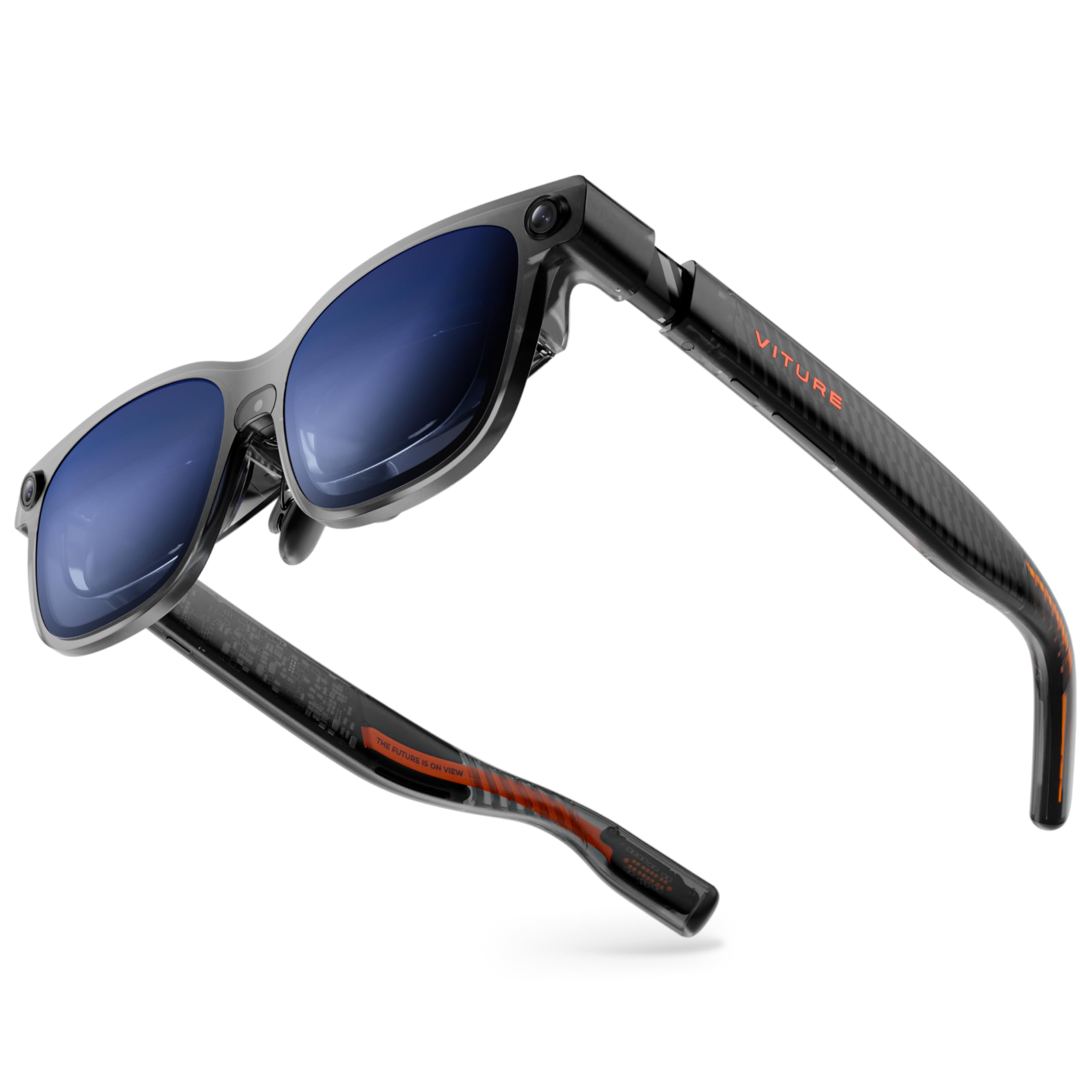
The VITURE Luma Ultra pushes brightness to 1500 nits, making it the most outdoor-usable option in this comparison. The triple-camera setup — a front RGB camera plus dual depth cameras — enables zero-drift 6DoF spatial tracking when paired with the VITURE Pro Neckband. This unlocks hand gesture recognition and true spatial anchoring with virtual objects placed in your real environment.
Built-in myopia adjustment goes up to -4.0D, which is sufficient for a broad range of nearsighted users without needing custom inserts. For those with astigmatism or stronger prescriptions, magnetic prescription lens frames are available separately. The IPD range of 58–70mm covers most adults, and the electrochromic film darkens instantly with a single tap to block ambient light during immersive sessions.
The proprietary Micro-OLED panels reduce power consumption by 35% compared to the VITURE Pro, which also reduces heat buildup on the face. Harman-tuned audio provides deeper bass and clearer mids than typical open-ear AR glasses, though the soundstage still leaks in quiet environments. The 52° FOV feels slightly narrower than the XREAL One Pro but is offset by the superior brightness and 6DoF capability for spatial computing enthusiasts.
Why it’s great
- Industry-leading 1500 nits brightness for outdoor use
- True 6DoF spatial tracking with triple-camera system
- Built-in myopia adjustment to -4.0D
Good to know
- Full 6DoF functionality requires separate Neckband purchase
- Some users report image jitter in 3DoF mode without SpaceWalker app
- 2D-to-3D conversion software can be unstable and drains phone battery
3. VITURE Luma Pro XR Glasses
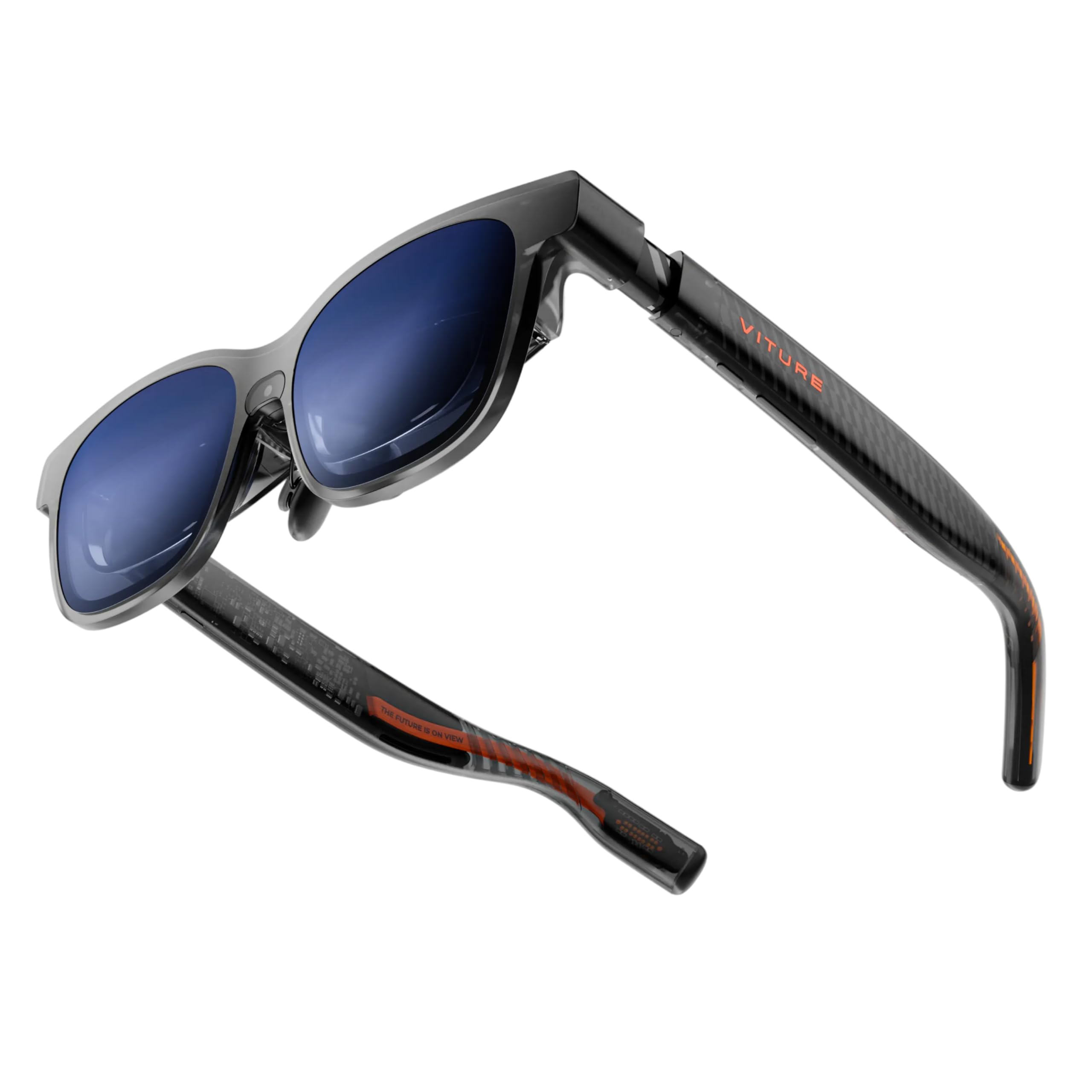
The VITURE Luma Pro is the sharpest display in the VITURE lineup at 1200p resolution with Hollywood-grade color accuracy (DeltaE < 2). The 152-inch virtual screen runs at 120Hz with 1000 nits brightness, and the proprietary optics deliver razor-sharp text clarity that out-resolves many competitors. For prescription wearers, the built-in myopia dial adjusts up to -4.0D, while a magnetic prescription lens frame is available for higher corrections or astigmatism.
What sets the Luma Pro apart is the first-ever programmable RGB lighting built into the frame, syncing colors and animations to gaming or productivity modes. The electrochromic film toggles between immersive and transparent states with one tap, and the IPD range is available in regular (58mm) and large (68mm) sizes to improve fit across different face shapes. The tilt-adjustable temples and magnetic ergonomic nose pad reduce pressure during extended wear.
SpaceWalker software enables multi-screen productivity on Mac and PC — up to three virtual monitors arranged horizontally, vertically, or in code mode. The Harman audio system delivers fuller bass than the previous VITURE Pro generation, though the open-ear design still bleeds sound in quiet rooms. Community feedback confirms the display clarity is best-in-class for media consumption, but the lack of native head tracking means you rely on the Neckband or SpaceWalker for 3DoF stabilization.
Why it’s great
- Sharpest display at 1200p with DeltaE < 2 color accuracy
- Built-in myopia dial to -4.0D with magnetic prescription frame option
- Programmable RGB lighting and multi-screen SpaceWalker app
Good to know
- No native head tracking — SpaceWalker or Neckband required for 3DoF
- Built-in speakers too quiet for noisy environments
- Corner sharpness degrades slightly compared to center
4. XREAL 1S AR/XR Glasses
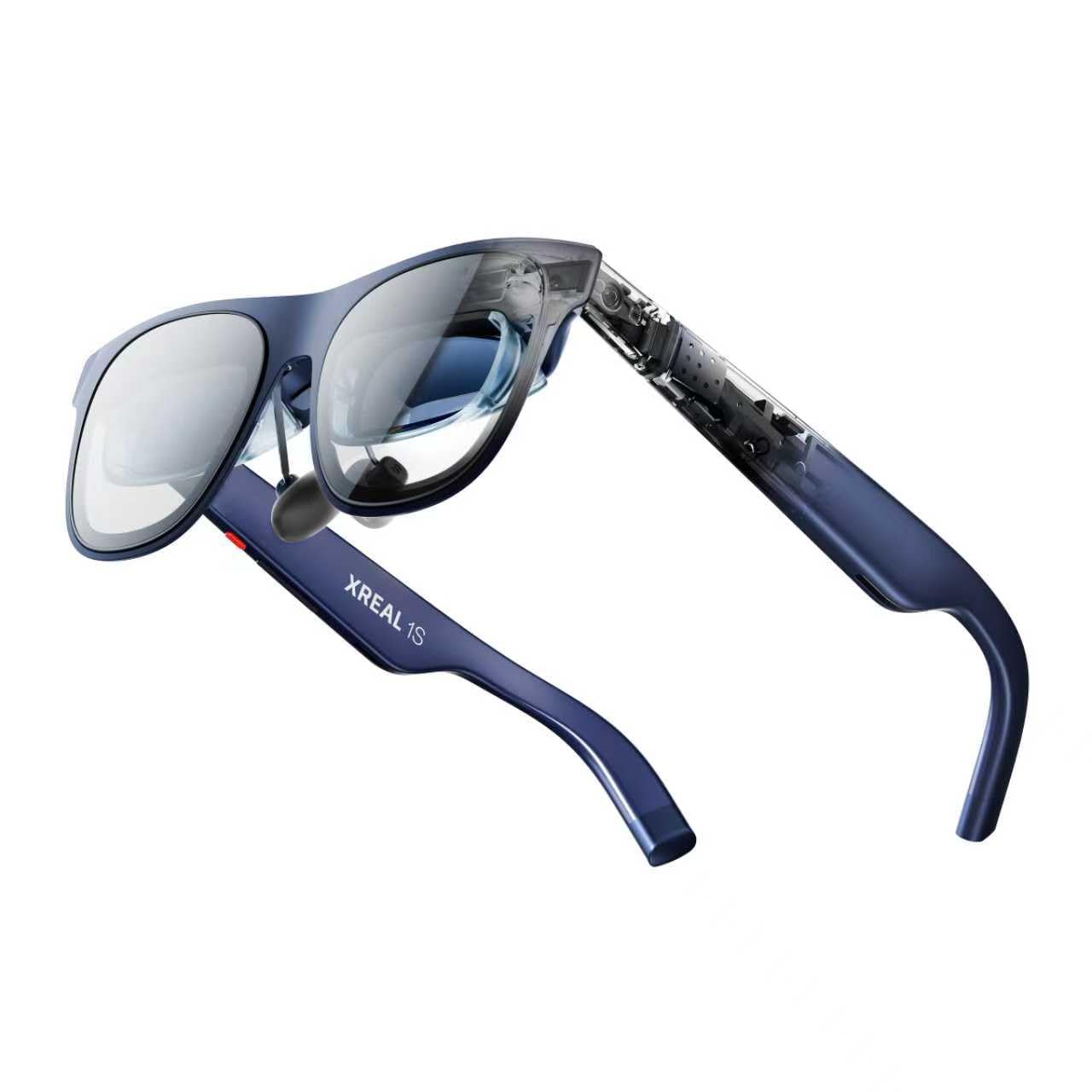
The XREAL 1S offers the best balance of native 3DoF capability and audio quality in the mid-premium tier. The X1 chip powers spatial tracking directly on the glasses with 3ms latency at 120Hz, delivering a stable screen that stays anchored without drift. The 52° FOV translates to a 500-inch equivalent screen, and the 1080p per-eye resolution is individually color-tuned for consistent tone reproduction.
For prescription users, the XREAL 1S supports custom prescription lens inserts that snap into the included frame. The IPD range of 59.5–70.5mm covers roughly 95% of users, and the redesigned optical engine improves edge-to-edge clarity by 9% over previous generations. TÜV Rheinland certification covers low blue light, flicker-free operation, and 100% UV protection, making the 1S one of the few AR glasses with explicit optical safety certification for long sessions.
Audio is co-developed with Bose, featuring custom AR-grade drivers in a dedicated acoustic chamber. The soundstage is spacious with deep lows and clear vocals — among the best open-ear audio in AR glasses today. The electrochromic dimming is less effective than dedicated lens shades in bright rooms, and some users note the nose pads can be uncomfortable after 90 minutes, but the overall package represents the most polished all-rounder for productivity and media consumption.
Why it’s great
- Native 3DoF with ultra-low 3ms latency, no external puck required
- Bose audio with spacious soundstage and deep lows
- TÜV Rheinland certified for eye safety and low blue light
Good to know
- Nose pads can become uncomfortable after 90 minutes
- Electrochromic dimming may not block enough light for bright environments
- Requires separate accessory to charge source device while using
5. INAIR 2 PRO AR Glasses

The INAIR 2 Pro is built for the office, offering up to four virtual screens when connected to a Mac or Windows PC via INAIR Space software. The dual 3840×1080 Micro-OLED displays deliver 49 pixels per degree (PPD) edge clarity, meaning small text remains crisp from center to periphery — a critical requirement for coding, spreadsheet work, or document editing. The 135-inch virtual screen runs at 120Hz with 500 nits brightness.
Prescription users can order custom lenses through the INAIR Space website, and the electrochromic technology allows transparency adjustment from 0.1% to 16% with a simple swipe on the left temple. The SGS A+ 2.0 certification for visual fatigue (index ≤2.5) indicates lower eye strain during long work sessions, and the heating element is positioned on the right side away from skin and eyes for thermal comfort.
Compatibility extends to iPhone 16/15, Android phones with DP output, Steam Deck, ROG Ally, and laptops via USB-C. The 80g weight is evenly distributed with three adjustable temple angles and two nose pad sizes. Early adopters report that the multi-monitor feature can be buggy on Windows 11 depending on graphics hardware, and the FOV is narrower than the XREAL One Pro, requiring more head movement to see the full virtual workspace.
Why it’s great
- 49 PPD edge clarity for razor-sharp text in productivity workflows
- Up to four virtual screens via INAIR Space on Mac/Windows
- SGS A+ 2.0 certified for low visual fatigue during extended use
Good to know
- Multi-monitor software can be unstable on some Windows configurations
- Narrower FOV than premium competitors, requiring more head movement
- Setup documentation is sparse, and early beta software caused issues
6. Rokid Max 2 (Black)
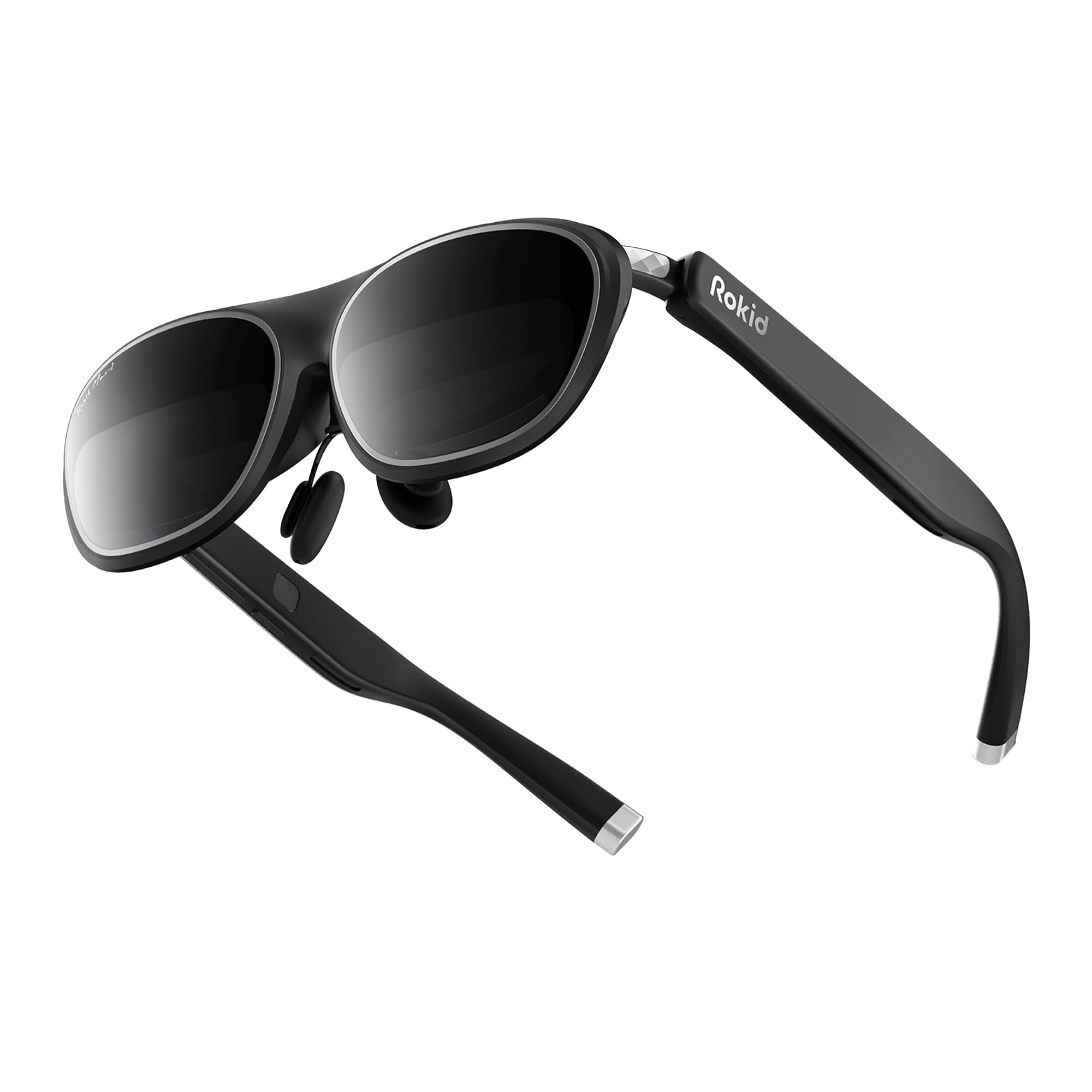
The Rokid Max 2 in black offers the widest built-in diopter adjustment range among mid-range options, covering myopia up to -6.0D with a simple dial on top of the glasses. This eliminates the need for separate prescription inserts for a large portion of nearsighted users. The 50° FOV delivers a 215-inch virtual screen at 6 meters distance using dual Micro-OLED displays running at 120Hz with 600 nits peak brightness.
The frame weighs only 75g, making it one of the lighter options for extended wear. The innovative airy-cushioning nose pad design prevents slipping and reduces facial fatigue. For users with prescriptions exceeding -6.0D or those needing astigmatism correction, separate prescription lenses are available from Rokid. The glasses are powered directly via USB-C from the connected device, requiring no internal battery.
Compatibility includes most Android phones, iPhone 15 series, Windows laptops, and iPad models from 2020 onward. The package includes a blackout cover and cleaning cloth. Some users note that the 50° FOV feels narrower than advertised when the glasses are not perfectly positioned, and the built-in speakers are only audible in quiet environments. The lack of native 3DoF means the screen follows your head, which can cause motion discomfort during extended use.
Why it’s great
- Built-in diopter adjustment to -6.0D covers most nearsighted users
- Lightweight 75g frame reduces fatigue during long sessions
- No internal battery — powered directly from connected device
Good to know
- No native 3DoF — screen drifts with head movement
- FOV feels narrower when glasses aren’t perfectly positioned
- Built-in speakers are quiet and leak sound in quiet rooms
7. Meta Ray-Ban (Gen 2) Headliner
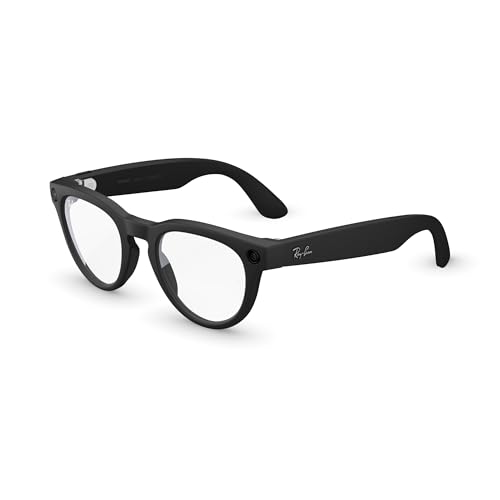
The Meta Ray-Ban (Gen 2) is not a traditional AR display device — it lacks a virtual screen projection — but it is the most polished AI glasses for hands-free capture and Meta AI integration. The 12 MP ultra-wide camera records 3K Ultra HD video, and the open-ear speakers deliver music and calls with 90% wind and street noise blocked. Battery life reaches up to 8 hours with moderate use, with a charging case providing 48 hours of total charge.
For prescription wearers, Meta offers custom prescription lenses through its online store, and the frame is available in a standard Wayfarer shape. The glasses integrate seamlessly with Meta AI for real-time translation between French, Italian, Spanish, English, and more. Voice commands enable hands-free texting, calling, and reminders without pulling out a phone.
At 51.2g, the frame is light and comfortable for all-day wear, though some users find the arms bulky after several hours. The UV protection coating and standard clear lenses make them suitable for daily wear. The main tradeoff is the lack of a display — these do not project a virtual screen, so they serve a different use case than the other glasses on this list.
Why it’s great
- Best-in-class AI assistant integration with real-time translation
- Lightweight 51.2g frame with custom prescription lens options
- 8-hour battery with 48-hour charging case
Good to know
- No virtual display — these are AI/smart glasses, not AR glasses
- Video recording is vertical only with no stabilization
- Bulky arms can be uncomfortable for all-day wear
8. RayNeo Air 4 Pro × Batman Limited Edition
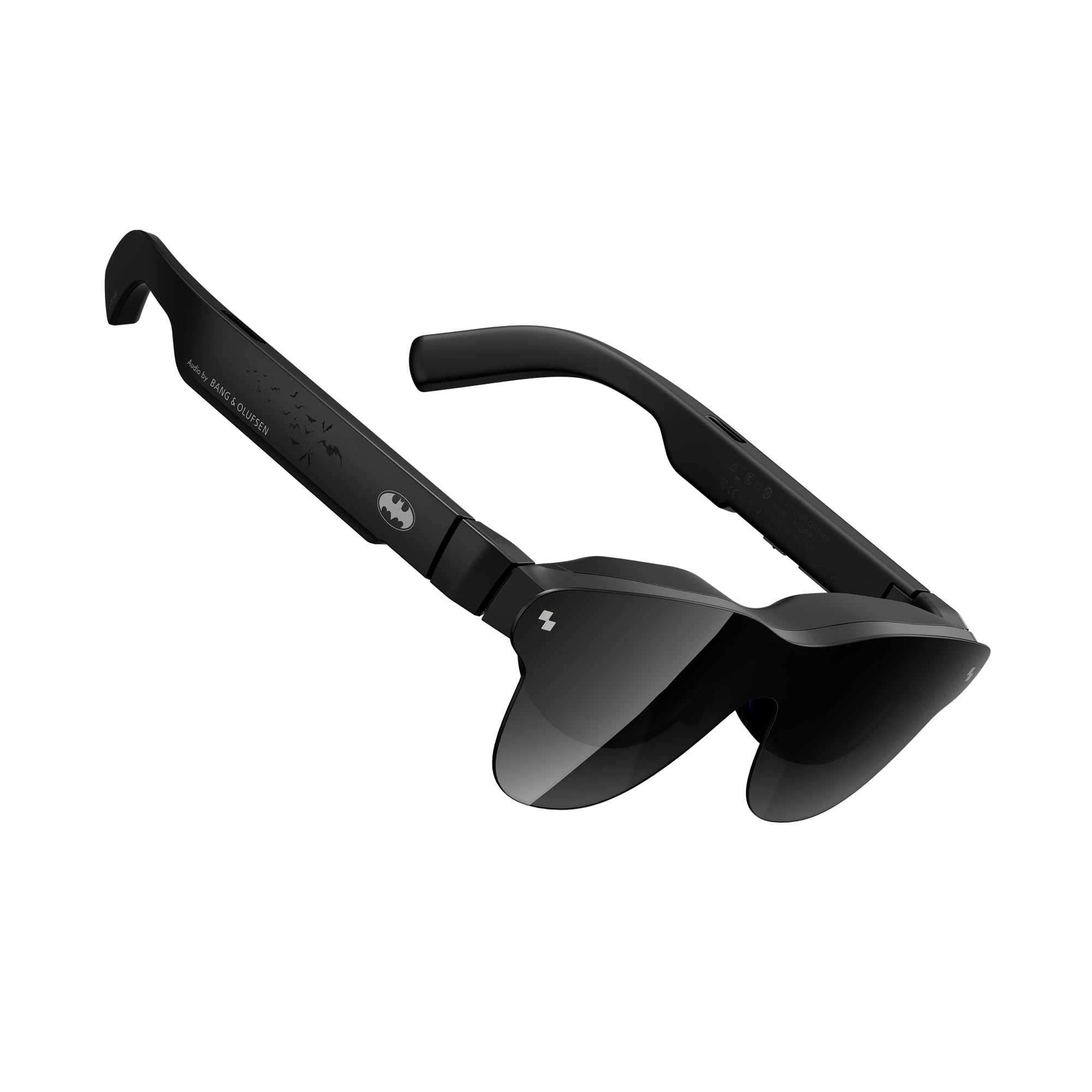
The RayNeo Air 4 Pro punches above its price tier with a 120Hz Micro-OLED display at 1200 nits brightness and HDR10 support, all in a collector-grade Batman limited edition package. The Vision 4000 chip powers AI-assisted SDR-to-HDR conversion, and the quad-speaker system co-tuned by Bang & Olufsen delivers a 360-degree soundstage. The 201-inch virtual screen is sharp and vibrant for media consumption and gaming.
Prescription users should note that the RayNeo Air 4 Pro lacks built-in diopter adjustment and does not ship with a prescription lens frame. Third-party snap-on lenses are available from online retailers, but the cost (–) is an additional expense. The frame fits smaller face shapes best, and some users report that only 90% of the screen is visible depending on their facial structure — a factor to consider before purchasing for daily prescription use.
The glasses draw 2–4W of power from the source device and have no internal battery, which means your phone or laptop battery depletes faster during use. The 0DoF constraint (the screen follows your head) limits spatial utility without external software like Apple’s Spatialize Audio or third-party utilities. For the price, the display quality and audio are exceptional, but the prescription compatibility requires extra effort and investment.
Why it’s great
- Best price-to-performance ratio with 120Hz HDR10 display
- Bang & Olufsen quad-speaker system with 360-degree soundstage
- 1200 nits brightness for good outdoor visibility
Good to know
- No built-in diopter adjustment — prescription lenses require third-party purchase
- 0DoF only — no spatial anchoring without external software
- Frame may not display full screen for users with larger faces
9. Meta Oakley Vanguard
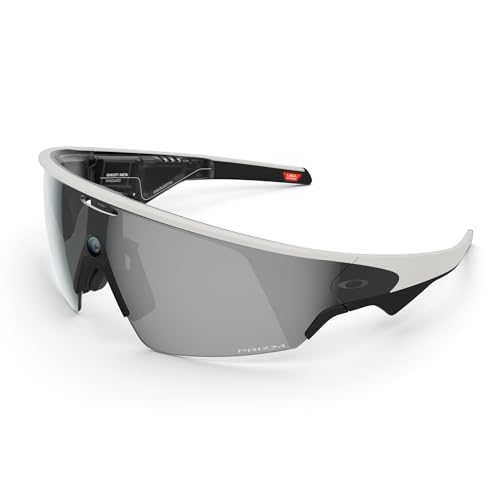
The Meta Oakley Vanguard combines Oakley’s Prizm Black lens technology with Meta AI for athletic performance tracking. The centered 12 MP camera with a 122° field of view captures 3K video in slow motion and hyperlapse modes. When paired with a compatible Garmin device, it provides real-time workout metrics such as heart rate, pace, and distance directly through the open-ear audio.
IP67 sweat, dust, and water resistance makes these suitable for intense workouts. The Prizm Black lenses offer polarized UV protection, and Oakley’s build quality ensures a secure fit during running and cycling. Prescription lenses are available through Meta’s prescription portal, and the frame accepts standard Oakley replacement lenses.
The audio system handles music and calls clearly in most environments, though wind noise recording can be problematic during fast activity. Battery life reaches up to 9 hours for typical use, with 2 hours of continuous video recording capability. The charging case provides an extra 36 hours of charge. These glasses lack any virtual display — they are exclusively a camera and audio device with AI features, not AR in the display sense.
Why it’s great
- IP67 sweat/dust/water resistance for athletic use
- 122° FOV camera with 3K video and multiple capture modes
- Prizm Black polarized lenses with prescription option
Good to know
- No virtual display — purely a camera and AI device
- Video stabilization is absent, causing jittery footage
- Vertical-only video recording limits framing options
10. Rokid Max 2 (Silver)
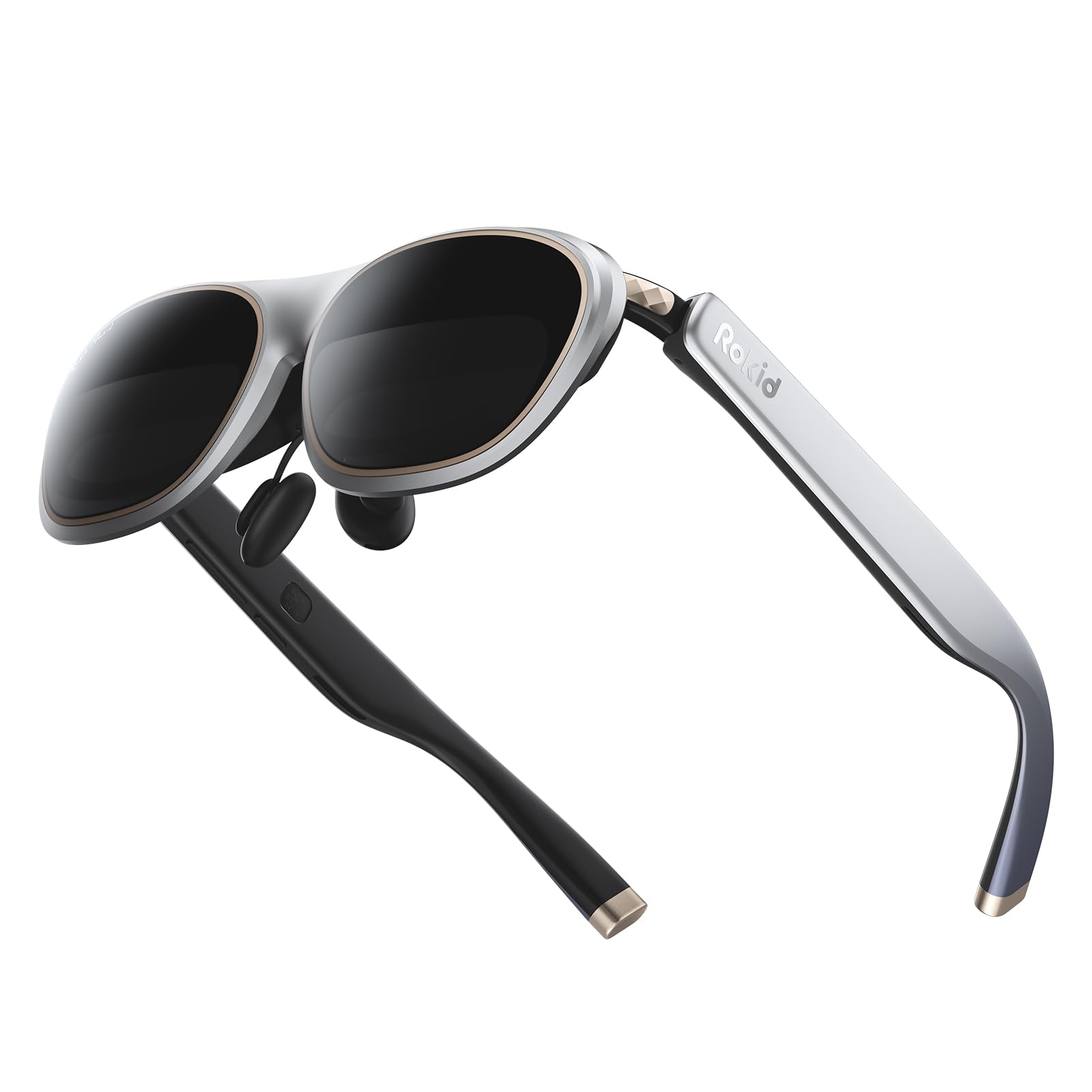
The silver variant of the Rokid Max 2 is mechanically identical to the black version, offering the same built-in diopter adjustment up to -6.0D and the same 50° FOV with 215-inch virtual screen projection. The silver frame may appeal more to users who prefer a lighter aesthetic or want to match specific eyewear styles. The 75g weight and airy-cushioning nose pad ensure the same lightweight comfort as the black version.
Powered via USB-C with no internal battery, the Max 2 connects directly to compatible smartphones, laptops, and tablets. The package includes the same accessories: carrying case, cleaning cloth, blackout cover, and multiple nose pad sizes. For users with myopia exceeding -6.0D or those with astigmatism, prescription frames must be purchased separately (ASIN: B0C7GZGTH3).
Community feedback largely mirrors the black version: the display is bright and sharp at 600 nits, the 120Hz refresh rate handles fast motion well, but the lack of 3DoF causes screen drift that can be disorienting during car or plane travel. The lenses are glued to the frame, making removal for cleaning or replacement difficult without risk of damage.
Why it’s great
- Built-in diopter adjustment to -6.0D, same as black version
- Lightweight 75g frame for comfortable extended wear
- No internal battery — powered directly via USB-C
Good to know
- No native 3DoF — screen follows head movement
- Lenses are glued to frame, difficult to remove or replace
- Blackout lenses reflect internal light in bright rooms
11. TOZO VIZO Z1 Pro AR Glasses
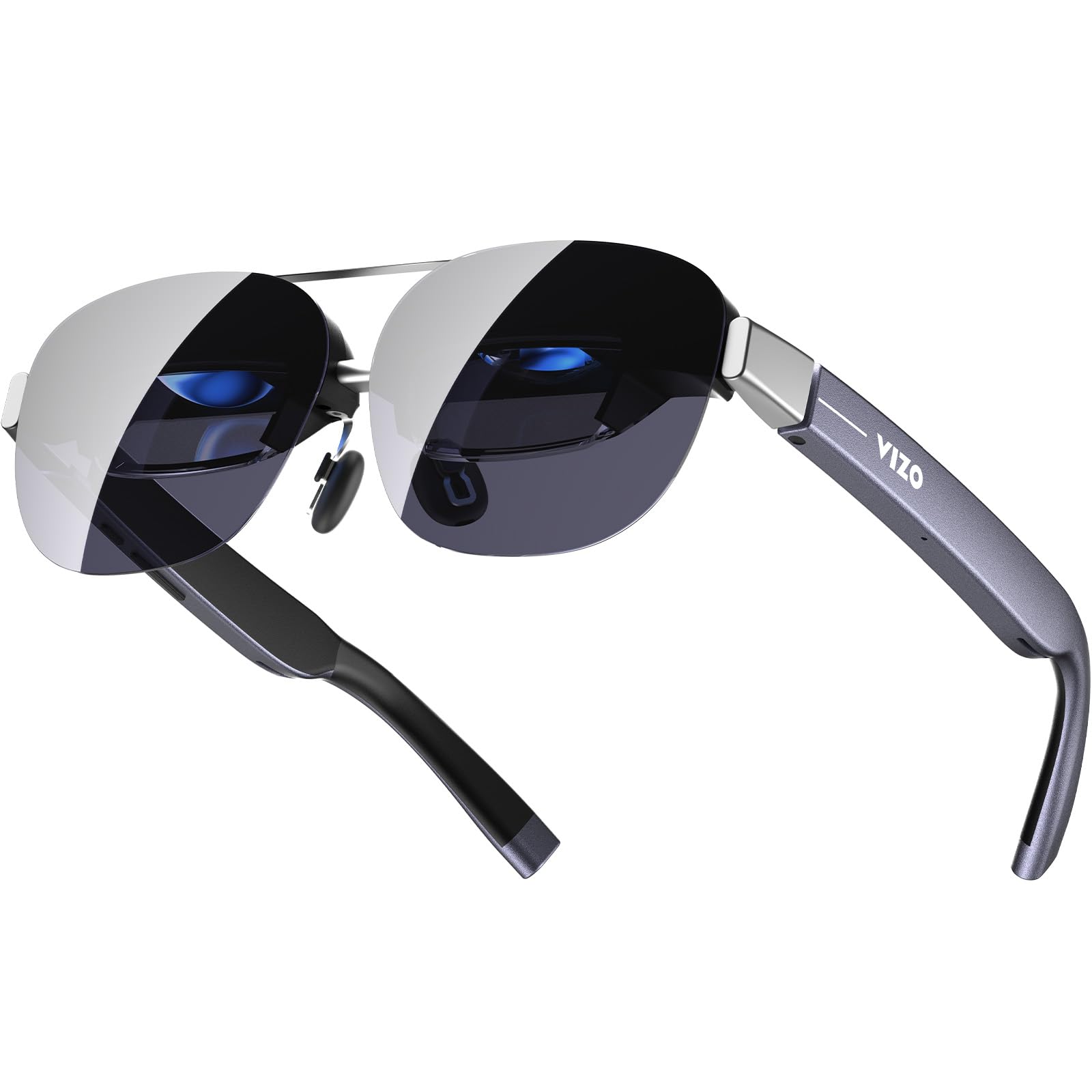
The TOZO VIZO Z1 Pro offers a unique detachable front frame that accepts standard prescription lenses, making it one of the more flexible options for vision correction. The dual 3840×1080 Micro-OLED panels deliver a 160-inch virtual screen at 120Hz with 98% DCI-P3 color coverage and 200,000:1 contrast ratio. The 47.5° FOV is narrower than most competitors, but the detachable lens system reduces the friction of ordering custom inserts.
At 63g, the Z1 Pro is the lightest AR glasses in this comparison, folding like conventional sunglasses for portability. The built-in stereo speakers and physical volume controls provide adequate audio for personal viewing, though there is noticeable audio bleed at higher volumes. The high-brightness optical system handles indoor and daytime use well, with multi-level brightness control.
Connectivity is plug-and-play via USB-C for compatible DisplayPort devices, requiring no additional apps. The lack of any degrees of freedom (0DoF) means the screen is always fixed relative to the glasses — there is no spatial anchoring or head tracking. Users find this fine for casual movie watching but unsuitable for productivity or gaming where screen stability matters. The frame also lacks lens covers, leaving the optics exposed to scratches when not in use.
Why it’s great
- Detachable frame accepts standard prescription lenses easily
- Ultra-lightweight 63g folds like sunglasses
- Dual 3840×1080 OLED with 98% DCI-P3 color coverage
Good to know
- 47.5° FOV is narrower than mid-range and premium competitors
- 0DoF — no spatial tracking or screen anchoring
- No lens cover included — optics prone to scratches
FAQ
Can I use prescription AR glasses if I have astigmatism?
What is the difference between 3DoF and 6DoF and why does it matter for prescription wearers?
Will prescription inserts affect the image quality of AR glasses?
How do I measure my IPD for AR glasses?
Final Thoughts: The Verdict
For most users, the prescription ar glasses winner is the XREAL One Pro because it combines the widest 57° FOV, native 3DoF with zero external processing, and includes a prescription lens frame right in the box. If you want the brightest display for outdoor use and are willing to buy the separate neckband for 6DoF, grab the VITURE Luma Ultra. And for budget-conscious users who need built-in diopter adjustment up to -6.0D without paying for premium features, nothing beats the Rokid Max 2.