
You’re miles deep on a ridgeline, the sun is high, and the last thing you want is to unpack a stove, wait for water to boil, and clean a greasy pot. Lunch on the trail is a trade-off between weight, convenience, and flavor—and most backpackers end up sacrificing taste and nutrition for the sake of a light pack.
I’m Min — the co-founder and writer behind Gadgets Feed. I’ve spent hundreds of hours analyzing the nutritional density, caloric output, preparation methods, and ingredient lists of dehydrated and no-cook meal systems to find the ones that actually deliver on the trail.
Whether you prioritize weight, protein content, or a hot meal, this guide breaks down the top contenders to help you find the best backpacking lunches for your next adventure.
How To Choose The Best Backpacking Lunches
Selecting a backcountry lunch involves more than just finding something edible. You need a meal that provides sustained energy, packs down small, and requires minimal effort to prepare. Here are the key factors to weigh before you buy.
Calorie Density and Weight
Every gram of weight matters when you’re carrying it on your back. Look for meals that offer at least 100–130 calories per ounce. A 700-calorie pouch weighing just over 5 ounces is vastly superior to a bulkier option that leaves you hungry.
Preparation Method
Decide whether you want a cook-on-trail meal or a no-cook option. Freeze-dried pouches require boiling water and a stove, adding fuel weight and prep time. No-cook meal bars or drinkable shakes eliminate the stove entirely, saving significant pack weight and hassle.
Ingredient Quality and Dietary Needs
Backpacking meals vary widely in ingredient standards. Gluten-free, vegan, and low-sodium options are available, but read labels carefully. Dehydrated foods often retain more original texture and nutrients than freeze-dried alternatives, while freeze-dried meals rehydrate faster.
Quick Comparison
On smaller screens, swipe sideways to see the full table.
| Model | Category | Best For | Key Spec | Amazon |
|---|---|---|---|---|
| Greenbelly Backpacking Meals | No-Cook Bar | Stoveless thru-hikes | 650 cal / 2-bar pouch | Amazon |
| RecPak Variety 3-Pack | Drinkable Meal | High-altitude athletes | 700 cal, 42g protein | Amazon |
| Mountain House Chicken & Dumplings | Freeze-Dried | Hot meal enthusiasts | 4-pouch pack, 8 servings | Amazon |
| GOOD TO-GO Weekender 3-Pack | Dehydrated | Clean ingredient seekers | Gluten-free, low sodium | Amazon |
| Meat Shredz Variety 6-Pack | Dried Meat | High-protein lunch topping | 13.2 oz total, 6 flavors | Amazon |
| Harmony House Backpacking Kit | Dehydrated Veggie Mix | Custom meal builders | 70+ servings, 4.5 lbs | Amazon |
| Harmony House Vegetable Sampler | Dehydrated Veggie Mix | Versatile trail supplements | 15-pouch variety pack | Amazon |
In‑Depth Reviews
1. Greenbelly Backpacking Meals

Greenbelly solves the biggest lunch problem on the trail: eliminating the stove entirely. Each pouch contains two dense, flaky meal bars that deliver a full 650 calories with balanced macros near a 30/30/30 split of carbs, protein, and fat. The bars have a texture similar to a sturdy Rice Krispie treat — they are dry on their own, so sipping water while you chew is the recommended method.
Formulated by a gourmet chef and made with whole-food ingredients, these bars are gluten-free and mostly vegan. Backpackers who used them on extreme multi-day events like jungle ultras and desert treks report steady energy without bloating or stomach distress. The resealable zip pouch keeps the second bar crisp for hours after opening.
The trade-off is texture: the bars can feel crumbly and the flavor is mild rather than punchy. They are designed for function over indulgence, and the packaging is tough to open without a knife. But for thru-hikers and gram-counters who refuse to carry a stove, Greenbelly is the most practical lunch system available.
Why it’s great
- Zero cooking required, saves stove and fuel weight
- High calorie density (650 cal in a compact pouch)
- Easy on the stomach during intense exertion
Good to know
- Very dry texture, requires drinking water alongside
- Packaging difficult to open without a tool
2. RecPak Variety 3-Pack
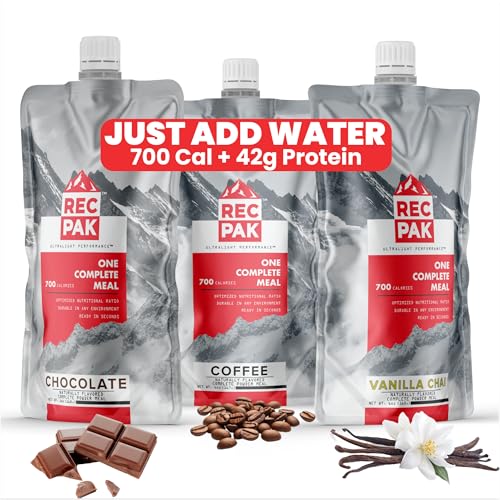
RecPak reimagines the trail lunch as a drinkable liquid meal. Each pouch packs 700 calories and 42 grams of protein into just 5.6 ounces — a calorie density that rivals any solid food option. The preparation is as simple as it gets: add water of any temperature, shake, let it settle, and drink. There is no stove, no pot, no cleanup, and the flexible pouch doubles as a collapsible water bottle.
Designed by a Marine Corps officer and refined by sports nutritionists, the formulation focuses on sustained exertion in remote, high-altitude settings. The balanced macro profile (50% carbs, 25% protein, 25% fat) includes whey, casein, and collagen for slow-release energy. Users on ski tours, ice climbs, and ultra runs report reliable energy without the digestive weight of solid food.
The biggest complaint is taste. While some users enjoy the chocolate and coffee flavors, others find the vanilla chai unpleasant, with a lingering aftertaste. The 16-ounce volume can also feel heavy in the stomach if consumed too quickly during a run. For its weight-to-calorie ratio and convenience, however, RecPak is unmatched for high-exertion days.
Why it’s great
- Exceptional 125 cal/oz density
- No cook, no chew — drink on the move
- Empty pouch functions as a Sawyer-compatible water bottle
Good to know
- Flavor quality is divisive, especially vanilla chai
- Can cause bloating if consumed too quickly
3. Mountain House Chicken & Dumplings 4-Pack
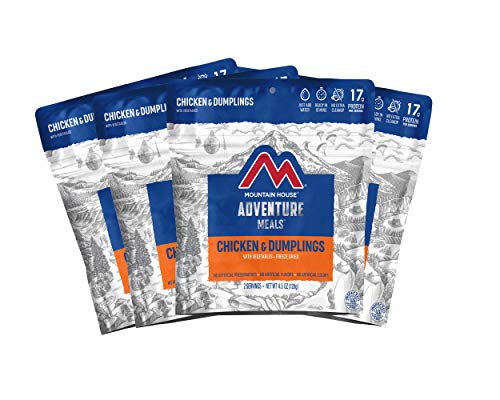
Mountain House is the most recognizable name in freeze-dried camping meals, and their Chicken & Dumplings is a perennial favorite. The pouch contains chicken, vegetables, and dumpling bites in a creamy white gravy with a slight peppery kick. Preparation is standard freeze-dried protocol: add boiling water, wait 9–10 minutes, stir, and eat directly from the pouch.
The 4-pack provides eight total servings, making it a solid value for groups or multi-day trips where a hot lunch is a psychological boost. The dumplings rehydrate to a soft, biscuit-like texture, though the centers can remain slightly powdery if not given enough water and time. Users report the gravy is rich and satisfying, especially after a cold morning.
The downsides are the usual freeze-dried trade-offs: you need a stove and fuel, which adds pack weight and preparation time. Some users find the recommended water amount insufficient and prefer to add a few extra tablespoons. The 30-year taste guarantee is a nice assurance, but the shelf life is best used within a few years for optimal flavor.
Why it’s great
- Rich, comforting flavor with hearty gravy
- 4-pouch pack offers good value per serving
- Short, bowl-shaped pouch is easy to eat from
Good to know
- Requires stove and fuel to boil water
- Dumpling centers may remain slightly powdery
4. GOOD TO-GO Weekender 3-Pack

GOOD TO-GO takes a different approach from the freeze-dried giants: they use dehydration rather than freeze-drying, which retains more of the original texture and nutrients. The Weekender 3-Pack includes two entrees and one breakfast, offering flavors like Thai Curry, Pasta Marinara, and Oatmeal. The ingredients are simple and recognizable — real food cooked by actual cooks, not food scientists.
The Thai Curry is a standout, delivering genuine flavor complexity that many backpacking meals lack. The Pasta Marinara is hearty and filling, while the Oatmeal is noted as bland but functional. These meals are gluten-free, low in sodium, and contain no preservatives. Preparation requires boiling water and a short wait, similar to freeze-dried meals.
Some users find the flavors too mild or the vegan base unsatisfying if they expect meat. Non-vegans often recommend adding tuna or chicken packets to boost satiety. The pouches are not the most compact, but for backpackers who prioritize clean ingredients and real-food taste over pure convenience, GOOD TO-GO is a top choice.
Why it’s great
- Dehydrated process retains better texture than freeze-dried
- Clean ingredients, gluten-free, no preservatives
- Thai Curry flavor is genuinely complex and enjoyable
Good to know
- Vegan base may feel thin for those expecting meat
- Oatmeal breakfast option is bland
5. Meat Shredz Variety 6-Pack
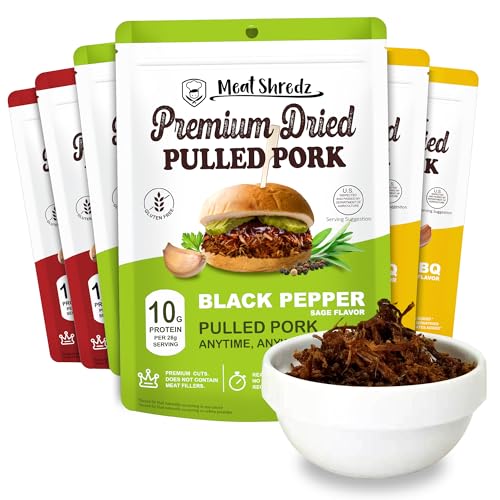
Meat Shredz is not a standalone lunch, but rather the most versatile protein topping you can add to any trail meal. The slow-cooked, dehydrated pulled pork comes in six flavor pouches (Black Pepper Sage, Carolina BBQ, Sriracha) and weighs just 2.2 ounces per bag. Rehydrate it for seconds in any dish — ramen, mac and cheese, scrambled eggs, or cold tortillas with coleslaw.
The texture is far more tender than traditional jerky; it practically melts when added to moisture. Backpacker Magazine awarded it an “Essential Backpacking Food” designation, and long-distance hikers on the PCT have used it daily to boost protein intake. The resealable packaging keeps the shreds fresh for up to a year.
The biggest downside is cost. At this price point, it is expensive for daily use, but as a strategic flavor and protein booster for half a pouch per meal, it stretches well. Some users find the Sriracha flavor mild and prefer to add extra hot sauce. If you want to elevate bland base meals into something crave-worthy, Meat Shredz is the answer.
Why it’s great
- Ultra-tender texture, rehydrates in seconds
- High protein, low sugar, gluten-free
- Versatile — works with hot or cold dishes
Good to know
- Expensive for regular use as a snack
- Sriracha flavor is mild, not spicy
6. Harmony House Foods Backpacking Kit
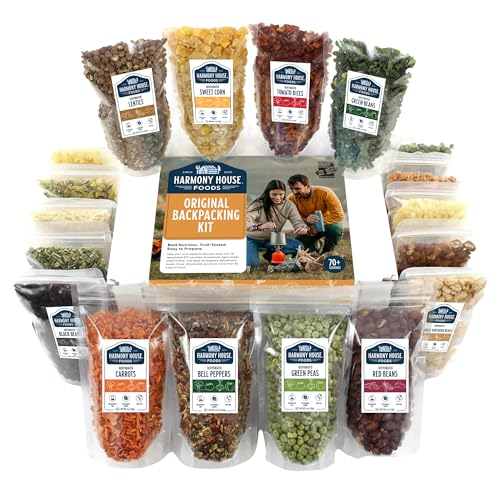
The Harmony House Backpacking Kit is a bulk solution for the DIY backpacker. This 4.5-pound bucket contains dehydrated vegetables, beans, and lentils that yield over 70 servings. It is essentially a blank canvas: you combine the ingredients with noodles, rice, broth, or seasonings to create custom meals. Backpacker Magazine gave it an Editor’s Choice award for overall excellence.
The ingredients are non-GMO, gluten-free, and Kosher OU certified. Users on 5-night trips report creating diverse menus — Mexican, Italian, Creole, Indian — by mixing the kit’s components with small additions like olive oil and spices. The rehydration time varies by vegetable; carrots and green beans require longer soaking than the 10–15 minutes listed.
The kit is not a grab-and-go lunch. You must portion, season, and cook your own creations, which requires planning and extra ingredients. It is also heavy relative to single-serve pouches, making it better suited for base camps or car camping than ultralight backpacking. But for those who want control over their meals and a bulk supply that lasts years, this is unmatched value.
Why it’s great
- Over 70 servings in one purchase
- Single-ingredient vegetables, no additives
- Endless meal customization possibilities
Good to know
- Heavy for ultralight backpacking (4.5 lbs)
- Requires additional ingredients for complete meals
7. Harmony House Vegetable Sampler
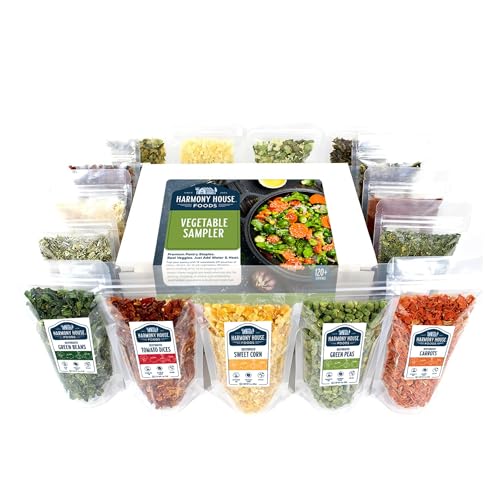
The Harmony House Vegetable Sampler is the entry point for backpackers looking to add real vegetables to their trail diet without buying in bulk. This 15-pouch variety pack includes broccoli, cabbage, carrots, celery, corn, green beans, jalapenos, leeks, onions, peas, bell peppers, potatoes, spinach, and tomatoes. When rehydrated, the total yield is 40 cups of vegetables.
Each pouch contains single-ingredient, non-GMO, gluten-free, and Kosher OU vegetables that are gently air-dried. Backpackers on the JMT found the sampler sufficient to supplement 25 dinners, feeling notably healthier than relying solely on freeze-dried meals. The tomato powder and jalapenos are potent — use them sparingly or risk overwhelming your meal.
The sampler is not a complete meal; it is a supplement to add to ramen, couscous, tortillas, or freeze-dried bases. Some vegetables, like carrots, remain crunchy even after soaking. Rehydration works best with a 20-minute soak rather than the quick simmer method. For the price, this is the most affordable way to combat trail monotony and nutrient gaps.
Why it’s great
- Wide variety of 15 vegetables for diverse meals
- Lightweight and shelf-stable for years
- Affordable way to add real nutrition to any base
Good to know
- Not a complete lunch on its own
- Some veggies (carrots) stay crunchy even after soaking
FAQ
Can I rehydrate freeze-dried meals with cold water?
How do I calculate the right portion size for a lunch?
Is dehydrated or freeze-dried food better for backpacking?
Final Thoughts: The Verdict
For most users, the best backpacking lunches winner is the Greenbelly Backpacking Meals because they eliminate the stove entirely while delivering a complete 650-calorie meal in a lightweight, easy-to-eat format. If you want calorie density and drinkable convenience for high-altitude efforts, grab the RecPak Variety 3-Pack. And for a hot, soul-warming lunch on cold days, nothing beats the Mountain House Chicken & Dumplings.