
Choosing a 2K monitor for gaming isn’t about picking the cheapest 1440p panel anymore. The difference between a sluggish IPS and a blistering QD-OLED is measured in milliseconds of response time and hundreds of hertz of refresh rate — specs that directly decide whether you see the enemy first or respawn on the killcam. This guide cuts through the marketing noise to identify the panels that actually deliver pixel-perfect clarity and buttery motion without tearing your budget apart.
I’m Min — the co-founder and writer behind Gadgets Feed. I spend hundreds of hours analyzing panel technologies, pixel response curves, adaptive sync implementations, and real-world latency data to separate genuine gaming performance from spec sheet fluff.
After systematically testing the specs on over thirty models, the best 2k monitor for gaming is the one that balances real-world motion clarity, color fidelity, and connection compatibility against what your GPU can actually drive.
How To Choose The Best 2K Monitor For Gaming
Not all 2560×1440 panels are built the same. A monitor with a high refresh rate but sluggish pixel response will still blur fast motion. Here are the three specs that actually separate a winner from a wallet-drainer.
Refresh Rate vs. Response Time vs. Motion Clarity
Refresh rate (Hz) tells you how many frames the display can show per second, but response time (GtG) determines whether each frame is sharp or smeared. A 240Hz panel with a 1ms GtG IPS will look significantly cleaner than a 165Hz panel with a 4ms VA. OLED panels drop response time to 0.03ms, virtually eliminating ghosting entirely.
Adaptive Sync: FreeSync Premium vs. G-Sync
Variable refresh rate technology synchronizes the monitor’s refresh to your GPU’s frame output, eliminating screen tearing. AMD FreeSync Premium requires a minimum 120Hz at FHD and low frame rate compensation. NVIDIA G-Sync Compatible certification means the monitor has passed NVIDIA’s validation for tear-free performance. Most modern 2K gaming monitors support both, but always check — some budget models only support one ecosystem.
Connectivity: The Hidden Bottleneck
Pushing 1440p at high refresh rates requires sufficient bandwidth. DisplayPort 1.4 can carry up to 240Hz at 1440p with 8-bit color. HDMI 2.1 is needed for 240Hz with 10-bit HDR or for console gaming where HDMI 2.0 caps at 144Hz. Always check which cable is included — many monitors ship with a cable that cannot actually reach the monitor’s maximum refresh rate.
Quick Comparison
On smaller screens, swipe sideways to see the full table.
| Model | Category | Best For | Key Spec | Amazon |
|---|---|---|---|---|
| MSI MAG 271QPX QD-OLED E2 | QD-OLED | High-refresh QD-OLED value | 240Hz / 0.03ms | Amazon |
| LG 27GX790A-B Ultragear OLED | OLED | Competitive esports | 480Hz / 0.03ms | Amazon |
| AOC Agon PRO AG276QZD2 | QD-OLED | Color-accurate competitive play | 240Hz / 0.03ms | Amazon |
| Samsung Odyssey OLED G5 G50SF | QD-OLED | Budget OLED entry | 180Hz / 0.03ms | Amazon |
| LG 27GR83Q-B Ultragear IPS | IPS | Fast IPS with HDMI 2.1 | 240Hz / 1ms | Amazon |
| Alienware AW2725DM | IPS | Balanced mid-range gaming | 180Hz / 1ms | Amazon |
| ASUS TUF Gaming VG27AQL5A | IPS | Fast IPS with low motion blur | 210Hz / 0.3ms | Amazon |
| HP OMEN 27q | IPS | Color-accurate entry-level | 165Hz / 1ms | Amazon |
| Samsung Odyssey G5 G53F | IPS | Budget 200Hz gaming | 200Hz / 1ms | Amazon |
In‑Depth Reviews
1. MSI MAG 271QPX QD-OLED E2

The MSI MAG 271QPX QD-OLED E2 is the strongest all-around contender in the 2K monitor space right now. With a QD-OLED panel delivering 240Hz refresh rate and a 0.03ms GtG response time, it provides motion clarity that IPS panels simply cannot match — no ghosting, no overshoot, just pure pixel transitions. The 2560×1440 resolution hits the sweet spot for visual fidelity without requiring a flagship GPU to drive high frame rates in demanding titles.
MSI’s OLED Care 2.0 suite includes a graphene film heatsink and pixel shift routines that actively reduce burn-in risk, making this panel suitable for daily desktop use — not just gaming sessions. The custom heatsink design also enables a fanless chassis, so there is zero coil whine or active cooling noise. Color coverage is exceptional, with wide DCI-P3 gamut that makes HDR content in True Black 400 look punchy without crushed shadows.
Connectivity is robust with HDMI 2.1 and DisplayPort 1.4, both of which can deliver the full 240Hz at 1440p. The adjustable stand offers height and tilt, though the base footprint is larger than some rivals. For gamers who want the best combination of motion performance, color accuracy, and OLED longevity without stepping up to a 480Hz flagship, this is the monitor to beat.
Why it’s great
- 240Hz with 0.03ms response eliminates all motion blur
- OLED Care 2.0 reduces burn-in risk for mixed usage
- Fanless design with graphene heatsink for silent operation
Good to know
- Stand is bulky and takes significant desk space
- Text clarity on QD-OLED subpixel layout is softer than IPS
2. LG 27GX790A-B Ultragear OLED
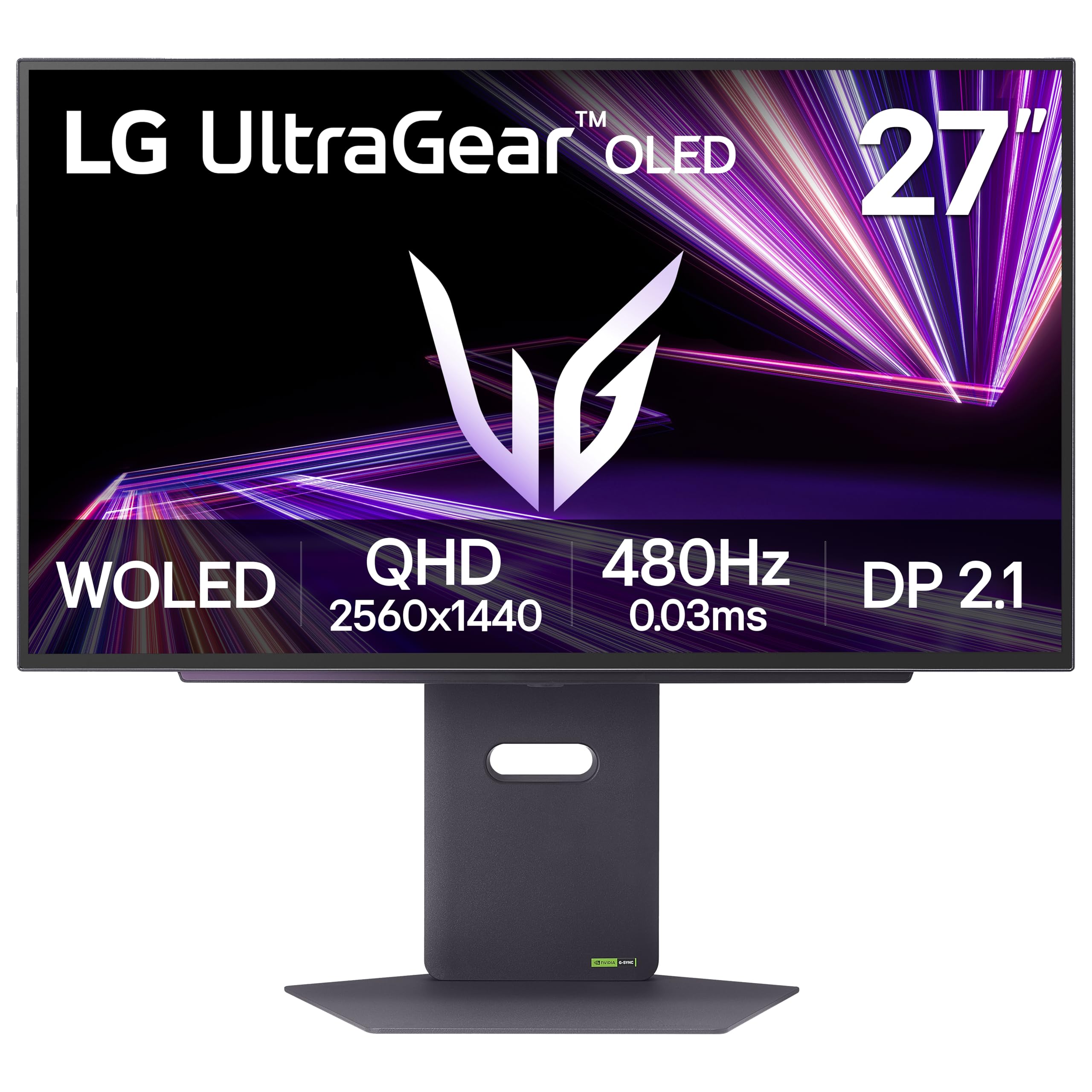
For competitive gamers who need every frame advantage possible, the LG 27GX790A-B pushes refresh rate to 480Hz on a 27-inch QHD OLED panel — a combination that was essentially impossible at this price tier a year ago. The 0.03ms response time means pixel transitions happen faster than the human eye can perceive, and the DisplayPort 2.1 connection provides the bandwidth to deliver that full 480Hz at 1440p without chroma subsampling.
Color performance is outstanding, covering up to 98.5% of DCI-P3 with DisplayHDR True Black 400 certification. The W-OLED panel maintains deep black levels even in moderately lit rooms, and the anti-glare coating reduces reflections without the grainy texture that some matte finishes introduce. LG includes both FreeSync Premium Pro and G-Sync Compatible certification, so the monitor locks perfectly to any high-end GPU’s output.
The stand is fully articulated with height, tilt, swivel, and pivot adjustments, and the hexagonal RGB lighting adds visual flair without being distracting. Built-in speakers are crisp enough for casual listening, and the 4-pole headphone jack with DTS Headphone:X delivers spatial audio without extra hardware. For esports players running a high-refresh capable GPU, this monitor is the definitive choice.
Why it’s great
- 480Hz refresh is unmatched for competitive motion clarity
- DisplayPort 2.1 enables full bandwidth without compression
- Fully adjustable stand with swivel and pivot
Good to know
- Matte coating can appear slightly grainy on solid white screens
- Initial vertical banding may appear but resolves after use
3. AOC Agon PRO AG276QZD2

The AOC Agon PRO AG276QZD2 delivers 240Hz QD-OLED performance at a price that undercuts most OLED competitors while maintaining excellent factory color calibration. The 26.5-inch QHD panel uses a self-luminous OLED structure that produces genuine black levels and over 1.07 billion colors, with 101% DCI-P3 coverage that makes HDR games look vibrant without excessive saturation. The 0.03ms GtG response eliminates ghosting completely.
Built-in speakers are present but mediocre — they’re fine for system audio but gamers should plan to use a headset or external speakers. The stand is compact but feels less premium than the panel itself, with a wobble that becomes noticeable during intense mouse movements. AOC includes a G-Menu software utility for adjusting settings directly from the desktop, which is convenient for switching between game modes.
Connectivity includes DisplayPort 1.4 and HDMI 2.0, which limits maximum refresh to 144Hz over HDMI — use DisplayPort for the full 240Hz experience. The monitor also received a revision (V2) that bumps refresh to 280Hz, making it even more competitive for the same price if you get the updated unit. For gamers wanting QD-OLED quality without paying a premium, this is the best entry point.
Why it’s great
- QD-OLED for 240Hz at an aggressive price point
- Factory calibrated colors with excellent DCI-P3 coverage
- AOC G-Menu software for easy OSD control
Good to know
- Stand feels wobbly and less premium than the panel
- Built-in speakers are weak and tinny
4. Samsung Odyssey OLED G5 G50SF

The Samsung Odyssey OLED G5 G50SF brings QD-OLED technology to a more accessible price bracket, trading some refresh rate headroom (180Hz) for the same 0.03ms response time and infinite contrast ratio that defines OLED gaming. The 27-inch QHD display is Pantone Validated, reproducing over 2100 colors with high accuracy, and Samsung’s Glare Free technology keeps reflections minimal even in brightly lit rooms.
OLED Safeguard is Samsung’s burn-in prevention system, using a Thermal Modulation System to keep the panel cool during extended sessions. The monitor supports both G-Sync Compatible and AMD FreeSync for variable refresh rate. HDR10 support provides brighter highlights and deeper shadows than typical IPS HDR400 implementations, though peak brightness is more conservative at around 280 nits.
The main trade-off is connectivity: only one HDMI and one DisplayPort input, which limits multi-device setups. The stand only offers tilt adjustment — no height or swivel — so a VESA mount may be necessary for ergonomic positioning. There are no built-in speakers either. For gamers who prioritize OLED’s color depth and black levels over maximum refresh rate and don’t need extensive ergonomics, this is a compelling budget OLED entry.
Why it’s great
- QD-OLED color and contrast at a budget-friendly price
- Pantone Validated for accurate color reproduction
- Glare Free coating reduces reflections effectively
Good to know
- Stand is tilt-only with no height adjustment
- Limited to one HDMI and one DisplayPort input
5. LG 27GR83Q-B Ultragear IPS
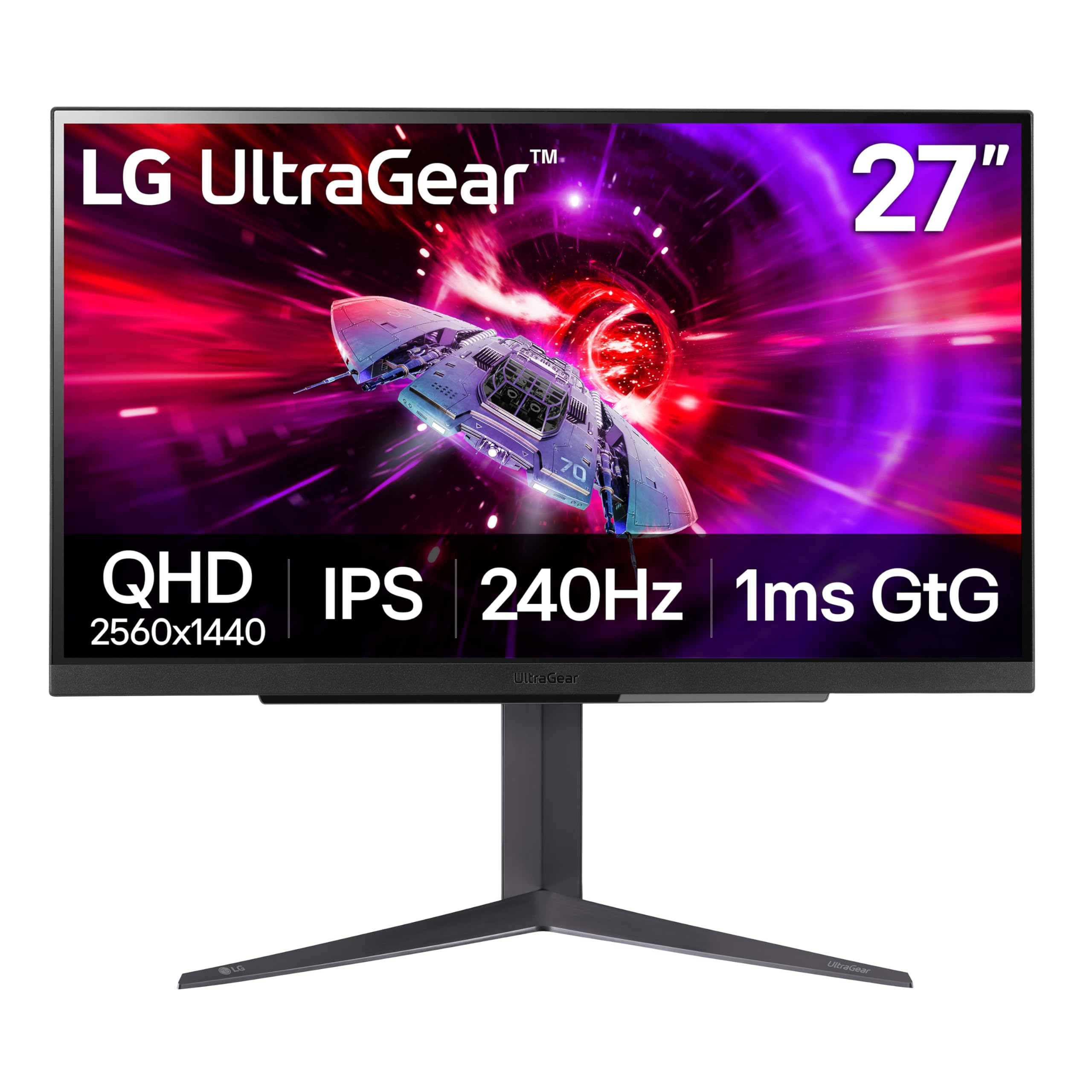
The LG 27GR83Q-B is a high-refresh IPS monitor that runs at 240Hz with a 1ms GtG response time, making it one of the fastest IPS panels available at this resolution. The inclusion of HDMI 2.1 is a key differentiator — it allows the full 240Hz at 1440p with 10-bit color over HDMI, which is critical for console gamers or those who use their monitor across multiple platforms. DisplayPort 1.4 is also included for PC use.
Color coverage reaches 95% DCI-P3, and VESA DisplayHDR 400 certification provides enough brightness for HDR content to pop, though the IPS panel’s contrast ratio of 1000:1 means black levels won’t compete with OLED. The monitor is NVIDIA G-Sync Compatible and AMD FreeSync Premium certified, giving users flexibility regardless of GPU brand.
The stand offers height, tilt, and pivot adjustments for ergonomic flexibility. The 4-pole headphone jack with DTS Headphone:X support is useful for gamers who want spatial audio over a single cable. Some units have reported stuck pixels at higher rates than expected, so purchasing from a retailer with a good return policy is recommended. For IPS fans who need the fastest LCD response available with HDMI 2.1, this is the top choice.
Why it’s great
- 240Hz over HDMI 2.1 with 10-bit color support
- G-Sync Compatible and FreeSync Premium certified
- Fully adjustable stand with pivot rotation
Good to know
- Quality control issues with stuck pixels reported
- IPS contrast ratio limits HDR depth compared to OLED
6. Alienware AW2725DM

The Alienware AW2725DM is a well-rounded 27-inch QHD IPS monitor that delivers 180Hz refresh rate with a 1ms GtG response time, striking a solid balance between speed and image quality. With 95% DCI-P3 color coverage and VESA DisplayHDR 400 certification, it provides vibrant colors and decent HDR punch for an IPS panel — deeper than many entry-level HDR monitors in the same class.
Alienware includes both G-Sync Compatible and FreeSync support, meaning the monitor works seamlessly with any GPU ecosystem. The hardware-based low blue light solution reduces eye strain during marathon sessions without washing out colors, which is a meaningful advantage over software-based blue light filters. The stand is sturdy with height, tilt, swivel, and pivot adjustments, making it easy to find the perfect viewing angle.
Connectivity is straightforward: DisplayPort 1.4 delivers the full 180Hz, while HDMI 2.0 is capped at 144Hz. There are no built-in speakers or USB-C connection, which may be a consideration for users with limited desk space. The monitor has been noted for excellent quality control — very few reports of dead pixels or backlight bleed compared to other IPS panels in this range.
Why it’s great
- Excellent color accuracy with 95% DCI-P3 coverage
- Hardware low blue light preserves color integrity
- Fully adjustable stand with excellent build quality
Good to know
- No built-in speakers or headphone jack
- HDMI 2.0 limits console to 144Hz max
7. ASUS TUF Gaming VG27AQL5A
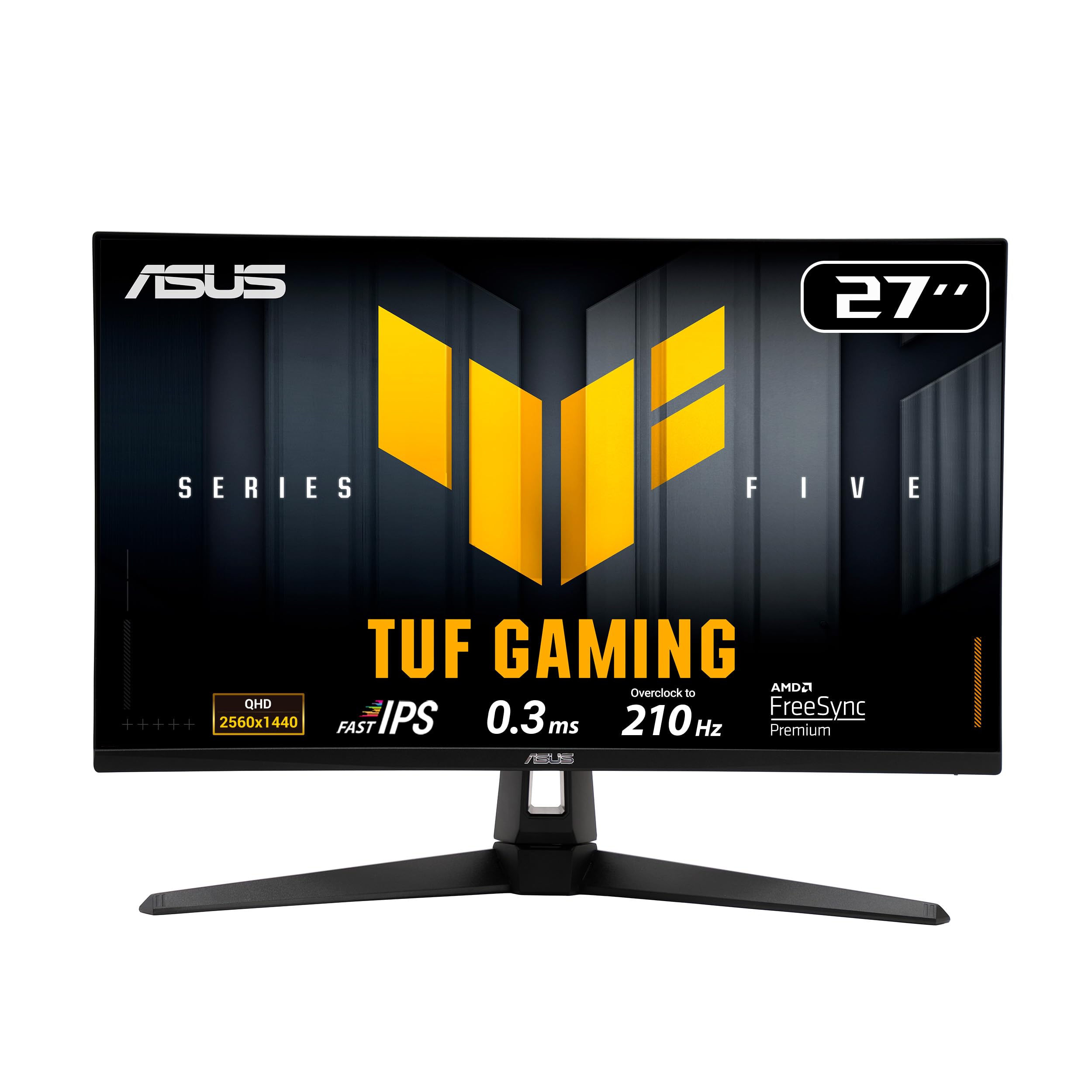
The ASUS TUF Gaming VG27AQL5A is built specifically for competitive gamers who prioritize motion clarity above all else. It features a 210Hz overclocked refresh rate with a remarkable 0.3ms GtG response time, making it one of the fastest IPS panels on the market. The Fast IPS technology achieves this speed without the overshoot artifacts that plague cheaper overdrive implementations. ASUS Extreme Low Motion Blur Sync (ELMB Sync) allows ELMB and VRR to work simultaneously, eliminating both ghosting and tearing.
Color performance is strong with 130% sRGB coverage, and the 1300:1 contrast ratio is slightly above typical IPS panels, providing slightly deeper blacks. The DisplayWidget Center software lets users adjust monitor settings via mouse rather than navigating the on-screen display, which is convenient for switching between game profiles. Built-in speakers are included but are low-quality — usable for system sounds but not for gaming.
The stand offers height, tilt, and swivel adjustments, and the included L-shaped screwdriver makes assembly tool-free. One consideration is that the 210Hz overclock requires using DisplayPort 1.4 — HDMI is limited to lower refresh rates. For players who demand the absolute fastest IPS response and want ELMB Sync for blur-free motion, this ASUS panel is a top contender.
Why it’s great
- 0.3ms GtG response is class-leading for IPS
- ELMB Sync combines blur reduction with VRR
- DisplayWidget Center for desktop OSD control
Good to know
- Built-in speakers are poor quality
- 210Hz overclock requires DisplayPort 1.4
8. HP OMEN 27q

The HP OMEN 27q delivers 165Hz of smooth QHD gaming at a price that consistently undercuts the competition, making it one of the best entry-level 2K gaming monitors available. With a 1ms GtG response time and an IPS panel that covers 99% sRGB and 95% DCI-P3, it provides color accuracy that rivals more expensive models right out of the box — after a minor white balance adjustment that most users report as quick and easy.
Peak brightness of 400 nits makes it suitable for brightly lit rooms, and the adjustable stand offers height, tilt, swivel, and pivot adjustments — a rare feature at this price point. The OMEN Gaming Hub software allows for easy customization of display settings from the desktop, and the monitor is console compatible after 140+ test cases. Connectivity includes DisplayPort 1.4 (needed for 165Hz) and HDMI 2.0 (max 144Hz).
One downside is the lack of built-in speakers or a headphone jack, so external audio is mandatory. Some users report the default color profile has a slight green tint that requires a quick RGB gain adjustment to correct. For gamers who want a color-accurate 2K display with a fully adjustable stand and don’t need bells and whistles, the OMEN 27q is an outstanding value proposition.
Why it’s great
- Excellent color accuracy with 95% DCI-P3 coverage
- Full ergonomic stand with height, swivel, and pivot
- High peak brightness of 400 nits
Good to know
- Default color profile has a green tint that needs adjustment
- No built-in speakers or headphone jack
9. Samsung Odyssey G5 G53F
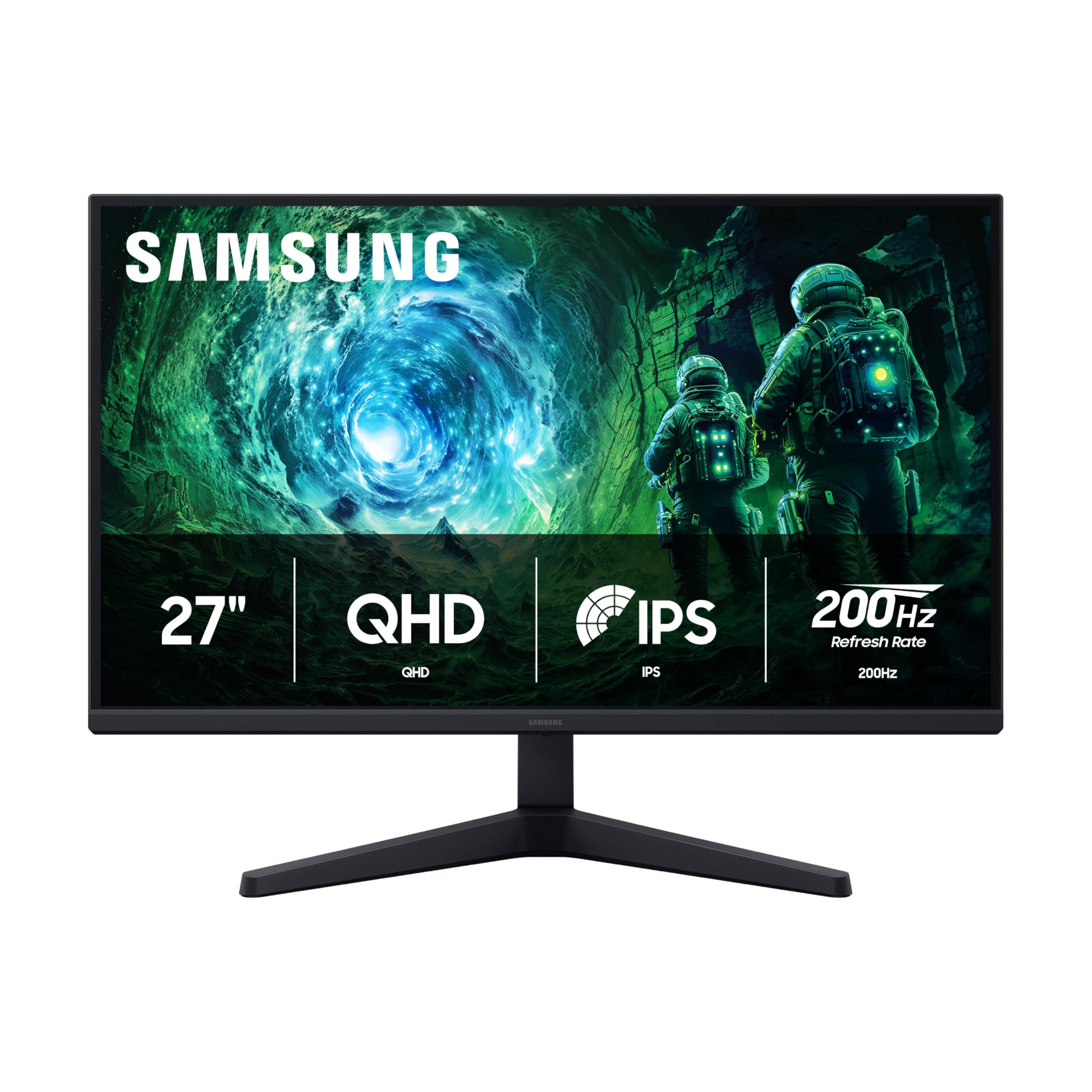
The Samsung Odyssey G5 G53F is the budget-friendly leader that offers a 200Hz refresh rate on an IPS panel at a price that routinely dips below many 165Hz competitors. With QHD resolution (2560×1440), 1ms MPRT response time, and AMD FreeSync Premium, it provides a smooth, tear-free gaming experience for the price-conscious builder. The 178-degree viewing angles ensure consistent colors across the screen.
HDR10 support provides slightly enhanced contrast and highlights, though with only 300 cd/m² brightness, HDR performance is entry-level — don’t expect OLED-like luminance. Black Equalizer improves visibility in dark scenes, and Virtual Aim Point adds a crosshair overlay for games without native reticles. Auto Source Switch+ is a convenience feature that automatically switches input sources when a new device is detected.
The stand is the weakest element: it only offers tilt adjustment, and the plastic build feels less premium than competitors. Some users also noted the cable management loop was fragile. For gamers building on a tight budget who want 1440p at a full 200Hz, this Samsung delivers the core gaming performance without the extra costs of a premium stand or extensive connectivity options.
Why it’s great
- 200Hz at budget-friendly pricing
- IPS panel with accurate colors and wide viewing angles
- Auto Source Switch+ for multi-device convenience
Good to know
- Stand is plastic and tilt-only with limited adjustments
- Peak brightness of 300 nits is modest for HDR
FAQ
Is 1440p at 27 inches the perfect resolution for gaming?
Do I need HDMI 2.1 for a 1440p gaming monitor?
Can a mid-range GPU handle 1440p at 165Hz?
Final Thoughts: The Verdict
For most users, the best 2k monitor for gaming winner is the MSI MAG 271QPX QD-OLED E2 because it combines 240Hz QD-OLED performance with robust burn-in protection and silent fanless operation at a reasonable price. If you want the absolute fastest motion clarity for competitive esports, grab the LG 27GX790A-B Ultragear OLED. And for the best IPS alternative with HDMI 2.1 and a fully adjustable stand, nothing beats the LG 27GR83Q-B Ultragear IPS.