
The shift from monochrome prototypes to vibrant, multi-material end-use parts has redefined what a desktop fabrication tool can do. A modern machine must handle complex geometries, support engineering-grade filaments, and deliver consistent first-layer adhesion without requiring a dedicated technician on standby. Whether you are printing flexible TPU gaskets or carbon-fiber reinforced nylon drone frames, the core question remains: which system provides the highest success rate per hour of run time?
I’m Min — the co-founder and writer behind Gadgets Feed. I have spent hundreds of hours analyzing build volumes, extrusion systems, chamber heating capabilities, and print-farm reliability metrics for this guide to separate genuine workhorses from marketing hype.
Whether your priority is industrial-scale resin fidelity or enclosed FDM for high-temp materials, this analysis of the best 3d gel printer options on the market will help you match the right hardware to your actual production needs.
How To Choose The Best 3D Gel Printer
Choosing the right 3D printer hinges on matching the machine’s core strengths to your specific output demands. An enclosed CoreXY system with a heated chamber is essential for high-temp materials, while an open-frame bed-slinger might be perfectly adequate and faster for PLA prototyping. For resin printers, the XY resolution measured in microns and light source uniformity define detail reproduction, whereas FDM printers live or die by extrusion reliability and motion system rigidity.
Build Volume and Chamber Temperature
A 350 mm³ build area enables industrial parts to be printed in one go, but only if the chamber can sustain 55–65 °C for materials like polycarbonate or PPS-CF. Smaller volumes under 260 mm³ are more forgiving for PLA and PETG, but limit functional prototyping of brackets, enclosures, or cosplay props. Always verify that the heated chamber is active (not just enclosed) to prevent layer delamination.
Multi-Material Systems and Purge Efficiency
Native 4‑color or 16‑color systems save manual filament swaps, but the purge waste per color change adds up. Systems using a single nozzle with a filament buffer (ACE Gen 2, AMS) generate a fused purge block, while independent toolhead setups eliminate purge waste entirely. For high-throughput farms, a low purge ratio translates directly into material cost savings and faster cycle times.
Resin vs. FDM Decision Factors
Resin printers excel at fine details (20–43 µm XY resolution) and smooth surface finish, but require post-processing (washing, curing) and have volatile organic compound (VOC) management considerations. FDM printers are more forgiving for structural parts, offer wider material choice including flexible filaments, and have a lower per‑part consumables cost. The choice ultimately depends on whether surface fidelity or mechanical strength drives your use case.
Quick Comparison
On smaller screens, swipe sideways to see the full table.
| Model | Category | Best For | Key Spec | Amazon |
|---|---|---|---|---|
| Prusa XL 5 Toolhead | Premium | Industrial Multi-Material | 360 mm³ / 5 independent toolheads | Amazon |
| QIDI Max4 Combo | Premium | Large Engineering Parts | 390 mm³ / 65 °C chamber / 800 mm/s | Amazon |
| Prusa CORE One | Premium | Reliable Enclosed Workhorse | 250×220×270 mm / 55 °C chamber | Amazon |
| Phrozen Sonic Mega 8K S | Premium | High-Volume Resin Production | 330×185×300 mm / 43 µm XY res | Amazon |
| ELEGOO Jupiter 2 | Premium | Large Format Resin 16K | 302×162×300 mm / 16K (15120×6230) | Amazon |
| Bambu Lab P1S | Mid-Range | Fast Enclosed Multi-Color | 256×256×256 mm / 500 mm/s / 16‑color AMS | Amazon |
| Creality K1C | Mid-Range | Carbon Fiber / High-Speed FDM | 220×220×250 mm / 600 mm/s / 300 °C nozzle | Amazon |
| ELEGOO Saturn 4 | Mid-Range | High-Resolution Resin Entry | 219×123×220 mm / 12K (11520×5120) | Amazon |
| Anycubic Kobra X (4‑Color) | Mid-Range | Beginner Multi-Color FDM | 260 mm³ / 600 mm/s / 45 dB / 4‑color native | Amazon |
| Anicubic Kobra X (Large Volume) | Mid-Range | Multi-Color Family / Education | 260 mm³ / LeviQ 3.0 / 45 dB | Amazon |
| AmeraLabs TGM-7 Resin | Budget | Durable Tabletop Miniatures Resin | 5 kg / Tough & flexible / Low odor | Amazon |
In‑Depth Reviews
1. Prusa XL 5 Independent Toolhead
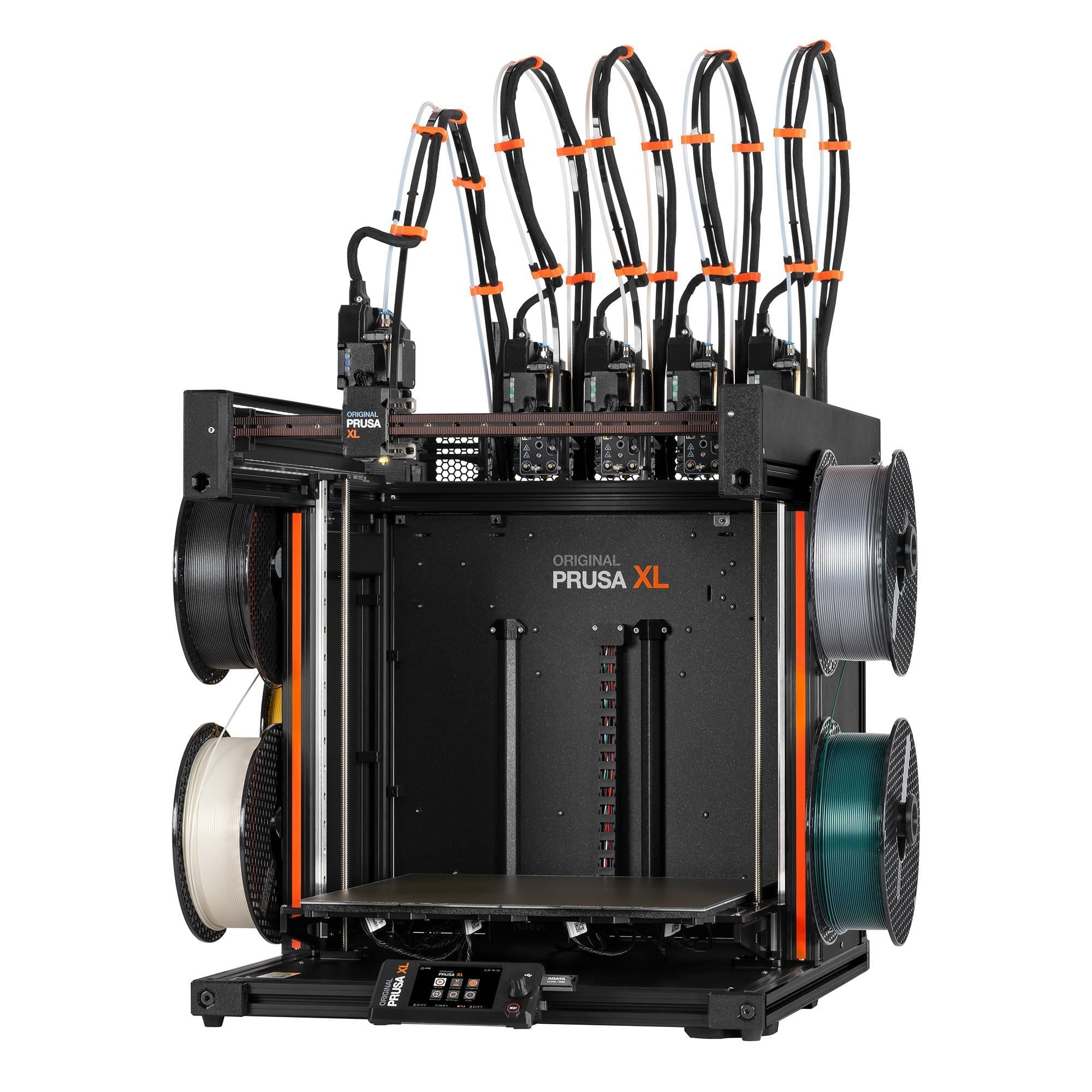
The Prusa XL with five independent toolheads eliminates the purge waste problem entirely — each toolhead switches materials without a fused purge block, saving grams per change on every multi-material print. Its large 360 mm³ build volume accommodates industrial prototypes and complex assemblies in a single run, while the segmented heated bed minimizes warping by only heating the zones under the active print area.
At 75 pounds and a fully assembled CoreXY frame, the XL is built to run 24/7 in a professional environment without losing calibration. The open-source firmware and lack of forced cloud login give you full control over slicing profiles, network security, and upgrade paths — a feature set that appeals to print farms and R&D labs that cannot tolerate vendor lock-in.
The five-tool system handles engineering materials like polycarbonate and nylon alongside flexible TPU and soluble PVA supports in one print. While the initial investment is steep, the per-part cost drops dramatically at scale because material waste is nearly zero and downtime for tool changes is eliminated.
Why it’s great
- Zero purge waste per color or material change
- Huge 360 mm³ build volume with good z-height
- Open source hardware and software
Good to know
- Requires partial assembly of extruder and LCD
- Premium price point for pro users only
2. QIDI Max4 Combo
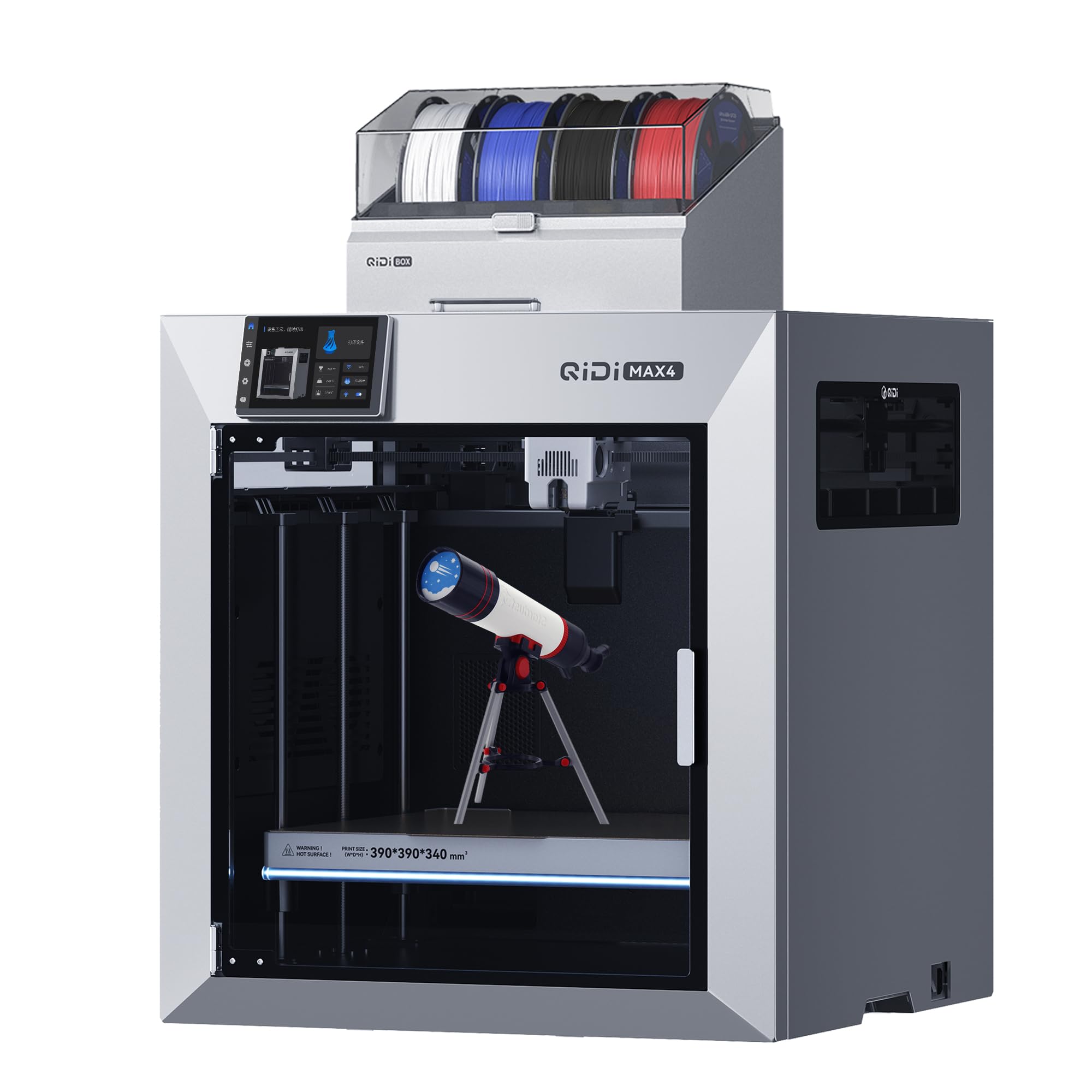
The QIDI Max4 Combo offers the largest build volume on this list at 390×390×340 mm, combined with a 65 °C actively heated chamber that unlocks high-temperature engineering filaments like PPS-CF and PAHT-CF. Its closed-loop motors on X/Y axes maintain positioning accuracy at 800 mm/s and 30,000 mm/s² acceleration, making it one of the fastest large-format FDM printers available today.
The integrated Polar Cooler system (sold separately) and high-flow 40 mm³/s hotend with hardened steel nozzle allow reliable printing of abrasive composite materials. The QIDI BOX attachment enables 16‑color multi‑material printing, and the AI camera automatically pauses the print when it detects spaghetti failures or foreign objects on the bed.
Users report exceptional print quality with PPA-CF and ABS-CF parts, though the initial pre-print heating and nozzle purge cycle takes longer than smaller machines. The 120-pound weight and large footprint require a sturdy dedicated table, but the output capacity justifies the space for producers running batches of industrial prototypes or end-use brackets.
Why it’s great
- Massive 390 mm³ build volume for large parts
- 65 °C active chamber for high-temp filament
- Closed-loop motors for precision at high speed
Good to know
- Polar Cooler must be purchased separately
- High initial power draw and bed warm-up time
3. Prusa CORE One
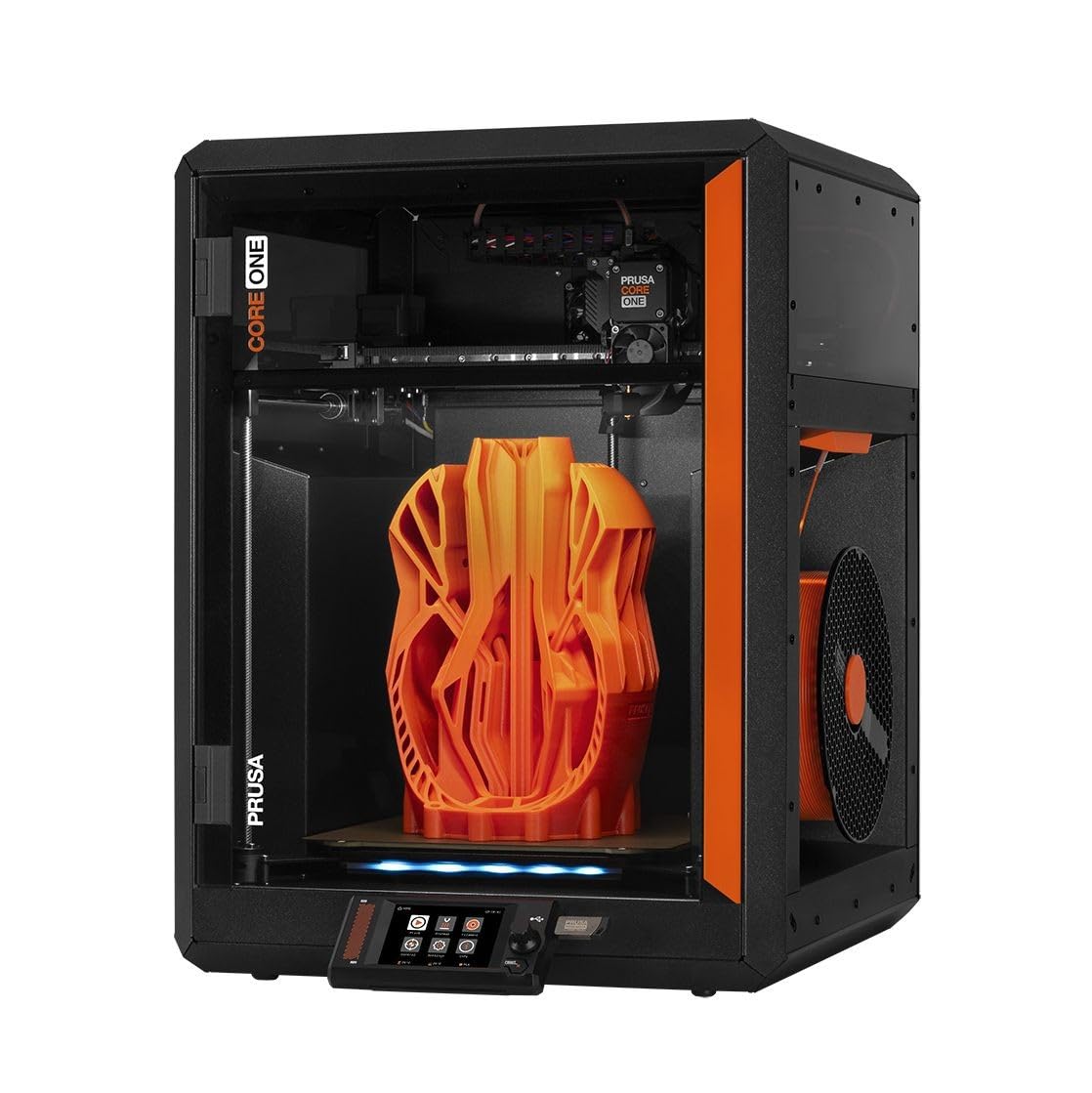
The Prusa CORE One combines the company’s legendary reliability with a CoreXY motion system and a 55 °C actively heated enclosure. At 56.8 pounds with an all-steel exoskeleton, this machine dampens vibration and maintains thermal stability for consistent layer bonding across PLA, PETG, ASA, and polycarbonate prints.
Setup from the assembled unit is straightforward, and the included 1 kg spool of Prusament PLA gets you printing within minutes. The printer uses open-source PrusaSlicer profiles that are tuned specifically for the CORE One, eliminating the guesswork around retraction and speed settings that plagues many open-frame printers in this class.
Users highlight the exceptional out-of-box print quality and the quiet operation even with the door closed. The main drawback is the delayed multi-color add-on, which means single-material printing is your only option until the MMU3 upgrade becomes available. For buyers who prioritize reliability over multi-color capability, the CORE One is a set-and-forget workhorse that requires minimal maintenance.
Why it’s great
- Excellent out-of-box print quality with pre-tuned profiles
- 55 °C active chamber for ASA, PC, Nylon
- Open source with lifetime tech support
Good to know
- Multi-color upgrade not available at launch
- Assembly takes about 25 hours if not pre-built
4. Phrozen Sonic Mega 8K S

The Phrozen Sonic Mega 8K S pushes resin printing throughput with a massive 330×185×300 mm build plate that can produce 80 detailed 1/32 scale miniatures in under 90 minutes. The 15‑inch 8K Mono LCD delivers a 43 µm XY resolution that captures fine textures and sharp edges without sacrificing build speed.
The integrated ACF (All-Cutter Fluoropolymer) film reduces suction forces during peel, enabling faster lift speeds and higher print success rates. The built-in metal drip hanger lets excess resin flow back into the vat, minimizing waste and keeping the workspace clean — a critical feature for professional studios running multiple batches per day.
Users note that the auto-refill mechanism works well once dialed in, and the lift-up lid design saves vertical space on cramped workbenches. While some initial customer support delays have been reported, the machine itself is a legitimate production tool for makers who need industrial-grade resin throughput without paying for industrial-grade infrastructure.
Why it’s great
- Huge 330×185×300 mm build area for batch production
- 43 µm XY resolution for fine detail
- ACF film reduces suction for faster lift speed
Good to know
- Build plate holes prevent magnetic flex plate use
- Customer service response time can be slow
5. ELEGOO Jupiter 2
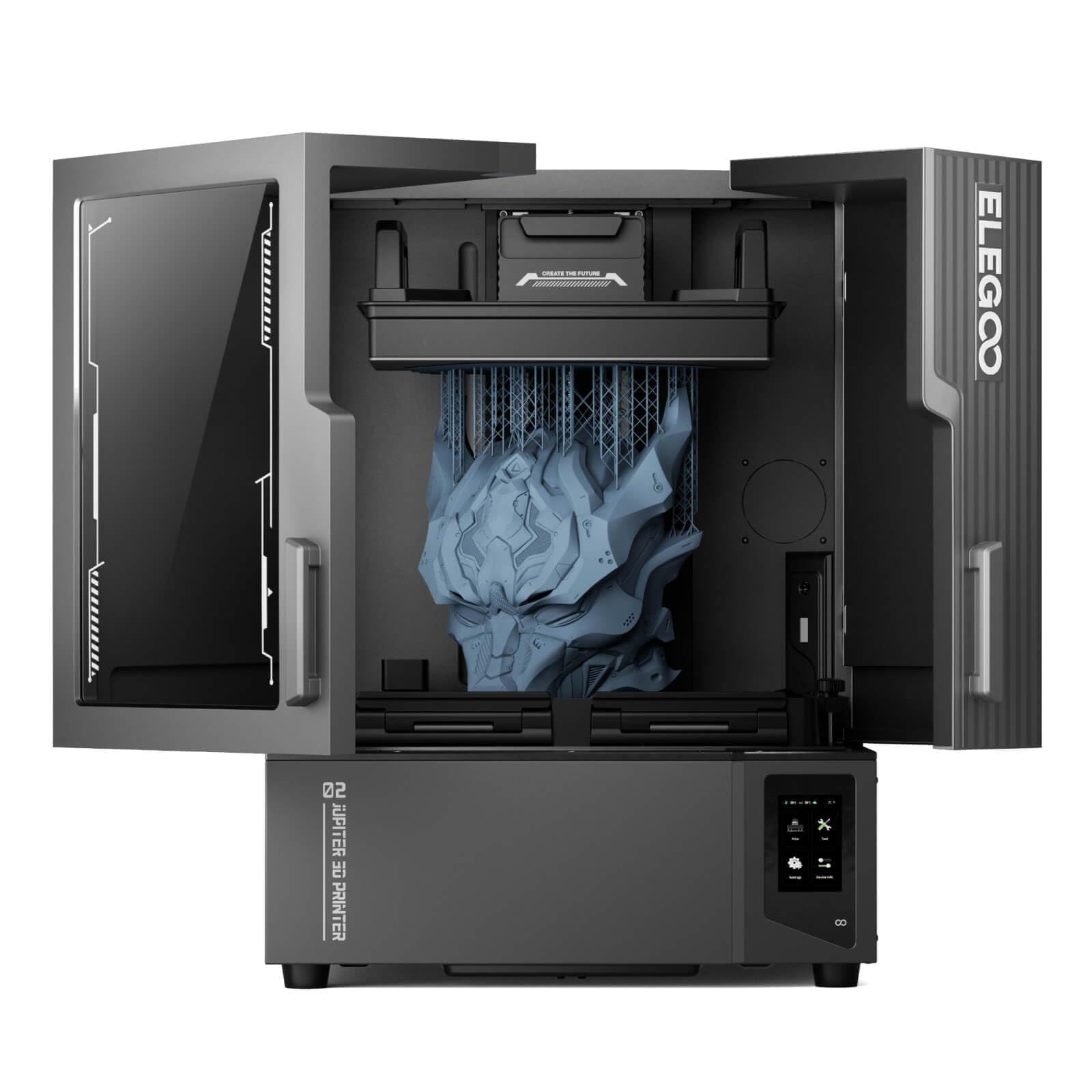
The ELEGOO Jupiter 2 delivers the highest pixel density on this list with a 16K Mono LCD (15120 × 6230 pixels) and a 20×26 µm XY resolution. Its 302.4×161.98×300 mm build volume is 2.5 times larger than the Saturn 4, making it ideal for large resin parts or batch printing multiple models without post-processing bottlenecks.
The smart tank heating maintains a precise 30 °C resin temperature through winter conditions, and the auto resin feeding system refills the vat mid-print so you can walk away from a 12‑hour job. The integrated HDR camera provides clear real-time monitoring and time‑lapse video even in low light inside the enclosure.
Users praise the simple setup and the cheap replacement parts — PFA sheets come in a 5‑pack for and replacement LCDs cost around , far less than competitive large-format resin printers. The double-door design and drip tray make resin handling less messy, though some users report the printer is not the fastest in its class and prioritizes quality over raw speed.
Why it’s great
- 16K (15120×6230) natively ultra‑fine resolution
- Auto resin feeding and smart tank heating
- Replacement parts are inexpensive and readily available
Good to know
- Slower print speed compared to ACF‑based resin printers
- Large size requires a dedicated workspace
6. Bambu Lab P1S

The Bambu Lab P1S is a fully enclosed CoreXY machine that hits 500 mm/s with 20,000 mm/s² acceleration and supports up to 16 colors when paired with the AMS unit. At under 30 minutes from unboxing to first print, and with automatic bed leveling before every print, the P1S is designed for users who want high-speed multi-color output without manual calibration.
The enclosed chamber improves ABS and ASA print quality while keeping the noise level low enough for a home office. The Bambu Studio slicer is well integrated, and the MakerWorld community provides a vast library of pre‑configured models that work out of the box. Filament runout detection and power loss recovery keep prints running even through interruptions.
Some users note that the P1S struggles with flexible TPU filament compared to direct-drive printers, and the AMS uses a single-nozzle buffer that produces a fused purge block with every color change. For PLA and PETG prints requiring multiple colors, the speed and consistency justify the moderate purge waste. The P1S hits a sweet spot between prosumer and industrial performance.
Why it’s great
- Very fast 500 mm/s with auto bed leveling
- Supports up to 16 colors via AMS
- Quiet operation and well-designed slicer software
Good to know
- Single nozzle produces high purge waste per color change
- TPU printing is less reliable than direct-drive
7. Creality K1C

The Creality K1C packs a high-temperature 300 °C extruder and hardened steel nozzle into a compact enclosed 220×220×250 mm frame. It reaches 600 mm/s and 20,000 mm/s² acceleration, making it one of the fastest machines in the sub- tier. The clog‑free direct extruder uses a bolster spring and ball plunger to grip abrasive filaments like carbon fiber reinforced nylon without slipping.
The AI camera detects spaghetti failures and foreign objects in real-time, pausing the print and sending an alert to your phone. The three‑fan cooling system — hotend fan, part cooling fan, and an auxiliary fan — minimizes stringing on bridges and overhangs even at high speeds. The auto‑leveling and auto Z‑offset eliminate the need for paper-based bed tramming.
Users report that the K1C is not truly plug-and-play out of the box — minor gantry adjustments and belt tensioning are often needed for optimal results. The smaller build volume limits large parts, but for functional prototypes and small production runs with exotic filaments, the K1C offers exceptional speed-to-price ratio.
Why it’s great
- High-temperature 300 °C nozzle for carbon fiber
- 600 mm/s speed with auto-leveling
- AI failure detection saves filament on long prints
Good to know
- Requires some manual tuning out of the box
- 220 mm³ build volume limits large parts
8. ELEGOO Saturn 4

The ELEGOO Saturn 4 delivers a 10‑inch 12K Mono LCD (11520×5120 pixels) with 19×24 µm XY resolution in a price bracket, making it the most accessible high-resolution resin printer for miniatures, jewelry, and small batch production. The integrated COB light source with Fresnel collimating lens achieves 0.5% astigmatism and 92% field uniformity for consistent exposure across the entire build plate.
The self-check and auto-bed-leveling system claims true unbox-and-print operation — power on, pour resin, and start printing without manual tramming. The quick‑release build plate and resin tray with spill‑prevention features make post-processing and cleanup less messy than traditional resin printers.
Users report excellent detail reproduction out of the box, but note that resin printing still requires careful attention to environment: air bubble removal before printing, steady temperature, and proper post-curing. Some negative reviews highlight firmware update issues and incorrect support instructions from customer service. For the resolution per dollar, the Saturn 4 remains a strong entry point into high-fidelity resin printing.
Why it’s great
- 12K resolution at a budget-friendly price
- Auto-leveling and self-check reduce setup time
- Large volume for its class (219×123×220 mm)
Good to know
- Resin printing requires careful maintenance and ventilation
- Customer service response quality is inconsistent
9. Anycubic Kobra X (4-Color Variant)
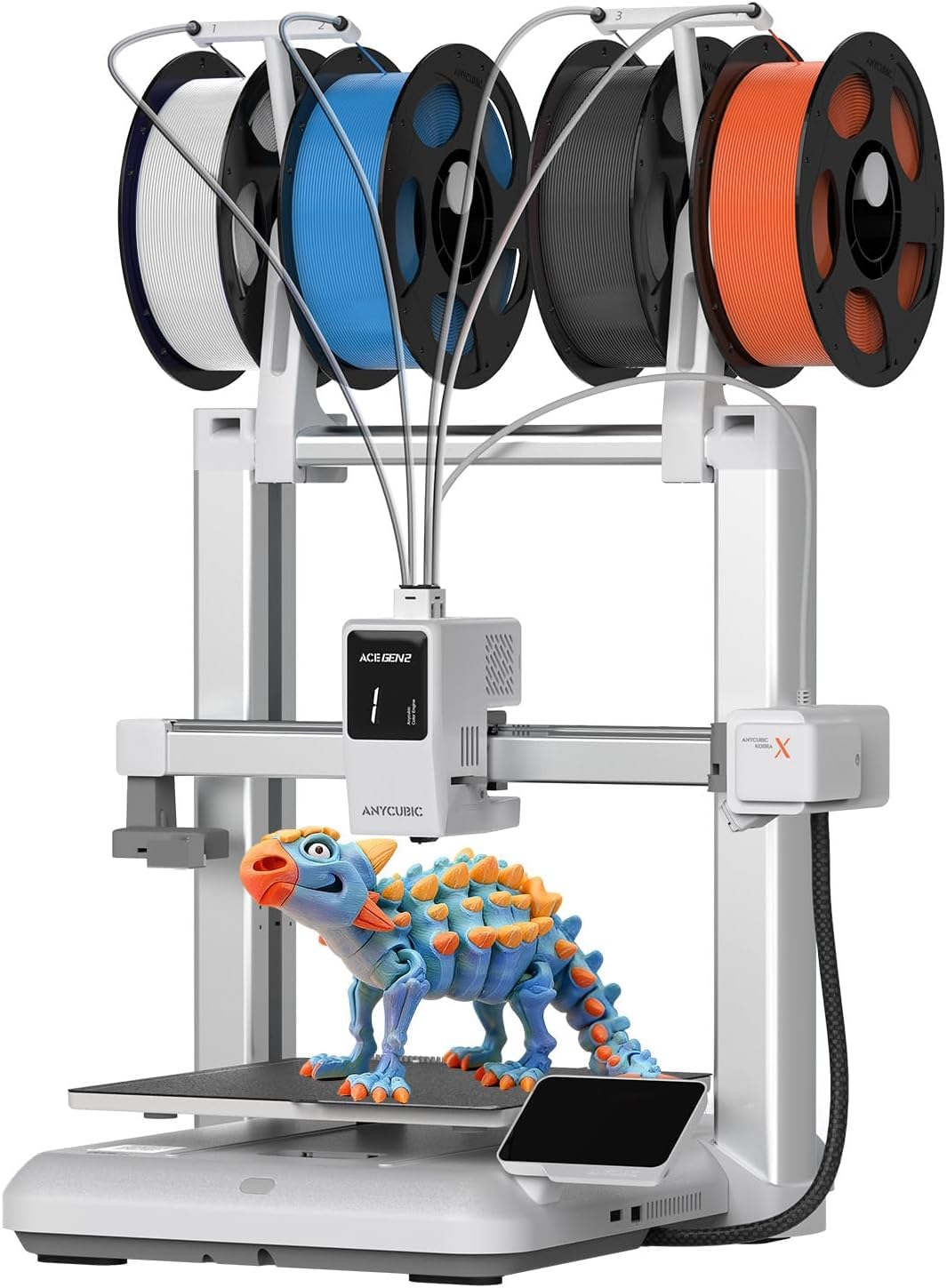
The Anycubic Kobra X brings native four-color printing to a consumer-friendly price point, with the ability to expand to 19 colors through four additional ACE 2 Pro units. Its 260 mm³ build volume and 600 mm/s maximum speed make it competitive with mid-range FDM printers, while the LeviQ 3.0 auto leveling system uses a 49-point calibration algorithm for consistent first-layer adhesion.
The ACE Gen 2 filament system reduces purge path by 81.25% compared to earlier generation multi-color buffers, cutting material waste roughly in half per color change. The printer operates at a quiet 45 dB — quieter than a normal conversation — and the top-mount spool holder frees up desktop space for the printer itself.
Users consistently report excellent print quality for both simple and complex geometries, with only a few isolated complaints about bed adhesion issues that were resolved after re-running the auto leveling. The AI camera with spaghetti and foreign object detection adds a safety layer that is rare at this price point. For families, educators, or makers entering multi-color FDM printing, the Kobra X offers the best cost-to-capability ratio available.
Why it’s great
- Native 4‑color expandable to 19 colors at low cost
- Reduced purge waste versus previous multi-color systems
- 45 dB quiet operation suitable for home or classroom
Good to know
- ACE Pro and ACE 2 Pro are not cross-compatible
- Phone app could use more polishing
10. Anycubic Kobra X (Standard Large Volume)
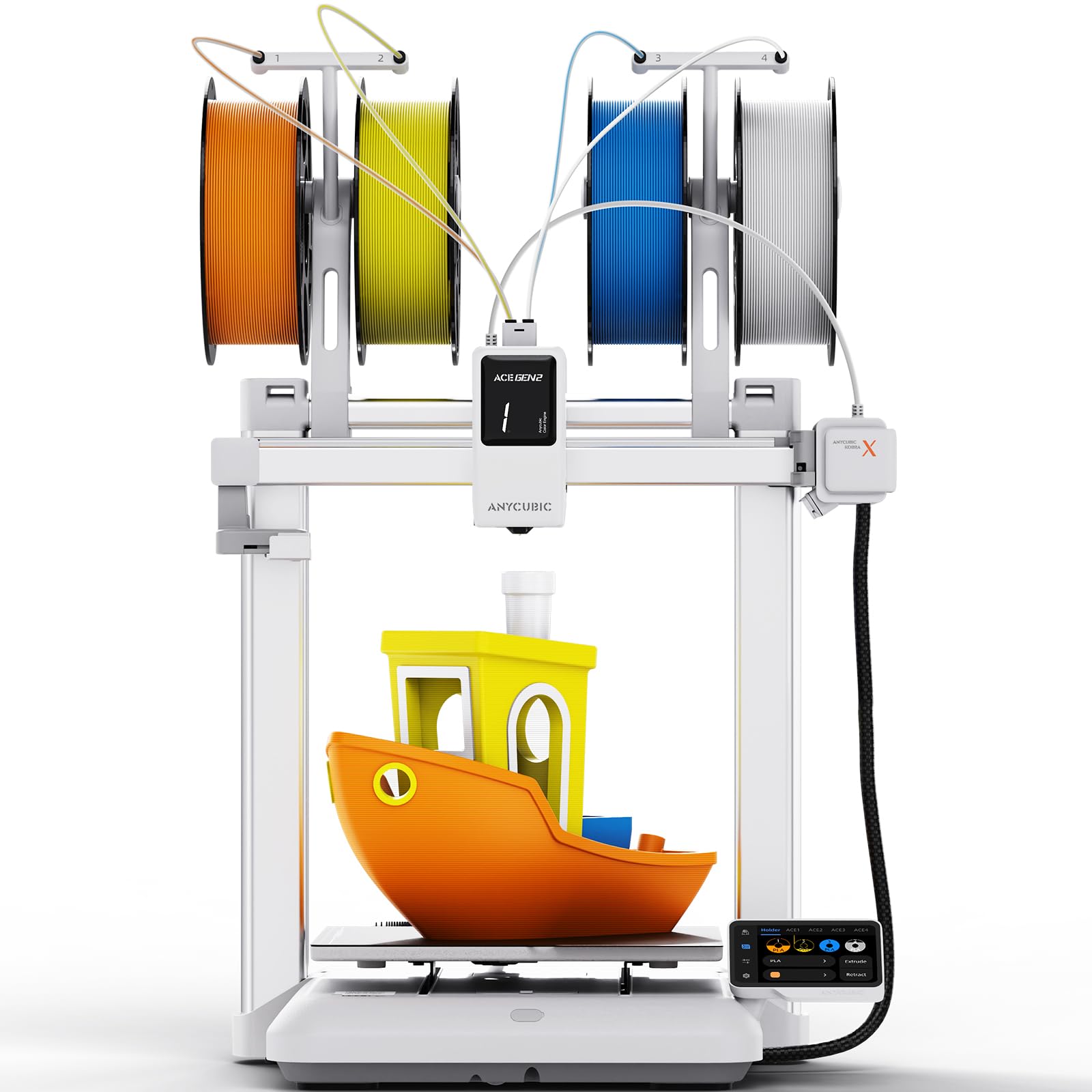
This variant of the Anycubic Kobra X focuses on the same 260 mm³ build volume and LeviQ 3.0 49-point auto-leveling system but is positioned as an entry-level machine for families and educational settings. Its 15-minute setup from unboxing to first print, combined with the pre-assembled modular design, eliminates the steep learning curve that typically prevents casual users from exploring 3D printing.
The printer maintains the same 45 dB noise level and 600 mm/s speed, making it suitable for shared living spaces. The AI safety features, including foreign object detection and spaghetti detection with automatic pause, provide peace of mind for unsupervised operation — particularly for younger users in a school or home environment.
Users note that the spool holders feel slightly flimsy and the camera quality is only acceptable rather than great, but the core printing performance is reliable. The printer supports both rigid and flexible filaments up to 300 °C, and the dual-band Wi-Fi enables remote monitoring through the Anycubic app. For users who want a straightforward, large-volume FDM printer without the complexity of multi-color systems, this is a safe, dependable choice.
Why it’s great
- 15-minute setup with pre-assembled modular design
- 45 dB quiet printing for home or classroom
- AI monitoring with automatic error pause
Good to know
- Spool holders feel flimsy
- Camera resolution is average
11. AmeraLabs TGM-7 Resin (5 kg)
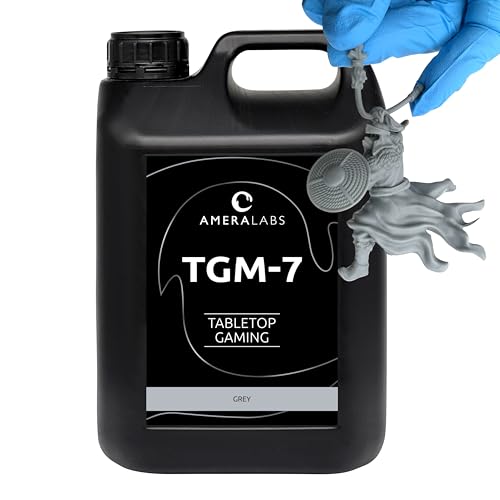
While not a printer itself, the AmeraLabs TGM-7 photopolymer resin is a critical consumable choice for anyone printing tabletop miniatures or delicate prototypes. This resin has a unique formulation that yields a hard, non‑sticky surface after curing while retaining a controlled amount of flexibility — miniature fingers, weapon hafts, and small details survive accidental drops that would shatter standard brittle resins.
The 5 kg bulk pack delivers the lowest per-gram cost for this premium-grade material. The low odor formulation reduces VOC load in enclosed printing spaces, and the material is compatible with all standard 4K, 8K, and 12K LCD/DLP/SLA printers. Users report that the satin finish takes paint well without needing primer in many cases.
Printers must note that this resin is more viscous than standard resins, requiring slightly longer rest times and stronger support structures to avoid sagging on overhangs. It also needs thorough two-stage cleaning with isopropyl alcohol to remove uncured surface resin. For makers selling finished miniatures, the durability premium is worth the extra handling effort.
Why it’s great
- Extremely durable with controlled flexibility, resists breakage
- Low odor formulation for home use
- Satin finish accepts paint well without primer
Good to know
- Higher cost per kg compared to standard resin
- Needs longer rest times and stronger supports for overhangs
FAQ
What does the XY resolution mean on a resin printer?
How much purge waste do multi-color FDM printers generate?
Do I need a heated chamber for printing PLA?
Final Thoughts: The Verdict
For most users, the best 3d gel printer winner is the Prusa XL 5 Toolhead because it combines a massive 360 mm³ build volume with independent toolheads that eliminate material waste and support complex multi‑material workflows. If you need a very large build capacity for engineering filaments at a more accessible price, grab the QIDI Max4 Combo. For high‑detail resin production at scale, nothing beats the ELEGOO Jupiter 2 with its 16K resolution and auto‑feeding system.