
Turning a camera-invisible blueberry into an edible bust of a celebrity? That’s the promise of a dedicated pancake printer. This isn’t a novelty toy — it’s a precise extrusion tool that pipes batter into any shape imaginable, from intricate mazes and character faces to your own signature doodles. The core metric serious buyers check first is nozzle resolution (usually 0.8mm down to 0.4mm) and the speed of the print head’s XY gantry system.
I’m Min — the co-founder and writer behind Gadgets Feed. I’ve spent hundreds of hours analyzing extruder flow consistency, bed heating uniformity, and g-code pathing to separate the kitchen-tested workhorses from the single-use gadgets gathering dust.
Whether you want to astonish your kids with a perfectly golden cartoon face or precisely portion batter for keto shapes at scale, this guide to the best 3d pancake printer breaks down the real-world performance, cleanability, and software ecosystem of every worth-your-time model.
How To Choose The Best 3D Pancake Printer
Buying a pancake printer means stepping away from standard FDM 3D printing into a world where food safety, easy cleaning, and precise batter flow matter more than layer height or retraction distance. The wrong choice leads to burnt outlines, clogged nozzles, and syrup-stained regret.
Nozzle Diameter & Batter Feed System
Most dedicated pancake printers use a syringe-style reservoir with a 0.4mm to 0.8mm nozzle. A 0.6mm nozzle is the sweet spot — fine enough for character eyes and letters, wide enough to avoid constant jams from pulp or thick batter. The feed mechanism should be gear-driven or pneumatic, not gravity-fed, for consistent line width.
Heated Bed Temperature & Coverage
The griddle surface must heat evenly. Look for a cast aluminum or anodized alloy plate with a thermostat that holds between 170°C and 210°C. Inconsistent heat leads to pale centers and dark edges. A minimum 20x20cm print area allows for multiple pancakes in a single batch.
Software & File Import
Does the printer accept custom SVG, PNG, or STL files? Some models force you into a branded app with a limited image library. The best units let you upload your own vector art or convert any photo to a pancake stencil via a dedicated slicer that generates g-code optimized for batter flow rates.
Quick Comparison
On smaller screens, swipe sideways to see the full table.
| Model | Category | Best For | Key Spec | Amazon |
|---|---|---|---|---|
| Entina Tina2 Plus | Best Overall | Custom pancake designs & STEM | 250mm/s print speed, PEI platform | Amazon |
| Bambu Lab A1 | Premium Pick | Ultra-precise batter layering | 10,000 mm/s² acceleration | Amazon |
| Anycubic Kobra X | Best Value | Multi-color pancake creations | 600mm/s max speed, 19 color | Amazon |
| ELEGOO Centauri Carbon | Top Performer | Consistent high-speed batter flow | CoreXY, 500mm/s, 320°C nozzle | Amazon |
| FLASHFORGE Adv. 5M Pro | Fastest Charging | Quick startup & easy cleaning | 35s to 200°C, 600mm/s | Amazon |
| Bambu Lab P1S Combo | Pro Grade | Multi-material pancake art | Enclosed, 500mm/s, 16 colors | Amazon |
| Creality K2 Combo | Best Battery Life | Large batch pancake printing | 600mm/s, 260mm³ build volume | Amazon |
| QIDI Q2 Combo | Compact Pick | Space-saving breakfast station | 65°C chamber, 600mm/s | Amazon |
| QIDI Max4 Combo | Most Versatile | Large-scale food art | 800mm/s, 390x390x340mm volume | Amazon |
In‑Depth Reviews
1. Entina Tina2 Plus Smart 3D Printer

The Entina Tina2 Plus brings a fully assembled, beginner-friendly package that works straight out of the box for pancake art. Its 250mm/s print speed and 40-second ceramic hotend preheat mean you can go from pouring batter to golden-brown shapes faster than heating a traditional skillet. The PEI spring steel platform provides excellent non-stick properties, making pancake release effortless without soaking.
WiFi connectivity through the Poloprint Cloud app gives you access to 1,500+ preloaded models, but the real value for pancake enthusiasts is the ability to upload custom SVG or STL files. The compact 11.4 x 8.6 x 8.6-inch footprint fits on any kitchen counter without dominating the space. The auto-leveling system ensures consistent first-layer batter adhesion across the entire bed, eliminating burnt edges.
Some users report the app can feel sluggish with large file uploads, and the printer only includes a single roll of white filament — you’ll want to stock up on food-grade PLA or silicone batter cartridges separately. The partially enclosed frame keeps hot components away from fingers, a thoughtful safety detail for family kitchens.
Why it’s great
- Fully assembled — no mechanical setup required
- Fast 40-second hotend preheat saves breakfast prep time
- Dual Z-axis and auto-leveling ensure flawless first layers
Good to know
- Poloprint app can lag with high-resolution files
- Included filament is white only — buy additional spools or batter cartridges
- Only one USB-C port; no expandable storage
2. Bambu Lab A1 3D Printer

The Bambu Lab A1 sets a new benchmark for precision batter deposition with its 10,000 mm/s² acceleration and active flow rate compensation. This means every loop and letter in your pancake design maintains consistent line width, even at high speeds. The price point positions it firmly in the premium mid-range, but the print quality rivals models costing double.
Its full-auto calibration system handles Z-offset and bed leveling entirely without manual intervention — critical for pancake printing where first-layer adhesion determines whether you get a perfect golden circle or a burnt mess. The active motor noise canceling keeps operation at or below 48 dB, quiet enough for early-morning cooking without waking the household.
The AMS lite expansion (sold separately) enables multi-color printing, allowing you to layer different batters for detailed character art. The 1-Clip quick swap nozzle design makes switching between batter cartridges a 5-second task, while the 256 x 256 x 256 mm build volume fits multiple pancakes in one session. Bambu’s slicer software is intuitive but proprietary, limiting your ability to manually tweak g-code for custom batter flow rates.
Why it’s great
- Active flow rate compensation ensures even batter lines
- Full-auto calibration — zero manual leveling needed
- Ultra-quiet operation at ≤48 dB
Good to know
- AMS lite for multi-color is an additional purchase
- Bambu slicer lacks open-source g-code flexibility
- 18.26-pound weight makes it less portable
3. Anycubic Kobra X Multicolor 3D Printer
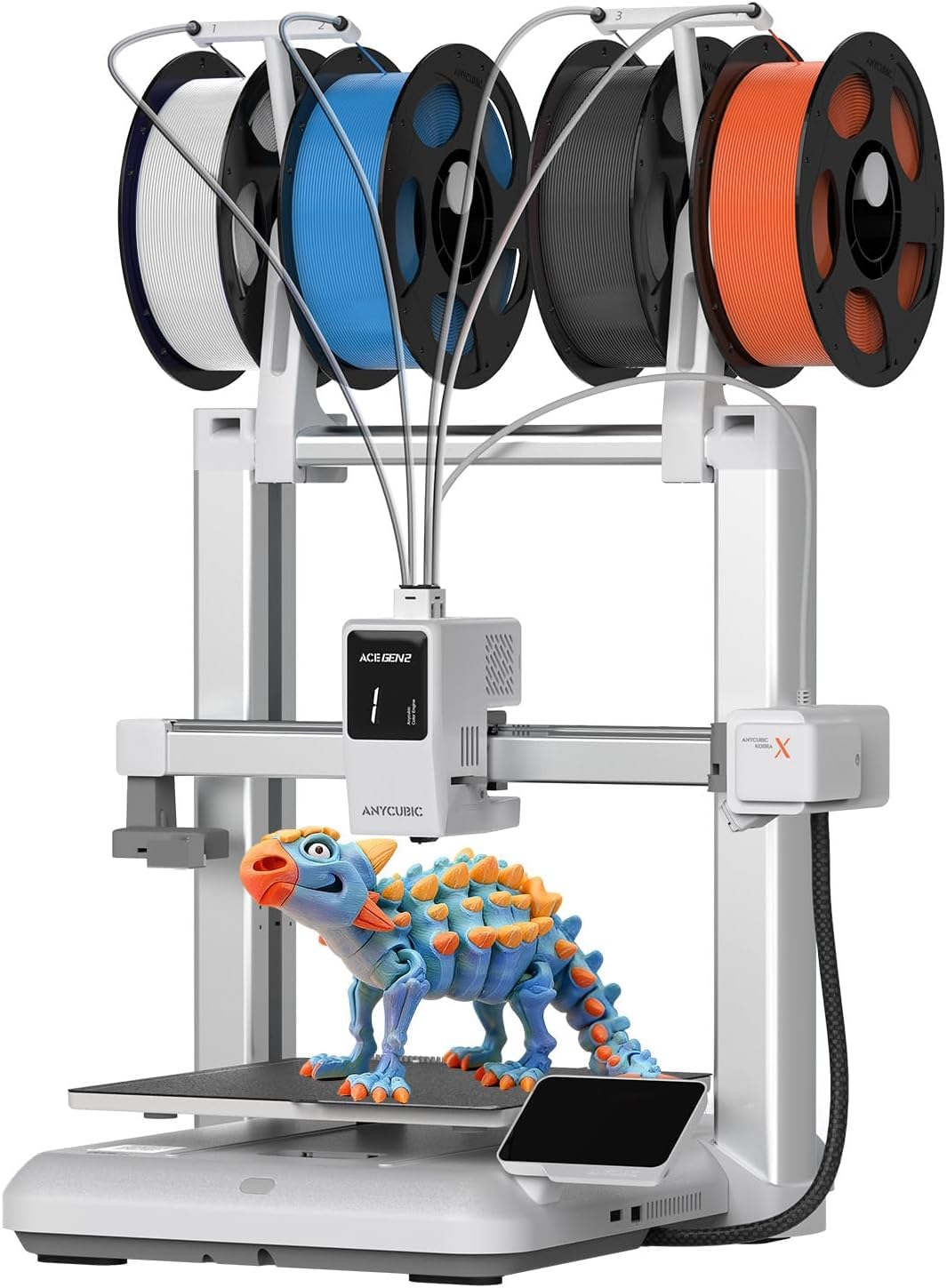
The Anycubic Kobra X delivers native 4-color printing out of the box, expandable up to 19 colors with four ACE 2 Pro units — a game-changer for pancake artists who want gradient shading and detailed character faces. The 600mm/s print speed and 14-minute Benchy completion demonstrate raw speed, but the real pancake-specific win is the 81.25% reduction in purge waste compared to earlier multicolor systems.
Its LeviQ 3.0 auto bed leveling uses a 49-point calibration grid to guarantee batter consistency across a 260 x 260 x 260 mm build area. The hardened steel nozzle withstands abrasive batters containing cocoa, spices, or sugar crystals without wear, extending nozzle life significantly. The Anycubic app provides remote monitoring via an AI camera that detects spaghetti failures — useful when a pancake design lifts off the bed mid-print.
The 30,000+ model library includes dedicated food art designs, and the open-source slicer compatibility (PrusaSlicer, Cura) lets you fine-tune flow rates for different batter viscosities. Some users report the app interface could be more polished, but the hardware reliability after 265+ hours of continuous use is excellent, with almost zero clogging complaints.
Why it’s great
- Native 4-color printing expands to 19 colors
- 49-point auto leveling ensures flawless first layers
- Open slicer compatibility for custom batter flow tuning
Good to know
- ACE 2 Pro units are incompatible with older ACE Pro
- Phone app could benefit from a UI overhaul
- Spaghetti detection camera needs good lighting
4. ELEGOO Centauri Carbon 3D Printer

The ELEGOO Centauri Carbon uses a rigid die-cast aluminum CoreXY frame to minimize vibrations during high-speed batter deposition, achieving 500mm/s speeds with exceptional consistency. Its 320°C hardened steel nozzle handles even the most viscous batters, including those with fruit purees or nut flours, without clogging. The 256 x 256 x 256 mm build volume is ideal for producing multiple small pancakes or one large decorative platter.
The built-in chamber camera with dual LED lighting captures time-lapse videos of your pancake creation, and the auto bed leveling is among the best in its class — users report flawless first layers straight from the box. The PEI dual-sided plate includes a PLA-specific surface that provides excellent adhesion for pancake batter even at lower bed temperatures, preventing the burnt-bottom issue common with hotter griddles.
Setup takes approximately 30 minutes from unboxing to first print, and the intuitive touchscreen walkthrough guides you through each step. The Wi-Fi connectivity allows remote monitoring and print management through ELEGOO’s slicer. Some early units experienced reliability issues, but the new Centauri Carbon 2 replacement program has resolved most hardware complaints.
Why it’s great
- Die-cast aluminum frame for vibration-free printing
- 320°C nozzle handles thick, viscous batters
- Integrated time-lapse camera with LED lighting
Good to know
- Initial units had reliability issues; newer revisions are improved
- USB-C cable design is somewhat fragile
- 38.5-pound weight is heavy for kitchen counter setup
5. FLASHFORGE Adventurer 5M Pro 3D Printer

The FLASHFORGE Adventurer 5M Pro prioritizes speed without sacrificing batter quality — its nozzle reaches 200°C in just 35 seconds, and the Core XY structure supports 600mm/s travel with 20,000 mm/s² acceleration. This means you can produce a detailed pancake image in roughly the same time it takes to whisk a bowl of batter. The all-metal frame and 280°C maximum nozzle temperature accommodate a wide range of food-grade materials.
The pressure-sensing auto bed leveling eliminates manual Z-axis calibration entirely, and the dual-sided PEI platform ensures easy non-stick removal. The Flash Maker app provides remote video monitoring and progress tracking, while the dual circulation HEPA filtration system reduces airborne flour particles during mixing. The 220 x 220 x 220 mm build volume is compact but sufficient for most pancake designs.
Some users report software compatibility issues with newer macOS versions, and the included USB drive contains legacy installers. The printer pairs best with a Windows machine or older macOS for slicer operation. Despite this, the print quality is exceptional for the price, with sharp detail on small letters and complex logo shapes. The quick-detachable 0.4mm nozzle makes switching between batter types a breeze.
Why it’s great
- 35-second preheat — fastest in its class
- Pressure-sensing auto leveling for zero-touch setup
- HEPA filtration keeps flour dust contained
Good to know
- Software compatibility issues with macOS Sequoia
- Nozzle can clog with very thick batters
- Phone support is limited; email response is slow
6. Bambu Lab P1S Combo 3D Printer
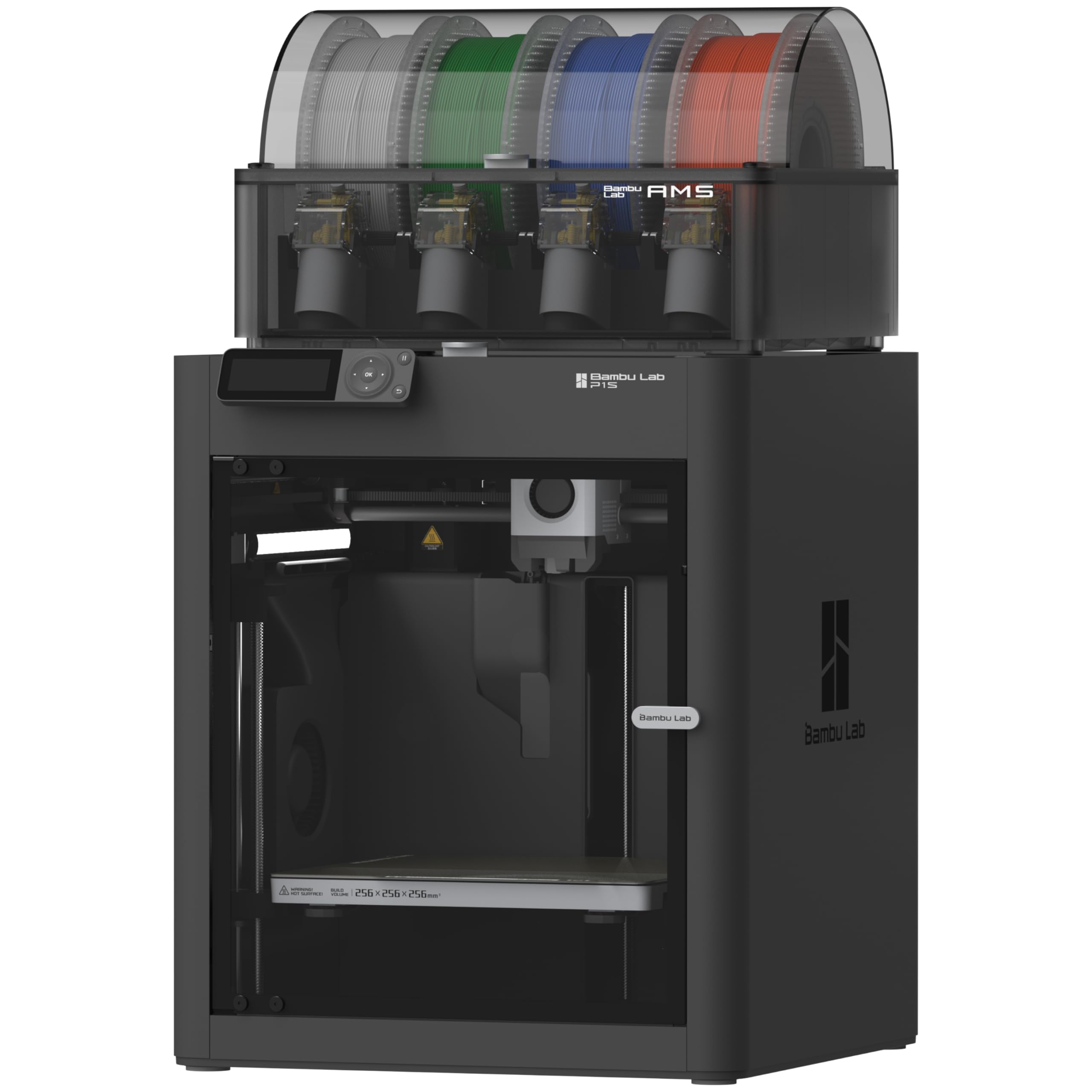
The Bambu Lab P1S Combo is the gold standard for multi-material pancake art, supporting up to 16 colors with its integrated AMS system. The enclosed design maintains a stable thermal environment for consistent browning, while the 500mm/s print speed and 20,000 mm/s² acceleration ensure rapid completion of complex designs. The auto bed leveling system delivers 95%+ first-print success rate over hundreds of prints.
Setup takes approximately 15 minutes, and the enclosed chamber improves print performance for heat-sensitive batters. The automatic bed leveling and active flow rate compensation work together to maintain consistent line widths, even when switching between dark chocolate batter and light vanilla at high speeds. The 256 x 256 x 256 mm build volume fits large pancake platters or multiple smaller designs.
The P1S Combo is best suited for users who want a reliable, turnkey solution for high-volume pancake production. The Bambu ecosystem is polished but proprietary — you can’t easily modify the g-code for custom batter flow curves. Some users find the noise level moderate for a printer of this speed, though it’s far from disruptive. The 48.2-pound weight requires a sturdy countertop.
Why it’s great
- 16-color AMS for intricate multi-batter designs
- Enclosed chamber for consistent thermal performance
- 15-minute setup to first print
Good to know
- Proprietary software limits custom g-code modifications
- 48.2-pound weight is heavy for mobile use
- AMS is required for multi-color — not standalone
7. Creality K2 Combo 3D Printer
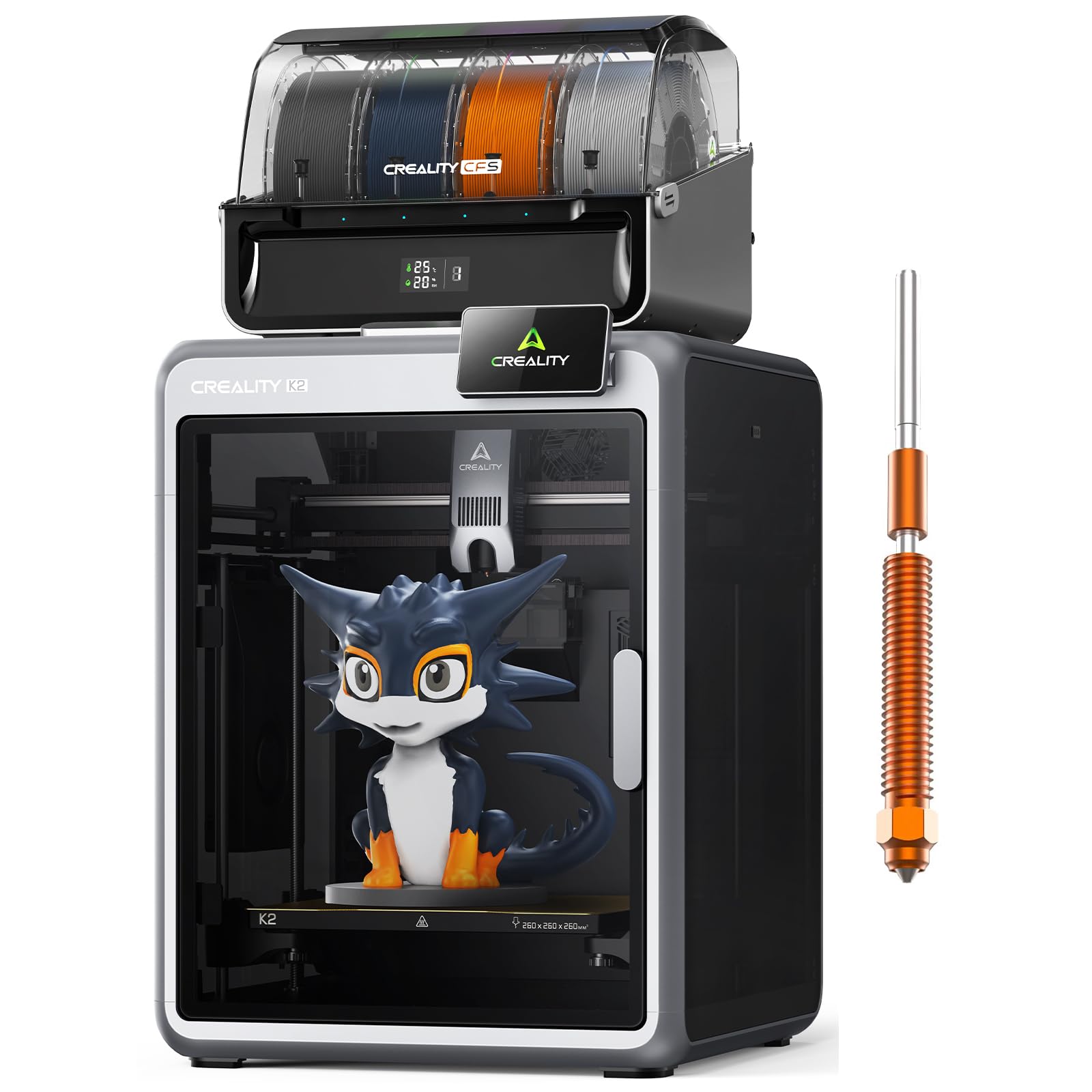
The Creality K2 Combo takes batch pancake printing to the next level with its CFS (Creality Filament System) supporting up to 16 colors when connected to four units. The 600mm/s print speed and step-servo motor system adjust torque in under a millisecond, ensuring smooth batter extrusion even with varying consistencies. The 260 x 260 x 260 mm build volume allows for multiple pancakes in a single print session.
The ultra-quiet silent mode uses dynamically balanced fans and step-servo motors, making it quieter than a laptop keyboard — ideal for early morning breakfast production without waking the house. The AI camera with spaghetti detection watches for failures and automatically pauses the print, saving batter from burning on the bed. The auto leveling sensor only probes the relevant print area, reducing calibration time significantly.
Users praise the out-of-box experience, with most getting their first print within an hour. The CFS does not fit standard spools, so you’ll need to print adapters or buy compatible spools. The AI spaghetti detection can miss failures caused by user error regarding bed adhesion. Some early units had CFS slot errors and extruder clogs, but Creality’s firmware updates have largely resolved these issues.
Why it’s great
- 16-color CFS for large batch multi-batter printing
- Ultra-quiet silent mode — perfect for early mornings
- AI camera monitors for failures and auto-pauses
Good to know
- CFS requires printable adapters for standard filament spools
- AI detection struggles with user error adhesion issues
- 65.9-pound weight requires a dedicated kitchen station
8. QIDI Q2 Combo 3D Printer
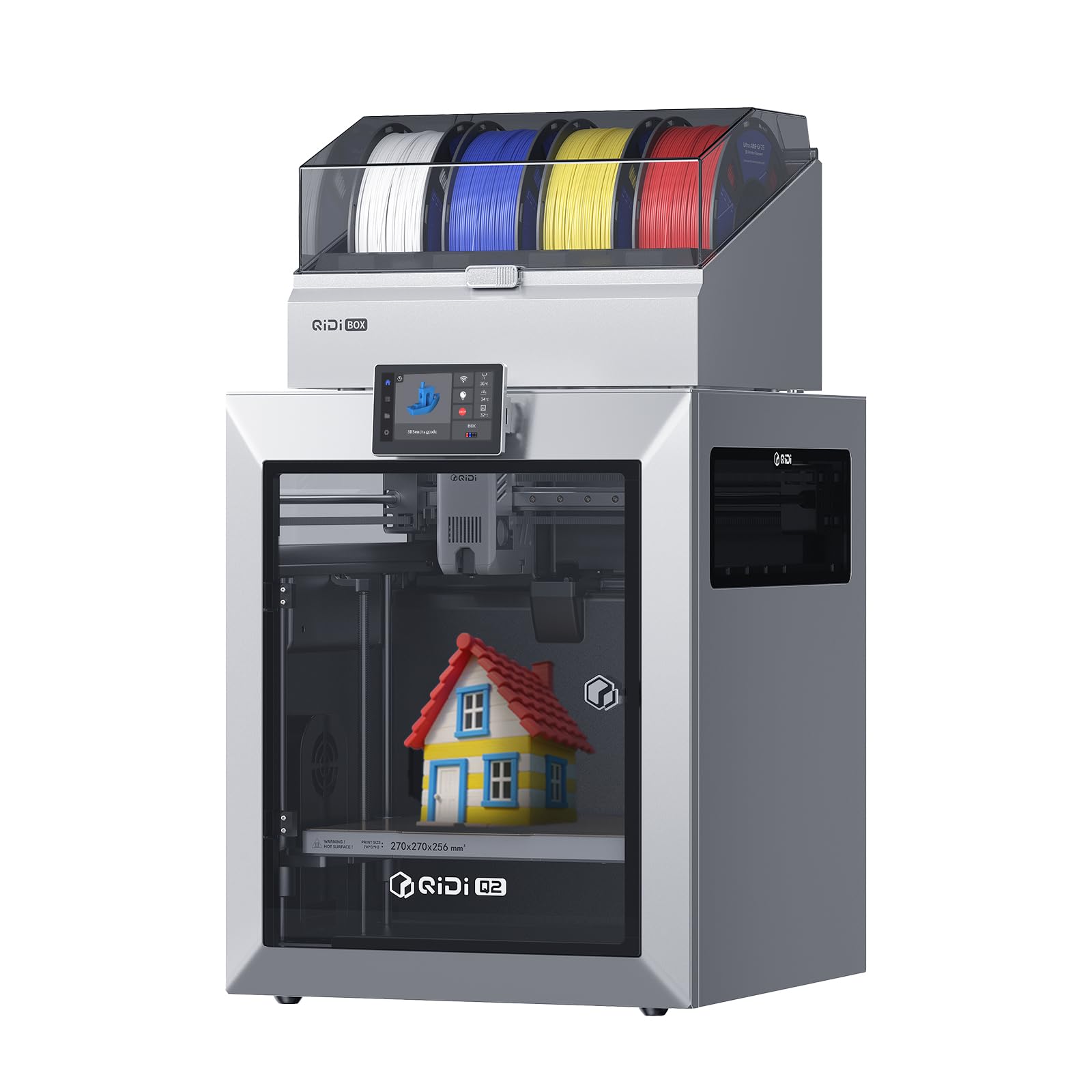
The QIDI Q2 Combo packs a heated chamber (up to 65°C) into a relatively compact 21 x 20 x 23-inch footprint, making it ideal for kitchens without dedicated countertop space. The 600mm/s print speed and 370°C nozzle handle even the most demanding batters, including those with hemp seeds, flax, or almond flour. The QIDI BOX enables up to 16-color multi-material printing with integrated drying technology that keeps batter cartridges fresh.
Its unique 2nd-generation PTC heated chamber minimizes warping and ensures strong internal cohesion for tall, layered pancake sculptures. The nozzle acts as its own leveling sensor, delivering unmatched first-layer accuracy unaffected by bed surface debris. The triple filtration system (G3 pre-filter + H12 HEPA + activated carbon) effectively reduces cooking odors, a major advantage for apartment dwellers.
The Klipper-based software is fully open, allowing advanced users to tweak every parameter for custom batter flow curves. Some users find the initial setup slightly more involved than Bambu alternatives, and the phone integration is less polished. However, the lifetime technical support and responsive customer service from QIDI make it a reliable choice for those willing to tinker.
Why it’s great
- Heated chamber reduces batter warping
- Open-source Klipper firmware for full customization
- Triple filtration system minimizes cooking odors
Good to know
- Setup is slightly more involved than plug-and-play models
- Phone app integration is less polished than competitors
- 54.9-pound weight requires sturdy countertop
9. QIDI Max4 Combo 3D Printer
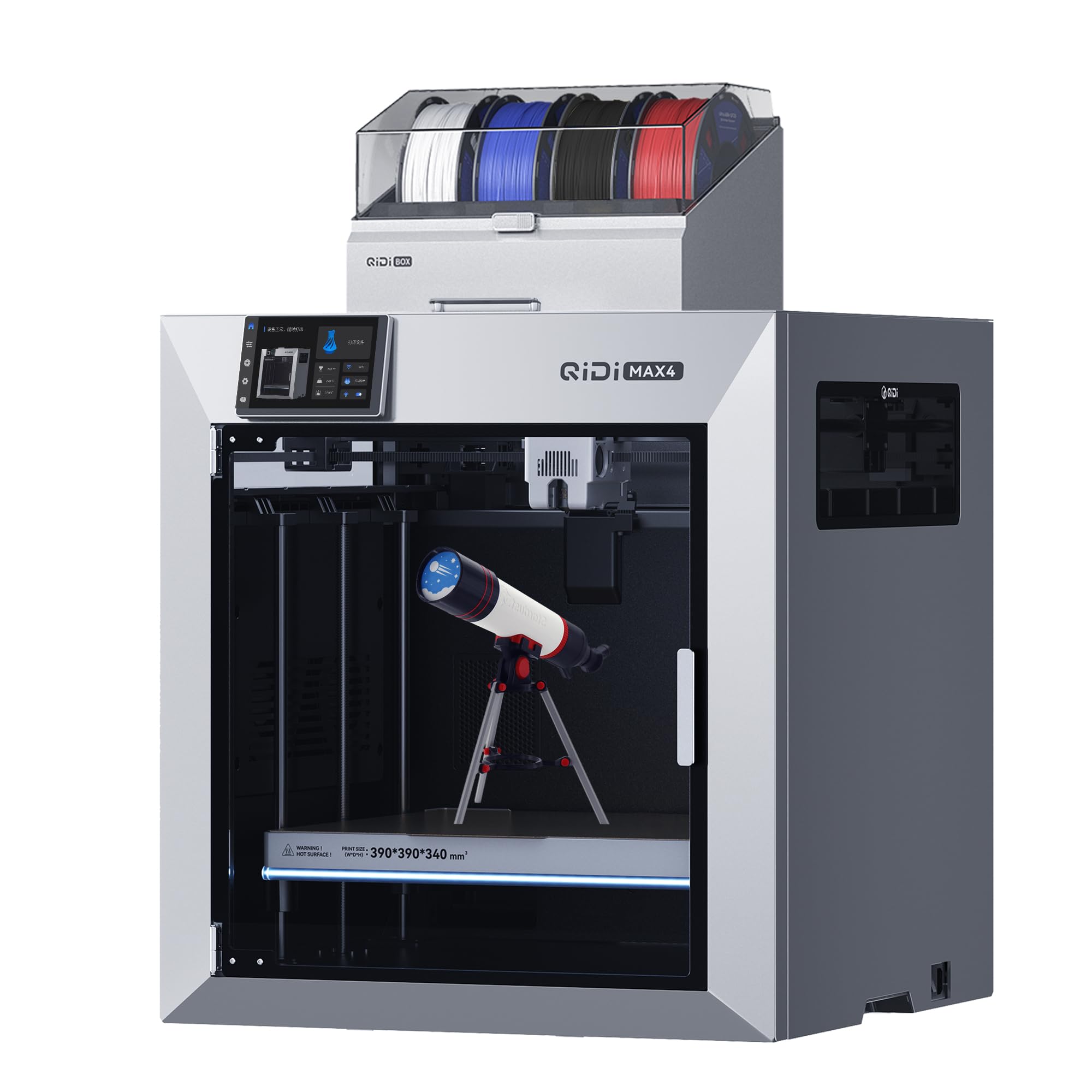
The QIDI Max4 Combo is the ultimate workhorse for large-scale pancake art, with a 390 x 390 x 340 mm build volume — 55% larger than its predecessor. This means you can print jumbo pancake platters, intricate edible maps, or multiple smaller designs in a single session. The 800mm/s print speed and 30,000 mm/s² acceleration make it the fastest in this lineup, completing a full-pancake design in under 10 minutes.
The closed-loop motors on the X/Y axes ensure precise positioning even at extreme speeds, while the 65°C heated chamber and Polar Cooler system (sold separately) create ideal conditions for batters with high sugar content that tend to burn on smaller beds. The 40 mm³/s high-flow hotend with hardened steel nozzle handles industrial-grade abrasive materials, making it equally capable with nut-based pastes and gluten-free blends.
The integrated AI camera detects spaghetti failures in real-time and pauses the print instantly. The QIDI BOX enables 16-color multi-material printing with intelligent filament management. The large touchscreen interface is intuitive, though the UI could feel slightly choppy when navigating through complex multi-color projects. The 120-pound weight demands a permanent kitchen installation, but the build quality and performance justify the dedication.
Why it’s great
- Massive 390x390x340mm build volume for jumbo pancakes
- 800mm/s print speed — fastest pancake printer available
- Closed-loop motors ensure precision at high speeds
Good to know
- 120-pound weight requires permanent kitchen installation
- Polar Cooler is sold separately for advanced batters
- UI can feel choppy with complex multi-color projects
FAQ
Can any 3D printer be modified to print pancakes?
What batter consistency works best for 3D pancake printing?
How do I clean a pancake printer after use?
Can I print multiple pancakes in one batch?
Final Thoughts: The Verdict
For most users, the best 3d pancake printer winner is the Entina Tina2 Plus because it combines zero-setup assembly, fast 40-second preheat, and a PEI platform for effortless pancake release at a price point that undercuts competitors while delivering reliable results. If you want true multi-color pancake art with gradients and detailed character faces, grab the Anycubic Kobra X for its 19-color capability and open-source slicer flexibility. And for commercial kitchens or ambitious home chefs who need jumbo pancake platters in under 10 minutes, nothing beats the monster build volume and blistering 800mm/s speed of the QIDI Max4 Combo.