
Mixing a concentrated fragrance oil or absolute into a wearable perfume requires a neutral base that carries the scent without altering it. That base, the carrier oil, determines how the perfume feels on skin, how long it lasts, and whether it stays true to the blend you intended. A wrong choice here — something with its own heavy aroma or a sticky texture — ruins the entire composition.
I’m Min — the co-founder and writer behind Gadgets Feed. My research for this guide focused on analyzing the molecular stability, absorption rates, and scent neutrality of the most common carrier oils used by professional perfumers and serious hobbyists.
To save you the guesswork and disappointment of a wasted batch, I’ve distilled the market down to the seven best options. These are the only liquids you should consider when searching for the ultimate carrier oil for perfume.
How To Choose The Best Carrier Oil For Perfume
Selecting a carrier oil for perfume is about more than just picking something labeled “natural.” The oil must be odorless, colorless, and chemically stable so it doesn’t oxidize quickly or change your fragrance blend over time. Here are the three most important factors to evaluate.
Scent purity and neutrality
Any carrier oil with its own distinct nutty, grassy, or oily aroma will compete with and corrupt your perfume blend. Jojoba oil and fractionated coconut oil are preferred because they are virtually scentless. DPG (dipropylene glycol) is another top contender — it is completely odorless and used by commercial perfume manufacturers. Always perform a sniff test on the blank carrier before mixing your fragrance.
Absorption rate and skin feel
Carrier oils range from extremely light and quick-absorbing (fractionated coconut oil) to thicker and more lingering (sweet almond oil). The absorption speed affects how the perfume wears through the day. A fast-absorbing oil will leave less residue but might carry the scent into the skin faster, shortening the top note life. A heavier oil holds the fragrance on the surface longer but may feel greasy. Match the oil weight to your preference for skin finish and scent diffusion.
Molecular stability and shelf life
Oils high in polyunsaturated fats (like grape seed oil) are prone to oxidation and rancidity, which ruins both the carrier and the blended perfume. Jojoba oil, a liquid wax ester, has exceptional shelf stability lasting several years. Fractionated coconut oil, stripped of long-chain triglycerides, also resists oxidation. DPG has a very high boiling point and low toxicity, making it an industrial-grade stabilizer. For any long-term perfume storage, choose a carrier known for longevity.
Quick Comparison
On smaller screens, swipe sideways to see the full table.
| Model | Category | Best For | Key Spec | Amazon |
|---|---|---|---|---|
| Cliganic Organic Jojoba Oil | Jojoba Oil | Everyday perfume base | 8 oz / USDA organic | Amazon |
| velona Jojoba Oil | Jojoba Oil | Bulk perfume crafting | 64 oz / Golden unrefined | Amazon |
| Soapeauty Fractionated Coconut Oil | Coconut Oil | Lightweight body perfumes | 32 oz / Cold pressed | Amazon |
| velona Sweet Almond Oil | Sweet Almond Oil | Heavy, long-lasting diffusion | 64 oz / Cold pressed | Amazon |
| Plant Guru DPG | DPG | Incense and oil-based perfume | 16 oz / Fragrance grade | Amazon |
| MAYJAM Jojoba Oil | Jojoba Oil | Multi-use perfume & skincare | 16 oz / USDA organic | Amazon |
| Plant Guru Carrier Oil Variety Set | Variety Set | Experimenting with different bases | 4 x 4 oz / Mixed oils | Amazon |
In‑Depth Reviews
1. Cliganic Organic Jojoba Oil
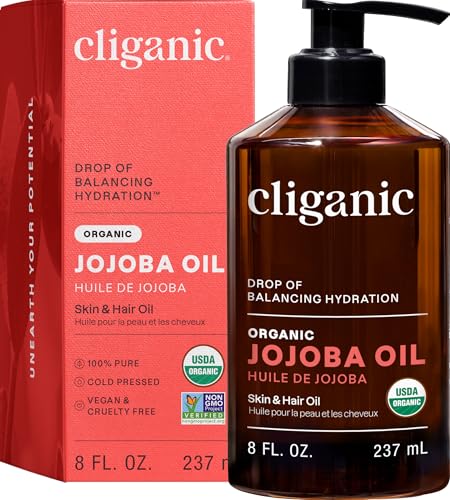
Cliganic’s jojoba oil is a single-ingredient, USDA-certified organic carrier that is virtually odorless and colorless — exactly what a perfume base demands. Its chemical structure as a liquid wax ester closely mimics human sebum, meaning it absorbs into skin without leaving a greasy film that could dilute or distort your fragrance blend. The cold-pressed extraction preserves the oil’s natural antioxidants, giving it a shelf life that easily exceeds two years when stored correctly.
When used as a perfume carrier, this jojoba oil allows top, middle, and base notes to project clearly. Reviewers note that it absorbs quickly without a heavy residue, making it ideal for alcohol-free perfumes that you want to wear daily. The pump dispenser on the bottle controls the pour, which helps when mixing precise ratios of essential oils and fragrance oils. At 8 ounces, this is the perfect starter size for testing blends before scaling up.
The key trade-off is that jojoba oil is a liquid wax, not a true oil, so it has a slightly different feel on skin compared to traditional vegetable oils. A few users reported minor leakage during shipping due to the bottle’s pump mechanism not being fully locked. If you need a bulk supply for commercial blending, you may want to step up to a larger volume, but for personal perfume crafting, this is the goldilocks bottle.
Why it’s great
- Completely odorless and colorless — scent-neutral carrier
- Absorbs rapidly without greasy residue
- USDA organic certification ensures purity
Good to know
- Pump dispenser can leak during shipping if not locked
- 8 oz size is best for personal use, not bulk
2. velona Jojoba Oil
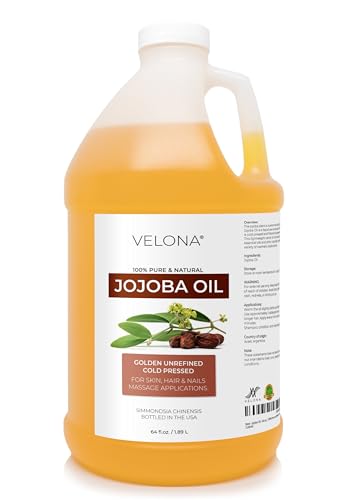
velona’s golden unrefined jojoba oil comes in a 64-ounce bulk jug that appeals to serious perfume makers and small business owners. Like all high-quality jojoba oils, it is fragrance-free and cold-pressed without hexane, but the unrefined variant retains a slightly more golden hue and a touch more natural waxiness than refined versions. This small difference doesn’t affect scent neutrality — it remains odorless — but it can add a subtle warming undertone to the perception of heavier base notes like sandalwood or vanilla.
Multiple professional massage therapists and perfume crafters have confirmed that this oil has excellent longevity and does not go rancid even after months of use. Its long shelf life makes it ideal for batch perfume making where you want to store blends for months at a time. The oil glides smoothly onto skin and washes out of fabrics easily, which is a practical concern for perfumers who test many blends. The 64-ounce size also offers the best per-ounce value among the premium options listed.
The unrefined nature means the oil is slightly thicker than refined jojoba, so it may feel marginally heavier on skin. If you prefer an ultra-light feel that disappears instantly, a refined fractionated coconut oil might be a better match. Also, the large jug takes up space and lacks a pump, so you will need to decant it into smaller bottles for daily perfume crafting.
Why it’s great
- Bulk 64 oz size offers best value for heavy use
- Odorless, cold-pressed, hexane-free
- Exceptional shelf life — resists rancidity
Good to know
- Unrefined golden oil may slightly warm base notes
- Large jug requires decanting into smaller bottles
3. Soapeauty Fractionated Coconut Oil
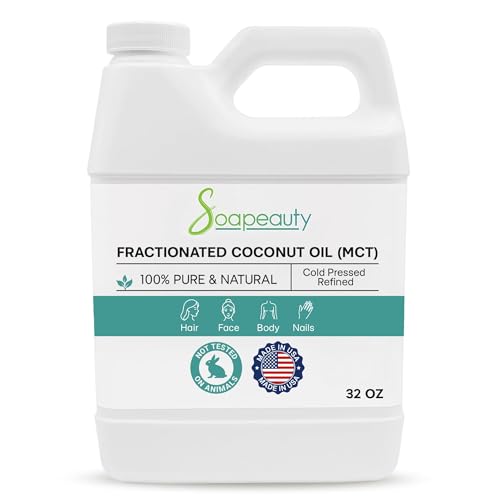
Fractionated coconut oil is the go-to carrier for perfumers who want the lightest possible feel and the fastest absorption into skin. Soapeauty’s version is cold-pressed and refined to remove the long-chain fatty acids that cause regular coconut oil to solidify. The result is a clear, liquid oil that stays liquid at any room temperature, has virtually no scent, and sinks into skin within seconds. This makes it the ideal base for body mists, roll-on perfumes, and light daytime fragrances.
Because fractionated coconut oil is stripped of most of the heavier triglycerides, it does not compete with or mute complex fragrance blends. Reviewers who use it for perfume-making consistently note that it helps sugars and salts blend smoothly in body scrubs and that it carries fragrance oils without leaving a sticky film. The 32-ounce bottle hits a sweet spot for home crafters — enough for multiple experiments without committing to a gallon.
The downside is that the same high absorption rate that feels great on skin also means the oil pulls the fragrance molecules into the skin faster, which can shorten the life of volatile top notes. If you want your perfume to project loudly for hours, a thicker carrier like sweet almond oil or jojoba may perform better. Also, fractionated coconut oil is slightly more expensive per ounce than standard coconut oil.
Why it’s great
- Ultra-light, fast-absorbing, no greasy residue
- Stays liquid at all temperatures
- Odorless and perfect for sensitive skin
Good to know
- Fast absorption may shorten top note projection
- Slightly higher cost per ounce than regular coconut oil
4. velona Sweet Almond Oil
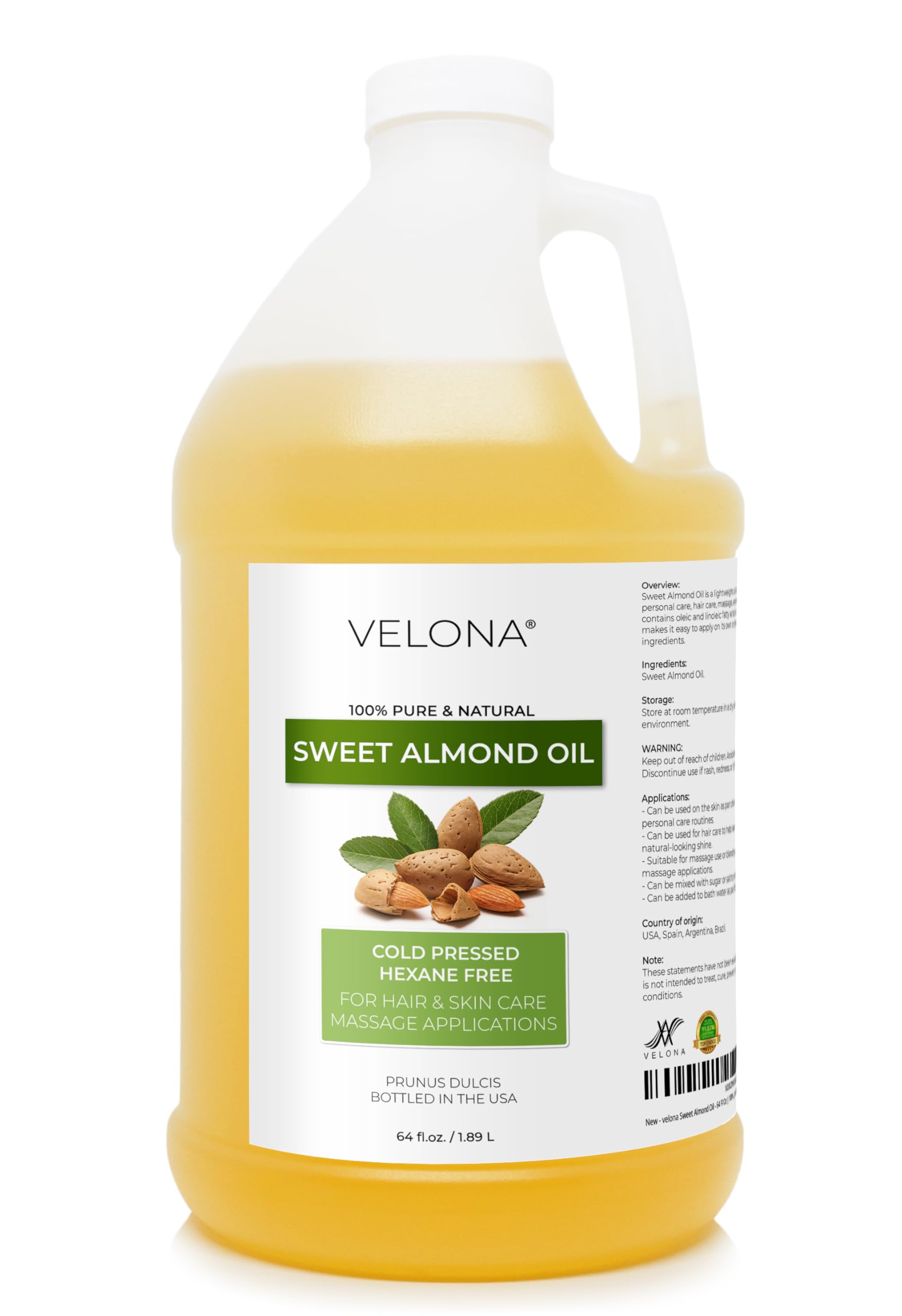
Sweet almond oil has been a traditional choice for massage oils and perfume bases for good reason: it offers a medium weight that stays on the skin long enough to let a fragrance develop without overwhelming the senses. velona’s version is 100% pure, cold-pressed, and fragrance-free — importantly, it has no detectable nutty aroma, meaning it will not compete with your carefully blended perfume notes. The 64-ounce jug is a clear contender for anyone making perfumed body oils in bulk.
Reviewers consistently point out that this sweet almond oil absorbs well without feeling sticky, and many use it as a carrier for both essential oils and fragrance oils with great results. It also works well as a mixer for sugar and salt scrubs, dissolving easily and adding a moisturizing base that complements the perfume. For perfume making specifically, its slightly heavier viscosity helps anchor heavier base notes like musk, amber, and patchouli, giving them better projection and longevity on skin.
The biggest caution is that sweet almond oil is derived from tree nuts, so it is unsuitable for anyone with nut allergies. Additionally, its polyunsaturated fat content means it has a shorter shelf life (about 6 to 12 months) compared to jojoba or fractionated coconut oil, so it’s best used in smaller batches that you will finish quickly. The 64-ounce size is a lot to use before oxidation sets in.
Why it’s great
- Medium weight keeps fragrance molecules on skin longer
- No detectable nutty aroma despite being almond-based
- Great for anchoring heavy base notes
Good to know
- Not safe for nut allergy sufferers
- Shorter shelf life than jojoba or fractionated coconut oil
5. Plant Guru Dipropylene Glycol DPG

Dipropylene Glycol (DPG) is not an oil — it is a synthetic solvent used extensively in the fragrance industry to dilute and carry concentrated perfume oils. Plant Guru’s DPG LO+ is a fragrance-grade solvent that is completely odorless, colorless, and has a high boiling point, making it exceptionally stable. It is the standard carrier used by commercial perfume manufacturers for oil-based perfumes because it binds to fragrance molecules without altering their chemical structure.
For home perfumers, DPG is a revelation: it thins out thick resinous absolutes and sticky essential oils, making them easy to work with in roller bottles and spray atomizers. It also has a very low toxicity profile and is safe for topical use. Customers specifically praise its ability to dilute overly strong perfumes without adding any scent of its own, saving expensive fragrances from going to waste. Many also use it with incense making because it helps fragrances bind to sticks and cones.
The major consideration is that DPG is not a moisturizing oil — it has no skincare benefits and can feel slightly astringent on dry skin if used undiluted with very little actual oil. It is also a synthetic chemical, so some users prefer natural oils for an all-natural perfume. If you prioritize a completely organic product or want your perfume to also serve as a skin moisturizer, DPG is not the right choice.
Why it’s great
- Completely odorless — will not alter fragrance profile
- Excellent solvent for thick absolutes and resinous oils
- High boiling point ensures long-term stability
Good to know
- Synthetic chemical — not a natural oil
- No moisturizing properties for skin
6. MAYJAM Jojoba Oil Organic
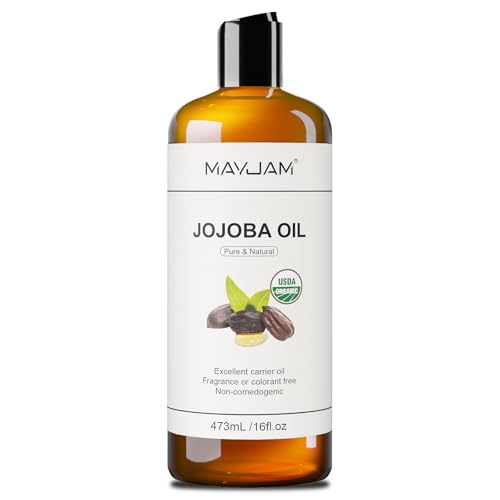
MAYJAM’s jojoba oil matches Cliganic in terms of purity and certification but comes in a larger 16-ounce bottle at an excellent value. It is also cold-pressed, hexane-free, and USDA organic certified, making it a dependable carrier for perfume blending. Like all quality jojoba oils, it is odorless, absorbs quickly, and mimics the skin’s natural sebum to allow fragrance notes to project naturally without an oily barrier. For budget-conscious perfumers who go through carrier oil quickly, this is the smart pick.
Reviewers use it for everything from diluting essential oils for waterless diffusers to making daily moisturizing perfumes. The larger bottle means less frequent reordering, and the oil’s stability means it won’t go bad before you finish the bottle. Customers also note its effectiveness in cuticle and nail care, adding versatility if you want a single oil that serves both perfume crafting and skincare.
Some buyers expressed concern about the product being certified organic by ECOCERT but manufactured in China, which may matter to those who prioritize domestic production. Additionally, a small number of reports indicate that the bottle’s seal can be inconsistent, leading to minor leakage. Overall, the quality of the oil itself receives consistent praise for being pure and effective.
Why it’s great
- Larger 16 oz bottle at a budget-friendly price
- USDA organic, cold-pressed, and hexane-free
- Odorless carrier that works for all perfume types
Good to know
- Manufactured in China despite organic certification
- Bottle seal can sometimes be inconsistent
7. Plant Guru Carrier Oil Variety Set

If you are new to perfume making and not sure which carrier oil suits your style, the Plant Guru Variety Set is the ideal sampler. It includes four 4-ounce bottles of sweet almond, avocado, fractionated coconut, and grapeseed oils, all cold-pressed and 100% pure. Each oil offers a different viscosity and skin feel: the fractionated coconut is the lightest, the sweet almond is mid-weight, and the grapeseed and avocado fall in between. This allows you to experiment with how each base affects your perfume’s diffusion and longevity before committing to a larger bottle.
Reviewers praise the set for its value and usefulness. The oils blend beautifully with essential oils like lavender, tea tree, and lemon, and they work as moisturizers and massage bases as well. The 4-ounce bottles are small enough to keep in a drawer without taking up space, and they are labeled clearly so you don’t mix them up during testing. This is particularly useful if you want to compare how the same fragrance blend performs in different carrier oils.
The main limitation is that none of the bottles include a pump dispenser, so you will need to pour or use a dropper. Also, the grapeseed oil has the shortest shelf life of the four — it oxidizes faster than the others. You’ll want to use that bottle first. If you already know exactly which carrier you prefer, buying a single large bottle will be more economical, but for exploration, this set is unbeatable.
Why it’s great
- Four different oils let you compare performance
- All cold-pressed, 100% pure, no fillers
- Perfect starter kit for new perfumers
Good to know
- No pump dispensers on the bottles
- Grapeseed oil has the shortest shelf life
FAQ
Can I use any carrier oil for perfume making?
What is the best carrier oil for long-lasting perfume?
How much carrier oil should I mix with fragrance oil?
Is DPG safe to use on skin in perfume?
Final Thoughts: The Verdict
For most users, the carrier oil for perfume winner is the Cliganic Organic Jojoba Oil because it combines odorless purity, fast absorption, and excellent shelf stability in a well-sized 8-ounce bottle. If you want a lightweight base that disappears into the skin instantly, grab the Soapeauty Fractionated Coconut Oil. And for bulk perfume crafting or professional blending, nothing beats the velona Jojoba Oil in its 64-ounce quantity.