
A fuel pump that can’t maintain rail pressure under load turns your daily driver into a roadside hazard. For modern EFI engines, whether you’re pulling a trailer in a Silverado or boosting a project car, consistent fuel delivery at the required PSI is non-negotiable. A failing pump introduces hesitation, hard starts, and eventual no-starts that leave you stranded.
I’m Min — the co-founder and writer behind Gadgets Feed. My research into the best automotive electric fuel pump for this guide involved cross-referencing flow-rate curves against factory PSI requirements across dozens of vehicle platforms to distinguish reliable replacements from parts-bin gambles.
After analyzing compatibility reports and real-world endurance data from thousands of verified buyers, these seven electric fuel pumps represent the most dependable options for restoring proper fuel pressure and volume to your vehicle’s fuel system.
How To Choose The Best Automotive Electric Fuel Pump
Selecting the right electric fuel pump requires matching three variables to your vehicle’s specific fuel system: the pump’s free-flow volume (LPH), its pressure capability (PSI), and its physical form factor (in-tank module vs. inline universal). A mismatch in any of these can cause fuel starvation, pressure drop, or installation headaches.
Match the Pump Style to Your Fuel System
In-tank module assemblies include the pump, sending unit, strainer, and often the pressure regulator in one drop-in unit. These are ideal for direct OE replacement in vehicles like the Chevy Silverado or Dodge Ram. Universal inline pumps like the Bosch 044 or Aeromotive 340 require custom plumbing and are designed for high-performance or swapped engines where the factory hanger doesn’t apply.
Verify Flow Rate Against Engine Demand
A stock V8 engine on a return-style system needs roughly 50-70 LPH at idle and up to 150 LPH at wide-open throttle. Forced induction engines (turbo or supercharged) demand 250-400 LPH to maintain pressure under boost. The Aeromotive 340 delivers over 340 LPH at 40 PSI, making it suitable for builds pushing 500-600 horsepower. The A-Premium module uses a turbine pump rated for stock Silverado flow, which is adequate for stock engines but insufficient for modified builds.
Check the Connector and Wiring Compatibility
Many aftermarket pump modules (like the A-Premium and AP3622S) come with replacement wiring pigtails that match the original vehicle connector. This is critical for 1999-2004 GM trucks, where multiple connector variants exist. Universal pumps require the user to source correct gauge wire, relays, and fuse holders. The SYKRSS unit includes quick-connect fittings that simplify the wiring step.
Quick Comparison
On smaller screens, swipe sideways to see the full table.
| Model | Category | Best For | Key Spec | Amazon |
|---|---|---|---|---|
| BOSCH 044 | Universal Inline | High-Performance & Motorsports | 80 GPH (303 LPH) at 72 PSI | Amazon |
| Aeromotive 340 | Universal In-Tank | High-Horsepower EFI & E85 | 340 LPH at 40 PSI | Amazon |
| PHILTOP FG1555 | Module Assembly | Hyundai/Kia Subcompact Cars | P76854M / FG1555 Cross-Reference | Amazon |
| BDFHYK E3609M | Module Assembly | 2004-2007 GM Full-Size Trucks | POM Plastic Housing / Flare Connector | Amazon |
| SYKRSS E7186M | Module Assembly | Dodge Ram 1500 & Jeep Wrangler | 1.84 kg / Quick Connect Fittings | Amazon |
| AP3622S | Module Assembly | 1996-1997 Chevy/GMC C/K Trucks | Tank Mount / OE Standard | Amazon |
| A-Premium FP0028C | Module Assembly | 1999-2004 GM Truck OE Replacement | OE Reference 150003 / Metal Body | Amazon |
In‑Depth Reviews
1. BOSCH 044 / 61944 Universal Inline Fuel Pump
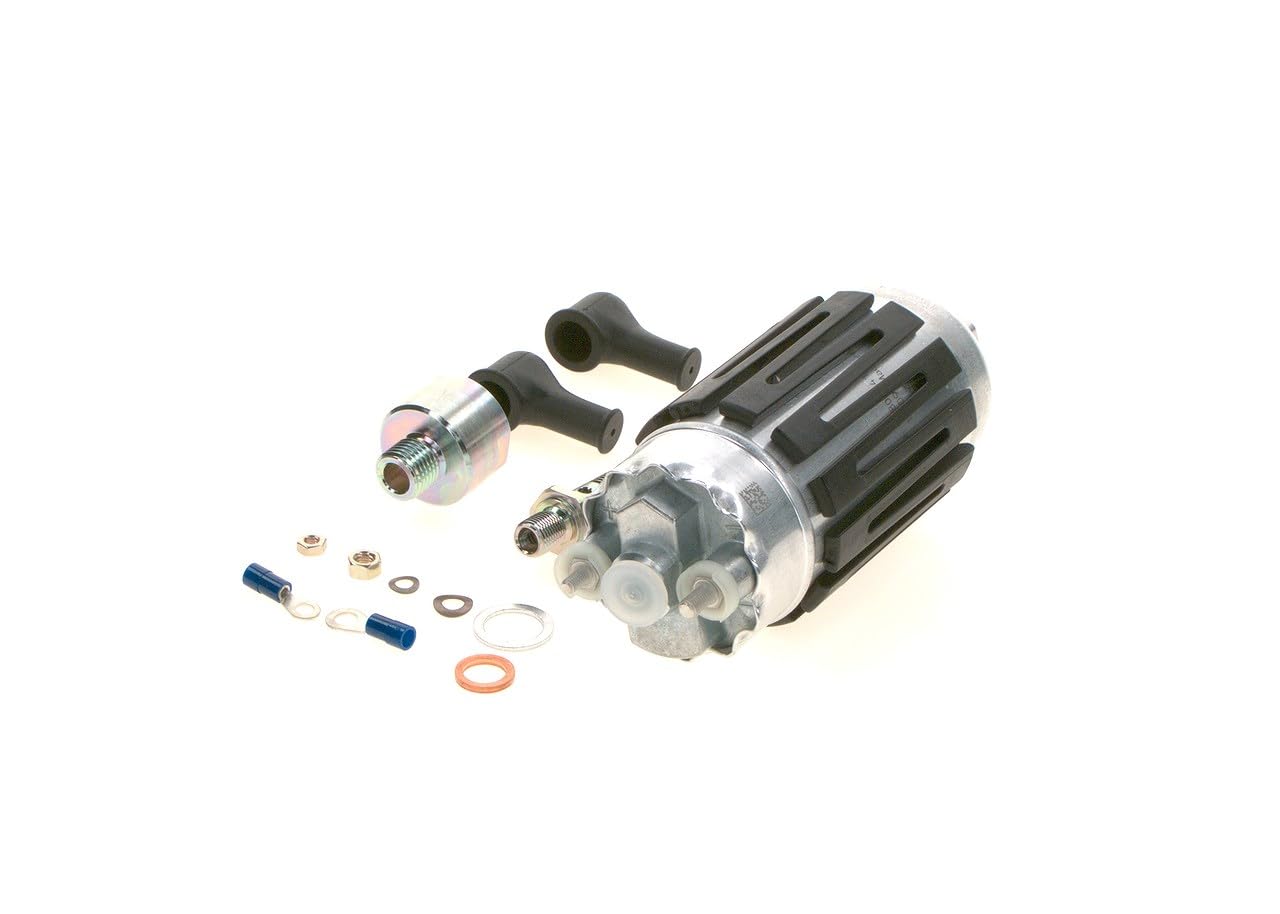
The Bosch 044 is the gold standard in motorsports fuel delivery. Its patented turbine pump technology eliminates the fuel pulsation and noise that plague older vane-style pumps, while delivering a verified 80 GPH at 72 PSI — enough to support 700+ horsepower on gasoline or race fuel. Each unit is end-of-line function tested at the factory, ensuring a flat pressure curve from idle to redline.
This inline pump requires custom plumbing with threaded M6 (positive) and M5 (negative) connectors. It’s designed for dedicated fuel systems in race cars, rally vehicles, or high-performance swaps where the factory tank hanger doesn’t apply. The 0.71-inch inlet size accepts -8 AN hose, and the included installation instructions simplify the wiring integration. Its compact 2.8 x 8.5-inch package fits in tight chassis locations.
The primary downside is audible pump whine at idle — it is not a quiet OE replacement. Some users report the built-in check valve can be weak, requiring an external aftermarket valve for anti-drain-back protection. Counterfeit units also exist in the supply chain, so purchasing from an authorized dealer is essential to guarantee genuine Bosch internals.
Why it’s great
- Proven 80 GPH delivery at 72 PSI supports high-boost engines without fuel starvation
- Turbine rotor design runs quieter and cooler than older vane pumps
- Factory end-of-line testing ensures consistent quality and reliable startup
Good to know
- Audible whine at idle; not intended for stealth daily-driver use
- Counterfeit units require careful sourcing from authorized Bosch retailers
- Check valve can be weak; external anti-drain-back valve may be necessary for some builds
2. Aeromotive 340 LPH In-Tank Fuel Pump
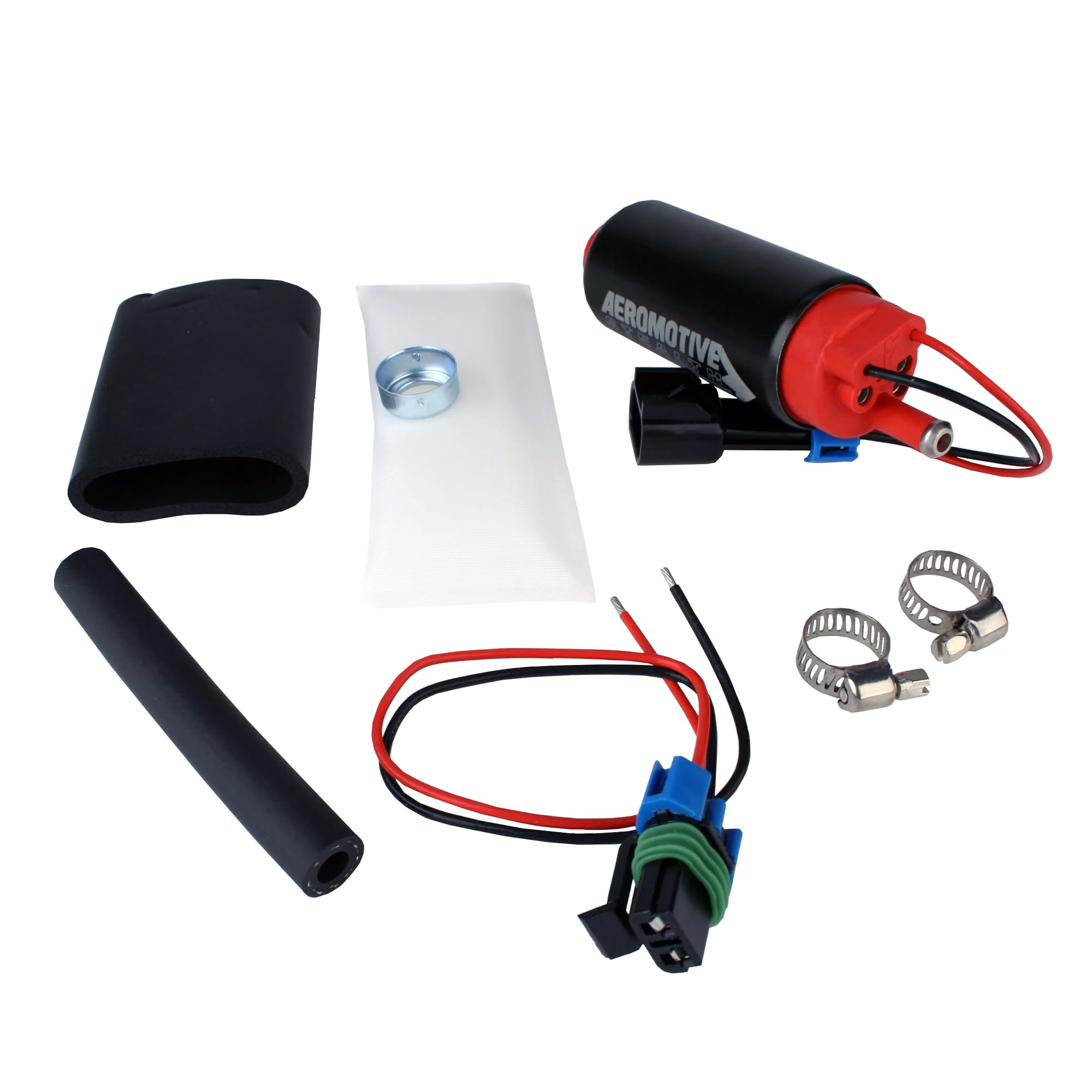
The Aeromotive 340 delivers over 340 liters per hour at 40 PSI, making it the highest-flowing compact in-tank pump in this comparison. Its turbine-style impeller is engineered for pulse-modulated control systems and constant-voltage setups alike, with compatibility for both gasoline and E85 ethanol fuels. The 39mm OEM-style body diameter lets it drop into many factory hanger assemblies without bracket modifications.
The kit includes a universal filter sock, wiring pigtail, rubber hose, clamps, and a mounting grommet to streamline installation. For high-horsepower naturally aspirated engines (500-600 HP) or moderate boost applications, this pump maintains steady rail pressure where smaller units would drop off. Its center-inlet design is a direct fit for most 90s Ford and GM in-tank hangers with simple harness adapter wiring.
Some reviews note that the included hydromat sock can be too thin and short for deep-sump tanks, causing fuel starvation below a quarter tank on certain vehicle setups. A few units have reported premature failure within a year, though the US-based construction generally earns trust. It is not as dead-silent as a stock module but quieter than the Bosch 044.
Why it’s great
- 340 LPH at 40 PSI supports 500-600 HP builds with headroom
- E85 compatible internals resist ethanol corrosion better than standard pumps
- Compact 39mm body fits OEM hangers without custom brackets
Good to know
- Included hydromat sock may cause fuel starvation below 1/4 tank in some tanks
- Some units report failure within 12 months under high-use conditions
- Not as quiet as OEM turbine module pumps for daily driving
3. PHILTOP FG1555 Electric Fuel Pump Module Assembly
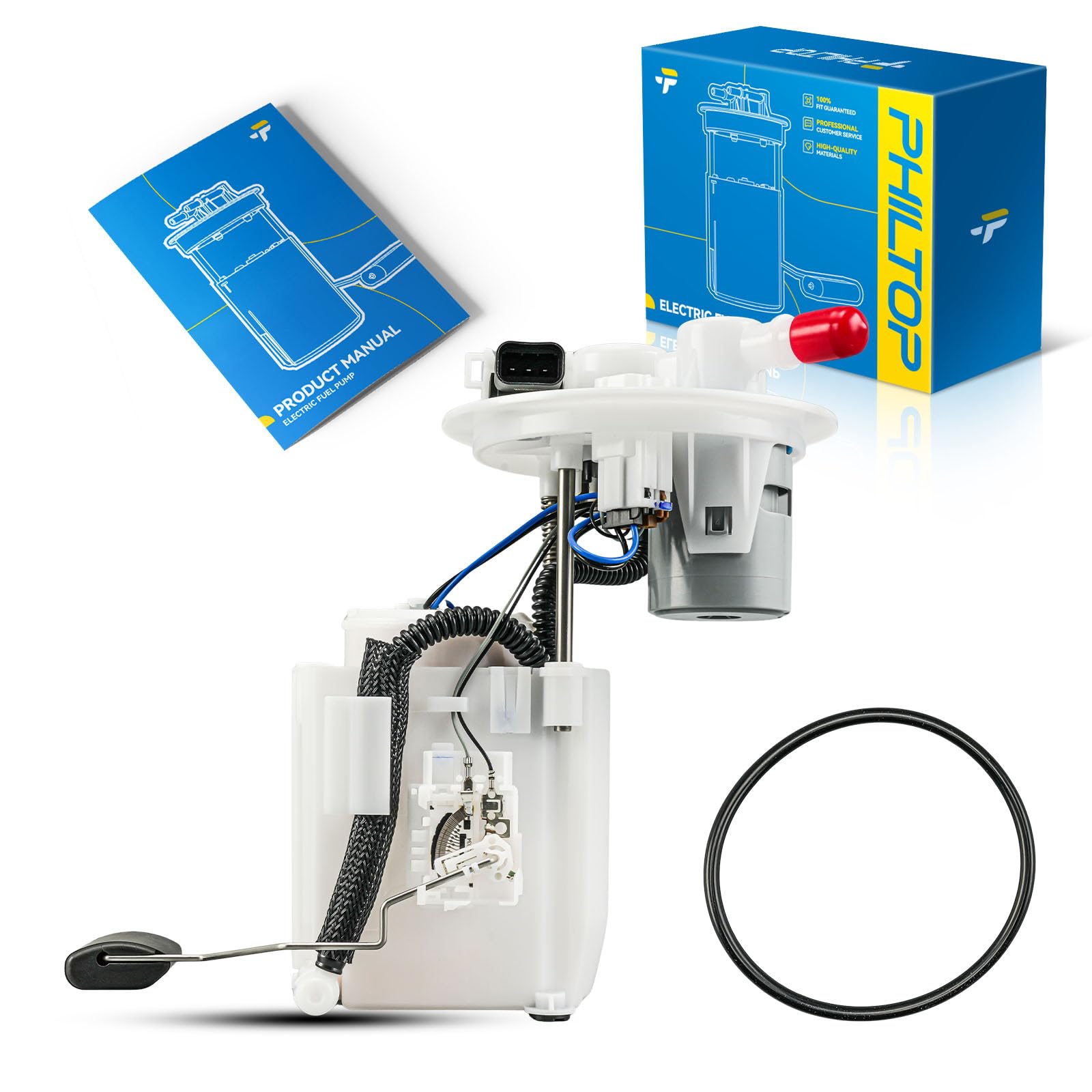
PHILTOP uses a carbon commutator and gold-palladium alloy contacts rated for 1 million cycles — components that directly address the brush wear and contact corrosion that kill budget pumps. The FG1555 module fits 2012-2017 Hyundai Accent and Kia Rio vehicles, replacing OE numbers 311101R500 and 944601R500. It includes the complete assembly: pump, strainer, seal ring, and fuel pressure sensor.
The carbon commutator design improves electrical transfer efficiency compared to traditional copper, reducing energy waste and heat buildup. This translates to more consistent fuel delivery across temperature extremes. Installation is a direct drop-in swap with no wiring modifications required. Users report it works as well in a 2009 Infiniti G37 as in a 2006 BMW 325i, though the stated fitment range is narrower.
The main risk is that the plastic housing feels less robust than OEM modules. One user reported a pump failure within 200 miles on a 2006 Mazda 3, citing pressure drop to 20 PSI under load. The 2-year warranty is better than the standard 1-year coverage, but dropping the tank for replacement is still a labor-intensive process. For the price, it’s a capable replacement for subcompact economy cars.
Why it’s great
- Gold-palladium contacts and carbon commutator reduce wear and improve arc suppression
- Direct drop-in fit with no wiring modifications for Hyundai/Kia platforms
- Two-year warranty provides better long-term protection than most aftermarket modules
Good to know
- Plastic housing may feel less durable than denser OEM modules
- Reported early failure in some applications within 200 miles
- Limited compatibility outside the listed Accent and Rio years
4. BDFHYK E3609M Electric Fuel Pump Assembly

The BDFHYK E3609M uses POM plastic for its housing, which offers better chemical resistance to ethanol-blended fuels than standard nylon. It replaces a long list of OE numbers (19133450, 88965371, and over a dozen others) for 2004-2007 Chevy Silverado and GMC Sierra trucks — including the Classic body style. The assembly includes the pump, strainer, sending unit, and pressure regulator in one package.
Users report faster starts and steady fuel pressure after installation, with the built-in filter element blocking impurities before they reach the injectors. The flare-style inlet connection provides a secure seal without clamps, reducing leak points. The unit is heavier than many competitors due to the metal-plastic hybrid construction, which adds to its perceived durability.
The most common fitment issue involves the fuel level float. On 2007 Chevy Classic 4×4 supercrew models, the float bail required heat bending and 180-degree rotation to clear the tank walls — a modification that necessitates partial bed removal for access. This isn’t a problem for most 2004-2006 standard cab trucks, but it’s a critical check for late Classic models. One-year warranty covers defects.
Why it’s great
- POM housing resists ethanol fuel degradation better than standard plastics
- Includes sending unit, pressure regulator, and built-in fuel filter
- Flare inlet fitting reduces leak risk compared to hose barb connections
Good to know
- Fuel level float may require bending for proper clearance in Classic models
- Partial bed removal needed for float fitment on 2007 supercrew trucks
- No wiring harness extension included for lifted or modified chassis
5. SYKRSS E7186M Fuel Pump Assembly
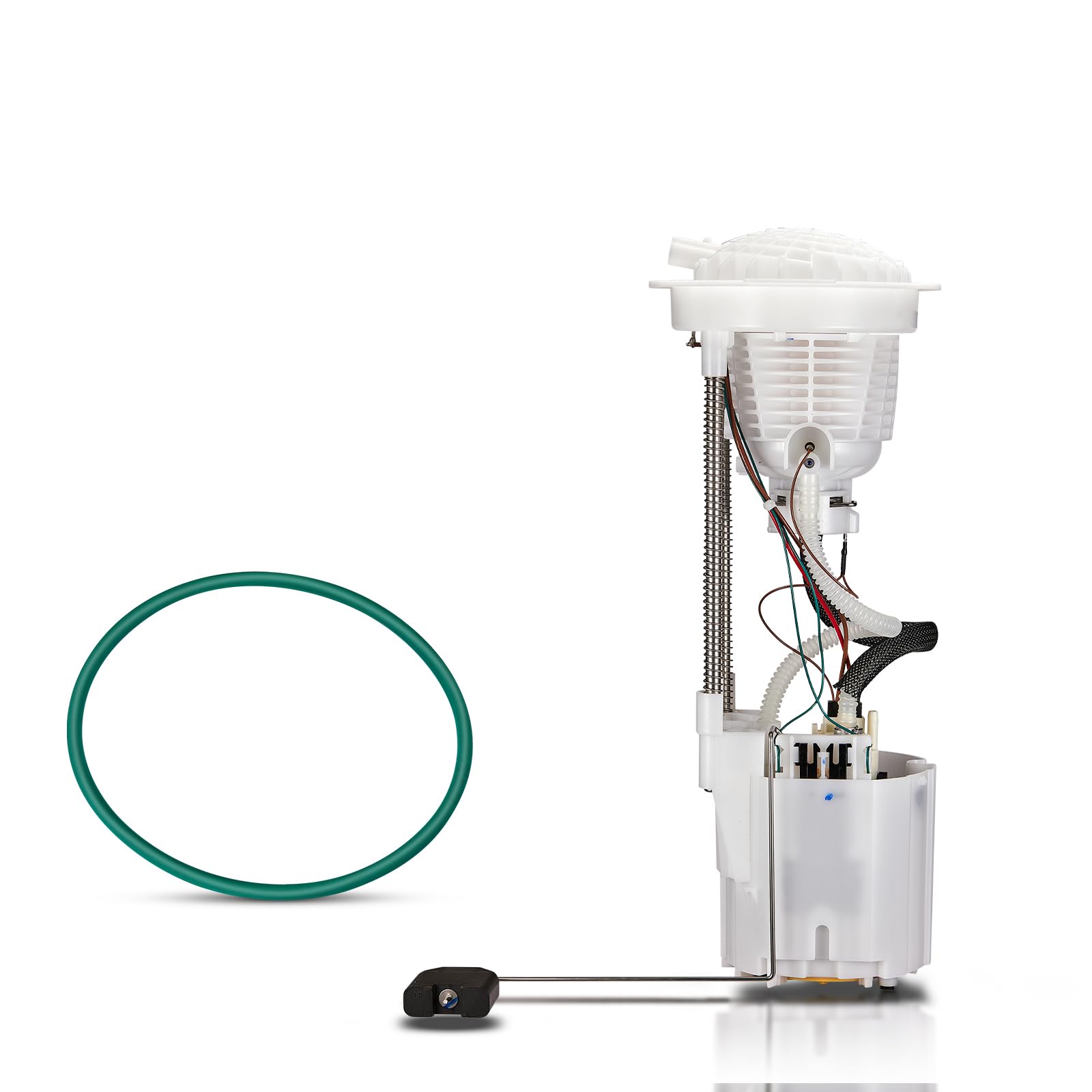
The SYKRSS E7186M is the most versatile module in this list, covering Dodge Ram 1500 (2004-2006 3.7L, 4.7L, 5.7L), 2007 Ram with the 26-gallon short bed, and notably 1998 Jeep Wrangler TJ and 2011 Chrysler 300. Its quick-connect fittings simplify fuel line attachment without clamps, reducing installation time by 20-30 minutes compared to traditional hose-barb assemblies. The module assembly weighs 1.84 kg.
Every unit is factory tested before shipping, and the manufacturer offers a 1-year unlimited-mileage guarantee. The pump meets OE spec for flow and pressure, meaning it will deliver adequate volume for stock engines but won’t support modified power adders. Users report it integrates seamlessly without wiring modifications, which is rare for a pump that crosses so many vehicle platforms.
The main concern is that the physical design of the pump module doesn’t always match the factory part despite claiming compatibility — some users noted the shape differed from the original, requiring checks on the fuel filter nipple orientation. For the 1998 Jeep TJ, it works perfectly, but for 2004 Ram trucks, confirm the sending unit float arm matches your tank depth before dropping the assembly in.
Why it’s great
- Quick-connect fittings reduce fuel line installation time and leak potential
- Covers multiple platforms (Ram, Jeep, Chrysler) with one verified assembly
- Factory-tested for pressure and flow before shipping
Good to know
- Module shape may differ from OEM despite claimed compatibility
- Not designed for high-flow modified engines; stock volume only
- Verify float arm length for deep vs shallow fuel tanks
6. AP3622S Fuel Pump Assembly for Chevy/GMC C/K Trucks

The AP3622S is a direct OE-replacement module for 1996-1997 Chevy and GMC C/K trucks (1500/2500/3500) with 4.3L V6, 5.0L V8, 5.7L V8, or 7.4L V8 engines. It replaces Airtex E3622S and other common reference numbers, providing both pump function and the fuel sending unit in one assembly. The tank-mount design uses a traditional hose barb inlet and NPT connector type.
Users report simple installation with the primary challenge being the plastic locking ring, which often requires replacement — the original ring can crack during removal. The pump fires right up after priming 2-3 times, restoring normal fuel delivery. One owner noted the pump runs strong enough for a 1997 K1500 5.7L short box, providing plenty of fuel volume for daily driving.
The most significant reliability concern is the fuel level sender, which has been reported to fail after roughly 6 months in at least one instance. The sender registered half to quarter tank when full, and empty below three-quarters. Contacting the seller through Amazon for warranty replacement was described as difficult. For the cost, it’s a solid short-term fix, but durability is not on par with OEM modules.
Why it’s great
- Accurate OE cross-reference for 1996-1997 Chevy/GMC C/K trucks
- Includes sending unit in the assembly for a complete replacement
- Fires right up after priming; strong fuel delivery for stock engines
Good to know
- Fuel level sender may fail within 6 months, requiring warranty hassle
- Plastic locking ring often breaks during removal; order a new one
- Seller support via Amazon can be slow for replacement claims
7. A-Premium Electric Fuel Pump Module Assembly for GM Trucks

This A-Premium module fits 1999-2004 Silverado and Sierra 1500/2500/3500 trucks with 4.3L, 4.8L, 5.3L, 6.0L, or 8.1L engines. Its metal body construction is a notable advantage over the plastic-housing competitors at similar price points — metal dissipates heat better and resists cracking during installation. The assembly ships with two connectors (for different wiring variants), a seal ring, and four protective covers.
Owner reports confirm it is a perfect fit for 2000 Silverado 4.8L and 2002 Chevy 2500 8.1L, with the correct wiring harness matching the factory connector without modification. One user has run it for nearly a year without issues. The 0.01-ounce listed weight seems to be an Amazon data error; the actual unit is standard module weight. The one-year unlimited-mileage warranty covers the part cost but not labor.
The main drawback is that some units arrive with a plastic assembly that feels brittle — one user broke the hose barb when removing the original hose, requiring a brass adapter to salvage it. The replacement pump runs fine after the workaround, but the initial impression of fragility is concerning. For budget-sensitive truck owners with a 4.8L or 5.3L engine, it’s the most cost-effective complete module available.
Why it’s great
- Metal body construction provides better heat dissipation than plastic modules
- Includes two connector variants to match different wiring harnesses
- Proven fit for 1999-2004 Silverado and Sierra with multiple engine options
Good to know
- Plastic hose barbs may break during hose removal; use brass adapters
- Warranty covers part only, not labor or towing expenses
- Listed 0.01 oz weight is a data error; actual unit is standard module size
FAQ
Can I use a universal inline pump like the Bosch 044 in my stock daily driver?
How do I know which wiring connector my 1999-2004 Silverado needs?
Does a higher LPH pump always mean better performance?
Final Thoughts: The Verdict
For most users, the best automotive electric fuel pump winner is the Bosch 044 because its proven 303 LPH flow at 72 PSI supports everything from stock swaps to 700 HP builds without fuel starvation. If you want a single drop-in module for a Silverado or Sierra, grab the A-Premium FP0028C. And for high-horsepower EFI builds requiring E85 compatibility, nothing beats the Aeromotive 340.