
A full 4×8 sheet of plywood is the raw material for hundreds of projects, from garage workbenches and cabinet carcasses to accent walls and shelving. But the difference between a frustration-free build and a weekend of splinter-picking comes down to a handful of specs: core material, face grade, thickness tolerance, and whether the panel was designed for structural load or decorative finish. Grabbing the wrong type can mean glue that won’t bond, screws that strip out, or a surface that warps before the paint dries.
I’m Min — the co-founder and writer behind Gadgets Feed. I’ve spent hundreds of hours analyzing plywood specifications, customer feedback, and real-world application data to separate the panels that deliver on their promises from those that waste your time.
This guide cuts through the confusion to help you identify the best 4ft x 8ft plywood for your specific project, whether you need CNC-ready Baltic birch, a flexible tambour for curved surfaces, or a weather-resistant polycarbonate alternative.
How To Choose The Best 4ft X 8ft Plywood
Selecting a 4×8 panel isn’t as simple as walking into a lumberyard and grabbing the first sheet. The application dictates the material, and material dictates the budget. Start by pinning down your use case: is this a structural shelf, a cosmetic veneer overlay, a jig for your router table, or a backing board for a cork pin-up? Each scenario demands a different core and face treatment.
Face Grade and Core Material
The face veneer grade tells you how many knots, patches, or color inconsistencies you’ll have to hide. A-grade offers a clean, uniform surface ideal for stain-grade furniture. B/BB allows minor patches and color-matched repairs — still fine for paint or less visible cabinetry. The core material underneath matters even more. Baltic birch plywood uses void-free cross-laminated veneers that hold screws near the edge without crumbling, while a particleboard or MDF core will swell and fail if moisture gets in. For jigs and router tables, the phenolic overlay found on premium panels provides a slick, moisture-resistant surface that won’t gum up with glue.
Thickness Tolerance and True Dimensions
Many panels labeled “¾ inch” actually measure closer to 23/32 inch — a discrepancy that throws off dado joints, rabbets, and CNC toolpaths. High-end Baltic birch sheets typically run slightly thicker than the nominal spec, while budget commodity plywood often runs thin. For precision router work or cabinetry, check the actual thickness in the product details before committing. The same applies to length and width: some manufacturers advertise “48×96” but deliver panels up to ¼ inch short, which can ruin a fitted application.
Quick Comparison
On smaller screens, swipe sideways to see the full table.
| Model | Category | Best For | Key Spec | Amazon |
|---|---|---|---|---|
| Baltic Birch 24×48 x ½” | Baltic Birch | CNC & laser cutting | 12 mm (0.5″) thickness, B/BB grade | Amazon |
| amaZulu Bamboo Wall Panel | Bamboo Tambour | Decorative accent walls | 0.5″ thick, 32 sq ft coverage | Amazon |
| Robosource Polycarbonate Sheet | Polycarbonate | Shatter-resistant windows & guards | 1/16″ (1.5 mm) thin, UV stabilized | Amazon |
| MakerStock Black Phenolic Baltic Birch | Phenolic Baltic Birch | Router tables & jigs | 18 mm (0.75″) thick, phenolic overlay | Amazon |
| Edge Supply Red Oak Veneer | Oak Veneer | Furniture refacing | 10 mil paper back, A-grade face | Amazon |
| Outwater Maple Tambour | Maple Tambour | Curved surfaces & drum doors | ¾” slats, 30° V-grooves, MDF core | Amazon |
| Manton Premium Cork Roll | Cork Roll | Bulletin boards & acoustic walls | ½” thick, 32 sq ft, natural facing | Amazon |
In‑Depth Reviews
1. Baltic Birch Plywood 24×48 x ½″ — Woodpeckers
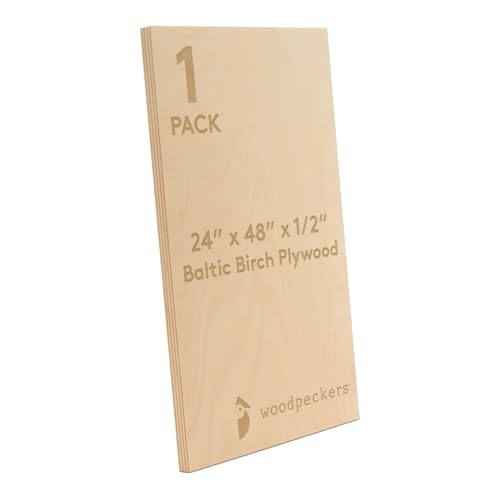
This 24×48 half-inch Baltic birch sheet is the goldilocks panel for CNC and laser cutting. Its true size (23-7/8 x 47-7/8 inches) gives you the full 12 mm of void-free cross-laminated birch that laser cutters and scroll saws love — the multi-coated layers glide through without burning or chattering. The B/BB grade means the face veneer is smooth and uniform while the back may have one or two small color-matched patches, which is negligible for most workshop projects.
The 1.3-square-foot footprint makes it manageable for smaller shops without a panel saw, yet the 12.8-pound weight is substantial enough for shelving or cabinet doors. Multiple users report that it takes Danish oil and stain beautifully, and the holding power for glue and screws far exceeds standard MDF or basswood sheets. The birch edges produce cleaner joinery than fir plywood, which tends to splinter when routed.
One mild trade-off is slivers along the raw edges when handling without gloves — a common characteristic of Baltic birch. But for a CNC-ready, furniture-grade panel at a mid-range price point, this sheet delivers the consistency that hobbyists and pros both need.
Why it’s great
- Void-free Baltic birch core for clean laser and router cuts
- Grade B/BB face takes stain very well
- True 12 mm thickness holds screws near edges
Good to know
- Raw edges can give splinters without gloves
- 24×48 format may not suit full-height cabinet applications
2. amaZulu Natural Bamboo Wall Panel 4×8 — Caramel Tambour

This is not your typical structural plywood — the amaZulu panel is a flexible tambour cladding made from hand-milled bamboo strips bonded to a mesh backing. Each 4×8 sheet covers 32 square feet and can wrap curved surfaces like columns, barrel ceilings, or rounded wainscoting with a minimum bend radius tight enough for most residential applications. The caramel color is warm and even, with a sanded finish that feels refined out of the roll.
Installation is straightforward with contact cement and finish nails, and the ½-inch strips cut cleanly with scissors or a utility knife — no table saw required. The bamboo core is solid, not hollow, which resists the splintering common with cheaper tambour materials. Several buyers note it took paint well and matched existing cabinetry after a light sand.
The only limitation: this is purely an interior panel. Direct sun or outdoor exposure will degrade the bamboo and the mesh backing. Also, heavier contact cement is recommended because the mesh lets the panel breathe, and some users found general adhesive didn’t hold well on glossy drywall.
Why it’s great
- Flexible mesh back wraps columns and curved walls easily
- Hand-milled bamboo with smooth, refined finish
- DIY-friendly cut with scissors or utility knife
Good to know
- Interior use only — not rated for direct sun or moisture
- May need strong contact cement for good adhesion on slick walls
3. Robosource Polycarbonate Clear Sheet 48×96 x 1/16″
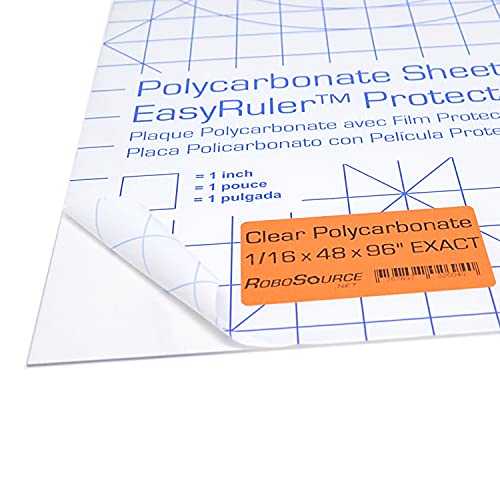
When plywood won’t work — think transparent window panels, winterizing enclosures, or machine guards — this polycarbonate sheet is the right alternative. At 1/16-inch thick, it’s much thinner than any plywood, yet it offers 250 times the impact resistance of glass and is easy to cut with tin snips, a box cutter, or a jigsaw without cracking or fracturing. The exclusive EasyRuler protective film helps you measure and mark directly on the sheet, then peels off to reveal a crystal-clear surface.
It ships rolled due to the 4×8 size, but users report it flattens quickly once unrolled. The UV stabilization makes it suitable for moderate sunlight exposure, though for constant direct sun a UV-coated grade is recommended. One buyer used it to build a display case for basketball shoes and praised the optical clarity, while another winterized a cat shelter with clean cuts that let light through.
The major downside is that polycarbonate scratches more easily than glass, and the sheet is soft enough that aggressive cleaning can mar the surface. Also, the rolled shipping means if you don’t unroll it immediately, the memory can cause slight curling that takes weight to flatten.
Why it’s great
- Shatter-resistant — far tougher than acrylic or glass
- Easy to cut, drill, and cold-bend without cracking
- UV stabilized for general outdoor use
Good to know
- Scratches more easily than glass
- Shipped rolled; needs immediate flattening to avoid curl
4. MakerStock Black Phenolic Baltic Birch 24×48 x ¾″

If your project involves a router table, CNC vacuum table, or table-saw extension, this phenolic-overlaid Baltic birch panel is purpose-built for the job. The 110 g/m² black phenol film creates a hard, slick surface that resists glue adhesion and moisture, meaning jigs and fixtures stay cleaner and last longer without warping. The Baltic birch core provides the void-free stability needed for precision routing, and the 18 mm (nominal ¾-inch) thickness gives it the rigidity for heavy router passes.
Users who cut this on a table saw with a 90-tooth blade reported zero chip-out or blowout, and the phenolic surface resisted scratches from repeated clamping and release. One buyer used it as a router table surface and claimed they’d never need to wax it — the slick finish is that good. The 24×48 size is ideal for benchtop tools without taking up an entire sheet’s footprint.
Note that the actual thickness measured around 0.700 inches instead of a full 0.750, which some users flagged for precision fixture work where exact thickness matters. Also, the edges may arrive painted black rather than showing the natural birch layers — a cosmetic detail but irrelevant for tooling applications.
Why it’s great
- Phenolic overlay resists glue and moisture buildup
- Void-free Baltic birch core for clean cuts
- Excellent rigidity for router tables and jigs
Good to know
- Measured 0.700″ thick — slightly less than advertised 0.75″
- Edge color may be painted black, hiding the birch plies
5. Edge Supply Red Oak Veneer Sheet 48×96 — A-Grade
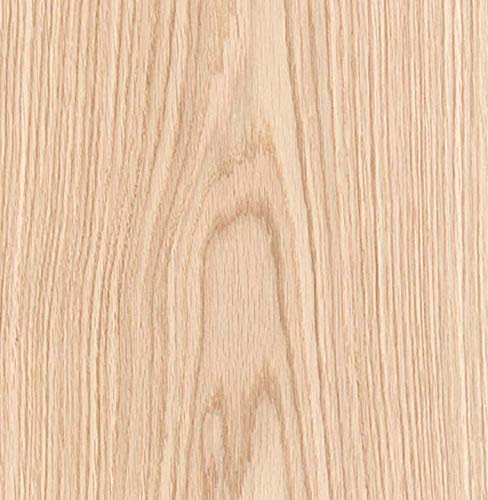
This is not a structural plywood — it’s a 10-mil paper-backed red oak veneer designed for refacing cabinets, tables, and fine furniture. The A-grade face is clean, with a consistent grain pattern that stains beautifully for a seamless match with existing oak cabinetry. The paper backing makes handling easier than raw veneer, preventing the tear-out that happens when you try to bend unsupported wood grain around corners.
Application is straightforward: cut to size with a box cutter, apply contact cement with a roller, and the 4×8 sheet covers a large surface area without seams. Users report excellent results when acclimating the rolled sheet for a day before mounting, then staining after adhesion. The cost per square foot is far lower than buying solid oak panels, making it a budget-friendly solution for large refacing projects.
The biggest risk is quality inconsistency — one user received a second sheet with cracks and splinters, suggesting batch variability. The veneer is thin at 0.024 inches, so any substrate imperfections telegraph through. It is not suitable for high-moisture areas like kitchens or bathrooms unless thoroughly sealed.
Why it’s great
- A-grade red oak face for stain-grade finishes
- Paper backing prevents grain splitting during application
- Cost-effective alternative to solid oak panels
Good to know
- Quality can vary between batches — some units have defects
- Thin veneer; substrate must be perfectly smooth
6. Outwater Unfinished Maple Tambour 4×8 — ¾″ Centers
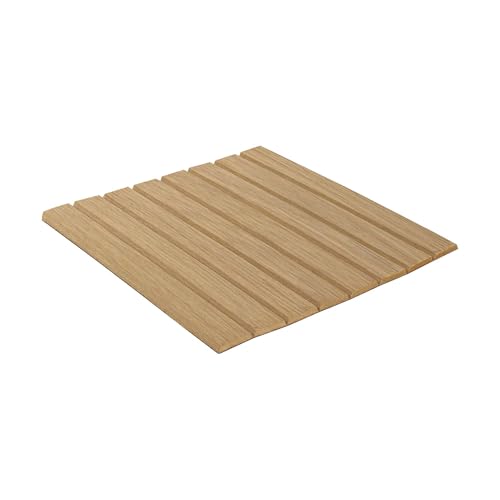
Tambour panels are the secret weapon for wrapping columns, building drum-front drawers, and creating curved backsplashes with a clean, professional look. This Outwater maple veneer tambour uses ¾-inch-wide slats with 30-degree V-grooves and a flexible paper backer that bends to a minimum 3-inch radius. The MDF core slats are stable and hold screws, while the unfinished maple surface accepts stain or paint for a custom match.
Users praise its ease of use: vertical cuts with a utility knife, horizontal cuts with a fine-tooth saw, and adhesion with construction adhesive. One buyer wrapped lally columns in a basement and reported that the tambour took latex paint without issue. The 4×8 format — though it ships as 4 feet tall by 8 feet long — gives enough coverage for most column wraps or a full kitchen backsplash accent wall.
Packaging can be a concern: the panel may arrive creased if the box is compressed during shipping, and it can take weeks to flatten fully. Also, the panel’s 5/32-inch overall thickness is thinner than residential-grade plywood, so it relies on the backing substrate for rigidity.
Why it’s great
- Flexible tambour bends around columns and curves as tight as 3″ radius
- Unfinished maple accepts stain, paint, or clear coat easily
- Simple DIY install with construction adhesive and basic tools
Good to know
- Can arrive creased from shipping; may need time to flatten
- Thin 5/32″ profile requires a solid backing for strength
7. Manton Premium Cork Roll 4×8 x ½″

This is not a plywood, but it competes in the 4×8 panel space as a versatile alternative for bulletin boards, acoustic dampening, and craft projects. The Manton cork roll is ½-inch thick — thick enough to hold push pins securely without hitting the wall behind it — and cut from 100% natural cork with a clean, consistent texture. It covers the full 32 square feet in a single continuous sheet, so there are no seams to align.
The cork rolls flat quickly when unrolled and weighted overnight, and it cuts easily with scissors or a utility knife. Users report excellent results mounting it to plywood backings with spray adhesive or stapling it into frames for large pin boards. The natural cork color works as a neutral backdrop that doesn’t distract from pinned items.
Installation can be tricky because the cork is thin enough to tear if pulled while unrolling, and the edges may not be perfectly square — a framing or trim solution corrects this. It is not a structural panel, so it must be glued to a solid substrate for rigidity. Over time, the cork may indent or crumble with heavy use, but for its price point, it delivers a huge surface area for the money.
Why it’s great
- Thick ½″ natural cork holds push pins securely
- Continuous 4×8 sheet with no seams
- Cuts cleanly with basic hand tools
Good to know
- Requires a rigid backing substrate for installation
- Edges may not be perfectly square; best framed
FAQ
What does B/BB plywood grade mean for a 4×8 sheet?
Can I use a 4×8 polycarbonate sheet as a plywood substitute outdoors?
How should I store a 4×8 plywood sheet before using it?
Final Thoughts: The Verdict
For most users, the 4ft x 8ft plywood winner is the Woodpeckers Baltic Birch 24×48 x ½″ because it balances a void-free cross-laminated core with a B/BB face that stains beautifully, making it the most versatile choice for CNC, laser, cabinetry, and shelving. If you need a hard, moisture-resistant surface for a router table or jig, grab the MakerStock Black Phenolic Baltic Birch. And for wrapping curved walls or columns with a natural wood finish, nothing beats the Outwater Maple Tambour.