
A weak or noisy preamp is the fastest way to ruin a great microphone. Whether you are tracking vocals, recording a podcast, or capturing guitar DI, the preamp stage defines your signal-to-noise floor — and that single spec determines whether your recordings sound professional or thin. Finding the right interface means matching preamp gain, noise performance, and connectivity to your specific workflow.
I’m Min — the co-founder and writer behind Gadgets Feed. I’ve spent countless hours analyzing the specifications, real-world noise figures, and gain staging capabilities of dozens of audio interfaces to separate the units that deliver clean, usable gain from those that force you to buy an external booster.
This guide breaks down the top contenders by preamp performance, connectivity, and studio integration to help you choose the right best audio interface with preamp for your specific recording needs.
How To Choose The Best Audio Interface With Preamp
Every audio interface contains a preamp, but the gap between a budget preamp and a premium one is measured in noise floor, headroom, and usable gain. Here are the critical factors to weigh before you buy.
Gain Range and EIN (Equivalent Input Noise)
The gain range, measured in dB, tells you how much the preamp can boost a weak signal. Dynamic microphones like the Shure SM7B require at least 60 dB of clean gain to reach usable levels without hiss. The EIN rating (expressed as -dBV, like -131.5 dBV) indicates the preamp’s self-noise — a lower number means a quieter noise floor. Interfaces with EIN below -127 dBV are considered very clean.
Phantom Power and 48V Implementation
Condenser microphones require +48V phantom power. Not all interfaces implement this equally — some units provide dirty phantom power that introduces hum or RF interference. A reliable 48V circuit with individual switching per channel lets you use condenser mics without powering a dynamic mic unnecessarily.
Input Count and Instrument Connectivity
The number of combo jacks (XLR + 1/4-inch) determines how many mics and instruments you can record simultaneously. If you record guitar or bass, check for a dedicated Hi-Z instrument input that preserves impedance matching for passive pickups. Some interfaces like the IK Multimedia AXE I/O One include impedance-adapting circuits specifically for guitar tone shaping.
Latency and Direct Monitoring
Round-trip latency (the time between recording and hearing yourself in the headphones) matters for tracking musicians who play in real time. Interfaces with hardware direct monitoring route the input signal straight to the headphone output with near-zero delay, bypassing the computer’s buffer. USB-C bus-powered interfaces typically have 2.5–4 ms of round-trip latency at low buffer sizes.
Quick Comparison
On smaller screens, swipe sideways to see the full table.
| Model | Category | Best For | Key Spec | Amazon |
|---|---|---|---|---|
| Focusrite Vocaster Two | Podcast | Two-person podcasting | 70 dB gain / Bluetooth phone | Amazon |
| IK Multimedia AXE I/O One | Guitar | Guitar tone shaping | Z-Tone impedance circuit | Amazon |
| Universal Audio Volt 2 | Studio | Vintage-style recording | UA 610 tube-emulation mode | Amazon |
| Solid State Logic SSL 2 MKII | Pro | Broadcast and music | Legacy 4K analog enhancement | Amazon |
| MOTU M4 | Studio | Multi-input recording | LCD level metering screen | Amazon |
| Focusrite Scarlett 4i4 4th Gen | Pro | All-purpose studio hub | 120 dB dynamic range | Amazon |
| RØDE RØDECaster Duo | All-in-One | Podcast production suite | -131.5 dBV EIN, 76 dB gain | Amazon |
| Shure MVX2U Gen 2 | Portable | Mobile XLR-to-USB conversion | 60 dB gain / onboard DSP | Amazon |
| MAONO MaonoCaster AME2 | Mixer | Live streaming control | 10-channel / 11 sound pads | Amazon |
In‑Depth Reviews
1. RØDE RØDECaster Duo
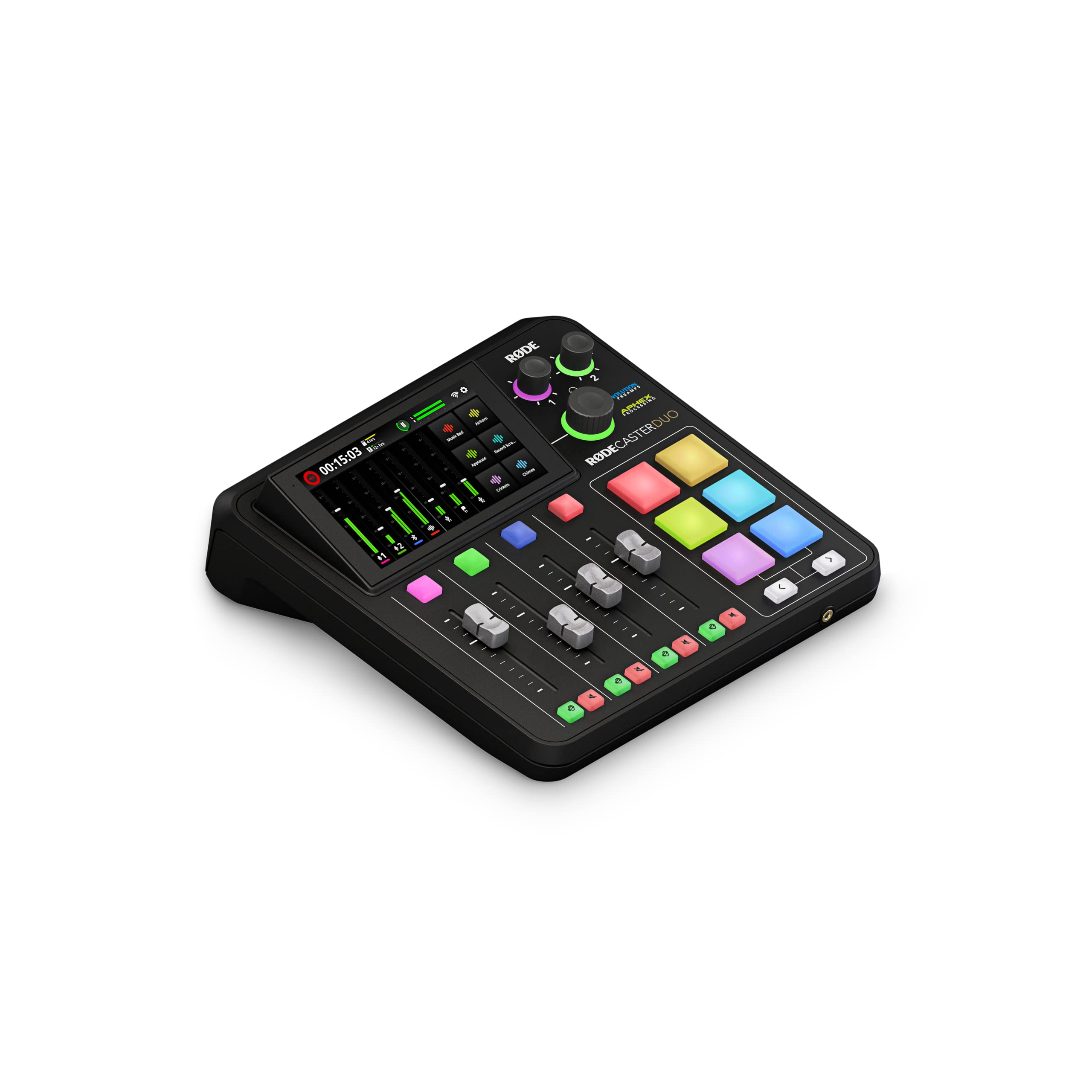
That noise floor is low enough to pair with a ribbon microphone without audible hiss, and the gain ceiling means you can drive a passive dynamic mic like the SM7B to broadcast levels without an inline booster. The four broadcast-grade faders and haptic touchscreen provide tactile control over mixing, while the APHEX processing suite (including Aural Exciter and Big Bottom) adds studio-grade signal shaping on the way in.
Six SMART pads with bank switching allow you to trigger sound effects, jingles, or MIDI commands during live streams or podcast recordings. The unit also includes a 3.5mm TRRS input for a headset, plus Bluetooth connectivity for phone call integration. The all-metal chassis feels built for daily abuse, and the USB-C power supply ensures consistent phantom power delivery without relying on bus power.
The learning curve is real for first-time users, particularly when routing audio to a smartphone or configuring the virtual faders for separate stream and monitor mixes. Some users report requiring a firmware reset out of the box. Once set up, the workflow efficiency is unmatched for content creators who need an all-in-one solution with professional preamps.
Why it’s great
- Industry-leading -131.5 dBV EIN for whisper-quiet preamps
- 76 dB gain handles any dynamic mic without external booster
- Built-in APHEX processing and four faders for live mixing
Good to know
- Setup can be complex for absolute beginners
- Some early units required firmware resets to resolve boot issues
2. Solid State Logic SSL 2 MKII

The SSL 2 MKII brings the legendary console sound to a 2×2 bus-powered interface. The mic preamps are derived from the same topology as SSL’s large-format consoles, delivering a low noise floor with enough headroom to capture transients without distortion. The signature Legacy 4K button engages an analog enhancement circuit that adds high-frequency sheen and subtle harmonic saturation — the same character that made SSL consoles the standard for pop and rock records.
The 32-bit / 192 kHz AD/DA converters provide exceptional dynamic range and clarity, though note that this is not 32-bit float recording — the 32-bit refers to the internal converter resolution. The metal chassis and smooth rotary knobs give it a premium feel, while the built-in high-pass filter on each channel lets you cut rumble and low-end noise before it hits the DAW. Stereo loopback functionality makes it easy to capture computer audio for streaming or podcasting.
Voice-over artists will appreciate the HPF’s ability to eliminate booth rumble instantly, and musicians will love the powerful headphone amp that can drive high-impedance monitoring headphones cleanly. The bundled SSL Production Pack software includes samples, plugins, and DAW essentials. No driver issues on Windows 11 or macOS — it is truly plug-and-play.
Why it’s great
- Legacy 4K button adds genuine analog console character
- Built-in high-pass filters clean up recordings before conversion
- Rock-solid metal build with smooth, weighted knobs
Good to know
- Not 32-bit float recording; can still clip if gain is too high
- Larger and heavier than the Focusrite 2i2
3. Focusrite Scarlett 4i4 4th Gen
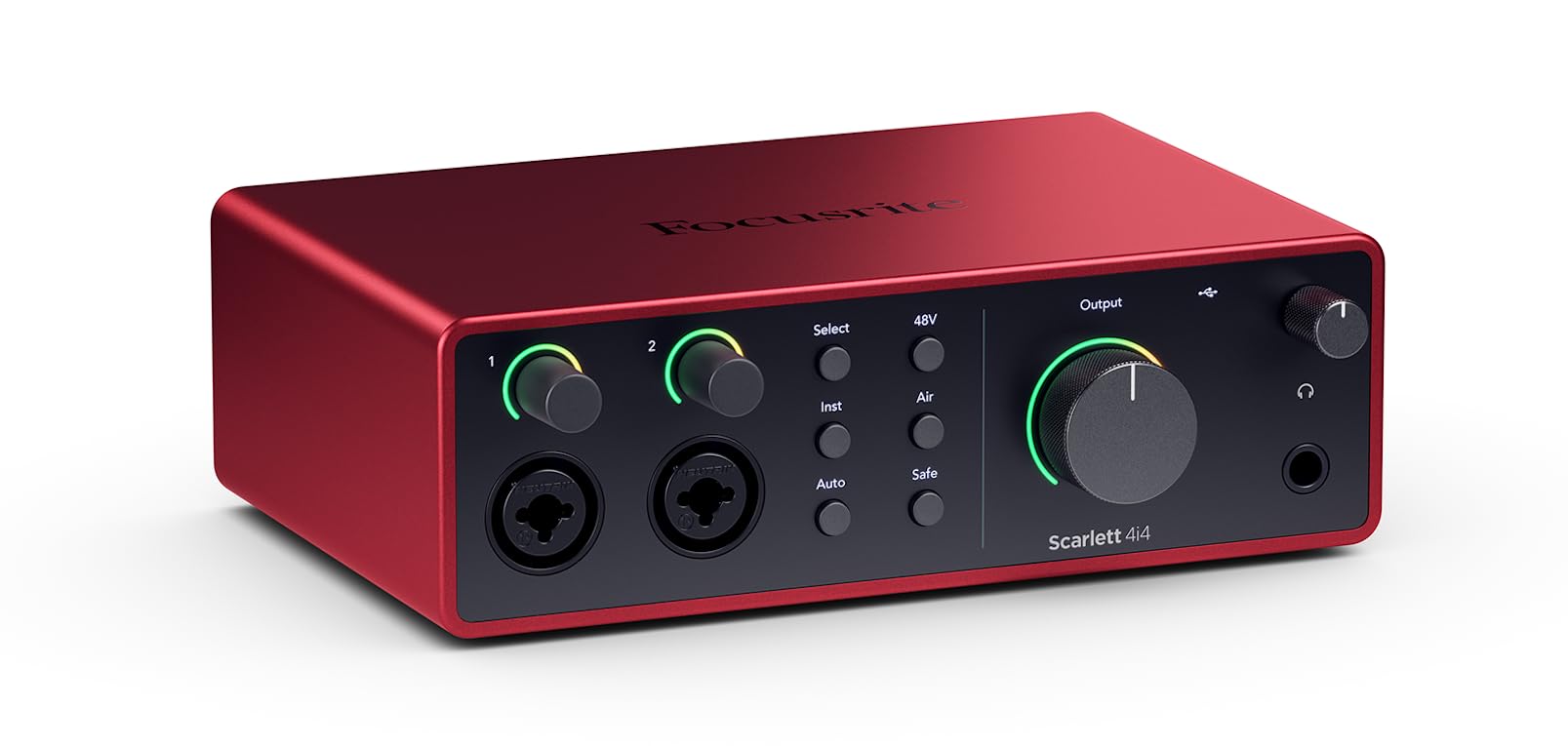
The Scarlett 4i4 4th Gen uses the same converter architecture as Focusrite’s flagship RedNet range, achieving a 120 dB dynamic range that captures the full transient detail of acoustic instruments and vocals. The two mic preamps deliver clean gain with an improved noise floor over previous generations, and the Air mode switch adds a presence boost that lifts vocals and acoustic guitars naturally without harshness.
Auto Gain and Clip Safe are two standout features for recording musicians: Auto Gain sets the input level to an optimal headroom zone with one button press, while Clip Safe continuously monitors the signal and prevents digital clipping if the source suddenly gets louder. This lets you focus on performance rather than gain staging. The four line inputs and four line outputs, plus MIDI I/O, make it a flexible hub for synths and outboard gear.
The bundled software package includes Pro Tools Intro+, Ableton Live Lite, Cubase LE, and the Hitmaker Expansion with effects and virtual instruments. The USB-C bus power works reliably, though using the included external power supply is recommended when using phantom power on both channels. The headphone output can drive medium-impedance headphones but may struggle with 250-ohm or higher models at low volumes.
Why it’s great
- 120 dB dynamic range matches flagship studio converters
- Auto Gain and Clip Safe eliminate gain-staging guesswork
- Four analog outputs and MIDI I/O for synth/sampler setups
Good to know
- Weak headphone amp for high-impedance monitoring headphones
- External power supply required for stable 48V phantom on both channels
4. MOTU M4

The MOTU M4 delivers transparent, uncolored preamps with exceptionally low noise and jitter — a hallmark of MOTU’s pro audio engineering. The two mic preamps provide clean gain up to 60 dB with an EIN rating that competes with interfaces costing significantly more. Each input has its own 48V phantom power switch on the front panel, so you can mix condenser and dynamic mics without power-cycling everything.
The integrated LCD screen shows real-time input and output levels with precision metering, making it easy to dial in gain without guessing. The hardware direct monitoring mixer lets you blend the input signal with the DAW return at near-zero latency, using a physical knob rather than software. The four outputs provide separate monitor mixes, and the dedicated loopback channel simplifies streaming and podcast routing.
Windows driver stability is excellent — MOTU’s ASIO drivers are among the most reliable for low-latency performance, consistently achieving 2.5 ms round-trip latency at 32-sample buffers. The headphone amp is adequate for IEMs but becomes a limitation with high-impedance studio cans when bus-powered. The compact aluminum chassis feels solid without adding much weight to a mobile rig.
Why it’s great
- LCD metering provides precise visual gain staging
- Rock-solid Windows ASIO drivers for ultra-low latency
- Individual 48V switches per channel on the front panel
Good to know
- Headphone amp is weak with high-impedance headphones on bus power
- Volume knobs have a dead zone in the first 25% of rotation
5. Universal Audio Volt 2

The Universal Audio Volt 2 brings the coveted UA 610 tube preamp sound to a bus-powered interface. The Vintage button engages a circuit that emulates the harmonic saturation and gentle compression of the 610 console preamps used on countless classic recordings. This adds warmth and character to vocals, acoustic guitar, and bass DI — a practical alternative to plugin emulation for tracking.
The converters deliver 24-bit / 192 kHz resolution with crystal-clear clarity, and the included LUNA DAW provides an analog-style recording workflow with tape-like summing and built-in effects. The bundled UAD plug-ins include the LA-2A, 1176, and Pultec EQs, though these require UA hardware to run in real time. The metallic chassis has a retro aesthetic with a satisfyingly solid feel.
Setup is straightforward on macOS and Windows, and the Volt 2 works with iPad and iPhone via USB-C with an optional power supply. The headphone output has decent volume for most headphones. The single Vintage button applies to both channels simultaneously, so you cannot color only one mic. The loopback feature is limited compared to dedicated streaming interfaces.
Why it’s great
- Vintage mode adds genuine 610 tube-emulation warmth
- Includes LUNA DAW and classic UAD plugin suite
- Solid build quality with appealing retro design
Good to know
- Vintage button affects both channels simultaneously
- Need external power for reliable iPad/iPhone use
6. IK Multimedia AXE I/O One

The AXE I/O One is designed specifically for guitarists who need a preamp that interacts correctly with magnetic pickups. The Z-Tone impedance-adapting circuit lets you dial in the input impedance, changing how the preamp loads the guitar’s pickups — a lower impedance tames harsh highs, while a higher impedance preserves the full frequency response. The Active/Passive selector ensures the preamp matches the pickup type for optimal signal transfer.
The XLR mic preamp delivers clean, quiet gain for vocal recording, though the real strength is the instrument input path. The bundled AmpliTube 5 SE and TONEX SE provide access to over 16,000 guitar tones and the ability to capture your own amp profiles. Ableton Live Lite is also included. The plastic housing is lighter than metal alternatives but actually reduces electrical interference compared to conductive metal chassis.
Setup requires registering through IK Multimedia’s portal and installing multiple software components, which can be time-consuming. The single-input format limits you to one mic or one instrument at a time, making it less suitable for podcasting or dual-mic recording. The Z-Tone knob has limited effect with active pickups that have their own buffered output.
Why it’s great
- Z-Tone impedance control shapes guitar tone at the input stage
- Active/Passive switch optimizes for any pickup type
- Huge software bundle with AmpliTube and TONEX
Good to know
- Single input limits simultaneous mic and instrument recording
- Multiple registration steps and installers required for software
7. Focusrite Vocaster Two

The Vocaster Two is Focusrite’s podcast-focused interface that packs 70 dB of mic preamp gain — enough to drive an SM7B to broadcast levels without an inline preamp. The Auto Gain feature sets the input level automatically by analyzing your speaking voice and adjusting gain accordingly. The Enhance button applies one of four podcaster-optimized presets that compress, EQ, and gate the signal for a polished sound without manual processing.
Two headphone outputs with independent Show Mix controls let both the host and guest hear separate monitor blends of the mics and computer audio. Bluetooth connectivity pairs with a smartphone to bring phone calls into the recording cleanly, and the camera output sends broadcast-quality audio to a DSLR or mirrorless camera for video recording. The plastic chassis is lightweight and portable, and the USB-C connection is bus-powered for mobile use with iPads.
The headphone jacks are angled on the front face, which can be awkward with thicker headphone cables. The 48V phantom power resets to off when the unit loses power, so you need to re-engage it for condenser mics after each startup. Some users reported the included USB cable was defective, so having a spare is wise.
Why it’s great
- 70 dB of clean gain handles demanding dynamic mics
- Bluetooth phone integration for call-in podcast recording
- Enhance presets deliver polished vocal sound instantly
Good to know
- 48V phantom power resets to off after power loss
- Front-angled headphone jacks can be inconvenient with thick cables
8. Shure MVX2U Gen 2
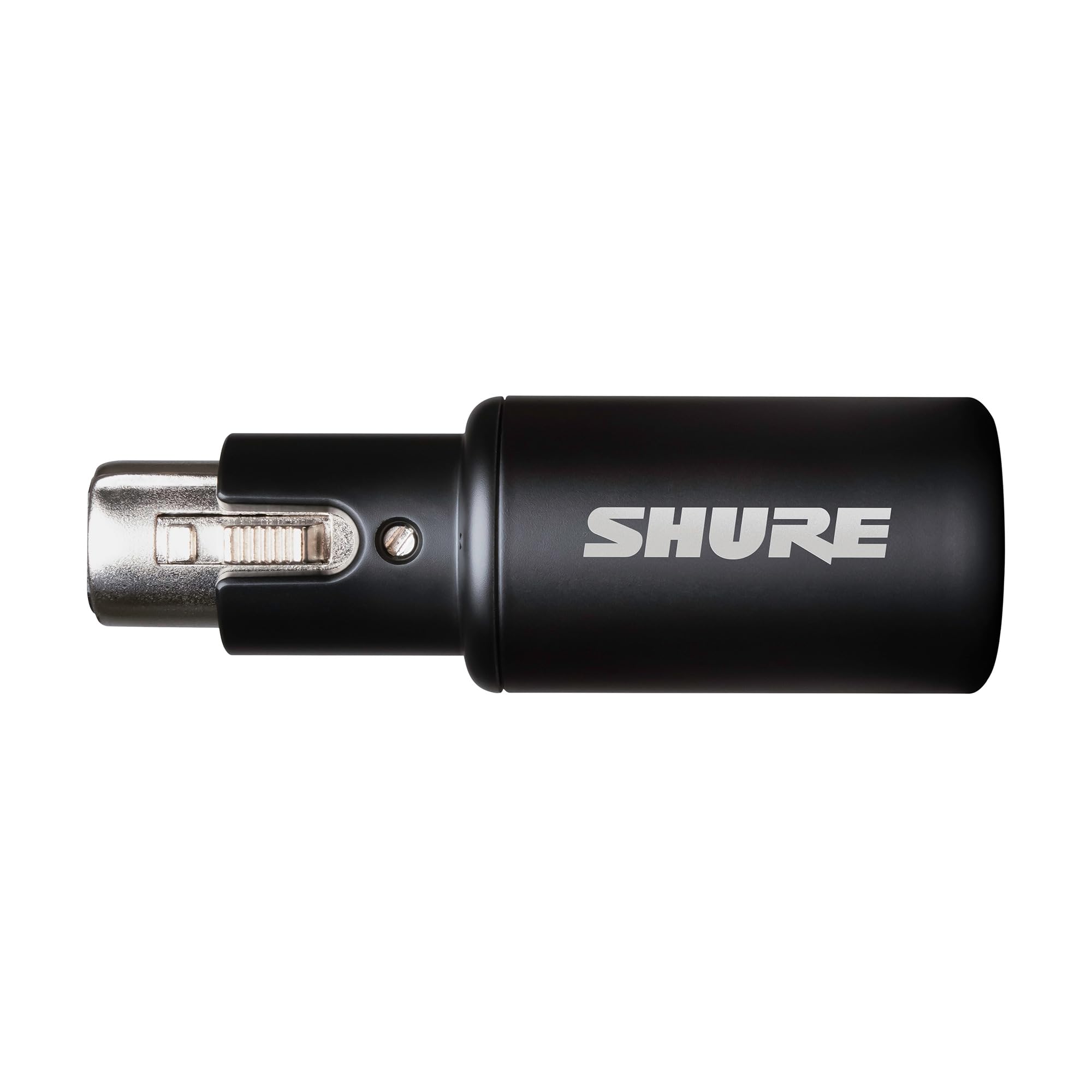
The Shure MVX2U Gen 2 is a compact XLR-to-USB-C interface that fits in the palm of your hand, designed to convert any XLR microphone into a plug-and-play USB device. The preamp delivers up to 60 dB of clean gain with 48V phantom power, meaning you can use condenser or dynamic mics without any external power supply — the MVX2U draws power directly from the USB-C host device.
The onboard DSP includes Auto Level Mode, Real-Time Denoiser, and Digital Popper Stopper, all processed with zero latency before the signal hits the device. Auto Level Mode dynamically adjusts gain as your voice gets louder or quieter, eliminating the need to touch the gain knob mid-session. The MOTIV app lets you tweak tone presets (Dark, Natural, Bright), EQ, compression, and limiter settings from your phone or computer.
Plug-and-play compatibility with iPhone, iPad, Android, Mac, and Windows makes it the most portable solution for field recording or mobile streaming. The settings save to the device itself, so your configuration persists even when not connected to the app. At 100 grams, it adds negligible weight to a mobile recording kit. The TRRS output for headsets is a nice touch for gaming or conferencing, but the single input means you cannot record two microphones simultaneously.
Why it’s great
- Ultra-compact XLR-to-USB conversion with 60 dB transparent gain
- Onboard DSP with Auto Level, Denoiser, and Popper Stopper
- Settings persist on device; works without app after configuration
Good to know
- Single XLR input — cannot record two microphones
- Heavier than it looks due to dense internal shielding
9. MAONO MaonoCaster AME2

The MaonoCaster AME2 is a 10-channel podcast mixer that aims to pack professional broadcast features into a budget-friendly package. The built-in preamp provides up to 60 dB of gain with 48V phantom power, so you can use either dynamic or condenser XLR microphones. The 32-bit chipset and Denoise function help clean up the signal, though the preamp noise floor is higher than dedicated studio interfaces — fine for live streaming where some noise is masked by the final broadcast.
The 11 customizable sound pads let you trigger audio clips, jingles, and sound effects with one press. Three of the pads can record up to 60 seconds of looping audio, and the remaining eight support 20-second clips. The six reverb modes, 12-step auto-tune, and adjustable EQ per input give you creative control that streamers and TikTok creators will find immediately useful. The 6.35mm instrument input allows direct guitar or bass recording without a separate DI box.
Connectivity is generous for the price: USB-C to computer, live outputs to a smartphone, AUX input for external devices, and monitor output for studio speakers. The unit supports simultaneous recording to two devices, which is rare at this level. Build quality is acceptable for desktop use, but some units have reported USB-C port failure after extended light use, and the headphone monitor mix does not always match the final stream audio. Consider this a capable starter board for streamers, not a long-term studio investment.
Why it’s great
- 10-channel mixing with 11 customizable sound pads
- Built-in reverb, auto-tune, and EQ per input
- Allows recording to PC and smartphone simultaneously
Good to know
- Preamp noise floor is higher than dedicated audio interfaces
- Some units reported USB-C port failure after 6-12 months
FAQ
Do I need an external preamp if my interface has 60 dB of gain?
What does the EIN rating mean for my recordings?
Is bus-powered phantom power reliable for condenser microphones?
Does the headphone amp matter for monitoring while recording?
Final Thoughts: The Verdict
For most users, the best audio interface with preamp winner is the RØDE RØDECaster Duo because its Revolution Preamps deliver -131.5 dBV EIN and 76 dB of gain, handling any dynamic microphone without extra hardware. If you want classic analog character for music recording, grab the Solid State Logic SSL 2 MKII. And for portable field recording where size matters, nothing beats the Shure MVX2U Gen 2.