
Reupholstering a car seat, headliner, or center console demands a material that resists UV rays, constant friction, and temperature swings without cracking or peeling. Automotive upholstery leather, whether synthetic or genuine, must balance flexibility for wrapping curves with a surface layer that holds up against daily ingress and egress.
I’m Min — the co-founder and writer behind Gadgets Feed. I’ve dissected dozens of leather and vinyl listings, analyzing thickness, adhesive backing, grain patterns, and real user feedback to separate materials built for the cabin from those destined to fail.
This guide nails down the very best options across thicknesses, textures, and price tiers so you can confidently choose the best automotive upholstery leather for your next restoration or customization project.
How To Choose The Best Automotive Upholstery Leather
Selecting the right material for your car’s interior involves weighing thickness, texture, backing, and UV resistance. Here are the three specs that separate a professional-grade finish from a sagging, peeling mess.
Thickness and Drape
Thickness dictates how the material wraps compound curves without puckering. Materials between 0.8 mm and 1.2 mm are pliable enough for seat bolsters and door cards. Anything thicker than 1.3 mm may require heat to mold around sharp corners, while paper-thin options lack the structural integrity for friction-heavy seating areas.
Material Composition
Three main types dominate automotive use: standard faux leather (PU) offers a soft hand at a moderate cost; marine-grade vinyl (PVC with polyester knit backing) adds UV and moisture resistance essential for convertibles and boats; natural grain cowhide provides unmatched breathability and patina but demands careful cleaning and conditioning. Each suits a different part of the vehicle.
Surface Finish and Grain
Smooth finishes look uniform but show wear more readily, while distressed or crazy horse textures hide scuffs and age gracefully. A suede or alcantara-style surface adds a sporty, non-reflective finish for dashboards and headliners, but traps dust more easily. Choose based on how much daily abrasion the panel will face.
Quick Comparison
On smaller screens, swipe sideways to see the full table.
| Model | Category | Best For | Key Spec | Amazon |
|---|---|---|---|---|
| Marine Vinyl Fabric (Maroon) | Premium Vinyl | Outdoor & marine-grade durability | UV-resistant, 100% PVC face | Amazon |
| SARANDAVE Faux Leather (Tan) | Premium Faux Leather | Large upholstery projects | 5-yard roll, 54″ wide, thick | Amazon |
| The Tannery NYC Cowhide (Black) | Genuine Leather | Authentic grain & patina | 1.1–1.3 mm thick, full-grain | Amazon |
| Yoquare Crazy Horse (Light Brown) | Mid-Range Faux Leather | Buttery soft upholstery | 1 mm thick, 118″ x 54″ | Amazon |
| Bobeey Crazy Horse (Dark Brown) | Mid-Range Faux Leather | Pliable distressed finish | 1.2 mm thick, pliable | Amazon |
| AOOTOOLINK Faux Leather (Black) | Entry-Level Faux Leather | Budget-friendly versatility | 0.8 mm thick, waterproof | Amazon |
| Y.A. LOTUS Suede Look (Black) | Entry-Level Self-Adhesive | Trim wrap & headliner repair | Self-adhesive, elastic | Amazon |
In-Depth Reviews
1. Marine Vinyl Fabric (Maroon)
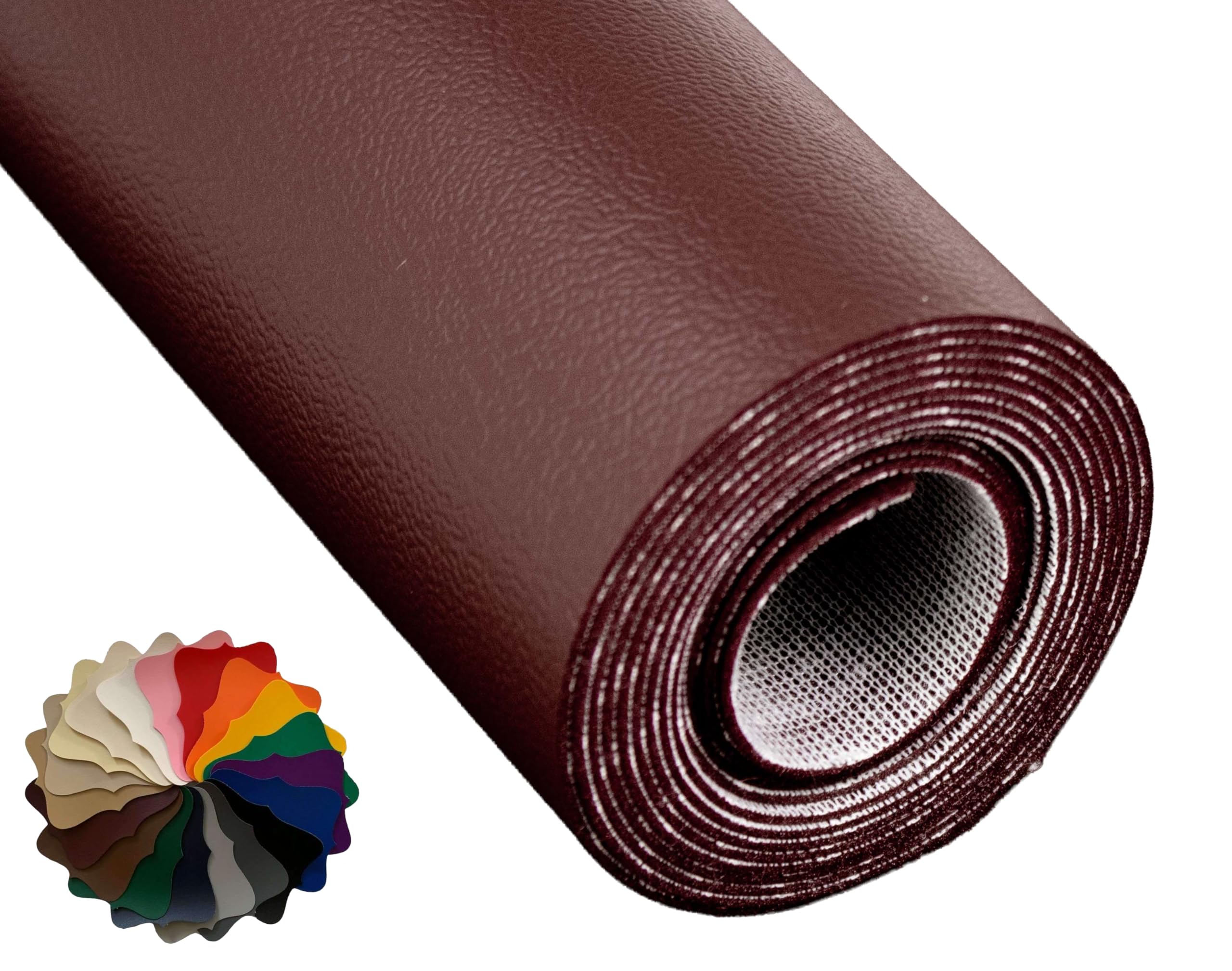
This marine-grade vinyl features a 100% PVC face with a 100% polyester knit backing, delivering a thickness that feels substantial without being stiff. The UV-resistant formulation means it won’t crack or fade under prolonged sun exposure, making it ideal for convertible interiors or any cabin with heavy glass area. At a 54-inch width with multiple yardage options, large surface jobs like full rear seats or door panels are manageable with minimal seams.
The material cuts cleanly with scissors or a utility knife and staples or glues down without puckering. Customers consistently note it handles splashes, spills, and constant marine use without peeling — the same durability translates directly to automotive seating. The leather-like finish is smooth to the touch but textured enough to prevent excessive sliding during driving.
Small cuts may ship folded, but the creases relax after a short exposure to heat or sunlight. For anyone wanting a material that bridges automotive and marine environments with proven longevity, this vinyl is the standout choice for long-term performance.
Why it’s great
- UV and water resistance built into the PVC/polyester construction
- Flexible enough for tight curves yet tough against abrasion
Good to know
- Smaller yardage ships folded, requiring heat to remove crease lines
2. SARANDAVE Faux Leather Fabric (Tan)
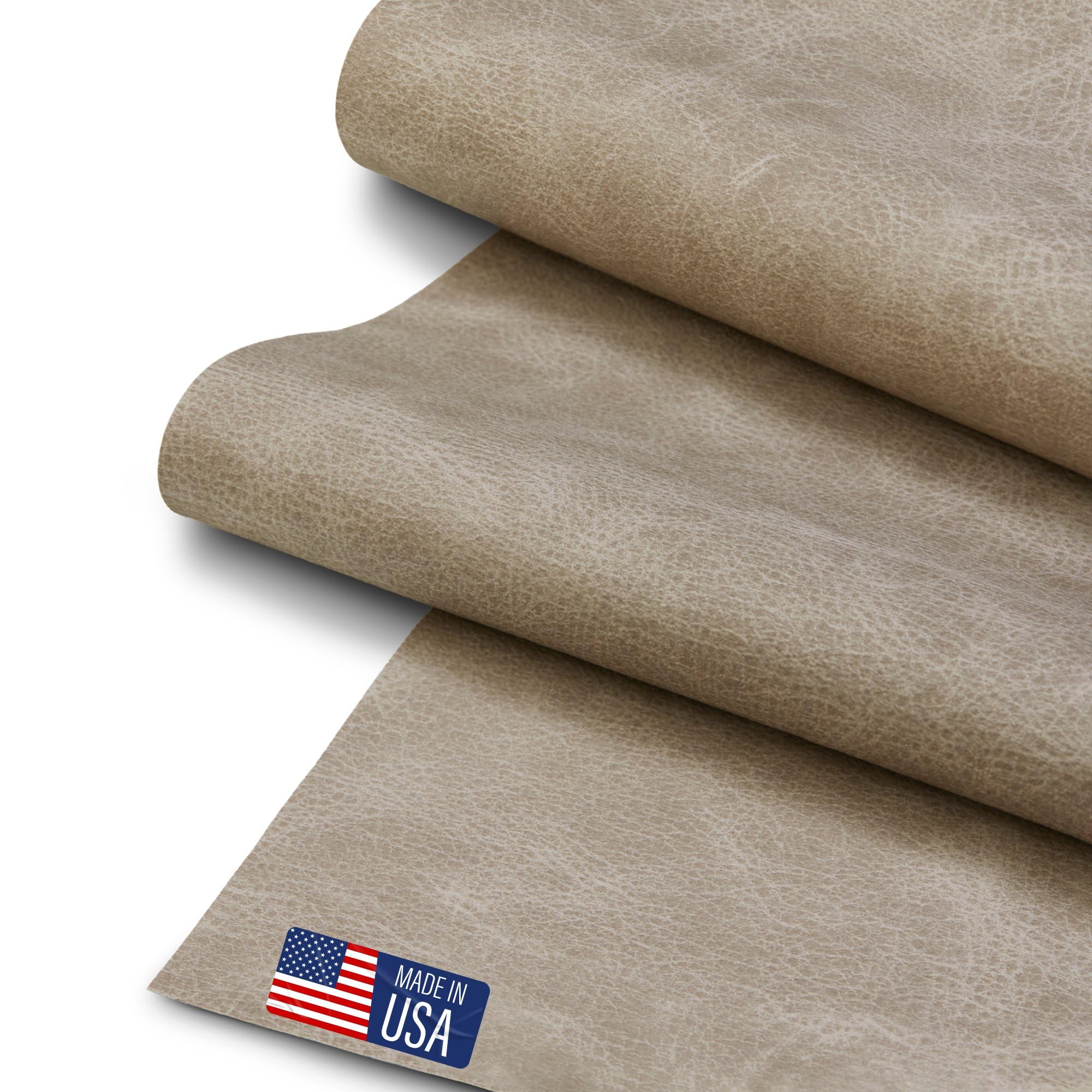
Sold in a five-yard roll at 54-inch width, this thick vinyl synthetic leather gives you a continuous expanse of material without join lines — crucial for bench seats or one-piece headliners. At roughly 1.0 mm of thickness, it strikes a sweet spot between pliability for stapling and enough body to hold shape over foam padding. Users report the tan color is rich and consistent across the roll, with no odd dye variation.
The material has decent stretch, which helps when wrapping chair backs and seat bolsters. One review notes a semi-permanent crease from shipping that relaxes over time, but the thickness prevents unsightly ripples after installation. It handles heat well if you need to use an iron (with a protective sheet) for custom embossing or patches.
This is also a top pick for DIYers who value odor control — multiple customers highlight the absence of chemical smells common with cheaper rolls. For a large-scale seat reupholstery job where seam mismatches are unacceptable, the roll format delivers professional-grade results without requiring expensive bulk contracts.
Why it’s great
- 5-yard continuous roll reduces seams on large seating surfaces
- Thick construction holds shape and resists tearing during stapling
Good to know
- Crease from folding may need heat or sunlight to fully relax
3. The Tannery NYC Premium Cowhide (Black)
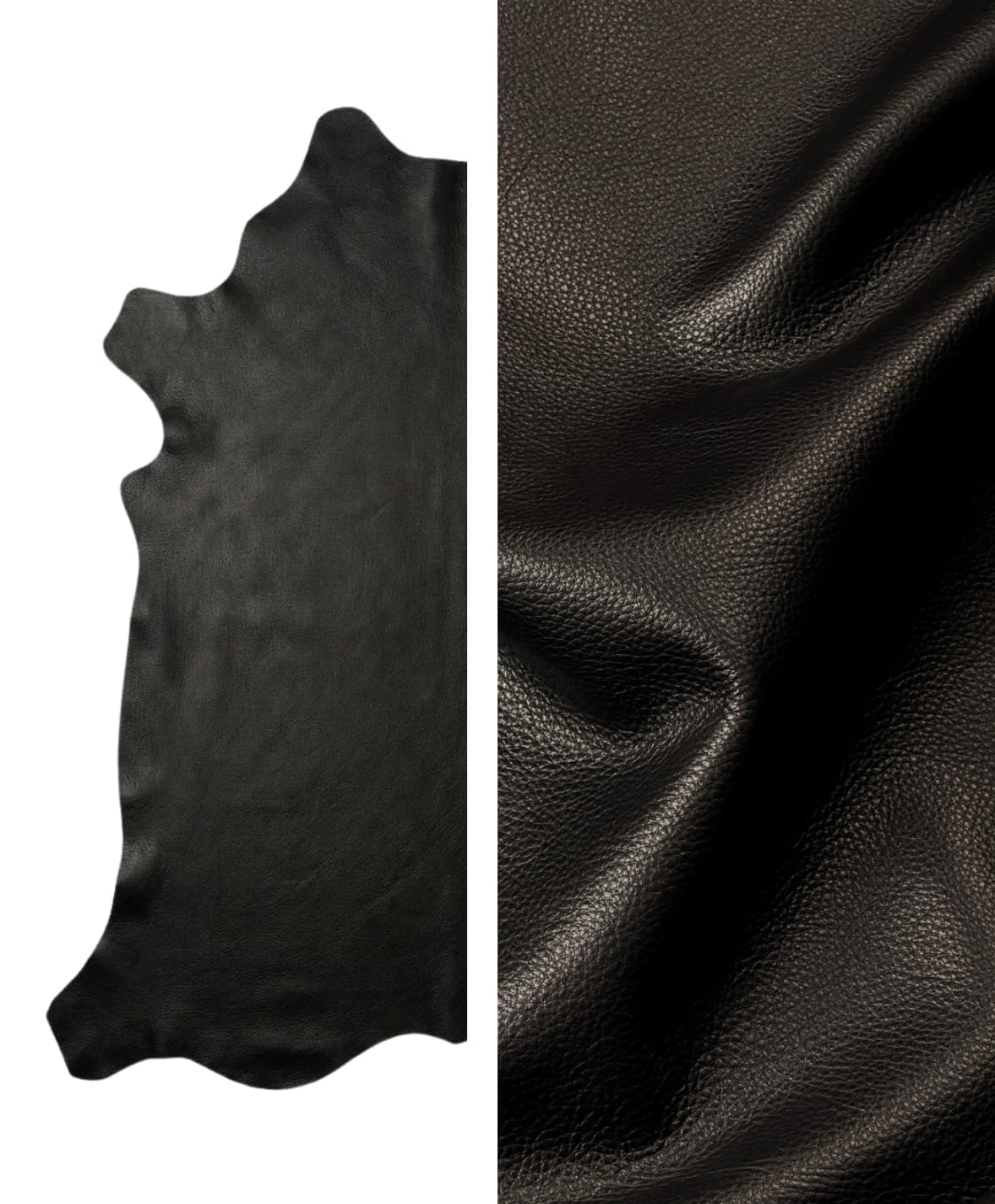
This is genuine full-grain cowhide, not embossed or split leather, with a thickness of 1.1 to 1.3 mm — the ideal range for automotive panels that need natural breathability and a soft drape. The 20-square-foot full side offers enough material for a pair of bucket seats, a rear bench, or a combination of door card inserts. The finish is a natural grain that develops patina over time, unlike synthetic materials that peel.
The consistent color and smooth surface make it suitable for patching existing leather interiors where an exact grain match is critical. One customer matched the black hide perfectly to a sofa cushion; the same principle applies to matching a worn factory leather seat. Because it is real cowhide, slight natural variations, brand marks, or small holes are possible — this is a sign of authenticity, not a flaw.
Being finished in the USA means the tanning process uses consistent quality controls. The leather is soft enough to hand-sew and flexible enough to wrap moderate curves, though heat molding is recommended for sharp automotive edges. For anyone wanting the smell, feel, and longevity of real skin rather than vinyl, this is the definitive choice.
Why it’s great
- Full-grain cowhide with natural grain that ages beautifully
- 20 sq ft provides enough for full seats or interior patching
Good to know
- Natural hides may contain brand marks or small holes
4. Yoquare Crazy Horse Faux Leather (Light Brown)
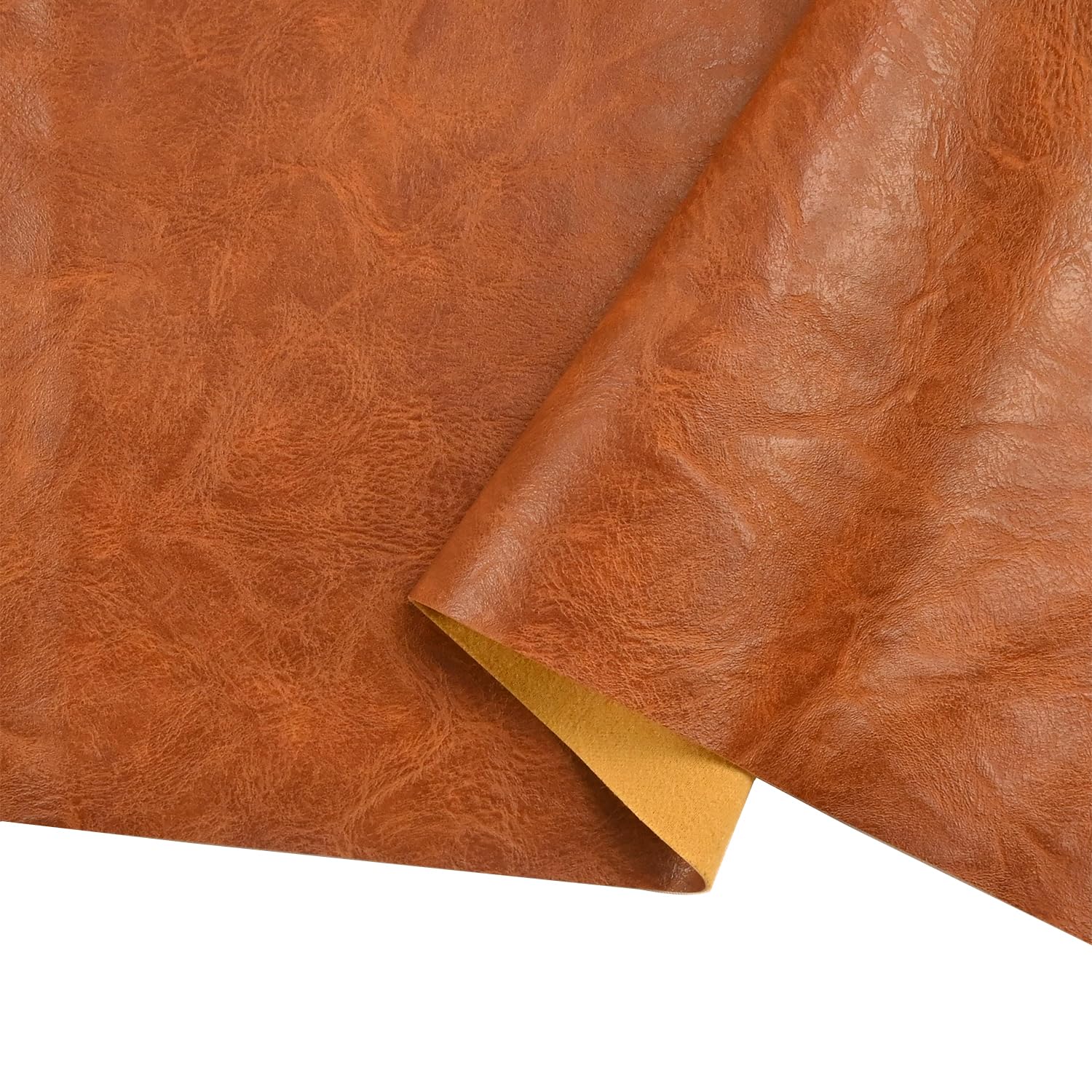
With a 1 mm thickness and a crazy horse distress texture, this faux leather feels buttery soft straight out of the package — comparable to high-end upholstery leather in hand feel. The large dimensions (118 inches by 54 inches) give you nearly 10 feet of continuous material, which is enough for a full headliner, a bench seat cover, or multiple trim pieces without wasteful cuts.
DIY users report it stretches nicely over curved surfaces like headboards and center console wraps. The material cleans with a simple spot wipe, making it practical for a daily driver that sees coffee spills and dirt. One caveat is that it arrives folded in the box, and the creases can be stubborn — users recommend steaming or ironing with a cloth barrier to restore a flat surface before installation.
The light brown color works well with tan and beige interiors, offering a soft, vintage-inspired look that contrasts with modern dark cabins. For a first-timer tackling a large upholstery project, the forgiving flexibility and generous cut make this the most user-friendly option in the mid-range tier.
Why it’s great
- Buttery soft hand that mimics high-end leather at a mid-range cost
- Generous 118-inch length reduces seam requirements on long panels
Good to know
- Arrives folded; creases require careful steaming to remove
5. Bobeey Crazy Horse Faux Leather (Dark Brown)

At 1.2 mm thick, this distressed faux leather falls on the heavier side of the synthetic spectrum, offering extra durability for high-friction areas like seat bottoms and armrests. The dark brown crazy horse finish hides scuffs and scratches that would show on a smooth surface, making it a practical choice for truck and SUV interiors that see dirt and heavy use.
The fabric back — a fuzzy pile weave — gives it a soft hand and helps with grip when wrapping foam, reducing the need for heavy adhesive layers. Customers have used it for motorbike seat covers, dining chair reupholstery, and automotive seat repairs, noting it cuts cleanly with scissors and sews without fraying. The 54-inch by 72-inch cut (2 yards) is ideal for a single bench seat or two front bucket covers.
One review highlights how the material transformed a vintage step stool, indicating it works well on older vehicles where the original leather has cracked beyond repair. The only downside is that it is not machine washable — spot cleaning is required. For a rugged, vintage-leather look that holds up to abrasive use, this is the smart mid-range pick.
Why it’s great
- 1.2 mm thickness adds abrasion resistance for heavy-use seats
- Crazy horse finish masks daily scuffs and wear marks
Good to know
- Spot clean only — do not machine wash
6. AOOTOOLINK Faux Leather Fabric (Black)

This 0.8 mm thick faux leather is the thinnest entry in the lineup, but don’t let the number fool you — the waterproof coating and scratch-resistant surface layer make it a surprisingly capable option for non-wear surfaces like door cards, glove boxes, or center console wraps. The 54-inch by 72-inch cut gives 2 yards of material, enough for several small to medium interior sections.
The fabric cuts easily with scissors and can be sewn by hand or machine, with needle marks that tend to self-heal due to the vinyl composition. Customers report using it successfully on boat seat covers, poker table tops, and cat trees, indicating it holds up surprisingly well under moderate friction. The lack of pungent odor is also a common praise point, which matters for an enclosed cabin environment.
For someone on a strict budget who wants a clean, modern black leather look in their vehicle without the commitment of thicker materials, this is the gateway option. It won’t survive heavy daily abuse on a driver’s seat bottom, but for low-wear panels or as a temporary refresh, it offers strong bang for the buck.
Why it’s great
- Waterproof coating simplifies cleaning in high-spill areas
- Budget-friendly entry point for small automotive interior projects
Good to know
- 0.8 mm thickness is not suited for heavy-wear seat surfaces
7. Y.A. LOTUS Suede Look Fabric (Black)
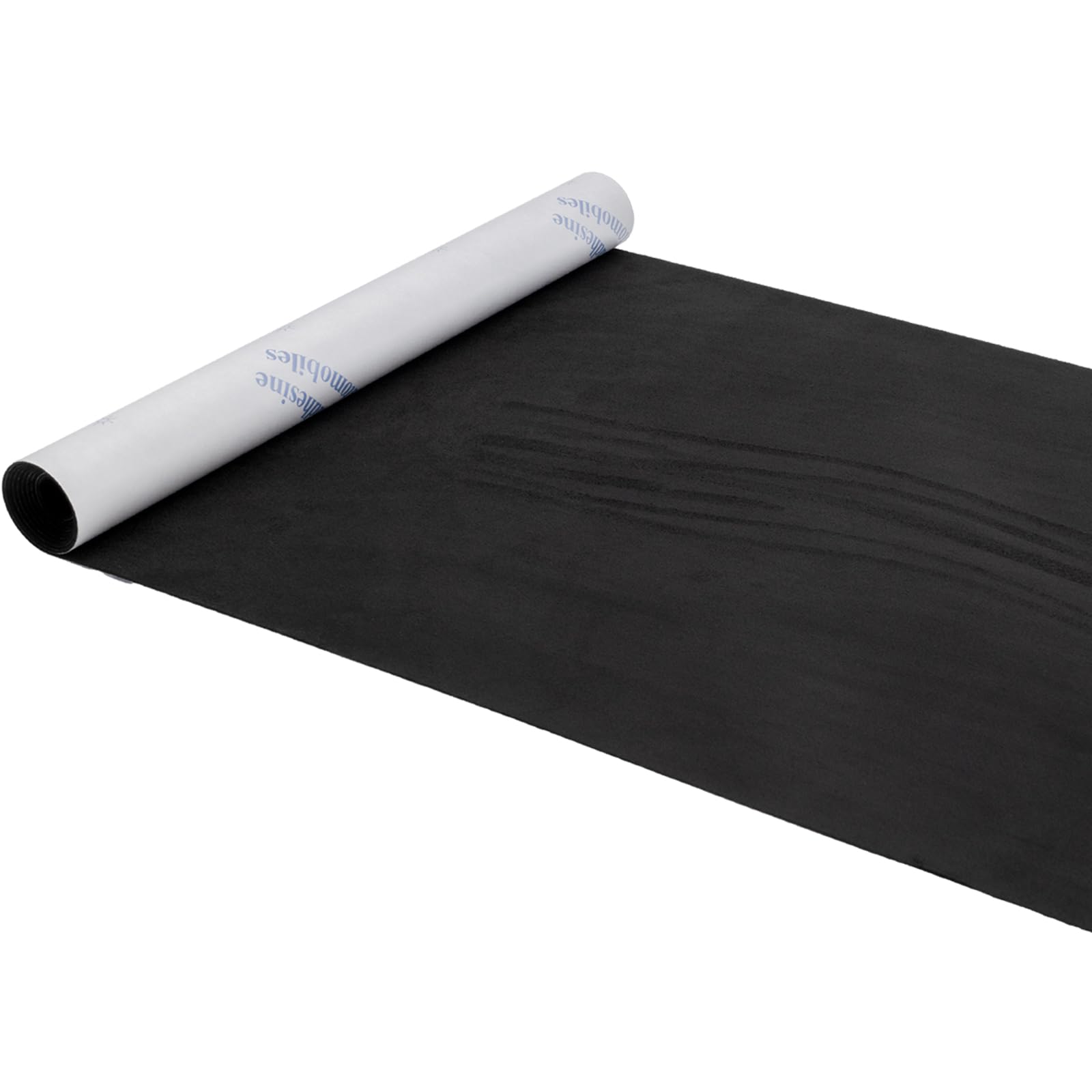
This self-adhesive microfiber fabric mimics a suede or alcantara finish and is specifically designed for trim wraps, headliners, and center consoles. The elastic stretch allows it to conform to complex shapes like dashboard curves and door handles, eliminating the need for separate adhesive sprays. The 39.37-inch by 78.74-inch sheet covers a standard headliner or multiple trim strips.
The adhesive is strong — customers warn it is very sticky and can be difficult to reposition, so careful cutting and placement are critical. Once applied, the material holds up well against daily contact, with the suede texture adding a sporty, non-reflective finish that reduces glare on dashboards. The black color blends seamlessly with factory dark interiors.
One user successfully replaced a 1997 Jeep Grand Cherokee headliner with this fabric, noting it required practice but delivered fantastic results. The main trade-off is that the adhesive is permanent once fully pressed, so mistakes cannot be easily undone. For a quick, no-sew upgrade to a worn interior surface, this elastic suede fabric is a time-saving specialist.
Why it’s great
- Self-adhesive backing eliminates the need for separate glue or spray
- Elastic stretch fabric wraps compound curves without wrinkling
Good to know
- Very sticky adhesive makes repositioning nearly impossible once pressed
FAQ
Can I use regular vinyl fabric for car seats or does it need to be marine grade?
How do I remove creases from folded faux leather before installation?
Is genuine cowhide leather better than synthetic faux leather for car interiors?
Final Thoughts: The Verdict
For most users, the best automotive upholstery leather winner is the Marine Vinyl Fabric because it balances UV resistance, waterproofing, and a realistic leather-like finish that holds up in both marine and automotive conditions. If you want a soft, buttery hand that mimics high-end leather, grab the Yoquare Crazy Horse Faux Leather. And for authentic full-grain patina and breathability, nothing beats the The Tannery NYC Premium Cowhide.