
Screen tearing is the single most distracting artifact in PC gaming—it breaks immersion the moment a horizontal split appears across your view during a fast flick in an FPS or a sweeping camera pan in an open-world title. Adaptive sync technology eliminates that tear line by making your monitor’s refresh rate dance in perfect lockstep with your GPU’s frame output, whether you’re running at 45 fps or 240 fps. Choosing the right monitor for this job means understanding the interplay between panel type, refresh rate ceiling, and VRR (Variable Refresh Rate) certification.
I’m Min — the co-founder and writer behind Gadgets Feed. I spend my time combing through the technical specifications of dozens of gaming monitors, cross-referencing FreeSync and G-Sync tiers with real-world latency and overdrive performance to find the models that actually deliver on their VRR promises.
Every spec in this guide was checked for its impact on tear-free gameplay, from response time consistency to LFC support. After hours of research and analysis, I’m confident these represent the best adaptive sync monitors you can buy right now.
How To Choose The Best Adaptive Sync Monitors
Adaptive sync is not a single checkbox feature—it is an ecosystem that depends on your GPU brand, the monitor’s VRR range, and whether the display supports Low Framerate Compensation (LFC). Matching these variables correctly ensures you get a stutter-free experience without overspending on capabilities your hardware cannot use.
FreeSync vs. G-Sync vs. G-Sync Compatible
FreeSync is an open standard that works over DisplayPort and HDMI with AMD GPUs. G-Sync uses a proprietary module from Nvidia and is the most strict certification. G-Sync Compatible is an intermediate tier: Nvidia tests standard FreeSync monitors and certifies them for tear-free operation with GeForce cards. A FreeSync monitor without certification may still work, but G-Sync Compatible guarantees the VRR implementation is clean across the entire refresh range.
VRR Range and LFC
The VRR range defines the lowest and highest frame rates where adaptive sync stays active. A wide range—like 48–240 Hz—is ideal because it keeps tearing away even during demanding scenes. Low Framerate Compensation (LFC) is a critical feature that kicks in when your fps drops below the minimum VRR threshold; it multiplies the refresh rate to maintain smoothness. LFC is standard on FreeSync Premium and Premium Pro monitors and on all G-Sync modules.
Panel Type and Overdrive
IPS panels generally deliver the best overdrive behavior across their VRR range, meaning response time stays consistent as refresh rate changes. VA panels can show dark-level smearing during low-fps scenes even with adaptive sync on, though high-end Mini-LED VA models have closed the gap. OLED panels offer near-instant response times, making them the ultimate VRR companions—but they require burn-in mitigation software to maintain reliability over years of use.
Quick Comparison
On smaller screens, swipe sideways to see the full table.
| Model | Category | Best For | Key Spec | Amazon |
|---|---|---|---|---|
| ASUS ROG Swift PG32UCDM | Premium | Ultimate 4K OLED VRR | 240Hz / 0.03ms / G-Sync Compatible | Amazon |
| MSI MAG 321UPX | Premium | QD-OLED HDR Gaming | 240Hz / 0.03ms / FreeSync Premium | Amazon |
| ASUS ROG Strix XG32UCG | Premium | Dual Mode 4K/FHD Switching | 4K 160Hz / FHD 320Hz / G-Sync Compatible | Amazon |
| LG 27GR83Q-B | Mid-Range | QHD 240Hz Competitive Gaming | 240Hz / 1ms IPS / G-Sync Compatible | Amazon |
| Samsung Odyssey G4 25″ | Mid-Range | 1080p 240Hz Esports | 240Hz / 1ms IPS / G-Sync + FreeSync Premium | Amazon |
| Alienware AW2725DM | Mid-Range | G-Sync + FreeSync Dual Support | 180Hz / 1ms IPS / G-Sync + FreeSync | Amazon |
| AOC Q27G3XMN | Mid-Range | Mini-LED HDR Value | 180Hz / 1ms VA / FreeSync | Amazon |
| Z-Edge 27″ 4K | Budget | Entry-Level 4K 160Hz | 160Hz / 1ms IPS / FreeSync | Amazon |
| Dell S2725QS | Budget | 4K Productivity & Casual Gaming | 120Hz / 0.03ms IPS / FreeSync Premium | Amazon |
In‑Depth Reviews
1. ASUS ROG Swift PG32UCDM

The ASUS ROG Swift PG32UCDM pairs a 32-inch QD-OLED panel with a 240 Hz refresh rate and G-Sync Compatible certification, making it the most polished adaptive sync experience in this roundup. The 0.03 ms GtG response time is effectively instantaneous—there is zero perceivable motion blur or overshoot across the entire VRR range. VESA DisplayHDR 400 True Black compliance and 99% DCI-P3 coverage mean the image quality matches the responsiveness.
ASUS added a custom heatsink, graphene film, and advanced airflow design to manage heat and reduce burn-in risk—a legitimate concern for OLED panels used in mixed work/gaming setups. The included DisplayWidget Center software lets you access OLED Care functions and adjust settings with a mouse. A 90W USB-C port with DP Alt mode simplifies single-cable laptop connectivity, while HDMI 2.1 supports full 4K 240 Hz from consoles.
User reports highlight the monitor’s outstanding HDR and Dolby Vision performance, though some note the software can be buggy during initial setup and the stand consumes significant desk space. The 3-year warranty with burn-in coverage provides peace of mind. For buyers who want the absolute best VRR experience with no compromises on color or contrast, the PG32UCDM is the clear champion.
Why it’s great
- Instant 0.03ms GtG response ensures perfect VRR tracking.
- Custom heatsink and graphene film reduce OLED burn-in risk significantly.
- 90W USB-C DP Alt mode for clean single-cable setups.
Good to know
- Software can be buggy; firmware updates may be required.
- Large stand footprint—plan desk space accordingly.
2. MSI MAG 321UPX

The MSI MAG 321UPX brings 3rd-generation QD-OLED technology to the table with a 32-inch 4K panel running at 240 Hz and 0.03 ms GtG response. The FreeSync Premium certification ensures a wide VRR range (typically 48–240 Hz) with LFC support, so the monitor stays buttery smooth even when frame rates dip below the minimum VRR threshold. VESA DisplayHDR True Black 400 delivers inky blacks and bright highlights that make HDR content genuinely pop.
MSI includes its OLED Care 2.0 suite—pixel shift, panel protect, and static screen detection—to proactively reduce burn-in risk during long gaming sessions. The monitor also supports HDMI 2.1 at full 48 Gbps bandwidth, making it a perfect companion for PS5 or Xbox Series X at 4K 120 Hz with VRR. The adjustable stand offers tilt, swivel, and height adjustment for comfortable ergonomics.
User feedback consistently praises the “breathtaking” color accuracy and contrast that rivals much more expensive displays. However, the mandatory OLED Care pop-up that forces a 10-minute refresh cycle during gameplay has frustrated some users. Text clarity is slightly softer than a comparable LCD, but for immersive gaming and media, the MAG 321UPX delivers unmatched VRR performance at a mid-premium price point.
Why it’s great
- Full HDMI 2.1 48 Gbps bandwidth for console VRR at 4K 120Hz.
- OLED Care 2.0 provides robust burn-in protection.
- Delta E≤2 color accuracy out of the box.
Good to know
- Mandatory OLED Care pop-up can interrupt gameplay.
- Text clarity is slightly softer than high-end IPS panels.
3. ASUS ROG Strix XG32UCG
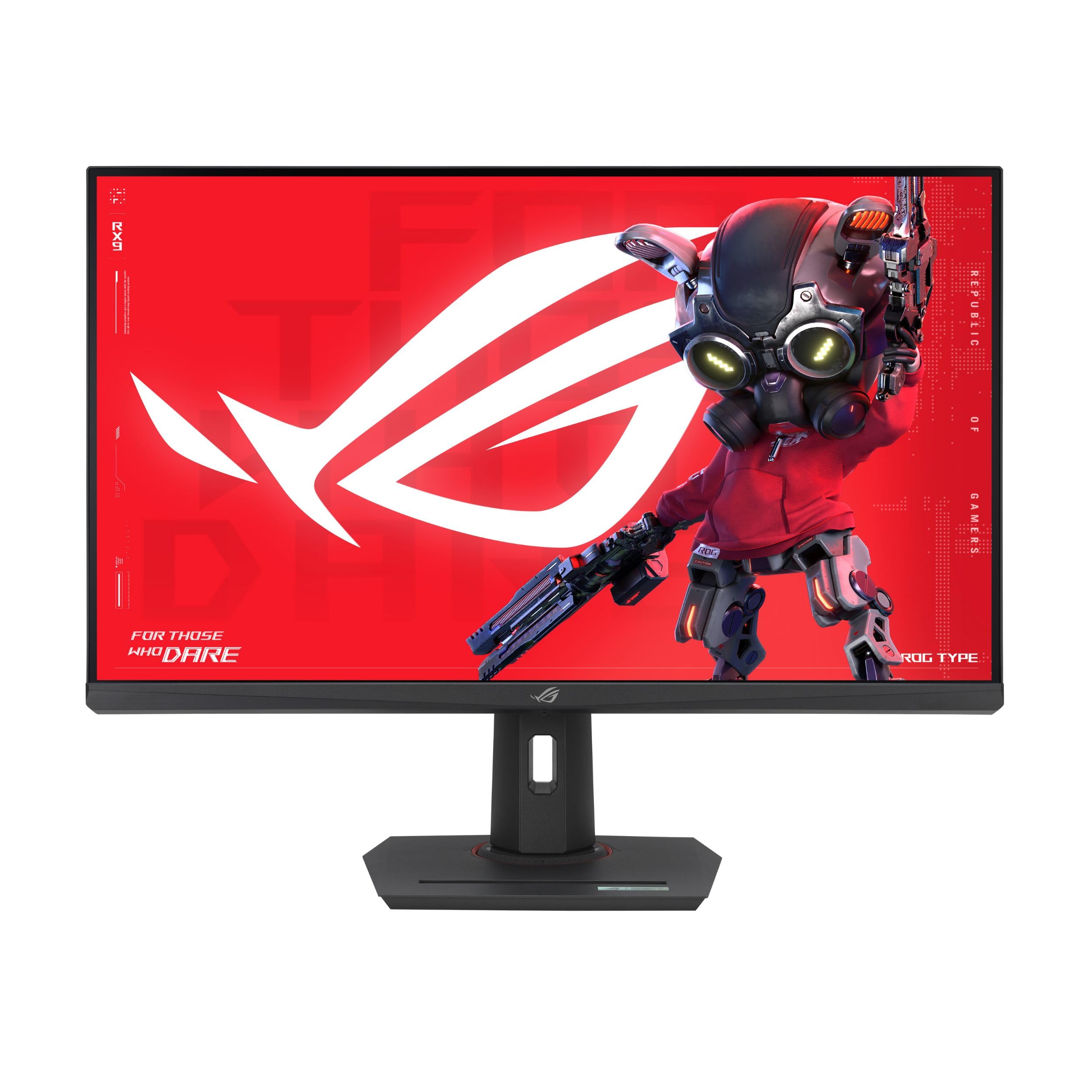
The ASUS ROG Strix XG32UCG is the first monitor in this guide to offer true dual-mode operation: 4K at 160 Hz for immersive single-player games, and a flick of a switch to FHD at 320 Hz for competitive esports. Both modes support G-Sync Compatible VRR, and the Fast IPS panel delivers a minimum 0.3 ms response time that keeps motion blur negligible at any refresh rate. ELMB Sync technology can be enabled simultaneously with VRR, eliminating both ghosting and tearing.
The 32-inch 4K panel covers 95% DCI-P3 with advanced gray-scale tracking for smooth gradations. USB-C with DP Alt mode allows easy laptop connection, and the built-in tripod socket is a thoughtful addition for streamers mounting a camera. The DisplayWidget Center software lets you switch between modes and adjust settings with a mouse rather than fiddling with OSD buttons.
Users report excellent color reproduction, a semi-gloss screen that resists reflections, and no compatibility issues with modern GPUs or BIOS. A few reviewers noted that the monitor lacks a KVM switch, which would have made it even more convenient for multi-device setups. For gamers who want one monitor that handles both cinematic 4K and high-fps competitive play, the XG32UCG is unmatched.
Why it’s great
- Dual mode (4K 160Hz / FHD 320Hz) covers both AAA and esports.
- ELMB Sync works simultaneously with VRR.
- 0.3ms Fast IPS with minimal motion blur.
Good to know
- No built-in KVM switch for multi-device setups.
- Premium price reflects the dual-mode technology.
4. LG 27GR83Q-B
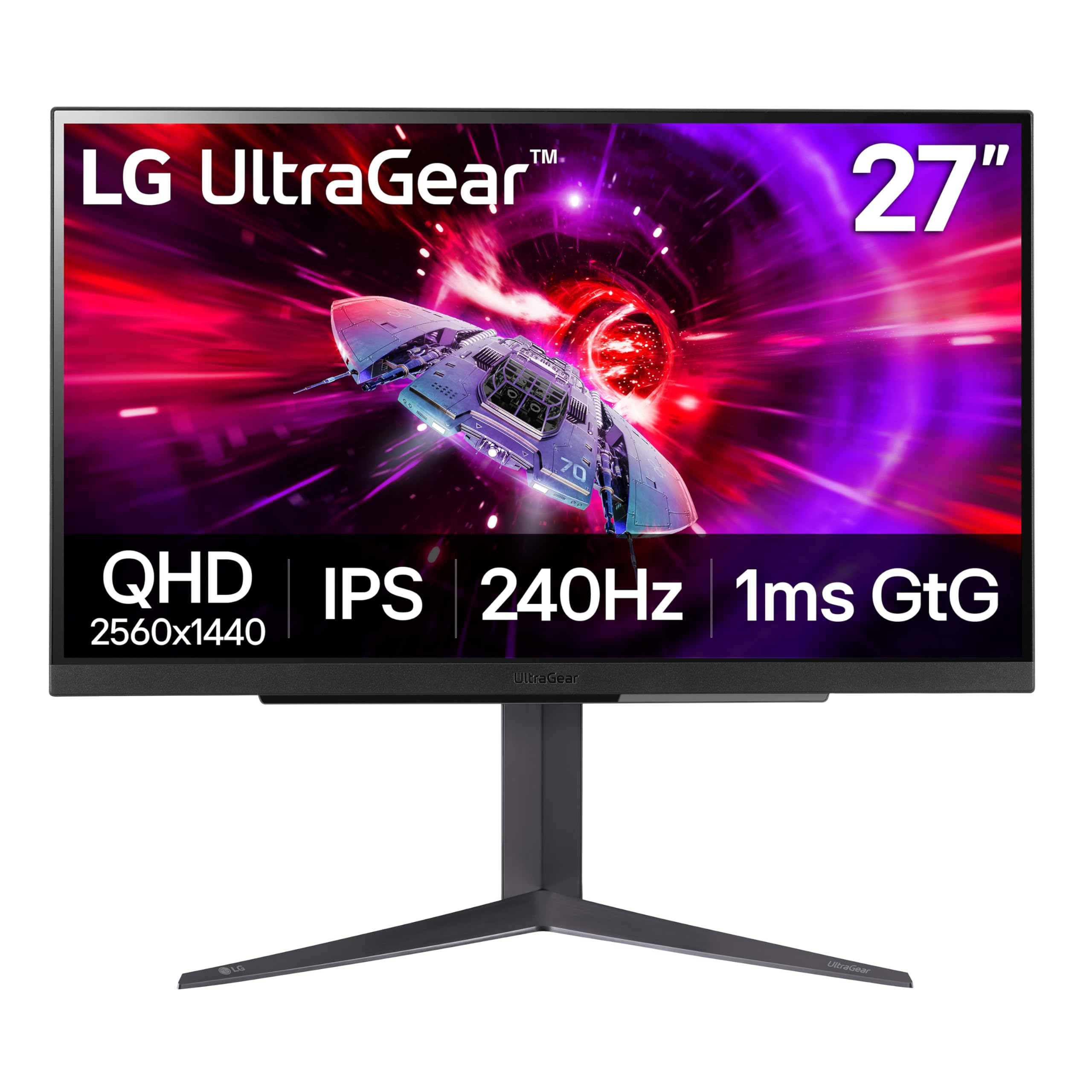
The LG 27GR83Q-B delivers 27 inches of QHD 2560×1440 resolution at 240 Hz with both G-Sync Compatible and FreeSync Premium certifications. The IPS panel provides consistent 1 ms GtG response times across its VRR range—no overshoot at low refresh rates, no ghosting at high refresh rates. HDMI 2.1 support means console gamers can also enjoy 4K 120 Hz VRR, though the native resolution is QHD.
Color performance is excellent with 95% DCI-P3 coverage and VESA DisplayHDR 400 certification. LG includes a 4-pole headphone jack with DTS Headphone:X spatial audio support, plus a full ergonomic stand with tilt, height, swivel, and pivot adjustments. Gaming-specific features like Dynamic Action Sync reduce input lag, and the Black Stabilizer improves visibility in dark scenes without washing out the image.
User reviews highlight the sharp, clear image quality and smooth gameplay across a wide range of titles. However, multiple reports mention stuck or dead pixels appearing within weeks of use, suggesting quality control inconsistencies. For buyers who prioritize QHD 240Hz VRR performance and are willing to check for pixel defects early, the 27GR83Q-B offers exceptional value.
Why it’s great
- 240Hz IPS with consistent overdrive across VRR range.
- HDMI 2.1 supports 4K 120Hz VRR for consoles.
- Full ergonomic stand with pivot and swivel.
Good to know
- Quality control issues with stuck/dead pixels reported.
- No built-in speakers—requires external audio.
5. Samsung Odyssey G4 25″

The Samsung Odyssey G4 25″ is a 1080p IPS monitor that punches well above its price point with a 240 Hz refresh rate, 1 ms GtG response, and dual certification for both G-Sync Compatible and FreeSync Premium. At 25 inches, pixel density at 1080p is decent—not as sharp as QHD, but perfectly suited for competitive esports where high frame rates matter more than absolute resolution. The VRR range is wide and stable, with LFC ensuring smoothness down to very low frame rates.
Ultrawide Game View lets you simulate a 21:9 aspect ratio in supported titles, a useful feature for seeing more of the battlefield in games like Valorant or Apex Legends. The ergonomic stand supports height, tilt, swivel, and pivot adjustments. Auto Source Switch+ automatically detects and switches to active inputs, reducing cable management frustration.
User reviews consistently praise the monitor’s excellent picture quality, vibrant colors, and wide viewing angles—all rare at this price tier. A few users noted the lack of built-in speakers and a minor HDMI notification issue when the source is in sleep mode. For competitive gamers on a budget who need reliable 240Hz VRR performance, the Odyssey G4 is the smart choice.
Why it’s great
- 240Hz IPS with both G-Sync and FreeSync Premium.
- Ultrawide Game View provides competitive advantage.
- Fully adjustable ergonomic stand included.
Good to know
- 1080p resolution—not ideal for productivity or single-player immersion.
- No built-in speakers; headphone jack only.
6. Alienware AW2725DM

The Alienware AW2725DM offers a 27-inch QHD IPS panel with 180 Hz refresh rate and 1 ms GtG response, backed by both G-Sync and FreeSync certification—meaning it works flawlessly with Nvidia and AMD GPUs right out of the box. The 2560×1440 resolution at 27 inches provides a sharp 109 PPI pixel density that balances image clarity with gaming performance. VESA DisplayHDR 400 certification and 95% DCI-P3 color coverage deliver vibrant, accurate colors.
The monitor features a dedicated console mode and a hardware-based low blue light solution that reduces eye strain without washing out colors—useful for long gaming sessions. The stand is sturdy with height, tilt, swivel, and pivot adjustments. Connectivity includes DisplayPort 1.4 and HDMI, though the HDMI port is limited to 144 Hz; you need DisplayPort to hit the full 180 Hz.
User feedback is overwhelmingly positive, with many calling it a “fantastic midrange monitor” with no ghosting, excellent brightness, and solid build quality. The main drawbacks are the lack of USB-C connectivity and the absence of built-in speakers. For gamers who want a simple, reliable QHD VRR monitor that works with any GPU, the AW2725DM is a straightforward recommendation.
Why it’s great
- Dual G-Sync and FreeSync support—GPU agnostic.
- Hardware low blue light preserves color accuracy.
- Sturdy fully adjustable stand included.
Good to know
- HDMI limited to 144 Hz—use DP for 180 Hz.
- No USB-C or internal speakers.
7. AOC Q27G3XMN

The AOC Q27G3XMN is a 27-inch QHD VA panel with Mini-LED backlight technology featuring 336 individual dimming zones and VESA DisplayHDR 1000 certification—a spec combination that usually commands a much higher price. The 180 Hz refresh rate (overclocked via DisplayPort 1.4) and 1 ms GtG response are backed by FreeSync support for tear-free gameplay. The VA panel delivers deep black levels and excellent contrast, approaching OLED-like HDR performance in dark scenes.
Color coverage reaches 134% sRGB, making colors appear vivid and punchy. The 3-year Zero-Bright-Dot warranty is a significant peace-of-mind addition, covering dead pixels for the entire period with 1-year accidental damage coverage. The 3-sided frameless design works well for multi-monitor setups. AOC includes an HDMI cable, DisplayPort cable, and power cord in the box.
Users are nearly unanimous in praising the HDR performance, calling it “breathtaking” and “near-OLED quality” for the price. The main compromises are a thick bezel at the bottom, a heavy stand that takes up desk space, and mediocre OSD buttons. For budget-conscious gamers who want genuine HDR and VRR without stepping up to OLED, the Q27G3XMN is the standout value pick.
Why it’s great
- Mini-LED with 336 zones delivers near-OLED HDR at a fraction of the price.
- 3-year Zero-Bright-Dot warranty with accidental damage coverage.
- 180Hz FreeSync with excellent VA contrast ratio.
Good to know
- Thick bottom bezel may obstruct webcam placement.
- Stand is large and heavy—plan desk space accordingly.
8. Z-Edge 27″ 4K

The Z-Edge 27″ 4K monitor brings a 3840×2160 Fast IPS panel with a 160 Hz refresh rate and 1 ms response time to the budget 4K gaming segment. FreeSync support ensures variable refresh rate operation, and the IPS panel provides 178-degree viewing angles with 99% sRGB color gamut coverage. The 450 cd/m² brightness rating is competitive for the price, making HDR content reasonably punchy even without a high DisplayHDR certification.
Connectivity includes two DP ports and two HDMI ports, with all ports supporting up to 160 Hz. The 3-sided frameless design works well for multi-monitor setups, and the monitor supports 100x100mm VESA mounting. Built-in FPS and RTS gaming modes let you quickly switch between optimized presets. The flicker-free and low blue light features reduce eye strain during extended use.
User reviews are mixed but largely positive: most praise the sharpness and smoothness of 4K at 160 Hz, while a few criticize the menu button placement on the back and the lack of included VESA mount screws. Some units arrived damaged due to inadequate packaging, so inspect the box carefully upon delivery. For buyers who want 4K resolution with a high refresh rate on a tight budget, the Z-Edge delivers respectable VRR performance.
Why it’s great
- 4K 160Hz Fast IPS panel at an entry-level price.
- Two DP and two HDMI ports all support 160 Hz.
- Flicker-free and low blue light reduce eye fatigue.
Good to know
- Menu buttons are on the back—can be awkward to reach.
- No VESA screws included; packaging may be insufficient.
9. Dell S2725QS

The Dell S2725QS is a 27-inch 4K IPS monitor with a 120 Hz refresh rate, AMD FreeSync Premium certification, and a 1500:1 contrast ratio that delivers deeper blacks than typical IPS panels. The 0.03 ms response time (gray-to-gray) is unusually low for a productivity-focused monitor, ensuring minimal input lag during casual gaming. ComfortView Plus reduces harmful blue light emissions to ≤35% without sacrificing color accuracy, making it ideal for all-day work sessions.
Color coverage is 99% sRGB with HDR readiness, and the monitor includes integrated speakers with improved sound quality over previous Dell models. The ultra-thin bezel design in ash white gives it a modern, minimalist aesthetic that fits well in home offices. The adjustable stand supports height, tilt, swivel, and pivot for flexible ergonomic positioning.
User feedback praises the bright, crisp 4K display and the smooth 120 Hz experience, with many calling it a “fantastic productivity monitor” for those who can’t go back to 60 Hz. Some users reported a persistent yellow tint and minor ghosting in fast-paced games, making it less ideal for competitive FPS. For professionals who want 4K resolution with VRR for occasional gaming, the S2725QS is a compelling hybrid choice.
Why it’s great
- 4K 120Hz IPS with FreeSync Premium and 1500:1 contrast.
- ComfortView Plus reduces blue light without color shift.
- Integrated speakers with improved frequency response.
Good to know
- Minor ghosting reported in fast-paced game scenes.
- Some units exhibit a yellow tint that may require calibration.
FAQ
What is the difference between FreeSync Premium and G-Sync Compatible?
Can I use Adaptive Sync with a console over HDMI?
Does G-Sync work with FreeSync monitors that aren’t certified?
What is the best VRR range for competitive gaming?
Final Thoughts: The Verdict
For most users, the best adaptive sync monitor winner is the ASUS ROG Swift PG32UCDM because its QD-OLED panel, 240 Hz refresh rate, and G-Sync Compatible certification deliver a flawless VRR experience with zero compromise on image quality. If you want a dual-mode monitor that can switch between 4K 160 Hz and FHD 320 Hz, grab the ASUS ROG Strix XG32UCG. And for budget-conscious gamers who still want genuine HDR and VRR, nothing beats the AOC Q27G3XMN with its Mini-LED backlight and aggressive pricing.