
Eight-year-olds are at a sweet spot for board games. They can handle layered rules, plan a few moves ahead, and genuinely enjoy the thrill of beating a parent or sibling. But the wrong game — one that’s too simple, too complex, or too slow — will lose their attention before the first turn ends. The best picks for this age balance fast-paced action with real cognitive challenge, turning family game night into genuine engagement instead of a chore.
I’m Min — the co-founder and writer behind Gadgets Feed. I’ve spent countless hours analyzing gameplay mechanics, playtime data, age-appropriateness guidelines, and thousands of customer reviews to find the games that actually hold the attention of an 8-year-old while delivering real strategic depth for the whole family.
You want games that are easy to learn but hard to master, that get kids thinking without feeling like homework. This guide breaks down the top-rated board games for 8 year olds and explains exactly why each one earns its place on your shelf.
How To Choose The Best Board Games For 8 Year Olds
The best games for this age group share a few key traits: they take between 20 and 60 minutes to play, have simple core rules with some strategic depth, and feature components that feel satisfying to handle. Avoid games with excessive reading or complex scoring systems — those kill the momentum. Look for mechanisms like set collection, route building, or cooperative decision-making that let kids think without getting stuck.
Playtime and Attention Span
An 8-year-old’s focus window is roughly 20 to 45 minutes for a single game session. Games like Tetris: The Board Game wrap up in about 20 minutes, keeping the pace high and the downtime low. Longer games like Ticket to Ride can stretch to an hour, but the constant decision-making keeps them engaged. If a game runs over 90 minutes without breaks, most kids will check out before the winner is declared.
Cooperative vs. Competitive
Some kids thrive on head-to-head competition, while others get frustrated by losing. Cooperative games like Space Escape let the whole team win or lose together, teaching communication and shared strategy. Competitive games like Exploding Kittens or Battleship build resilience and turn-taking discipline. The best approach is to have both types on rotation so your child develops skills in each environment.
Component Quality and Replayability
Eight-year-olds are tactile learners. Games with chunky plastic pieces, real LEGO bricks, or sturdy cardboard tokens feel more engaging than flimsy paper components. The Monkey Palace game uses actual LEGO elements that kids can build and rebuild, turning the game itself into a construction toy. High-quality components also mean the game survives repeated play, which matters because the best games in this category get played dozens of times.
Quick Comparison
On smaller screens, swipe sideways to see the full table.
| Model | Category | Best For | Key Spec | Amazon |
|---|---|---|---|---|
| Ticket to Ride | Strategy | Family strategy sessions | 30-60 min playtime | Amazon |
| Monkey Palace | Creative Strategy | LEGO-loving builders | 231 LEGO elements | Amazon |
| Battleship Reloaded | Electronic Strategy | Head-to-head naval combat | Lights & sound effects | Amazon |
| Exploding Kittens | Party | High-energy family fun | Flip-board mechanic | Amazon |
| Space Escape | Cooperative | Teamwork and communication | Cooperative gameplay | Amazon |
| Game of the States | Educational | Learning US geography | 50 state cards | Amazon |
| Tetris: The Board Game | Puzzle Strategy | Classic puzzle fans | 20 min playtime | Amazon |
In‑Depth Reviews
1. Ticket to Ride
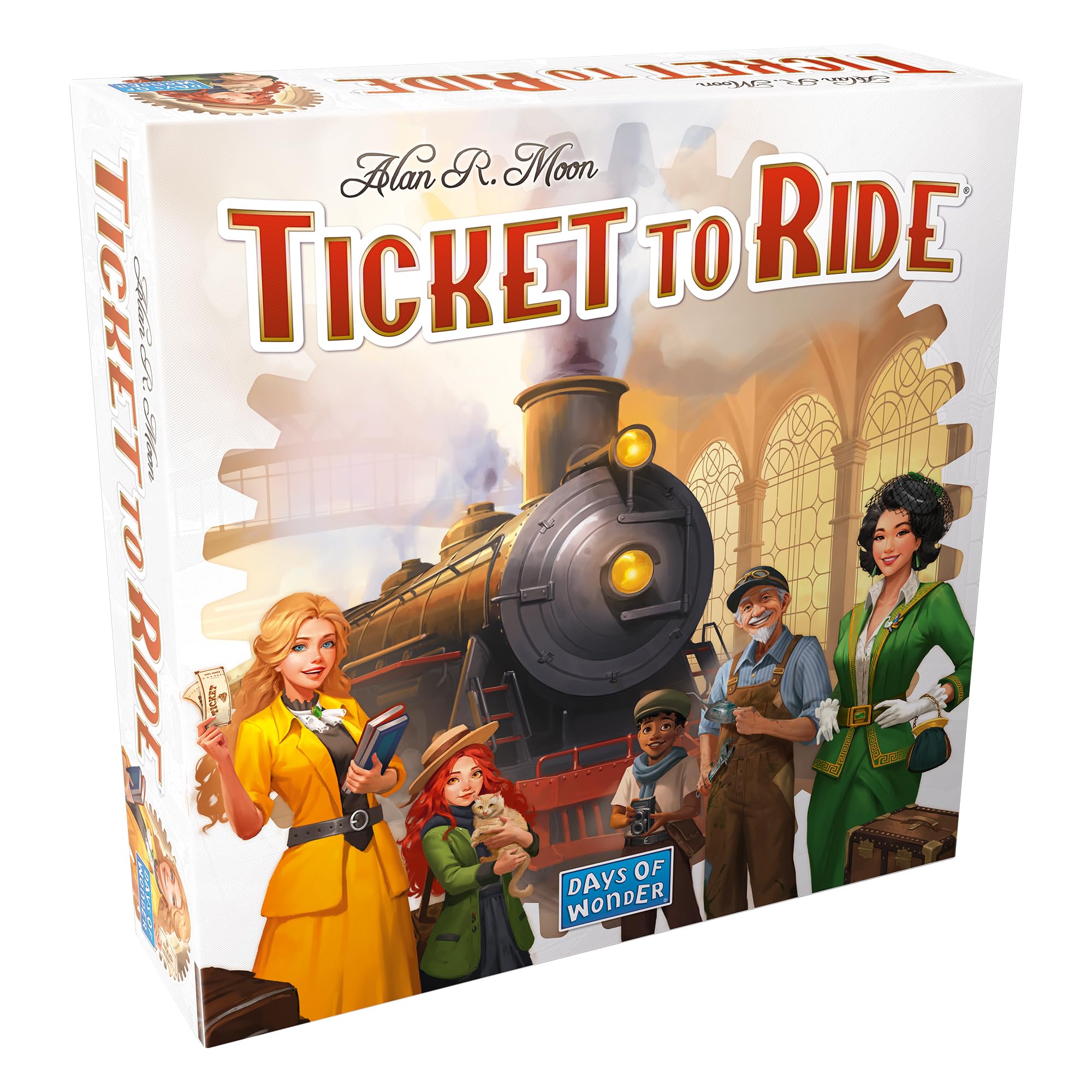
The 2025 refresh of the classic cross-country train adventure retains everything that made the original a staple of family game nights. Players collect colored train cards to claim railway routes across a giant map of North America, connecting cities and completing destination tickets for points. The rules are simple enough that an 8-year-old can grasp them within one round, yet the strategic depth — blocking opponents, choosing when to draw cards versus claim routes — keeps adults fully engaged.
The tactile experience is a huge part of the appeal. Each player gets a set of brightly colored plastic trains that physically occupy the claimed routes on the board, making progress visible and satisfying. The 225 miniature trains, combined with 110 train cards and 33 destination tickets, create near-infinite replayability. Game length settles around 45 to 60 minutes, which hits the sweet spot for sustained attention without dragging.
Customer reviews consistently highlight how the game works across generations. Families report playing it three times a week with kids aged eight to twelve, and the lack of cutthroat mechanics means it stays fun even when younger players aren’t optimizing their routes perfectly. The geography education is a nice bonus, but the real win is that kids learn strategic planning and set-collection discipline without feeling like they’re being taught.
Why it’s great
- Easy to learn with deep strategic replay value
- High-quality plastic train components that feel great to handle
- Works well for 2 to 5 players with consistent game length
Good to know
- Younger players may need help reading destination city names
- Box is fairly large for storage
2. Monkey Palace

Monkey Palace is the rare board game that truly blurs the line between gameplay and construction. Players build actual LEGO brick towers and fortresses that serve as the playing field, stacking pieces to create paths for their monkey pieces. The twist is that unstable towers can collapse mid-game, sending bricks scattering and forcing players to adapt their strategy on the fly. This unpredictability creates laugh-out-loud moments that are perfect for the 8-to-12 age range.
The 231 LEGO elements included in the box are fully compatible with standard LEGO bricks, meaning you can expand the game with your existing collection. The core mechanics involve resource management and spatial planning — players draw cards that dictate which bricks they can place and where, then earn banana points for completing structures. The scoring system is straightforward (just count bananas), so kids can track their progress without needing a calculator.
Some families report that the game runs low on LEGO pieces after several rounds with three or more players, but supplementing with spare bricks solves this easily. The initial rules explanation takes a bit of patience — there are several card types and movement options to digest — but by the second game, everything clicks. The combination of building and strategy makes this a standout pick for LEGO-loving kids who want more structure than free-building provides.
Why it’s great
- Real LEGO bricks that double as a construction toy after the game
- Unpredictable tower collapses keep every round exciting
- Simple banana scoring system is easy for kids to track
Good to know
- Setup and initial rules explanation can be time-consuming
- May need extra LEGO bricks for longer sessions with more players
3. Battleship Reloaded

The classic naval combat game gets a modern overhaul with Electronic Battleship Reloaded, which adds voice commands, sound effects, and flashing lights to the grid-based strategy. Players enter coordinates and press the fire button — a hit triggers an explosion sound while a miss gets a dud noise, creating real tension with every guess. The electronic command unit handles all the bookkeeping, so kids can focus on deduction and strategy rather than manual peg placement.
This edition includes two modes: Classic Mode for traditional gameplay and Advanced Mode that introduces special weapon pegs for salvo strikes and other tactical options. The folding game unit features preset ship layouts that let players jump straight into action without spending time arranging their fleet. Solo practice mode against the computer is a welcome addition for kids who want to sharpen their skills before challenging a sibling.
The improved storage and sturdier construction address the main complaints from previous versions. Setup does take a few minutes — you need to insert the ships into their slots on the board — but once you’re in, the game moves fast. The recommended age of 8 and up is accurate; younger kids may struggle with the coordinate system, but by second grade most children can handle the grid logic without frustration.
Why it’s great
- Electronic sounds and lights add immersion and excitement
- Advanced Mode with special weapons increases replay depth
- Solo practice mode lets kids learn independently
Good to know
- Requires batteries (not included)
- Setting up ships the first time takes a few minutes
4. Exploding Kittens: The Board Game
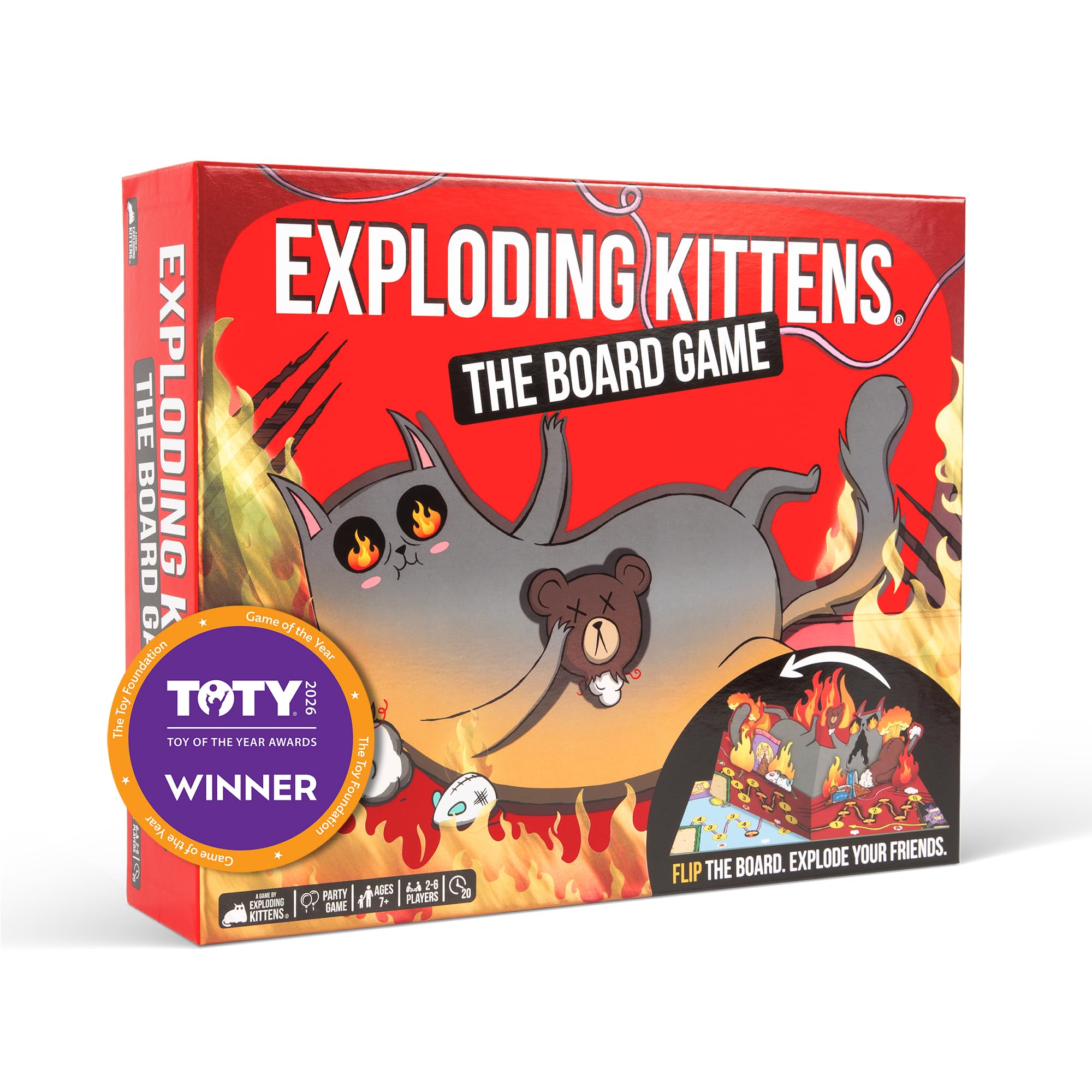
Exploding Kittens has been a card game phenomenon for a decade, and this board game adaptation translates the chaotic energy into a physical path-based format. Players move their character standees along a track, drawing action cards and trying to avoid the explosion that ends their run. The board itself flips mid-game, revealing an entirely new path that changes the available strategies and traps — a clever mechanic that keeps every session feeling fresh.
The components are a highlight: a pop-up game board, 65 action cards, 26 move cards, and six character standees including fan-favorites like TacoCat and GnomeCat. The humor is deliberately absurd — cards let you deploy Meatpants or a Butterfly Punch — which lands perfectly with the 8-to-12 crowd who love silly humor. Games typically run 30 to 45 minutes, though some sessions stretch longer depending on elimination order.
Customer feedback notes that the physical board can be stiff when first unfolded, but it loosens up after a few plays. The cardboard standees are adequate rather than premium, but the overall build quality is solid for the price point. This game works best with three to five players; with six players, downtime between turns can test patience. It’s a fantastic choice for family game nights where laughter matters more than pure strategy.
Why it’s great
- Flip-board mechanic creates surprising strategic shifts mid-game
- Absurd humor and character designs kids love
- Quick to learn with fast-paced turns
Good to know
- Board can be stiff when new
- Gameplay feels less action-packed than the original card game for some players
5. Space Escape

Space Escape, designed by the creator of Pandemic, brings cooperative strategy to the younger crowd without dumbing it down. The premise is simple: a band of snakes has infiltrated the mole rats’ space station, and players must work together to gather equipment and reach the escape pod before time runs out. Each turn, a player draws a card with two actions — one for the mole rats and one for the snakes — forcing the team to negotiate who moves where and how to block the pursuing villains.
What makes this game exceptional for 8-year-olds is that no reading is required. All the game information is conveyed through icons and visual cues on the cards, so even kids who struggle with text can participate fully. The cooperative format means there’s no single loser — everyone wins or loses together — which builds communication skills and emotional resilience. The difficulty is adjustable via unlockable challenge cards that increase the snake threat for seasoned players.
Components are durable and child-friendly: thick cardboard tiles, chunky plastic mole rat movers, and a sturdy game board that survives repeated play. Games run about 20 to 30 minutes, which is ideal for post-dinner sessions. Families report that this game becomes a new favorite especially for kids who get frustrated by competitive games, because the shared goal eliminates the sting of losing while still providing genuine challenge.
Why it’s great
- No reading required — all visual gameplay
- Teaches teamwork and communication without feeling forced
- Unlockable challenge cards extend replay value
Good to know
- Cooperative format may not appeal to competitive-minded kids
- Can feel challenging and sometimes random in early games
6. Game of the States

This updated version of a classic 1970s game brings pick-up-and-deliver mechanics together with US geography education. Players drive plastic pickup trucks across a colorful map of the United States, buying goods from one state and selling them in another. The state cards contain useful facts: capitals, state flowers, major resources, and historical trivia. The gameplay naturally reinforces geography as kids learn which states border each other and what products come from where.
The STEM-approved designation is earned. Players must plan efficient routes, manage their play money budget, and decide when to take risks on buying more goods. The simple gamble mechanic — you can re-spin the spinner once per turn if you don’t like your initial result — adds a layer of decision-making that keeps the game from being purely luck-based. The wooden packages and plastic trucks are satisfyingly tactile, and the large game board is printed on thick stock.
Some quality control issues have been reported: one customer noted a misspelling on a Wisconsin card. For the most part, though, the production values are solid for the price tier. The game works best with two to four players and takes about 30 to 45 minutes per session. It’s particularly popular in homeschool environments, but even casual family play results in kids absorbing state capitals and resource maps without realizing they’re learning.
Why it’s great
- Teaches US geography, capitals, and state resources naturally
- Tactile pickup trucks and wooden goods components
- STEM-approved with genuine economic strategy
Good to know
- Minor quality control issues reported on some cards
- Educational focus may feel less exciting for purely casual play
7. Tetris: The Board Game
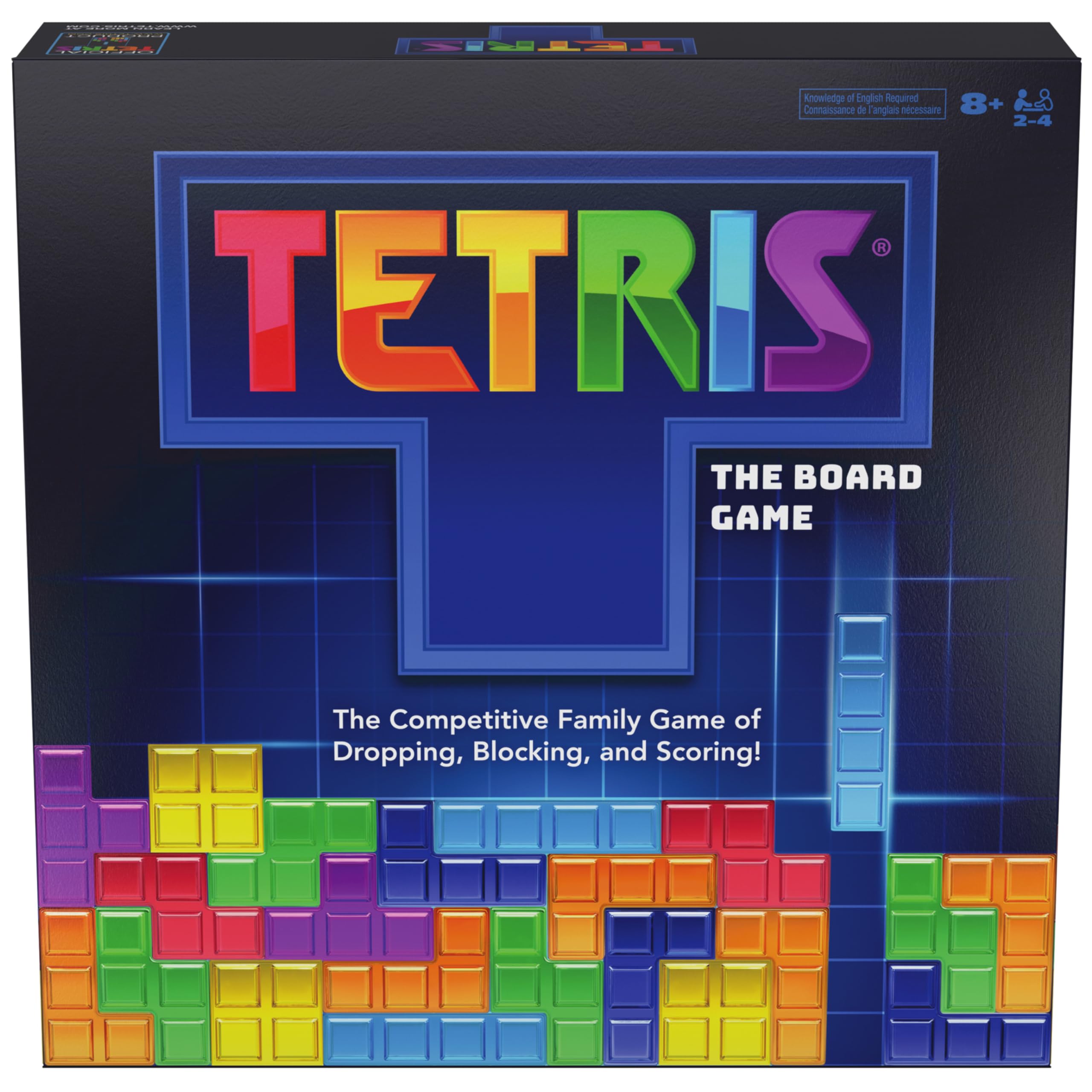
Bringing the iconic video game to the tabletop is a bold move, and Spin Master pulls it off with surprising fidelity. Players place semi-translucent tetromino pieces onto their personal grids, trying to complete horizontal lines just like in the digital version. The physical twist: when you place a piece on an opponent’s garbage drop icon, you add a blocking piece to their grid, introducing a competitive element that the original game never had.
The components are faithful to the source material. The tetrominoes are made of semi-translucent plastic that mimics the look of the video game blocks, and the player grids have raised edges to keep pieces in place. The game includes 128 tetrominos, 24 tetrimino cards, and four grid bases, plus a central gameboard for tracking scores and garbage drops. Setup takes under two minutes, and games wrap up in about 20 minutes — perfect for quick sessions between homework and dinner.
Customer feedback is overwhelmingly positive, with families noting that the game gets eight- and nine-year-olds thinking spatially and planning ahead without them feeling like they’re doing math. The competitive blocking mechanic adds tension and encourages players to watch opponents’ boards, not just their own. Some pieces arrived slightly bent in a few packages, but the plastic is flexible enough that this doesn’t affect gameplay. It’s a faithful adaptation that captures the addictive puzzle-loop of the original.
Why it’s great
- Fast 20-minute games are ideal for short attention spans
- Semi-translucent tetrominoes look and feel authentic
- Competitive blocking mechanic adds strategic depth
Good to know
- Some pieces may arrive slightly bent in packaging
- Younger players may need help with spatial planning
FAQ
How do I know if a board game is too complex for my 8-year-old?
Are cooperative games better than competitive ones at this age?
How many players should a board game for 8-year-olds support?
Final Thoughts: The Verdict
For most families, the best board games for 8 year olds winner is Ticket to Ride because its simple rules, deep strategy, and high-quality components make it a game that grows with your child for years. If you want creative construction and unpredictable fun, grab Monkey Palace. And for quick 20-minute sessions that exercise spatial reasoning, nothing beats Tetris: The Board Game.