
Carbon monoxide is a silent, odorless threat in any general aviation aircraft, capable of incapacitating a pilot within minutes when exhaust systems leak into the cabin. Standard home detectors are dangerously inadequate for this environment, as they alarm only at high levels after prolonged exposure, leaving you vulnerable to subtle but cumulative poisoning during flight. You need a detector built for the cockpit: one with fast low-level response, a rugged housing, and clear alarms that cut through engine noise.
I’m Min — the co-founder and writer behind Gadgets Feed. My research into this category involved cross-referencing dozens of electrochemical sensor specifications and comparing alarm thresholds against industry exposure limits from OSHA, the FAA, and WHO to separate true aviation-grade instruments from repurposed home safety devices.
Whether you fly a Cessna, Piper, or experimental homebuilt, the right device delivers continuous real-time protection. This guide breaks down the critical specs behind the best aircraft carbon monoxide detector for your specific flying needs.
How To Choose The Best Aircraft Carbon Monoxide Detector
Selecting the right CO detector for your aircraft requires understanding how the cockpit environment differs from a home or garage. The primary threat comes from exhaust system cracks that introduce CO into the cabin heat or ventilation system. A detector with the right sensor tech, alarm thresholds, and physical durability is a non-negotiable safety item before every flight.
Electrochemical Sensor vs. Semiconductor Sensor
Electrochemical sensors are the gold standard for aviation use. They consume minimal power, offer high accuracy (within ±5% full scale), and respond to CO within 30 seconds. Semiconductor or metal oxide sensors, found in cheap home detectors, draw more current and suffer from false alarms and drift over time. Every product in this guide uses an electrochemical cell, ensuring your readings are trustworthy when they matter most.
Alarm Thresholds and Response Time
Home CO detectors typically alarm at 70 ppm after 60 to 240 minutes. In an aircraft cabin, you need a device that triggers well below that threshold. The most protective units sound the alarm at 9 ppm within 60 seconds, matching World Health Organization and EPA exposure recommendations. A detector that only alarms at 70 ppm means you’ve already inhaled a potentially dangerous dose before it registers a problem.
Power Source and Longevity
Look for continuous runtime measured in months, not hours. Devices with non-replaceable coin cell batteries (CR2032 or CR123A) can run for 12 to 24 months, making them true set-and-forget safety devices. USB-rechargeable models are better suited for pre-flight inspection tools used by mechanics, as they require more frequent charging and maintenance attention.
Quick Comparison
On smaller screens, swipe sideways to see the full table.
| Model | Category | Best For | Key Spec | Amazon |
|---|---|---|---|---|
| AV8 Inspector Pro | Aviation Grade | Cockpit Continuous Monitoring | 2-year battery (CR123A) | Amazon |
| MSA ALTAIR | Industrial Grade | Rugged Professional Use | 2-year maintenance-free life | Amazon |
| Forensics 4 Gas Monitor | Multi-Gas | Comprehensive Hangar Safety | O2, CO, H2S, LEL sensors | Amazon |
| Vehicle & Aircraft CO Detector v2.0 | Low-Level Alarm | Pilots Needing 9 ppm Alarm | 9 ppm alarm in 60 seconds | Amazon |
| Forensics CO Meter FD-90A | HVAC Inspection | Pre-Flight Exhaust Checks | USB rechargeable, 0-1000 ppm | Amazon |
| Forensics CO + Pump | Point Sampling | Spot-Checking Cabin Air Vents | Built-in pump (0.5 LPM) | Amazon |
| BW Technologies BWC2-M | Continuous Wear | Reliable 2-Year Runtime | 35-event data logging | Amazon |
| Sensorcon Industrial CO Monitor | Waterproof | High-Moisture Cabin Environments | IP67 waterproof, 2-year battery | Amazon |
| Portable CO Detector FD-101-CO | Drop Tested | Pre-Flight Walkaround Inspections | 10ft drop test, IP67, OSHA alarms | Amazon |
In‑Depth Reviews
1. Sensorcon AV8 Inspector Pro
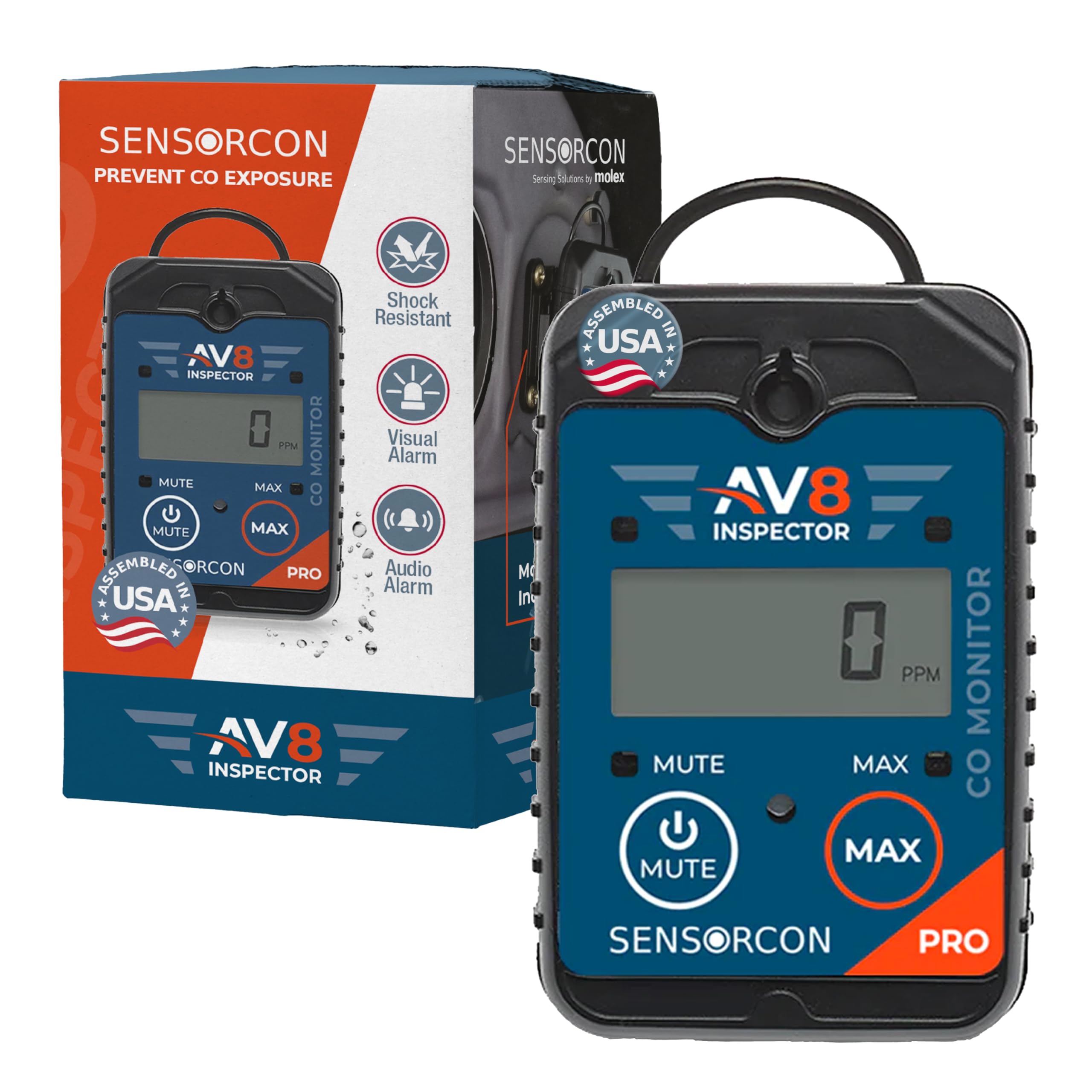
The AV8 Inspector Pro is purpose-built for the cramped, vibrating environment of a flight deck. Its advanced electrochemical sensor delivers real-time CO readout in parts per million, with a fast response that begins alarming well before your concentration suffers. The triple-alert system — flashing LED, 80-85 dB audible tone, and a strong vibration motor — ensures you cannot miss a warning even with a headset on and engine noise filling the cabin.
Powered by a single Panasonic CR123A battery, this unit delivers over two years of continuous operation with no charging cables to manage. The IP67-rated housing is shock-resistant and completely waterproof, surviving the rough handling of flight bags, hangar benches, and cockpit toss-and-go. The adjustable alarm set points let you configure low and high thresholds exactly to your safety standard.
Pilots specifically praise its lightweight 4-ounce design and the secure steel clip that keeps it attached to a kneeboard, shoulder harness, or flight bag loop. The ability to set 24-hour TWA alarms makes it a genuinely professional-grade instrument that treats cumulative low-level exposure as seriously as an acute spike.
Why it’s great
- Designed specifically for aviation with aircraft‑specific alarm logic
- Triple alarm system (visual, audio, vibration) cuts through headset noise
- Two‑year continuous battery life with no recharging required
Good to know
- Battery is non‑replaceable; unit is disposable after sensor lifespan
- Premium option that justifies its cost through refined cockpit integration
2. MSA ALTAIR Single-Gas CO Detector

MSA is a household name in industrial safety, and the ALTAIR brings that reputation to the cockpit. This maintenance-free detector runs for a full two years including 1,080 minutes of alarm time — no sensor or battery changes, no charging docks, just instant protection from the moment you unbox it. The rubberized housing absorbs impacts and provides a secure grip in sweaty hands.
The triple-alarm system uses flashing red LEDs, a piercing audible beep, and an internal vibration motor. The large backlit LCD is easy to read in any light, and the single-button operation works smoothly even with gloved fingers. The built-in IR communication port allows you to download the last 25 alarm and test events via MSA Link software, giving you a complete exposure log after each flight.
Some users have reported reliability concerns with units failing before the advertised lifespan, so it is wise to purchase from an authorized dealer with a solid return policy. However, for pilots who want the peace of mind of a globally recognized brand with UL approval, the ALTAIR delivers proven performance in a durable, set-and-forget package.
Why it’s great
- Two‑year maintenance‑free operation with no charging or sensor swaps
- Built‑in data logging for the last 25 alarm events
- UL standard‑approved with a tough IP67-rated rubberized housing
Good to know
- Some units have experienced early failure before the 2‑year mark
- Alarm thresholds set higher than aviation‑focused competitors
3. Forensics 4 Gas Monitor FD-4A

For pilots who also maintain their own aircraft or work in hangars with multiple gas hazards, the Forensics 4 Gas Monitor is a comprehensive solution. It simultaneously monitors Oxygen (O2), Carbon Monoxide (CO), Hydrogen Sulfide (H2S), and Combustible LEL (Lower Explosive Limit) gases with separate electrochemical sensors for each target. This unit is particularly useful during pre-flight walkarounds near fuel tanks, battery compartments, or engine exhaust areas.
The 0.6-pound body is built from high-strength ABS with anti-slip rubber grip and an explosion-proof, dust-proof, and waterproof design. The USB-rechargeable 1500mAh battery provides about six hours of runtime — enough for a full day of hangar work or a multi-leg cross-country trip. Adjustable audio, visual, and vibration alarms let you set custom thresholds for each gas channel.
The user interface can be confusing, and the unit requires annual recalibration with calibration gas, which adds ongoing cost. However, the NIST traceable calibration certificate included in the box gives you confidence that the readings are accurate from day one, making this a solid choice for the safety-conscious aviator who also manages ground operations.
Why it’s great
- Monitors O2, CO, H2S, and combustible gases in one device
- NIST traceable calibration certificate included with purchase
- Rugged ABS housing with explosion‑proof certification
Good to know
- Short 6‑hour battery life requires daily charging
- Requires annual recalibration with specialty gas equipment
4. Vehicle & Aircraft CO Detector v2.0
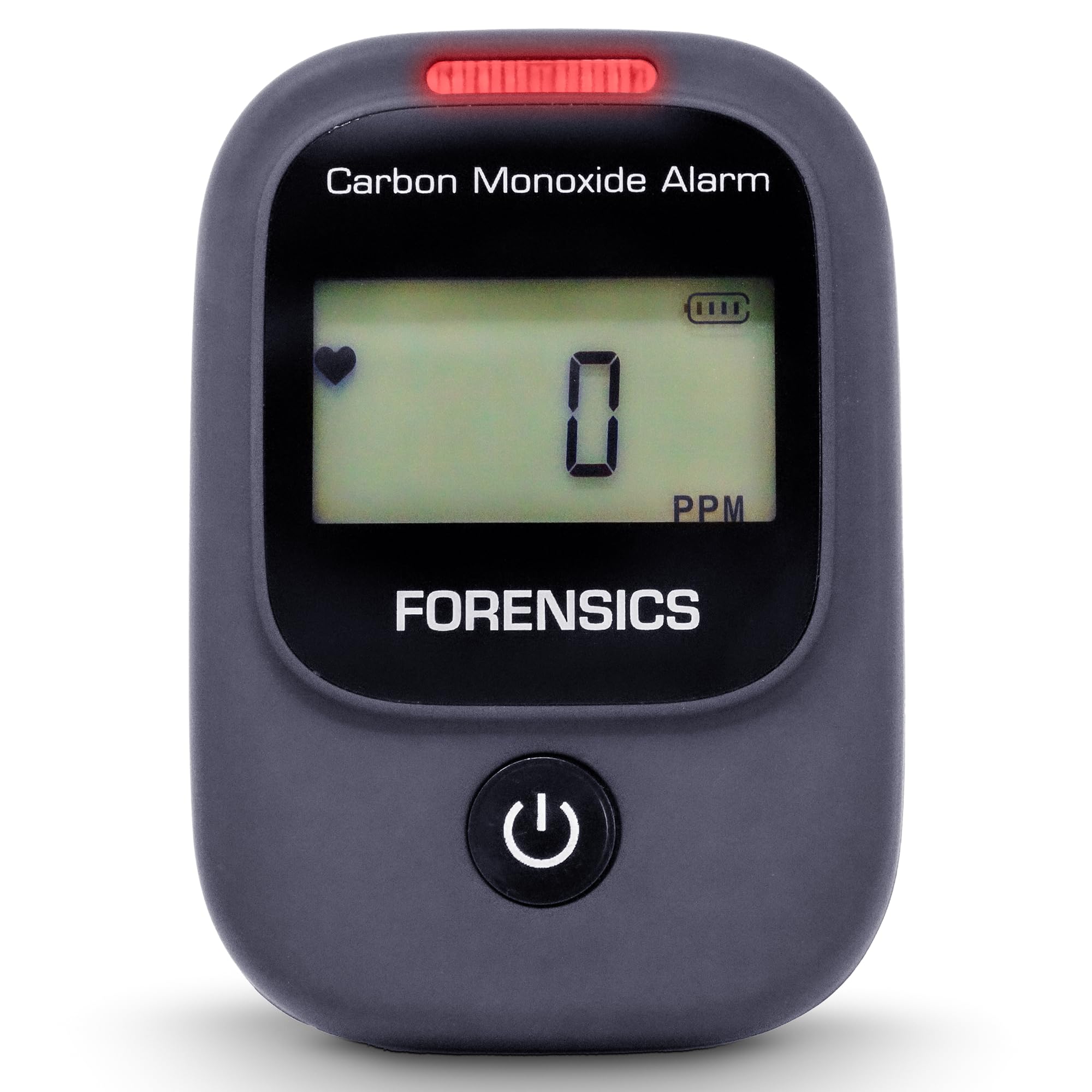
This compact detector from Forensics is specifically calibrated for exhaust leak detection in vehicles and aircraft, with the lowest alarm threshold in this roundup. It begins alarming at just 9 ppm within 60 seconds — a level that matches WHO, EPA, and NIOSH recommendations — whereas standard home detectors don’t trigger until 70 ppm. This sensitivity is critical for aviation, where subtle exhaust leaks can accumulate during a long flight.
Weighing only 2 ounces with dimensions of 2.8 by 1.9 by 0.7 inches, it slips easily into a shirt pocket or clips onto a visor using the included adhesive bracket. The device runs on three CR2032 coin cell batteries (one pre-installed, two spares included), providing 8 to 12 months of continuous operation. A Japanese 5-year CO sensor ensures long-term accuracy.
Pilots of Piper Cherokees and Cessnas have confirmed it works perfectly in the cockpit, with the 70 dB buzzer and bright LED easily cutting through cabin noise. The packaging includes a key ring with a sling and a plastic sleeve mount, giving you multiple mounting options for your particular aircraft interior.
Why it’s great
- Alarms at just 9 ppm — the lowest threshold in this comparison
- Ultra‑light 2‑ounce design fits in any pocket or clip mount
- Japanese 5‑year electrochemical sensor for extended service life
Good to know
- Coin cell batteries may need replacement every 8‑12 months
- Not rechargeable — no USB port for power
5. Forensics CO Meter FD-90A

The Forensics FD-90A is a versatile CO meter that bridges the gap between a simple alarm and a professional calibration tool. Its electrochemical sensor measures CO from 0 to 1000 ppm with 1 ppm resolution and accuracy of better than ±5% full scale, making it suitable for detailed pre-flight inspections of your aircraft’s exhaust system and cabin heat exchanger. The adjustable alarm thresholds let you program low, TWA, and STEL limits to match your operation.
The rechargeable 1500mAh Li-Ion battery provides about 10 hours of runtime per charge, charged via the included micro-USB cable. The housing is shock-proof, dust-proof, water-proof, and explosion-proof, with a belt clip that keeps it handy during walkarounds. HVAC technicians and aircraft mechanics alike appreciate the fast T<30s response time that pinpoints leaks immediately.
A word of caution: this unit is designed as an inspection meter, not a continuous-use monitor. The sensor lifespan is 2-3 years, and the manufacturer recommends recalibration every six months with calibration gas equipment. For pilots who want a unit that both monitors continuously and provides precise leak location, the FD-90A works well but demands more maintenance attention than a disposable alarm.
Why it’s great
- Professional‑grade 0‑1000 ppm range with 1 ppm resolution
- USB rechargeable with 10‑hour continuous runtime
- Explosion‑proof housing certifies safe use near fuel sources
Good to know
- Requires recalibration every 6 months with specialty gas
- Sensor lifespan limited to 2‑3 years before replacement needed
6. Forensics CO Meter + Pump FD-90A-PUMP
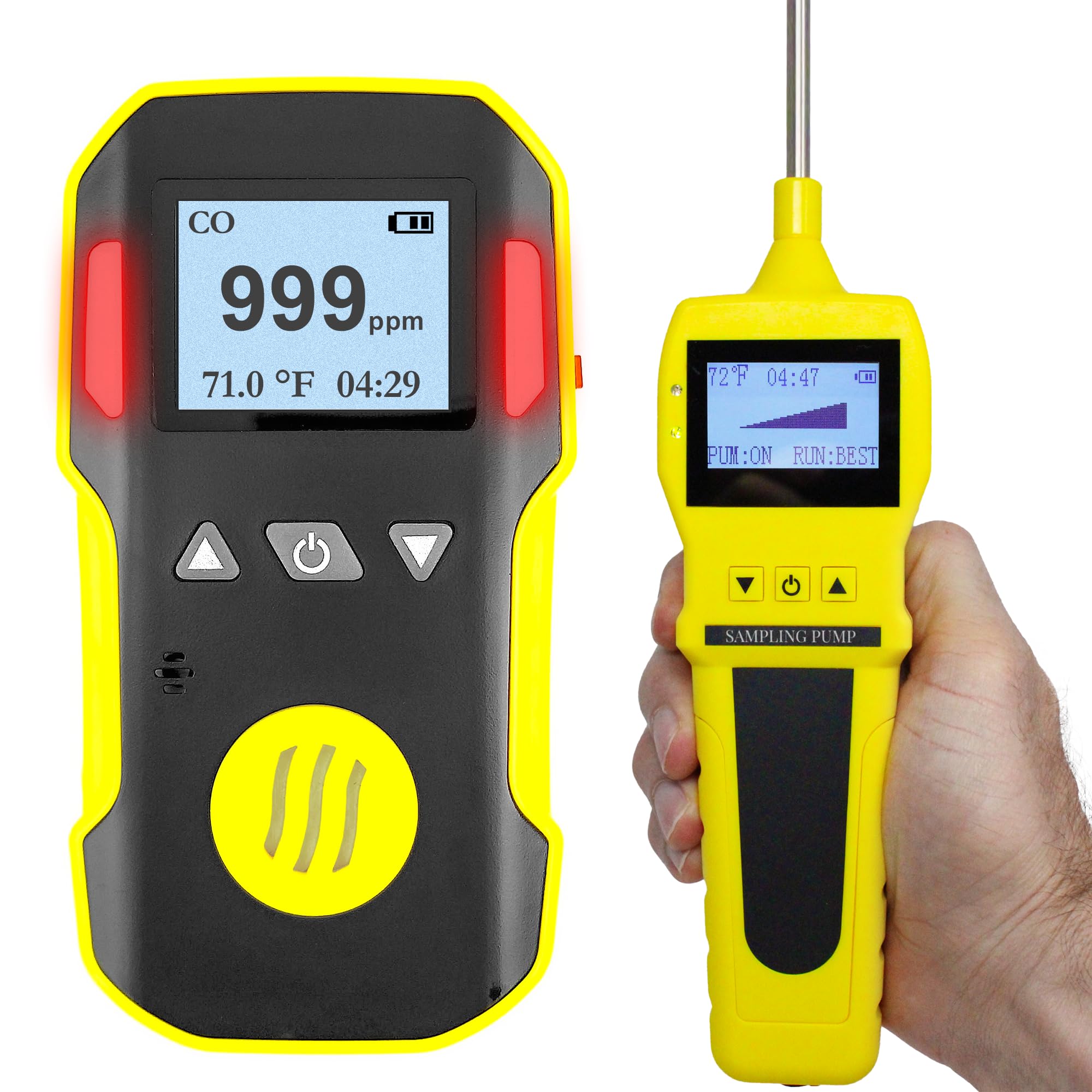
This variant of the FD-90A adds a built-in internal pump that draws air in at 0.5 liters per minute, making it an exceptional tool for locating exhaust leaks in hard-to-reach areas. Instead of relying on ambient air diffusion, the pump actively pulls samples from specific spots — like the cabin heat exchanger outlet, the firewall penetrations, or the exhaust riser cracks — giving you immediate, localized readings.
The same electrochemical sensor accuracy (±5% F.S.) and quick response (T<30s) apply here, with the pump extending your diagnostic capability significantly. The 1500mAh battery still provides approximately 10 hours of runtime even with the pump running, and the triple alarms (audible, visual, vibration) work identically. The data logging feature time-stamps each alarm event for post-flight analysis.
Some users report that the charging port requires firm cable insertion and the power switch can be finicky, but the pump reliability is excellent. If you perform your own annual condition inspections or fly an experimental aircraft where you have intimate knowledge of the exhaust system, this pump-equipped unit is an indispensable diagnostic partner that also serves as a continuous cabin monitor.
Why it’s great
- Active pump draws samples from specific locations for precise leak detection
- Same accurate sensor and alarms as the standard FD‑90A
- Data logging with time stamps for exposure tracking
Good to know
- Charging port and power switch can be slightly temperamental
- Not suitable for measuring CO levels above 1000 ppm
7. BW Technologies BWC2-M BW Clip

The BW Clip is a no-frills single-gas CO monitor from a respected industrial safety brand. Its standout feature is the two-year maintenance-free runtime — no charging, no sensor swaps, no batteries to change. You turn it on and it runs continuously for 24 months, logging the last 35 gas events and bump test results automatically. For pilots who simply want a reliable, always-on monitor without fiddling with cables, this is a compelling option.
The device supports configurable high and low alarm set points before activation, and it works with the IntelliDoX and microdock II fleet management software if you need to track multiple units across a flying club or flight school. The visual alarm is bright, though some users note the lack of a vibration alert limits its effectiveness if you don’t keep it in direct line of sight.
Reliability reports are mixed; while many users report it saved them from exposure, a concerning number of reviewers experienced premature failure within months, including a permanently alarming error code that could not be reset. Given that this is a sealed disposable unit with no field service options, buying from a reputable dealer with a strong return policy is strongly advised for aviation use.
Why it’s great
- Two‑year maintenance‑free operation — truly set and forget
- Automatic logging of the 35 most recent gas events
- Compatible with fleet management software for multi‑unit tracking
Good to know
- Some units have been reported failing before reaching the 2‑year lifespan
- No vibration alarm — relies entirely on visual and audible alerts
8. Sensorcon Industrial CO Monitor
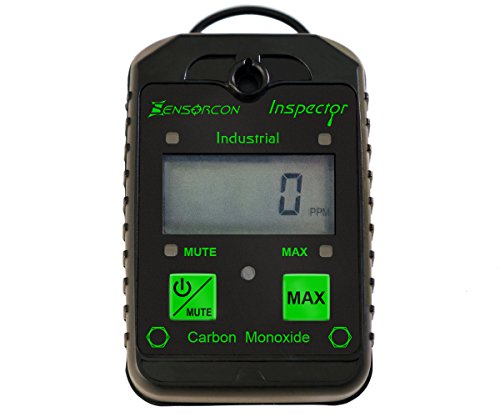
The Sensorcon Industrial CO Monitor is built for wet, dirty environments that would kill lesser devices. Its IP67 rating means it is fully waterproof and dust-tight, surviving immersion in up to one meter of water for 30 minutes. The measurement range extends from 1 to 1,999 ppm, with a low-level alert at 35 ppm and a high-level alert at 200 ppm, matching industrial safety standards.
Weighing just 4 ounces with a compact form factor, it clips easily to a flight suit pocket or hangs from a lanyard. The battery lasts up to two years under continuous operation, and the device features three alert modes: visual, audible, and vibrating.
The alarm threshold at 35 ppm is higher than the most sensitive aviation detectors, meaning it may not detect subtle, slow leaks before they accumulate to dangerous levels during a long flight. However, for pilots who operate in high-moisture conditions — seaplane bases, coastal operations, or tropical climates — the waterproof build provides reliability that no other unit in this comparison can match.
Why it’s great
- Fully IP67 waterproof — survives immersion and heavy rain exposure
- Wider measurement range up to 1,999 ppm for severe leaks
- American‑made build with two‑year continuous battery life
Good to know
- Alarm threshold at 35 ppm is higher than aviation‑focused detectors
- No backlight button for easy reading in dark cockpits at night
9. Portable CO Detector FD-101-CO
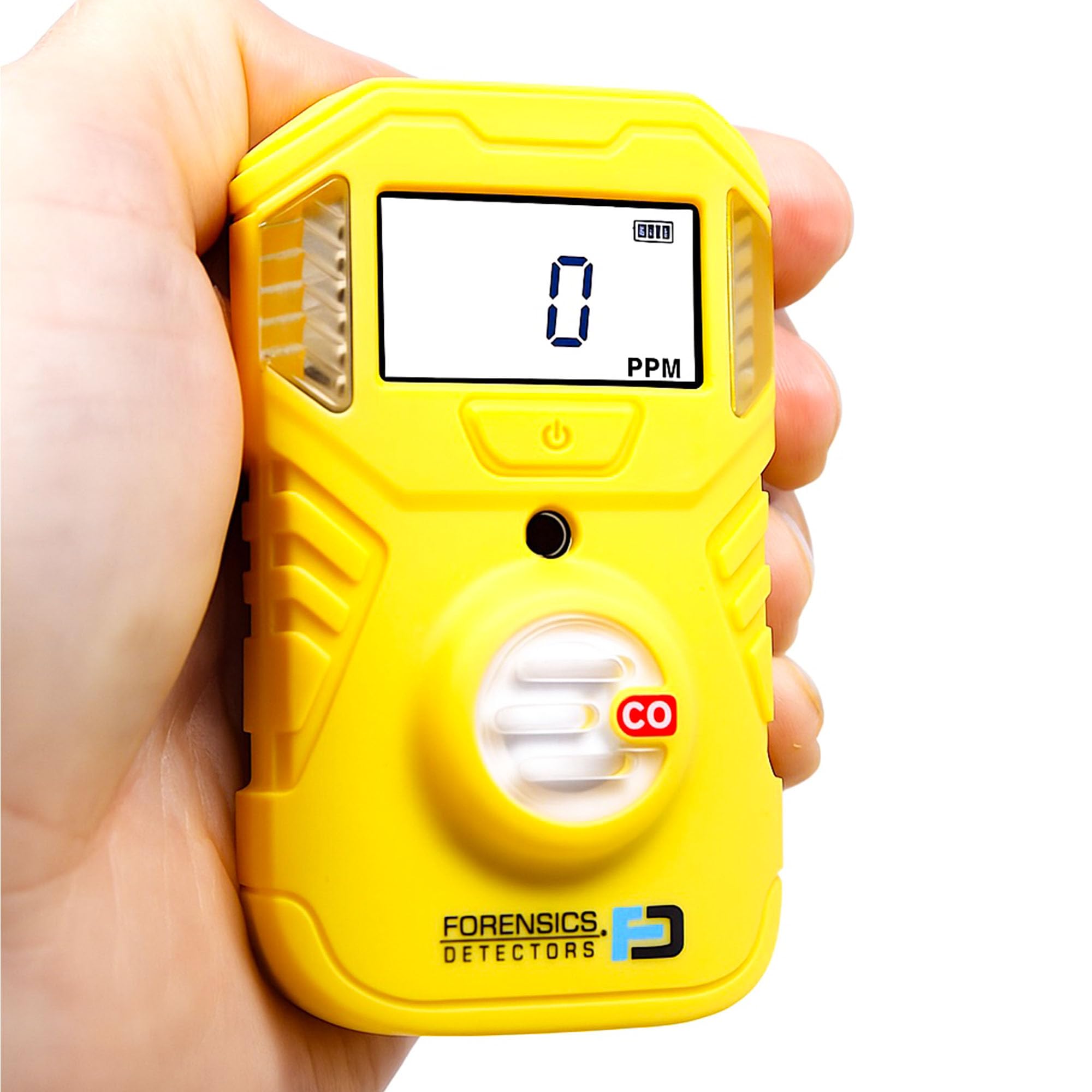
The Forensics FD-101-CO is the entry-level portable CO detector that punches above its price point with industrial specs. It measures CO from 0 to 1,000 ppm with 1 ppm resolution using a factory-calibrated electrochemical sensor, and features three alarm modes — buzzer, LED, and vibration — ensuring you notice a reading regardless of cockpit noise or visual distractions.
Durability is a highlight: the rubberized housing passed a 10-foot drop test and carries an IP67 waterproof rating, meaning it can survive being knocked off a wing strut or dropped into a puddle during a pre-flight. The two-year disposable battery keeps weight down to 3.2 ounces, and the belt clip keeps it secure during taxi and turbulence. The NIST-calibrated certificate in the box confirms accuracy out of the box.
The non-replaceable battery is an environmental trade-off — the entire unit is disposable after two years or when the sensor reaches end-of-life. Additionally, the OSHA alarm thresholds (TWA and STEL) are configurable, which gives you some flexibility, but the default programming is geared toward workplace compliance rather than the ultra-low level detection some pilots prefer for cabin monitoring.
Why it’s great
- Passed 10‑foot drop test and IP67 waterproof for extreme durability
- NIST calibration certificate included for verified accuracy
- Low 3.2‑ounce weight with secure belt clip for cockpit wear
Good to know
- Non‑replaceable battery means the unit is disposable after 2 years
- Default alarm thresholds set for OSHA compliance, not aviation low‑level
FAQ
Can I use a home carbon monoxide detector in my aircraft?
What does the NIST calibration certificate guarantee?
How often should I replace my aircraft CO detector sensor?
Final Thoughts: The Verdict
For most users, the best aircraft carbon monoxide detector winner is the Sensorcon AV8 Inspector Pro because it was purpose-designed for the cockpit with triple alarms that penetrate headset noise and a two-year battery life that eliminates charging routines. If you want the most sensitive low-level detection for early warning, grab the Vehicle & Aircraft CO Detector v2.0. And for comprehensive hangar and cabin multi-gas monitoring, nothing beats the Forensics 4 Gas Monitor FD-4A.