
Stepping into photography for the first time means choosing between a DSLR and a mirrorless system, each with its own trade-offs in size, battery life, and lens compatibility. A beginner camera needs to balance ease of use with enough manual control to grow your skills without overwhelming you from the start.
I’m Min — the co-founder and writer behind Gadgets Feed. I’ve spent countless hours dissecting technical specifications, studying user experience reports, and comparing sensor performance across entry-level models to identify the cameras that truly help new photographers learn the craft. This guide focuses on the real specs that matter for a first camera body.
After careful analysis of autofocus systems, sensor quality, and kit lens versatility, I’ve compiled the best beginner photography camera options available right now to help you take that first shot with confidence.
How To Choose The Best Beginner Photography Camera
Starting out in photography means finding a camera that teaches you the exposure triangle — aperture, shutter speed, and ISO — without making the process frustrating. The right entry-level body gives you intuitive controls, a capable kit lens, and room to improve as your skills develop.
Sensor Size and Megapixels
An APS-C sensor with at least 20 megapixels offers a solid balance between image quality and affordable lens options. Full-frame sensors provide better low-light performance and shallower depth of field, but typically cost more and require pricier glass. For a beginner, a good APS-C sensor with 24 megapixels delivers plenty of resolution for prints and cropping.
Autofocus System and Burst Rate
A reliable autofocus system with phase-detection points and subject tracking makes capturing sharp images of moving subjects much easier. Look for at least 9 to 49 autofocus points, though more points with cross-type sensors improve accuracy. A continuous shooting speed of 5 to 8 frames per second helps you catch action without missing the decisive moment.
Kit Lens Versatility
The included kit lens defines your initial shooting range and learning experience. A standard zoom like 18-55mm or 18-140mm covers wide-angle to short telephoto, giving you practice with landscapes, portraits, and everyday scenes. Optical image stabilization in the lens helps reduce blur from hand shake, especially in lower light.
Quick Comparison
On smaller screens, swipe sideways to see the full table.
| Model | Category | Best For | Key Spec | Amazon |
|---|---|---|---|---|
| Canon EOS R100 | Mirrorless | Best Overall Starter | 24.1MP APS-C, 4K Video | Amazon |
| Panasonic LUMIX G85 | Mirrorless | Best Stabilization | 16MP MFT, 5-Axis IBIS | Amazon |
| Nikon D7500 | DSLR | Best DSLR Experience | 20.9MP APS-C, 8 fps | Amazon |
| FUJIFILM X-T30 III | Mirrorless | Best Film Simulations | 26.1MP APS-C, AI AF | Amazon |
| Canon EOS RP | Mirrorless | Best Full-Frame Entry | 26.2MP Full-Frame, 4K | Amazon |
| Sony a7 III | Mirrorless | Best All-Rounder Premium | 24.2MP Full-Frame, 693 AF | Amazon |
| FUJIFILM X-E5 | Mirrorless | Best Premium Compact | 40.2MP APS-C, 7-Stop IBIS | Amazon |
| Nikon D3500 | DSLR | Best Budget DSLR | 24.2MP APS-C, 5 fps | Amazon |
| Canon EOS Rebel T7 Bundle | DSLR | Best Value Bundle | 24.1MP APS-C, 3 fps | Amazon |
| Sony Alpha a3000 | Mirrorless | Budget Mirrorless Pick | 20.1MP APS-C, 25 AF | Amazon |
| Sony Alpha ZV-E10 | Mirrorless | Best for Vlogging | 24.2MP APS-C, 425 AF | Amazon |
In‑Depth Reviews
1. Canon EOS R100 Mirrorless Camera with RF-S18-45mm Lens Kit

The Canon EOS R100 packs a 24.1MP APS-C CMOS sensor with a DIGIC 8 processor, delivering sharp stills and 4K video at 24 fps. Its Dual Pixel CMOS AF covers 143 zones with human face and eye detection, making autofocus reliable for portraits and everyday shooting. The 3-inch LCD screen provides a clear live view for framing your shots.
Weighing just 356 grams with the kit lens, this is the lightest and smallest body in the EOS R series, ideal for carrying on long walks or travels. The RF-S18-45mm F4.5-6.3 IS STM lens offers optical image stabilization up to 4 stops, reducing blur in handheld shots. Continuous shooting reaches 6.5 fps in One-Shot AF, fast enough for casual action.
The menu system is beginner-friendly with a custom quick menu that simplifies access to key settings. Bluetooth and Wi-Fi enable easy photo transfer to your smartphone. The battery lasts a full day of moderate shooting, though the charger is sold separately. For a new photographer, this mirrorless body provides a modern foundation with room to grow into more advanced RF lenses.
Why it’s great
- Excellent autofocus with face and eye detection for people and animals
- Compact and lightweight design perfect for travel and everyday carry
- 4K video capability adds creative flexibility for beginners
Good to know
- No in-body image stabilization — relies on lens-based IS
- Charger not included in the box
2. Panasonic LUMIX G85 4K Mirrorless Camera with 12-60mm Lens

The Panasonic LUMIX G85 uses a 16MP Micro Four Thirds sensor with no low-pass filter, resulting in a noticeable boost in fine detail capture. Its standout feature is the 5-axis in-body image stabilization (IBIS) that works with lens-based OIS for smooth handheld shots and 4K video. The 12-60mm Power O.I.S. kit lens provides a versatile 24-120mm equivalent range.
The magnesium alloy body is weather-sealed against dust and moisture, offering durability you rarely see at this level. A 2.36M-dot OLED electronic viewfinder and a 3-inch articulating touchscreen give you flexible framing options. 4K Photo mode captures bursts at 30 fps, and Post Focus lets you select the focus point after taking the shot.
Autofocus uses 49 points with eye detection and performs reliably in good light, though it slows in very low light for 4K video. Battery life is average, and there is no headphone jack for audio monitoring. The Micro Four Thirds system offers a wide selection of affordable lenses, making this a smart long-term investment for a beginner interested in video and stills.
Why it’s great
- Industry-leading in-body stabilization for sharp handheld shots
- Weather-sealed magnesium alloy body for outdoor shooting
- 4K Photo and Post Focus features add creative flexibility
Good to know
- Battery life is mediocre on a full charge
- Autofocus slows in low light for 4K video recording
3. Nikon D7500 DSLR with AF-S DX 18-140mm VR Lens

The Nikon D7500 packs a 20.9MP APS-C sensor with an EXPEED 5 processor inherited from the flagship D500, delivering class-leading image quality up to ISO 25600. Its 51-point autofocus system includes 15 cross-type sensors with Group Area AF, providing reliable tracking for sports and wildlife. The 3.2-inch tilting touchscreen LCD makes live view shooting intuitive.
Burst shooting reaches 8 fps, which is excellent for capturing fast action without missing frames. The included AF-S DX 18-140mm f/3.5-5.6G ED VR lens gives you a 27-210mm equivalent range, covering wide-angle landscapes to telephoto portraits, with Vibration Reduction to minimize camera shake. 4K UHD video at 30 fps with stereo sound and power aperture control adds professional video capability.
The traditional DSLR optical viewfinder provides a clear, lag-free view that many beginners find easier for learning composition. Battery life is outstanding at around 950 shots per charge. The body is weather-resistant but heavier than mirrorless alternatives. For a beginner who wants a robust DSLR with long lens reach and fast burst speeds, this is a strong contender.
Why it’s great
- Excellent burst rate of 8 fps for action and sports photography
- 51-point AF system with 15 cross-type sensors for accurate tracking
- Versatile 18-140mm kit lens covers wide to telephoto range
Good to know
- Heavier body compared to mirrorless options in this class
- No built-in focus motor for older AF lenses
4. FUJIFILM X-T30 III Mirrorless Camera Body, Silver
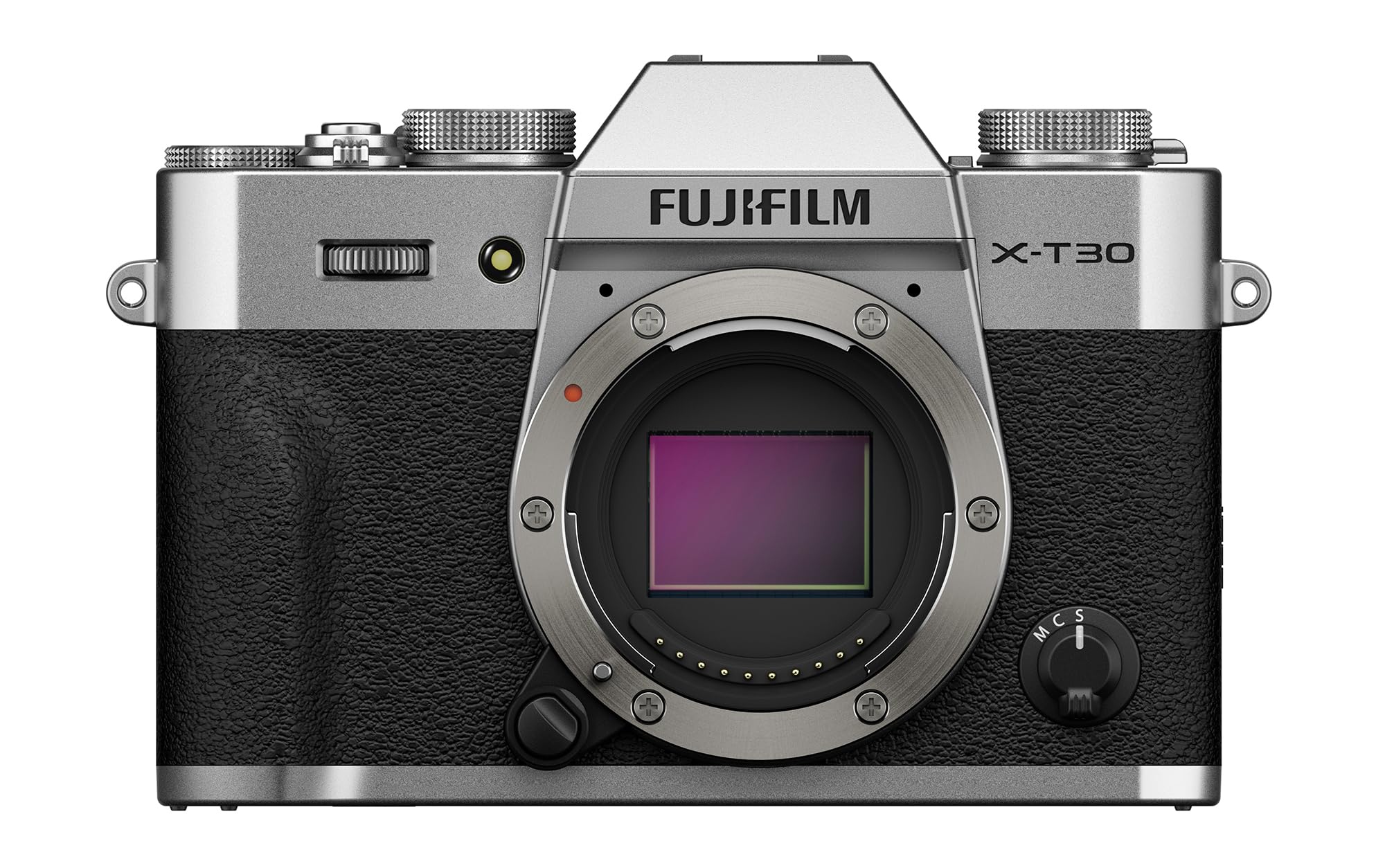
The FUJIFILM X-T30 III features a 26.1MP APS-C X-Trans CMOS 4 sensor with the X-Processor 4, offering exceptional color science and 20 built-in Film Simulation modes. These presets produce stunning JPEGs straight out of camera, reducing the need for post-processing — a huge advantage for beginners. Its AI-powered subject detection autofocus uses 179 phase-detection points to track faces, eyes, animals, and vehicles.
The compact body with analog dials for ISO, shutter speed, and exposure compensation encourages hands-on learning of manual exposure. The 2.36M-dot OLED electronic viewfinder and 3-inch tilting touchscreen provide clear framing. 4K video at 30 fps with F-Log recording gives video creators room to color grade. The XC13-33mmF3.5-6.3 OIS kit lens covers the wide to standard range with optical stabilization.
Battery life is moderate, and the body lacks in-body stabilization, relying on lens-based OIS. The menu system can feel dense for absolute beginners, but the Auto mode makes it easy to hand the camera to a friend. For someone who values rich colors and a classic shooting experience, the X-T30 III offers a unique entry into photography.
Why it’s great
- Film Simulation modes deliver beautiful JPEGs without editing
- AI-powered subject detection autofocus tracks faces and animals
- Analog control dials teach manual exposure intuitively
Good to know
- No in-body image stabilization
- Battery life is average for the class
5. Canon EOS RP Full-Frame Mirrorless with RF24-105mm Lens

The Canon EOS RP brings a 26.2MP full-frame CMOS sensor to a beginner-friendly price point, offering significantly better low-light performance and shallower depth of field than APS-C cameras. Its DIGIC 8 processor enables Dual Pixel CMOS AF with 4779 selectable positions for fast, smooth autofocus in stills and video. The RF24-105mm F4-7.1 IS STM kit lens provides up to 5 stops of optical stabilization.
Weighing just 485 grams with the lens, this is one of the most compact full-frame mirrorless systems available, ideal for travel and everyday carry. The 3-inch vari-angle touchscreen allows flexible framing from high and low angles. 4K UHD video at 24 fps comes with a 1.6x crop, but 1080p at 60 fps delivers excellent quality with face detection AF.
The battery life is decent, and the menu system is clean and intuitive, making the transition from smartphone photography smoother. The RF lens mount gives access to Canon’s growing lineup of modern glass, and EF/EF-S lenses work via an adapter. For a beginner wanting the image quality jump to full-frame without the premium price, the EOS RP is a compelling choice.
Why it’s great
- Full-frame sensor delivers superior low-light and bokeh performance
- Compact and lightweight for a full-frame mirrorless system
- Vari-angle touchscreen makes creative framing easy
Good to know
- 4K video has a 1.6x crop and 24 fps limit
- Kit lens aperture is slow at the telephoto end
6. Sony a7 III Full-Frame Mirrorless with 28-70mm Lens

The Sony a7 III is a benchmark full-frame mirrorless camera featuring a 24.2MP back-illuminated Exmor R CMOS sensor with 15 stops of dynamic range. Its 693 phase-detection and 425 contrast-detection AF points cover 93% of the frame, providing industry-leading autofocus speed and accuracy for stills and video. The 28-70mm f/3.5-5.6 OSS kit lens includes optical stabilization for steadier handheld shots.
Burst shooting reaches 10 fps with silent or mechanical shutter, keeping AE and AF tracking active. The 2.36M-dot OLED electronic viewfinder and 3-inch tilting LCD are clear and responsive. 4K video at 30 fps with full pixel readout and no pixel binning delivers outstanding sharpness. The NP-FZ100 battery lasts approximately 710 shots per charge, a major advantage over older Sony models.
The body feels solid with a deep grip, and the menu system, while dense, becomes manageable with use. The full-frame sensor gives beginners access to professional image quality and lens options that can grow with their skills. For a beginner willing to invest in a system that will last through advanced learning, this camera is hard to beat.
Why it’s great
- Superb autofocus coverage with 693 phase-detection points
- 10 fps burst shooting with silent mechanical shutter option
- Long battery life—one of the best in full-frame mirrorless
Good to know
- Menu system can be complex for first-time users
- Kit lens aperture is restrictive in very low light
7. FUJIFILM X-E5 Mirrorless Digital Camera with XF23mmF2.8 Lens Kit
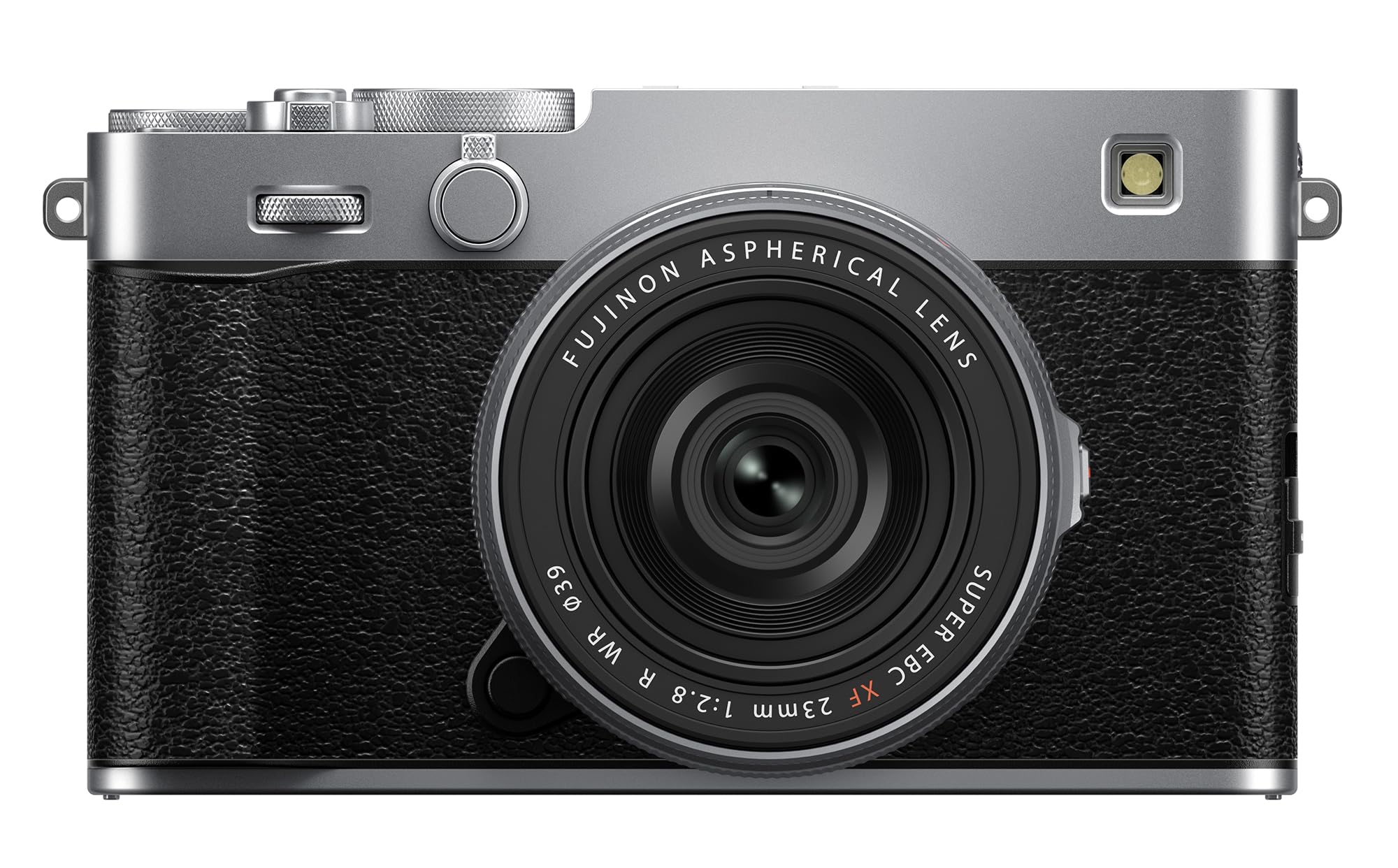
The FUJIFILM X-E5 marks a significant step forward with a 40.2MP X-Trans 5 HR sensor and X-Processor 5 engine, delivering the highest resolution in this guide. Its in-body image stabilization provides up to 7 stops of shake correction at the center and 6 stops at the edges, enabling sharp handheld shots in very low light. The XF23mmF2.8 R WR pancake lens pairs perfectly with the compact rangefinder-style body.
AI-powered subject detection autofocus uses 425 phase-detection points to track a wide range of subjects, including birds, cars, and animals. A first for X Series, the customizable Film Simulation dial sits under the top plate, giving quick access to classic recipes and three custom slots. The 40MP sensor also enables a digital teleconverter that crops to 1.4x or 2x without quality loss.
The aluminum top plate and analog controls evoke a vintage aesthetic while providing modern performance. The body is not weather-sealed, and battery life is typical for a compact mirrorless. For a beginner who values resolution, film-like color science, and a small carry footprint, the X-E5 offers a premium experience that encourages everyday shooting.
Why it’s great
- Highest resolution sensor at 40.2MP for detailed cropping and printing
- 7-stop IBIS ensures sharp shots in challenging light
- Film Simulation dial and analog controls for creative shooting
Good to know
- Not weather-sealed, limiting use in rain or dust
- Higher price point may exceed some beginner budgets
8. Nikon D3500 24.2MP DSLR with AF-P DX 18-55mm VR Lens (Renewed)

The Nikon D3500 is a classic entry-level DSLR with a 24.2MP DX-format CMOS sensor that omits the optical low-pass filter for sharper images. Its native ISO range of 100-25600 handles a variety of lighting conditions well for the price. The Guide Mode built into the menu system teaches beginners about aperture, shutter speed, and composition step by step.
The AF-P DX 18-55mm f/3.5-5.6G VR lens provides smooth, quiet autofocus and vibration reduction for handheld shooting. The 3-inch 921K-dot LCD monitor is clear and bright for reviewing images. Continuous shooting runs at 5 fps, suitable for everyday subjects but limited for fast action. The optical viewfinder is large and bright, offering a traditional shooting experience.
Battery life is excellent — up to 1550 shots per charge — so you can shoot all day without worrying. The body is lightweight at just 415 grams with the battery and lens. The Snapbridge app connectivity can be unreliable, and there is no microphone input for video. For a budget-conscious beginner who prefers an optical viewfinder and long battery life, the D3500 is a reliable choice.
Why it’s great
- Guide Mode teaches photography fundamentals in-camera
- Excellent battery life for extended shooting sessions
- Sharp 24.2MP sensor with no low-pass filter
Good to know
- Limited to 5 fps burst with 11 AF points
- Snapbridge app connectivity can be frustrating
9. Canon EOS Rebel T7 Bundle with 18-55mm + 420-800mm Lenses (Renewed)

The Canon EOS Rebel T7 is a staple entry-level DSLR featuring a 24.1MP APS-C CMOS sensor with a DIGIC 4+ processor. The bundle includes the standard EF-S 18-55mm f/3.5-5.6 IS II lens plus a 420-800mm f/8.3 manual telephoto zoom for distant subjects like wildlife and moon photography. A 64GB SD card, tripod, sling bag, filters, and spare battery round out the package.
The 9-point autofocus system with a center cross-type sensor works well for stationary subjects, and Scene Intelligent Auto mode helps beginners get good results in common situations. The 3-inch 920K-dot LCD monitor provides a clear view for playback and live view shooting. Full HD 1080p video at 30 fps captures decent footage for a DSLR at this level.
The extra telephoto lens is manual focus only and does not communicate EXIF data to the camera, requiring some practice to use effectively. The burst rate is limited to 3 fps, and the DIGIC 4+ processor is older. For a beginner who wants a complete kit with multiple accessories to explore different types of photography immediately, this bundle delivers great value.
Why it’s great
- Comprehensive bundle includes telephoto lens and accessories
- Scene Intelligent Auto mode helps beginners get great shots
- Familiar Canon interface and large lens ecosystem
Good to know
- Burst rate is slow at 3 fps for action
- Extra telephoto lens is manual focus only
10. Sony Alpha a3000 ILCE-3000K Mirrorless with 18-55mm OSS Lens

The Sony Alpha a3000 features a 20.1MP Exmor APS-C HD CMOS sensor, producing images with good color rendition and low distortion for its class. Its DSLR-style body with a deep grip feels comfortable and secure in hand, resembling a traditional camera more than smaller mirrorless alternatives. The 18-55mm OSS lens includes optical SteadyShot for reducing blur from camera shake.
The 25-point contrast-detection autofocus system covers the frame decently, and the camera supports full HD video recording at 30 fps. The electronic viewfinder (EVF) is low resolution at 230K dots but helps for composition in bright sunlight. The 3-inch LCD screen is fixed and provides adequate live view framing.
Battery life is a weak point — draining 20-30% per hour — and there is no external charger included, requiring in-camera USB charging. The EVF and LCD are both low resolution, making manual focus and fine detail checking difficult. For an absolute beginner on a tight budget who wants a mirrorless APS-C sensor, the a3000 offers an entry point, but the compromises are real.
Why it’s great
- APS-C sensor delivers good image quality at this budget level
- Comfortable grip and familiar DSLR-style ergonomics
- Lightweight body for easy carrying
Good to know
- Low-resolution EVF and LCD make detail checking difficult
- Battery drains quickly — 20-30% per hour of use
11. Sony Alpha ZV-E10 APS-C Mirrorless Vlog Camera
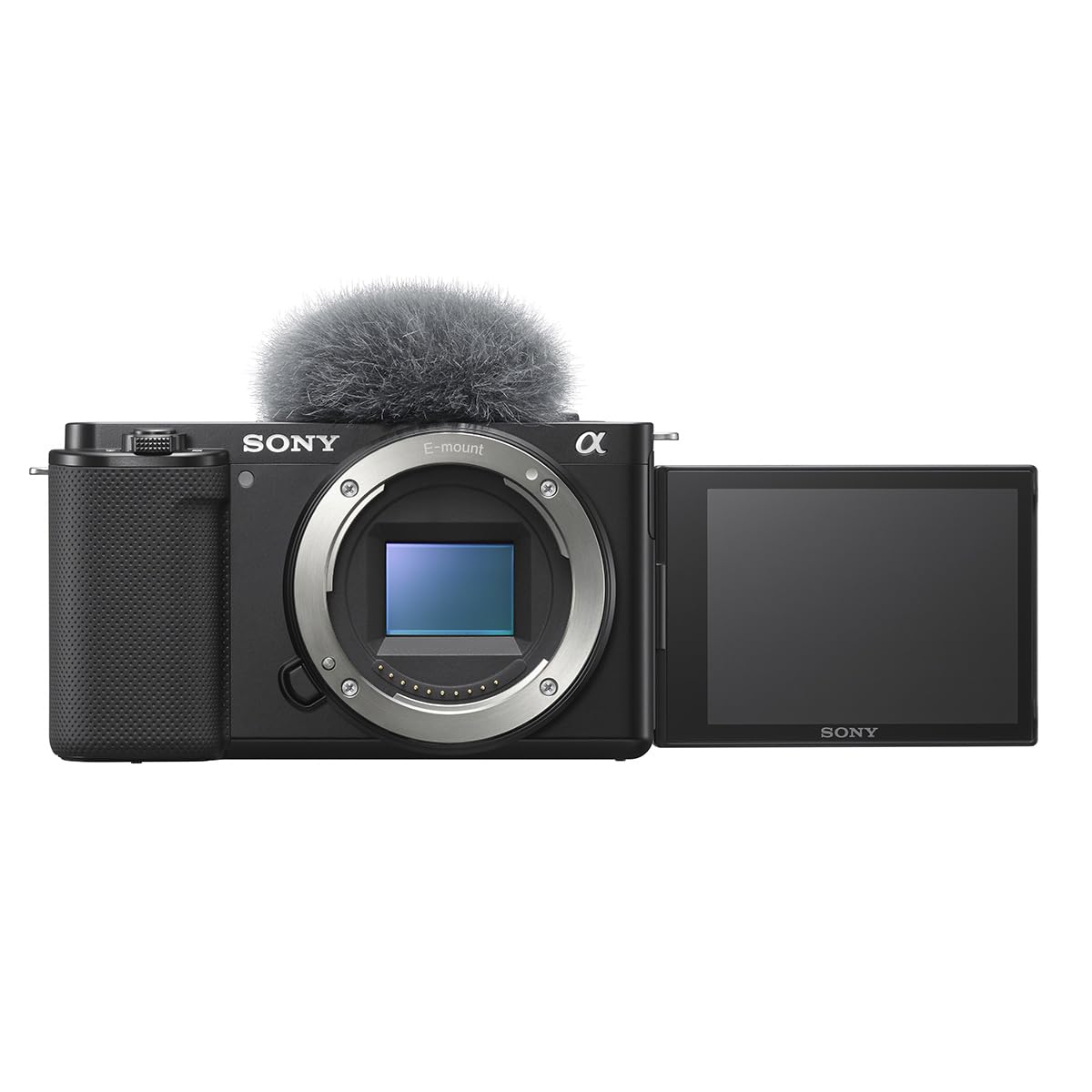
The Sony ZV-E10 is a 24.2MP APS-C Exmor CMOS sensor camera with a BIONZ X processor, designed specifically for content creators. Its 4K video oversampled from 6K with full pixel readout delivers sharp, detailed footage. The 425-point phase-detection autofocus with real-time Eye AF for humans and animals ensures subjects stay in sharp focus during video recording.
Product Showcase Setting transitions focus seamlessly from a face to an object held up to the lens, ideal for review videos. The Background Defocus button instantly toggles between shallow and deep depth of field. The flip-out 3-inch touchscreen faces forward for easy self-recording, and the built-in directional microphone captures clear audio. USB streaming delivers high-quality live video without extra hardware.
The body lacks in-body stabilization, so you need stabilized lenses or a gimbal for smooth walking shots. Rolling shutter can be noticeable, and 4K 30p uses a heavy crop that limits wide-angle shooting. Battery life is short — about 25 minutes in 4K — so spare batteries are essential. For a beginner focused on vlogging, streaming, or content creation, the ZV-E10 offers specialized tools that simplify the process.
Why it’s great
- Product Showcase and Background Defocus buttons simplify video creation
- Excellent autofocus with real-time Eye AF for humans and animals
- Compact and lightweight with a forward-facing flip screen
Good to know
- No in-body stabilization — requires stabilized lenses or a gimbal
- Short battery life, especially when recording 4K video
FAQ
Should a beginner start with a DSLR or a mirrorless camera?
How many megapixels do I need as a beginner photographer?
Is a kit lens good enough for learning photography?
Final Thoughts: The Verdict
For most users, the best beginner photography camera winner is the Canon EOS R100 because it combines a modern mirrorless system with intuitive controls and a versatile kit lens at a reasonable entry point. If you want the most durable build and best stabilization for video, grab the Panasonic LUMIX G85. And for the full-frame image quality that will grow with your skills for years, nothing beats the Sony a7 III.