
The jump from smartphone photography to a dedicated camera and lens system is defined by one thing: control. You gain the ability to manipulate depth of field, freeze fast-moving subjects with a crisp shutter, and capture usable detail in lighting conditions that would cripple a phone sensor. The choice, then, isn’t just about megapixels—it’s about which pairing of body and glass delivers the specific look and handling you need for your style of shooting.
I’m Min — the co-founder and writer behind Gadgets Feed. I’ve spent hundreds of hours analyzing sensor readout speeds, lens element designs, autofocus point coverage, and stabilization implementation to match the right kit with real-world shooting scenarios across this entire price spectrum.
Whether you’re building your first interchangeable-lens kit or upgrading your rig, this guide breaks down the top contenders for the best camera and lens combinations for travel, video creation, wildlife, and studio work.
How To Choose The Best Camera And Lens
Choosing a camera and lens system is about matching the gear’s physical capabilities to your subject. A wedding photographer needs fast, reliable autofocus and a large sensor for creamy backgrounds. A backpacking hiker needs a compact body and a versatile zoom that doesn’t weigh them down. A content creator needs unlimited recording, image stabilization, and a flip-out screen. Understanding these three trade-offs will steer you to the right combination.
Sensor Size: Full-Frame vs. APS-C vs. Micro Four Thirds
Full-frame sensors (like the 24.2MP Exmor R in the Sony a7 III) capture more light and shallower depth of field than APS-C sensors, but they come with larger, heavier lenses. APS-C sensors (found in the Sony ZV-E10 and Canon EOS Rebel T7) provide a 1.5x to 1.6x crop factor, effectively extending your telephoto reach without needing a longer lens. Micro Four Thirds sensors (like the 20MP sensor in the OM SYSTEM OM-1 Mark II) offer a 2x crop factor, which is fantastic for wildlife and macro, and enable dramatically smaller body and lens designs.
Autofocus System: Phase Detection vs. Contrast Detection
For capturing sharp images of moving subjects—kids, pets, birds, athletes—a phase-detection autofocus (PDAF) system is essential. The Sony a7 III uses 693 phase-detection points covering 93% of its frame, while the Canon EOS RP uses Dual Pixel CMOS AF. Contrast-detect-only systems (like the Panasonic G97 in certain modes) can hunt and lag in low light. Look for “hybrid AF” systems that combine both types for the fastest lock-on speeds.
Lens Aperture and Stabilization
A constant f/2.8 aperture lens (like the OM SYSTEM 12-40mm f/2.8 PRO) allows four times more light to hit the sensor than a variable f/3.5-5.6 kit zoom at the telephoto end, letting you shoot in darker environments and achieve thinner depth of field. In-body image stabilization (IBIS) in the camera body, such as the 5-stop system in the Panasonic LUMIX G97, works with any lens you mount, while lens-based optical stabilization (like the 5.5-stop IS in the Canon RF100-400mm) is more effective with that specific lens.
Quick Comparison
On smaller screens, swipe sideways to see the full table.
| Model | Category | Best For | Key Spec | Amazon |
|---|---|---|---|---|
| Panasonic LUMIX G97 | Mirrorless MFT | Hybrid Shooting & Stability | 5-stop 5-axis Dual I.S.2 IBIS | Amazon |
| Canon RF100-400mm F5.6-8 | Telephoto Lens | Wildlife & Birding | 5.5 Stops Optical IS | Amazon |
| Canon EOS Rebel T7 Kit | DSLR Kit | Entry-Level Learning & Value | 24.1MP APS-C Sensor | Amazon |
| Sony ZV-E10 Bundle | Vlogging Mirrorless | Content Creation & Vlogging | 425-Point Fast Hybrid AF | Amazon |
| Nikon NIKKOR Z 24-120mm f/4 | Zoom Lens | All-in-One Travel Zoom | Constant f/4 Aperture | Amazon |
| Canon EOS RP + RF24-105mm | Full-Frame Mirrorless | Entry Full-Frame Travel | 26.2MP Full-Frame CMOS | Amazon |
| FUJIFILM X-T30 III | Mirrorless APS-C | Film Simulations & Style | 20 Film Simulations | Amazon |
| Nikon Z50 II | Mirrorless APS-C | Travel & Portraits | 31 Built-In Color Presets | Amazon |
| Sony a7 III + 28-70mm | Full-Frame Mirrorless | Low-Light & Fast AF | 693 Phase-Detection Points | Amazon |
| Panasonic LUMIX S5IIX | Full-Frame Mirrorless | Professional Hybrid Video/Photo | 5.8K ProRes Internal Recording | Amazon |
| OM SYSTEM OM-1 Mark II | Mirrorless MFT | Weather-Sealed Action | IP53 Dust/Splash/Freeze Rating | Amazon |
In‑Depth Reviews
1. Panasonic LUMIX G97 Compact Mirrorless Camera
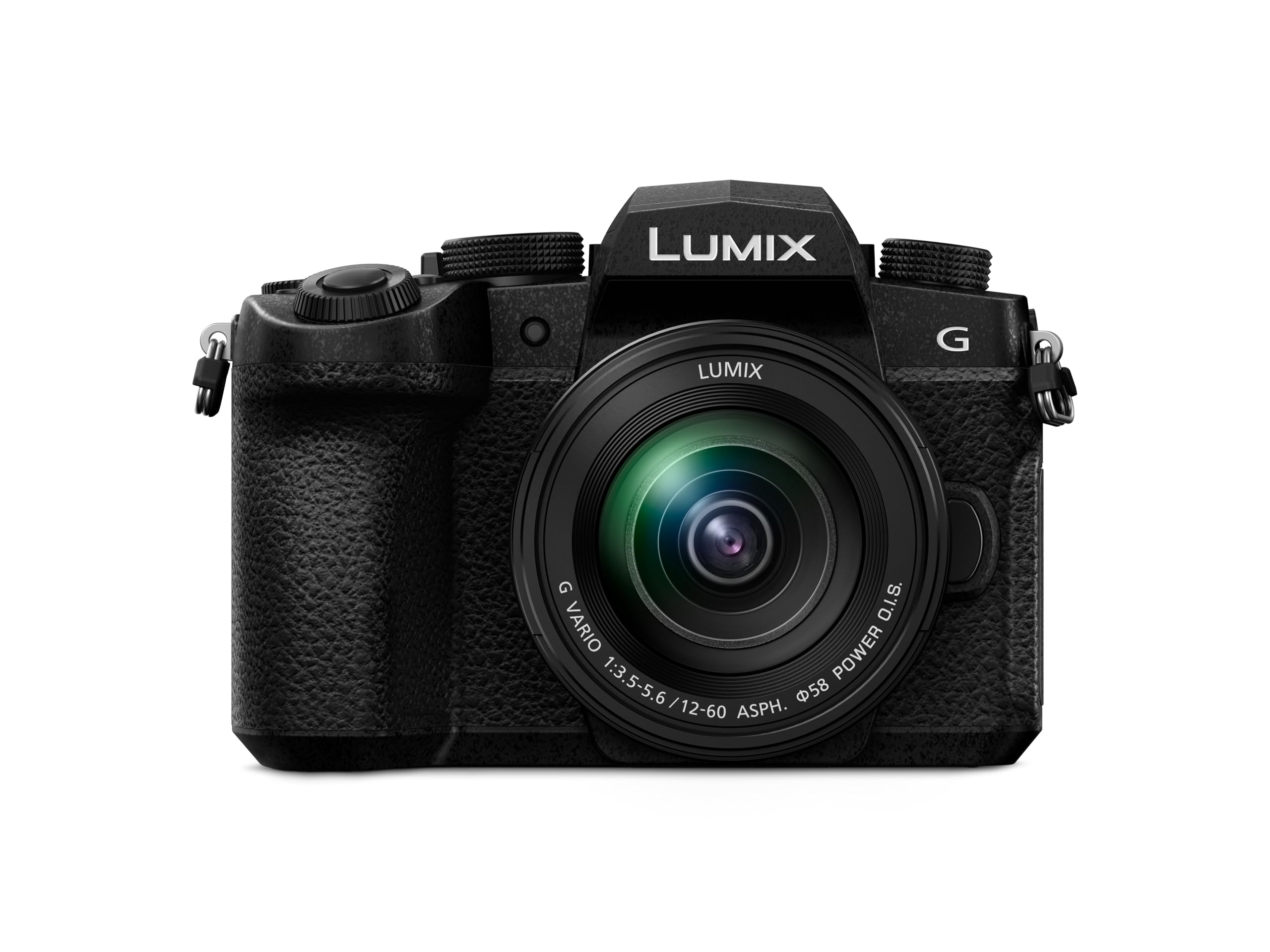
The G97 is the rare mid-tier mirrorless that packs a 5-stop 5-axis Dual I.S.2 stabilization system into a compact Micro Four Thirds body, allowing you to handhold at shutter speeds that would blur on almost any other camera in its class. The 20MP sensor delivers higher resolution than a typical smartphone, and the Live View Composite Mode lets you build star trails or light trails in real time without overexposing the foreground—a feature usually reserved for far pricier bodies.
Paired with the included LUMIX G Vario 12-60mm f/3.5-5.6 lens, you get a versatile 24-120mm equivalent zoom range that covers everything from wide landscapes to tight portraits. The 2,360k-dot OLED Live View Finder is crisp even in bright sunlight, and the free-angle LCD screen makes overhead or ground-level shots easy. That said, the contrast-detect autofocus can hunt in dimly lit scenes, and the 4K 30p video, while unlimited, crops slightly compared to FHD.
Battery life is adequate at roughly 300 shots per charge, so a spare is wise for a full day of shooting. The magnesium alloy body feels solid in hand, and physical dials for ISO, white balance, and exposure compensation give it the tactile control that hybrid shooters will appreciate. For the balance of stabilization, lens versatility, and build quality, this is the strongest all-around kit at this level.
Why it’s great
- Excellent 5-axis IBIS for handheld stability
- Versatile 12-60mm kit lens with 4x zoom
- Physical control dials for fast settings access
Good to know
- Contrast-detect AF struggles in low light
- Battery life is around 300 shots
- 4K 30p video has a slight crop
2. Canon RF100-400mm F5.6-8 IS USM Lens

This RF-mount telephoto zoom delivers an effective 160-640mm equivalent field of view on APS-C bodies, making it a strong choice for birding, wildlife, and outdoor sports without demanding a second mortgage. The 5.5-stop Optical Image Stabilizer means you can handhold at 400mm at shutter speeds as slow as 1/30s and still produce sharp frames, while pairing it with an EOS R body that has IBIS boosts correction to 6 stops.
The Nano USM autofocus is quick and near-silent, which is essential for video wildlife work and for keeping up with erratic bird movement. Minimum focus distance of 2.89 feet at 200mm gives you a maximum magnification of 0.41x at 400mm, allowing surprisingly decent close-up shots of butterflies or flowers without a dedicated macro lens.
The trade-off is the variable f/5.6-8 aperture, which restricts low-light performance; you’ll struggle at dawn or dusk without raising ISO substantially. The zoom ring turns in the opposite direction of Canon’s EF lenses, which can trip up users transitioning from older gear, and the barrel lacks weather sealing, so a protective filter is recommended for dusty or damp conditions. For the weight and cost, though, this is the most reach-per-dollar lens in the RF lineup.
Why it’s great
- Excellent 5.5-stop optical stabilization
- Nano USM AF is fast and quiet
- 0.41x macro magnification at 400mm
Good to know
- Slow f/5.6-8 aperture limits low-light use
- No weather sealing on the barrel
- Zoom ring direction opposite to EF lenses
3. Canon EOS Rebel T7 Double Zoom Bundle
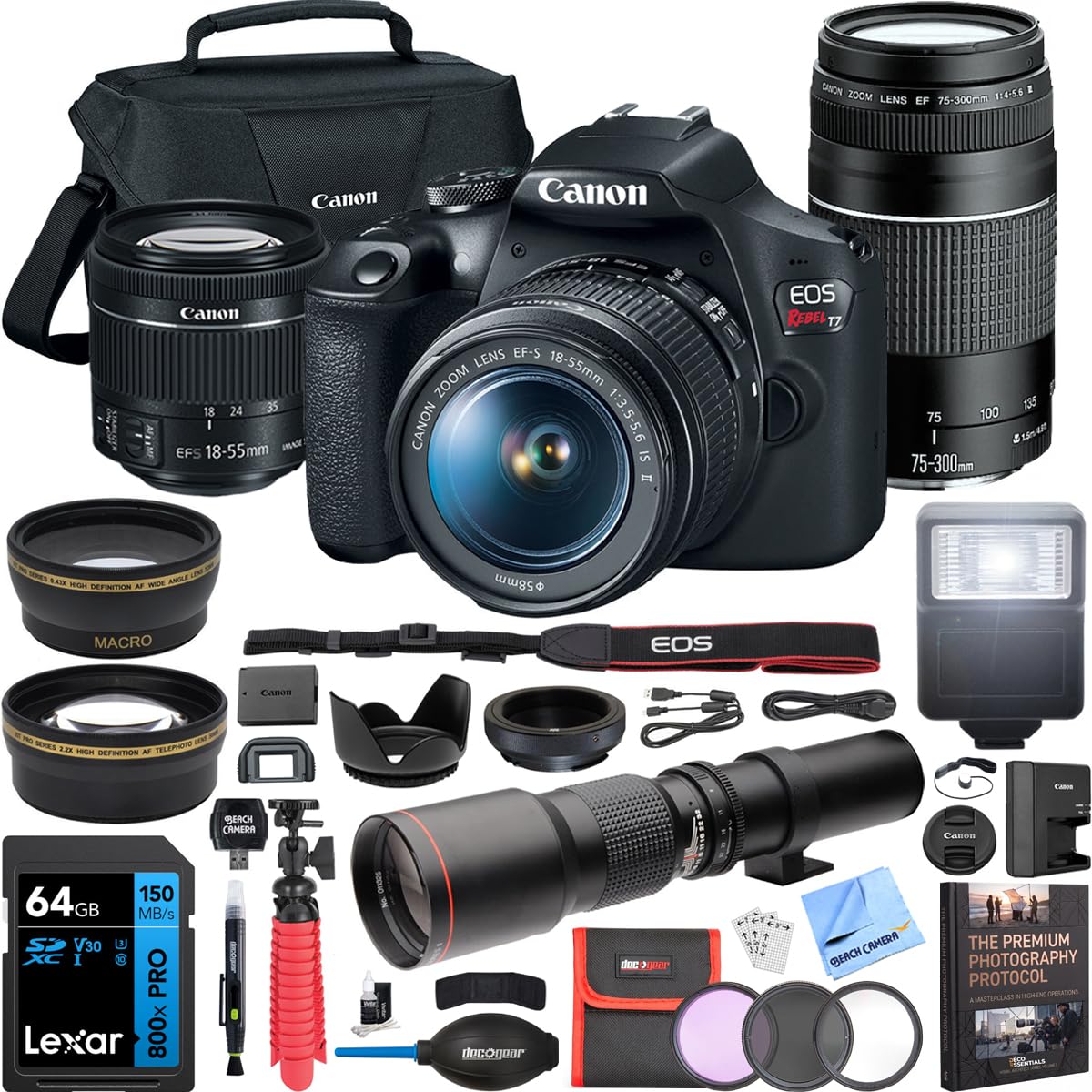
The Rebel T7 is the classic entry ramp into interchangeable-lens photography, and this bundle piles on a 500mm preset telephoto, a wide-angle adapter, a flash, a tripod, a 64GB memory card, and photo editing software, giving you everything you need to start shooting day one. The 24.1MP APS-C sensor with the DIGIC 4+ processor delivers solid image quality for its class, with most of the image quality improvement over a phone coming from the sensor size rather than the processor speed.
The included EF-S 18-55mm f/3.5-5.6 IS II and EF 75-300mm f/4-5.6 III lenses cover both wide-angle and telephoto perspectives, though the 75-300mm is known for being soft at its full 300mm extension and slow to focus. The optical viewfinder offers 95% coverage, which is fine for framing but means the edges of your final image will be slightly wider than what you saw. Wi-Fi and NFC are built in for quick image transfers to a smartphone.
The biggest drawback is the 3 fps continuous shooting speed and a 9-point AF system that feels dated when tracking kids or pets. The 3-inch 920k-dot LCD is non-touch and fixed, which limits creative low-angle compositions. Battery life is also a concern—some users report the included LP-E10 pack draining quickly. The value of the bundle is indisputable for someone wanting to learn photography on a budget, but a mirrorless alternative will offer faster performance and a more modern shooting experience.
Why it’s great
- Huge accessory bundle for beginners
- Optical viewfinder with no latency
- Wi-Fi and NFC for easy sharing
Good to know
- 3 fps burst rate and 9-point AF are slow
- Non-touch, fixed LCD screen
- Battery drains faster than mirrorless competition
4. Sony ZV-E10 Mirrorless Camera Bundle

The ZV-E10 is purpose-built for content creators, starting with the 24.2MP APS-C Exmor CMOS sensor that captures UHD 4K30p video without a record time limit and Full HD at up to 120fps for smooth slow-motion. The 425-point Fast Hybrid Autofocus with Real-Time Eye AF for humans and animals locks onto subjects reliably, which is crucial for solo vloggers who need the camera to stay sharp as they move around the frame.
The bundled Sony E PZ 16-50mm f/3.5-5.6 OSS lens provides a 24-75mm equivalent field of view with power zoom functionality, so you can zoom smoothly while recording. The side flip-out 3-inch touchscreen is ideal for self-recording, and the directional 3-capsule microphone with included windscreen captures clear on-camera audio, reducing the immediate need for an external mic. The bundle adds a 64GB Extreme PRO SD card, a tripod, a wide-angle and telephoto attachment set, and editing software.
The main limitation is the APS-C sensor’s smaller light-gathering area compared to full-frame cameras, which results in more noise above ISO 6400. The kit lens at f/3.5-5.6 is adequate for well-lit scenes but struggles in dim indoor lighting unless you invest in a faster prime lens. Some bundles have been reported missing items like the software or a secondary lens, so check the box contents thoroughly. For a dedicated content creation tool with strong AF and a creator-friendly feature set, this is a top contender.
Why it’s great
- Excellent 425-point hybrid AF with Eye Tracking
- Side flip-out screen for vlogging
- No 30-minute record limit on 4K
Good to know
- Kit lens is slow in low light
- No in-body image stabilization
- Bundle contents may vary or be incomplete
5. Nikon NIKKOR Z 24-120mm f/4 S Lens

The Z 24-120mm f/4 S is a constant-aperture zoom that occupies the sweet spot between a standard kit lens and a pro-level f/2.8 zoom. The constant f/4 means exposure remains consistent throughout the 5x zoom range—important for video shoots where the iris cannot change mid-take—and the close focus distance of 1.15 feet at any focal length allows dramatic wide-angle perspectives and detailed close-ups without swapping to a macro lens.
Optically, this lens uses two low-dispersion ED elements and three aspherical elements to suppress chromatic aberration and maintain edge-to-edge sharpness even at f/4, a class above the superzoom convenience lenses. The dual STM stepping motors drive autofocus quickly and silently, making it suitable for both photo and video on Nikon Z bodies like the Z8 or Zf. The custom control ring can be assigned to aperture, ISO, or exposure compensation for fingertip adjustments.
It lacks optical image stabilization, relying instead on the IBIS inside Nikon’s Z-series bodies—so users on the Z30 or Zfc without IBIS won’t get any shake correction. The 77mm filter thread is standard, but the lens hood is plastic and feels less premium than the metal rings. For a single-lens travel kit that covers wide to mid-telephoto without the weight of a 24-70mm f/2.8, this is the sharpest all-rounder in the Z mount system.
Why it’s great
- Constant f/4 aperture for consistent exposure
- Very close 1.15 ft minimum focus distance
- Excellent edge-to-edge sharpness at all focal lengths
Good to know
- No lens-based image stabilization
- Plastic lens hood feels cheap
- f/4 not as fast for low light as f/2.8 zooms
6. Canon EOS RP + RF24-105mm F4-7.1 IS STM Kit

The EOS RP is the lightest and most compact full-frame mirrorless camera in Canon’s lineup, weighing just 1.07 pounds with the RF24-105mm f/4-7.1 IS STM lens attached. The 26.2MP full-frame CMOS sensor delivers significantly shallower depth of field and better low-light performance than any APS-C camera at this price, with the ability to create smooth background blur even with the kit lens at 105mm. The 4K 24p video output, while heavily cropped (1.6x), is usable for short clips, but the camera truly excels at 1080p with Dual Pixel CMOS AF for fast, smooth face tracking.
The RF24-105mm lens covers a useful 24-105mm equivalent range with up to 5 stops of optical image stabilization, which effectively cancels out hand shake for static subjects. The lens also offers a center focus macro mode with minimum focusing distance of 0.43 feet when manually selecting that mode, giving you a 0.5x maximum magnification for detailed food or product photography.
The kit lens has some compromises: it lacks a physical AF/MF switch, the barrel extends significantly when zooming, and the f/7.1 aperture at the telephoto end restricts light in dim conditions. The camera’s single UHS-I card slot is also a limitation for video recording, and the 4K crop leaves many videographers sticking to 1080p. Despite these points, the EOS RP remains the most affordable gateway to the RF full-frame ecosystem, producing images with a depth and richness that smaller sensors cannot match.
Why it’s great
- Lightest full-frame kit at 1.07 lbs
- Excellent face-tracking Dual Pixel AF
- Versatile 24-105mm IS zoom in the box
Good to know
- 4K video is heavily cropped
- Kit lens has no AF/MF switch
- Single UHS-I card slot is limiting for video
7. FUJIFILM X-T30 III Mirrorless Camera
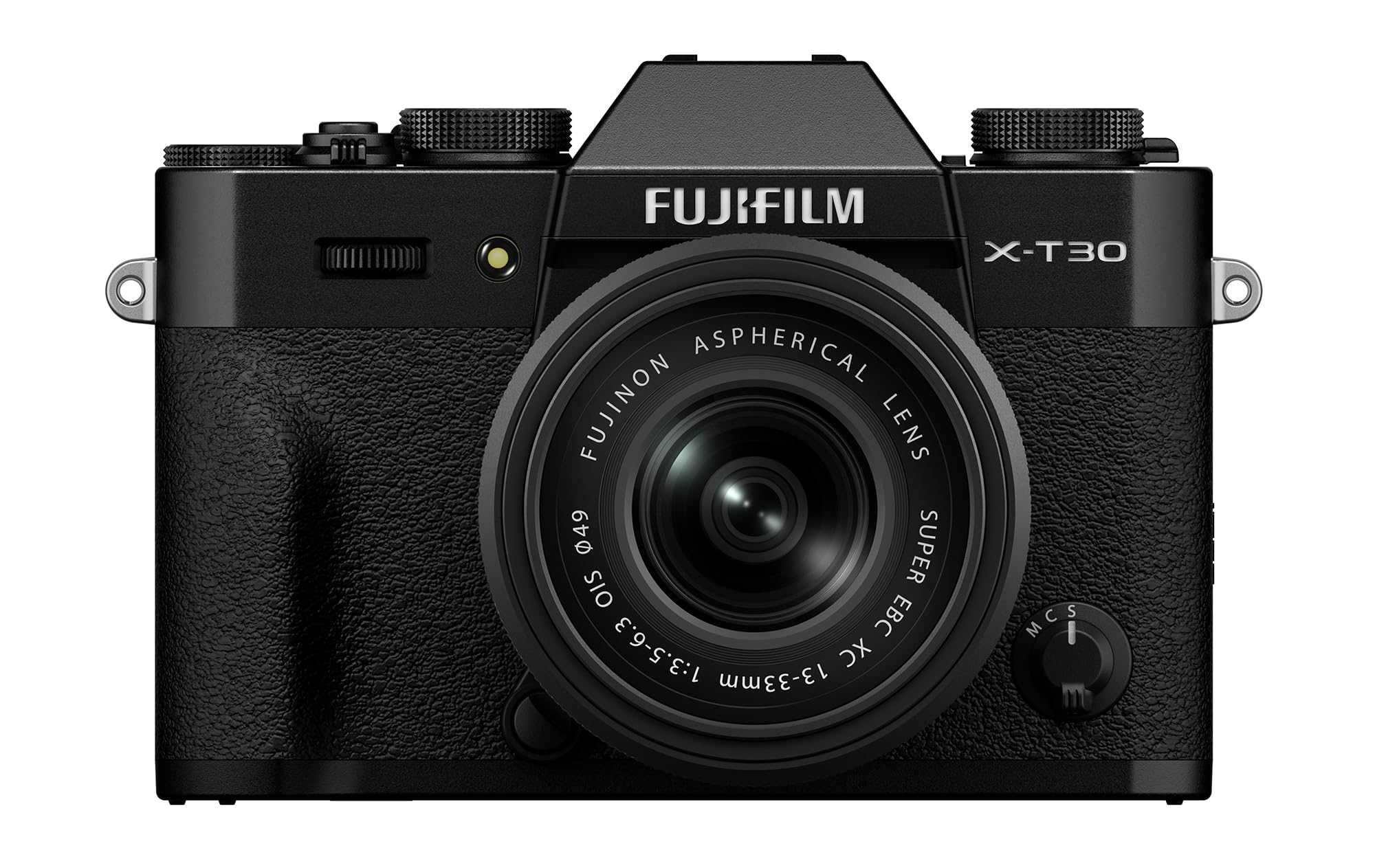
The X-T30 III is built around the idea that great color straight out of camera saves hours of editing. Its 20 built-in Film Simulations—including the beloved Astia and Classic Negative profiles—apply unique tonality and grain structure that reproduces the look of analog film stocks, meaning JPEGs often require zero post-processing. The 26.1MP X-Trans CMOS 4 sensor has a unique color filter array that reduces false color and moiré without needing an optical low-pass filter, giving you sharper details than traditional Bayer pattern sensors.
The bundled FUJINON XC13-33mm f/3.5-6.3 OIS kit lens provides an equivalent 20-50mm focal range with optical stabilization, covering from ultra-wide to standard perspectives. The camera’s AI-powered subject detection autofocus reliably locks onto human faces and eyes, and it even detects animals and cars. The dedicated dials for shutter speed, exposure compensation, and ISO give the X-T30 III a tactile shooting experience that feels like a classic film camera.
The body lacks in-body stabilization, so all shake correction relies on the lens, and the kit lens is slow at the telephoto end with a maximum aperture of f/6.3. Battery life is also modest, and the camera ships without a charger—the battery must be charged in-camera via USB-C, making a spare battery and external charger a necessary addition for full-day shoots. For shooters who value color output and a compact retro design over brute-force specs, the X-T30 III produces some of the most beautiful JPEGs in the APS-C class.
Why it’s great
- 20 Film Simulations produce stunning JPEGs
- AI-powered subject detection AF is reliable
- Tactile manual dials for fast control
Good to know
- No in-body image stabilization
- Battery dies quickly; no external charger included
- Kit lens is slow (f/6.3) at telephoto end
8. Nikon Z50 II Two-Lens Kit

The Z50 II pairs a 20.9MP DX-format (APS-C) sensor with two compact zoom lenses—the 16-50mm f/3.5-6.3 VR and the 50-250mm f/4.5-6.3 VR—giving you an equivalent focal range of 24-375mm in a kit that fits in a small daypack. The 31 built-in Picture Control presets, including bespoke Cloud Picture Controls downloadable directly to the camera via the Nikon Imaging Cloud, allow you to dial in your preferred look before pressing the shutter. The sensor’s larger physical size compared to a typical smartphone produces noticeably richer colors and dynamic range from dawn to dusk.
The autofocus system is a standout here, automatically detecting and tracking nine distinct subjects including people, dogs, cats, birds, and vehicles, with dedicated bird and airplane modes for added accuracy. For video, the Z50 II records UHD 4K 60p and can capture in-camera 120p slow-motion in Full HD, with built-in electronic VR for stable handheld footage and a product review mode that quickly racks focus to close subjects for the lens.
The kit lenses have variable apertures that narrow to f/6.3 at the telephoto end, making them less capable indoors or at twilight compared to a constant-aperture zoom. The camera uses a single SD UHS-I card slot, which limits buffer depth for rapid shooting and writing high-bitrate 4K video. The menus have a learning curve, but the result is a lightweight travel system that covers everything from wide cityscapes to distant wildlife, all without changing bags.
Why it’s great
- Two-lens kit covers 24-375mm equivalent
- 9-subject autofocus detection with bird mode
- Lightweight and fits in a small bag
Good to know
- Kit lenses have slow variable apertures
- Single UHS-I SD card slot limits buffer
- Menu system takes time to learn
9. Sony a7 III + 28-70mm Kit

The Sony a7 III has become the baseline reference for full-frame mirrorless performance. Its 24.2MP back-illuminated Exmor R sensor delivers 15 stops of dynamic range, 14-bit uncompressed RAW, and a native ISO range that extends to 204,800, giving you usable images in near-darkness that smaller sensors simply cannot achieve. The 693 phase-detection AF points cover 93% of the frame, and the 10 fps continuous shooting with AE/AF tracking means you can capture fast action with confidence.
The included FE 28-70mm f/3.5-5.6 OSS lens is reliable and stabilized, but its variable aperture means it’s best used in good light or with a flash. Most users plan to replace this lens quickly with a fast prime like the 35mm f/1.8 or the 85mm f/1.8, which unlock the sensor’s true low-light potential. In-body stabilization is rated at 5 stops, which pairs well with unstabilized lenses and gives smooth handheld footage.
Battery life is exceptional, rated at around 710 shots per charge—three to four times what most mirrorless cameras manage. The menu system is notoriously dense and non-intuitive, requiring dedicated study to master its depth of customization. The 4K S-Log output is gorgeous but demands UHS-II cards, and the weather sealing, while present, feels less robust than the pro-grade bodies from Canon and Nikon. For the combination of sensor performance, autofocus coverage, and battery endurance, the a7 III remains a compelling full-frame foundation.
Why it’s great
- Exceptional 15-stop dynamic range from BSI sensor
- 693-point phase AF covers 93% of the frame
- Class-leading battery life (~710 shots)
Good to know
- Complex, menu-heavy interface
- Kit lens is slow; upgrade recommended
- 4K S-Log requires fast UHS-II card
10. Panasonic LUMIX S5IIX Dual Lens Kit
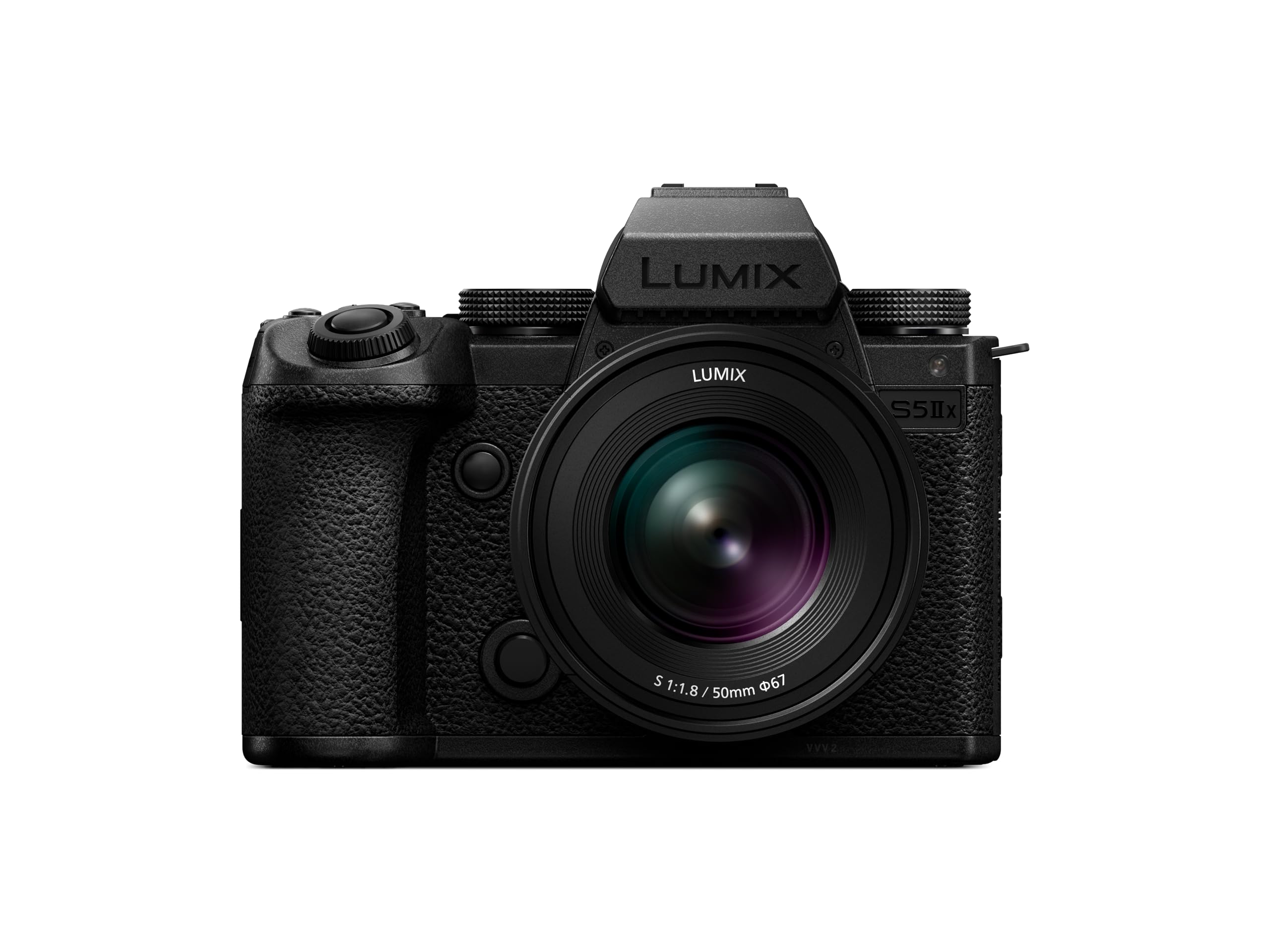
The S5IIX is built for the hybrid creator who needs unlimited recording and professional codecs from a compact full-frame body. It records 5.8K ProRes internally and can output 6K RAW over HDMI, with a small internal fan that eliminates overheating during long streams or recording sessions. The Phase Hybrid AF, a breakthrough for Panasonic, locks onto subjects with the speed and confidence that was previously missing from their mirrorless line, supporting 779 phase points for wide coverage.
The kit includes both a 20-60mm f/3.5-5.6 standard zoom and a 50mm f/1.8 prime lens, giving you both a versatile walk-around zoom and a fast portrait lens that can isolate subjects with smooth bokeh. The 14+ stop V-Log/V-Gamut capture provides professional-grade color grading flexibility, and the Active I.S. boosts stabilization specifically for walking and tracking shots, removing the need for a gimbal in many scenarios.
The S5IIX has a known issue where a certain firmware update removed the advertised Ethernet live-streaming feature from all units, and some customers reported units arriving in used condition despite being listed as new. The L-mount lens ecosystem is still smaller than Sony E-mount or Canon RF-mount, though it’s growing steadily with Sigma and Panasonic support. For the headlining dual-lens package alone—full-frame body plus two quality lenses—this kit offers a depth of video capability unmatched at this level.
Why it’s great
- 5.8K ProRes internal recording with no overheating
- Two-lens kit: zoom plus fast f/1.8 prime
- Active I.S. stabilizes walking shots without a gimbal
Good to know
- Firmware update removed Ethernet live-streaming
- Reports of units arriving used when listed new
- L-mount lens selection is still limited
11. OM SYSTEM OM-1 Mark II + 12-40mm f/2.8 PRO

The OM-1 Mark II is the most rugged camera in this lineup, rated IP53 for dustproof, splashproof, and freezeproof operation down to -10°C. Its 20MP Stacked BSI Live MOS sensor, paired with the TruePic X engine, processes data three times faster than its predecessor, unlocking computational photography functions like Handheld High Res Shot (80MP multi-shot capture), Live ND (simulating neutral density filters up to 6 stops), and in-camera Focus Stacking that merges multiple exposures of a single frame. The bundled M.Zuiko Digital ED 12-40mm f/2.8 PRO II lens provides a 24-80mm equivalent at a constant f/2.8 aperture, matching the speed of pro-grade full-frame zooms but in a significantly smaller package.
The Cross Quad Pixel AF system delivers 1,053 cross-type phase detection points covering 100% of the frame, making subject acquisition instantaneous and reliable even in dim light. The in-body stabilization is class-leading, rated at 8 stops, which means you can hold 1-second handheld exposures that would be impossible on any other system. This IBIS, combined with the compact Micro Four Thirds lenses, allows you to pack a body and several quality lenses in a bag that would barely fit a single full-frame body and lens.
The Micro Four Thirds sensor has a 2x crop factor, which gives your telephoto lenses extra range but also means you get less background blur at a given aperture compared to full-frame. The camera has no dedicated Auto mode, so absolute beginners will face a steep learning curve. The high ISO performance, while improved, still trails full-frame sensors above ISO 6400. For photographers who work in extreme weather and value portability and stabilization above all, the OM-1 Mark II is the most capable adventure camera available.
Why it’s great
- IP53 weather sealing for extreme conditions
- 8-stop IBIS for impossible handheld shots
- Constant f/2.8 PRO lens in a compact package
Good to know
- Steep learning curve with no Auto mode
- 2x crop reduces background blur compared to FF
- High ISO noise trails full-frame sensors
FAQ
Should I buy a body-and-lens kit or a body with a separate lens?
How many megapixels do I really need for sharp prints?
Is in-body image stabilization necessary for video?
What does the f/stop number on a lens actually mean for my photos?
Can I use old DSLR lenses on a mirrorless camera?
Final Thoughts: The Verdict
For most users, the best camera and lens combination is the Panasonic LUMIX G97 because its 5-axis IBIS, versatile 12-60mm kit lens, and intuitive physical controls deliver the most balanced shooting experience for both photos and video at a mid-range price point. If you want the shallowest depth of field and best low-light performance of a full-frame sensor, grab the Sony a7 III with its benchmark autofocus and battery life. And for a rugged, ultra-portable system that can survive rain, snow, and dust while producing professional-grade stills and video, nothing beats the OM SYSTEM OM-1 Mark II.