
That gap between the floor and the wall is not just an eyesore — it is a dirt magnet, a draft tunnel, and a constant reminder of a previous owner’s shoddy trim work. The solution is not to tear everything out and start over; the solution is a dedicated trim that bridges the gap in minutes without you touching a miter saw or a caulking gun.
I’m Min — the co-founder and writer behind Gadgets Feed. I have spent hundreds of hours cross-referencing peel-and-stick vinyl ratings, measuring real-world adhesive strength reports, and comparing register vent steel gauge listings to separate the covers that actually stay put from the ones that peel off in a week.
A good set can transform a room without a single nail, which is why we sorted through the market to find the best baseboard covers that hold up under daily wear, resist scuffs, and install fast enough for a weekend project.
How To Choose The Best Baseboard Covers
Selecting the right cover means matching the material and design to the specific problem you are solving — whether it is an uneven floor gap, an outdated register vent, or a chipped painted baseboard. Below are the three factors that make or break the purchase.
Material: Vinyl vs. Steel vs. Plastic
Flexible vinyl cove base (usually 0.08 inches thick) conforms to wavy walls and hides gaps from an eighth to three-quarters of an inch. Cold-rolled steel register vents resist rust and handle foot traffic in hallways, but they require a precise duct opening measurement. Plastic covers are lightweight and easy to cut with household shears, though they can feel less substantial under impact.
Adhesion: Self-Stick vs. Screw-Mount
Peel-and-stick vinyl depends entirely on the quality of the pressure-sensitive tape and the cleanliness of the surface. A strong adhesive locks on instantly and cannot be repositioned, so you must get the alignment right the first time. Screw-mounted register vents offer the opposite advantage: they are removable and adjustable, but they require a screwdriver and wall anchors for non-metal surfaces.
Fit and Finish: Toe Design and Customization
A toe that extends slightly past the vertical face of the cover seals the bottom edge against the floor, preventing dust from collecting in the gap. This detail matters most in rooms with hardwood or tile where a cleaning mop can push debris under a flat trim. For vents, the lever mechanism that controls airflow should move smoothly without sticking, and the grille should sit flush against the wall.
Quick Comparison
On smaller screens, swipe sideways to see the full table.
| Model | Category | Best For | Key Spec | Amazon |
|---|---|---|---|---|
| LSGCQ Flexible Baseboard Molding | Peel-and-Stick | DIY gap coverage on smooth walls | 0.08 in thickness, 20 ft length | Amazon |
| GAMZAU Flexible Baseboard Molding | Peel-and-Stick | Garages and high-traffic areas | 0.08 in thickness, includes scraper | Amazon |
| YZXTECNIP Air Vent Deflector | Register Vent | Redirecting airflow from floor vents | Adjustable 9-14 in, magnetic mount | Amazon |
| COUKIU Flexible Rubber Baseboard | Peel-and-Stick | Black trim on uneven or curved walls | 0.08 in thickness, 20 ft, heat-formable | Amazon |
| Aremae 2 Pack Baseboard Register | HVAC Register | Replacing rusted 1970s floor vents | 18 in opening, cold-rolled steel | Amazon |
| Yaocom Baseboard Register Vent | HVAC Register | Modern black finish for updated rooms | 18 in opening, heavy-duty steel | Amazon |
| NeatHeat Baseboard Heat Front Cover | Hydronic Cover | Covering damaged hot-water registers | 6 ft x 6.25 in, polymer panel | Amazon |
In‑Depth Reviews
1. Yaocom 2 Pack Baseboard Register Vent 18 Inch
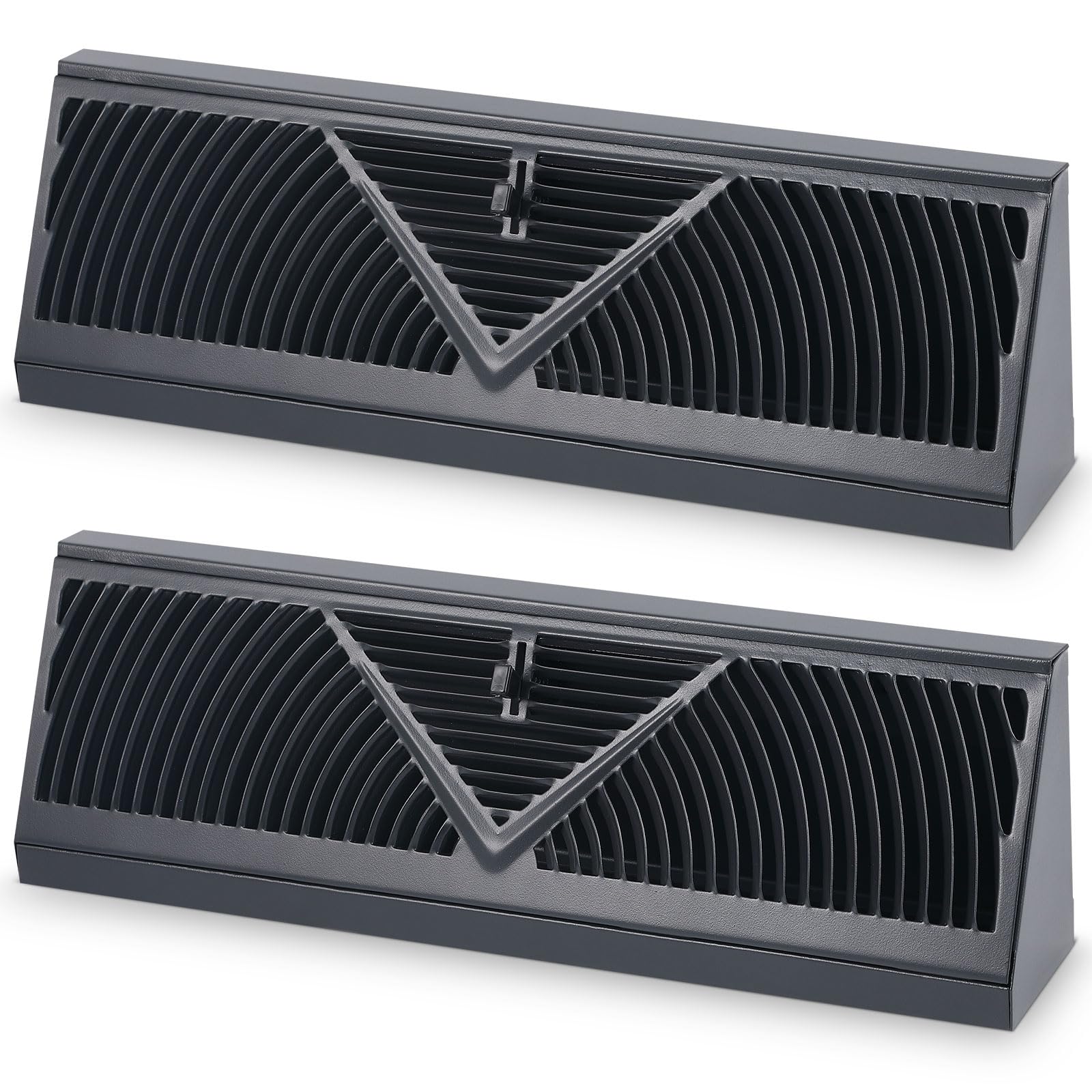
The Yaocom double-pack delivers the best mix of construction heft and clean aesthetics for anyone retrofitting a home with older floor registers. The steel body feels rigid in hand — no flexing or thin-gauge rattling — and the textured black finish hides scuffs far better than a glossy white alternative. Each unit is engineered for an 18-inch duct opening (the standard size for most residential sidewall and floor transitions).
The smooth-glide air lever travels easily from fully open to closed without binding, which is a common failure point on cheaper stamped registers. Installation requires only a screwdriver and four screws (included), and the cover sits flush against the wall with no visible gap around the flange. Buyers consistently report that the dimensions match the listing exactly, eliminating the headache of measuring twice and fitting once.
For rooms where you want a modern, understated look that does not scream “landlord-grade,” the Yaocom pair is a set-and-forget upgrade. The steel is thick enough to resist bending under accidental kicks, and the powder-like coating does not chip during installation. Pair these with a flexible vinyl cove base on the surrounding trim for a fully refreshed room.
Why it’s great
- Rigid steel construction with no thin-gauge flex
- Adjustable airflow lever operates smoothly
- Fits standard 18-inch duct openings without modification
Good to know
- Black finish shows dust more readily than white
- Screws are included, but you may want longer ones for thicker flooring
2. Aremae 2 Pack 18 Inch Baseboard Register
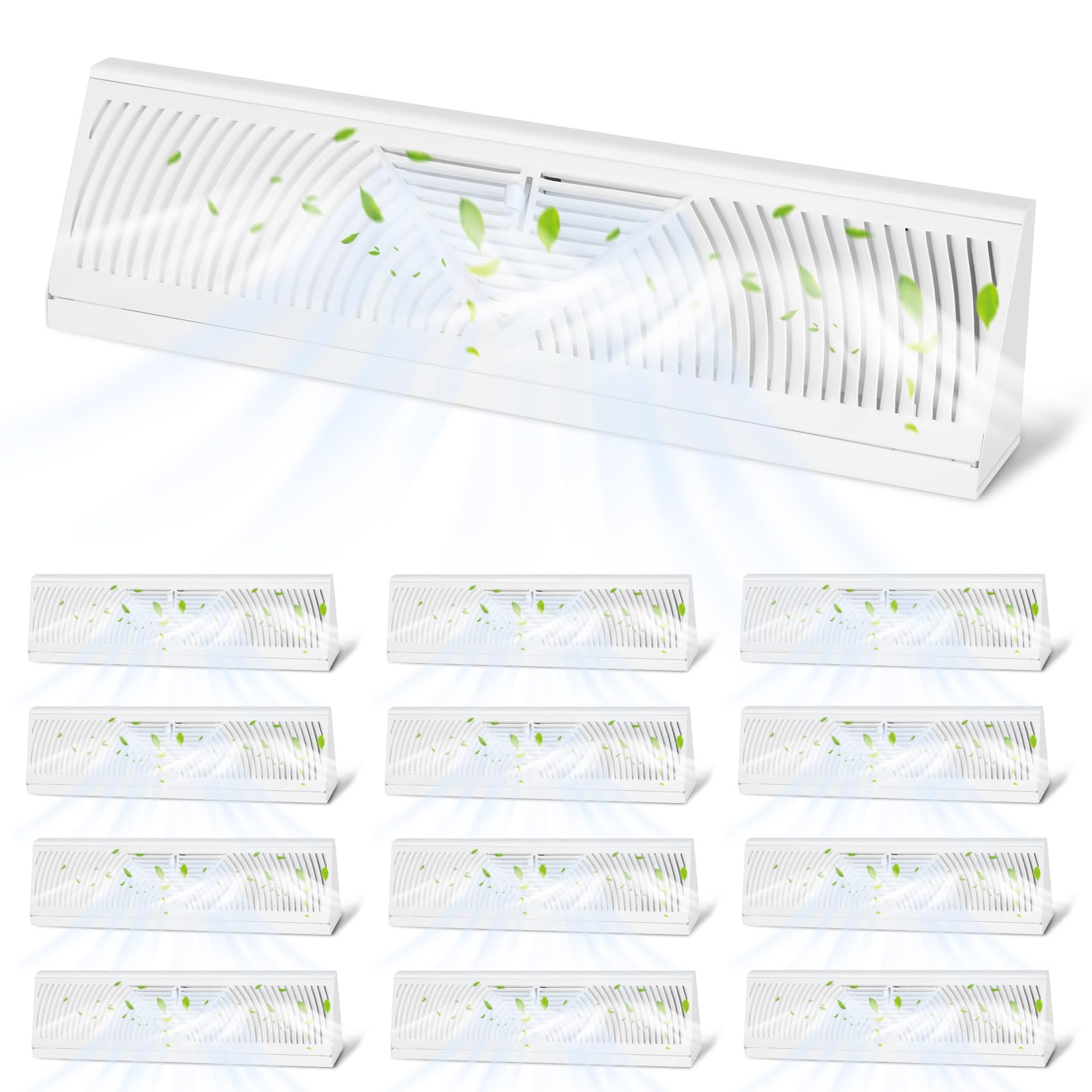
The Aremae register covers hit a rare sweet spot: they are affordable enough to replace every vent in the house without budget guilt, yet they use cold-rolled steel with a white anti-corrosion coating rather than flimsy aluminum. The 18-inch model is designed to fit the actual duct opening (not the wall cutout), so measure the interior duct dimension first to avoid a return.
Each pack includes two registers and four screws, and the install takes under five minutes per unit with a standard screwdriver. The precision lever offers positive click-stops rather than a vague friction slider, so you can set the airflow exactly where you want it and trust it will stay. Homeowners replacing rusty 1970s registers note that the bright white paint modernizes the room instantly without any priming or painting.
The steel is on the thinner side compared to premium commercial-grade registers, which means you should avoid stepping on it during installation to prevent bending. For typical residential traffic, though, the gauge is adequate, and the 10-year product support from the manufacturer adds peace of mind for the price point.
Why it’s great
- Price-per-unit is excellent for a two-pack
- Anti-rust coating ensures long-term durability in humid basements
- Tool-free lever adjustment with positive stops
Good to know
- Thinner steel can bend if weight is applied directly
- White finish may require touch-up if screws are over-tightened
3. COUKIU Flexible Rubber Baseboard Molding Trim

The COUKIU roll in black is the specialist choice for anyone dealing with curved walls, recessed alcoves, or uneven subfloors where a rigid wood baseboard would leave glaring gaps. The 0.08-inch-thick vinyl is flexible enough to wrap around gentle curves without kinking, and the toe that extends below the face seals against the floor to block dust migration.
Installation requires a clean surface, a tape measure, and a sharp utility knife. The self-adhesive backing is aggressive — reviewers warn that once it touches the wall, repositioning is nearly impossible — so dry-fit the entire run before peeling the red film. For tight corners, a quick pass with a hair dryer softens the vinyl enough to fold without cracking, and the included scraper helps press out air bubbles.
The black color gives this trim a distinct industrial or modern farmhouse vibe that white cannot deliver. It works particularly well in home gyms, Airstream renovations, and garages where the trim doubles as a bumper. The adhesive coverage on the backing could be wider — a few users noted the tape does not span the full width of the roll — but proper surface prep solves most hold issues.
Why it’s great
- Flexible enough for curved walls and rounded corners
- Heat-formable at corners for a seamless look
- Black finish resists visible scuffs in high-traffic zones
Good to know
- Adhesive does not cover the full 4-inch width
- Requires immaculately clean surface for best bond
4. NeatHeat 6ft Baseboard Heat Front Cover

The NeatHeat cover takes a fundamentally different approach: instead of paint-grade trim or adhesive, it is a 6-foot-long polymer panel that snaps over existing damaged hot-water baseboard radiators. This is the product to reach for when your old register has rust, dents, or layers of chipped paint that sanding cannot fix.
The panel is made from a thick, non-absorbent plastic that does not rust, does not absorb moisture, and wipes clean with a damp rag. It snaps directly over the existing metal register without removing the old unit, which saves hours of demolition work. The 6.25-inch height covers most standard baseboard radiators, and the material resists the heat output without warping or discoloring over time.
Bathroom buyers report that the polymer solved uric acid damage from years of poor aim — the non-porous surface eliminated odor and stopped the cycle of repainting. End caps are sold separately, so factor that into the total cost if you want finished corners. This cover is rated for hydronic (hot water) systems only; the manufacturer explicitly warns against using it with electric baseboard heat.
Why it’s great
- Snaps over existing damaged registers — no demolition needed
- Non-porous polymer resists moisture, rust, and odor
- Holds up to heat without warping or yellowing
Good to know
- End caps sold separately
- Not suitable for electric baseboard heaters
5. GAMZAU Flexible Baseboard Molding Trim

For homeowners who need a bright white trim that matches typical builder-grade baseboard without the hassle of painting, the GAMZAU roll delivers a clean, uniform look. The 4-inch height and 20-foot length cover a standard bedroom or small living room with one roll, and the included scraper and scribing tool reduce the guesswork for first-time DIYers.
The self-adhesive tape on this roll is notably aggressive — multiple reviewers warn that once the vinyl touches the painted wall, it bonds instantly and will pull off paint and drywall paper if you try to reposition. This makes careful alignment critical, but the bond strength also means it will stay stuck in garages and bathrooms where temperature and humidity fluctuate. The white finish resists yellowing better than unpainted polymer alternatives.
The main limitation is the same as any peel-and-stick trim: the surface must be surgically clean. Grease, dust, or loose paint will cause failure. The product is rated for commercial use, so it can handle the abuse of a workshop or retail space, but the adhesive performance on textured walls is inconsistent. Prepared DIYers who mark their lines before peeling will get the best result.
Why it’s great
- Very strong adhesive bonds to clean walls immediately
- Includes scraper and scribing tool for accurate installation
- White color matches most existing trim without painting
Good to know
- Cannot be repositioned once contact is made
- Adhesive may fail on textured or porous surfaces
6. LSGCQ Flexible Baseboard Molding Trim

The LSGCQ roll in gray is the entry-level option that proves you do not need to spend much to hide a rough floor-wall gap. The 0.08-inch vinyl and toe design mirror the higher-priced competitors, and the self-adhesive backing is strong enough to hold on smooth surfaces like tile, metal, and glass. The gray color was chosen specifically to complement modern LVP flooring and slate-look tiles.
Installation mirrors the process for other peel-and-stick trims, but the LSGCQ tape is marketed as removable without leaving residue on most materials. This is a genuine advantage if you are renting or expect to change the flooring later — the trim can come off cleanly without scraping. One installer reported covering 200 linear feet in 90 minutes using just a guide block and a mallet.
The vinyl does scuff and mark more easily than premium brands, especially if furniture is dragged across it. The gray pigment hides minor scuffs better than white, but deep scratches will still show. For a low-traffic bedroom or a temporary fix before a full renovation, the LSGCQ roll offers the best cost per linear foot available in this category.
Why it’s great
- Removable without residue — ideal for renters
- Gray color complements modern vinyl plank floors
- Fast installation at roughly 2 feet per minute
Good to know
- Vinyl scuffs more easily than thicker or rubber alternatives
- Adhesive requires perfectly dust-free surface for full hold
7. YZXTECNIP Adjustable Air Vent Deflector

This product solves a different problem entirely: it is not a trim for gaps, but a magnetic deflector that snaps over existing floor or baseboard vents to redirect airflow. If your HVAC register blasts cold air directly onto a seating area or gets blocked by furniture, this adjustable plastic panel tilts the airflow upward and away from the obstruction.
The two-pack includes strong neodymium magnets that grip metal vents securely — reviewers describe having to slide the deflector off rather than lift it to avoid detaching the magnets. The telescoping body extends from 9 to 14 inches to fit most residential vent sizes, and the angle of the louver can be set to push air toward the center of the room instead of the wall.
The limitation is that the magnets only work on steel vents. For wood, aluminum, or plastic registers, you must use the screw slots provided, which turns a tool-free job into a drilling project. The plastic build is sturdy for its weight class, but it will not survive being stepped on. For tenants in apartments with poorly placed floor vents, this is the quickest comfort fix money can buy.
Why it’s great
- Strong magnets secure instantly to steel vents
- Telescoping design fits multiple standard vent sizes
- Redirects airflow away from furniture or cold zones
Good to know
- Magnets do not adhere to wood, aluminum, or plastic vents
- Plastic body may crack under heavy foot traffic
FAQ
Can peel-and-stick baseboard covers be removed without damaging the wall?
How do I measure for a baseboard register vent replacement?
What is the difference between a cove base and a baseboard register?
Can I paint peel-and-stick vinyl baseboard covers?
Final Thoughts: The Verdict
For most users, the best baseboard covers winner is the Yaocom 2 Pack Baseboard Register Vent because it combines heavy steel construction, a modern black finish, and an adjustable airflow lever that actually works — all at a two-pack price that beats buying singles. If you need flexible trim to hide floor gaps on curved walls, grab the COUKIU Flexible Rubber Baseboard Molding for its heat-formable black vinyl. And for a rust-proof replacement over damaged hydronic radiators, nothing beats the NeatHeat 6ft Baseboard Heat Front Cover.