
If your table saw shakes the floor or your lathe belt slips under load, the standard rubber V-belt with its fixed length and flat spots is likely the culprit. An adjustable V-belt solves both problems at once: you cut it to the exact length you need without dismantling headstocks or motor mounts, and the segmented design naturally cancels vibration better than any solid belt can. The trade-off is that these linked belts require a break-in period and occasional re-tensioning as the links settle.
I’m Min — the co-founder and writer behind Gadgets Feed. I spend countless hours cross-referencing technical specs, analyzing user experiences across thousands of machines, and verifying fitment claims for pulleys and drive systems to find the adjustable V-belt that actually delivers on its promises.
Whether you are chasing smoother cuts on a vintage Craftsman saw or trying to avoid a four-hour teardown on a tractor water pump, the right choice starts by understanding link material and width compatibility. This guide breaks down the best adjustable v belt options to match your specific machine and budget.
How To Choose The Best Adjustable V Belt
An adjustable V-belt is a niche solution that shines hardest when access is tight, pulley alignment is imperfect, or you want to eliminate the inventory of a dozen fixed-length rubber belts. The wrong choice means a belt that rides too high in the groove, slips under moderate torque, or requires re-tensioning every week. Focus on these three dimensions.
Match the Profile to Your Pulley
Standard V-belt profiles are defined by top width and angle: A/4L belts measure 1/2 inch wide, B/5L belts measure 5/8 inch, and Z/3L belts measure 3/8 inch. Your pulley groove is machined for one of these profiles. Installing a belt that is even 1 mm too wide prevents proper seating, causing slippage and heat buildup. Always measure the groove width with calipers before ordering.
Material Composition and Durability
Most adjustable link belts use polyurethane-and-polyester composites that resist oil, moisture, and abrasion better than standard rubber. These composites run smoother because the segments absorb vibration energy rather than transmitting it. A few premium options use chloroprene (a synthetic rubber) impregnated into fabric — this offers higher temperature tolerance but sometimes less vibration damping. For dusty woodshops, polyurethane composites are easier to clean and less prone to gumming.
Break-In Stretch and Re-Tensioning
Every adjustable V-belt stretches during the first few hours of operation as the links seat into the pulley grooves and the material yields under load. Expect to remove one to three links after the first week. Belts that arrive already pre-stretched by the manufacturer reduce this hassle. If your machine has no adjustment mechanism for the motor position, plan for a tensioning spring or idler pulley to take up the slack automatically.
Quick Comparison
On smaller screens, swipe sideways to see the full table.
| Model | Category | Best For | Key Spec | Amazon |
|---|---|---|---|---|
| Power Twist 5/8″ x 5 ft | Premium | B/5L heavy-duty tractors and mills | 5/8-inch top width, 5 ft length | Amazon |
| Jason Industrial Accu-Link 1/2″ | Premium | Chloroprene durability in high-heat | Chloroprene rubber, 5 ft roll | Amazon |
| Grizzly T21992 Power Twist | Premium | Woodworking table saws and lathes | 1/2-inch top width, 4 ft length | Amazon |
| Poweka Power Twist 1/2″ x 5 ft | Mid-Range | Wood lathes and contractor saws | PU composite, 5 ft, A/4L | Amazon |
| Phoenix goods 1/2″ x 5 ft | Mid-Range | Universal drills and lawn equipment | PU composite, 5 ft, A/4L | Amazon |
| ApplianPar Power Twist 1/2″ x 5 ft | Budget-Friendly | Whole-house fans and bench saws | PU composite, 5 ft, A/4L | Amazon |
| Wadoy Power Twist 3/8″ x 4 ft | Budget-Friendly | Drill presses and Z/3L applications | PU composite, 4 ft, Z/3L | Amazon |
In‑Depth Reviews
1. Power Twist V-Belt 5/8-Inch x 5-Feet B/5L
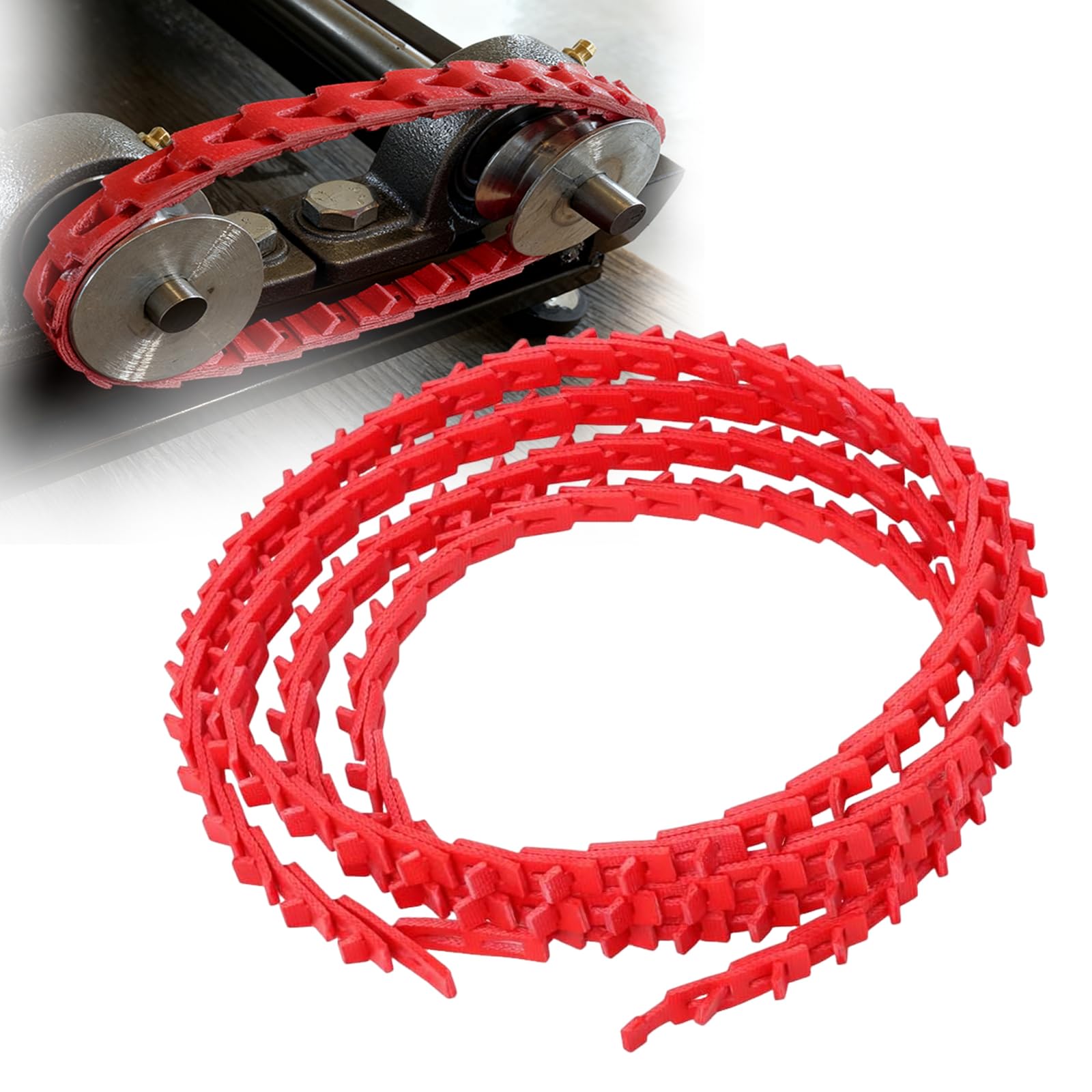
This B/5L profile belt delivers the widest top width of the group at 5/8 inch, making it the only real option for heavy-duty applications like tractor PTO drives, large wood lathes, and backhoe fan belts. The polyurethane/polyester composite handles wear much better than standard rubber in gritty environments, and users consistently report lasting through hundreds of hours on agricultural equipment where a solid belt would have failed within weeks.
Installation speed is this belt’s strongest asset — several verified owners describe completing what was a multi-hour disassembly job in under five minutes by simply linking the belt in place. The 5-foot length gives enough material for most mid-size farm and shop machines, and the adjustable links mean you can remove or add segments as the belt stretches during break-in. The package weight of 5.6 ounces reflects the density of the composite material, which feels solid in hand.
One nuance: because the B-profile is wider, the belt sits higher on some pulley flanges. If your machine is designed for a standard B-section belt, the geometry is identical, but verify your pulley groove depth before ordering. The manufacturer does not include a tension guide, so you will need to run the belt for about 30 minutes, then re-check tension and remove links as needed.
Why it’s great
- True B/5L 5/8-inch profile for heavy-duty farm and shop machines.
- Installs in minutes without dismantling equipment.
- Durable PU composite outlasts rubber in abrasive environments.
Good to know
- No pre-stretching from the factory; expects break-in tension adjustments.
- May ride high on shallow pulley grooves — measure depth first.
2. Jason Industrial A-LINK-5 Accu-Link V-Belt 1/2-Inch
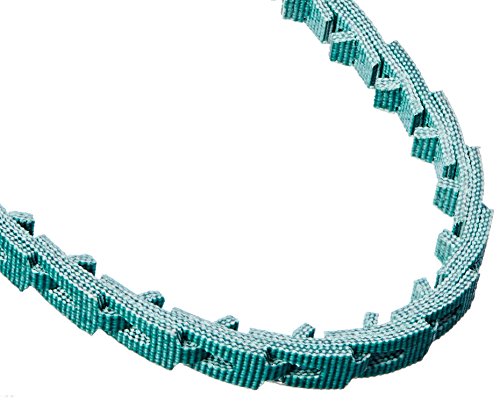
Jason Industrial takes a different material approach: instead of polyurethane composite, the Accu-Link uses chloroprene rubber impregnated into a polyester fabric. This construction offers higher heat resistance — relevant for machines that run continuously for hours in enclosed spaces — and a detachable tab-type link system that is slightly easier to assemble than the push-fit designs used by most competitors.
The 1/2-inch A/4L profile fits standard table saws, drill presses, and many antique car fan drives. One notable verified review comes from a 1932 MG owner who used this belt to replace a custom-length rubber belt without removing the engine mount. Similarly, a snow blower owner ran this belt on the auger clutch after a Kevlar belt snapped. The chloroprene material shows less initial stretch than PU composites, though users still report needing to remove links after the first month of use.
The trade-off for the material advantage is vibration damping — chloroprene is stiffer than polyurethane, so it does not cancel vibration as dramatically. Several drill press owners report noticeable but not complete vibration reduction. The belt is also sold as a 5-foot section, and at this price point it is the most expensive per-foot option in this guide. If your priority is extreme heat tolerance or compatibility with oddball antique machinery, the Accu-Link justifies the cost.
Why it’s great
- Chloroprene rubber resists heat better than PU composites.
- Tab-link design is simpler to assemble than push-fit segments.
- Works well for antique vehicles and odd-length applications.
Good to know
- Higher material cost per foot than polyurethane alternatives.
- Less vibration cancellation than similarly priced PU link belts.
3. Grizzly T21992 Power Twist V-Belt 1/2-Inch x 4-Foot

Grizzly is a household name in woodworking, and the T21992 reflects that focus with a 1/2-inch A/4L profile optimized for table saws, bandsaws, and lathes. The 4-foot length is shorter than most options here, which makes it ideal for benchtop machines where a 5-foot belt would leave you removing a dozen links. The belt is manufactured in the United States, and the material is a polyurethane/polyester composite that Grizzly has been using for years with a strong reliability record.
Verified owners on older Delta/Rockwell and Craftsman saws report that after a short break-in period, the belt runs smooth enough to pass the nickel test — placing a nickel on its edge on the saw table while the blade is spinning without it falling over. The belt requires proper directional installation: the tail of each link must trail, not lead, or the belt will make slapping noises and wear prematurely. One user measured the delivered belt at approximately 3.5 feet instead of the advertised 4 feet, so verify length on arrival if your machine needs the full 4 feet.
The composite material settles within the first 30 minutes of run time, after which you will likely need to remove one or two links. Owners who let the belt stretch beyond the adjustment range of their motor mount have successfully added a tension spring to compensate. For a woodworker who wants a single belt that will outlast the saw, this Grizzly belt is a safe investment.
Why it’s great
- Proven vibration reduction — passes the table-saw nickel test.
- Short 4-foot length suits benchtop tools without excess links.
- Made in USA with consistent quality.
Good to know
- Delivered length may be shorter than advertised by about 6 inches.
- Requires correct directional installation to avoid slapping noise.
4. Poweka Power Twist V-Belt 1/2-Inch x 5-Feet A Type
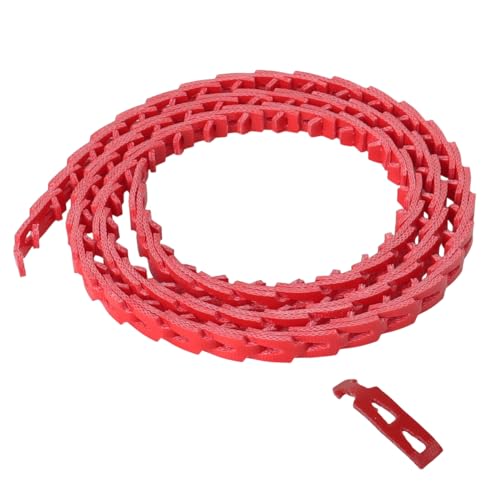
Poweka markets this 1/2-inch A-type belt with a claim of low elongation, and the verified reviews back it up — several owners on 1960s Rockwell-Delta wood lathes report that after an initial break-in where they removed about 22 inches from the 60-inch length, the belt held tension well without further adjustment. The polyurethane/polyester composite formulation appears slightly denser than budget alternatives, which translates to less bounce under load.
The belt’s real-world fitment is wide: it is listed as compatible with wood lathes, benchtop drill presses, table saws, bandsaws, garage door openers, and even some tractor applications. One verified review on a 1 HP 230V wood lathe noted that the belt was slightly wider than the original rubber belt, causing it to ride a bit higher on the pulley flange — the owner is monitoring wear but reports no performance issues after months of use. The belt weighs 80 grams for the full 5-foot section, giving it a lightweight feel that makes handling easier during installation.
Installation can be frustrating on the first attempt because the belt arrives rolled in a tight coil, creating a reverse curl that fights you as you try to align the links. A reviewer recommends unrolling and letting the belt sit flat for an hour before starting. The belt also requires a break-in run of about 30 minutes before the links seat fully, during which the tension will drop noticeably.
Why it’s great
- Low post-break-in elongation — holds tension after initial settling.
- Fits a huge range of machines from saws to garage openers.
- Lightweight composite makes handling and routing easier.
Good to know
- Arrives tightly coiled; may need flattening before installation.
- Slightly wider profile may ride higher on pulley flanges.
5. Phoenix goods V Belt 1/2-Inch x 5-Feet A/4L

Phoenix goods offers a standard A/4L profile belt in a 5-foot length, making it a direct competitor to the ApplianPar and Poweka belts. The material is a polyester/polyurethane composite that shares the same vibration-damping properties. Verified owners on Craftsman table saws report the same dramatic noise reduction as other link belts — one described the drop in vibration as “unbelievable” on a 40-year-old saw.
Where this belt stands out is in unusual applications. A reviewer on a Husqvarna R120S articulating lawn mower used the Phoenix belt to replace a shredded intermediate belt that was nearly impossible to route past obstructions. The adjustable link design let him build the belt on the machine in segments, bypassing the need for a service manual. Another owner installed it on a lathe specifically to avoid removing the spindle — a job that routinely takes hours on machines with non-split belt guards.
One reviewer noted early wear after a few weeks of use, suggesting that the composite formulation may be slightly softer than premium options. The belt also stretched considerably during the first few runs, requiring link removal to restore tension. For light to medium-duty applications like bench saws and small drills, the Phoenix belt delivers solid performance at a competitive price point.
Why it’s great
- Excellent for hard-to-reach installations like mower decks and lathes.
- Significant vibration and noise reduction on older woodworking tools.
- Available 60-inch length provides ample material for most machines.
Good to know
- Some reports of early surface wear on the composite material.
- Stretches noticeably during break-in; plan for link removal.
6. ApplianPar Power Twist V-Belt 5 Feet 1/2 Inch A Type

ApplianPar’s 1/2-inch A-type belt is the most budget-friendly entry in this guide, yet it shares the same fundamental polyurethane/polyester composite construction as mid-range competitors. The belt measures 5 feet long and ships with enough links to fit most medium-sized shop tools. A verified whole-house fan owner reported that the belt reduced vibration issues dramatically, though he noted the belt continues to stretch over time and added a tension spring to maintain proper tension automatically.
The belt’s real strength is on older machinery where a solid rubber belt has developed flat spots. A Craftsman 113 table saw owner described the belt as a “hidden gem” that revived the saw’s performance — quieter, smoother, and no slipping. The belt runs best after a deliberate break-in: one reviewer recommends running the belt under tension for 15-20 minutes to pre-stretch the links, then removing one or two segments before final use. The belt ships very stiff, and the links may have small gaps that close only after the first warm-up run.
The main limitation is the belt “memory” — it arrives coiled and tends to twist when you try to feed it around pulleys. A tractor/backhoe owner who used it on a water pump described fighting the belt’s twist for the first few minutes. Once installed, however, the belt held up for months in a high-dust agricultural environment without breaking. For the price, the ApplianPar is a legitimate entry point into link belting, provided you are willing to manage the break-in process.
Why it’s great
- Lowest cost entry into PU composite adjustable belting.
- Excellent vibration reduction on table saws and fans.
- Works well on machinery with minor pulley misalignment.
Good to know
- Significant initial memory/twist makes installation awkward.
- Requires manual pre-stretching or a tension spring to handle ongoing stretch.
7. Wadoy Power Twist V Belt 3/8-Inch x 4 Feet Z Type
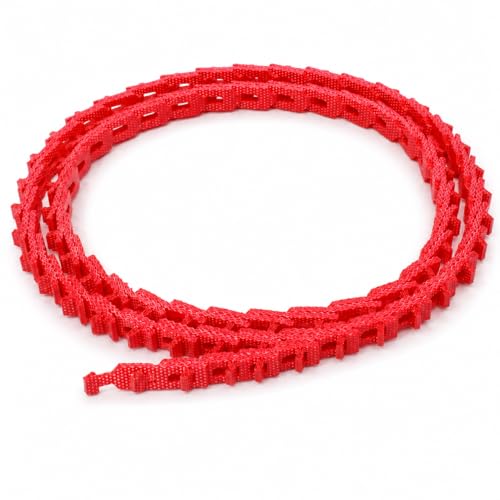
This is the only Z/3L profile belt in the guide, with a 3/8-inch top width designed for light industrial drives like drill presses, small bandsaws, and HVAC equipment. The narrower profile means it fits pulleys that the wider 1/2-inch A-type belts cannot seat into. The belt is made from the same polyurethane/polyester composite as larger belts, so it shares the vibration-damping and chemical-resistance properties.
Verified owners on Craftsman benchtop drill presses report that the belt runs quieter than the original rubber belt, with no slipping and no vibration. The adjustable link design allowed one user to replace a worn 5/16-inch belt that had no direct commercial replacement — by switching to this 3/8-inch belt, he gained a standardized profile that is easy to source in the future. The 4-foot length is enough for most benchtop machines, though larger drill presses with multiple pulley stages may need the full length.
One reviewer flagged a tightness issue: the belt measured approximately 1 mm over the 3/8-inch spec, preventing it from seating fully into the pulley groove on a benchtop drill press. This tolerance variance is not uncommon in budget link belts, and it can cause slippage under heavy loads. If your equipment has tight pulley tolerances, measure the groove width carefully before committing to this belt. For standard 3/8-inch pulleys, the Wadoy belt works reliably and represents good value for light-duty applications.
Why it’s great
- Only Z/3L 3/8-inch option for small pulleys and benchtop tools.
- Reduces noise and flat-spot vibration on drill presses.
- Easy to shorten with pliers for custom lengths.
Good to know
- Occasional 1 mm oversize prevents seating in tight grooves.
- Short 4-foot length limits use on larger multi-stage drives.
FAQ
Can an adjustable V-belt replace a standard rubber belt permanently?
How do I determine the correct profile for my pulley?
How many links should I expect to remove after installation?
Will a link belt fix vibration caused by a bent motor shaft?
Do adjustable V-belts work on snow blowers and lawn equipment?
Final Thoughts: The Verdict
For most users, the best adjustable v belt winner is the Power Twist V-Belt 5/8-Inch x 5-Feet B/5L because it is the only option that spans heavy-duty farm tools and shop machines with a true B-profile width, and it holds up in gritty environments where cheaper belts fail. If you want maximum heat resistance and a link system that is easier to assemble, grab the Jason Industrial Accu-Link 1/2-Inch. And for pure woodshop value on a 1/2-inch A-type saw or lathe, nothing beats the Grizzly T21992 Power Twist 1/2-Inch x 4-Foot.