
Every photographer eventually faces it: a brilliant landscape shot ruined by a ghostly flare or a washed-out portrait where the sun turned the subject’s face into a pale mask. That light scatter isn’t a lens flaw — it’s the absence of quality anti-reflective engineering between your glass and the world. The right coating doesn’t just cut reflections; it recovers contrast, deepens blacks, and keeps your images sharp even when shooting straight into a light source.
I’m Min — the co-founder and writer behind Gadgets Feed. I’ve spent countless hours dissecting the differences in multi-layer deposition technologies, glass substrates, and hydrophobic layers across dozens of filter brands to separate real optical gains from marketing hype.
This guide breaks down the top contenders in the niche to help you pick the best anti-reflective coating for camera lens that preserves the resolving power of your glass without introducing unwanted artifacts.
How To Choose The Best Anti-Reflective Coating For Camera Lens
Choosing an anti-reflective coating isn’t just about picking a filter size. The coating technology, the glass quality, and the number of layers determine whether your lens sees a neutral, flare-free image or a degraded one with color casts and ghosting.
Layer Count and Coating Type
Not all multi-coatings are created equal. A filter with 18 to 28 layers of nano-deposited material can reduce surface reflections to below 0.3%, dramatically minimizing flare and ghosting. Single-coated or uncoated filters can reflect up to 8% of incoming light, robbing your image of contrast and introducing internal reflections that hard to fix in post. Always look for the specific layer count and coating brand — names like Nano Coating, T*, or Zero-One AR indicate advanced multi-layer stacks.
Glass Substrate and Optical Clarity
The glass base matters just as much as the coating. Japanese AGC glass or Schott glass offers superior homogeneity and fewer internal stresses, which translates to higher light transmission and less color shift. Budget filters often use standard soda-lime glass that can introduce a slight green or yellow cast. For high-resolution sensors above 24 megapixels, the glass must be double-side polished to maintain corner-to-corner sharpness and avoid degrading the lens’ native resolving power.
Frame Design and Vignetting
An ultra-slim frame — typically 3.3mm or thinner — is critical for wide-angle lenses. A thick frame can protrude into the field of view, creating vignetting at focal lengths below 24mm. Look for frames made of aviation-grade aluminum that remain rigid without adding bulk. The knurling or grip texture also matters for quick changes, especially when stacking multiple filters.
Quick Comparison
On smaller screens, swipe sideways to see the full table.
| Model | Category | Best For | Key Spec | Amazon |
|---|---|---|---|---|
| Nikon ARCREST II | Premium | Zero flare and maximum contrast | Zero-One AR Coating | Amazon |
| ZEISS T* UV 52mm | Premium | Classic T* coating on ZEISS glass | ZEISS T* Multi Coating | Amazon |
| Haida Pro II CPL+VND 82mm | Premium | CPL and VND in one filter | Multi-Coating + Nano | Amazon |
| NiSi UHC UV 77mm | Mid-Range | Ultra-slim protection with 18 layers | 18 Multi-Layer + Nano | Amazon |
| K&F CONCEPT Nano-X 40.5mm | Mid-Range | Shockproof tempered glass for small threads | 28 Multi-Layer Coatings | Amazon |
| K&F CONCEPT ND100000 49mm | Mid-Range | Solar photography and long exposure | 28 Multi-Layer Coatings | Amazon |
| GREEN.L MRC UV 86mm | Budget | Affordable 28-layer protection for large threads | 28-Layer NANO-Coating | Amazon |
In‑Depth Reviews
1. Nikon ARCREST II 77mm
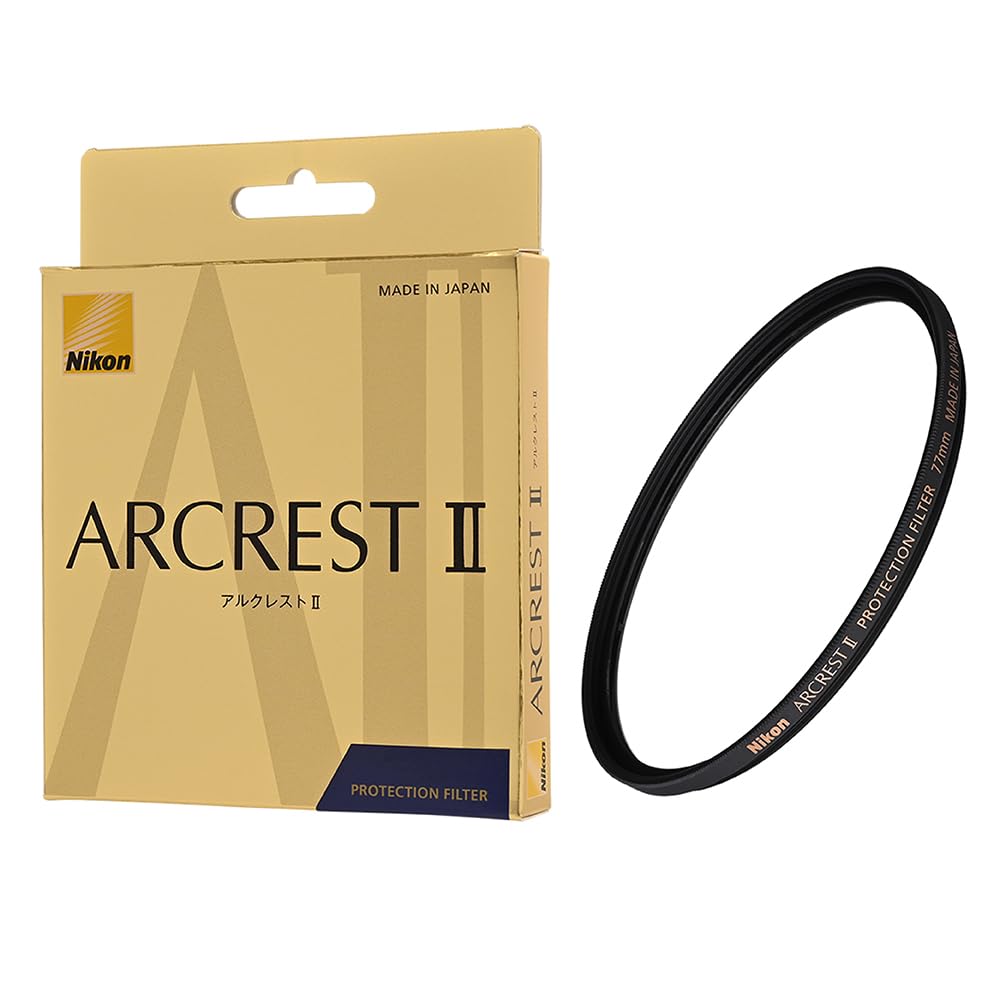
Nikon’s ARCREST II is engineered with a proprietary Zero-One Anti-Reflective Coating that pushes surface reflectance below 0.1% across the visible spectrum. This is the same coating philosophy used in high-end NIKKOR optics, designed to preserve the lens’ native contrast and resolution without introducing any additional flare or ghosting. The high-performance glass substrate is exceptionally clear and free of intrinsic color casts.
The 77mm thread version fits directly onto the Nikon 70-200mm f/2.8 and similar pro lenses, and the ultra-slim frame doesn’t interfere with the lens hood. The coating is also oleophobic and hydrophobic: water beads up and rolls off, and fingerprints wipe away cleanly without smearing. Users report zero perceptible impact on sharpness even on 45-megapixel sensors.
This is the most expensive filter on this list, but it delivers the highest standard of optical neutrality. If you shoot professionally or simply demand the cleanest possible image from your telephoto or standard zoom without any artifact, this is the definitive choice. It is built to match the lifespan and performance of high-end NIKKOR lenses.
Why it’s great
- Zero-One AR coating virtually eliminates all surface reflections
- High-performance glass maintains full lens sharpness
- Excellent smudge and water resistance for field use
Good to know
- Premium price point limits it to primary lenses
- Only available in standard thread sizes like 77mm
2. ZEISS T* Anti-Reflective Coating UV 52mm

ZEISS T* is one of the most recognized anti-reflective coating technologies in the optics world, developed originally for cinema and high-end camera lenses. This 52mm UV protection filter applies that same multi-layer deposition to a high-quality glass substrate, cutting reflections to less than 0.3% per surface. The result is noticeably deeper blacks and a significant reduction in ghosting when shooting backlit scenes.
The filter fits both ZEISS and non-ZEISS lenses with a 52mm thread, making it a versatile option for legacy primes or modern mirrorless kits. The frame is sturdy enough for daily use and the filter accepts a standard lens cap easily. Tested on a Canon R7 with an RF 24-105mm f/4, the T* coating showed no degradation in sharpness at any aperture and improved contrast in high-contrast lighting.
At this price tier, the T* coating offers a blend of heritage optical science and reliable build quality. It’s an excellent choice for photographers who want proven flare suppression on their favorite 52mm lens without the cost of a full ZEISS lens. The included plastic storage case is a practical touch for safe transport.
Why it’s great
- World-renowned T* coating provides genuine flare suppression
- Compatible with any 52mm lens, not just ZEISS
- Solid construction with easy-to-clean surface
Good to know
- Limited to the 52mm thread size
- Higher cost than standard UV filters of the same size
3. Haida Pro II 82mm CPL+VND 2-in-1

The Haida Pro II 2-in-1 combines a circular polarizer and a variable neutral density filter into a single 82mm package, with each air-to-glass surface treated with anti-reflection multi-coatings and an additional Nano coating for water and oil repellency. This design minimizes the number of glass elements between your lens and the scene, reducing the cumulative flare risk that comes from stacking multiple filters.
The VND offers up to 8 stops of light reduction (1.5 to 7 stops) via a rotating lever, while the CPL ring rotates independently for precise polarization control. On a Nikon 24-70mm f/2.8G at 24mm, users report no visible X-pattern or vignetting even at f/2.8, and the anti-reflective coatings keep internal reflections well-controlled. The filter body uses aluminum and optical glass with a smooth rotation mechanism.
This is a versatile tool for landscape and travel photographers who want to carry one filter instead of two. The ability to dial in the ND density while maintaining polarization without cross-threading is a genuine workflow advantage. Be aware that the ND knob can loosen over time, so a quick tighten after each session is recommended.
Why it’s great
- Combines CPL and VND in one slim unit to reduce stacked flare
- Independent rotation for polarizer and ND control
- No vignetting at 24mm on full-frame wide zoom
Good to know
- Slight blue color cast noted in deep shadows
- Cannot attach a same-thread lens cap directly
4. NiSi 77mm UHC UV Protection Filter
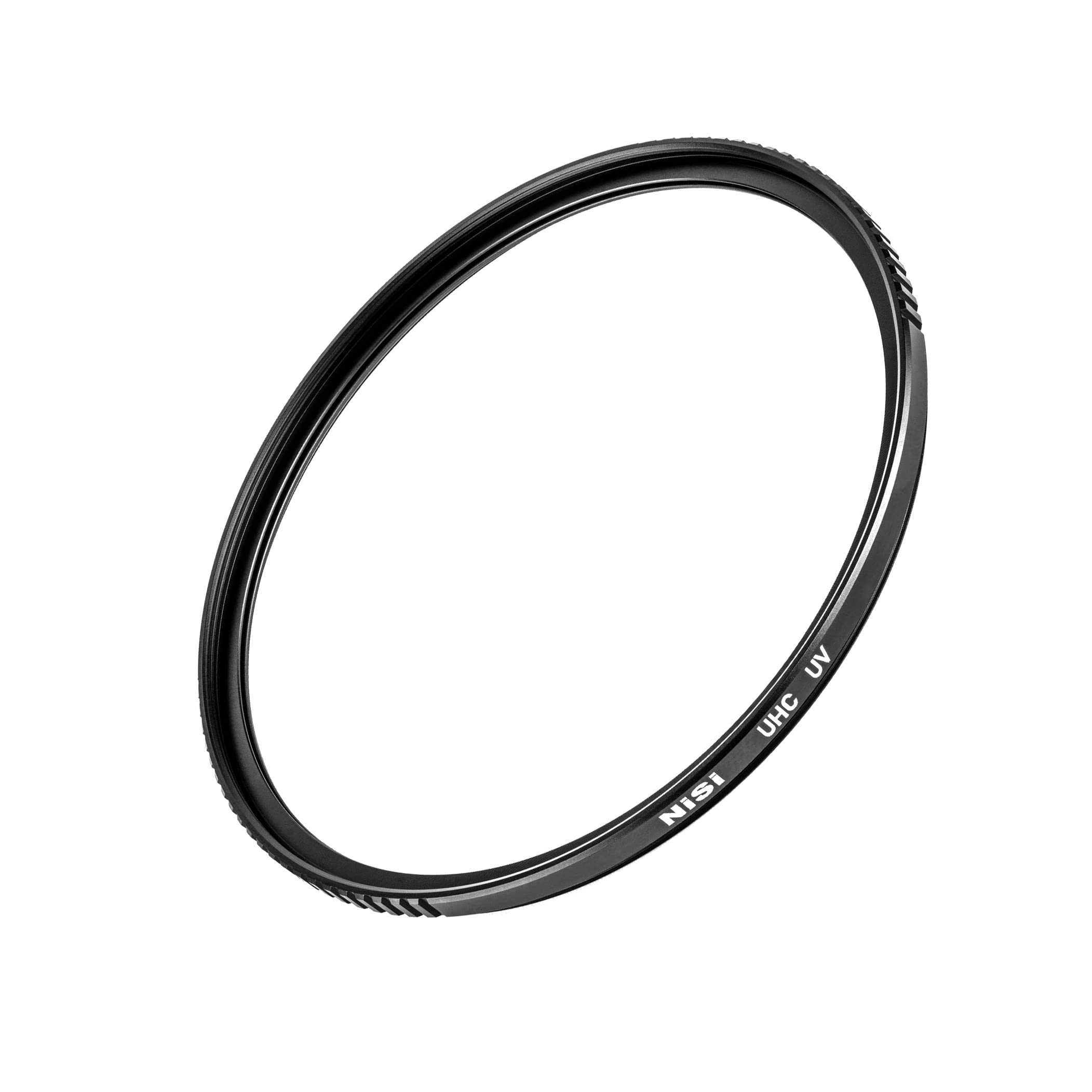
NiSi’s UHC UV filter offers an impressive 18-layer nano-coating stack on a Water White Glass substrate, delivering 99.3% transmittance and effective anti-reflective performance at a mid-range price. The ultra-slim design — just a few millimeters thick — prevents vignetting even on wide-angle lenses with 77mm threads, making it a solid choice for Canon, Nikon, and Sony standard zooms.
The multi-layer coatings actively suppress ghosting and flare in normal shooting conditions, though in extreme backlit situations some green artifact has been reported near strong light sources. The glass is double-side polished for clarity and the Nano coating adds a hydrophobic layer that makes cleaning dust and smudges effortless. The included storage case is well-padded and matches the high-quality feel of the filter itself.
For photographers who need a reliable daily protection filter with genuine anti-reflective benefits at a reasonable cost, the NiSi UHC UV is an excellent pick. It performs optically close to much more expensive filters while keeping the cost accessible for multi-lens kits. The build quality is robust enough for field use without being overly heavy at 90 grams.
Why it’s great
- 18-layer Nano coating cuts reflections effectively
- Ultra-slim profile fits wide-angle lenses without vignetting
- Water White Glass delivers neutral color reproduction
Good to know
- May introduce a slight green artifact in extreme lens flares
- Not as flare-resistant as premium 28-layer competitors
5. K&F CONCEPT 40.5mm Nano-X MC UV
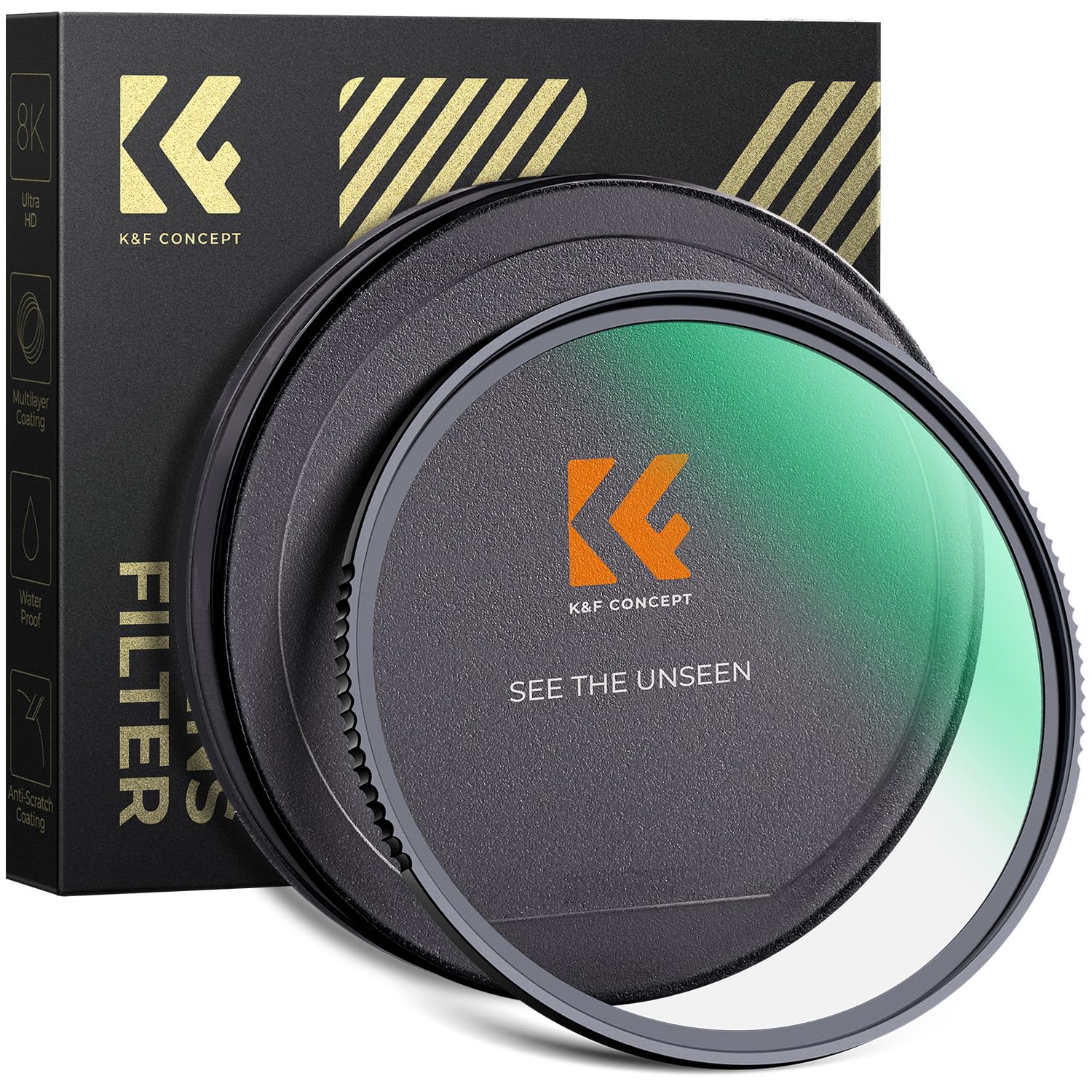
This K&F CONCEPT Nano-X filter packs 28 multi-layer coatings into a small 40.5mm frame, offering 99.6% light transmission with effective anti-reflective properties. The shockproof tempered glass from Japanese AGC is a step above standard optical glass in terms of strength and clarity, and the ultra-slim 3.3mm frame ensures no vignetting even on wide-angle prime lenses with small threads.
The 28-layer stack aggressively suppresses reflections and protects against water, oil, and scratches. Tested on a Sigma 50mm f/1.4 ART, the filter produced no unwanted flares or loss of contrast, and the low profile allowed for easy stacking with another filter. The ribbed grip makes installation and removal straightforward even with cold hands. The filter comes with a hard storage case that is both sturdy and compact.
This is a fantastic choice for owners of smaller mirrorless primes or compact system cameras that use a 40.5mm thread. The combination of high layer count, tempered glass, and precision fit at this price point makes it a standout value for those who prioritize optical neutrality in a lightweight package.
Why it’s great
- 28-layer nano-coatings provide excellent flare suppression
- Shockproof tempered glass offers superior durability
- Ultra-slim frame avoids vignetting on wide primes
Good to know
- Limited to the specific 40.5mm thread size
- Tempered glass edge may be more prone to chipping if dropped on hard surfaces
6. K&F CONCEPT 49mm ND100000 Nano-X
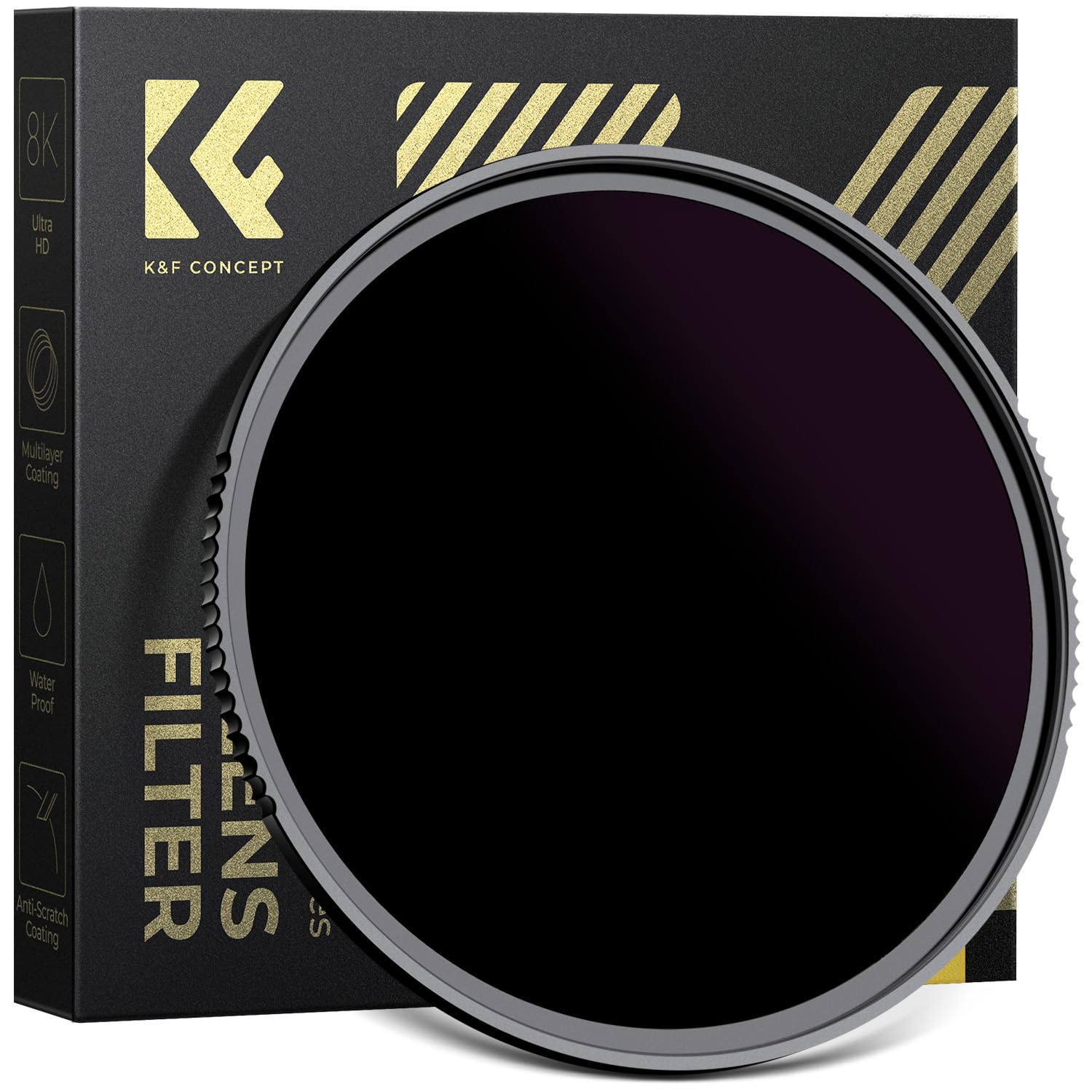
The K&F CONCEPT ND100000 is designed for a very specific use case: capturing the sun with full detail. With 16.6 stops of light reduction, it blocks enough light to shoot the solar disk at safe shutter speeds, and the 28 multi-layer coatings suppress internal reflections that could otherwise create ghost suns or flare artifacts in the image. The imported AGC optical glass ensures low reflectivity at 0.2%.
The aviation-grade aluminum frame is super slim and lightweight, avoiding vignetting on telephoto lenses like the Sony 200-600mm. While the primary purpose is solar and eclipse photography, the same deep ND density can be used for shooting powerful light sources or creating extreme long exposures in bright daylight. The coatings maintain neutral color without introducing a visible color cast, as confirmed by users who shot the 2024 eclipse.
If you plan to photograph the sun or solar eclipses, this filter is a purpose-built tool that balances extreme density with optical quality. The 28-layer coatings do a commendable job of keeping reflections in check, though it is important to note that this is not a protective filter for everyday use — it is a specialty tool for blocking extreme amounts of light.
Why it’s great
- 16.6 stops of light reduction perfect for solar and eclipse photography
- 28-layer multi-coatings minimize internal flare and ghosting
- Ultra-slim aluminum frame prevents vignetting on telephoto lenses
Good to know
- Only usable for extreme ND scenarios, not daily protection
- UV blocking is unknown — use live-view, not optical viewfinder
7. GREEN.L 86mm MRC UV Protection Filter
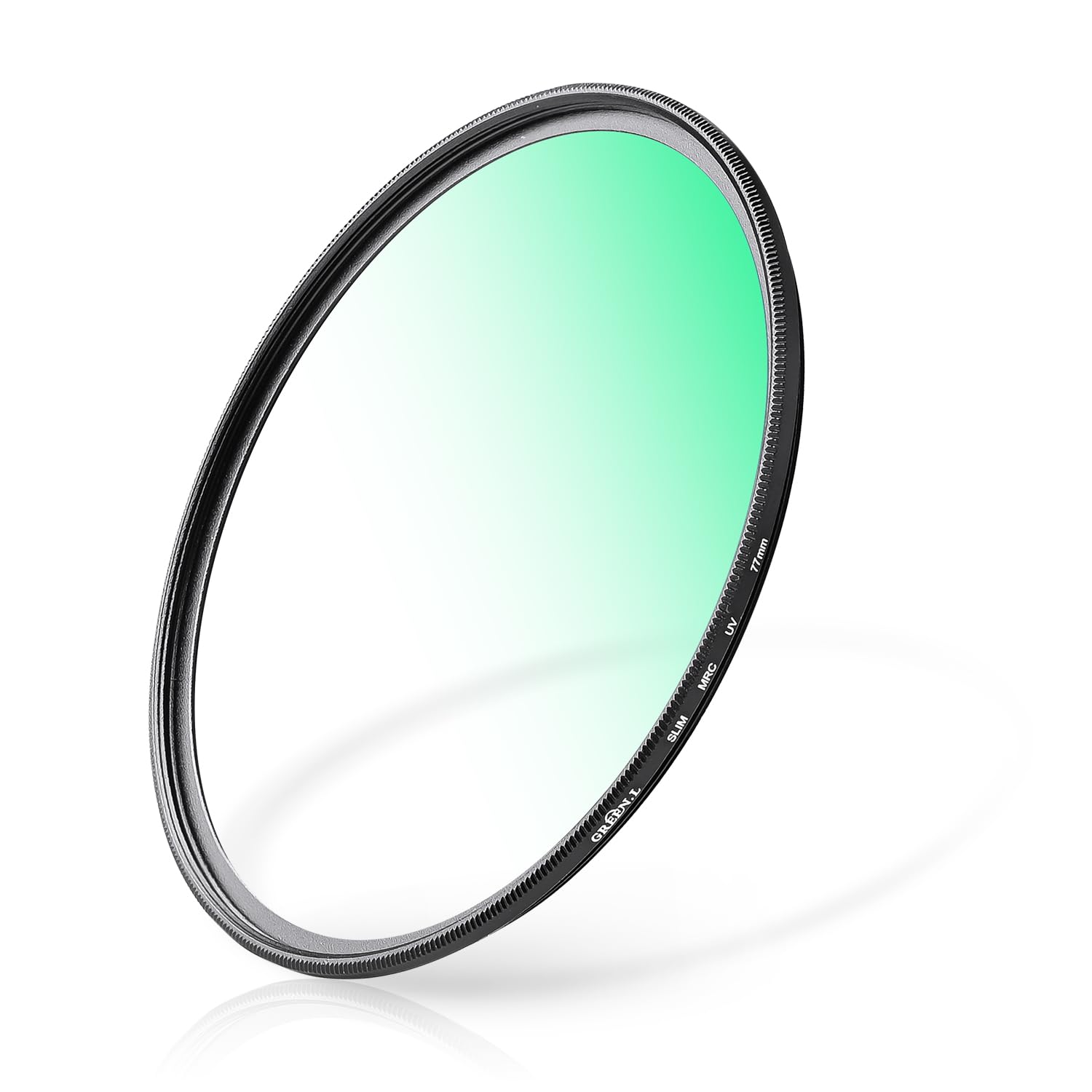
The GREEN.L MRC UV filter delivers 28-layer NANO multi-coating on Japanese AGC glass for a very accessible price, making it an attractive option for those who need to protect a large 86mm front element without spending a premium. The coating achieves 99% light transmission and actively reduces environmental reflections, helping to preserve contrast in everyday shooting conditions.
The ultra-thin 2.4mm frame is one of the slimmest in this comparison, ensuring no vignetting on telephoto lenses with huge front threads. Users have confirmed it fits perfectly on Tamron 150-500mm and similar super-telephoto lenses, allowing the lens cap and hood to attach normally. The hydrophobic and scratch-resistant properties are functional, though the coating does not reach the same level of flare suppression as premium competitors like the ZEISS T* or Nikon ARCREST II.
This filter is ideal for photographers on a budget who need a large-format protective filter with solid anti-reflective characteristics. The 28-layer coating provides real value at a low cost, but keep in mind that the build quality and optical refinement are naturally a step below the more expensive options. It is a competent daily driver for lens protection that will not degrade image quality noticeably.
Why it’s great
- 28-layer nano-coatings for under are exceptional value
- 2.4mm ultra-slim frame avoids vignetting on large telephoto lenses
- Japanese AGC glass provides good optical clarity and color fidelity
Good to know
- Flare suppression is decent but not as strong as premium multi-coated filters
- Thin frame may be easier to cross-thread if not aligned carefully during installation
FAQ
Does an anti-reflective coating affect image sharpness or contrast?
How many coating layers do I need to see a real difference in flare reduction?
Can I use an anti-reflective coated UV filter as a lens protector all the time?
Final Thoughts: The Verdict
For most users, the anti-reflective coating for camera lens winner is the Nikon ARCREST II because its Zero-One coating delivers the lowest reflectance and highest contrast of any filter in this comparison, making it optically invisible even on high-resolution sensors. If you want the prestige of Zeiss optical heritage at a lower price, grab the ZEISS T* UV 52mm. And for a budget-friendly way to protect a large front element without sacrificing coating quality, nothing beats the GREEN.L MRC UV 86mm.