
Small outboards under 3 HP are the unsung workhorses of the dinghy, kayak, and inflatable world. They push tiny boats up rivers, across lakes, and to fishing spots where trolling motors run out of battery. The decision between a two-stroke, a four-stroke, or a modern electric equivalent has never been more complex—or more important for your time on the water.
I’m Min — the co-founder and writer behind Gadgets Feed. I’ve spent hundreds of hours cross-referencing displacement figures, fuel consumption data, weight distributions, and real owner reports from small-boat forums to separate the genuinely reliable options from the ones that leave you stranded mid-lake.
This guide focuses solely on the best lightweight, portable outboards in the 2–3 HP equivalent class for small craft. Whether you prioritize gas-free instant torque or the simplicity of a 4-stroke air-cooled engine, the right 2.0 hp outboard motor balances portability with genuine propulsion power for your exact hull size.
How To Choose The Best 2.0 HP Outboard Motor
The small outboard market is flooded with generic 4HP-engines sold under dozens of brand names. Most share the same 53cc or 60cc air-cooled 4-stroke powerhead. Your real decision hinges on three factors: the weight you can carry, the fuel you want to store, and whether you need instant maneuverability around docks without a separate reverse gear.
2-Stroke vs. 4-Stroke for Tiny Boats
Two-stroke engines at this size are lighter per horsepower—often by 8–12 pounds—and simpler to service. The trade-off is a smoky idle, louder operation around 5500 RPM, and the need to mix 50:1 oil into every gallon of gasoline. Four-stroke models run cleaner, sip fuel at trolling speeds, and never require oil mixing, but they weigh more and typically lack a neutral gear unless you rotate the entire motor 360 degrees.
Shaft Length and Trim Angle
Most small motors in this category ship with a short shaft around 40cm (15.7 inches), which suits inflatable dinghies and jon boats with a transom height under 16 inches. If your transom is higher, the anti-cavitation plate sits above the waterline and the propeller will ventilate (lose bite). Look for adjustable trim/tilt pins that let you angle the propeller thrust downward for maximum planing efficiency.
Air Cooling vs. Water Cooling
Air-cooled small outboards simplify operation—no water pump impeller to fail, no tell-tale stream to monitor, and you can run them on land for carburetor tuning. Water-cooled engines perform better under sustained heavy load because water conducts heat away faster than air, but they require a submerged pump and annual impeller inspection. For a 2–4 HP motor used intermittently, air cooling is more forgiving.
Quick Comparison
On smaller screens, swipe sideways to see the full table.
| Model | Category | Best For | Key Spec | Amazon |
|---|---|---|---|---|
| Newport NT300 | Electric | Quiet trolling & marina use | 36V / 1300W / 110lb thrust | Amazon |
| GrfceVue 4-stroke 6HP | 4-Stroke | Quiet cruising 14ft boats | 140cc air-cooled TCI ignition | Amazon |
| TBVECHI 2-Stroke 6HP | 2-Stroke | Budget power for jon boats | 102cc water-cooled CDI | Amazon |
| DNYSYSJ 18HP | 2-Stroke | High-speed inflatables | 246cc water-cooled CDI | Amazon |
| BJTDLLX 2-Stroke 6HP | 2-Stroke | Lightweight on 12ft skiffs | 0.6L water-cooled CDI | Amazon |
| CUKUSIN 4HP w/Lifejacket | 4-Stroke | Budget all-in-one package | 53cc air-cooled | Amazon |
| KUSINDOG 4HP with Shade | 4-Stroke | Complete kit for dinghies | 53cc air-cooled | Amazon |
| CUKUSIN 4HP (144F 60cc) | 4-Stroke | Lowest entry price | 60cc air-cooled | Amazon |
| FiueStur 7.5HP | 4-Stroke | Heavy load on 13ft+ boats | 200cc air-cooled CDI | Amazon |
In‑Depth Reviews
1. Newport NT300

The Newport NT300 redefines what a small outboard can be at this power level. Instead of a 53cc 4-stroke with carburetors needing winterization, you get 1300 watts of instant electric torque delivered through a field-oriented control throttle that eliminates the hesitation every gas outboard has at low RPM. The 24.6-inch shaft and 9.8-inch composite two-blade propeller push a standard dinghy at 6.5 MPH with zero smoke, negligible vibration, and a noise level that won’t disturb conversation.
The digital throttle’s LCD display shows battery voltage and speed in real-time, letting you manage your range without guessing. Owners consistently report 2+ hours at full throttle on a 100Ah 36V lithium pack, and the quick-disconnect battery cable makes removal for charging trivial. The 23.8-pound weight undercuts every gas 4-stroke in this class by 15–20 pounds, which matters when you’re hauling the motor down a dock ramp.
The magnetic emergency stop key and four-position trim/tilt angles (0°, 7°, 14°, 21°) give you precise control over propeller depth. While the tiller lacks an offset for angled installation, the overall package runs cleaner, longer, and quieter than any comparably priced gas alternative. For marina-adjacent boating, this is the gold standard.
Why it’s great
- Instant torque from standstill—no carb tuning
- 23.8 pounds makes portability effortless
- Runs 30+ runtime hours on a 36V 100Ah lithium
- Near-silent operation at trolling speed
Good to know
- Battery pack sold separately—adds cost and weight
- Shaft length too long for shallow weedy water
- Lower top speed than a 6HP gas motor
2. HANGKAI (GrfceVue) 4-Stroke 6HP
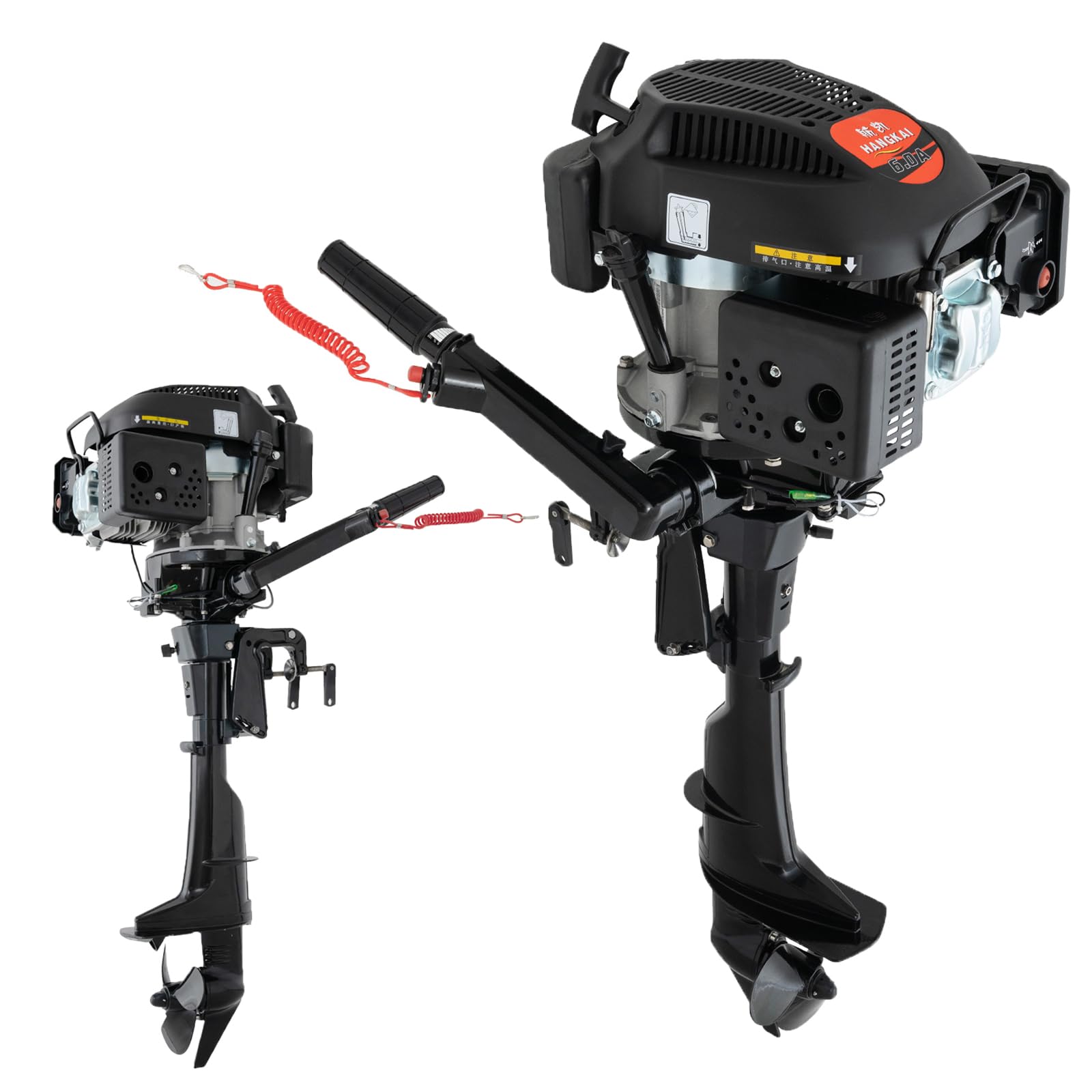
This 140cc 4-stroke from GrfceVue (branded under HANGKAI’s distribution network) delivers a genuinely smooth sailing experience on boats up to 14 feet. The air-cooled TCI ignition system fires reliably on the first or second pull in dozens of owner reports, and the three-blade propeller cuts through water with minimal resistance. On a 14-foot inflatable with two adults and gear, verified owners report 7 MPH at half throttle with fuel consumption around 0.26 gallons per hour.
The forward-and-neutral gearbox is a notable differentiator at this price—most 4-stroke motors of this size only offer forward with manual rotation for reverse. Having a proper neutral position makes docking and warm-up far safer. The emergency flameout rope and automatic overheat shutdown add genuine safety layers that the generic 53cc engines omit entirely.
Several owners noted FedEx delivered damaged fins, but both Amazon and the seller resolved replacements quickly. The motor weighs 46.2 pounds, which is heavier than the 2-stroke options but typical for a 140cc 4-stroke. If you need a gas motor that idles cleanly, starts in one pull, and sips fuel all day, this is the most well-rounded option at this tier.
Why it’s great
- Forward and neutral gearbox for safe docking
- TCI ignition delivers reliable first-pull starts
- Overheat auto-shutdown and emergency stop rope
- Only 0.26 gal/hr at cruising speed
Good to know
- 46.2 pounds is heavy for frequent portaging
- No built-in fuel tank—requires external hookup
- Air-cooled, not ideal for full-throttle all day
3. TBVECHI 2-Stroke 6HP

The TBVECHI 102cc 2-stroke occupies the sweet spot between affordability and genuine 6HP output. At 45.3 pounds, it’s lighter than any comparable 4-stroke in this horsepower range, and the water-cooling system keeps temperatures stable during extended full-throttle runs. The 2.5-liter integral fuel tank gives roughly one hour of wide-open operation before refueling, and the oil mixing ratio (50:1 fuel to 2-stroke oil) is straightforward once you mark a dedicated gas can.
Real-world performance on a 14-foot Jon boat with two occupants hits 6 MPH at quarter-to-half throttle, according to verified break-in reports. The CDI ignition and manual start produce reliable pulls—most owners report the motor starting within three pulls after priming the carburetor bulb. The gearbox comes pre-filled with 195ml of gear oil, saving you that initial setup step.
The major buyer caution here is that one unit arrived damaged and the seller demanded return shipping before the manufacturer stepped in. The second unit ran well, but the platform’s quality control is not consistent. If you’re comfortable with a 1-year warranty from the manufacturer and the possibility of needing to file an Amazon claim, this is a potent budget proposition for light hulls.
Why it’s great
- 45.3 pounds—one of the lightest 6HP options
- Genuine water-cooling for sustained power
- 2.5-liter built-in tank for hour-long runs
- Starts reliably within 3 pulls after break-in
Good to know
- Quality control variance between units
- Requires 50:1 gas/oil mixing
- Smoky idle and louder than 4-stroke
- Return shipping on defects can be expensive
4. DNYSYSJ 18HP 2-Stroke
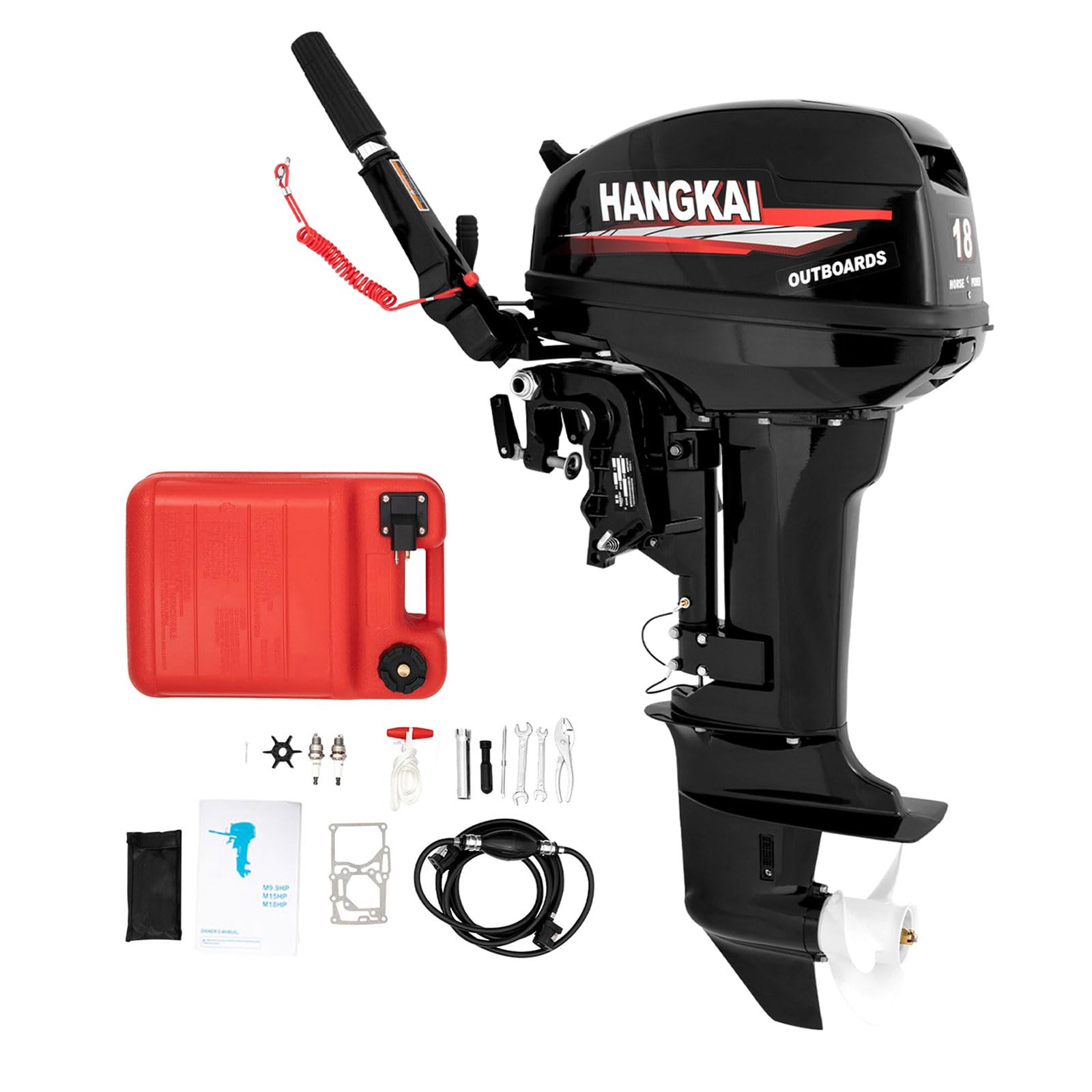
The DNYSYSJ 246cc 2-stroke is a different league entirely—this is not a lightweight dinghy motor but a serious powerhead for larger inflatables and aluminum skiffs up to 19 feet. The 18HP output, combined with forward-neutral-reverse gear positions and a 360-degree steering tiller, gives you full gear-shifting capability that no fixed-rotation 4-stroke offers. Owners report speeds of 18–20 MPH on 12-foot aluminum boats with a passenger, and the 24-liter external fuel tank provides multi-day range.
The twin-cylinder design and water-cooling system handle sustained high-RPM operation without overheating, and the CDI ignition fires consistently. Verified owners note this engine is a near-exact clone of the Tohatsu M9.8B 2-stroke, meaning generic replacement parts often fit. The seller provides MSO paperwork for boat registration in most states, which is critical for legal lake use.
The primary longevity concern is that one owner reported the pull-start housing broke during the second summer and the engine later refused to start. The throttle sticker has also been known to ship reversed, causing the motor to run at full throttle when the grip is in the idle position—a simple fix once you know to check it. For the speed and displacement, this is high performance per dollar, but longer-term durability remains a gamble.
Why it’s great
- 18HP delivers 18–20 MPH on 12-foot boats
- Forward-neutral-reverse gearbox
- Tohatsu clone—parts compatibility is strong
- 24-liter external tank for multi-day trips
Good to know
- 85 pounds—not portable without a motor stand
- Throttle sticker may be reversed from factory
- Pull-start housing reliability over 2 years is inconsistent
5. BJTDLLX 6HP 2-Stroke

This 2-stroke 6HP from BJTDLLX pushes a 1232 Jon boat into the low 20s MPH on a calm day, per verified owner reports. The 2.5-liter internal tank and water-cooling system work together to keep the engine running strong during extended throttle runs. The CDI ignition and manual pull-start generally fire within one to two pulls after the initial break-in period.
The 360-degree steering rotation lets you reverse without shifting gears—a genuine advantage for tight dock maneuvering. The 66-pound overall weight (including the 2-stroke powerhead) is manageable for two people to lift onto a transom, though it’s not a single-hand carry like the Newport electric. Owners on 12-foot flat-bottom duck boats report moving two adults plus 60 decoys upriver at an acceptable pace.
Fuel economy is good for a 6HP 2-stroke; one owner used approximately two tanks of gas before the motor truly broke in and delivered its full power curve. The 50:1 oil mix is necessary, and the smoke at idle can be bothersome in enclosed coves. For pure budget-conscious speed on very light hulls, this motor delivers on its sticker horsepower.
Why it’s great
- Low 20s MPH on a lightweight Jon boat
- 360-degree steering for instant reverse
- Water-cooling for sustained high RPM
- Starts first pull after break-in period
Good to know
- 2-stroke smoke at idle is intrusive
- Poor low-speed idle for trolling
- Requires 50:1 premix fuel
6. CUKUSIN 4HP w/Lifejacket

The CUKUSIN 53cc 4-stroke packages a life jacket and the motor together, creating a one-box purchase for first-time dinghy owners. The air-cooled powerhead eliminates the water pump failure point, and the twist-grip throttle control is intuitive even if you’ve never run a small outboard. At 33 pounds (15 KG), it’s easy for one person to carry from car to transom.
Several verified owners on Intex Excursion 5 kayaks report running 8-mile round trips on about one-third of the 1.75-liter tank, which translates to economical operation. The motor starts reliably on the first or second pull, and the 3.7-inch (18cm) propeller provides decent bite for a 4HP rating. The manual reverse (by rotating the entire motor 360 degrees) is standard for this class and requires some practice to execute smoothly.
The trade-offs are notable: the included life jacket is not USCG-approved, so you’ll still need to buy a legal PFD. One owner reported the engine cuts out above one-third throttle and struggles against tide, and manufacturer support responsiveness is inconsistent. The carburetor tuning screw is accessible via the included screwdriver, but the airbox is fussy to reseat. For the price, it’s a functional starter motor with the convenience of an all-in-one box.
Why it’s great
- Lightest 4-stroke in this tier at 33 pounds
- Starts reliably 1st or 2nd pull
- Air-cooled—no water pump to maintain
- Included life jacket (non-USCG) as bonus
Good to know
- Some units cut out above 1/3 throttle
- Life jacket not USCG-approved
- Manufacturer support responsiveness is mixed
- Carburetor requires fine-tuning out of the box
7. KUSINDOG 4HP with Shade

The KUSINDOG 4HP shares the same 53cc air-cooled 4-stroke powerhead as the CUKUSIN but adds a shade visor and a 1.2-liter fuel tank in a package that weighs just 26.5 pounds (12 KG). That’s the lightest weight in this entire roundup, making it the best choice for kayak anglers who portage over long distances. Owners consistently praise the quiet operation—several note it’s quieter than a Mercury 4HP 4-stroke when running.
Documented customer service from a representative named Luci M. has been exceptionally helpful, providing video and written support for setup and carburetor tuning. The motor starts promptly after following the included instructions, and the metal propeller is a welcome upgrade over the plastic props found on cheaper competitors. The 360-degree hook handle rotation for reverse is easier to operate than trying to spin the entire motor body.
Quality control remains the Achilles’ heel: one unit shipped without a driveshaft entirely, and the seller acknowledged the defect but only offered a replacement part with long shipping delays. Another owner reported fast shipping and durable construction. For the 26.5-pound weight and the included shade, this is the most portable 4-stroke in the lineup, assuming your unit arrives complete.
Why it’s great
- 26.5 pounds—lightest 4-stroke in the guide
- Metal propeller, not cheap plastic
- Excellent customer support from Luci M.
- Quieter than Mercury 4HP 4-stroke
Good to know
- One unit shipped without a driveshaft
- 1.2L tank is small—refuels are frequent
- Replacement parts shipping can be slow
8. CUKUSIN 4HP (144F 60cc)
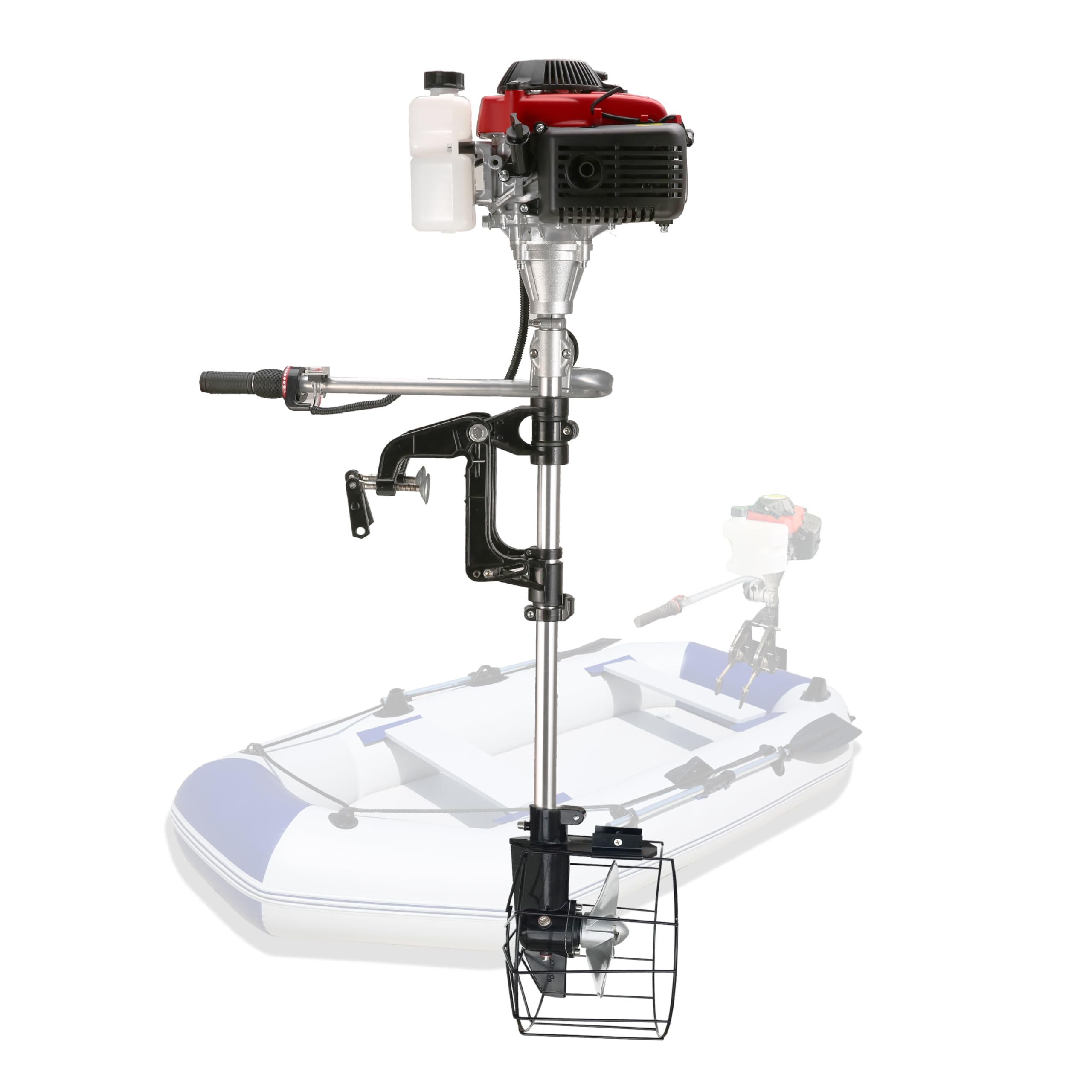
This 60cc variant of the CUKUSIN 4-stroke represents the entry-level price point for a new gas outboard. The 60cc displacement is a slight bump over the 53cc siblings, and the air-cooled system with 360-degree steering provides the same basic functionality. The motor ships with a tool kit and a full accessory set, making it a true ready-to-mount package for first-time buyers on budget dinghies.
One verified owner recorded a top speed of 4.2 MPH on a 12-foot tin boat—adequate for puttering but not for covering distance against current. The carburetor on some units causes intermittent skipping; the company shipped a replacement carburetor promptly when one owner raised the issue. The metal propeller and adjustable handle are genuine quality touches at this price.
The most concerning report involves a unit that worked normally for one season, was stored outside, and then spontaneously caught fire the following year, causing in damage on a foggy 58°F day. While this is a single incident, it underscores the importance of storing any gas outboard properly—draining the carburetor and fuel tank before off-season storage is mandatory. For the price-conscious buyer willing to perform careful maintenance, this motor represents the lowest barrier to entry.
Why it’s great
- Lowest entry price for a new gas 4-stroke
- Metal propeller and adjustable handle
- Company ships replacement parts quickly
- Tool kit and accessories included
Good to know
- 4.2 MPH top speed—no speed demon
- One reported spontaneous fire during storage
- Carburetor tuning issues common out of box
- Must drain fuel for off-season storage
9. FiueStur 7.5HP 200cc
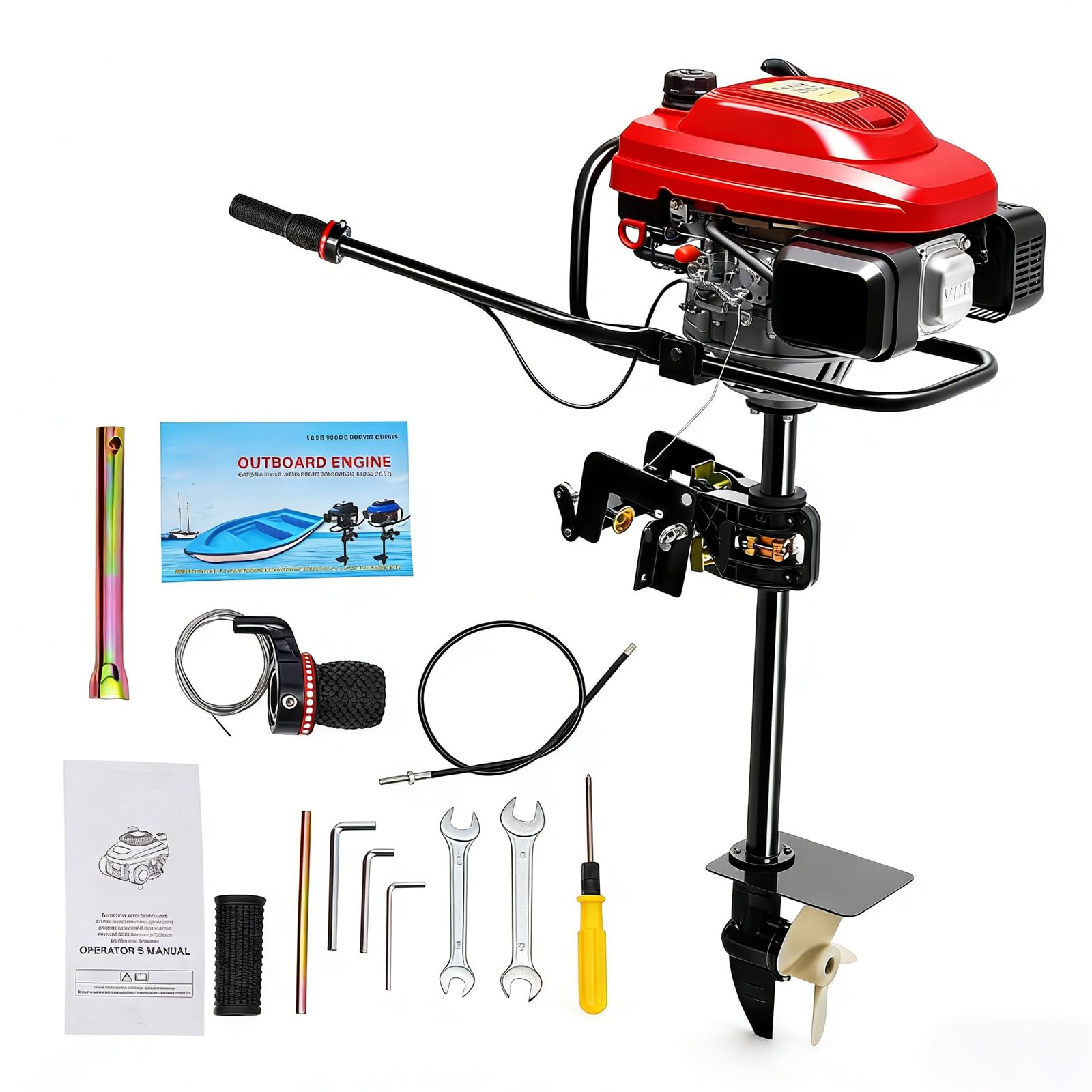
The FiueStur 200cc 4-stroke is built for heavier loads—two hunters, 60 decoys, and all their gear on a 12-foot flat-bottom duck boat, moving upriver at an acceptable pace. The CDI electronic ignition and easy-pull starter make startup consistent, and the air-cooling multi-port design keeps the engine from overheating during long sustained runs. The 66-pound weight is substantial but expected for a 200cc powerhead.
The continuously variable speed control provides smooth throttle transitions without the sticking sensation reported on some cheaper 53cc motors. The 0.34-gallon fuel tank gives approximately two hours of runtime on standard 92-octane gasoline, and the 4-stroke design means no oil mixing—just gas and periodic oil changes. The seller offers CE certificates and certificates of origin for registration purposes.
The plastic propeller is the weakest link—one owner reported it snapped within five minutes of first use. Replacing it with a metal propeller is a recommended first upgrade. The instruction manual suffers from poor English translations and mismatched diagrams that cover multiple motor variants without clear identification. For the additional displacement and torque, this motor pushes heavy loads better than any 53cc class engine, but you’ll want a backup prop on board.
Why it’s great
- 200cc displacement handles heavy loads well
- CDI ignition starts consistently every time
- No oil mixing with gas
- CE certificate and origin docs for registration
Good to know
- Plastic propeller broke within 5 minutes for one owner
- Manual has poor English and mismatched diagrams
- 66 pounds is heavy for solo portaging
FAQ
Can I use a 4HP outboard on a 12-foot inflatable?
How long does the fuel last on a 53cc 4-stroke?
Do I need to register a 2.0 HP outboard motor?
Why does my new outboard smoke at idle?
What shaft length do I need for my dinghy?
Final Thoughts: The Verdict
For most users, the 2.0 hp outboard motor winner is the Newport NT300 Electric because it delivers instant torque, near-silent operation, and zero maintenance on the powerhead—eliminating the carburetor and fuel storage headaches that plague gas engines. If you need the longest range without recharging, grab the GrfceVue 4-Stroke 6HP for its first-pull reliability and low fuel consumption. And for the lightest possible gas option on a kayak, nothing beats the 26.5-pound KUSINDOG 4HP with Shade.