
Standard insoles with plush foam do nothing for big-toe joint pain, turf toe, or hallux rigidus. What you actually need is a rigid plate that stops the toe from bending — and nothing does that better than a carbon-fiber shell. Carbon fiber insoles are thin, stiff, and lightweight, designed to transfer your weight efficiently while keeping the big toe joint in a fixed, pain-free position.
I’m Min — the co-founder and writer behind Gadgets Feed. I’ve spent hundreds of hours combing through biomechanics research and analyzing material specifications for rigid orthotic inserts to determine which carbon fiber insoles deliver real medical-grade stiffness without adding bulk or weight.
Whether you suffer from hallux rigidus, turf toe, metatarsalgia, or Morton’s neuroma, finding the right rigid support is critical. This guide breaks down the top options to help you find the best carbon fiber insoles for your specific foot condition and activity level.
How To Choose The Best Carbon Fiber Insoles
Not all rigid insoles are the same. The right choice depends on your foot condition, activity, and shoe type. Here are the three most critical factors to evaluate.
Rigidity and Morton’s Extension Design
The defining feature of a carbon fiber insole is its stiffness. Look for a model with a Morton’s extension — a rigid platform that runs under the big toe to prevent the joint from bending upwards. This is the only way to offload an arthritic or injured big toe joint. True carbon fiber plates (3K twill weave, around 1.6 mm thick) offer the best balance of strength and thinness.
Fit and Sizing for Rigid Inserts
A carbon fiber insole should sit about ¼ to ½ inch shorter than your shoe’s original insole. Because these insoles don’t compress, they need to fit snugly inside the shoe without curling or buckling. If you’re between half sizes, always size down. Many rigid insoles are sold as a single piece (reversible) rather than a pair — pay close attention before ordering.
Activity-Specific Design
Hiking, basketball, hockey, and daily walking place different demands on your feet. Hiking insoles like the Kinergy model combine a carbon arch with foam cushioning for trail stability. Hockey-specific carbon insoles from Superfeet are designed to fit inside tight skate boots. For court sports, the MOVE Game Day Pro uses a carbon-infused frame for explosive push-off. Match the insole’s design to your primary activity.
Quick Comparison
On smaller screens, swipe sideways to see the full table.
| Model | Category | Best For | Key Spec | Amazon |
|---|---|---|---|---|
| Superfeet Hockey Performance | Premium | Ice hockey, figure skating | 11% better acceleration | Amazon |
| PowerStep Morton’s Extension | Premium | Hallux rigidus, walking, hiking | Carbon fiber stability plate | Amazon |
| VKTRY Silver Performance | Premium | Basketball, volleyball, running | Multi-layer carbon fiber composite | Amazon |
| MOVE Game Day Pro | Premium | Basketball, court sports, tennis | X-Frame torsional support | Amazon |
| Morton’s Extension Orthotic (Tega Design) | Mid-Range | Turf toe, big toe arthritis | 100% 3K carbon fiber, sold as a pair | Amazon |
| EstCarbon Carbon Fiber Insole | Mid-Range | Morton’s neuroma, turf toe, hallux rigidus | 1.6 mm thick, 3K twill carbon fiber | Amazon |
| Kinergy Hiking Boot Insoles | Budget | Hiking, long shifts, standing | Carbon arch support + EnerBoost foam | Amazon |
In‑Depth Reviews
1. Superfeet Hockey Performance Insoles

Superfeet built these specifically for hockey skates, and the design shows: the high-density carbon fiber construction reduces heel lift inside the tight boot while providing up to 11% better acceleration off the stride. The low-profile shape means it fits without crowding your toes inside the skate toe box — a common issue with thicker insoles.
Figure skaters and hockey players alike report dramatically improved edge control and reduced foot collapse on outside edges. The heel pitch in the carbon version is more aggressive than the standard Comfort insole, which translates into better responsiveness but demands a secure heel lock. Several reviewers noted that this insole eliminated inward arch collapse and extended comfortable skating sessions beyond two hours.
Wearers with flat feet and pronation found the rigid arch supportive enough to reduce knee and back pain during play. The main trade-off is comfort: the carbon plate is firm and takes a session or two to adapt to, especially if you’re used to soft stock insoles.
Why it’s great
- Engineered specifically for skate boot geometry
- Measurable performance gain in acceleration and edge control
- Low volume design eliminates heel lift perfectly
Good to know
- Very firm; requires break-in for non-athletes
- May add ball-of-foot pressure for some foot shapes
2. PowerStep Morton’s Extension Carbon Fiber Orthotic Insole

PowerStep’s rigid insole combines a full-length carbon fiber stability plate under the big toe with a contoured flexible arch and deep heel cradle. This design limits big toe dorsiflexion — the painful upward bending that triggers hallux rigidus — while still allowing natural pronation control through the midfoot.
The dual-layer cushioning runs from heel to toe, reducing friction and heat buildup. Reviewers with arthritis and bone spurs reported immediate relief, with one 76-year-old walker noting the insoles enabled her to continue daily steep walks without toe pain. The build is solid enough that several users said it matches or exceeds custom prescription orthotics at a fraction of the cost.
It fits Hoka Arahi 8 and similar neutral trainers without trimming, though a short break-in period with looser laces is recommended. The price point is higher than basic rigid inserts, but the combination of prescribed arch profile and carbon plate makes it a strong alternative to podiatrist-fitted devices.
Why it’s great
- Full Morton’s extension with Medically designed arch support
- Works out of the box for many neutral shoes
- Often replaces custom orthotics at lower cost
Good to know
- Requires break-in period for optimal comfort
- Premium price tier for an over-the-counter insole
3. VKTRY Silver Performance Insoles
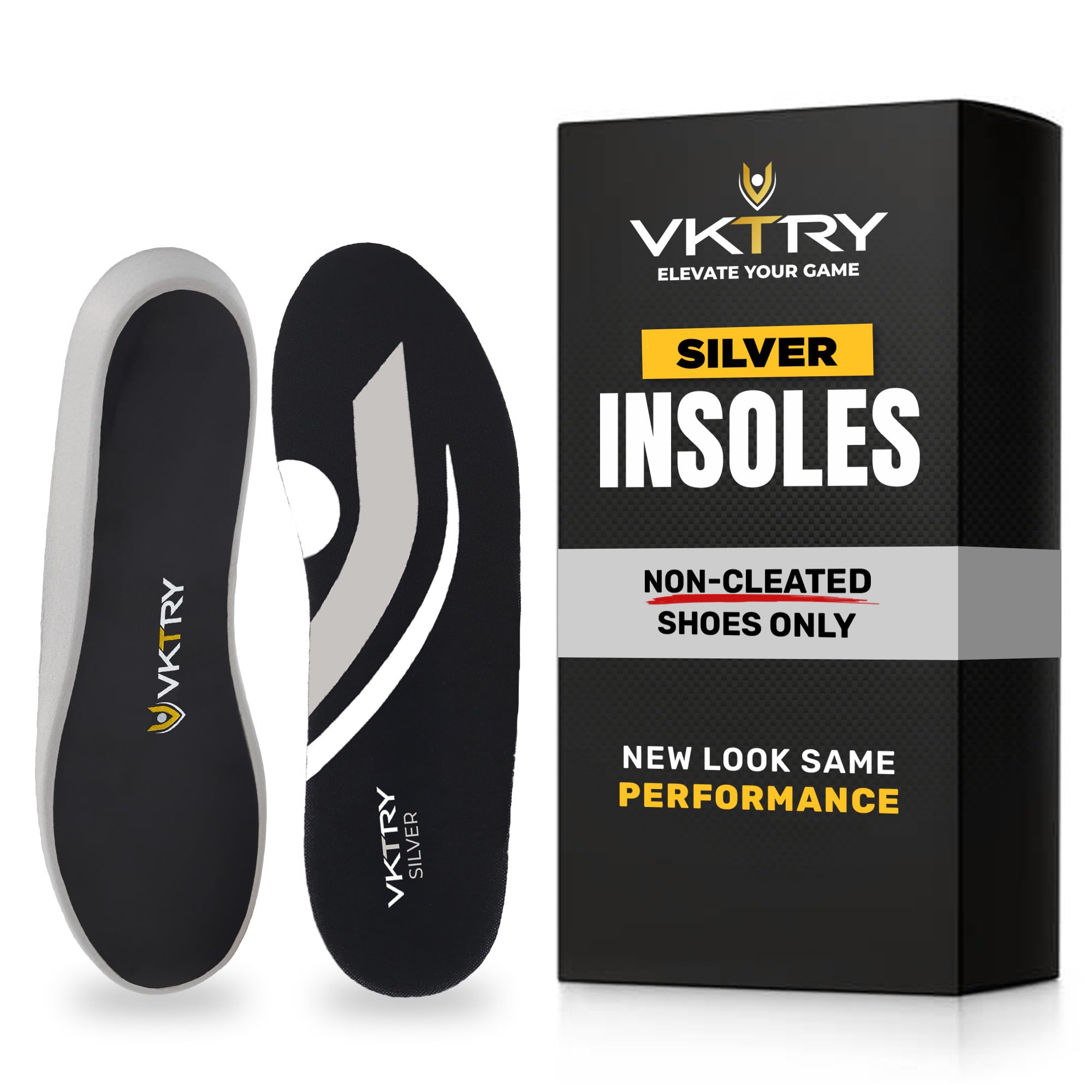
VKTRY uses a multi-layer carbon fiber composite construction that is thicker and heavier than pure carbon sheets — 8.78 ounces per pair — but this bulk translates into exceptional shock absorption and energy return. The ergonomic arch and deep heel cradle stabilize the foot during cutting and jumping, making this a top choice for basketball and volleyball players.
A 300-pound factory worker reported major relief for knees, ankles, and lower back when standing on hard concrete floors. Soccer players noted the insoles optimized their performance in cleats and trainers. The structured arch is slightly lower than some dedicated orthotic brands, so users with very high arches may wish for more lift.
VKTRY’s design prioritizes responsiveness over pure rigidity. It still limits toe motion, but the composite layup allows a small degree of flex that some athletes prefer for natural push-off. It fits most non-cleated athletic shoes without modification.
Why it’s great
- Excellent impact absorption for heavy landings
- Deep heel cradle stabilizes ankle and knee
- Works for both court sports and industrial standing
Good to know
- Heavier and thicker than pure carbon fiber plates
- Arch height may not satisfy high-arched users
4. MOVE Game Day Pro
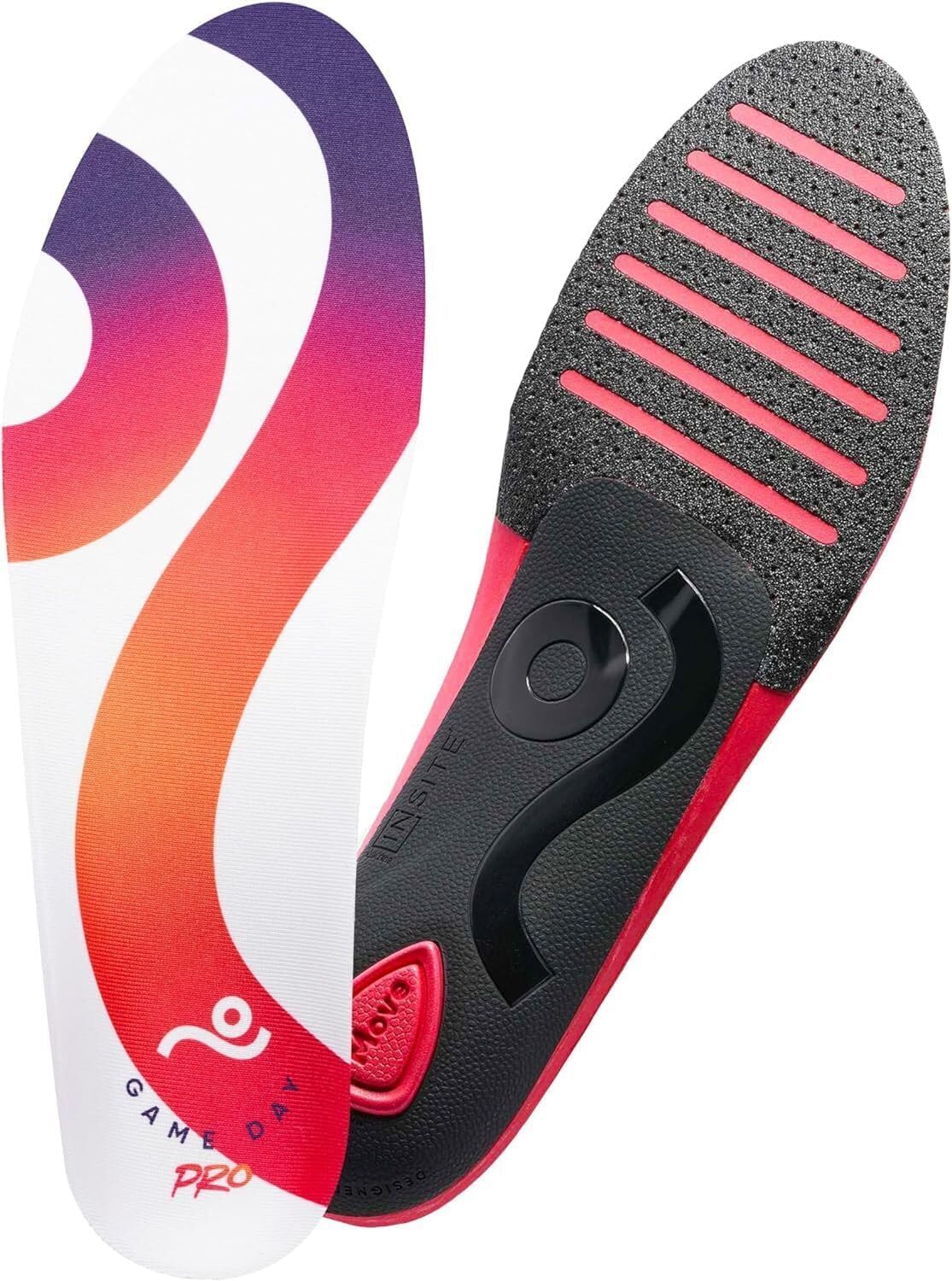
Co-founded by NBA All-Pro Damian Lillard, the Game Day Pro uses a carbon-infused X-Frame for torsional rigidity through the heel and midfoot while allowing natural forefoot flexibility. The Active Heel Technology targets pressure points in sensitive areas, making it suitable for extended wear during basketball, tennis, and pickleball.
Reviewers consistently praise the locked-in feel that prevents blisters and foot sliding inside the shoe. The aggressive forward tilt (heel-to-toe drop built into the insole) improves first-step quickness and explosiveness for court sports. Volleyball players reported the insole lasted an entire season without compression loss.
It provides high arch support that combats plantar fasciitis and flat feet. The cushioning is plush on landing but firm enough for responsive push-off — a balance that few athletic insoles achieve. The trade-off is that the forward tilt may feel unnatural for casual walking or standing.
Why it’s great
- X-Frame provides excellent lateral stability for cutting
- Forward tilt enhances athletic acceleration
- High arch support combats plantar fasciitis effectively
Good to know
- Aggressive forward pitch not ideal for casual walking
- Premium pricing tier for an athletic insole
5. Morton’s Extension Orthotic (Tega Design)
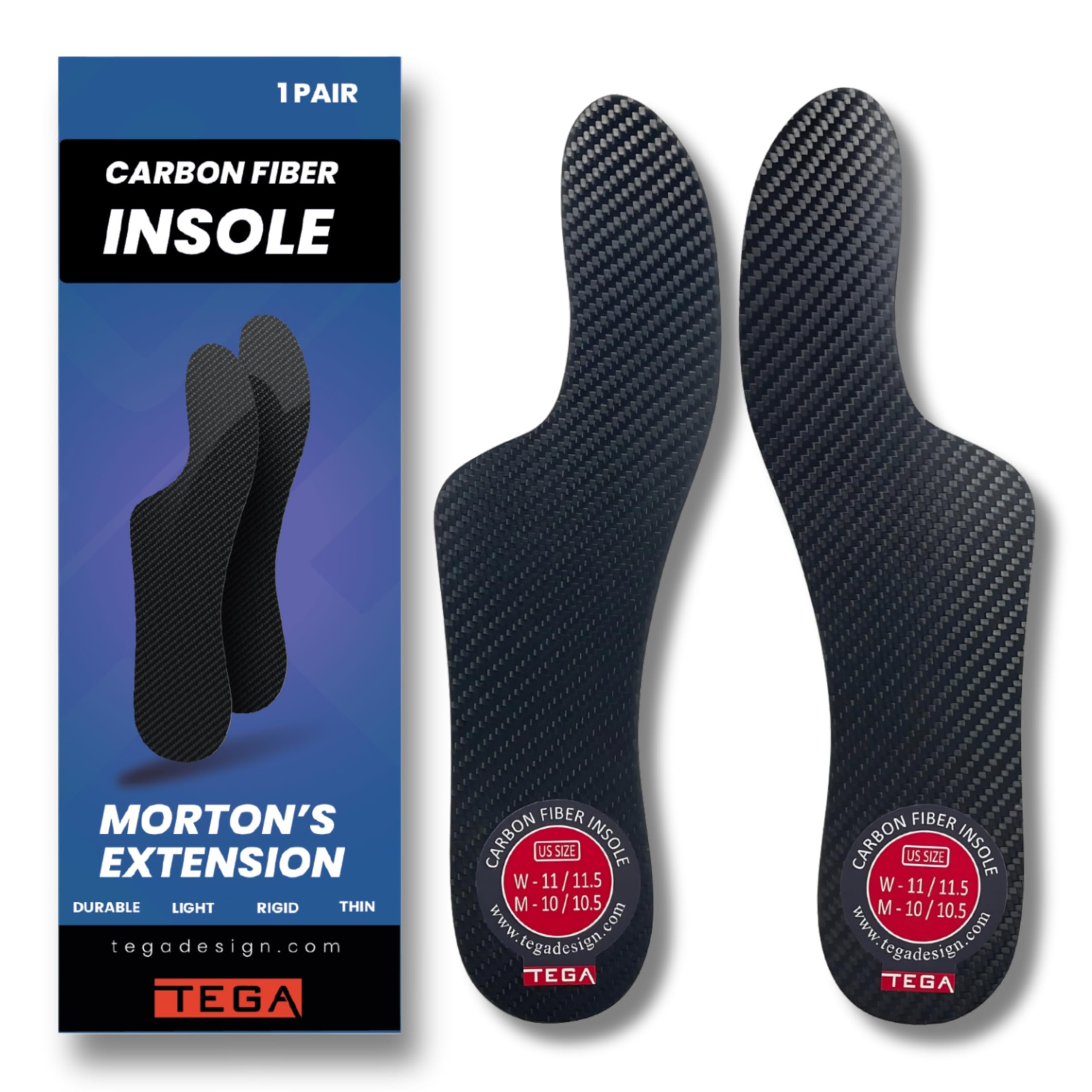
Unlike many rigid insoles sold as a single reversible piece, Tega Design includes two separate Morton’s Extension orthotics — one for each foot — made from 100% genuine 3K carbon fiber. Each insole is incredibly thin (about 0.28 inches thick at the toe) and lightweight at 3.21 ounces for the pair.
Users with hallux rigidus, turf toe, and fused ankles reported immediate pain relief. One reviewer with a fused ankle said the insole removed all walking pain for the first time in years. The mirror-set design allows installation on either foot, and the thin profile means it fits under the original insole in most closed-toe shoes without raising the footbed uncomfortably.
The main durability concern: some users reported the carbon fiber edge flaking or breaking off at the front after several months of heavy use, causing sharp irritation. For the price point, the performance is excellent, but heavy users may need to replace them more frequently than premium alternatives.
Why it’s great
- Two-piece set at a mid-range price point
- Thin and lightweight — fits under stock insoles easily
- Instant pain relief for big toe joint conditions
Good to know
- Carbon fiber edge may fray or break over time
- Does not contour to curved shoe footbeds perfectly
6. EstCarbon Carbon Fiber Insole

At just 1.6 mm thick, the EstCarbon insole is the thinnest rigid plate in this guide — essentially a flat sheet of 3K twill carbon fiber with no contoured arch. It is designed purely to limit big toe dorsiflexion for conditions like turf toe, hallux rigidus, Morton’s neuroma, and sesamoiditis. The flat profile makes it reversible for either foot.
Users with hallux rigidus reported being able to walk over 3 miles at brisk pace on a 7.0 incline treadmill with zero great toe pain. The insole works best when placed under the existing foam insole, as the rigid surface against the foot is uncomfortable. Some users noted a squeaking sound caused by friction between the carbon fiber and the shoe’s foam insole.
The biggest drawback: the flat sheet does not lie flush in shoes with curved footbeds. Multiple reviewers reported the insole hovering above the shoe’s base, causing foot movement and reduced effectiveness. It requires a shoe with a relatively flat interior or an additional orthotic underneath to fill the curve.
Why it’s great
- Extremely thin — minimal volume added to shoe
- True 3K carbon fiber provides maximum rigidity
- Affordable entry point for Morton’s extension therapy
Good to know
- Flat design doesn’t conform to curved shoe footbeds
- Can cause squeaking noise against foam insoles
- Sold as a single insole (1 pc), not a pair
7. Kinergy Hiking Boot Insoles
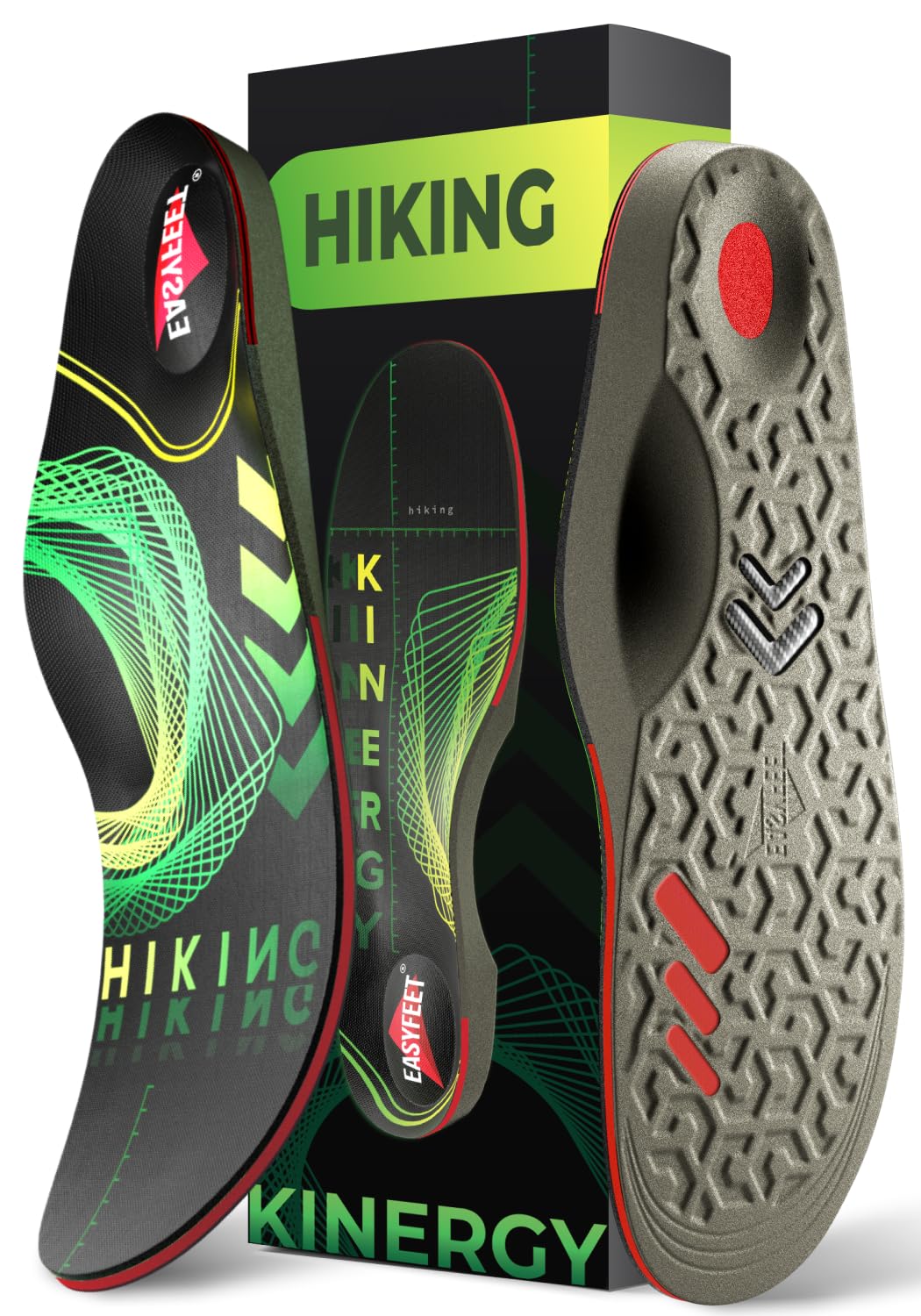
Kinergy takes a hybrid approach: a rigid carbon fiber arch support is embedded within a foam foundation using EnerBoost Tech for energy return and Joint Protect Tech for shock absorption. This gives you the stability of a carbon plate at the midfoot with the cushioning needed for long hikes and standing shifts.
Oilfield workers and barbers who spend 10+ hours on their feet reported significant fatigue reduction. The deep heel cup provides extra stability on uneven terrain, and the breathable cover with a non-sweat layer keeps feet dry during intense activities. Multiple reviewers noted the insoles fit perfectly into Merrell hiking boots without trimming.
It is important to note that this is not a pure carbon fiber insole — the carbon element is limited to the arch region. The forefoot is cushioned foam that does bend, so it will not provide the rigid Morton’s extension needed for severe hallux rigidus or turf toe.
Why it’s great
- Carbon arch adds stability without sacrificing all-day comfort
- Breathable top layer resists odor and moisture
- Excellent for standing work and trail hiking
Good to know
- Not a full Morton’s extension — forefoot still flexes
- Less rigid than pure carbon fiber plates
FAQ
Can I wear carbon fiber insoles in any shoe?
How should a carbon fiber insole fit inside my shoe?
Will carbon fiber insoles cure my big toe arthritis?
Final Thoughts: The Verdict
For most users, the best carbon fiber insoles winner is the PowerStep Morton’s Extension because it combines a full-length carbon fiber stability plate with medically designed arch support and dual-layer cushioning, making it suitable for both hallux rigidus relief and everyday walking. If you want a dedicated athletic insole with energy return, grab the MOVE Game Day Pro. And for affordable pair-pack rigidity in a thin profile, nothing beats the Tega Design Morton’s Extension.