
The promise of stunning aerial footage is what pulls most buyers into the drone market, but the reality of wind shake, horizon tilt, and mushy 4K is where dreams go to die. Finding a camera for drone that genuinely delivers cinema-quality stabilization and high-resolution capture without draining your wallet requires separating the gimmick from the genuine engineering.
I’m Min — the co-founder and writer behind Gadgets Feed. I analyze dozens of flight logs, gimbal specs, and CMOS sensor datasheets to pinpoint exactly which drones deliver professional-grade footage versus those that just mimic the specs on the box.
This guide breaks down the drone camera market by stabilization type, transmission range, and flight time to help you identify the best camera for drone that matches your aerial creative ambition.
How To Choose The Best Camera For Drone
The camera is the soul of any drone, yet many buyers fixate on resolution alone. A 4K label means little if the gimbal can’t hold the horizon, the sensor can’t handle dusk, or the transmission drops frames. Focus on the four pillars below to ensure your footage matches the marketing hype.
Gimbal Stabilization: The Core Differentiator
Mechanical 3-axis gimbals physically counter motor vibration and wind tilt, producing smooth, horizon-level footage regardless of aggressive flight. Electronic Image Stabilization (EIS) crops and warps the frame, which works for slow cruising but introduces jello effects and loss of field of view during quick turns. For professional-grade aerial work, a 3-axis brushless gimbal is non-negotiable.
Sensor Size and Aperture
A larger CMOS sensor (1/1.3-inch or 1-inch) captures more light, yielding richer colors, wider dynamic range, and usable footage in twilight hours. The smaller 1/2-inch or 1/3.2-inch sensors common in budget drones clip shadows and produce noise above ISO 800. Pair this with a wide aperture (F1.7 to F1.8) for better low-light performance.
Video Resolution, Frame Rate, and Bitrate
4K at 30fps is standard, but 4K at 60fps with HDR provides smooth slow-motion potential and highlights detail in high-contrast scenes. Look for a bitrate above 100 Mbps — anything lower introduces compression artifacts in complex landscapes like tree canopies or water reflections.
Transmission System and Range
Digital transmission (GQ 2.0, PixSync, or OcuSync equivalents) at 1080p/60fps delivers a low-latency live feed. Wi-Fi-based transmission drops frames beyond 500 meters and introduces lag. For cinematic flying, a minimum 6km digital link ensures you capture landscapes without signal anxiety.
Quick Comparison
On smaller screens, swipe sideways to see the full table.
| Model | Category | Best For | Key Spec | Amazon |
|---|---|---|---|---|
| DJI Mini 5 Pro | Premium | Pro-grade creative work | 1-inch CMOS, 4K/60fps HDR | Amazon |
| Potensic ATOM 3 | Premium | Travel content creators | 1/1.3″ CMOS, 4K/60fps HDR | Amazon |
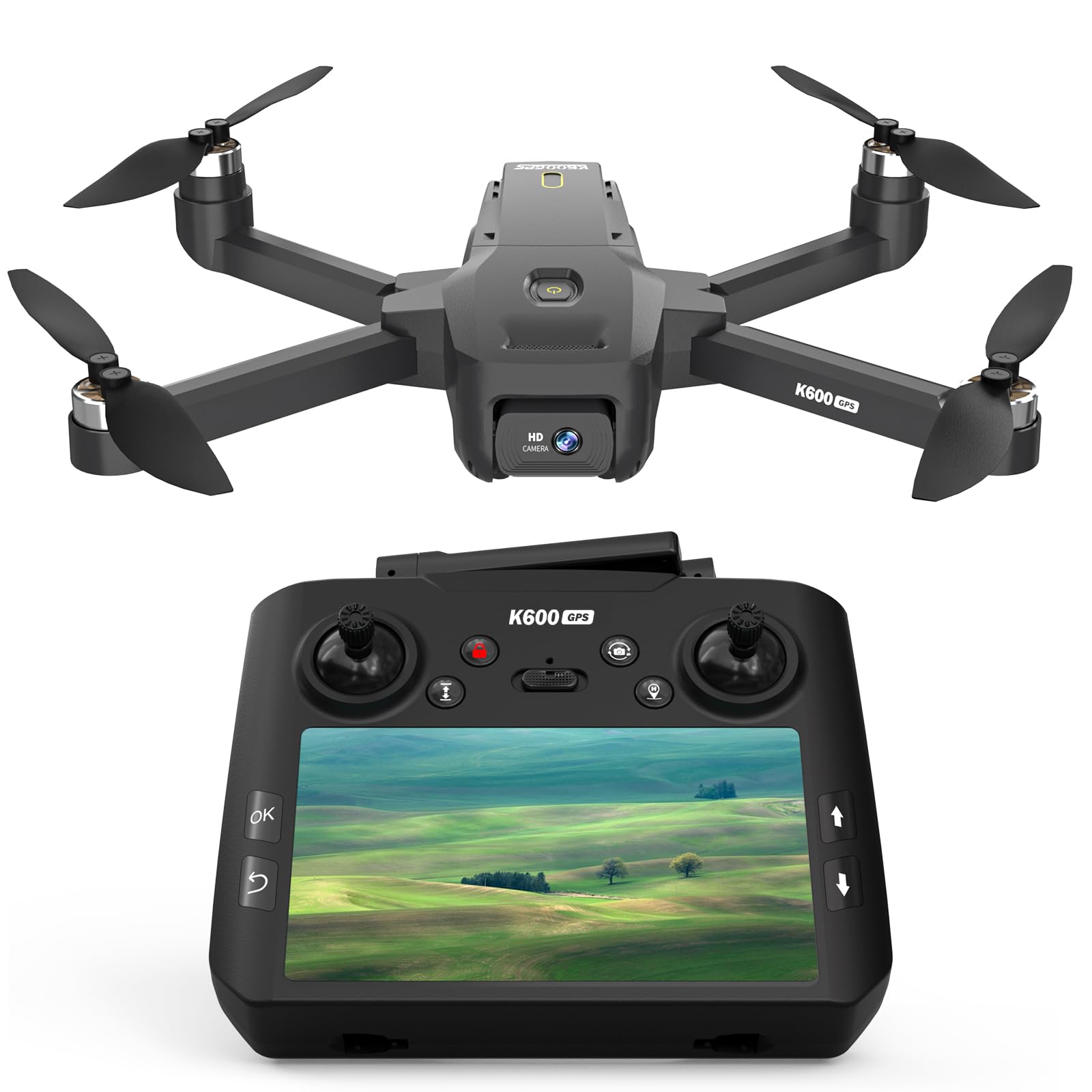
| K600PRO GPS Drone | Mid-Range | Screen-in-controller flying | 5.5″ screen, 50x zoom | Amazon |
| DJI Flip | Mid-Range | Beginner with DJI ecosystem | 1/1.3″ CMOS, 4K/60fps HDR | Amazon |
| Bwine F7MINI | Mid-Range | FAA-exempt 249g flyer | 48MP photo, 4K/30fps | Amazon |
| Bwine F7GB2 Pro | Mid-Range | High-altitude & wind flying | 2600mAh x3, 6-level wind | Amazon |
| G11PRO 6K Drone | Mid-Range | Budget-friendly gimbal shooting | 3-axis gimbal, 4K/30fps | Amazon |
| HOVERAir X1 | Mid-Range | Action sports self-flying | 125g, palm takeoff, 2.7K | Amazon |
| GPS Drone w/ 4.5″ Screen | Entry-Level | Budget entry with screen controller | 4.5″ LCD, EIS, 249g | Amazon |
In‑Depth Reviews
1. DJI Mini 5 Pro Fly More Combo Plus
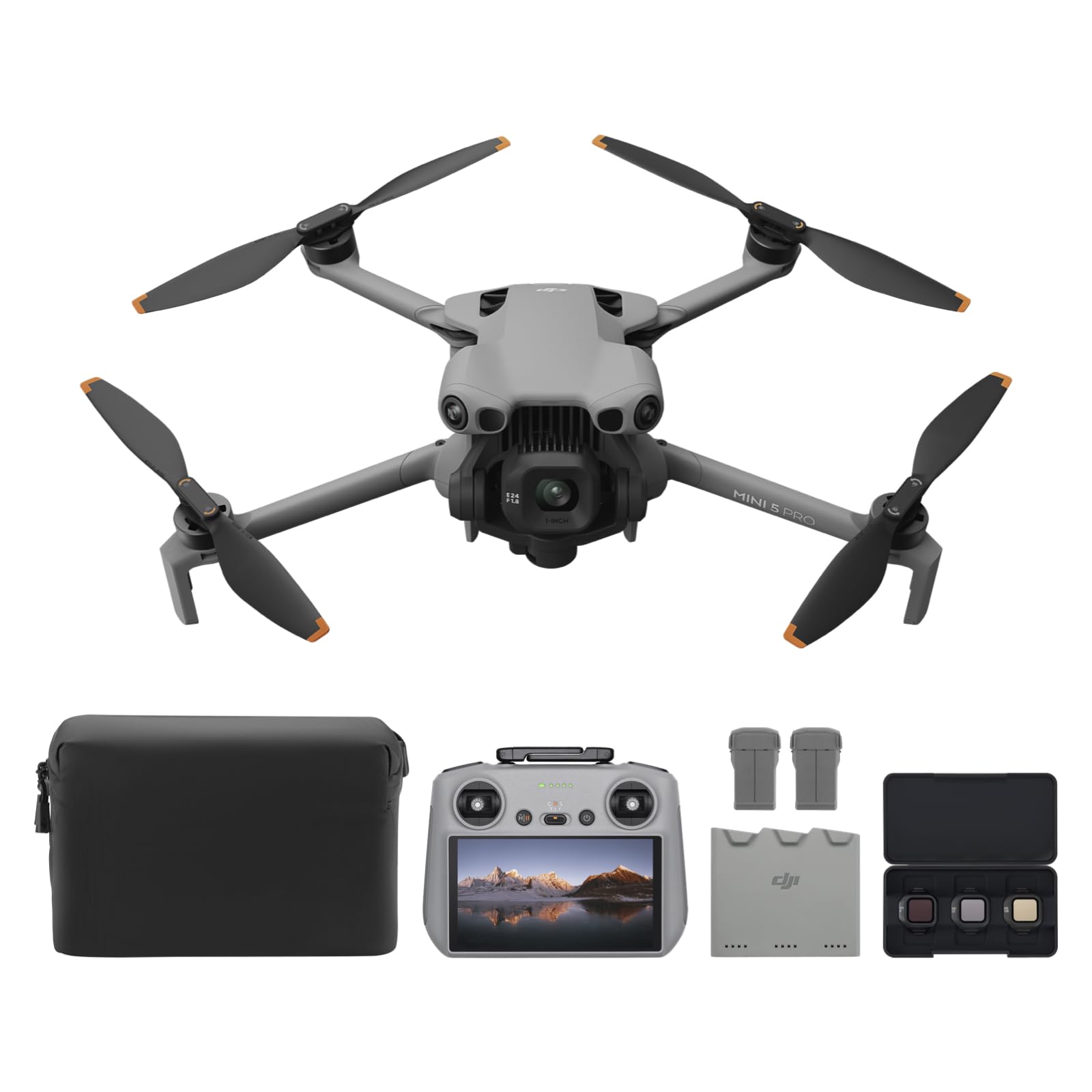
The Mini 5 Pro series is the gold standard for sub-250g drones, and this iteration’s 1-inch CMOS sensor is a generational leap. True 4K/60fps HDR video with a dynamic range that holds highlights and shadows means you can shoot in golden hour conditions without the footage falling apart. The 225-degree gimbal rotation unlocks true vertical filming, a feature cinematographers will immediately appreciate for social-first content.
ActiveTrack 360° with omnidirectional obstacle sensing makes tracking moving subjects — cyclists, vehicles, runners — a hands-off experience. The Fly More Combo Plus bundles three batteries that push total flight time past 150 minutes, and the two-way charging hub powers them in under two hours. The 42GB of internal storage eliminates the need for a microSD card on shorter shoots.
The RC 2 controller with its bright display is a premium experience, though the larger batteries push the total weight over 249g, requiring FAA Remote ID registration. The DJI ecosystem remains the most polished in terms of app stability and flight modes.
Why it’s great
- 1-inch sensor with real 4K/60fps HDR and superb dynamic range
- Omnidirectional obstacle avoidance with LiDAR for night flights
- 225° gimbal for true vertical and creative tilt shots
- Up to 52 minutes per extended battery with fast charging
Good to know
- Combo batteries push weight over 249g, requiring FAA registration
- No DJI Care Refresh warranty available in the US at launch
- RC 2 controller is large and heavy without a neck strap
2. Potensic ATOM 3 Fly More Combo
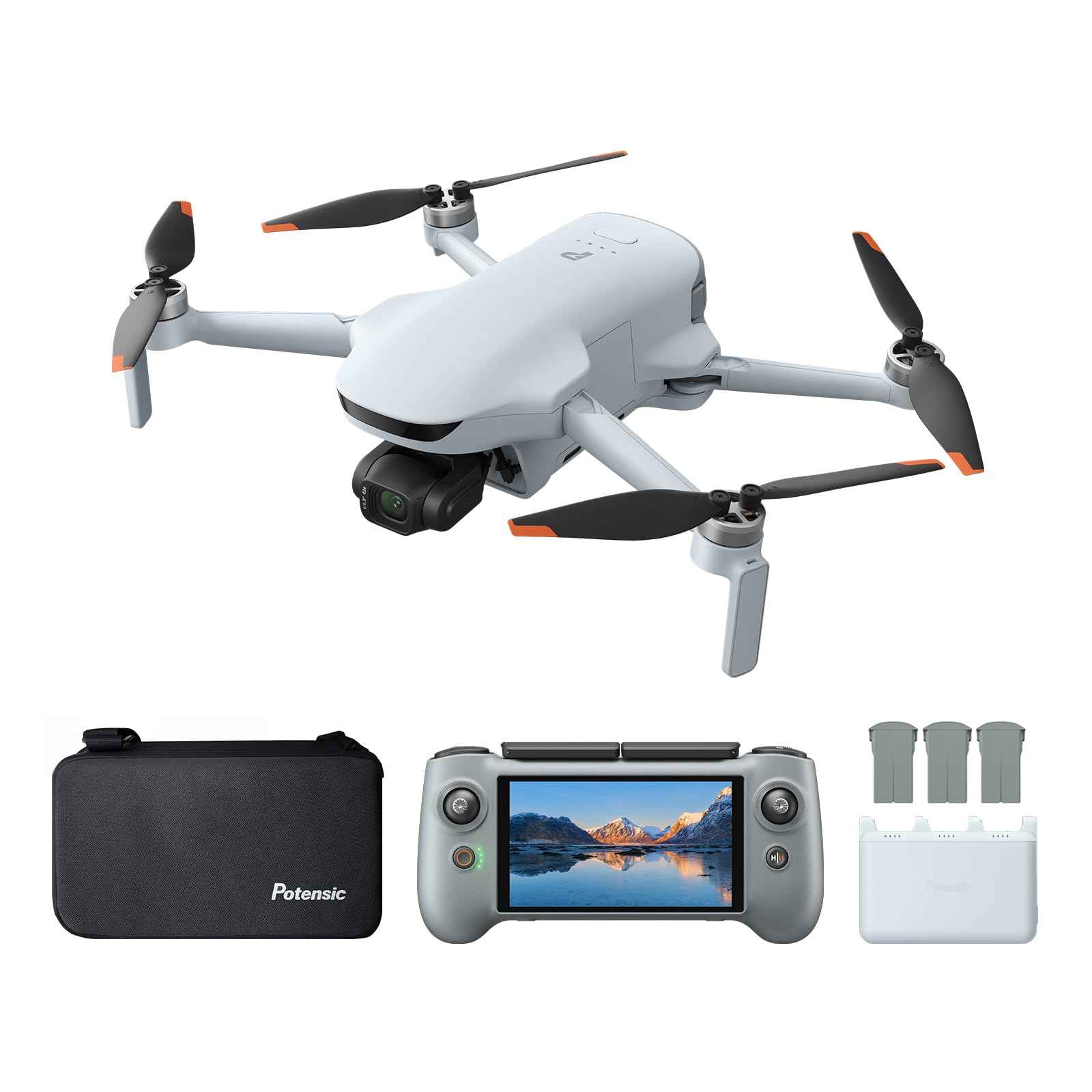
The ATOM 3 is Potensic’s strongest challenger to the DJI Mini line, packing a 1/1.3-inch CMOS sensor capable of 4K/60fps HDR and 50MP photos. The included P-Log mode preserves flat color profiles for serious grade work, giving editors creative control without the baked-in contrast of consumer drones. The 5.5-inch PTD 2 controller with 900 nits brightness stays readable under direct sunlight.
PixSync 5.0 digital transmission reaches 16km — genuinely impressive for the sub-250g class — and the Tri-band setup avoids interference in crowded urban airspace. The three-battery Fly More configuration delivers 120 minutes total runtime, and the parallel hub charges everything in 90 minutes. AI Tracking 2.0 works at altitudes below 4 meters with the optional propeller guard.
Vertical 2.7K shooting and QuickShot modes (Drift, Spin Ascend) cater to social media creators, while the AR Return-to-Home with apron recognition adds safety. The ATOM 3 matches DJI on core specs for a lower entry price, but its obstacle sensing is limited compared to the Mini 5’s omnidirectional LiDAR.
Why it’s great
- 1/1.3-inch sensor with 4K/60fps HDR and P-Log color profile
- 16km Tri-band digital transmission with bright 5.5-inch controller
- 120-minute total flight time with fast parallel charging hub
- Low-altitude AI tracking and QuickShot cinematic modes
Good to know
- Obstacle sensing is not omnidirectional like DJI’s flagships
- Propeller guard required for low-altitude tracking, sold separately
- Some users report occasional sensor error messages
3. K600PRO GPS Drone with EIS 4K Camera
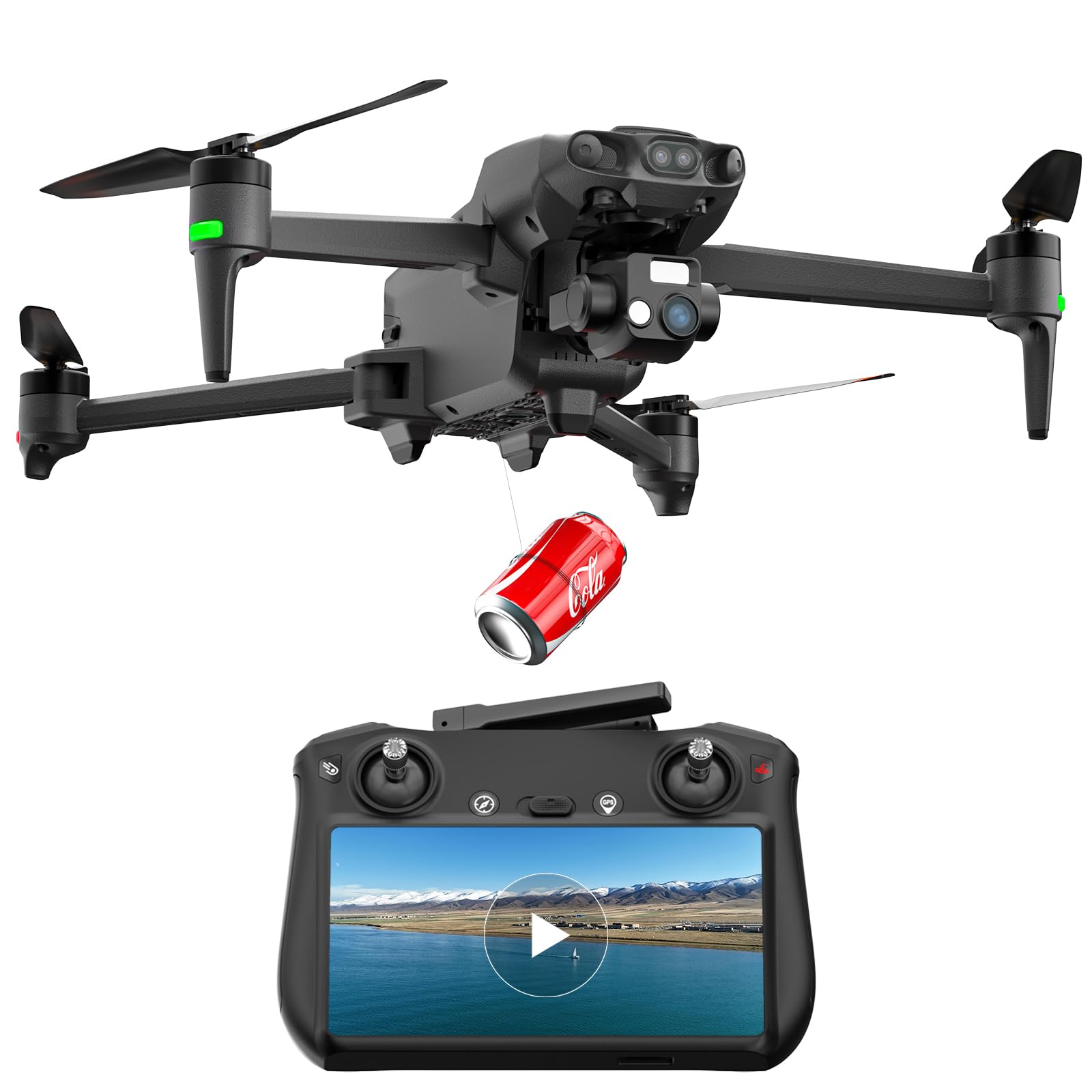
The K600PRO leans heavily into the integrated-screen convenience trend, offering a 5.5-inch touchscreen on the controller that eliminates phone tethering. The 50x digital zoom and 16GB SD card slot add flexibility, though the EIS stabilization (rather than a mechanical gimbal) means footage is best suited for slower, more controlled flights. The 15km digital transmission range is surprising at this price point.
The 3500mAh battery promises 55 minutes of flight per charge — a standout number confirmed by user reports of consistent 50-minute sessions. The brushless motors and TOF / 6 GPS sensors improve low-altitude stability, making it easier for beginners to handle hovering in breezy conditions. Follow Me and Orbit modes work reliably for casual tracking shots.
At 0.73kg, this drone is significantly heavier than the 249g class models, so FAA registration is mandatory. The 4K EIS video is acceptable for social media and personal projects, but it lacks the color fidelity and low-light performance of a larger sensor paired with a mechanical gimbal.
Why it’s great
- 5.5-inch built-in touchscreen controller — no phone needed
- 55-minute max flight time with 3500mAh battery
- 15km digital video transmission for long-range exploration
- TOF height sensors improve low-altitude stability
Good to know
- EIS stabilization, not a 3-axis mechanical gimbal
- Weighs 0.73kg, requires FAA Remote ID registration
- Digital zoom degrades image quality at higher magnifications
4. DJI Flip (RC-N3)

The DJI Flip is a lightweight entry point into the DJI ecosystem without sacrificing camera quality. The 1/1.3-inch CMOS sensor captures 4K/60fps HDR video with excellent dynamic range, and the full-coverage carbon fiber propeller guards make it one of the safest drones to fly in close proximity to people and pets. The 13km video transmission ensures solid signal in suburban environments.
Subject Tracking via the DJI Fly app works intuitively — you can operate the drone entirely through your iPhone or Apple Watch, including palm launch and landing, making it ideal for hands-free outdoor shoots. The 31-minute standard battery is modest, but the lightweight design keeps it under 249g with full prop guards, avoiding FAA registration entirely.
The RC-N3 controller is basic, requiring a phone cradle rather than a built-in screen. The lack of omnidirectional obstacle avoidance (only forward-facing) means you still need to fly with caution, especially when tracking faster subjects sideways or backward.
Why it’s great
- 1/1.3-inch sensor with 4K/60fps HDR in a sub-249g frame
- Full-coverage carbon fiber prop guards for safe close-quarters flying
- Palm takeoff/landing and subject tracking via smartphone
- 13km digital video transmission with stable connection
Good to know
- No built-in controller screen — phone cradle only
- Only forward-facing obstacle avoidance
- 31-minute standard battery; additional batteries are expensive
5. Bwine F7MINI 4K Video 8K Photo Drone
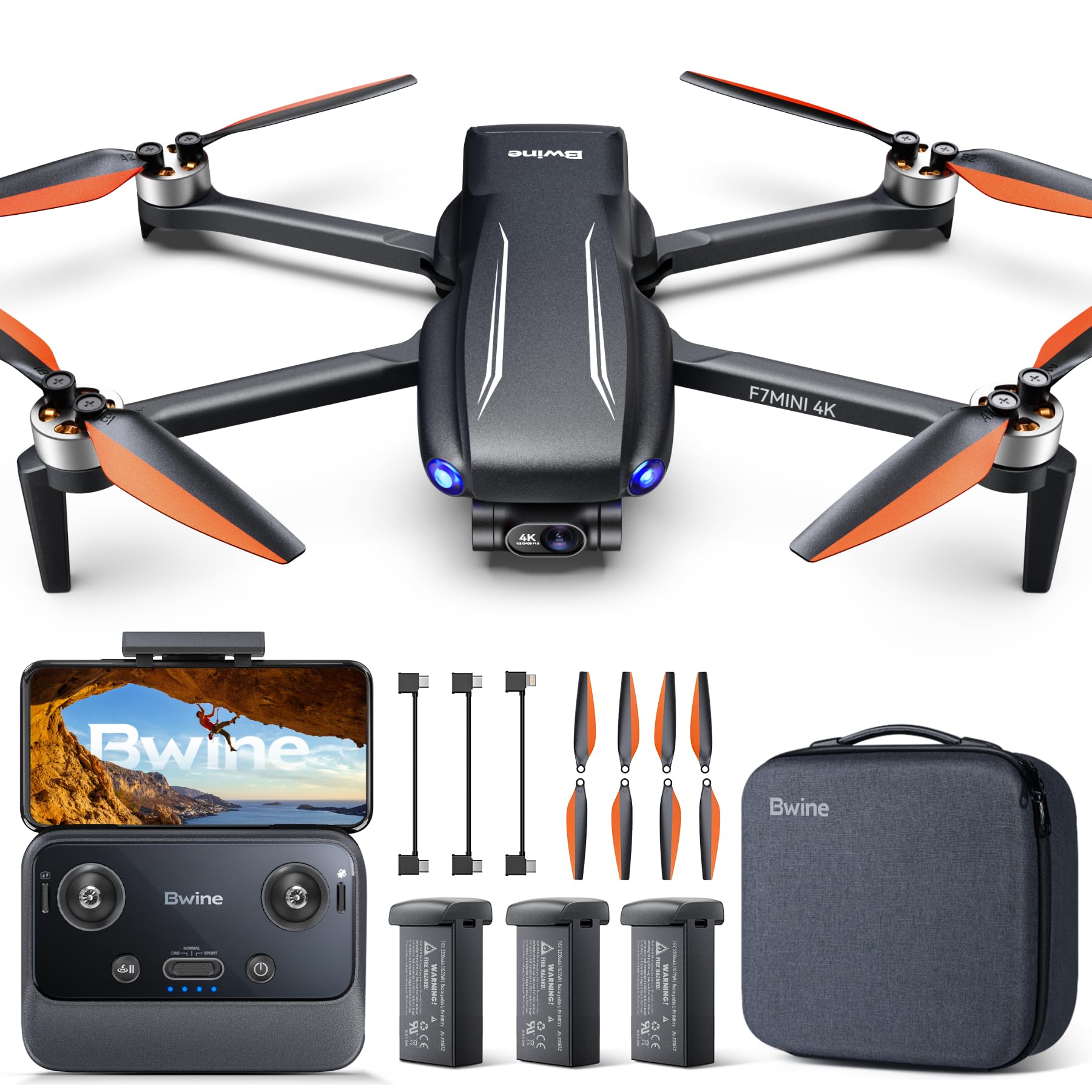
The F7MINI slots into the sweet spot of the sub-249g category — no FAA registration, no Remote ID hassle, and a genuine 3-axis mechanical gimbal that keeps the horizon locked even in Level 5 wind conditions. The 48MP 1/2-inch CMOS with F1.8 aperture delivers sharp 8K interpolated photos and 4K/30fps video, though the smaller sensor means low-light performance is below the 1/1.3-inch class.
The built-in 5.5-inch touchscreen controller is the highlight here, offering a bright, responsive display that frees your phone completely. The 6km digital transmission is stable for rural and suburban flying, and the three-battery setup yields 96 minutes of total flight time with PD 3.0 fast charging support. Optical flow positioning keeps it steady indoors without GPS.
The 120dB locator buzzer is a practical addition for finding the drone after a landing in tall grass. The F7MINI offers impressive hardware for the price, but the video bitrate feels limited compared to the Potensic and DJI competition, and color profiles lack flat recording options for advanced grading.
Why it’s great
- Under 249g with a true 3-axis mechanical gimbal — no FAA registration
- 5.5-inch bright touchscreen controller built into the remote
- 96-minute total flight time with three PD 3.0 fast-charging batteries
- 120dB buzzer helps locate the drone after landing
Good to know
- Smaller 1/2-inch sensor struggles in low light versus 1/1.3-inch models
- Video bitrate feels limited for professional-grade color grading
- No flat/Log color profile option for advanced editors
6. Bwine F7GB2 Pro 4K UHD

The F7GB2 Pro is built for altitude. The 1806 brushless motors combined with a barometer and 6-level wind resistance certification mean stable footage at up to 2000-meter peaks and 10mph crosswinds. The 3-axis gimbal and 5x digital zoom provide smooth transitions between wide landscapes and tighter compositions, though digital zoom losses are noticeable past 3x.
Three 2600mAh intelligent batteries (UL 2054 certified) deliver 75 minutes total runtime — enough for extended mapping flights or multiple takeoff-and-land sequences at different vantage points. The 10,000-foot control range is consistent in open areas, and the GPS-based Auto Return activates reliably on low battery or signal loss. The detachable 4K camera with 120-degree FOV captures wide-angle perspectives well.
The Bwine app includes retouching tools (6 filters, 10 background music tracks) for quick social media sharing, though serious editors will pull the raw files. The hard shell carrying case is well-organized, and the FAA compliance (Remote ID) is already certified.
Why it’s great
- Certified 6-level wind resistance and 2000m altitude capability
- 3-axis mechanical gimbal with 5x digital zoom for smooth shots
- 75 minutes total flight time with three UL-certified batteries
- FAA Remote ID compliant with comprehensive carrying case
Good to know
- Controller screen is hard to see in direct sunlight
- MicroSD card compatibility issues reported by some users
- 5x digital zoom degrades image quality beyond 3x
7. G11PRO 6K Drone with 3-Axis Gimbal

The G11PRO brings a 3-axis brushless gimbal to a price point where most competitors rely on EIS. The gimbal’s pitch, roll, and yaw control keeps wind-induced wobble out of frame, and the 1/3.2-inch CMOS sensor captures 4K/30fps video with decent daytime color. The GQ2.0 digital transmission with dual antennas maintains a stable 1080p feed at 10,000 feet in clear conditions.
The GL2.0 smart battery system charges two 3200mAh packs in about 2.5 hours and provides up to 70 minutes of flight time with 300+ charge cycles before significant degradation. Cruise Control mode simplifies cinematic flying by automating gimbal stability while the pilot focuses on directional movement. The 40-piece kit includes a portable bag, extra propellers, and both USB-C and Lightning cables.
The FAA compliance certification is already handled, and the weight (357g) does require registration. The follow-me mode works best in open fields with clear GPS lock, and some users report the gimbal calibration needed occasional re-tuning after rough landings.
Why it’s great
- True 3-axis brushless gimbal for smooth aerial footage at budget price
- 70-minute total flight time with smart battery management system
- 10,000-foot GQ2.0 digital transmission with dual antennas
- FAA Remote ID compliant with comprehensive kit in carrying bag
Good to know
- Small 1/3.2-inch sensor limits low-light performance
- Gimbal occasionally needs recalibration after rough landings
- Follow-Me mode requires strong open-field GPS lock
8. HOVERAir X1 Combo Plus

The HOVERAir X1 redefines the camera for drone concept as a self-flying camera rather than a traditional drone. At 125 grams with fully enclosed safety guards, it launches from your palm and tracks you at up to 15 mph using visual algorithms — no controller, no phone pairing required for basic modes. The 2.7K at 30fps and 1080P HDR video with triple stabilization is impressive for its size class, producing smooth action sports footage.
The six intelligent flight modes (Hover, Follow, Zoom Out, Orbit, Bird’s Eye, Manual) are triggered by a single button on the device itself. The 32GB internal storage keeps your content private and secure, and battery life provides 11 minutes per charge — enough for roughly 20 automated flight paths. Two batteries are included in the Combo Plus kit.
Wind resistance is limited to Level 4 (7.9 m/s), and flights above 2000 meters altitude are discouraged. The lack of a remote control means you sacrifice real-time creative framing, and the enclosed guards that make it safe also restrict camera angles compared to open-gimbal designs. It’s a specialized tool for selfie vlogging and action sports, not general aerial photography.
Why it’s great
- Ultra-portable 125g palm-launch design — no controller needed
- Fully enclosed safety guards for worry-free close-quarters shooting
- 32GB internal storage with easy app-to-phone sharing
- Triple stabilization smooths 2.7K and 1080P HDR footage
Good to know
- Limited to Level 4 wind resistance — not for breezy conditions
- No manual camera exposure controls; limited creative framing
- Does not fly well over water; will crash on contact
9. GPS Drone with EIS Camera 4.5″ Screen
This entry-level GPS drone packs an impressive feature-to-price ratio, headlined by a 4.5-inch HD LCD screen built into the controller. The EIS camera delivers 4K-grade footage with Electronic Image Stabilization that smooths out minor vibrations, though it can’t match the mechanical gimbal for aggressive flight. The GPS system enables Auto Return, Follow Me, and Orbit modes reliably for the class.
The 2200mAh battery provides up to 25 minutes of flight, which is solid for a sub-250g drone. The foldable design and 205.8g weight make it genuinely portable, and FAA registration is not required. The 400m control range and 250m mapping distance are sufficient for park flying and backyard exploration.
Video quality is good for casual use in good light, but low-light performance shows visible noise and stabilization struggles during fast descents. The remote’s small screen, while convenient, has limited brightness for sunny days. It’s an excellent introduction to flying with a screen controller without a premium investment.
Why it’s great
- Built-in 4.5-inch LCD screen eliminates phone tethering
- Under 249g with GPS Auto Return, Follow Me, and Orbit modes
- 25-minute flight time from 2200mAh battery
- Foldable and lightweight — no FAA registration required
Good to know
- EIS stabilization, not a mechanical gimbal — shaky during fast flight
- Limited brightness on the small controller screen in direct sun
- Video quality degrades noticeably in low-light conditions
FAQ
Do I need a 3-axis gimbal for good aerial footage or is EIS enough?
Does sensor size really matter for drone cameras or is 4K resolution enough?
What does “under 249g” mean for FAA registration and drone regulations?
How far can a camera drone realistically transmit live HD video?
Can you fly a camera drone at high altitudes or in strong wind?
Final Thoughts: The Verdict
For most users, the best camera for drone winner is the Potensic ATOM 3 Fly More Combo because it delivers a large 1/1.3-inch sensor, genuine 4K/60fps HDR, a 16km digital transmission, and a bright controller screen — all under 249g and at a price that undercuts the premium competition. If you want the absolute best sensor with a 1-inch CMOS and omnidirectional obstacle avoidance, grab the DJI Mini 5 Pro. And for hands-free self-flying action sports vlogging, nothing beats the pocket-sized HOVERAir X1.