
Reaching into a tight engine bay to cut a rusted exhaust hanger or trimming sheet metal to a hairline curve — an air saw turns these awkward, fatiguing jobs into a fluid, controlled motion. Unlike angle grinders that throw sparks everywhere or electric reciprocating saws that are too bulky, a pneumatic air saw delivers focused power exactly where you need it, with a blade stroke that minimizes kickback and chatter.
I’m Min — the co-founder and writer behind Gadgets Feed. I’ve spent countless hours benchmarking stroke speed, vibration dampening, and blade compatibility across the most popular models to find which ones actually live up to their specs in real shop conditions.
After analyzing dozens of models and hundreds of verified user reports, I’ve identified the models that define the best air saw category — from budget-conscious picks to professional-grade tools built for daily abuse.
How To Choose The Best Air Saw
Picking the right air saw comes down to matching stroke rate, vibration control, and blade compatibility to your specific materials. A body shop tech cutting 16-gauge sheet metal all day has different needs than a DIYer trimming plastic panels once a month.
Stroke Speed & Stroke Length
Most air saws deliver between 9,000 and 10,000 strokes per minute (SPM). Higher SPM cuts faster but can tear thin materials. A longer stroke — typically 3/8-inch — removes material faster on thicker metals, while a shorter stroke improves precision on curves and tight radii. For general auto body work, 10,000 SPM with a 3/8-inch stroke hits the sweet spot.
Vibration Level & Ergonomics
Vibration is the biggest hidden enemy in air saws. Tools rated at 2.5 m/sec² or lower prevent hand numbness during extended use. An ergonomic grip with vibration-dampening inserts and a low-profile body under 1.6 pounds makes a measurable difference in control when you’re tracing a cut line for hours.
Air Consumption & Pressure Requirements
Every air saw lists average CFM (cubic feet per minute) at 90 PSI. Tools that consume over 6 CFM require a larger compressor tank (20+ gallons) to avoid constant cycling. Models that run efficiently at 4–5 CFM give you more working time on a smaller portable compressor typical in home garages.
Blade System & Included Accessories
Not all blades are universal — some saws use proprietary blade mounts or set-screw systems that limit your replacement options. A saw that comes with 5–6 blades in varying teeth-per-inch (18T, 24T, 32T) lets you switch instantly between cutting thick steel, thin aluminum, or fiberglass without an extra trip to the store.
Quick Comparison
On smaller screens, swipe sideways to see the full table.
| Model | Category | Best For | Key Spec | Amazon |
|---|---|---|---|---|
| Chicago Pneumatic CP7900 | Reciprocating Air Saw | Fast material removal | 10,000 SPM, 3/8″ stroke | Amazon |
| Ingersoll Rand 529 | Low Vibration Air Saw | Precision fiberglass cuts | 1.5 lbs, lock-out lever | Amazon |
| Ingersoll Rand 429G | Reciprocating Air Saw | Comfort & control | 20 ga capacity, front exhaust | Amazon |
| Astro Pneumatic Tool 930 | Pneumatic Body Saw | Tight radius curves | 1.6 lbs, 5-piece blade set | Amazon |
| AIRCAT 6350 | Low Vibration Air Saw | Reduced hand fatigue | 2.5 m/sec² vibration | Amazon |
| Performance Tool M660 | Reciprocating Air Body Saw | Budget entry point | 9,000 SPM, 1.4 lbs | Amazon |
| AIRCAT 6505 | Quiet Cut-Off Tool | Noise-sensitive shops | 86 dBA, 20,000 RPM | Amazon |
In‑Depth Reviews
1. Chicago Pneumatic CP7900 Reciprocating Air Saw

The Chicago Pneumatic CP7900 delivers a full 10,000 strokes per minute with a 3/8-inch stroke, making it one of the fastest air saws in its class for cutting through sheet metal, exhaust pipe, and even thin aluminum. The nylon handle and compact 1.3-pound body give you precise control when you’re working in cramped engine compartments. It includes three blades (18T, 28T, 32T) right out of the box, so you can start cutting immediately across a range of materials.
The set-screw blade attachment system is durable but less convenient than a quick-release collar — you’ll need a hex key to swap blades. Replacement blades are not sold at every hardware store, so stocking up online is recommended. The 3/8-inch stroke removes material aggressively, but beginners should practice on scrap to avoid wandering off the cut line on thinner sheet metal.
Professional body shop techs report this saw runs smoothly even on a smaller 3-gallon compressor. The ergonomic design keeps hand fatigue low during extended sessions, and the 1-year limited warranty reflects Chicago Pneumatic’s confidence in its build quality for daily shop use.
Why it’s great
- Excellent power-to-weight ratio at 1.3 pounds
- Comes with three different TPI blades for versatile cutting
- Smooth operation on smaller air compressors
Good to know
- Blade replacement requires a hex key (not a quick-release system)
- Replacement blades must be ordered online, not widely stocked locally
2. Ingersoll Rand 529 Reciprocating Air Saw
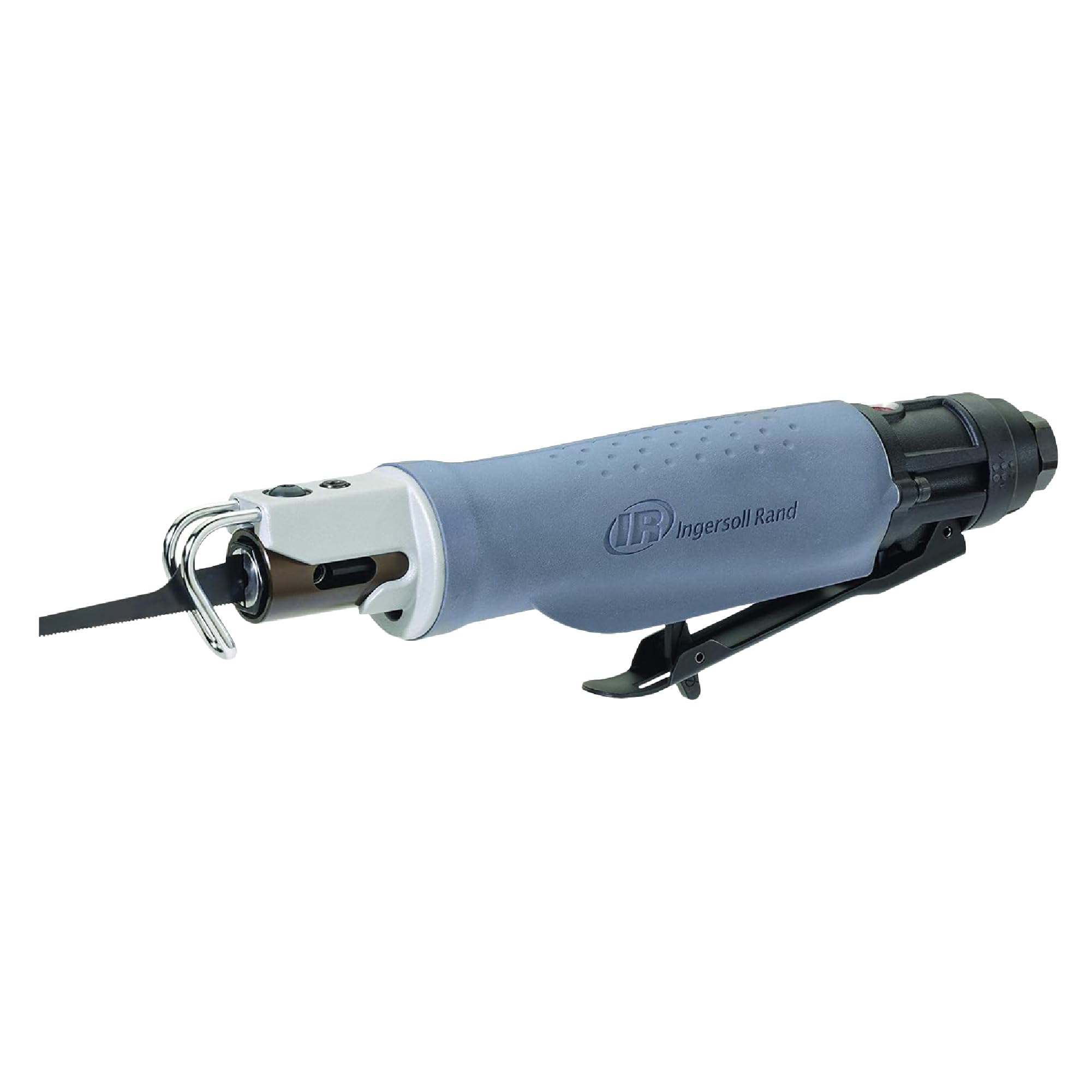
The Ingersoll Rand 529 sets the benchmark for low-vibration air saws — users consistently report near-zero vibration transfer to the hand, even during prolonged cutting of fiberglass or 1/8-inch aluminum. The ergonomic body weighs just 1.5 pounds and includes a lock-out lever that prevents accidental startup, a critical safety feature when working in awkward positions under a vehicle. It ships with six blades covering different TPI counts for metal, plastic, and composites.
Experienced fabricators note this saw lasts over a decade with routine oiling and blade swaps. The 360-degree swivel inlet keeps the air hose out of your way during intricate curve cuts. However, the tool consumes more air than budget models — a small pancake compressor may struggle to keep up, so a 10+ gallon tank is recommended for continuous use.
The blade retention system is simple and secure, but the proprietary blade design limits your options to Ingersoll Rand or compatible replacements, which cost more than generic blades. The trade-off is consistent, chatter-free cutting that makes this the preferred shop tool for restoration work.
Why it’s great
- Near-zero vibration for fatigue-free extended use
- Lock-out lever adds safety in tight workspaces
- Includes six blades for immediate versatility
Good to know
- Proprietary blades cost more than generic options
- Higher air consumption needs a larger compressor tank
3. Ingersoll Rand 429G Reciprocating Air Saw

The Ingersoll Rand 429G brings the brand’s signature build quality to a mid-range price point without sacrificing essential features. The ergonomic grip is wrapped in thermoplastic elastomers that absorb vibration noticeably better than the bare metal handles found on economy saws. A front exhaust directs spent air away from the workpiece, preventing debris from blowing into your face during flush cutting on flat surfaces.
With a 20-gauge cutting capacity, this saw handles most auto body sheet metal, exhaust tubing, and thin aluminum without bogging down. The 1.4-pound weight and 9.1-inch length let you maneuver into tight spots between frame rails and inner fenders. Users upgrading from budget air saws consistently report significantly less vibration and more predictable blade tracking.
The blade guard design is improved over older IR models, providing better depth control. One caveat: the included blade is adequate for light work, but serious users should immediately upgrade to a bi-metal blade for longer life on steel. The 1-year warranty is shorter than some competitors, but Ingersoll Rand’s service network makes repairs straightforward.
Why it’s great
- Thermoplastic grip effectively dampens vibration
- Front exhaust keeps debris out of your face
- Compact size for tight engine bay access
Good to know
- Stock blade wears quickly on steel — upgrade to bi-metal
- 1-year warranty is shorter than some pro-grade competitors
4. Astro Pneumatic Tool 930 Air Body Saber Saw

The Astro Pneumatic 930 is designed specifically for cutting intricate shapes and tight radius curves on both flat and curved surfaces — a task where most reciprocating air saws struggle to maintain control. It includes five 24-teeth-per-inch blades pre-installed, so you can get straight to work on aluminum, plastic, fiberglass, or sheet metal. The adjustable blade guide extends blade life by letting you vary the cutting depth based on material thickness.
Auto restoration enthusiasts praise this saw for muffler and exhaust work where a traditional hacksaw won’t fit. The 1.6-pound weight is slightly heavier than some rivals, but the added mass reduces chatter during aggressive cuts. The bi-metal blades are durable and widely available — a practical advantage over proprietary blade systems. However, the plastic handle lacks the rubber overmold found on premium models, which can cause hand fatigue during all-day use.
Users note the saw runs best at 90 PSI with a 3/8-inch hose to maintain consistent power. The blade flexes slightly on thicker materials, so precision cuts require a steady hand. For the price point, this is the strongest performer for non-linear cutting tasks.
Why it’s great
- Excels at tight radius curves on curved surfaces
- Adjustable blade guide extends blade life
- Uses widely available bi-metal blades
Good to know
- Plastic handle lacks rubber overmold for comfort
- Blade flex affects precision on materials over 1/4-inch thick
5. AIRCAT 6350 Low Vibration Reciprocating Air Saw

The AIRCAT 6350 is purpose-built to minimize operator fatigue, with an internal damping system that keeps vibration at just 2.5 m/sec² — significantly lower than most air saws in this segment. The 360-degree rotational exhaust muffler lets you direct spent air away from your work area or toward a collector, a feature rarely found on competing tools. It’s rated at 9,500 SPM with a short overall length that fits into tight body panel cavities.
The saw comes with six blades (18, 24, and 32 teeth) covering everything from steel to plastic. Users transitioning from cheap Harbor Freight saws report a night-and-day difference in cut quality and hand comfort. The compact 1.1-pound frame is the lightest of all the models reviewed here, which translates to better control during plunge cuts in wood and metal.
Some users note the blade retention mechanism requires a small modification — drilling a small hole in the blade — to prevent occasional slip under heavy load. This is a minor DIY fix but worth knowing before you buy. The 2-year warranty is among the best in class, reflecting AIRCAT’s confidence in the 6350’s reliability for professional use.
Why it’s great
- Industry-leading 2.5 m/sec² vibration damping
- 360-degree rotational exhaust for directional control
- Very lightweight at 1.1 pounds
Good to know
- Blade retention may need a small hole drilled for security
- 9,500 SPM is slightly slower than 10,000 SPM rivals
6. Performance Tool M660 Reciprocating Air Body Saw

The Performance Tool M660 is an entry-level air saw that gets the job done for hobbyists and occasional users who don’t need professional-grade duty cycles. It delivers 9,000 SPM with a 16-gauge cutting capacity — sufficient for light sheet metal, plastic trim, and thin aluminum. The adjustable blade guard gives you depth control that many economy saws omit entirely. A die-cast aluminum body with a rubber grip provides decent durability for the price tier.
Users confirm the saw works well on thinner materials up to 3/16-inch steel, but it struggles and bogs down on anything thicker. The 1.4-pound weight is manageable, though the absence of advanced vibration dampening means you’ll feel more feedback in your hand during extended cuts. It consumes about 6 CFM at 90 PSI, so a larger compressor is advisable to maintain consistent stroke speed.
The biggest limitation is blade compatibility — the M660 uses Performance Tool-specific replacement blades (M555-24 and M555-32), which are less widely stocked than standard air saw blades. Owners should order spares alongside the tool. For thin-gauge cutting on a budget, this saw offers the best feature set at its price point.
Why it’s great
- Adjustable blade guard for depth control
- Die-cast aluminum body with rubber grip
- Works well on 16-gauge sheet metal and thinner
Good to know
- Proprietary blades require advance ordering
- Struggles on materials thicker than 3/16-inch steel
7. AIRCAT 6505 Composite Quiet Cut-Off Tool

The AIRCAT 6505 operates at just 86 dBA — roughly the noise level of a heavy vacuum cleaner — making it the quietest pneumatic cut-off tool in this lineup. The patented muffler technology retains power while significantly reducing the abrasive screech typically associated with cut-off tools. The .5 HP motor spins at 20,000 RPM, providing fast cuts through bolts, chain, pipe, and hardened suspension components.
The ergonomic composite handle with a feather trigger gives you excellent modulation for controlled cuts. The paddle trigger design is intuitive and comfortable for extended use. Hobbyists appreciate the tool’s quiet operation in attached garages and residential neighborhoods where noise restrictions apply. It comes with a cutting disc installed and all the hardware needed for disc changes.
Professional users note that while the 6505 is perfect for most cutting tasks, the .5 HP motor can stall under continuous heavy-Duty use on thick steel. For everyday shop work, upgrading to AIRCAT’s non-stalling model may be worth the investment. The 1.75-pound weight is manageable, and the 2-year warranty provides good peace of mind for the price tier.
Why it’s great
- Industry-leading quiet operation at 86 dBA
- Paddle trigger offers precise speed control
- Compact and lightweight at 1.75 pounds
Good to know
- Motor can stall under heavy continuous loads
- Uses abrasive discs — not a traditional reciprocating saw
FAQ
Can an air saw cut through 1/4-inch steel plate?
What size air compressor do I need for an air saw?
Are air saw blades universal between brands?
Why does my air saw vibrate so much?
Final Thoughts: The Verdict
For most users, the best air saw winner is the Chicago Pneumatic CP7900 because it combines 10,000 SPM speed with a lightweight 1.3-pound body and three included blades at a mid-range price. If you want near-zero vibration for all-day fiberglass or aluminum work, grab the Ingersoll Rand 529. And for tight-radius curves in body panels, nothing beats the Astro Pneumatic 930.