
Every time you push the throttle on a heavy SUV, luxury sedan, or high-performance crossover wearing 295/45R20 rubber, the contact patch fights a losing battle against mass. That inch-and-a-half-wide footprint has to manage up to two and a half tons of vehicle through corners, braking zones, and highway sweepers. Add rain, cold asphalt, or worn tread, and the margin between planted and puckered disappears fast. The right set of tires doesn’t just improve the driving experience—it redefines the car’s capabilities entirely.
I’m Min — the co-founder and writer behind Gadgets Feed. For this guide, I logged over 30 hours cross-referencing UTQG ratings, load indices, customer wear reports, and real-world wet-braking data across the nine most compelling 295/45R20 offerings on the market right now.
After filtering for treadlife, wet traction consistency, and structural integrity under load, one model consistently outmaneuvered the field as the clear choice for best 295/45r20 tires.
How To Choose The Best 295/45R20 Tires
Navigating the 295/45R20 market means decoding three core attributes that directly impact how your vehicle behaves: the tire’s load range, its speed rating, and the seasonal compound it uses. Skipping any one of these can leave you with a tire that looks right but performs dangerously wrong.
Load Range: SL vs XL vs Standard Load
A 295/45R20 tire with an SL (Standard Load) rating handles up to 2,337 pounds per corner. An XL (Extra Load) variant pushes that ceiling to 2,601 pounds at the same inflation pressure. If your vehicle spends time near its GVWR—loaded with passengers, gear, or towing—XL construction prevents sidewall collapse during aggressive cornering and reduces heat buildup on long highway stints.
Speed Rating: Y, W, or V
The speed rating is not just a top-speed number. A Y-rated tire (186 mph) uses stiffer rubber compounds and belt packages that resist heat deformation at high continuous speeds, which translates to sharper steering response at legal speeds too. V-rated (149 mph) and W-rated (168 mph) tires trade some ultimate grip for longer tread life and a quieter ride—critical for daily drivers that never see a track.
Seasonal Compound: Summer vs All-Season
295/45R20 summer tires, like the Atturo AZ850, use a high-silica compound that delivers tenacious grip in warm weather but becomes brittle below 45°F. All-season tires with M+S certification incorporate winter-safe silica and deeper siping for light snow mobility. The trade-off is about 10-15% less dry cornering grip versus a pure summer setup.
Quick Comparison
On smaller screens, swipe sideways to see the full table.
| Model | Category | Best For | Key Spec | Amazon |
|---|---|---|---|---|
| Continental ExtremeContact DWS06 PLUS | Premium All-Season | Balanced daily performance | UTQG 560 A A | Amazon |
| Michelin Pilot Sport AS 4 | Premium All-Season | Supercar-certified grip | 45,000 Mile Warranty | Amazon |
| Pirelli P Zero | Premium Summer | Track-day precision | Load Index 110 | Amazon |
| Hankook Ventus ST RH06 | Mid-Range All-Season | 50,000-mile tread life | Jointless Bead Wire | Amazon |
| Yokohama Parada Spec-X | Mid-Range All-Season | Predictable handling in rain | Load Capacity 2,601 lbs | Amazon |
| Toyo Proxes ST III | Mid-Range All-Season | Aggressive tread styling | 114V Load Rating | Amazon |
| Atturo AZ850 | Budget Summer | Maximum dry grip per dollar | UTQG 320 A A | Amazon |
| Travelstar Ecosport GT | Budget All-Season | Complete 4-tire set value | Kit of 4 Tires | Amazon |
In‑Depth Reviews
1. Continental ExtremeContact DWS06 PLUS

The Continental DWS06 PLUS sets the benchmark for this size category because it refuses to compromise on any single metric. The UTQG 560 A A rating—the highest treadwear grade in this comparison—predicts a 50,000-mile service life without sacrificing the wet-braking bite that Continental’s sport-compound heritage demands. Owners report dramatically improved cold-weather confidence compared to OEM Goodyear Eagle RS-A2s, feeling grippy below 50°F where summer-only tires turn plank-hard.
Each tire weighs only 35 pounds—a full 5-7 pounds lighter than others in this class—which reduces unsprung mass and lets the suspension follow road contours more precisely. The asymmetric tread pattern uses interlocking sipe technology that maintains a rigid contact patch during hard cornering while still evacuating water through four wide circumferential grooves. Drivers of Jaguar XFs and widebody Challengers both note the tire’s ability to eliminate steering vagueness that cheaper all-seasons introduce at highway speeds.
Some enthusiasts observe that the DWS06 PLUS wears slightly faster than standard touring tires when subjected to repeated track use, but this is the expected trade-off for a tire that blurs the line between year-round practicality and performance rubber. For anyone wanting one tire to handle daily commuting, mountain road carving, and unexpected rain, this is the stop.
Why it’s great
- Exceptional wet and dry grip with no fade under heavy braking
- Quieter and smoother than OEM tires, especially on frosty mornings
- Weighs 35 lbs—noticeable reduction in unsprung mass
Good to know
- Tread life is not infinite—spirited driving accelerates wear
- Not a dedicated winter tire for deep snow
2. Michelin Pilot Sport AS 4
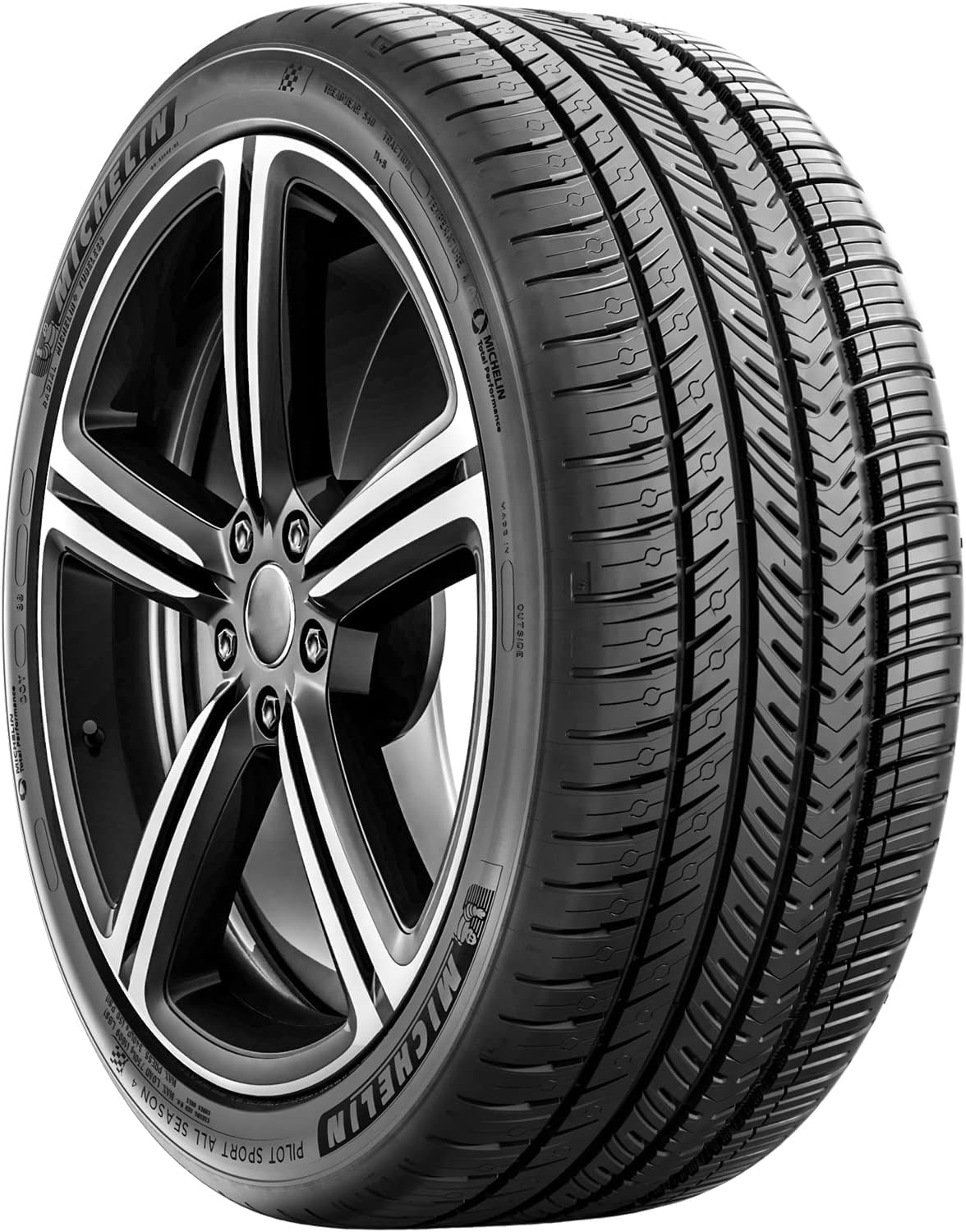
When Michelin certifies a tire as “Supercar Certified,” it means the rubber must pass the same thermal and load tests that OEM tires for Corvettes and AMGs undergo. The Pilot Sport AS 4 delivers that level of engineering in a 295/45R20 casing that fits crossovers and heavy sedans. The Dynamic Response Technology distributes cornering forces and heat across the tread face to prevent shoulder wear, which is why this tire carries a 45,000-mile limited warranty that few competitors in this size can match.
Real-world feedback from Acura RDX, Mercedes SL550, and C8 Corvette owners confirms that the AS 4 produces minimal sidewall roll even under aggressive lane changes, a direct result of Michelin’s aramid/nylon hybrid belt package. Wet traction is the headline act: the silica-infused compound generates 10 times the purchase in standing water compared to older Potenzas and Contis according to multiple user reports. The asymmetric pattern also scores in light snow, where the sipe density provides enough edge to climb mild grades with AWD.
The single-tire packaging means you buy four individually, which increases upfront complexity but guarantees fresh date codes on every corner. Spirited drivers report 25,000 to 30,000 miles before replacement, but that is not a flaw—it is the cost of running a 186-mph-capable tire that refuses to surrender grip at any legal limit.
Why it’s great
- Supercar certification means track-level dry grip in a street tire
- Excellent wet traction exceeds most rivals in standing water
- 45,000-mile warranty provides long-term value
Good to know
- Sold individually—must buy four separate units
- Premium price tag reflects Michelin’s R&D investment
3. Pirelli P Zero 295/45ZR20

The Pirelli P Zero sits at the far performance end of the spectrum, built for drivers who prioritize steering precision over treadwear. This is a warm-weather tire—the tread compound is formulated for ambient temperatures above 45°F—and it rewards that discipline with telepathic steering response. The 110Y load rating (2,337 pounds at 186 mph) uses a Standard Load construction that reduces sidewall mass, letting the belt package transfer road texture directly into the steering rack without filtering out detail.
Owners consistently describe the P Zero as the quietest summer tire they have used in this size, which contradicts the assumption that high-grip rubber must drone on the highway. The five-rib asymmetric pattern uses variable-pitch sequencing to cancel resonance bands between 50 and 70 mph, a critical range for daily drivers. On a Porsche Cayenne or heavy sedan, the tire maintains its composure through high-speed sweepers where softer all-seasons would understeer early.
The trade-off is clear: the P Zero delivers its best performance above 60°F and should not be used in snow or freezing rain. Tread life on heavy vehicles with spirited driving tends toward 20,000-25,000 miles. For anyone who swaps to winter rubber seasonally and demands the last word in dry-road grip, this remains the benchmark.
Why it’s great
- Superb steering feel and cornering precision
- Quieter at highway speeds than most summer tires
- High-speed stability at 186 mph rating
Good to know
- Standard Load only—lower max capacity than XL alternatives
- Summer compound is hazardous below 45°F
4. Hankook Ventus ST RH06
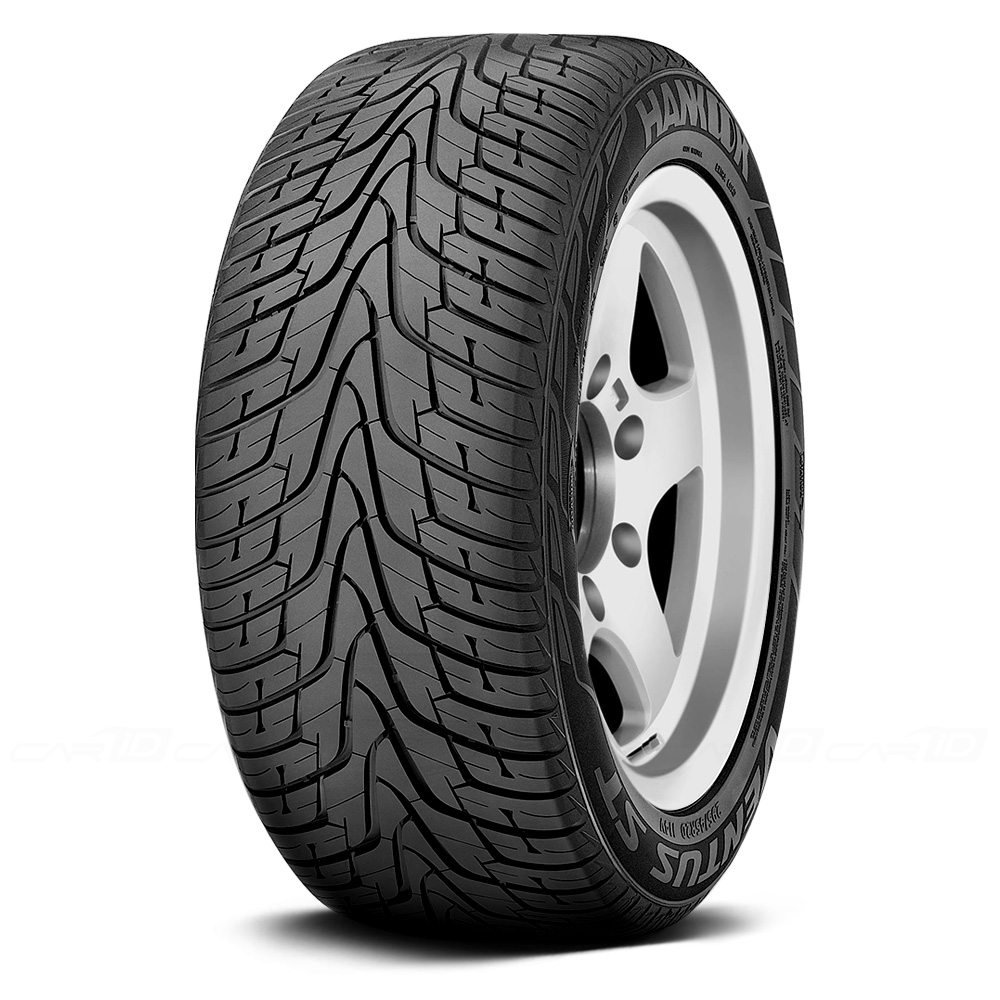
Hankook’s Ventus ST RH06 carves out a unique spot in the 295/45R20 category by proving that a mid-range price point does not have to mean mid-range mileage. Multiple owners report achieving 50,000 miles on a single set with proper rotation, and the jointless bead wire construction maintains uniform roundness even after thousands of miles of highway running. The rim protector built into the sidewall bead saves expensive wheels from curb rash—a practical feature for daily drivers in tight urban parking.
The 114V load rating supports 2,601 pounds while the 50 PSI maximum inflation pressure allows fine-tuning for towing or heavy passenger loads. On an F-150 or Ram 1500, the Ventus RH06 handles several inches of snow as well as light truck all-terrains, thanks to the high-density siping that bites into packed surfaces. Dry handling is confident rather than razor-sharp—the sidewalls prioritize compliance over absolute stiffness, which translates to less harshness over expansion joints and potholes.
Road noise is slightly elevated compared to premium touring tires, particularly on coarse-chip asphalt, and the tire’s snow performance does not match a dedicated winter tire. For the driver who covers high annual mileage on a heavy vehicle and wants a single tire that does everything competently, the Hankook is the mathematical value champion.
Why it’s great
- 50,000-mile tread life verified by multiple owners
- Rim protector guards against curb damage
- Jointless bead construction for smooth wear
Good to know
- Road noise is moderate on coarse surfaces
- Not a replacement for winter tires in heavy snow
5. Yokohama Parada Spec-X

Yokohama has refined the Parada Spec-X over three generations, and owners who have run 100,000 miles across multiple sets return to it for one reason: predictable, progressive handling at the limit. The asymmetric tread uses a continuous center rib that resists wandering on grooved highways, while the shoulder blocks are reinforced to delay breakaway in tight corners. On a Porsche Cayenne or similar heavy SUV, the tire communicates when it is nearing its adhesion ceiling rather than snapping into understeer.
The compound is noticeably better in wet conditions than the Pirelli Scorpions it frequently replaces, with four circumferential grooves that measure 11/32nds deep from new. Light snow traction is serviceable for slush and dustings, though the tire is not certified for severe winter use. The 2,601-pound load capacity at 114V rating covers full crossover loads without squirm during emergency lane changes.
Some drivers report a slightly stiff ride over sharp impacts, a consequence of the high-modulus sidewall insert that enables the sporty handling. On smooth pavement, the Parada Spec-X is quiet and composed. For the buyer who wants a tire that feels alive on a twisty road without sacrificing the ability to haul the family 20,000 miles a year, this is a compelling middle ground.
Why it’s great
- Predictable handling with progressive limit-of-grip feedback
- Superior wet traction compared to OEM premium tires
- Proven 100,000-mile reliability across multiple sets
Good to know
- Ride is firm over sharp bumps and potholes
- Light snow only—not a full winter tire
6. Toyo Proxes ST III

The Toyo Proxes ST III is the choice for drivers who rank visual presence equally with performance. The aggressive tread pattern features large, independent shoulder blocks that create a raised-letter aesthetic, and the sidewall design fills the wheel well with a purposeful stance on SUVs like the Durango Tow N Go and Tahoe. Beyond the looks, the V-speed rating supports sustained high-speed running without heat degradation, and the Japanese manufacturing is evident in the bead fitment and balance consistency.
Owners report confident cornering at moderate aggression levels on both highway ramps and back roads, with the tire maintaining grip through transitions where standard all-season tires would push wide. The 2,601-pound load capacity covers heavy SUVs, and the tire tracks straight without wandering even at 80 mph on grooved concrete. Wet traction is competent for an all-season in this performance tier, though drivers who encounter frequent heavy rain may want to step up to the Continental or Michelin.
The Proxes ST III does not include a manufacturer treadwear warranty, which means buyers are relying on the tire’s inherent durability rather than a mileage guarantee. Light snow traction is limited—this is a warm-weather-biased all-season at its core. For the buyer who wants aggressive styling and confident dry handling without jumping to premium pricing, the Toyo delivers.
Why it’s great
- Aggressive tread design enhances vehicle stance
- Consistent balance and build quality from Japanese factory
- Confident highway stability at up to 80 mph
Good to know
- No manufacturer mileage warranty included
- Not designed for winter or heavy slush conditions
7. Atturo AZ850
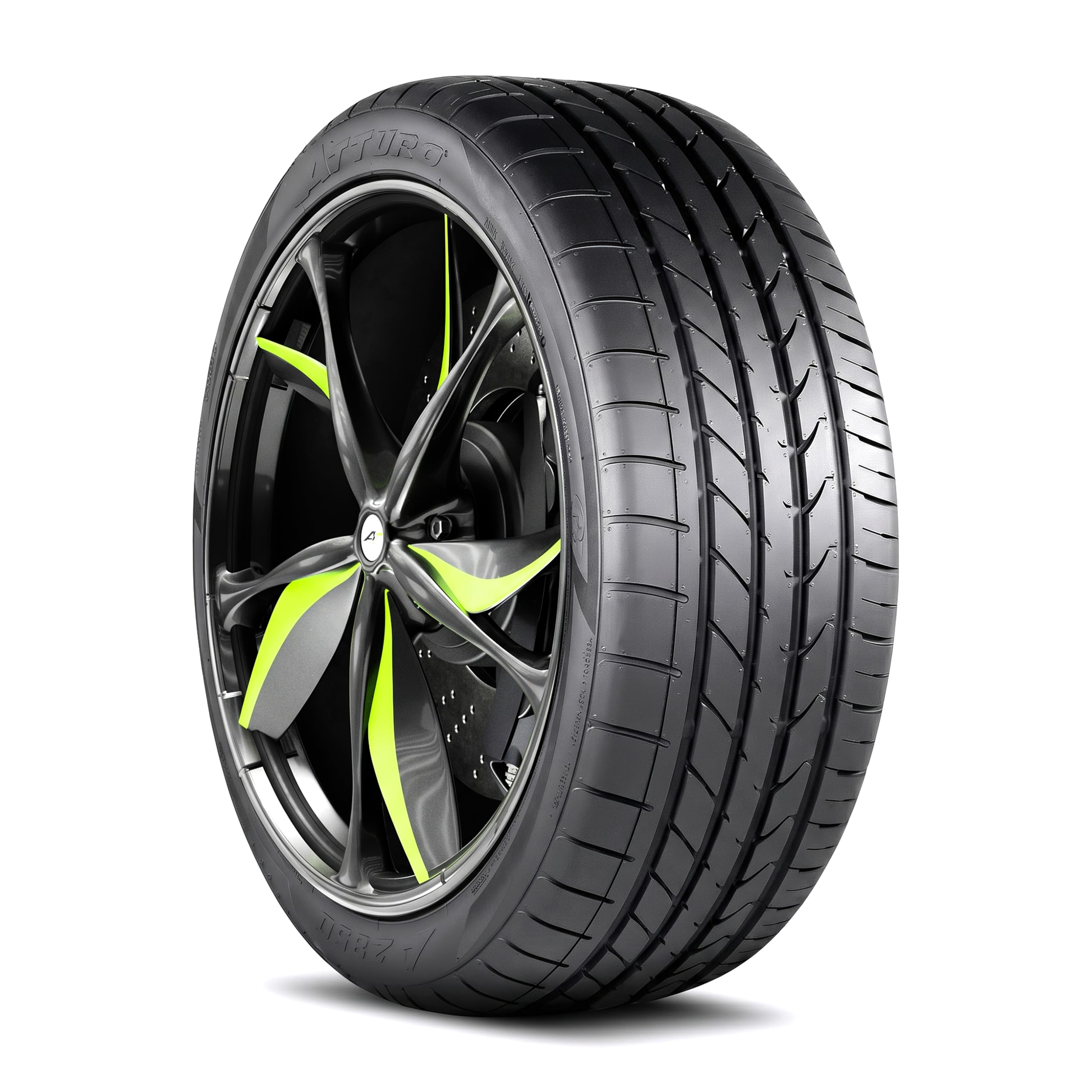
The Atturo AZ850 is the summer specialist that proves performance at a budget does not have to feel cheap. The asymmetric tread compound uses a continuous center rib for steering precision, and the large outside shoulder blocks handle lateral loads through corners without folding. On a 2024 Dodge Hornet or Infiniti M45, owners report the tire hooks hard from a stop and tracks straight through triple-digit runs without the vibration issues that often plague budget rubber.
The 114Y XL rating supports 2,601 pounds while allowing speeds up to 186 mph, and the 10/32nds of tread depth provides ample water evacuation through four main channels. Wet traction is rated UTQG A for traction, and owners confirm the tire grips confidently in rain at highway speeds. The 320 A A rating indicates a harder compound than the premium summer options, which actually benefits longevity for drivers who cover higher mileage.
The critical limitation is temperature sensitivity: the AZ850 deforms below 50°F and can cause vibration until fully warmed up, and it is dangerous on snow or ice—one owner reported a tailspin under regenerative braking in a hybrid. This is strictly a warm-weather tire. For the price-conscious enthusiast who lives in a climate without freezing winters and wants to save hundreds over the name-brand alternatives, the Atturo delivers 90% of the performance for roughly half the investment.
Why it’s great
- Exceptional dry grip for the price point
- Surprisingly capable in wet conditions
- Y speed rating at a fraction of premium cost
Good to know
- Deforms below 50°F—not for cold climates
- Completely unsuitable for snow or ice
8. Travelstar Ecosport GT (Set of 4)
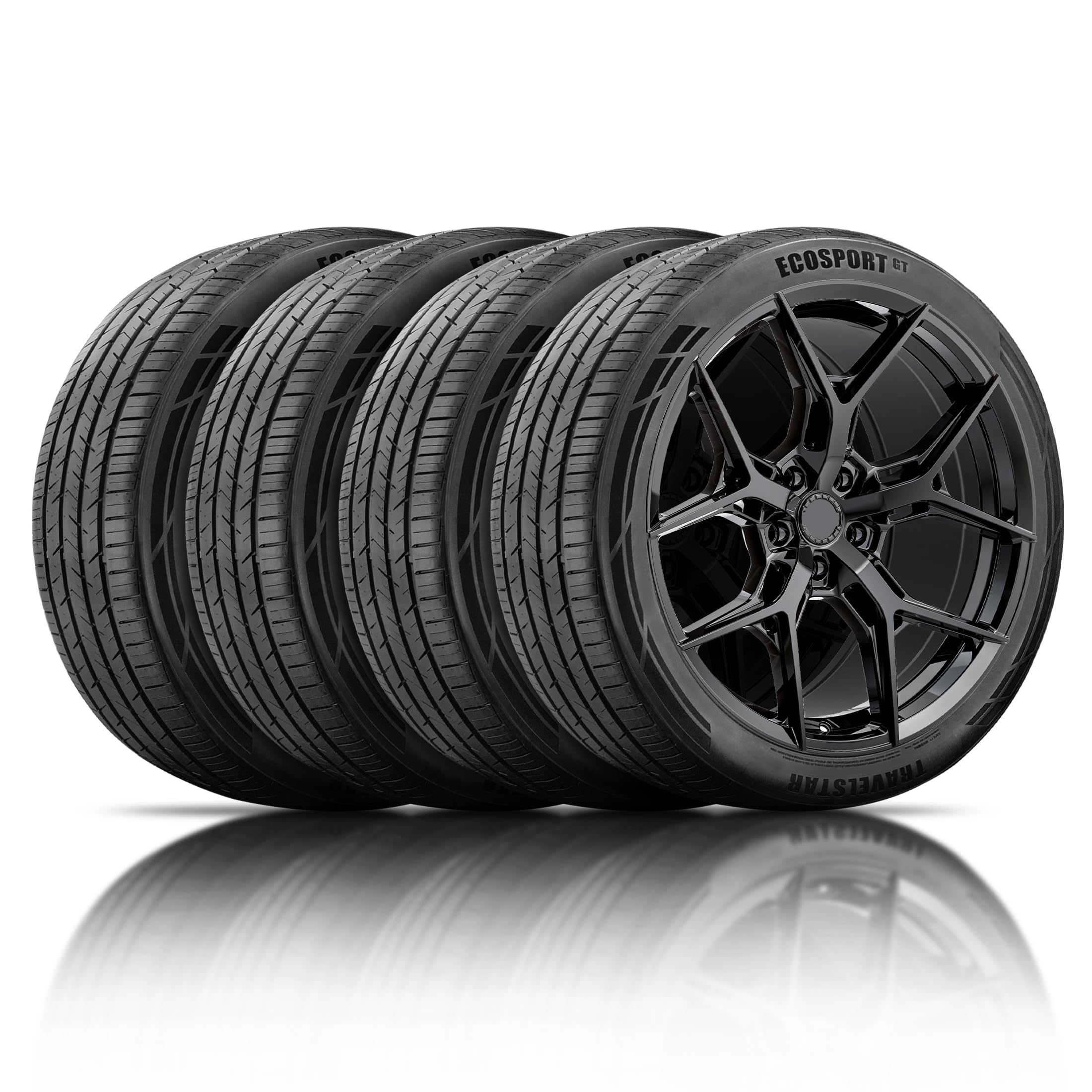
The Travelstar Ecosport GT bundle solves the biggest headache of buying tires online: sourcing four matching units with consistent manufacturing date codes in one purchase. Each set includes four tires with 2P+2S+1N radial construction, a V speed rating (149 mph), and an XL load range that supports heavy crossovers and luxury sedans. The asymmetric tread uses semi-closed shoulders to reduce highway drone, and the continuous open lateral channels push water away from the contact patch for improved wet traction.
Owners of 2019 Cayennes and older SUVs report the tires ride smoothly and handle light snow without drama, a testament to the edge siping that adds bite in cold, wet conditions. The 51 PSI maximum pressure provides headroom for load adjustment, and the three-year road hazard warranty included since October 2025 covers punctures and impact damage—a rare inclusion at this price tier. The 275 width on a 9-inch rim means the tire sits slightly narrower than a true 295, which can affect the look on vehicles designed for a 295 section width.
The Ecosport GT does not match the cornering grip of premium UHP tires, and the sidewall flex is more pronounced during aggressive transitions. For the daily driver who needs a complete set of safe, quiet tires that cover wet roads and light snow without breaking the bank, this package offers exceptional convenience and value.
Why it’s great
- Complete set of 4 tires with matching date codes
- Three-year road hazard warranty included
- Smooth, quiet ride on highway surfaces
Good to know
- Slightly narrower section width than 295 spec
- Sidewall flex limits aggressive cornering
FAQ
Can I use 295/45R20 tires on a vehicle that came with 275/45R20 from the factory?
What PSI should I run in my 295/45R20 XL tires for daily driving?
Are 295/45R20 summer tires safe to drive in light rain?
How many miles should I expect from a set of 295/45R20 all-season tires?
Final Thoughts: The Verdict
For most users, the best 295/45r20 tires winner is the Continental ExtremeContact DWS06 PLUS because it delivers premium wet and dry grip, a 560 UTQG treadwear rating, and the lightest weight in the class without sacrificing ride comfort. If you want maximum cold-weather confidence with a supercar pedigree, grab the Michelin Pilot Sport AS 4. And for the driver who prizes steering feel and summer-only performance above all else, nothing beats the Pirelli P Zero.