
An air conditioner leak isn’t just a minor annoyance—it’s a quiet system killer. Whether it’s refrigerant slowly escaping from a corroded fitting or condensate water seeping from a clogged drain pan, every undetected leak drains your cooling efficiency, hikes your energy bills, and can cause major damage to your home or vehicle. Chasing invisible gas leaks with soapy water or waiting for a puddle to form under your HVAC unit is a losing battle.
I’m Min — the co-founder and writer behind Gadgets Feed. I’ve spent countless hours researching consumer HVAC diagnostic gear, cross-referencing sensitivity specs and customer field reports to identify which detectors actually catch those hard-to-find leaks that professional shop tools often miss.
This guide breaks down the top electronic sniffers, UV dye kits, and ultrasonic sensors on the market so you can confidently buy the best air conditioner leak detector for your specific setup, whether it’s a home mini-split, a car AC system, or a basement condensate pan.
How To Choose The Best Air Conditioner Leak Detector
Choosing the wrong leak detector can mean missing a slow refrigerant leak or getting flooded by a burst condensate line. The right choice depends entirely on what kind of leak you are chasing. Start by identifying the culprit: refrigerant gas escaping the sealed system, or water overflowing from the drain pan. These are two completely different problems requiring completely different tools. For refrigerant, you need an electronic sniffer or a UV dye kit with a specific sensitivity rating. For water, you need a simple flood sensor or a smart water alarm. Never try to use a water sensor to find a gas leak—it won’t work, and vice versa.
Sensitivity and Detection Threshold
For electronic refrigerant sniffers, the most critical spec is sensitivity, measured in ounces per year (oz/yr). A detector with a sensitivity of 0.14 oz/yr can locate leaks smaller than a pinprick, while a less sensitive unit at 0.5 oz/yr might only catch larger, obvious punctures. The lower the number, the more capable the tool is at finding slow, hidden leaks in your AC system’s evaporator coil or condenser. For water sensors, the key metric is detection depth—look for units that can sense water as shallow as 0.4 mm, otherwise you might not catch a slow drip before it rots the subfloor.
Power Source and Durability
Most portable refrigerant leak detectors run on AA or 9V batteries. Ensure the model you choose uses standard, widely available cells—proprietary batteries die at the worst moment and are hard to replace on a Sunday. For smart water sensors that sit under a sink or in a condensate pan, battery life of 1-2 years is standard. Also check the enclosure material: rubberized grips and metal sensor tips survive drops in tight engine bays better than flimsy all-plastic shells. A unit that feels cheap in hand will likely fail when you need it most.
Smart Features vs. Simple Alarms
For condensate and water leak detection, ask yourself if you need remote alerts. A basic 90 dB standalone alarm is fine if you’re always home, but if you travel or have a basement you rarely visit, a Wi-Fi-connected sensor that pushes push notifications to your phone is worth the upgrade. Some premium systems can integrate with Alexa or Home Assistant for automated valve shutoffs. For refrigerant sniffers, smart features are irrelevant—you just need instant audible and visual alarms that increase in frequency as you approach the leak source.
Quick Comparison
On smaller screens, swipe sideways to see the full table.
| Model | Category | Best For | Key Spec | Amazon |
|---|---|---|---|---|
| WJL-6000PRO | Electronic Sniffer | DIY Refrigerant Leaks | 0.14 oz/yr Sensitivity | Amazon |
| X-Sense SWS0A41 Kit | Smart Water Sensor | Whole-Home Leak Monitoring | App Alerts & 100 dB Alarm | Amazon |
| Elitech CLD-100 | Electronic Sniffer | Budget Refrigerant Detection | 0.21 oz/yr Sensitivity | Amazon |
| Vansky UV Dye Kit | UV Dye Kit | Automotive AC Leaks | 100 LED Beads | Amazon |
| YoLink Water Level Sensor | Smart Float Switch | Condensate Pan Overflow | 105 dB & LoRa Range | Amazon |
| Zircon Leak Alert | Standalone Alarm | Simple Point Detection | 90 dB Alarm | Amazon |
| Nu-Calgon Cal-Blue Plus | Spray Solution | Bubble Leak Testing | Freeze Protection to 5°F | Amazon |
In‑Depth Reviews
1. Aprvtio WJL-6000PRO Refrigerant Leak Detector
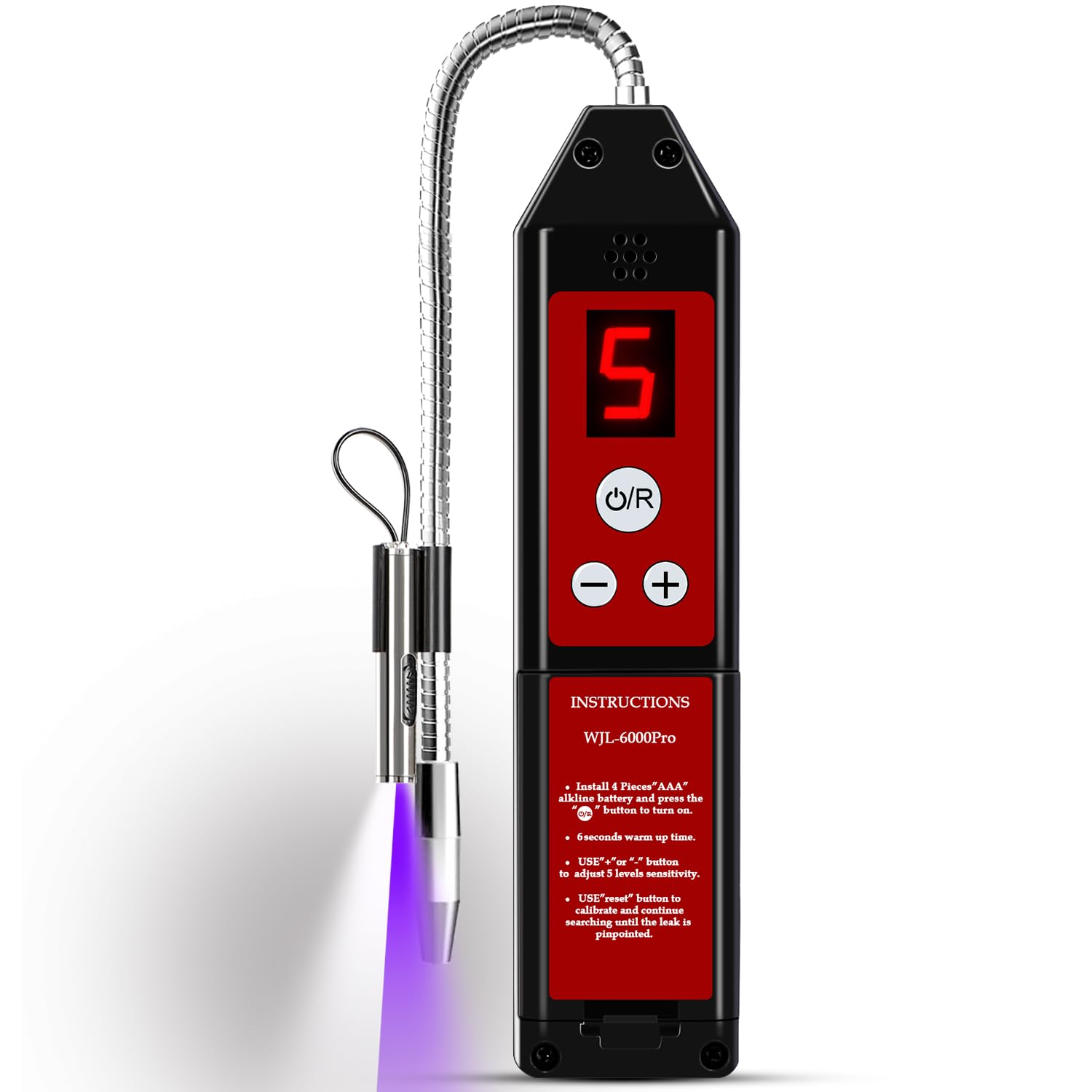
The WJL-6000PRO is the sweet spot for any DIYer or apprentice tech who needs a reliable electronic sniffer without spending industrial-grade money. Its upgraded sensor hits a sensitivity of 0.14 oz/yr, meaning it can catch those micro-leaks that slowly bleed out R134a or R410A over weeks. The 7.9-inch flexible probe snakes past compressor clutches and behind tight evaporator housings where rigid tools can’t reach.
The built-in LCD screen is a genuine upgrade over older beep-only units—it shows the sensitivity setting and real-time gas level, so you can visually track the intensity as you near the leak source. The dual-color LED and UV light work together for double verification, especially useful when you inject fluorescent dye into the system. It detects all common refrigerants including R1234yf, making it future-proof for newer car AC systems.
Battery life is solid on 4 AA cells, and the audible alarm increases in frequency as the sensor gets closer to the leak. A quick warm-up of about 6 seconds and calibration in fresh air are required before use. Users consistently report catching leaks that were invisible to the naked eye, saving hundreds in shop diagnostic fees.
Why it’s great
- Top-tier sensitivity for micro-leaks detection.
- Flexible probe reaches cramped engine bay spots.
- LCD screen removes guesswork from leak hunting.
Good to know
- Must calibrate in fresh air to avoid false positives.
- UV dye not included in the kit.
2. X-Sense Wi-Fi Water Leak Detector Kit SWS0A41

The X-Sense kit is the most complete whole-home water leak monitoring system in this lineup, and it’s specifically useful for AC condensate overflow prevention. The kit comes with four ultra-slim sensors and one base station, allowing you to place sensors under every air handler, drain pan, and water heater in your house. Each sensor is only 0.67 inches thick, easily sliding into the tight gap between a condensate pan and the furnace.
What sets this system apart is the dual-sensing design: it has two probes on top to catch drips from above and four on the bottom to detect standing water as shallow as 0.4 mm. When triggered, the base station blasts a 100 dB alarm and pushes an immediate notification to your phone via the dedicated app, even if you’re miles away. The wireless range between sensor and base station reaches up to 1,700 feet in open air, so it works in detached garages or basement corners where Wi-Fi is weak.
The app allows you to mute alarms temporarily (from 10 minutes to 12 hours), view alarm history, and test the system remotely. Batteries are included and the base station plugs into AC power, ensuring 24/7 uptime. Users report catching sump pump failures and burst washing machine hoses before they caused real damage, making this kit a passive insurance policy for your home.
Why it’s great
- Detects water from both top and bottom surfaces.
- Ultra-slim design fits into tight HVAC spaces.
- App notifications work even when you’re away.
Good to know
- Base station requires AC power.
- No integration with Alexa or Home Assistant.
3. Elitech CLD-100 Refrigerant Leak Detector

The Elitech CLD-100 is an upgraded version of the classic WJL-6000 platform, retaining the traditional corona discharge sensor while adding a more sensitive analogue circuit. With a detection threshold of 0.21 oz/yr, it’s slightly less sensitive than the WJL-6000PRO but still capable of finding slow refrigerant leaks in household AC units and car systems. The flexible 8.26-inch probe is long enough to reach deep into condenser coils.
It offers six adjustable sensitivity levels, which is crucial for filtering out background refrigerant residue—set it low when testing a recently serviced system, then crank it up for a clean system. The dual-color battery indicator shows remaining power at a glance, and the audible/visual alarms increase in frequency as you zero in on the leak. It handles all common halogenated refrigerants including R22, R410A, R134A, and blends.
Battery-operated by 4 AAA cells (not included), it’s fully portable for field use. The build quality is solid with a rubberized grip and metal sensor tip. Customer feedback highlights its ability to find leaks that were invisible to soap bubbles, saving expensive service call fees. Just remember to calibrate it in clean air before each use to avoid false triggers.
Why it’s great
- Six sensitivity levels for accurate leak pinpointing.
- Flexible probe reaches tight AC fittings.
- Dual-color battery indicator prevents mid-job power loss.
Good to know
- AAA batteries not included.
- Requires calibration before each use.
4. Vansky 100 LED UV Dye Leak Detector Kit
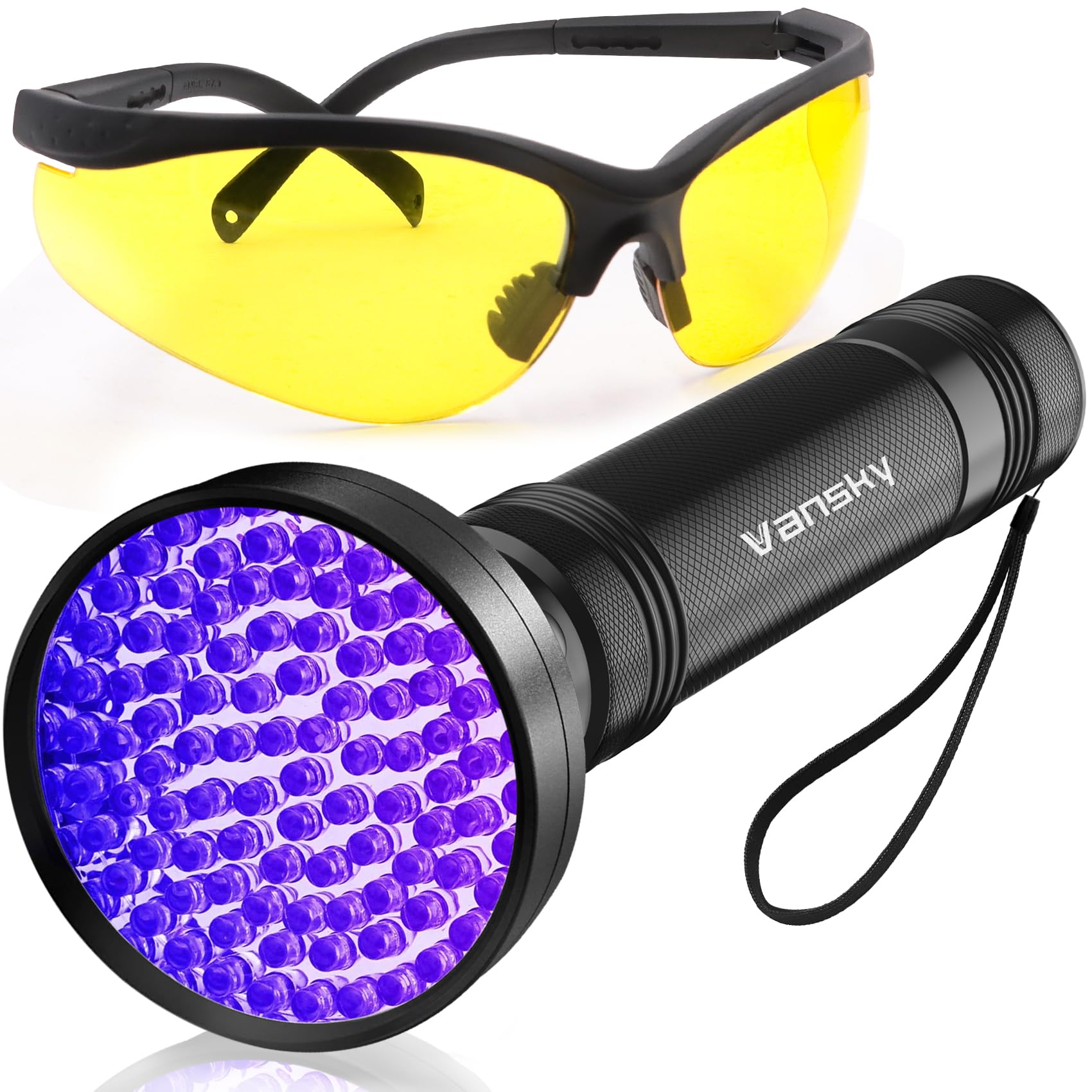
For automotive AC work where you need visual confirmation of a leak, the Vansky kit is the best choice. The flashlight packs 100 high-intensity UV LED beads that make fluorescent dye glow vividly even in a well-lit garage. It’s designed specifically for car air conditioner leak detection but also works for engine oil leaks, transmission fluid, and power steering systems, making it a versatile tool for the DIY mechanic.
The build quality is impressive for the price: a high-precision aluminum housing with a textured non-slip grip and an included lanyard. The kit comes with UV protective glasses that have yellow-filter optical lenses to block ambient light, letting you see the dye more clearly. The two included battery holders accept 9V batteries, though they are not included in the box.
Users consistently report that the Vansky flashlight is noticeably brighter than smaller pen-style UV lights, covering a larger area without dark spots. It’s ideal for locating leaks in evaporator cores, compressor fittings, and condenser joints. If you already have or plan to buy fluorescent dye injectors, this kit gives you the light source and eye protection needed to complete the job accurately.
Why it’s great
- 100 high-brightness UV LEDs for strong dye activation.
- Aluminum body resists drops and wear.
- Included glasses filter ambient light for clarity.
Good to know
- UV dye is not included in the kit.
- 9V batteries not included.
5. YoLink LoRa Smart Water Level Monitoring Sensor
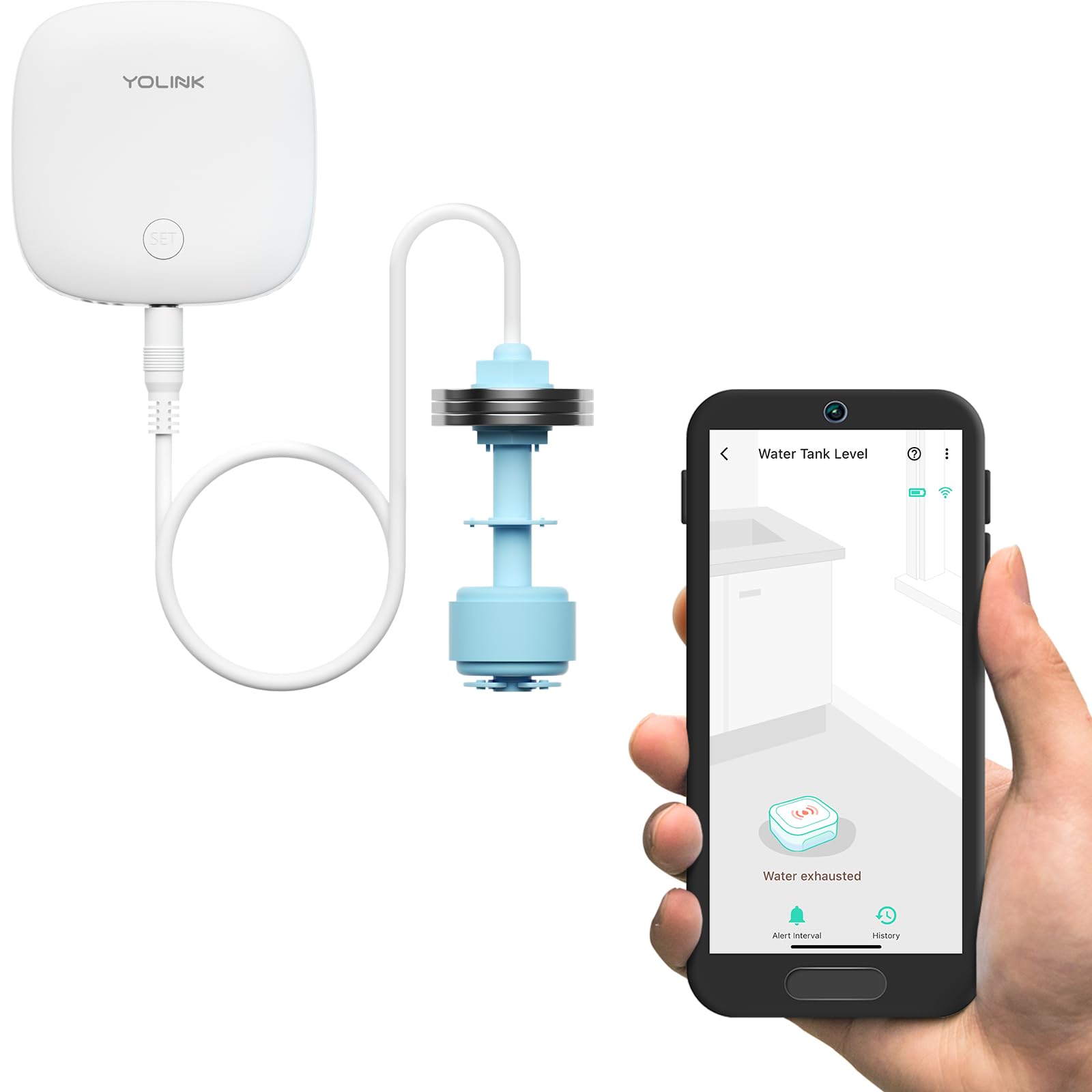
If your main concern is a condensate pan overflowing onto your ceiling, the YoLink float switch sensor is the most targeted solution. It uses LoRa (Long Range) wireless technology, which means the sensor can communicate with the hub from over a quarter mile away in open air—through concrete floors and metal ductwork. This makes it the only reliable option for monitoring a second-floor AC unit from a basement hub.
The sensor is designed as a pendant float switch that you hang or suspend in the condensate pan or tank. Its stainless steel washers provide ballast against wave action from vibration. When the water level rises too high, it triggers a built-in 105 dB audible alarm on the sensor itself, plus push notifications, email, and SMS through the app. You can even integrate it with Alexa, IFTTT, or Home Assistant for automated responses like shutting off the AC.
A YoLink hub is required to operate this sensor, and it’s sold separately. The sensor runs on AA batteries that last 1-2 years depending on usage. Customer reports highlight its ability to catch sump pump failures and toilet flapper jams before any water touches the floor. For condensate overflow protection specifically, this is the most capable and reliable smart sensor you can buy.
Why it’s great
- LoRa range works through concrete and metal.
- 105 dB local alarm plus multi-channel alerts.
- Compatible with smart home automation.
Good to know
- YoLink hub required and sold separately.
- Not a standalone unit—needs the app ecosystem.
6. Zircon Leak Alert Electronic Water Leak Detector

The Zircon Leak Alert is the simplest and most affordable water leak detector you can trust for your AC condensate pan. It’s a self-contained unit with no app, no hub, no Wi-Fi—just a 90 dB alarm that sounds the moment its sensors touch even a trace of moisture. For a single point of detection like a drip pan, this simplicity is actually a strength; there’s nothing to fail or configure.
One unique feature is that the detector is designed to float in a flood situation, continuing to sound the SOS alarm for up to 72 hours or until the battery is exhausted. This means if your condensate pan fills up and the unit becomes submerged, it won’t just die silently. It uses a standard 9V battery that lasts for years in standby mode, and a low-battery chirp warns you when it’s time for a replacement.
Placement is straightforward: set it on the floor near the AC air handler, in the condensate pan, or under any plumbing fixture. It’s proven itself in thousands of homes over more than five years of use, with customers reporting that it caught leaks from washing machines and water heaters that would have caused thousands in damage. If you want a set-and-forget solution that just works, this is it.
Why it’s great
- Floats and continues to alarm during flooding.
- 90 dB alarm is audible throughout a house.
- No setup or app required.
Good to know
- 9V battery not included.
- No remote notifications.
7. Nu-Calgon 4182-24 Cal-Blue Plus Micro Gas Leak Detector
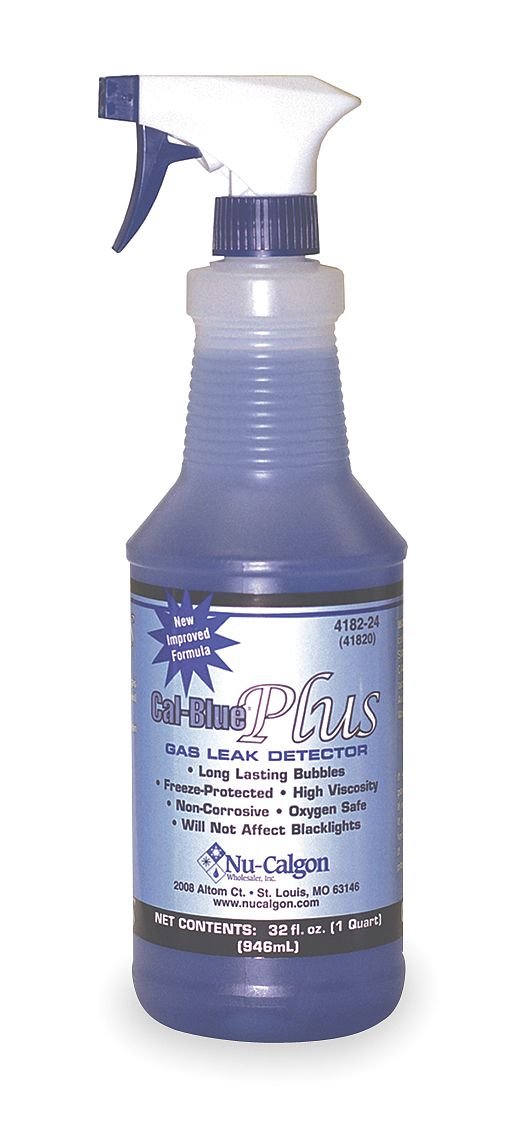
Sometimes the simplest method is the most reliable. Nu-Calgon’s Cal-Blue Plus is a liquid bubble leak detector that you spray or brush onto AC fittings, pipe joints, and valves. If there’s a leak, you’ll see a stream of bubbles forming within seconds. It’s non-corrosive and oxygen-safe, meaning it won’t degrade copper lines or aluminum coils, making it perfectly safe for all AC systems.
This bottle contains 1 quart of blue liquid, enough for dozens of inspections. The standout spec is its freeze protection down to 5°F, which means it won’t turn into slush or lose viscosity when you’re working on a rooftop unit in cold weather. It clings to vertical surfaces without running off immediately, giving you time to inspect every joint. Users recommend applying it with a small disposable brush rather than the spray nozzle to avoid waste and get better control.
For homeowners who want to verify a suspected leak before calling a technician, this is the most affordable and foolproof method. It has found leaks causing pressure losses as small as 0.25 psi over 24 hours. Pair it with a small hand mirror to see behind pipes, and you have a complete low-tech detection solution that never needs batteries or calibration.
Why it’s great
- Immensely reliable bubble detection—no false positives.
- Safe on copper and aluminum AC components.
- Works in freezing outdoor conditions.
Good to know
- Requires physical access to all fittings.
- Not suitable for hairline cracks in coils.
FAQ
Can I use a water leak detector to find refrigerant leaks?
How often should I replace the batteries in my AC leak detector?
What is the difference between a heated diode and a corona discharge sensor?
Final Thoughts: The Verdict
For most users, the best air conditioner leak detector winner is the Aprvtio WJL-6000PRO because it combines professional-grade sensitivity with an intuitive LCD screen and a flexible probe that reaches the tightest spots on any HVAC system. If you want whole-home water leak monitoring with app alerts and 4 sensors, grab the X-Sense Wi-Fi Kit. And for low-tech bubble detection that never fails, nothing beats the Nu-Calgon Cal-Blue Plus.