
Finding a 10-foot fishing kayak that balances primary stability, predictable tracking, and a weight capacity that can actually handle a cooler full of bluegill plus your tackle bag is the real challenge. The market is flooded with bargain-bin rotomolded tubs that spin in the slightest crosswind and inflatables that feel more like pool toys than fishing platforms. You need a hull design that resists the temptation to swap ends on every paddle stroke, with deck space that can support rod holders, a crate, and a comfortable seat that doesn’t leave you numb after two hours.
I’m Min — the co-founder and writer behind Gadgets Feed. I’ve spent countless hours analyzing hull specifications, deck layouts, and seat ergonomics across the most popular 10-foot fishing kayaks to separate genuine performers from marketing fluff.
This guide breaks down the key features that matter on the water so you can confidently choose the right 10 ft fishing kayak for your specific fishing style and body type.
How To Choose The Best 10 Ft Fishing Kayak
A 10-foot fishing kayak occupies a sweet spot: short enough for easy transport and maneuverability on small rivers, long enough for decent tracking on open lakes. But within that narrow length band, hull design and feature sets vary wildly. Focus on these three factors to narrow your list.
Primary Stability vs. Tracking
The width of a 10-foot kayak directly dictates your experience. A hull measuring 32 inches or wider offers exceptional primary stability, meaning you barely wobble when shifting weight to reach for a rod or net a fish. However, that same wide beam creates drag, making the kayak feel “sticky” and slow to paddle. Narrower hulls around 28-30 inches track straighter and glide faster, but you sacrifice some of that rock-solid initial stability. Know your priority: stable for casting or efficient for covering distance.
Weight Capacity is Non-Negotiable
Manufacturer weight ratings are optimistic and assume calm, flat water. A realistic rule of thumb is to take the stated maximum capacity and subtract your body weight plus 30 pounds of gear. If you weigh 220 pounds and bring a 30-pound gear load, a kayak rated for 325 pounds leaves you a minimal safety margin. Look for a capacity of at least 350 pounds if you plan on carrying a cooler, tackle box, and extra rods. Going over capacity affects freeboard, stability, and tracking dramatically.
Sit-On-Top vs. Sit-Inside for Fishing
Sit-on-top (SOT) designs dominate the 10-foot fishing category for good reason. They self-bail through scupper holes, offer unobstructed deck space for mounting rod holders and gear tracks, and let you get back in easily after an unexpected swim. Sit-inside models feel more protected from wind and spray and offer more dry storage under the deck, but can become swamped and dangerous for sea kayaking without proper skill. For warm-weather fishing and maximum accessibility, SOT is the smarter choice for most anglers.
Quick Comparison
On smaller screens, swipe sideways to see the full table.
| Model | Category | Best For | Key Spec | Amazon |
|---|---|---|---|---|
| Perception Pescador Pro | Sit-on-Top | All-Day Comfort & Storage | 325 lb capacity, 57 lbs | Amazon |
| Pelican Sentinel 100X | Sit-on-Top | Value Fishing Package | 44 lbs, ExoPak storage | Amazon |
| Wilderness Systems Tarpon 120 | Sit-on-Top | Fast Tracking & Features | 350 lb capacity, 63 lbs | Amazon |
| Reel Yaks Radar | Modular SOT | Pedal Drive Portability | 430 lb capacity, 67 lbs | Amazon |
| Reel Yaks Recon | Modular SOT | Pedal Drive Stability | 430 lb capacity, 88 lbs | Amazon |
| Pelican Argo 100XR | Sit-Inside | Lightweight Recreational | 43 lbs, storage hatch | Amazon |
| Perception Sound 10.5 | Sit-Inside | Large Paddler Sit-Inside | 335 lb capacity, 46 lbs | Amazon |
| INTEX Dakota Quest | Inflatable SOT | Ultra-Portable Fishing | 352 lb capacity, inflatable | Amazon |
| Lifetime Kokanee | Sit-on-Top | Solo or Tandem Use | 36″ wide, 76 lbs | Amazon |
| Emotion Spitfire | Sit-on-Top | Lightweight Entry Level | 45 lbs, 350 lb capacity | Amazon |
| Tucktec 10′ PRO | Foldable | Compact Storage | 24 lbs, folds to 48″x15″x8″ | Amazon |
In‑Depth Reviews
1. Perception Pescador Pro

The Pescador Pro is the benchmark that other 10-foot SOT fishing kayaks are measured against, and for good reason. Its adjustable “lawn chair” style seat is a game-changer for long days on the water, offering real back support that keeps you fishing comfortably through the afternoon bite. The 32-inch beam delivers a stable platform for standing and casting, while the hull tracks surprisingly well for its length.
The deck layout is smart and spacious: large front and rear storage areas with bungee tie-downs can swallow a milk crate, a cooler, and tackle bags. Two flush-mount rod holders sit behind the seat, and the integrated accessory tracks on the front allow you to mount a fish finder or rod holder without drilling. At 57 pounds, it’s manageable for one person to car-top, though a kayak cart is a welcome helper for longer carries.
Tracking is predictable and the hull cuts through light chop confidently. Some users note the rear rod holders are angled wide, allowing rod tips to swing during transit, and the higher seating position creates a slightly elevated center of gravity that takes a moment to adjust to. Overall, this is the most complete package for the serious recreational angler.
Why it’s great
- Extremely comfortable adjustable seat
- Excellent storage capacity and layout
- Stable and tracks well for its class
Good to know
- Higher center of gravity from the elevated seat
- Rear rod holders can be too wide for some rods
2. Pelican Sentinel 100X
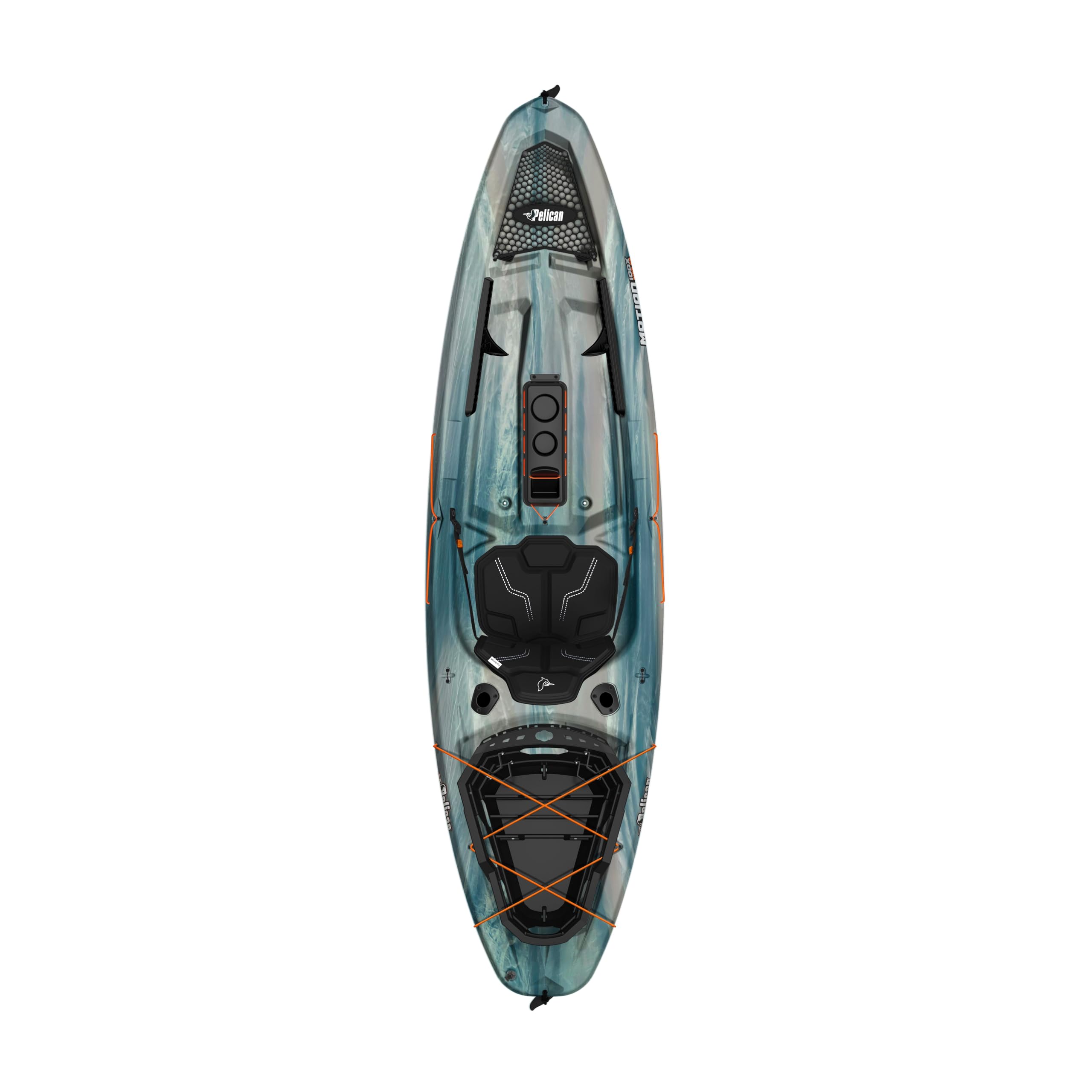
Pelican has cut a clear path to value with the Sentinel 100X, offering a weighted fishing-ready SOT at a price that undercuts the premium segment. The defining feature is the ExoPak, a removable storage compartment that clicks into the rear of the kayak and comes pre-loaded with two vertical rod holders. This lets you pack gear at home and drop the whole unit into the boat when you hit the launch.
At just 44 pounds, the Sentinel is one of the lightest hard-shell SOT kayaks in the 10-foot range, making it genuinely easy to lift onto a roof rack or toss into a truck bed. The ErgoLounge seating system uses extra-thick padding and a tall, wide backrest that improves comfort over the basic bucket seats found on cheaper competitors. The hull is stable enough for casting from a seated position on calm lakes and slow rivers.
The trade-offs become apparent after a few hours: the seat well lacks drainage, leading to a wet bottom on warm days, and the seatback feels flimsy under heavier paddlers. The low freeboard means waves can wash over the deck more easily. For the angler who values portability and a clean storage solution over expedition-level features, this is a standout buy.
Why it’s great
- Very lightweight at 44 pounds for easy transport
- Removable ExoPak storage system is convenient
- Excellent value for a fishing-specific SOT
Good to know
- Non-draining seat well causes wetness
- Low freeboard can swamp in rougher conditions
- Seatback could be more supportive
3. Wilderness Systems Tarpon 120
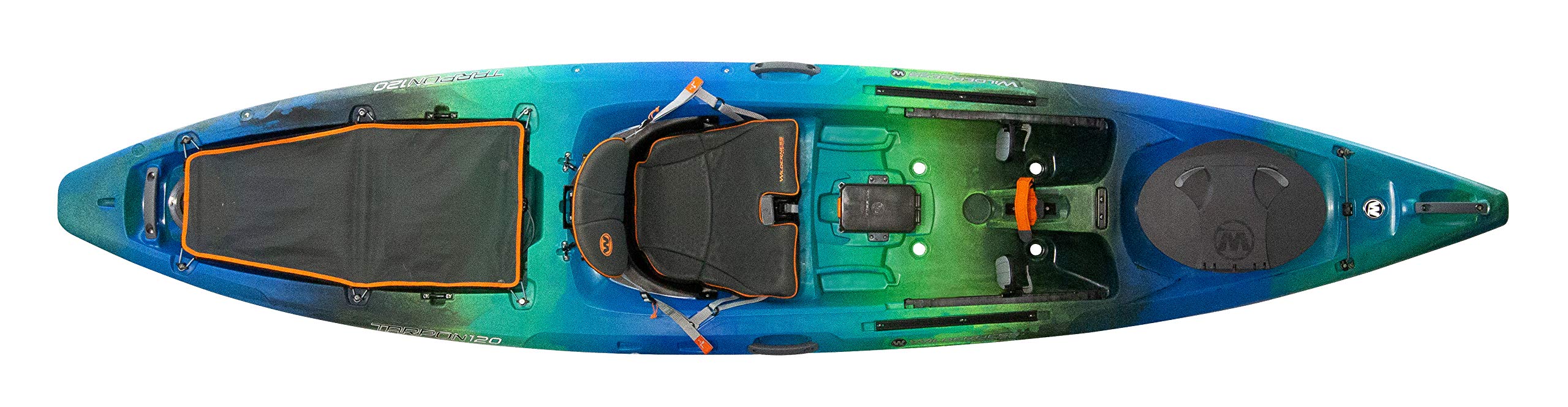
The Tarpon is a 12-foot kayak in a class of its own, representing the pinnacle of SOT design for serious anglers. Its Phase 3 Air Pro seating system is a marvel of adjustability, allowing you to shift the seat forward or backward and recline it for ideal weight distribution. The “cool touch” fabric prevents that swampy back feeling on hot summer days, and the high position provides excellent visibility over the water.
Speed and tracking are where the Tarpon truly separates itself from shorter boats. The 12’3″ hull slices through the water with purpose, carrying momentum well between strokes. It feels more like a touring kayak that happens to fish than a fishing kayak that you grudgingly paddle. The large rear storage well accepts standard crates and coolers, while the front hatch offers dry storage protected by a Dry Tec removable box for valuables.
At 63 pounds, portability takes more effort, and the packaging from online retailers has been inconsistent, with some units arriving damaged. The Track is legendary for its versatility. If you want one kayak that excels at paddling efficiency, fishability, and storage capacity, the Tarpon is the king of the hill.
Why it’s great
- Superior tracking and paddling speed
- Exceptionally comfortable and adjustable seat
- Large capacity for gear and dry storage
Good to know
- Heavy at 63 pounds for solo car-topping
- Packaging quality issues reported in online orders
4. Reel Yaks Radar Modular Fishing Kayak
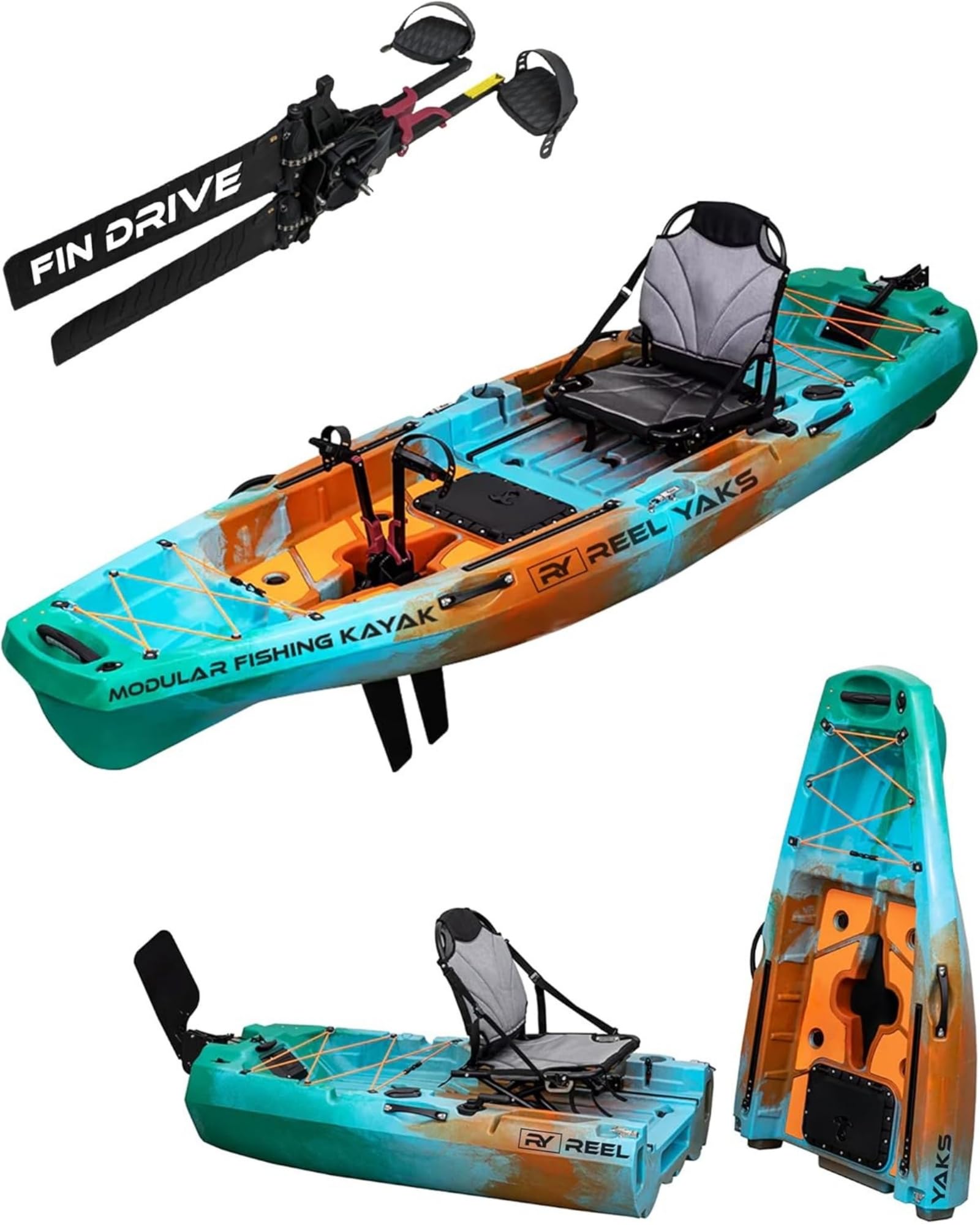
Reel Yaks has solved the biggest problems with pedal kayaks — storage and transport — by splitting the hull into three modular sections that snap together in seconds. The Radar breaks down into 31-pound pieces that fit easily in a sedan trunk or apartment closet. No roof rack required. This alone makes it a compelling option for anglers without truck beds or garage space.
The fin drive system is quiet, weedless, and provides hands-free propulsion that lets you position your kayak precisely while casting or fighting a fish. The W-hull design delivers exceptional primary stability, making it one of the most stable platforms in this lineup. At 430 pounds of maximum capacity, it can comfortably handle large paddlers and heavy gear loads without compromise.
Assembly is straightforward once you know the procedure, though the included instructions can be vague, and the rudder system’s setup is confusing for first-time owners. The pedal drive itself lacks height adjustment, which can be uncomfortable for shorter paddlers. The modular connections are robust, but some users report water ingress through the front pedal hole when standing. For the apartment-dwelling angler who wants a pedal kayak, the Radar is a unique and capable solution.
Why it’s great
- Modular sections store anywhere
- Quiet, weedless fin drive system
- Very high weight capacity
Good to know
- Rudder system setup is confusing
- Pedal drive lacks height adjustment
- Water can enter through pedal hole when standing
5. Reel Yaks Recon Modular Fishing Kayak
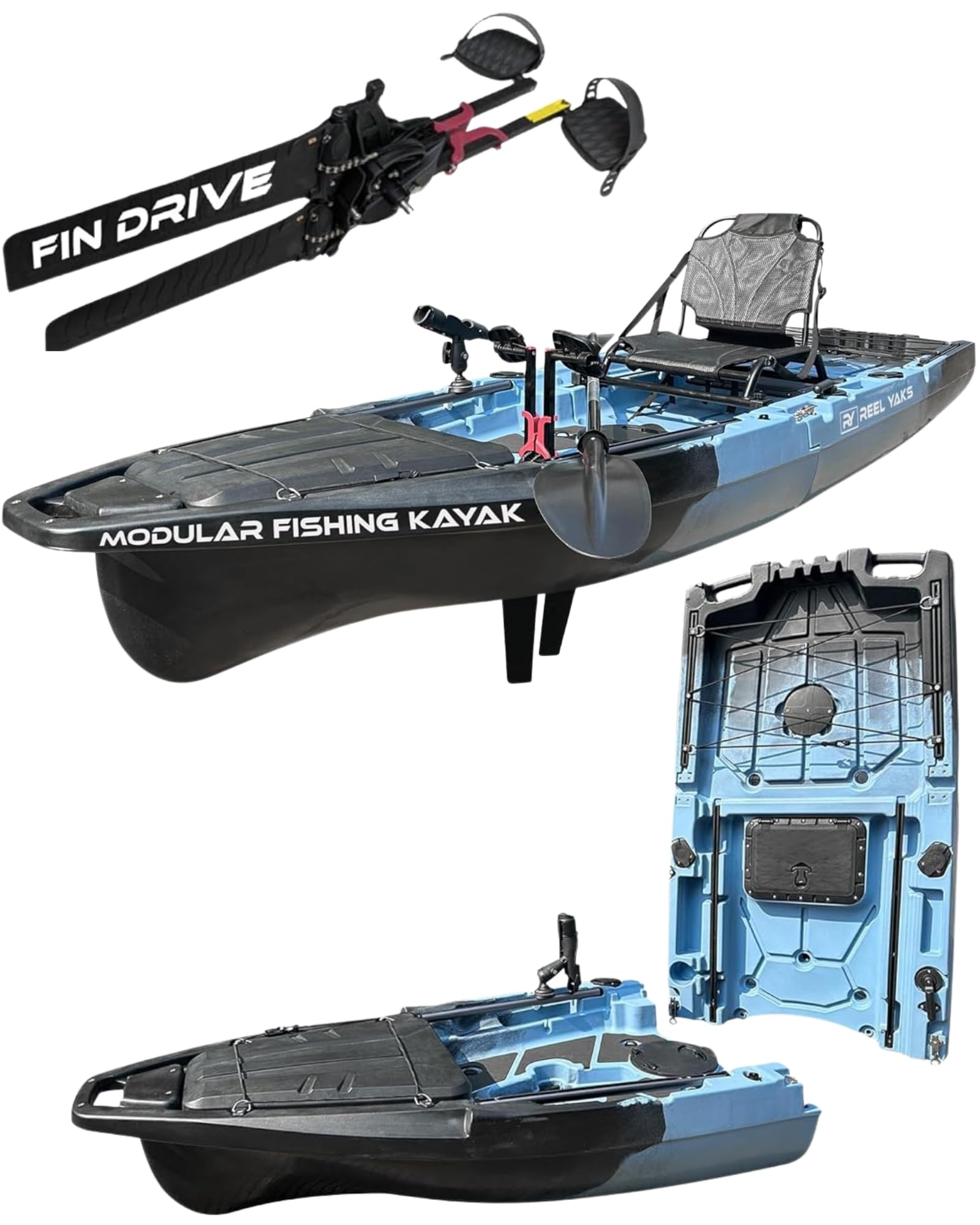
The Recon is the bigger sibling to the Radar, built on a 35.4-inch wide platform that prioritizes rock-solid stability above all else. This is the kayak you want if you plan to stand and cast, take a dog along, or fish in conditions where a wide base of support is a safety asset. The fin drive system is the same efficient, weedless design, offering quiet propulsion through shallow water and heavy vegetation.
The modular design splits into 44-pound sections, each with built-in carry handles, making it manageable for one person to load into a vehicle. The W-hull configuration feels nearly impossible to tip from a seated position, and the elevated stadium seat provides an excellent vantage point for spotting fish structure. The included 360-degree rod holder is a thoughtful touch that keeps your rod out of the way while pedaling.
The Recon is not without its pain points. The actual length is roughly 9’10”, shorter than advertised, and the rudder system requires careful setup to function properly. The seat can slide under heavy paddling, and the overall weight of 88 pounds makes it a two-person job for carrying any distance when assembled. For the angler who prioritizes a stable standing platform and modular storage above all else, the Recon delivers.
Why it’s great
- Extremely stable wide platform
- Modular design for easy storage
- Quiet fin drive propulsion
Good to know
- Actual length is shorter than advertised
- Rudder setup can be finicky
- Heavy and difficult to carry when assembled
6. Pelican Argo 100XR
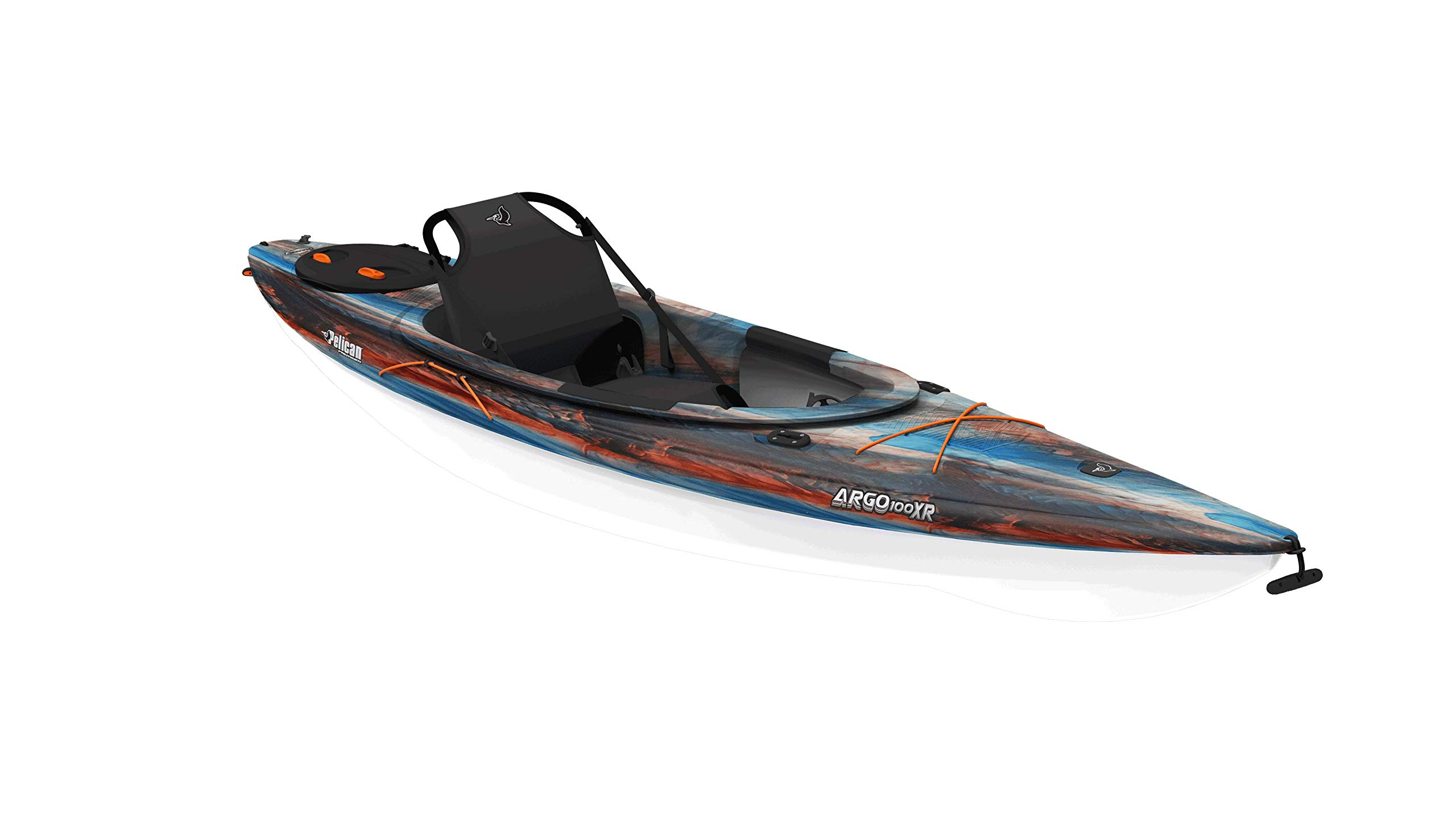
The Argo 100XR is a sit-inside kayak that proves you don’t need a SOT to have a great fishing platform. Its Twin-Arched Multi Chine hull offers impressive initial stability for a sit-inside, making entry and exit easy even for beginners. The cockpit is spacious enough to accommodate a range of body sizes, and the removable Ergocoast seat doubles as a beach chair, a clever feature that extends its utility beyond the water.
At just 43 pounds, the Argo is one of the lightest kayaks in this review, making it a breeze to load onto a roof rack or carry short distances. The back quick-lock hatch provides dry storage for keys, phone, and snacks, and the forward storage platform with bungee cords keeps a water bottle or tackle box within reach. Two 1-inch rigging tracks allow you to mount a fish finder or rod holder without drilling holes.
The trade-off for sit-inside design is limited fishing-specific deck space and the challenge of accessing gear stored behind you. The hull is best suited for casual paddling on calm lakes and slow rivers, where its stability and comfort shine. It is slower than longer touring models and tracking can drift in crosswinds. For the angler who wants a comfortable, lightweight sit-inside that doubles as an excellent recreational kayak, the Argo is a premium choice.
Why it’s great
- Very lightweight and easy to transport
- Comfortable, adjustable seat that doubles as a beach chair
- Stable and easy to re-enter
Good to know
- Sit-inside limits accessible deck space for gear
- Slower and less efficient tracking than longer hulls
- Dry storage hatch is small
7. Perception Sound 10.5

Perception designed the Sound 10.5 with a specific mission: create the best sit-inside value for larger paddlers. The 29.5-inch beam provides excellent primary stability for a sit-inside, and the Tri-Keel hull tracks reliably straight without excessive effort. The cockpit measures 56 inches long, offering plenty of legroom for paddlers up to 6’2″ and 245 pounds, making it one of the most accommodating sit-inside options in the 10-foot range.
The Zone seat with adjustable backrest is cushy and supportive for all-day paddling. Two molded-in rod holders sit within easy reach, and the large rear open storage area is designed to accept a crate or cooler, secured by bungee cords. The dashboard features two mounting points for Perception’s Solo Mount accessory system, allowing you to add a fish finder or GPS without drilling. At 46 pounds, it remains manageable for solo roof-rack loading.
The biggest downside for fishing use is that the paddle keeper is no longer included as a standard feature, which seems like a strange omission for a model marketed to anglers. Some users report the hull handles like a “barge” in terms of speed, but that stability trade-off is exactly what fishing requires. For larger paddlers who prefer a sit-inside hull for wind protection and dry storage, the Sound 10.5 is a standout value.
Why it’s great
- Very stable and roomy for large paddlers
- Comfortable seat and adequate legroom
- Good storage for a sit-inside model
Good to know
- Paddle keeper is not included
- Slow hull speed for a sit-inside
8. INTEX 68245EP Dakota Quest Sit-On-Top Kayak
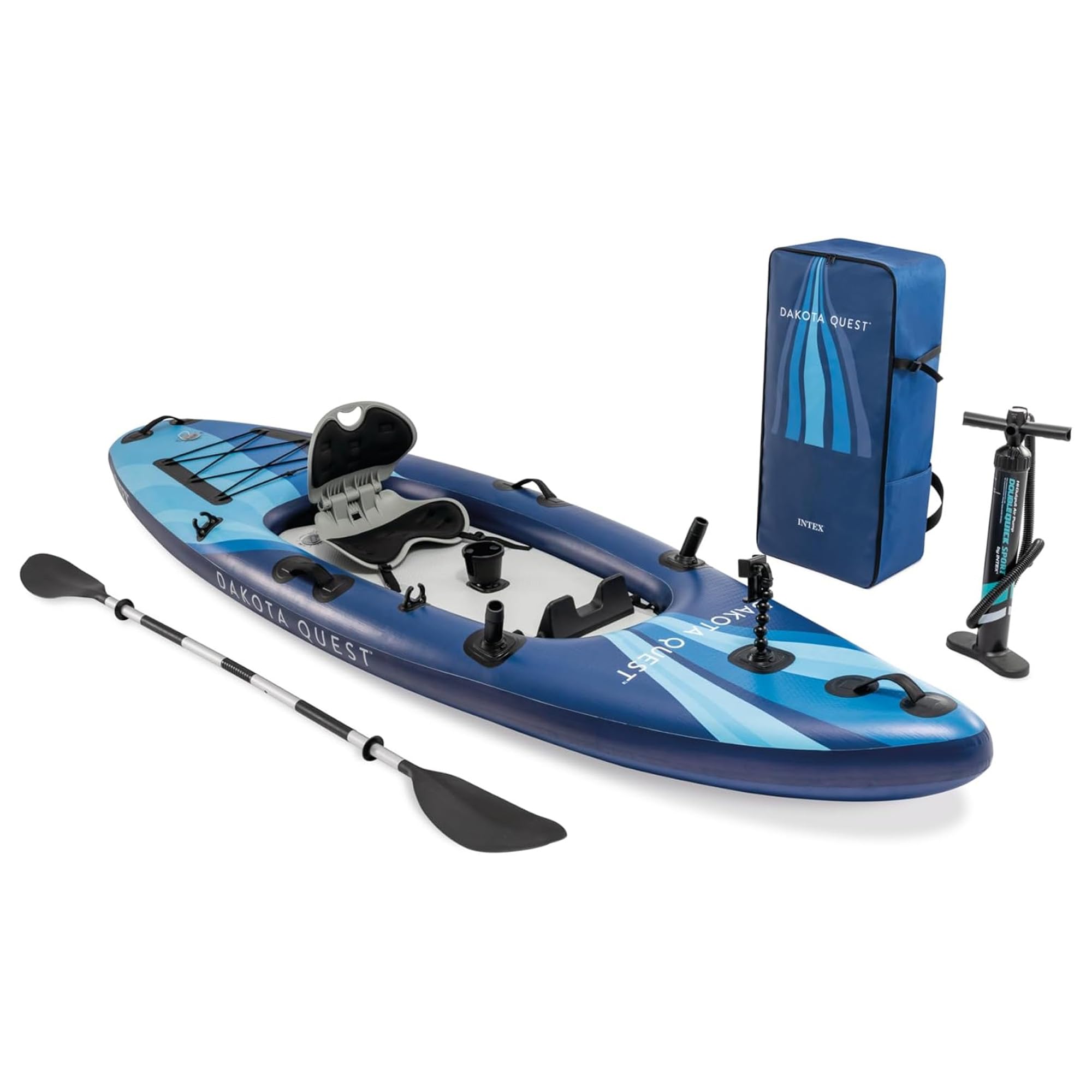
The Dakota Quest is not your childhood pool toy. INTEX has stepped up with a drop-stitch PVC construction that inflates to a rigid 12 PSI, delivering a platform that feels impressively close to a hard-shell kayak. The wide 2’11” beam provides excellent stability, and the large removable skeg helps keep the boat tracking straight. For the angler who prioritizes portability above all else — apartment dwellers, travelers, hikers — this is the most practical option available.
The complete kit includes a high-pressure hand pump, 86-inch adjustable aluminum paddle, ergonomic seat with back support, two removable rod holders, a phone/action camera mount, and a rugged travel backpack. Everything packs into a bag small enough to check on an airplane or store in a closet. The bungee tie-downs on the bow and stern provide adequate gear storage for a day trip.
The included paddle is heavy and flexible, and the backpack zipper is prone to failure under heavy loads. Full inflation takes 10-15 minutes of steady work, and the kayak requires thorough drying before storage to prevent mold. The material is durable but not indestructible; sharp rocks and oyster beds are genuine threats. For the traveling angler who values packability over hard-shell performance, the Dakota Quest is a purpose-built solution.
Why it’s great
- Packs down for airline travel or small apartments
- Surprisingly rigid and stable at 12 PSI
- Complete kit with pump, paddle, and accessories
Good to know
- Included paddle is heavy and low quality
- Must dry thoroughly to prevent mold
- Requires setup and inflation time
9. Lifetime Kokanee Sit-On-Top Kayak

The Kokanee is a 10-foot 6-inch kayak that occupies a unique position: it’s wide enough to comfortably carry two paddlers or a single large angler with room for a dog. The 36-inch beam is the widest in this guide, translating directly into exceptional primary stability. You can stand up to stretch and the boat barely rocks. This makes it an excellent platform for tandem fishing trips or for paddlers who prioritize a rock-solid feel above all else.
The kayak includes two quick-release seat backs, multiple footrest positions, and a 6-inch storage hatch. The UV-protected HDPE construction is durable and shrugs off scrapes from rocks and docks. The hull tracks reasonably well for its width, though it is not fast. The bungee storage system on the front and rear deck provides ample tie-down points for gear.
At 76 pounds, the Kokanee is the heaviest kayak in the guide, making solo transport a workout. The hard plastic seats lack padding; after 40 minutes, discomfort sets in. The storage hatch is small, and items placed in the open storage areas can slide around. For the angler who needs a stable, wide platform for two people or a person plus a large dog, the Kokanee is a solid, heavy-duty choice.
Why it’s great
- Very wide and stable platform
- Can accommodate two people or a person with a dog
- Durable HDPE construction
Good to know
- Very heavy at 76 pounds
- Uncomfortable hard plastic seats
- Not fast due to wide beam
10. Emotion Spitfire Sit-On-Top Kayak
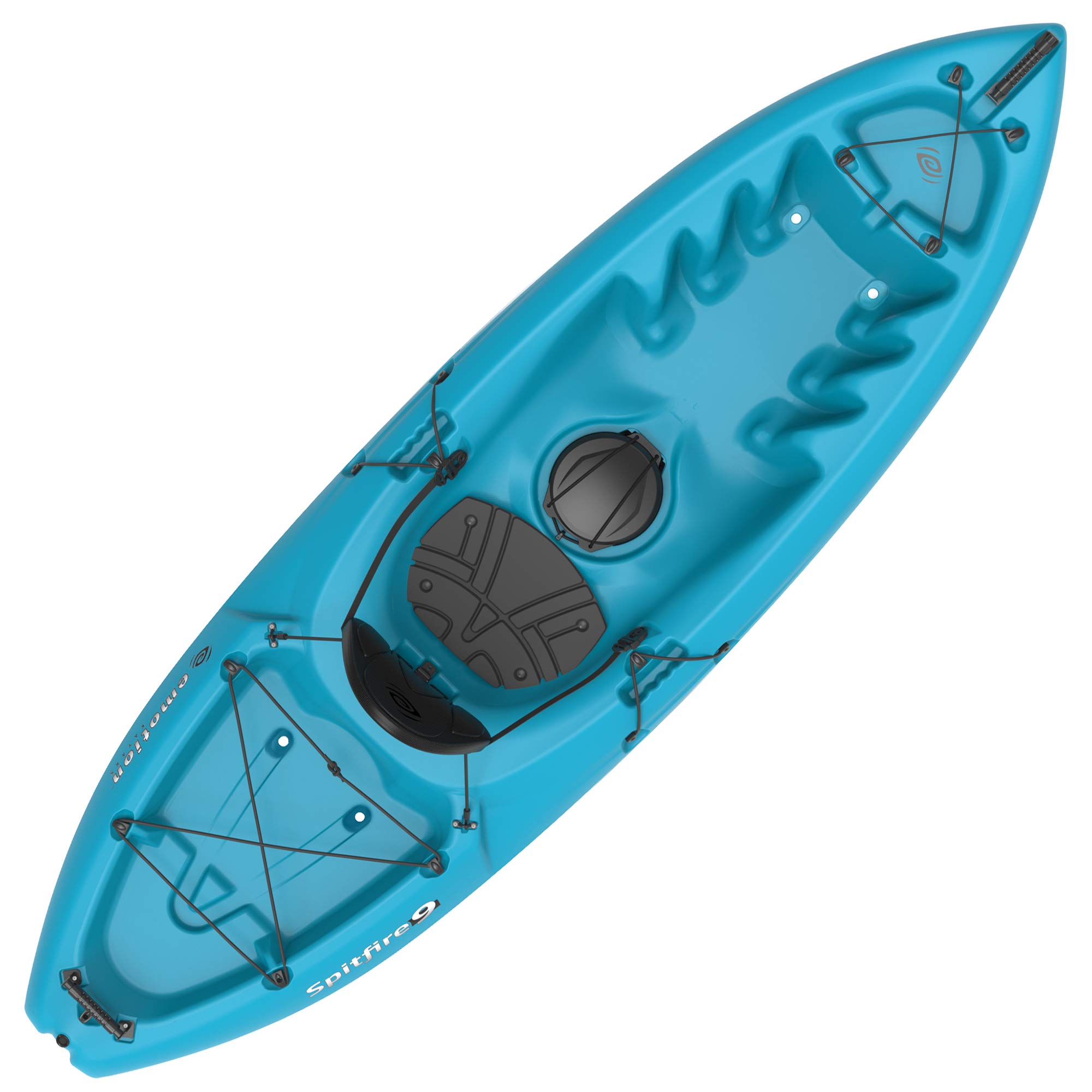
The Emotion Spitfire is the entry point to sit-on-top fishing for budget-conscious paddlers. At 45 pounds and 9 feet long, it is one of the smallest and lightest kayaks in this guide, making it exceptionally easy for smaller users to handle alone. The hull design prioritizes stability over speed, and the adjustable footrests accommodate a range of paddler heights. Self-bailing scupper holes drain any water that splashes aboard.
The padded CRS seat with UltraLite construction provides reasonable comfort for short to medium sessions on the water. The rear tankwell with cargo net lacing offers storage for a small cooler or gear bag, and the molded-in paddle keepers are a nice touch. The 350-pound capacity is generous for the size, allowing larger paddlers to use it, though its performance at the upper end of that range is compromised.
The tracking is the Spitfire’s biggest weakness. Multiple users report that the kayak spins easily and requires constant course correction, making it tiring to paddle any significant distance. The seat attachment system is frustrating to use, and some larger paddlers have reported seat failures. This is an adequate kayak for a child or small adult fishing small, protected waters, but serious anglers will quickly outgrow its performance limitations.
Why it’s great
- Lightweight and easy for small users to handle
- Stable platform for protected waters
- Generous weight capacity for its size
Good to know
- Poor tracking requires constant steering correction
- Seat can be difficult to attach and uncomfortable for larger users
- Best suited for small users in calm conditions
11. Tucktec 10′ PRO Foldable Kayak
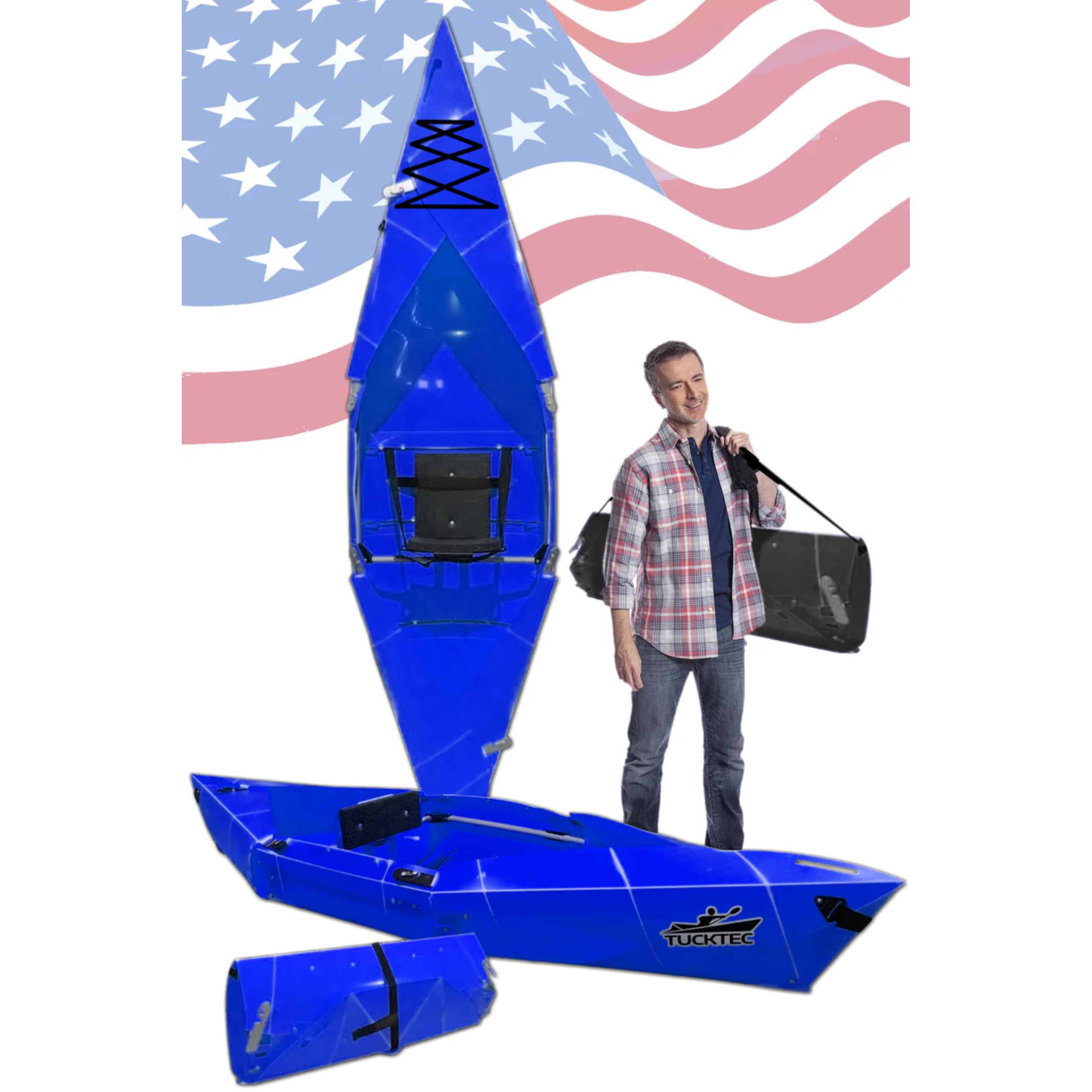
The Tucktec PRO is a radical departure from traditional kayak design: a folding hard-shell kayak that assembles in two minutes and packs down to the size of a large suitcase. At 24 pounds, it is by far the lightest option in this guide, and its 48x15x8-inch folded size means it can fit in a car trunk or closet without any roof rack. This is the ultimate solution for anglers with zero storage space.
The construction uses a thick, puncture-resistant sheet plastic that folds at engineered seams, then locks into place with six levers. The resulting hull feels surprisingly rigid on the water, with the included fin providing adequate tracking. The 10-foot length offers reasonable maneuverability on small lakes and slow rivers. The kayak is made in the USA from locally sourced materials and comes with a 3-year warranty.
The assembly process, while quick, has a steep learning curve. The first few attempts can be frustrating without watching a video guide, and the plastic grooves require some force to engage. The foot rest is uncomfortable and poorly positioned for many users. The kayak is also prone to splashing water over the rear folds when paddling at speed, especially under heavier loads. For the storage-challenged angler who values packability over traditional kayak performance, the Tucktec PRO is a unique and functional choice.
Why it’s great
- Incredibly compact storage when folded
- Very lightweight at 24 pounds
- Assembles in minutes without tools
Good to know
- Assembly has a steep learning curve
- Footrest is uncomfortable
- Can splash water over the rear folds
FAQ
What is the difference between a 10-foot and a 12-foot fishing kayak?
How much weight can a 10-foot fishing kayak really handle?
Can a 10-foot kayak be used on the ocean?
Should I get a sit-on-top or sit-inside kayak for fishing?
What is the best way to transport a 10-foot fishing kayak without a roof rack?
Final Thoughts: The Verdict
For most users, the 10 ft fishing kayak winner is the Perception Pescador Pro because it combines a supremely comfortable adjustable seat, ample storage, and excellent stability in a package that still weighs under 60 pounds. If you want hands-free pedal propulsion and have limited storage space, grab the Reel Yaks Radar. And for the ultimate in portability and packability, nothing beats the INTEX Dakota Quest.