
Selecting the wrong chair after spinal surgery can undo weeks of recovery in a single afternoon. The delicate balance required to protect a healing spine—supporting the lumbar curve without加压, providing a stable base without restricting circulation, and enabling safe transitions from sit to stand—demands a chair engineered specifically for post-operative needs, not a generic comfort seat.
I’m Min — the co-founder and writer behind Gadgets Feed. I’ve spent hundreds of hours analyzing biomechanical support systems, lift mechanisms, and adjustability ranges to find what truly works for the surgically-repaired spine, filtering out marketing claims from genuine therapeutic design.
After thorough evaluation of lumbar support adjustability, recline range, and assisted-stand capability, this guide delivers the definitive analysis of the best chair after spinal surgery to protect your recovery investment.
How To Choose The Best Chair After Spinal Surgery
Spinal surgery recovery introduces unique constraints. The chair you choose must provide controlled lumbar engagement, zero-compression transfer, and the ability to change positions without twisting or straining the surgical site. The following criteria separate a therapeutic recovery chair from a standard recliner that may hinder healing.
Lift Mechanism: Safety in Transition
The single most important feature is how the chair assists standing. A dual-motor system allows independent control of the backrest and footrest, meaning you can bring the chair to a fully upright seated position before the lift engages. Single-motor chairs tilt the entire frame simultaneously, which can shift your weight unevenly and strain the lower back during the rise. Look for independent motor control and a lift actuator rated for your weight.
Lumbar Support: Active vs. Passive
Post-surgery lumbar support must be adjustable in both height and depth to match your specific curve. Fixed lumbar pads can exert pressure on the wrong part of the spine. Adjustable lumbar support that moves vertically (up to 30 mm) and in depth (up to 25 mm) allows you to fill the arch created by the seat back without creating a pressure point against the fusion or discectomy site.
Recline Range and Seat Positioning
Sleeping upright in a standard recliner is common after spinal surgery, but a chair that achieves a true flat position (170° to 180°) allows you to lie supine with proper spinal alignment. Equally important is seat depth adjustability: a seat that is too long will compress the back of your thighs and tilt your pelvis, while a seat that is too short fails to distribute weight across the thigh. Adjustable seat depth (1.9 to 2.5 inches of travel) ensures proper thigh support for your leg length.
Quick Comparison
On smaller screens, swipe sideways to see the full table.
| Model | Category | Best For | Key Spec | Amazon |
|---|---|---|---|---|
| CDCASA Oversized Dual Motor | Premium | Flat sleep position & heavy users | 180° lay flat / 400 lb capacity | Amazon |
| RESTREAL Dual Motor Lift Recliner | Premium | Built-in tray table & wireless charging | 180° lay flat / 400 lb capacity | Amazon |
| EZZUP Dual Motor Lift Recliner | Mid-Range | Independent back & footrest control | 180° lay flat / solid wood armrests | Amazon |
| HINOMI H2 Pro | Premium | Precise lumbar adjustability | 19 adjustment points / 25 mm lumbar depth | Amazon |
| Branch Verve Chair | Mid-Range | Contoured back for extended sitting | V-shaped back / high-density foam seat | Amazon |
| Steelcase Series 1 | Premium | Weight-activated recline & durability | Weight-activated controls / tool-free assembly | Amazon |
| MAHOMICO Power Lift Recliner | Mid-Range | Compact footprint with heat & massage | 23.62″ wide seat / 135° recline | Amazon |
| ProtoArc EC200 | Mid-Range | Adjustable seat depth & breathable mesh | 1.97″ seat depth travel / 55D foam | Amazon |
| Branch Ergonomic Chair | Mid-Range | Modern design with eight adjustments | Breathable mesh / anodized aluminum frame | Amazon |
In‑Depth Reviews
1. CDCASA Oversized Dual Motor Lay Flat Power Lift Recliner Chair

The CDCASA lift recliner is the standout performer for spinal surgery recovery because it achieves a true 180° lay-flat position using dual OKIN motors that independently adjust the backrest and footrest. This means you can sleep supine with the spine in neutral alignment—no awkward upright sleeping that compresses the lumbar discs. The 400-pound capacity and 26D high-density foam cushion ensure the seat does not sag or create pressure points against a healing surgical site.
Eight massage points distributed across the back, lumbar, thighs, and legs—combined with lumbar heating—provide targeted relief for the muscle spasms often accompanying recovery. The built-in cup holders and front storage pockets keep essentials within reach without requiring twisting or bending. The textile upholstery is breathable and stain-resistant, reducing friction against sensitive skin during extended periods of sitting.
Assembly involves three packages and takes 10 to 15 minutes. The robust steel and rubberwood frame provides a stable platform for the lift mechanism, which operates silently. The only reported drawback is the massage noise on bare floors, but the therapeutic benefits of the lay-flat position and independent motor control make this the top recommendation for post-spinal surgery recovery.
Why it’s great
- True 180° lay-flat position for neutral spine alignment during sleep
- Dual OKIN motors allow independent backrest and footrest control
- 400 lb capacity with high-density 26D foam cushion
- Lumbar heating and 8-point massage for post-surgery relief
Good to know
- Massage vibration is audible on bare floors
- Oversized design requires ample floor space
2. RESTREAL Dual Motor Power Lift Recliner Chair
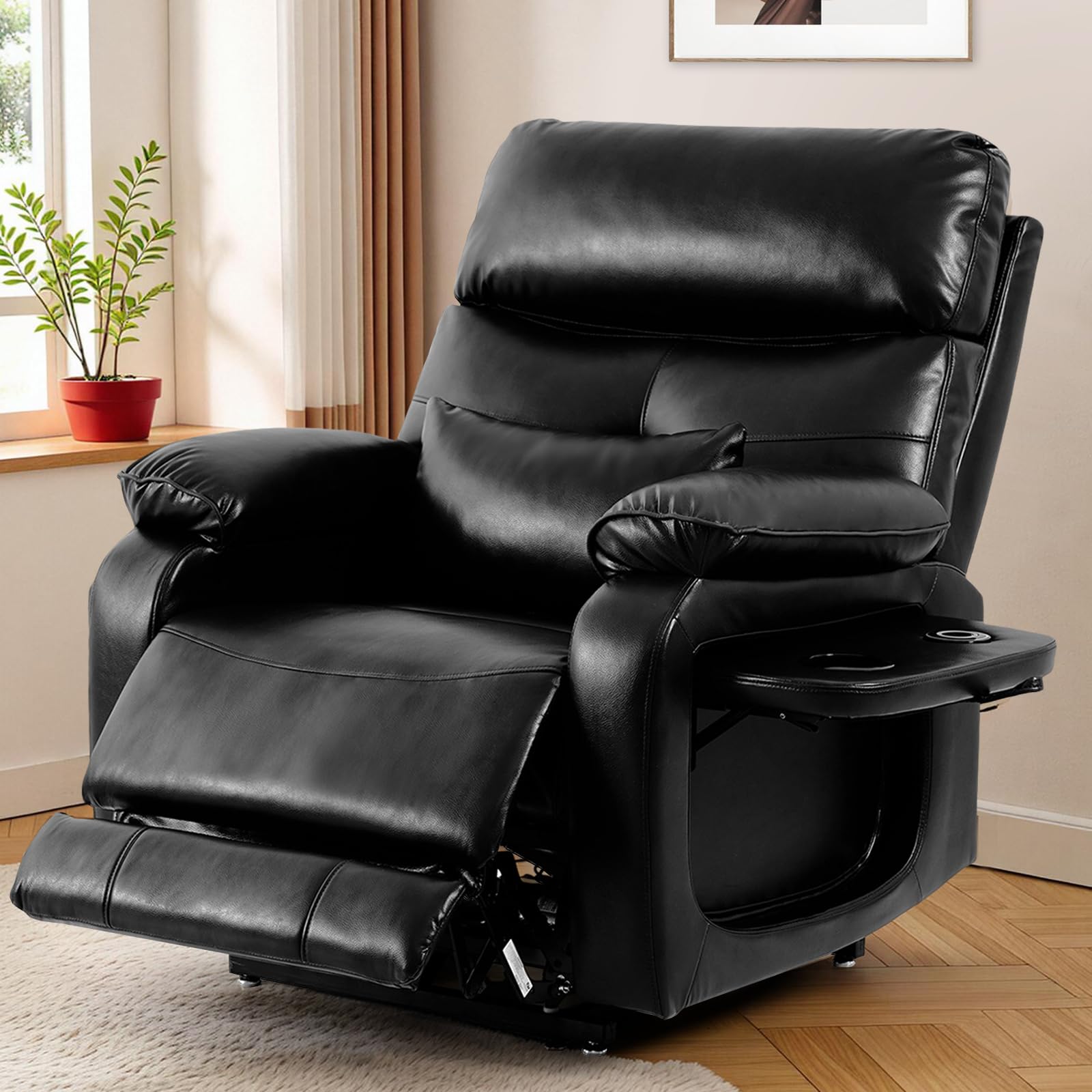
The RESTREAL lift recliner pairs dual-motor independence with a foldable tray table and built-in wireless charger, making it a standout for recovery where convenience and function must coexist. The dual-motor system allows separate control of the backrest and footrest, enabling the chair to achieve a full flat position ideal for sleeping without compressing the spine. A removable lumbar pillow with a zipper design lets you adjust firmness to match your specific curve.
Eight massage points with five distinct modes and adjustable vibration intensity, combined with lumbar heating, actively reduce muscle tension around the surgical area. The extended footrest accommodates taller individuals, and the leather upholstery is easy to clean in case of spills or wound drainage. The integrated tray table with cup holder and wireless charging pad keeps remote controls and phones within reach without requiring you to bend or twist.
Assembly is tool-free and takes 20 to 40 minutes, with the chair shipping in three packages. The iron and solid wood frame supports up to 400 pounds, and the formaldehyde-free FSC-certified wood frame adds safety for long-term use. The only point to note is that the heaviest box may be left by the curb during delivery, so coordinate drop-off logistics carefully.
Why it’s great
- Foldable tray table with wireless charger for easy reach
- Dual-motor system allows full flat position for sleep
- 400 lb capacity with metal and solid wood frame
- Customizable lumbar pillow with zipper firmness adjustment
Good to know
- Heaviest box may be delivered separately or left at curb
- Leather upholstery can be warm during extended sitting
3. EZZUP Dual Motor Power Lift Recliner Chair
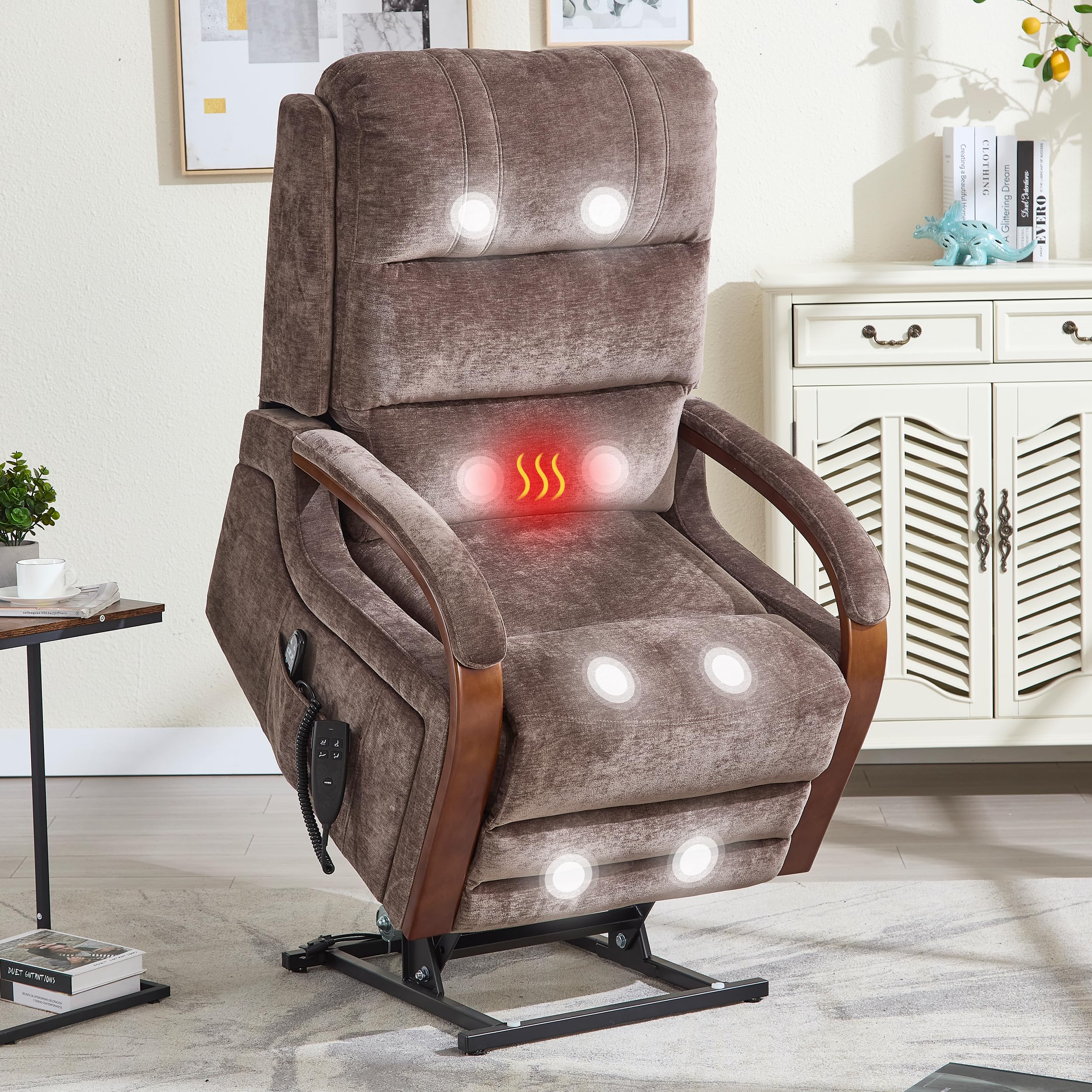
The EZZUP lift recliner delivers independent dual-motor control at a mid-range price point, allowing you to recline the backrest independently of the footrest to achieve a full 180° flat position. This is critical for spinal surgery patients who need to sleep lying down rather than in a semi-upright recliner. The chenille fabric is breathable and resistant to pilling, reducing friction against tender surgical areas during extended use.
Eight vibrating nodes are distributed across the back, lumbar, thighs, and legs, with three massage modes and optional lumbar heating to ease muscle tension around the spine. Solid wood armrests provide structural durability and a stable push-off surface when using the lift function. The intuitive remote control simplifies operation, and the two side pockets keep remotes, glasses, and books within reach without twisting.
The robust lift mechanism is engineered to assist standing without placing strain on the knees or lower back, making it suitable for post-surgery recovery and limited-mobility individuals. Assembly is straightforward, and the whisper-quiet motors ensure the chair does not disrupt sleep. Some users reported that the function pictures on the remotes can be confusing initially, but the overall build quality and therapeutic recline range offer excellent value.
Why it’s great
- Independent dual motors for full 180° flat sleep position
- Solid wood armrests provide durable push-off support
- Breathable chenille fabric resists pilling over time
- Quiet motors with smooth lift mechanism
Good to know
- Remote control function icons can be unclear at first
- Rated for older adult use; may be too compact for taller users
4. HINOMI H2 Pro Premium Ergonomic Office Chair
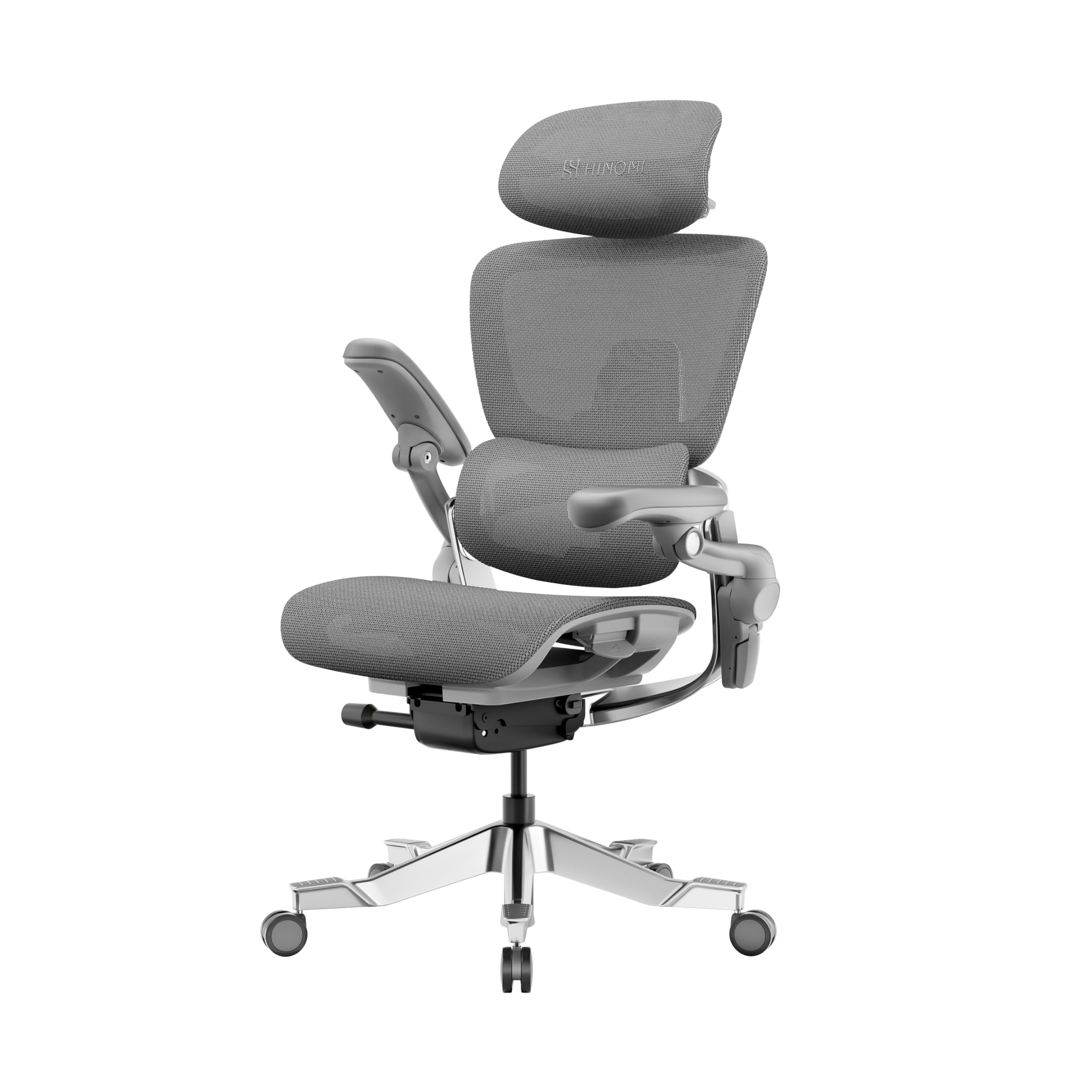
The HINOMI H2 Pro offers the most precise lumbar and postural adjustability of any chair on this list, with 19 points of adjustment that include a lumbar support moving 30 mm vertically, 25 mm forward and backward, and tilting 12° to auto-sync with your body. For spinal surgery patients, this level of customization is critical: you can dial the lumbar pad into the exact arch of your spine without creating a pressure point against the surgical site.
The 2-in-1 dynamic back support tilts 10° and reclines 143°, allowing you to switch between upright focused sitting and relaxed recline without losing lumbar contact. The dual-layer soft mesh fabric is highly breathable, reducing heat buildup and moisture against the skin during long sitting sessions. The flip-up armrests with 130° pad rotation and 40° joint movement provide precise shoulder support while allowing you to clear the chair for easy ingress and egress.
The solid aluminum frame and base support up to 330 pounds, and the optional retractable footrest with vegan leather padding adds a leg elevation feature beneficial for reducing lower back stress. The chair is designed for users up to 6’5″ and is praised for its sturdy build and silent wheels. The only noted design flaw is that the backrest lock can occasionally disengage during recline, causing a sudden drop that may be jarring for a post-surgery user.
Why it’s great
- 19 adjustment points including 25 mm lumbar depth travel
- Dual-layer breathable mesh reduces skin friction
- Flip-up arms with 130° rotation for easy entry/exit
- Optional retractable footrest reduces lumbar stress
Good to know
- Backrest lock can disengage and cause sudden recline
- Premium pricing reflects the extensive adjustability
5. Branch Verve Chair

The Branch Verve employs a sculpted V-shaped back with integrated spine support that cradles the thoracic and lumbar regions without the aggressive curve found in traditional ergonomic chairs. For spinal surgery patients, this gentler contour can be preferable because it does not强行 exert pressure on a specific spinal segment. The high-density foam seat cushion resists compression, preventing the “bottoming out” sensation that forces the pelvis into posterior tilt.
Six adjustment points—including seat height, seat depth, tilt and tilt lock, lumbar height, and armrest height—allow you to dial in a position that maintains the natural lumbar curve. The 3D knit back promotes airflow to regulate body temperature, which is beneficial during extended recovery periods where sweating against the backrest can irritate incisions. The futuristic armrest design includes a wide pad surface that supports the forearms without pinching the shoulders forward.
Assembly takes 30 to 45 minutes and the aluminum frame with powder-coated finish feels solid. Users with hip or joint pain have reported significant relief using this chair. The main drawbacks are that the armrests are narrow (3 inches) and lack cushy padding, and the lumbar support is basic compared to dedicated office chairs. The seat cushion, while supportive, is very firm and may require a break-in period before it conforms to your body.
Why it’s great
- V-shaped back provides gentle spine support without force
- High-density foam seat resists sagging over time
- Breathable 3D knit back regulates temperature
- Six adjustment points for personalized fit
Good to know
- Armrests are narrow at 3 inches without cushy padding
- Seat cushion is very firm and may need break-in
6. Steelcase Series 1 Office Chair
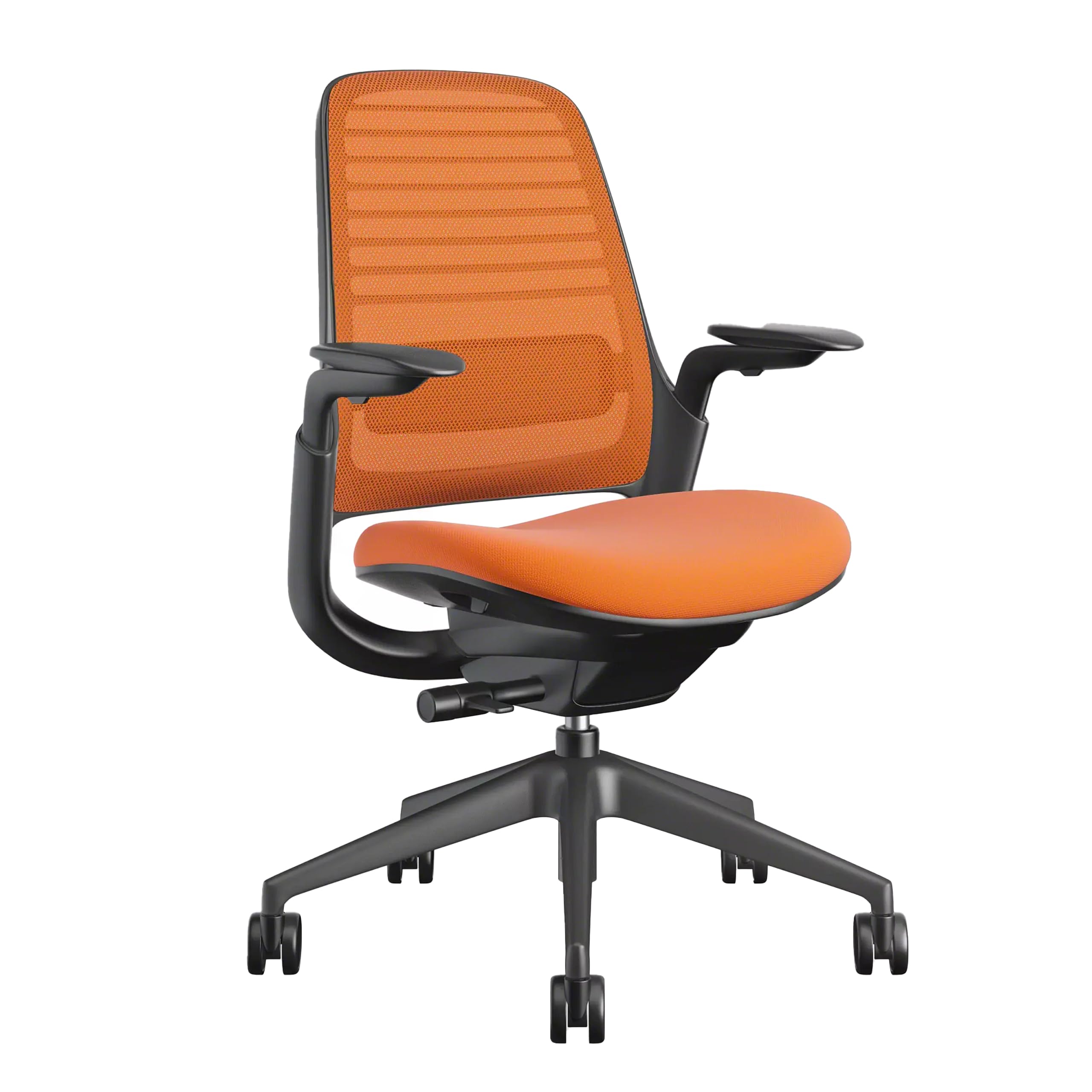
The Steelcase Series 1 brings contract-grade durability and weight-activated recline control into a chair that assembles in under two minutes without tools. The weight-activated mechanism means the recline resistance automatically adjusts to your body weight, eliminating the need to fiddle with tension knobs—a convenience for post-surgery patients who may lack fine motor control or strength. The flexible edges and adaptive bolstering in the forearm provide a pressure-free sit that reduces shoulder and upper back tension.
Optional 4-dimensional arm support and an adjustable headrest add task-specific customization. The chair includes a cushioned seat with supportive foam that maintains its shape over time, and the mesh back encourages airflow to prevent heat buildup. The solid back style provides continuous support without pressure gaps, which is important for patients recovering from fusion surgery who need consistent contact across the entire back.
Users consistently praise the ease of assembly and the solid feel of the polyester frame. The chair works well for both shorter (5’3″) and taller (6’3″) users, and the casters roll smoothly on hardwood floors when the correct hard-floor casters are provided. The only issue reported is that the hard-floor casters are sometimes swapped for carpet casters in the box, so verify the casters match your flooring before assembly.
Why it’s great
- Weight-activated recline adjusts resistance automatically
- Tool-free assembly in under two minutes
- Mesh back provides consistent contact without pressure gaps
- Works well for users from 5’3″ to 6’3″
Good to know
- Hard-floor casters may be substituted with carpet casters
- Armrest pads can shift during use if not tightened
7. MAHOMICO Power Lift Recliner Chair
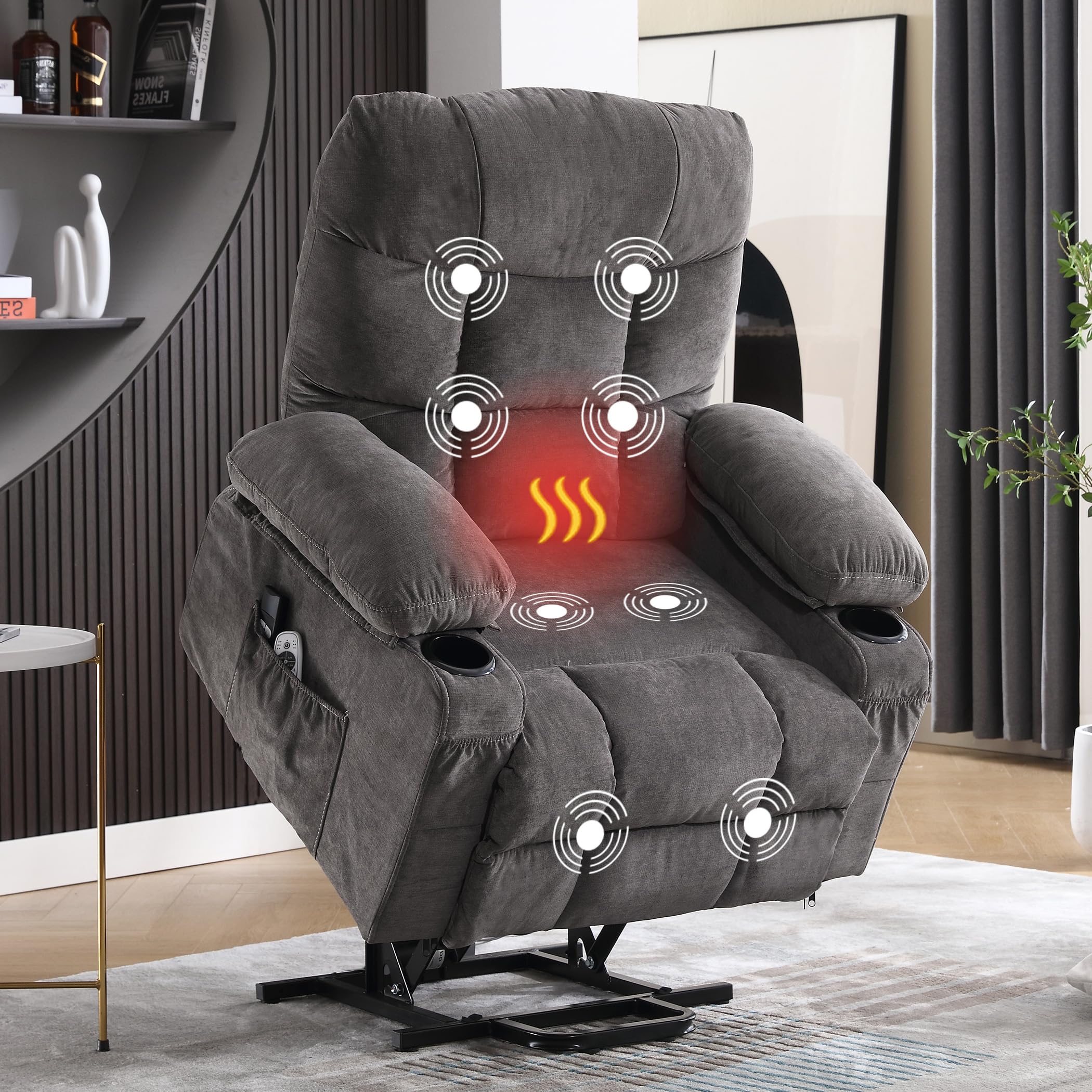
The MAHOMICO power lift recliner fits into smaller living spaces while still offering power lift assistance, 135° of infinite recline, and vibration massage with lumbar heating. The 23.62-inch extra-wide seat with contoured foam encourages healthy circulation and reduces lateral pressure on the hips—an important factor after spinal surgery when hip positioning affects pelvic tilt and spinal alignment.
The wired remote controls the lift and recline functions separately, and the lumbar heat function targets the lower back to ease muscle spasms. The side pockets and cup holders keep essentials within reach, reducing the need to bend or twist. The fabric upholstery is skin-friendly with padded armrests that provide a comfortable surface for the forearms during supported sitting.
Assembly takes 10 to 15 minutes with clear instructions. The slim profile is ideal for apartments or bedrooms where floor space is limited. The massage function offers five levels of vibration intensity, though users note it is more of a surface vibration than deep tissue work. The lift mechanism raises the user almost to a standing position, minimizing the burden on the lower back during the transition.
Why it’s great
- Compact design fits small apartments and bedrooms
- Extra-wide seat reduces lateral hip pressure
- Lumbar heat function eases muscle spasms
- Lift mechanism raises user nearly to standing
Good to know
- Massage is surface-level vibration, not deep tissue
- Two separate remotes required for lift and massage
8. ProtoArc EC200 Ergonomic Office Chair
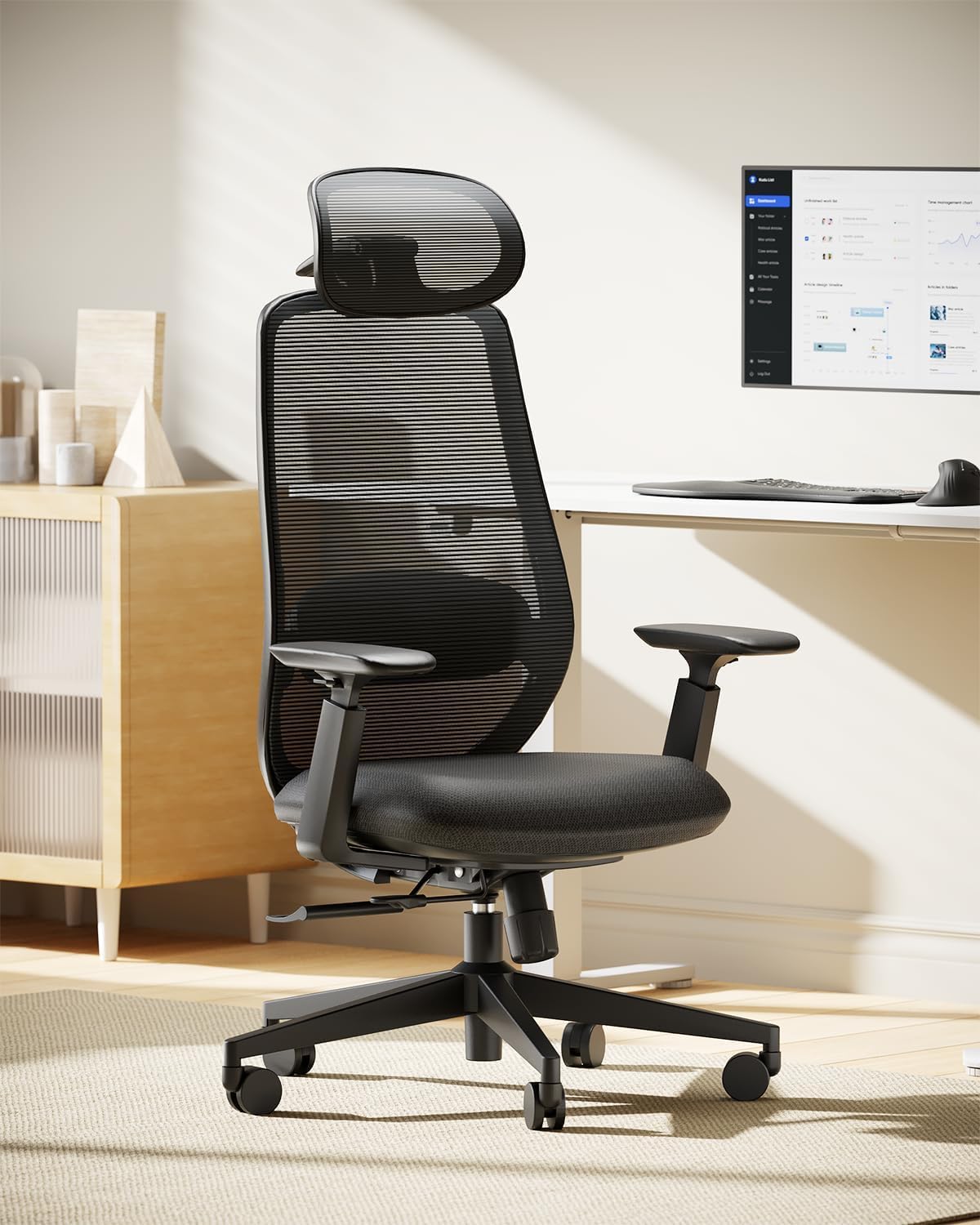
The ProtoArc EC200 distinguishes itself with a 5-position sliding seat depth that travels 1.97 inches with instant lock, allowing you to match the seat pan to your leg length precisely. For spinal surgery patients, proper seat depth prevents the common problems of dangling legs (which pulls the pelvis into posterior tilt) or knee compression (which shifts the pelvis forward and flattens the lumbar curve). The 55D high-density foam resists collapse and maintains consistent support.
The 3-point ergonomic support system aligns the head, back, and lumbar with an adjustable lumbar pad that moves 2.36 inches vertically and 0.8 inches in depth. The 3D headrest offers 3.94 inches of vertical travel, 2.76 inches of depth adjustment, 75° pivot, and 35° rotation, cradling the cervical spine without pushing the head forward. The 4-stage recline (90° work, 105° reading, 120° calls, 130° relax) provides structured position changes throughout the day.
The mesh back provides excellent airflow, and the TÜV-tested Class 4 gas lift ensures reliable height adjustment. Assembly takes about 20 minutes, and the chair fits users from 5’4″ to 6’0″ and under 220 lbs. The main limitation is that the chair does not offer a lift assist function for standing, so it is best suited for users who can independently transition from sit to stand or prefer a traditional ergonomic desk chair for seated recovery periods.
Why it’s great
- 5-position seat depth with 1.97″ travel for leg length matching
- 22 mm vertical and 20 mm depth lumbar adjustment
- 35° headrest rotation cradles cervical spine
- 55D high-density foam resists sagging
Good to know
- No lift assist function for standing
- Weight limit of 220 lbs restricts larger users
9. Branch Ergonomic Chair
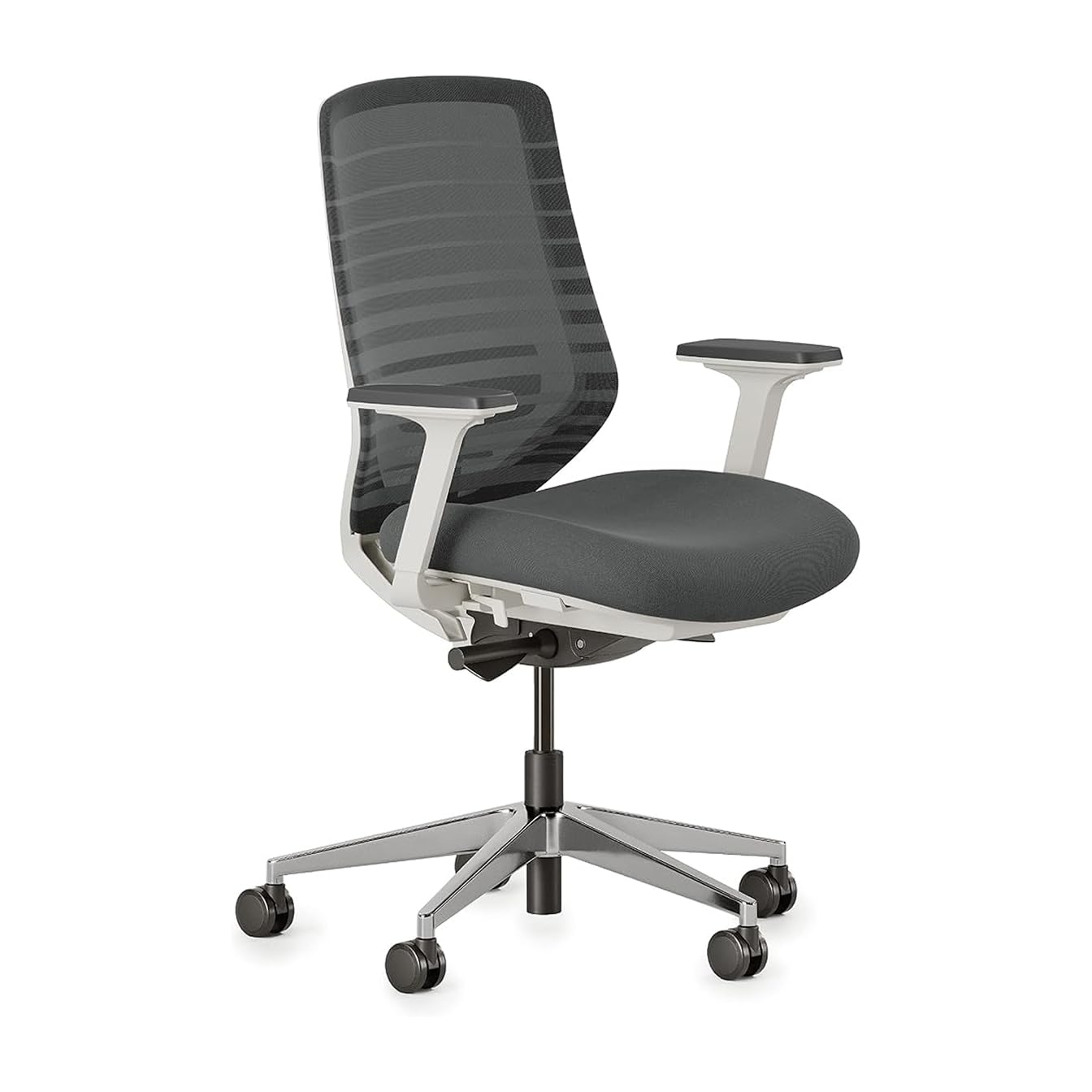
The Branch Ergonomic Chair offers a minimalist design with eight points of adjustment, including seat height, seat depth, backrest height, and armrest height, plus tilt lock for the recline mechanism. The breathable mesh backrest keeps the user cool, while the contoured cushion provides balanced weight distribution across the sitting bones. For spinal surgery recovery, the adjustable seat depth is a key feature that allows you to avoid the thigh compression that tilts the pelvis.
The anodized aluminum frame is lightweight yet sturdy, and the powder-coated finish resists wear. The chair rolls smoothly on hard floors with the included casters, and the seat cushion uses high-quality foam that maintains its shape even after eight hours of continuous use. The modern style works well in home office environments where the chair needs to serve both recovery and work functions.
Assembly takes about 30 minutes, and users consistently praise the build quality relative to the price point. The chair is particularly well-suited for petite users (down to 5’0″) due to the low seat height range and adjustable seat depth. The primary shortcoming for post-surgery use is the lack of a lift assist mechanism and the relatively mild lumbar support—it works well for seated support during recovery but does not assist with standing transitions.
Why it’s great
- Eight adjustment points for precise ergonomic positioning
- Anodized aluminum frame is lightweight yet durable
- Adjustable seat depth prevents pelvic tilt
- Ideal for petite users down to 5’0″
Good to know
- Lumbar support is mild compared to dedicated chairs
- No lift assist for standing transitions
FAQ
Is a power lift recliner necessary after spinal surgery, or can I use a standard recliner?
What recline angle is safest for sleeping after spinal fusion surgery?
How do I know if the lumbar support position is correct for my surgery site?
Can I use a high-back office chair instead of a recliner for spinal surgery recovery?
Final Thoughts: The Verdict
For most users, the best chair after spinal surgery winner is the CDCASA Oversized Dual Motor Lift Recliner because its 180° lay-flat position and dual OKIN motors provide the safest sleeping and transition environment for a healing spine. If you want a built-in tray table and wireless charging convenience, grab the RESTREAL Dual Motor Lift Recliner. And for precise lumbar adjustability during daytime sitting, nothing beats the HINOMI H2 Pro.