
A bad tank of gas—whether from a storm-drenched station, a leaky boat fuel cap, or just condensation over a long winter—introduces water into your fuel system. The moment that water hits your engine, you get sputtering, hard starting, hesitation under load, and potentially severe corrosion in injectors and cylinders. Draining the whole tank is a messy, labor-intensive job; the smarter move is using a chemical solution that safely disperses or emulsifies that water so it can be burned off harmlessly during combustion.
I’m Min — the co-founder and writer behind Gadgets Feed. I’ve spent countless hours analyzing technical formulations, customer test data, and real-world field reports on fuel system chemistry to separate the additives that actually solve water contamination from those that are simply marketing claims in a bottle.
This guide compares the top-performing formulas available today, breaking down how they handle phase separation, freezing protection, and long-term engine safety to help you pick the right additive to remove water from gas tank for your vehicle or equipment.
How To Choose The Best Additive To Remove Water From Gas Tank
Water contamination doesn’t just dilute your fuel; it promotes microbial growth, rusts steel lines, and drops out of solution as free water that can freeze in a carburetor jet or clog an injector nozzle. The right additive must do three things: chemically bond with or break apart water molecules so they become combustible, protect against freeze damage in cold weather, and not leave behind harmful residues. Here are the critical factors to weigh.
Water Removal Technology: Emulsifier vs. Demulsifier
Most retail additives use an emulsifier that suspends water droplets in the fuel as micro-sized particles, allowing them to be burned in the combustion chamber without reaching injectors first. A demulsifier, by contrast, forces water to separate and sink so you can drain it. For small amounts of water (under a full tank percentage), an emulsifier is safer and far easier—you simply pour and drive. Larger volumes of standing water may demand a demulsifier and a drain process, but that is rare for typical gas tanks.
Treatment Ratio and Bottle Volume
The concentration of the active chemistry varies widely between products. Some 8-ounce bottles treat only 20 gallons, while a 12-ounce bottle might cover 250 gallons. If you’re treating a large truck, boat, or a fleet of small engines, a high-capacity formula saves you from buying multiple bottles. Always check the ounces-per-gallon ratio: a low ratio means more potent chemistry and better value for repeated use.
Compatibility with Ethanol and Modern Engines
Ethanol in pump gas naturally attracts moisture, making water contamination more likely. A good water-removing additive must work with ethanol-blended fuels without causing phase separation—where the ethanol/water mix drops out of solution entirely. Also confirm the additive is safe for oxygen sensors, catalytic converters, and fuel injectors in modern vehicles. Some older-style products contain alcohols that can attack rubber seals or plastics in fuel systems built after 2000.
Additional Benefits: Lubricity and Octane Boost
Water in fuel not only hurts combustion but also washes lubricating film off cylinder walls. An additive that includes fuel lubricants or octane boosters provides a secondary layer of protection, reducing the risk of engine knock and premature wear. This is especially valuable for diesel engines where water can cause injector tip failure if not properly emulsified.
Quick Comparison
On smaller screens, swipe sideways to see the full table.
| Model | Category | Best For | Key Spec | Amazon |
|---|---|---|---|---|
| Red Line 60302 | Premium | High-capacity treatment | 12 oz treats 250 gallons | Amazon |
| Sea Foam Combo Pack | Premium | Intake cleaning + water removal | 16 oz + 14 oz spray | Amazon |
| K100 Marine Grade | Premium | Water elimination + corrosion prevention | 32 oz treats up to 64 gallons | Amazon |
| Quicksilver Quickleen | Mid-Range | Marine outboard & sterndrive | 32 oz treats 160 gallons | Amazon |
| B3C Mechanic in a Bottle | Mid-Range | Small engines & lawn equipment | 24 oz bottle | Amazon |
| STA-BIL Marine Tune-Up | Value | Boat & small engine tune-up | 8 oz treats 20 gallons | Amazon |
| STP Water Remover | Budget | Octane boost + water removal | 5.25 oz per bottle | Amazon |
In‑Depth Reviews
1. Red Line 60302 Fuel System Water Remover and Antifreeze
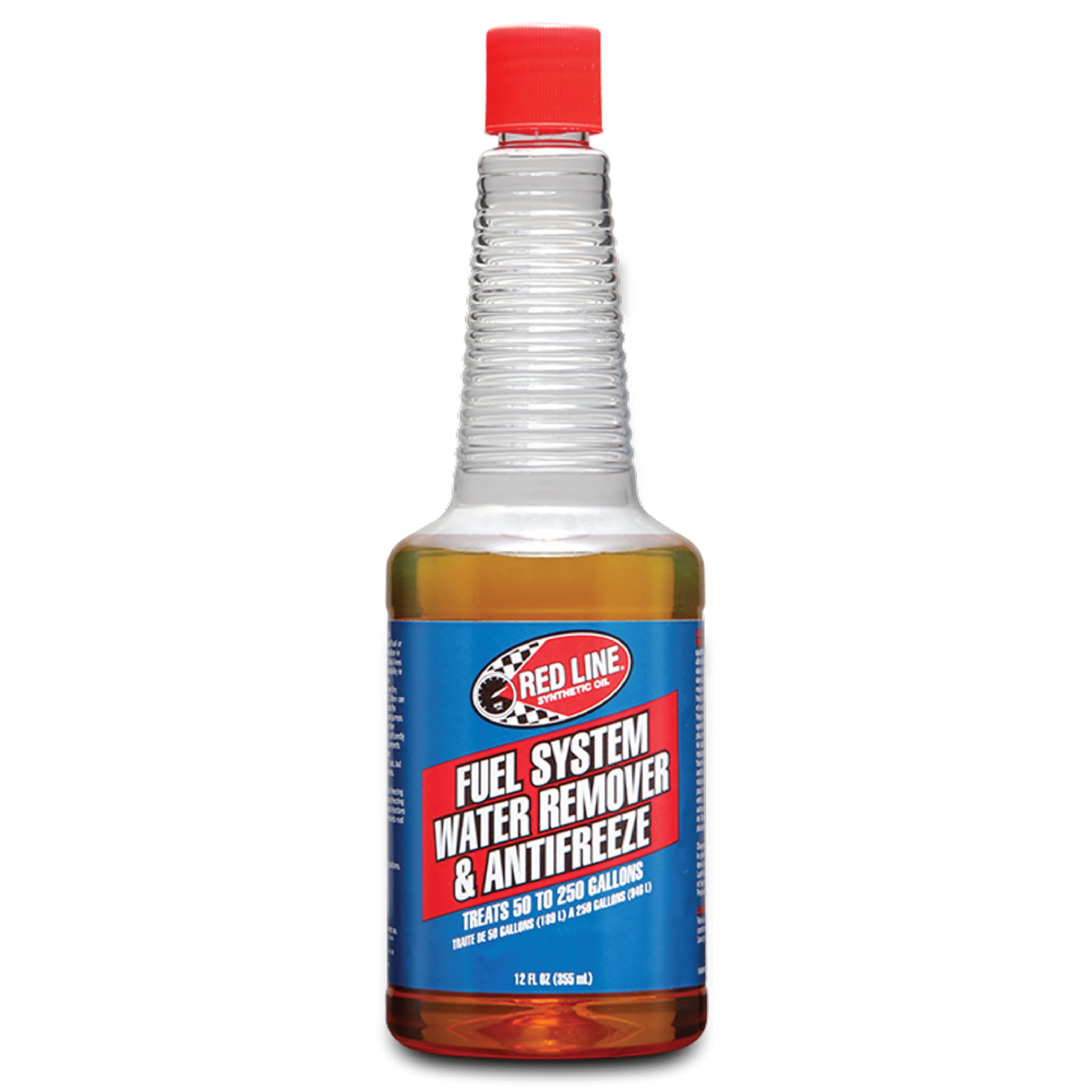
The Red Line 60302 is the definition of high-capacity efficiency: a single 12-ounce bottle treats up to 250 gallons of gasoline or diesel, which means you can dose it across multiple vehicles, seasonal equipment, and a boat without buying a second bottle. The formula uses a glycol-ether base that actively binds to free water and lowers its freezing point, preventing ice formation in fuel lines during cold weather—a critical feature if you store tanks over winter.
Beyond water removal, Red Line includes fuel lubricants that protect injectors and pumps from the wash-down effect water can cause. Real-world user reports show it resolving engine-jerking and hard-starting issues within 35 miles after a bad fuel fill. The unscented liquid is safe for both carbureted and port-injected systems, though the 12-ounce bottle is oversized for a single 15-gallon car tank—you’ll have plenty left for the lawnmower.
The only downside is that Red Line does not include a fuel system cleaner or octane booster, so if you need to simultaneously remove carbon deposits, you’d need to pair it with their SI-1 additive. But for pure water removal and freeze protection at scale, this is the most versatile and cost-effective option per gallon treated.
Why it’s great
- 250-gallon treatment capacity per bottle
- Significantly lowers water freezing point
- Unscented and safe for all fuel types
Good to know
- Does not contain injector cleaner or octane booster
- Bottle size is overkill for a single small car tank
2. Sea Foam Motor Treatment and Intake Cleaner Combo Pack

The Sea Foam combo pack pairs a 16-ounce bottle of Motor Treatment (which you pour into the fuel tank) with a 14-ounce spray can used directly into the intake system. The Motor Treatment forms a stable emulsion with water that allows it to be burned away, while the spray attacks carbon deposits on intake valves and combustion chambers that fuel-born cleaners can’t reach—especially crucial for modern GDI engines where fuel spray never contacts the valve backs.
Users consistently report dramatic improvements: a 2010 Tacoma at 170,000 miles ran like new after the intake-cleaning procedure, with black sludge draining out at the first oil change. The Motor Treatment also cleans fuel injectors, carburetors, and upper cylinder areas, providing a comprehensive drivability fix beyond just water removal. Keep in mind that the spray application requires you to warm the engine, maintain 2,000 RPM during injection, and do a post-treatment oil change because the dissolved deposits end up in the crankcase.
This is the best choice if your water problem is accompanied by rough idle, hesitation, or a check-engine light caused by carbon buildup. The 16-ounce bottle treats up to 21 gallons of fuel, so for larger tanks you may need a second unit or a different water-specific additive from this list.
Why it’s great
- Intake spray cleans GDI valve deposits that fuel additives miss
- Safe for oxygen sensors and catalytic converters
- Combines water removal with carbon and varnish cleanup
Good to know
- Requires a specific engine-warm and spray procedure
- Post-treatment oil change is mandatory
3. K100 32oz Marine Grade Gasoline Fuel Treatment
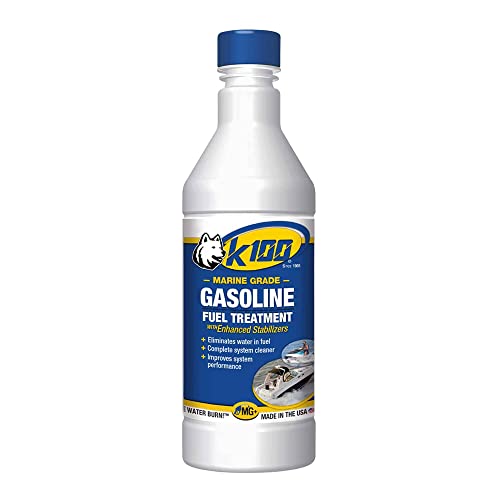
The K100 Marine Grade formula uses a unique chemical approach that claims to alter the molecular structure of water so it becomes combustible rather than just suspended. The 32-ounce bottle treats 64 gallons at the recommended 0.5 oz per gallon ratio.
This formula also includes fuel system cleaning properties—dissolving gum, varnish, and deposits—plus a 2-point octane boost. In a controlled test, one Infiniti G35 owner gained 30 extra miles per tank, suggesting real fuel-economy improvement when water contamination was present before. The formula is safe for gasoline, diesel, and all small engines, but the liquid is caustic to painted surfaces and furniture, so careful pouring is essential.
Where the K100 shines is in its “set it and forget it” ease for seasonal storage. A single application protects equipment over the winter, and the bottle lasts two years for typical household use. If you want a single additive that handles water, cleans the system, and slightly boosts octane, this is the mid-range value king.
Why it’s great
- Water is chemically modified to burn, not just emulsified
- Restores engines that have sat for 1-2 years with bad fuel
- Includes octane boost and fuel system cleaner
Good to know
- Liquid damages painted surfaces and furniture
- Large 32 oz size may be excessive for small car tanks
4. Quicksilver Quickleen Engine and Fuel System Cleaner

Quicksilver’s Quickleen is purpose-built for marine environments—specifically outboard and sterndrive engines that sit for extended periods with ethanol fuel. The formula removes carbon deposits from carburetors, injectors, intake valves, spark plugs, piston crowns, and cylinder heads, while also addressing water in the fuel. At a 1-ounce-per-5-gallon concentration, the 32-ounce bottle treats 160 gallons, making it an excellent companion for large boat fuel tanks.
The additive also prevents engine knocking and piston seize-up, which is a real risk when water causes uneven combustion in a two-stroke or four-stroke marine engine. The liquid is designed for every fill-up as preventive maintenance, not just emergency use.
Some lighter-use boat owners may find the 32-ounce volume excessive if they only treat a small 12-gallon fuel tank once a season. But for anyone running a large boat, a personal watercraft, or a high-horsepower outboard that sees seasonal storage, this is the most targeted marine solution available.
Why it’s great
- Specifically formulated for marine outboards and sterndrives
- Removes carbon from piston crowns and spark plugs
- 160-gallon treatment capacity per bottle
Good to know
- Recommended for every fill-up, not just emergency use
- Large bottle size for small boat tanks
5. B3C Fuel Solutions Mechanic in a Bottle, 24 oz

The B3C “Mechanic in a Bottle” is a synthetic fuel additive that specifically targets water removal, carbon deposit dissolution, and rubber/plastic component rejuvenation. The dual lubricants condition dried-out gaskets and seals that crack from ethanol exposure—a common failure point in older small engines like lawn tractors, chainsaws, and generators. Users report it eliminating sputtering in lawn mowers and bringing snow blowers back to life after a winter of storage.
This formula processes water by breaking down varnish and shellac in the fuel system while also providing an octane boost (no alcohol). The 24-ounce bottle is large enough for multiple treatments across a fleet of power equipment. A notable user described fixing a neighbor’s chainsaw by running the fuel straight through the carburetor, letting it sit 10 minutes, then adding fresh fuel—demonstrating its ability to clear blocked passages.
The main limitation is that B3C is not marketed for large automotive or marine tanks in the same high-volume way as Red Line or K100. The instructions are best suited for smaller fuel systems in the 3-10 gallon range. If you maintain multiple lawnmowers, trimmers, and an ATV, this is an excellent all-in-one maintenance solution.
Why it’s great
- Rejuvenates rubber seals and gaskets dried by ethanol
- Dissolves varnish and shellac from old fuel
- Excellent for small engine fleets
Good to know
- Not ideal for large 100+ gallon marine or truck tanks
- Octane boost is mild, not for high-performance build needs
6. STA-BIL Marine Tune-Up Fuel Treatment, 8 oz

STA-BIL Marine Tune-Up is a compact 8-ounce treatment that covers up to 20 gallons of fuel, making it ideal for a single boat tank, a few 5-gallon gas cans, or a bass boat. It cleans carburetors and injectors while eliminating water that causes rough running and hard starting. The small bottle fits easily in a glove box or tool kit for on-the-water emergencies, and the price makes it accessible for a single-season fix.
User reports from boat owners and Harley riders confirm that the product improves combustion and reliability in engines that have been sitting on old fuel. One detailed account described using a full bottle in a 12-year-old Mercruiser 3.0L with questionable gas; after a week and fresh spark components, the idle and starting behavior improved notably. However, the same user later experienced fuel system failures the next season, and it remains uncertain whether the additive contributed to long-term deterioration of seals or simply could not prevent it.
For a one-time emergency treatment on a 20-gallon tank, this is a convenient, proven solution. For year-round protection across multiple engines, you’ll likely want a larger bottle with a better per-gallon cost.
Why it’s great
- Compact bottle perfect for marine emergencies
- Cleans carburetors and injectors simultaneously
- STA-BIL brand reputation for long storage stability
Good to know
- Only treats 20 gallons per bottle
- Some users report mixed long-term results
7. STP Water Remover, All Season Fuel Cleaner and Octane Booster

STP’s 2-in-1 formula combines water removal technology with octane boosting and fuel system cleaning in one small 5.25-ounce bottle. The water removal chemistry works year-round to prevent freeze-ups, while the octane booster restores power and acceleration and reduces knocking and pinging. STP claims their formula provides more boost than most other brands, and it is safe for cap-less fuel systems, turbochargers, oxygen sensors, and catalytic converters.
This additive is best suited as a preventive dose at every fill-up for older daily drivers that see some water condensation or for anyone who wants a maintenance additive that handles water, cleaning, and octane in one step. Users report smoother engine operation and better start-up behavior, though some question whether the octane benefit is noticeable if the base fuel already meets minimum requirements. The 5.25-ounce size is small—expect to treat only one tank per bottle, making it less economical for large-volume use compared to Red Line or K100.
If you simply want a single bottle to keep in the car for peace of mind after a suspicious gas fill, the STP does the job with a trusted brand name and wide engine compatibility. For serious water contamination, you’ll want a dedicated water remover with higher concentration.
Why it’s great
- Combines water removal, octane boost, and injector cleaning
- Safe for turbos, oxygen sensors, and cat converters
- Easy to store in the glove box
Good to know
- Small bottle treats only one tank
- Octane gain may be marginal if fuel base is adequate
FAQ
Can a water-removing additive damage my fuel injectors or oxygen sensors?
How do I know how much water is actually in my gas tank?
Should I use an additive that also stabilizes fuel for long-term storage?
What’s the difference between a water remover and a fuel system dryer?
Can I use a diesel water remover in a gasoline engine and vice versa?
Final Thoughts: The Verdict
For most users, the additive to remove water from gas tank winner is the Red Line 60302 because its 12-ounce bottle treats an extraordinary 250 gallons, offering the best per-gallon value while providing freeze protection and fuel lubricity. If you need a product that simultaneously cleans a GDI intake system and removes water, grab the Sea Foam Combo Pack. And for marine-specific applications where ethanol fuel sits for months, nothing beats the Quicksilver Quickleen for keeping outboards and sterndrives running reliably season after season.