
Camping in a camper without a proper air conditioning setup is a survival challenge, not a vacation. The right system transforms a sweltering metal box into a controlled, comfortable environment, allowing you to sleep, relax, and actually enjoy the great indoors regardless of the heat outside. Whether you are boondocking off-grid with solar or plugged into shore power at a full-hookup site, your choice of AC unit determines your entire comfort ceiling.
I’m Min — the co-founder and writer behind Gadgets Feed. My deep dive into the camper AC market involves cross-referencing dozens of units on critical specs like BTU output, decibel ratings, compressor type, amp draw, and installation compatibility across trailer, van, and motorhome platforms to separate real performers from loud, inefficient duds.
From lightweight rooftop units with variable-speed compressors to powerful portable options, this guide details the best air conditioning for camper across nine top-rated models to match your specific rig and power setup.
How To Choose The Best Air Conditioning For Camper
Picking the wrong camper AC means either freezing your generator to death with a power-hungry monster or sweating through the night with an underpowered unit. Focus on three things: how the unit gets its power (120V shore, 12V battery, or generator), where it physically mounts (roof or floor), and how much cold air it actually pushes (BTU vs. square footage).
Power Source: Off-Grid vs. Shore Power
If you frequently dry camp without hookups, a 12V rooftop unit with an inverter compressor is essential. These units sip power (often under 500W in eco mode) and let you run off a decent lithium battery bank and solar setup. For campers that only need AC at full-hookup campgrounds, a standard 115V rooftop or portable unit offers more BTU per dollar but demands generator or shore power to start its compressor.
Rooftop vs. Portable: Where You Mount It Changes Everything
Rooftop units are the gold standard for RVs and trailers. They sit entirely outside your living space, duct air through the ceiling, and preserve floor space. Installation requires a standard 14.25″ x 14.25″ roof vent opening, which most campers already have. Portable units sit on the floor, vent hot air through a window or hatch, and are much easier to move between rigs. The trade-off: portables take up interior square footage and are generally noisier because the compressor lives inside your camper.
BTU and Noise: Matching Performance to Your Rig Size
BTU is the cooling power measurement. For a small camper van under 150 sq ft, 8,000 to 10,000 BTU is generally adequate. For a travel trailer or Class A motorhome, 13,500 to 15,000 BTU provides reliable cooling even in high heat. Noise is just as important: a 55 dB unit is conversational background noise, while anything above 65 dB can interrupt sleep. Units with variable-speed compressors (inverter type) drastically reduce both startup noise and compressor cycling noise.
Quick Comparison
On smaller screens, swipe sideways to see the full table.
| Model | Category | Best For | Key Spec | Amazon |
|---|---|---|---|---|
| TOSOT 16000 BTU | Rooftop | Best Overall Camper AC | 43 dB noise / 16,000 BTU | Amazon |
| Furrion Chill Cube 18k | Rooftop | Large RVs & High Heat | 18,000 BTU / Variable Speed | Amazon |
| RecPro 15K | Rooftop | Quiet with Heat Pump | 55.4 dB / 15,000 BTU | Amazon |
| Coleman-Mach 15 | Rooftop | Proven Reliability | 15,000 BTU / 1/3 HP Motor | Amazon |
| Dometic FreshJet 3 | Rooftop | Lightweight Replacement | 13,500 BTU / 21 SEER | Amazon |
| ASA Electronics Advent Air | Rooftop | Budget-Friendly Rooftop | 13,500 BTU / Metal Base Pan | Amazon |
| OUTEQUIP 12V 10000 BTU | Rooftop | Off-Grid / Battery Power | 10,000 BTU / 12V DC | Amazon |
| DOMANKI 14,000 BTU | Portable | Large Campervans | 14,000 BTU / 52 dB | Amazon |
| Uhome 8000 BTU | Portable | Small Campers on a Budget | 8,000 BTU / 55 dB | Amazon |
In‑Depth Reviews
1. TOSOT 16000 BTU RV Air Conditioner

The TOSOT 16000 BTU unit delivers the most compelling combination of performance and technology in this list. Its 43 dB noise level is genuinely quiet — 32% quieter than standard RV rooftop ACs — making it a viable overnight unit for light sleepers. The built-in heat pump provides 12,500 BTU of heating, which extends your camping season into shoulder months without firing up a propane furnace.
Wi-Fi connectivity through the Gree+ app gives you remote temperature control from the driver’s seat or your sleeping bag, a feature rarely seen at this price tier. The non-ducted design fits the standard 14.25″ x 14.25″ roof opening, and the unit operates in ambient temperatures from 23°F to 115°F, covering nearly every North American camping scenario. ETL certification and a 2-year warranty add peace of mind.
Some users report that long-term parts availability is a concern given the brand’s relatively recent entry into the RV market. The unit ships in two separate packages, so double-check that both arrive before starting installation. Overall, for campers needing a quiet, powerful, and smart-ready AC, the TOSOT is the top pick.
Why it’s great
- Exceptionally quiet operation at just 43 dB.
- Wi-Fi and app control for convenient remote management.
- Powerful 12,500 BTU heat pump for year-round use.
Good to know
- Limited parts availability for long-term service.
- Ships in two packages that must both arrive.
2. Furrion Chill Cube 18k BTU

The Furrion Chill Cube is engineered for serious cooling in larger rigs. With 18,000 BTU of variable-speed compressor output, it throws over a ton of cold air into a 37-foot fifth wheel or Class A motorhome with authority. The variable-speed compressor is the star here: it avoids the harsh on/off cycling of standard units, maintaining a steady temperature while drawing less peak amperage.
This unit is 10% lighter than many competitors at 72.4 lbs, and its aerodynamic shroud reduces wind drag when driving — a subtle but real benefit for fuel economy. The R32 refrigerant is more environmentally friendly and efficient than older R410A systems. The compact bolt-on installation is straightforward for a DIY owner, though you will need to purchase the air distribution box (ADB) separately.
A small minority of owners report compressor vibration that transmits through the RV frame, creating a low-frequency hum louder than expected. The separate ADB purchase also adds to the total cost. For owners of large travel trailers or motorhomes who prioritize raw cooling power and energy efficiency, the Chill Cube justifies its premium position.
Why it’s great
- Variable-speed compressor for steady quiet cooling.
- Lightweight design for easier roof installation.
- Powerful 18K BTU output for large rigs.
Good to know
- Air distribution box sold separately.
- Some units have compressor vibration issues.
3. RecPro RV Air Conditioner 15K
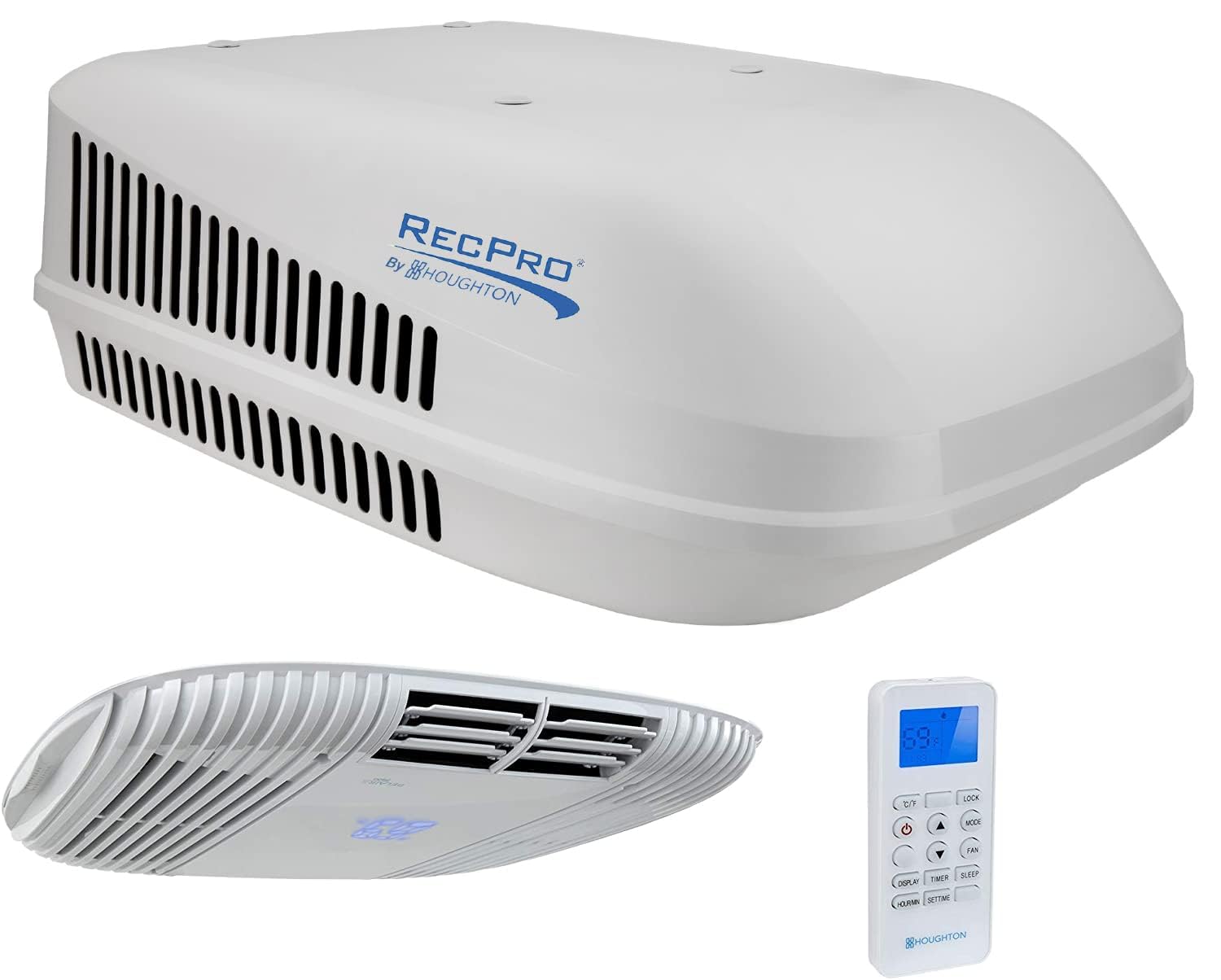
The RecPro 15K offers excellent value for campers who want both cooling and heating without a separate furnace. Its integrated heat pump provides supplemental warmth down to mild spring and fall temperatures, and the unit is rated at a reasonable 55.4 dB — comparable to gentle rainfall. The rooftop design is compatible with both ducted and non-ducted RV systems, giving flexibility for different ceiling configurations.
Users frequently praise the low amp draw, which allows simultaneous use of other appliances on a 30A campground pedestal. The build quality noticeably surpasses budget offerings, with sleeved pipes that prevent vibration wear over time. Installation is manageable at around 80 lbs with two people, and the included remote and touchscreen LED panel make day-to-day adjustments easy without crawling onto the roof.
Some units arrive with minor cosmetic cracks on the plastic shroud, and the noise level is slightly higher than premium ultra-quiet units. The heat pump is effective but not a primary heater for sub-freezing conditions. For a solid all-rounder that works across seasons, the RecPro is a strong contender.
Why it’s great
- Integrated heat pump for year-round comfort.
- Low amp draw for 30A campground compatibility.
- Works with both ducted and non-ducted systems.
Good to know
- Occasional cosmetic cracks on outer plastic.
- Not a primary heater for extreme cold.
4. Coleman-Mach 15 48204 Series

The Coleman-Mach 15 is the reliable workhorse of the RV AC world, with a scroll compressor that has been proven in thousands of installations. Its 15,000 BTU output and 5,600 BTU heating capacity (with optional heat strip) handle summer heat and cool mornings effectively. The rigid metal base pan and thick vent opening gasket with six foam pads create a watertight seal that prevents roof leaks over years of use.
Owners report temperature drops of 15-20°F compared to older or smaller units, making it effective for larger RVs. The 1/3 HP fan motor moves a substantial volume of air without excessive noise. Installation is straightforward for those with RV experience, though the upper unit itself is heavy at over 80 lbs and requires two people to lift onto the roof safely.
This is the upper unit only — you will need a compatible lower control panel if replacing a different brand. A few rare units arrive with defective compressors, but Coleman’s market presence means warranty service is more accessible than with smaller brands. If you want a proven, no-nonsense AC that cools like a beast, the Mach 15 remains a benchmark.
Why it’s great
- Proven scroll compressor with long service life.
- Substantial 15°-20°F temperature drop in large rigs.
- Well-engineered gasket for reliable roof seal.
Good to know
- Upper unit only; lower control panel sold separately.
- Heavy at 80+ lbs; two-person lift required.
5. Dometic FreshJet 3 Series 13.5K

The Dometic FreshJet 3 is designed specifically as a premium replacement for aging rooftop units. At 14% lighter than the Dometic Brisk II, it reduces roof load and makes solo installation more feasible. The 13,500 BTU cooling capacity is paired with an impressive 21 SEER efficiency rating — among the highest in this class — meaning it converts more electricity into cooling power than standard units.
Noise reduction is a key selling point: Dometic claims it is 4 dB quieter than comparable competitive units, and owners upgrading from older Dometic models consistently report a significant decrease in operating sound. The unit is backward-compatible with existing Dometic and competitor air distribution boxes, allowing a clean swap without redoing your entire ceiling system.
Quality control during shipping is a recurring issue, with some units arriving with cracked mounting tabs or cosmetic damage. The compressor startup draw is around 2,000W, which may be too high for smaller generators. For owners of mid-sized RVs looking for a quiet, efficient drop-in replacement from a brand they trust, the FreshJet 3 is a compelling choice.
Why it’s great
- Very high 21 SEER efficiency rating.
- Lightweight design for easier installation.
- Backward-compatible with most distribution boxes.
Good to know
- Frequent shipping damage reports.
- High 2,000W startup draw for generators.
6. ASA Electronics Advent Air 13,500 BTU

The Advent Air provides entry-level access to rooftop camper AC without the premium price tag. Its 13,500 BTU output is adequate for smaller travel trailers and pop-up campers, and the rigid metal base pan offers durability that plastic-only competitors lack. The unit includes three fan speeds and uses a standard 14.25″ x 14.25″ roof opening for installation compatibility.
Real-world testing from owners in Arizona confirmed the unit kept a trailer cool even in 115°F heat when powered by a 3,500W generator. For those replacing an older Dometic unit, the Advent Air often works as a direct bolt-on replacement for the upper section. The included six foam support pads and thick gasket provide a solid weather seal.
This is the upper unit only — the ceiling assembly, control box, and wiring must be purchased separately or reused from your existing RV system. Some units arrive with defective motors or crushed shrouds from shipping. For budget-conscious owner-builders who already have a compatible lower system, the Advent Air offers functional cooling at a low entry price.
Why it’s great
- Very affordable rooftop AC option.
- Handled 115°F heat in field tests.
- Metal base pan for added durability.
Good to know
- Upper unit only; requires separate control system.
- Some units arrive damaged during shipping.
7. OUTEQUIP 12V 10000 BTU Rooftop AC
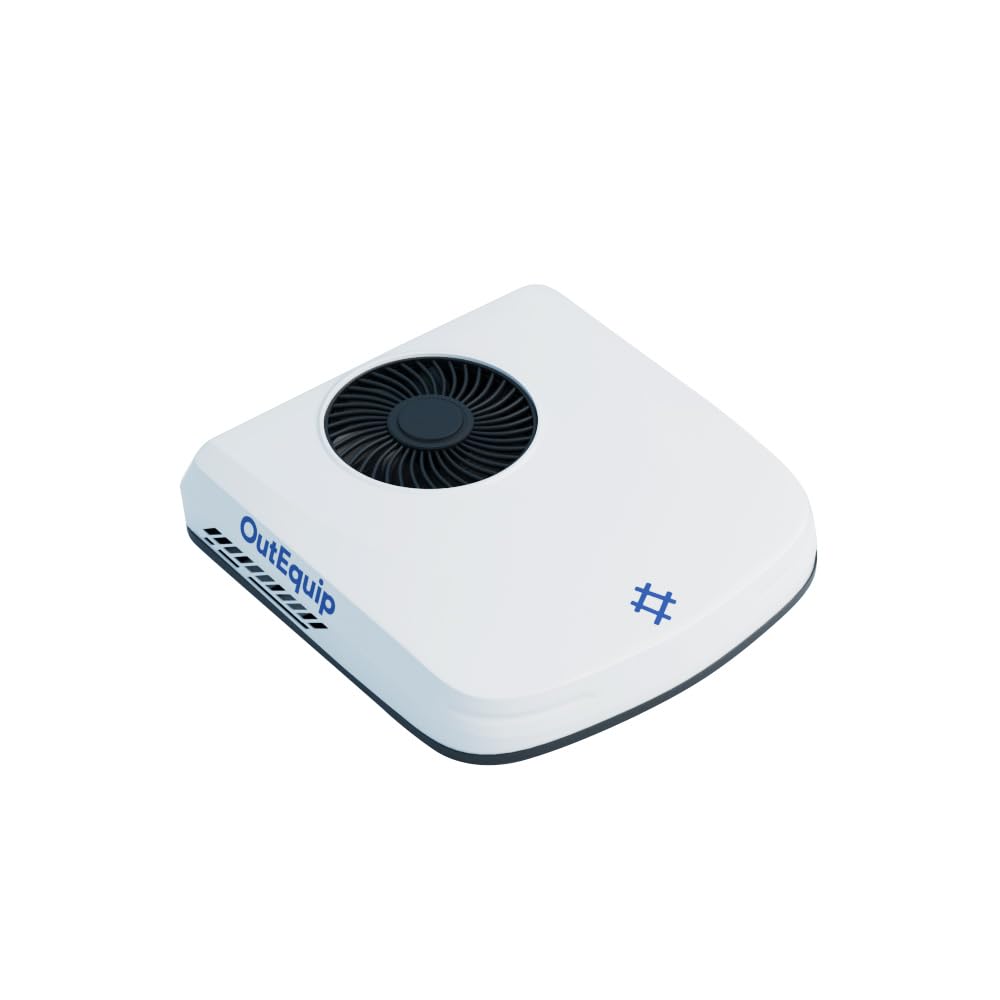
The OUTEQUIP 12V AC is the go-to solution for off-grid camper van owners. Running on 12V DC directly from a lithium battery bank, it eliminates the need for an inverter, reducing system losses. Its 10,000 BTU cooling capacity works well for vans and small campers, and the integrated 4,500 BTU PTC heater provides supplementary warmth for mild mornings.
The inverter-driven variable-speed compressor is the efficiency hero here: in eco mode, it draws around 300W, making it feasible to run for hours on a 200Ah battery with solar. The unit weighs only 43 lbs and has a low 6-inch roof profile, reducing wind resistance and weight on the roof. Users report noise levels around 40 dB in eco mode, which is genuinely quiet for rooftop AC.
The heat pump is not a primary heater for freezing conditions. Installation is manageable in about 4 hours, though the mounting screw design is finicky and connectors can be fragile. Support from the manufacturer is reportedly excellent, with quick replacements for defective units. For anyone building a solar-powered van, this is the best available option.
Why it’s great
- Efficient 12V DC operation for off-grid setups.
- Low power draw of around 300W in eco mode.
- Lightweight and low-profile roof design.
Good to know
- Heat pump not suitable for extreme cold.
- Mounting screws and connectors can break.
8. DOMANKI 14,000 BTU Portable AC

The DOMANKI portable unit is ideal for campervans or temporary spaces where rooftop installation is impractical. Its 14,000 BTU rating (ASHRAE) cools up to 700 sq ft, which is overkill for most campers but allows quick temperature recovery on hot days. The 3-in-1 functionality includes fan and dehumidifier modes, removing up to 40 pints of moisture daily.
The inverter-style compressor delivers consistent cooling without the aggressive cycling of traditional portable units. Owners report bringing a 600 sq ft room from hot to cool in about 20 minutes. Sleep mode drops noise to under 48 dB, which is acceptable for overnight use. The self-evaporating system means no daily condensate draining in cooling mode, reducing maintenance.
The supplied window seal kit is flimsy and benefits from additional foam weatherstripping. Some units have experienced serious leaking that causes water damage to floors, so a water sensor pan or secondary drip tray is a wise precaution. For large campervans or pop-up campers where a rooftop unit cannot fit, the DOMANKI provides powerful, versatile cooling.
Why it’s great
- Powerful 14,000 BTU output for fast cooling.
- Inverter compressor for consistent temperature.
- Self-evaporating operation reduces daily draining.
Good to know
- Window seal kit is low quality.
- Some units leak and cause floor water damage.
9. Uhome 8000 BTU Portable AC

The Uhome 8000 BTU portable AC is the most accessible entry point for campers needing basic cooling on a budget. It cools spaces up to 350 sq ft and delivers air temperatures down to 60°F. The 3-in-1 system includes dehumidifier and fan modes, removing up to 40 pints of moisture daily — useful in humid campsite conditions. The unit is compact with rolling wheels for easy repositioning.
Owners report it keeps a 10×10 ft space ice-cold and can even cool adjacent areas when the fan is used. The bucket-less self-evaporating design eliminates the need for constant manual draining, and the washable filter extends the unit’s lifespan. A full-function remote and 24-hour timer provide convenience for overnight use.
Noise is the primary trade-off: the unit is rated less than 55 dB but many users describe it as very loud, particularly on high fan speed. The plastic build feels cheap with reports of warped faceplates. For small campers, pop-up tents, or as a temporary solution while saving for a rooftop unit, the Uhome delivers functional cooling at a minimal investment.
Why it’s great
- Very affordable entry-level cooling solution.
- Self-evaporating operation for low maintenance.
- Portable with rolling wheels and remote control.
Good to know
- Noise level is high at top fan speeds.
- Plastic construction feels less durable.
FAQ
Can I run a camper AC on a 12V battery without shore power?
How do I know what BTU I need for my camper?
Are portable air conditioners good for campers?
What is the quietest camper AC on the market?
Does a rooftop AC need a separate control system?
Final Thoughts: The Verdict
For most users, the best air conditioning for camper winner is the TOSOT 16000 BTU because it combines class-leading 43 dB quiet operation with a powerful heat pump, Wi-Fi control, and a reasonable price. If you prioritize raw cooling for a large motorhome, grab the Furrion Chill Cube 18K with its variable-speed compressor. And for off-grid van dwellers, nothing beats the OUTEQUIP 12V 10000 BTU for efficient battery-powered cooling.