
The noisiest part of your recording chain is often the very first link — your preamp stage. A subpar preamp introduces a constant floor of hiss and grain that no amount of EQ or noise reduction can truly fix, leaving your vocals, podcast, or instrument sounding amateur no matter what microphone you plug in. The difference between a clean, wide dynamic range and a compressed, brittle signal comes down to the preamp design, the EIN (Equivalent Input Noise) rating, and the quality of the analog circuitry before the converter even touches your signal.
I’m Min — the co-founder and writer behind Gadgets Feed. I’ve spent countless hours dissecting preamp specifications, comparing EIN figures, gain staging ranges, and converter bit-depth specs across dozens of models to separate the interfaces that genuinely deliver studio-grade transparency from those that merely look the part.
Whether you are tracking vocals, recording a podcast, or connecting a dynamic microphone for streaming, this guide will help you choose the right preamp for your signal chain — these are our researched picks for the best audio interface preamps.
How To Choose The Best Audio Interface Preamps
Selecting the right preamp is not about the brand name — it is about the noise floor, gain headroom, and the character of the analog circuitry. A preamp that is too noisy will sabotage even the best microphone, while one with insufficient gain will leave you cranking the digital trim and adding unwanted hiss.
Equivalent Input Noise (EIN)
EIN, measured in dBV (A-weighted), tells you the self-noise of the preamp itself. A good preamp should measure around -127 dBV or lower. Anything above -120 dBV will introduce audible noise when recording quiet sources or when using low-output dynamic microphones like the SM7B or RE20. The RØDE Revolution Preamps on the RØDECaster Duo achieve -131.5 dBV EIN, which is exceptionally quiet, while the Focusrite Scarlett 4th Gen preamps land around -127 dBV.
Maximum Gain
Gain is measured in decibels (dB). A preamp with 55-60 dB of gain works well for most condenser microphones, but dynamics and ribbons often need 65-76 dB to reach a healthy level without cranking the digital trim. The Zoom AMS-44 offers plenty for its class, while the RØDE Revolution preamps deliver a massive 76 dB of clean gain.
Analog Character Features
Some preamps offer switchable analog circuitry that adds harmonic content — like the SSL Legacy 4K button, the Focusrite Air mode, or the Universal Audio Unison preamp architecture. These are not digital effects; they physically alter the impedance and frequency response of the preamp input stage. If you need a clean, transparent signal for post-processing, look for preamps without these features or that allow them to be bypassed.
Quick Comparison
On smaller screens, swipe sideways to see the full table.
| Model | Category | Best For | Key Spec | Amazon |
|---|---|---|---|---|
| SSL 2 MKII | Premium | Analog character & clarity | Legacy 4K analog enhancement | Amazon |
| Focusrite Scarlett 4i4 4th Gen | Premium | Auto gain & clip safety | 120 dB dynamic range | Amazon |
| MOTU M4 | Mid-Range | Low noise & LCD metering | 192 kHz / 24-bit converters | Amazon |
| Audient EVO 8 | Mid-Range | SmartGain & JFET DI | 4 EVO mic pres with SmartGain | Amazon |
| Behringer UMC1820 | Mid-Range | Multi-channel / ADAT expansion | 8 Midas-designed preamps | Amazon |
| Zoom AMS-44 | Mid-Range | Portable bus-powered rig | 4 low-noise preamps / AA battery | Amazon |
| Focusrite Clarett+ 8Pre | Premium | 8-channel professional tracking | All-analogue Air Premium circuitry | Amazon |
| Universal Audio Apollo Solo | Premium | UAD Unison preamp emulation | UAD Solo Core DSP processing | Amazon |
| RØDE RØDECaster Duo | Premium | All-in-one production/podcasting | 76 dB gain / -131.5 dBV EIN | Amazon |
In‑Depth Reviews
1. Solid State Logic SSL 2 MKII

The SSL 2 MKII is built around the same console-grade preamp topology that made SSL mixing desks legendary. The two XLR/TRS combo inputs feature a low-noise microphone preamplifier with an EIN of approximately -127 dBV, giving you a transparent floor before the Legacy 4K analog enhancement circuit adds its signature sheen and presence. The stainless steel chassis and metal knobs feel significantly more substantial than the plastic-bodied competition in this tier.
At 192 kHz and 32-bit converter architecture, the AD/DA stage provides more headroom than you will ever need for home or project studio recording. The high-pass filter engages at 75 Hz and cuts low-end rumble before it hits the converter, which voice artists and podcasters will appreciate for reducing handling noise and HVAC rumble. The headphone amplifier easily drives 250-ohm monitoring headphones with enough power to maintain clarity at higher levels.
The included SSL Production Pack contains the Vocalstrip 2 and Drumstrip plug-ins, which mirror the analog processing of the Legacy 4K circuit. The loopback and zero-latency monitoring options make this interface equally suited for streaming and live broadcasting. MIDI I/O via 5-pin DIN jacks is a rare and welcome inclusion for those using hardware synthesizers.
Why it’s great
- Legacy 4K switch adds analog harmonic content that cannot be replicated with software
- Low-noise floor combined with clean gain up to approximately 62 dB
- Metal build quality with smooth, weighted knobs that feel like a console
- MIDI I/O via 5-pin DIN is rare at this price point
Good to know
- Not a true 32-bit float interface — it uses a 32-bit D/A converter, but the signal will clip if you hit 0 dBFS
- Only two mic preamp inputs, limiting multi-mic setups without adding an external preamp
2. Focusrite Scarlett 4i4 4th Gen
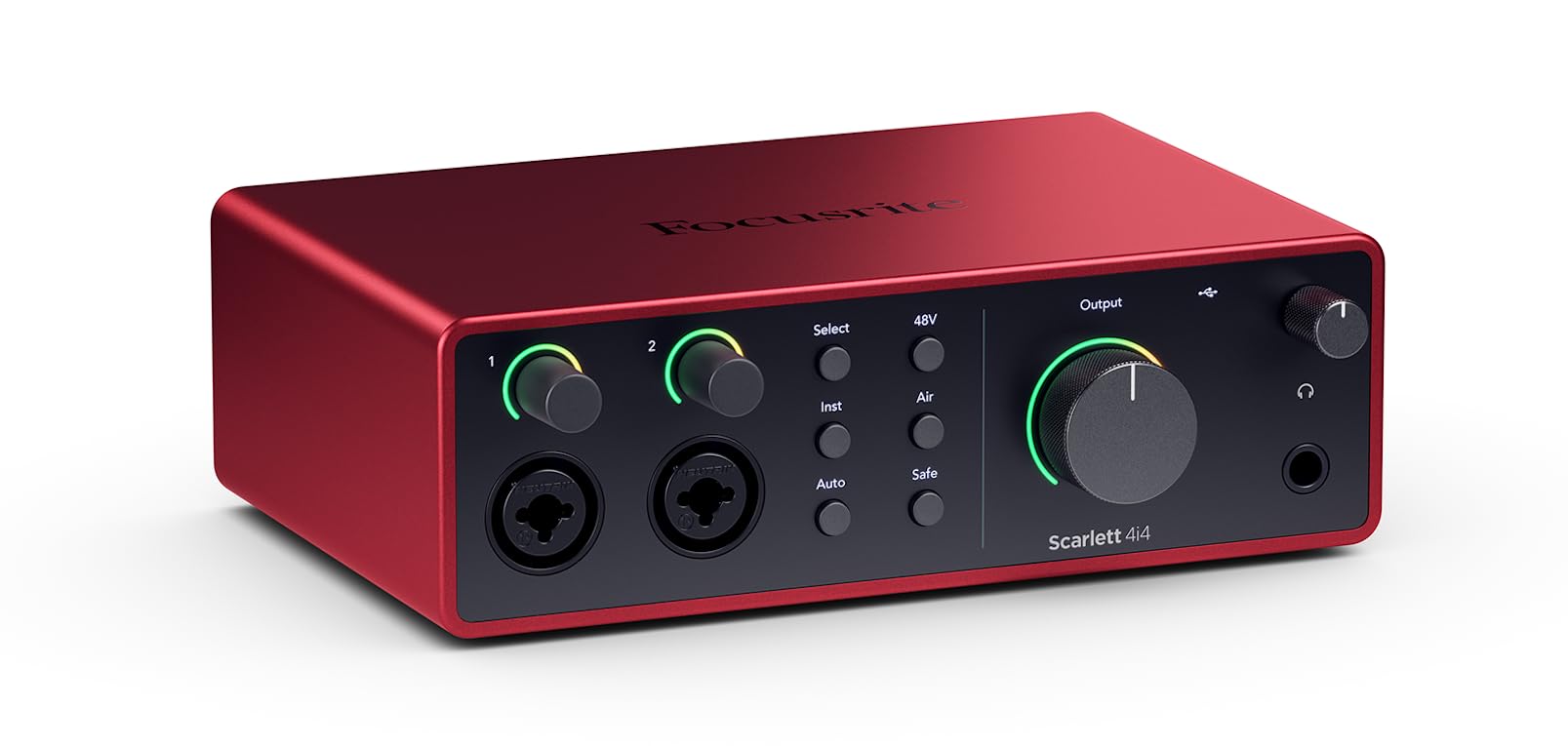
The 4th generation Scarlett preamps represent a significant leap from the 3rd Gen, utilizing the same converter stage found in the flagship RedNet and Clarett+ ranges. The two Scarlett 4th Gen mic preamps deliver a 120 dB dynamic range with an EIN rating of -127 dBV, providing a transparent and wide noise floor that captures subtle transient detail. The Air mode has been redesigned to add a musical presence boost that lifts vocals and acoustic guitar in a mix.
Auto Gain and Clip Safe are genuinely useful features for solo creators who cannot ride the gain knob during a take. Auto Gain listens to your input level and sets the preamp gain to an optimal point, while Clip Safe continuously monitors the signal and automatically pulls gain back if it detects a transient that would clip the converter — similar to a hardware limiter but on the input stage. The four line outputs allow for separate monitor mixes or connecting to outboard gear.
The included Hitmaker Expansion bundle provides a comprehensive set of compressors, EQs, reverbs, and vocal processing tools that integrate seamlessly with the included Pro Tools Intro+, Ableton Live Lite, and Cubase LE licenses. The unit ships with a dedicated 5V 3A power supply, which is necessary for the 4i4’s full preamp and headphone output performance — USB bus power alone is insufficient for the 4th Gen preamps.
Why it’s great
- Auto Gain and Clip Safe features eliminate gain-staging guesswork during recording
- 120 dB dynamic range matches studio-grade converter performance
- Included software bundle is one of the most generous on the market
Good to know
- Requires external power supply — not fully bus-powered
- Only two mic preamp inputs despite four total analog inputs
3. MOTU M4 4×4 USB-C Audio Interface

The MOTU M4 is known for its exceptionally transparent preamps and rock-solid driver stability. The two mic preamps utilize a low-noise design that achieves an EIN of around -129 dBV, making it one of the quietest options in its class. The LCD display on the front panel gives you a precise numeric and bar-graph level readout for each input, which is valuable for dialing in gain without relying on software metering and its inherent latency.
The 192 kHz converters capture every nuance of the analog signal, and the ESS Sabre32 DAC technology ensures low-jitter and high dynamic range on the monitoring side. The separate volume knobs for main monitors and headphones allow independent level control, and the hardware direct monitoring mixer lets you blend the input signal with computer playback without opening a software control panel. Loopback functionality is built directly into the hardware.
The USB-C bus power delivers enough current to drive the preamps and headphone amplifier, though users with high-impedance headphones (250-300 ohms) may find the headphone output lacking in power compared to a dedicated amplifier. The unit is lightweight at 16 ounces and compact, making it a strong choice for mobile recording rigs. The included Performer Lite and Ableton Live Lite software provide a solid starting point for production.
Why it’s great
- Transparent preamps with one of the lowest noise floors at this tier
- Built-in LCD metering eliminates the need for software gain monitoring
- Dedicated loopback output for streaming without software
Good to know
- Headphone amplifier output is weaker than desktop-class units
- Some users report occasional audio pitch-shifting requiring disabling Windows fast startup
4. Audient EVO 8 USB Audio Interface

The Audient EVO 8 packs four EVO mic preamps into a chassis smaller than most two-input interfaces. The preamp design comes from Audient’s professional console heritage (the ASP8024, used in major studios worldwide) and delivers a clean, transparent sound with an EIN of -127 dBV. The SmartGain feature is a standout — press one button and the interface automatically sets the gain for all active channels, then lets you fine-tune from there.
The single JFET instrument input is a major advantage for guitarists and bassists. JFET topology emulates the input stage of classic tube amplifiers, giving DI recordings a warmth and harmonic richness that standard solid-state instrument inputs lack. The two independent headphone outputs have their own volume controls, which is useful for recording sessions where the performer needs a separate mix from the engineer.
The control knob is unique — it serves as both a physical fader and a rotary encoder, syncing with your DAW fader or operating system volume when in different modes. The unit is extremely light (475 grams), which is great for portability but means the front can lift up under the weight of heavy XLR cables. The included software bundle is lighter than some competitors but covers the essentials for getting started.
Why it’s great
- Four mic preamps in an ultra-compact form factor
- JFET instrument input delivers authentic analog warmth for DI recording
- SmartGain sets recording levels instantly across all channels
Good to know
- Light weight causes instability when heavy cables are connected
- Drivers must be installed before plugging in the device to avoid system freezing
5. Behringer UMC1820

The UMC1820 is a rack-mountable 18-in/20-out interface built around eight Midas-designed microphone preamps. Midas is known for premium live sound console preamps, and these deliver a clean, neutral sound with an EIN of approximately -127 dBV and enough gain (about 60 dB) to handle most microphones. The ADAT optical input allows expansion up to 18 inputs by connecting an ADA8200 or similar ADAT-equipped preamp.
The 24-bit/96 kHz converters are adequate for the price point, and the unit easily handles multi-mic recording sessions for bands, drum kits, or surround sound setups. The direct monitoring via the built-in mixer offers near-zero latency monitoring. The included USB cable and AC adapter are all you need to get started. The interface is plug-and-play on Mac and Linux, and the ASIO drivers on Windows are stable and low-latency when configured correctly.
One trade-off is the lack of 192 kHz support — the maximum sample rate is 96 kHz. For most production and recording scenarios, this is more than sufficient, but if you need 192 kHz for sound design or high-frequency sample rate work, you will need to look at other options. The build is all-metal and feels solid, and the rack ears make it easy to integrate into a studio setup alongside other rack gear.
Why it’s great
- Eight Midas preamps provide clean, consistent sound across all channels
- ADAT expansion allows scaling up to 18 inputs
- Rack-mountable design fits permanent studio installations
Good to know
- Limited to 96 kHz maximum sample rate — no 192 kHz support
- Routing options are basic compared to more flexible interfaces
6. Zoom AMS-44

The Zoom AMS-44 stands out for its dual power supply design — it runs from USB-C when connected to a computer or from two AA batteries when used with a tablet or mobile device. The four low-noise XLR/TRS combo preamps include 48V phantom power and deliver 60 dB of gain, providing sufficient level for most condenser and dynamic microphones in a compact, lightweight package (320 grams). The reported noise floor is impressively low, with users noting zero audible hiss even at high headphone levels.
The unit features a dedicated switch between Music mode (independent input routing for DAW recording) and Streaming mode (combines all inputs into a single signal for livestreaming). Loopback is hardware-switched without requiring any software configuration. The direct monitoring switch enables zero-latency input monitoring — you hear your microphone signal directly before it reaches your computer, which is critical for reducing audible latency.
The maximum sample rate of 192 kHz is a surprising inclusion at this price point. The compact size makes it genuinely portable, but the lack of a standard 1/4-inch tripod mount means you will need a flat surface or custom mounting solution. The loopback and streaming-focused features make it a strong choice for podcasters and streamers who need portability and simplicity over extensive routing.
Why it’s great
- AA battery power for true mobile recording away from AC power
- Hardware loopback and direct monitoring without software
- Four preamps with 192 kHz support in a sub-350g package
Good to know
- No standard 1/4-inch tripod mount for attaching to a camera rig
- Some users report confusion with the loopback switch causing feedback in DAW
7. Focusrite Clarett+ 8Pre
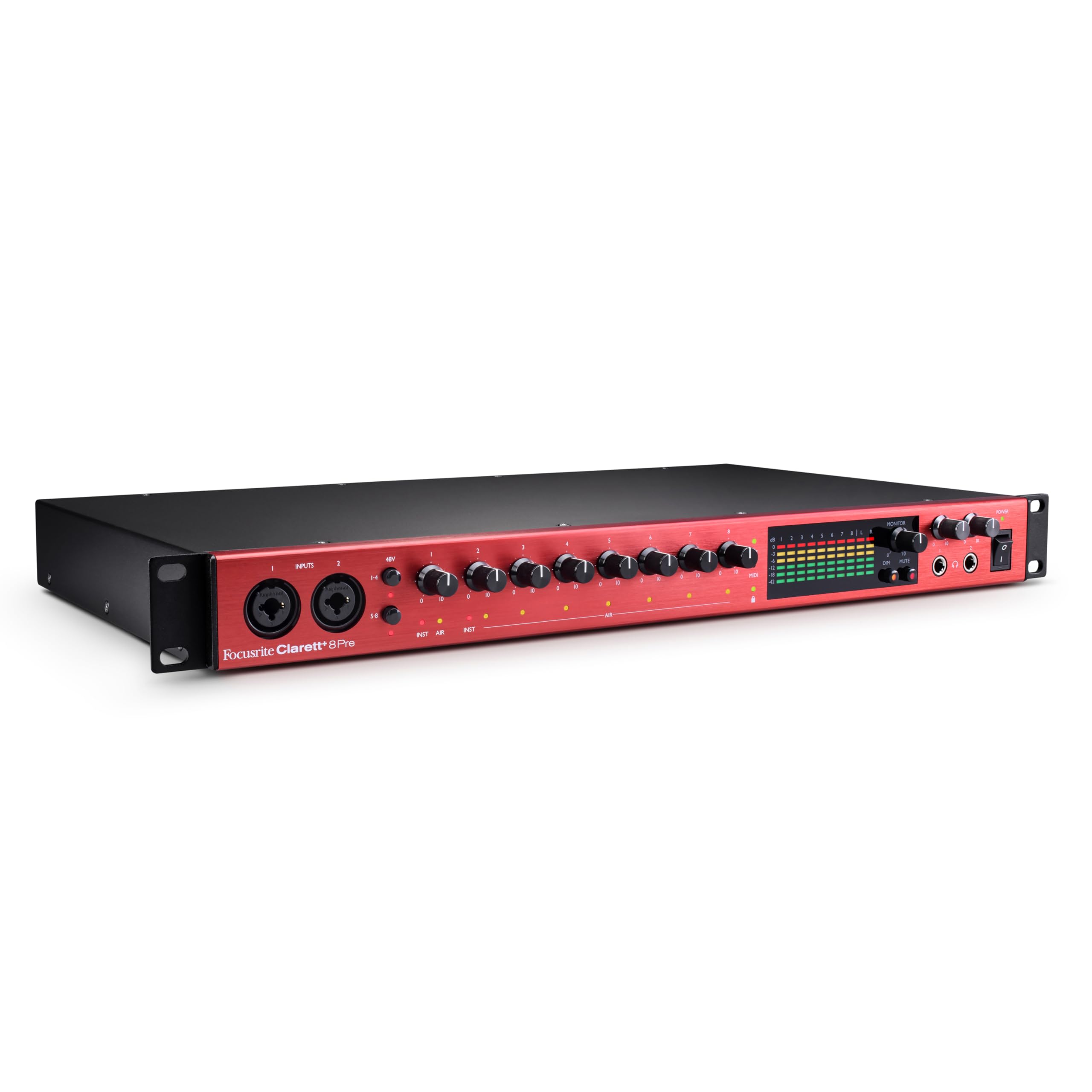
The Clarett+ 8Pre is Focusrite’s high-end multi-channel interface designed for established producers who need eight preamps with a common class-leading noise floor. The Clarett+ preamp design achieves an EIN of -128 dBV with exceptionally low distortion (THD+N below 0.0007%). The Air Premium mode goes beyond the standard Air — it uses relay-controlled analog circuitry that switches the input impedance and adds two cumulative high-frequency shelves totaling a 4 dB boost above 10 kHz, emulating the classic Focusrite ISA 110 console preamp.
The independent A-D and D-A converters maintain signal purity with low jitter and high dynamic range. The two headphone outputs are designed to deliver a flat frequency response at all output levels, meaning they do not color the sound as volume increases — which is a common flaw in lesser headphone amplifiers. The ADAT optical input supports expansion to 16 inputs with an external preamp like the Clarett OctoPre.
The 1U rack-mountable chassis houses all analog connections on the rear panel, keeping cable management clean. The included Focusrite Control software provides complete routing flexibility, allowing you to create multiple headphone mixes and monitor configurations. The unit requires an IEC power cable — it is not bus-powered, but the power supply ensures consistent performance regardless of USB power delivery fluctuations.
Why it’s great
- Eight preamps with ISA 110-inspired Air Premium analog circuitry
- Extremely low THD+N and wide dynamic range for critical tracking
- ADAT expansion allows up to 16 simultaneous inputs
Good to know
- Does not support 192 kHz and 24-bit simultaneously without glitching
- Larger and heavier than desktop interfaces, requiring a rack or dedicated space
8. Universal Audio Apollo Solo USB Heritage Edition

The Apollo Solo is a unique entry in this guide because the preamp is not just an amplifier — it is a programmable analog front end. The Unison technology physically alters the impedance, gain structure, and input stage of the preamp to match the behavior of specific vintage preamps, compressors, and guitar amps. When you load a Unison Neve 1073 or API 512c plug-in, the hardware preamp itself changes its electrical behavior to match the real unit — latency is near-zero because the processing happens before the signal reaches your DAW.
The UAD Solo Core DSP processor runs these plug-ins in real time, allowing you to record through vintage compressors, EQs, and tape machines without taxing your computer’s CPU. The Heritage Edition includes a premium suite of five award-winning plug-in titles from Teletronix, Pultec, and Universal Audio, representing approximately in software value. The headphone amplifier is best-in-class, delivering loud, detailed, low-noise monitoring with enough power to drive high-impedance headsets.
The unit is USB-C bus-powered and weighs only 16 ounces, making it highly portable. The main limitation is that it is a single-channel DSP interface — you can only use Unison processing on one input at a time. For producers who want to track through authentic analog emulations without a rack of outboard gear, the Apollo Solo is unmatched. However, driver support on Windows has historically lagged behind macOS, and users should be prepared for occasional driver troubleshooting.
Why it’s great
- Unison preamp technology genuinely changes the hardware impedance and gain staging
- Real-time UAD DSP processing allows tracking through vintage compressors with near-zero latency
- Exceptional headphone amplifier outperforms most bus-powered interfaces
Good to know
- Only one input supports Unison processing at a time
- Driver support on Windows can be inconsistent after macOS updates
9. RØDE RØDECaster Duo
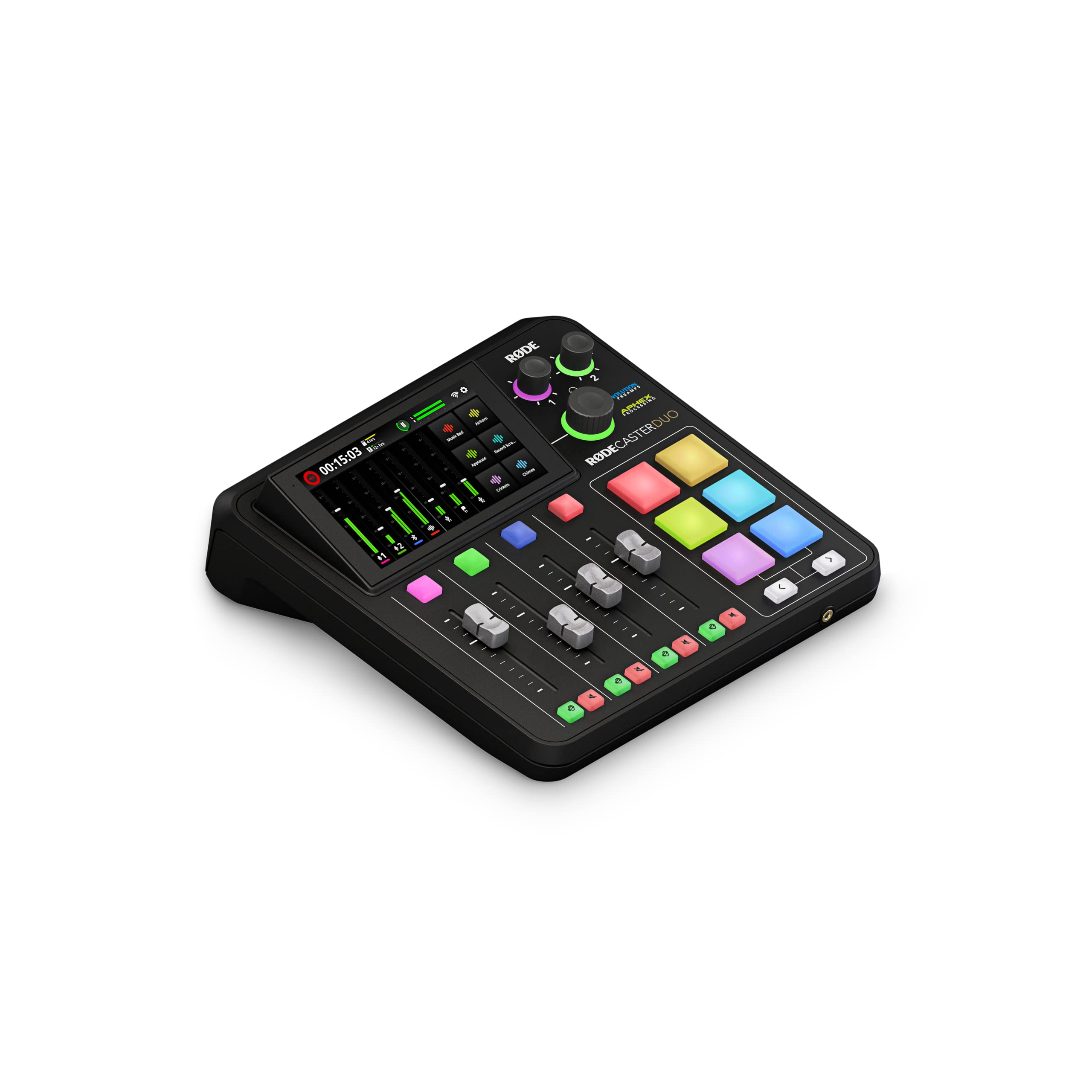
These preamps are the quietest in this entire guide with an EIN of -131.5 dBV and a massive 76 dB of clean gain. This combination means you can connect a low-output dynamic microphone like the Shure SM7B or Sennheiser MD 421 and achieve a healthy level without any audible self-noise from the preamp stage.
The unit is built around a high-resolution touchscreen with haptic feedback, four broadcast-quality faders, and six SMART pads with bank switching for triggering sounds, effects, or sends. The APHEX processing engine includes the legendary Aural Exciter and Big Bottom effects, which can be applied to individual channels or the master bus. The onboard effects are studio-grade and can replace external processing hardware for many podcasting and music production workflows.
The built-in 3.5mm TRRS input allows monitoring via a headset like the NTH-100M, and the USB-C connectivity works as a standard audio interface with any DAW. The unit is powered by an external power supply and weighs 2 kg, so it is not designed for mobile recording but excels as a desk-centric production hub. The software can be complex for beginners, but once configured, the Duo provides a level of integration (faders, effects, routing) that would require multiple separate hardware units to replicate.
Why it’s great
- 76 dB of gain and -131.5 dBV EIN — the cleanest preamps in this guide
- Integrated APHEX processing and broadcast faders eliminate the need for outboard effects
- Touchscreen and SMART pads provide intuitive access to all features
Good to know
- Setup can require troubleshooting and may not be immediately beginner-friendly
- Heavy and requires AC power, limiting mobile use
FAQ
What dB gain do I need for an SM7B with an audio interface preamp?
What is the difference between a transparent preamp and a colored preamp?
What does Unison preamp technology do on the Universal Audio Apollo Solo?
Do I need 192 kHz sample rate for my preamps to sound better?
Final Thoughts: The Verdict
For most users, the best audio interface preamps winner is the SSL 2 MKII because the Legacy 4K analog circuit gives your recordings an immediately noticeable character that no plug-in can fully replicate, while maintaining a clean noise floor. If you want a completely transparent preamp for critical mixing and you need built-in LCD metering, grab the MOTU M4. And for podcasters and streamers who need the quietest preamp possible with 76 dB of gain to handle any microphone you throw at it, nothing beats the RØDE RØDECaster Duo.