
Picking up a dozen 12-inch softballs seems straightforward until you feel the difference between a ball with a leather cover and raised seams versus one with a cheap synthetic skin and flat stitching. A bad ball won’t just affect your pitcher’s grip—it can turn a sweet spot hit into a dull thud and lose its shape within a few batting practice sessions. The right ball delivers consistent flight, a clean pop off the aluminum, and seams that give your pitcher real confidence on the mound.
I’m Min — the co-founder and writer behind Gadgets Feed. I’ve spent countless hours analyzing the technical specifications, compression ratings, cover materials, and seam heights across dozens of models to separate the training toys from the league-grade rounds.
This guide breaks down the best 12 inch softballs for practice, league play, and pitching development, focusing on the specs that actually matter for your game.
How To Choose The Best 12 Inch Softballs
Not all 12-inch softballs play the same. A ball built for a pitching machine might shred in a live game, and a high-compression league ball can be too hard for young beginners. The key is matching the construction to your specific use case—whether that’s fastpitch practice, slowpitch league play, or training sessions with a pitching machine.
Cover Material and Stitching
Leather covers offer the best grip, durability, and water resistance, making them ideal for game play and frequent use. Synthetic leather is lighter on the wallet but tends to scuff faster. The seam height is just as critical: raised seams (about 0.05–0.07 inches) give pitchers a stronger hold for spin and let fielders track rotation off the bat, while flat seams reduce wind drag for longer throws but limit grip.
Compression and COR Rating
Official certifications like USASB, NFHS, and ASA specify a compression of 375 lbs and a Coefficient of Restitution (COR) of 0.47. A ball meeting these standards delivers consistent exit velocity and predictable bounce. Training balls may drop compression lower to soften impact—good for beginners, but not legal for league play.
Quick Comparison
On smaller screens, swipe sideways to see the full table.
| Model | Category | Best For | Key Spec | Amazon |
|---|---|---|---|---|
| MacGregor NFHS Fast Pitch | Fastpitch Game Ball | NFHS league play & high school practices | Leather cover, raised seams, .47/375 lbs | Amazon |
| Dudley USASB Fastpitch | Fastpitch Game Ball | USAB/USSSA approved games & elite pitching | Granulated cork center, raised seams | Amazon |
| Wilson ASA Polycore | Slowpitch Game Ball | ASA slowpitch leagues & durability | Polycore, 20% higher seams, .47/375 lbs | Amazon |
| Jugs Sting-Free Dimpled | Machine Training Ball | Pitching machines & sting-reduced practice | Dimpled surface, cork/rubber core | Amazon |
| MacGregor Safe/Soft Training | Safety Training Ball | Young beginners & fear-reduction drills | Tri-Flex safety core, leather cover | Amazon |
| Tebery 6-Pack Practice | Budget Practice Ball | Casual practice & youth beginner drills | Synthetic leather, flat seams, 7 oz | Amazon |
| OMYOPY Fastpitch Practice | Budget Practice Ball | Affordable fastpitch practice sets | Faux leather, flat seams, unmarked | Amazon |
In‑Depth Reviews
1. MacGregor NFHS Fast Pitch Softball, 12-inch (One Dozen)

This is the gold standard for high school and travel ball fastpitch. The poly graphite center delivers the required 375 lbs compression and 0.47 COR, making it fully approved by NFHS. Reviewers consistently report the leather cover and raised seams hold up through hundreds of batting practice swings, with many coaches buying multiple dozens for their 12U and 14U teams.
The raised seams give pitchers a solid finger slot for drop balls and change-ups, something flat-seam practice balls simply cannot offer. Players note the ball pops cleanly off the bat and maintains its shape even after repeated impact on blacktop surfaces.
One minor caveat: older power hitters may dent the cover over extended use, so this is primarily a game and dedicated practice ball rather than a machine abuse round. If you need a league-legal ball with pro feel, this is the pick.
Why it’s great
- NFHS approved with correct .47/375 lbs standard
- Raised seams help pitchers develop spin control
- Leather cover resists scuffing better than synthetic
Good to know
- Not ideal for high-speed pitching machines above 50 mph
- Cover may show wear under heavy power hitting
2. Dudley Fastpitch Softballs, USASB Approval
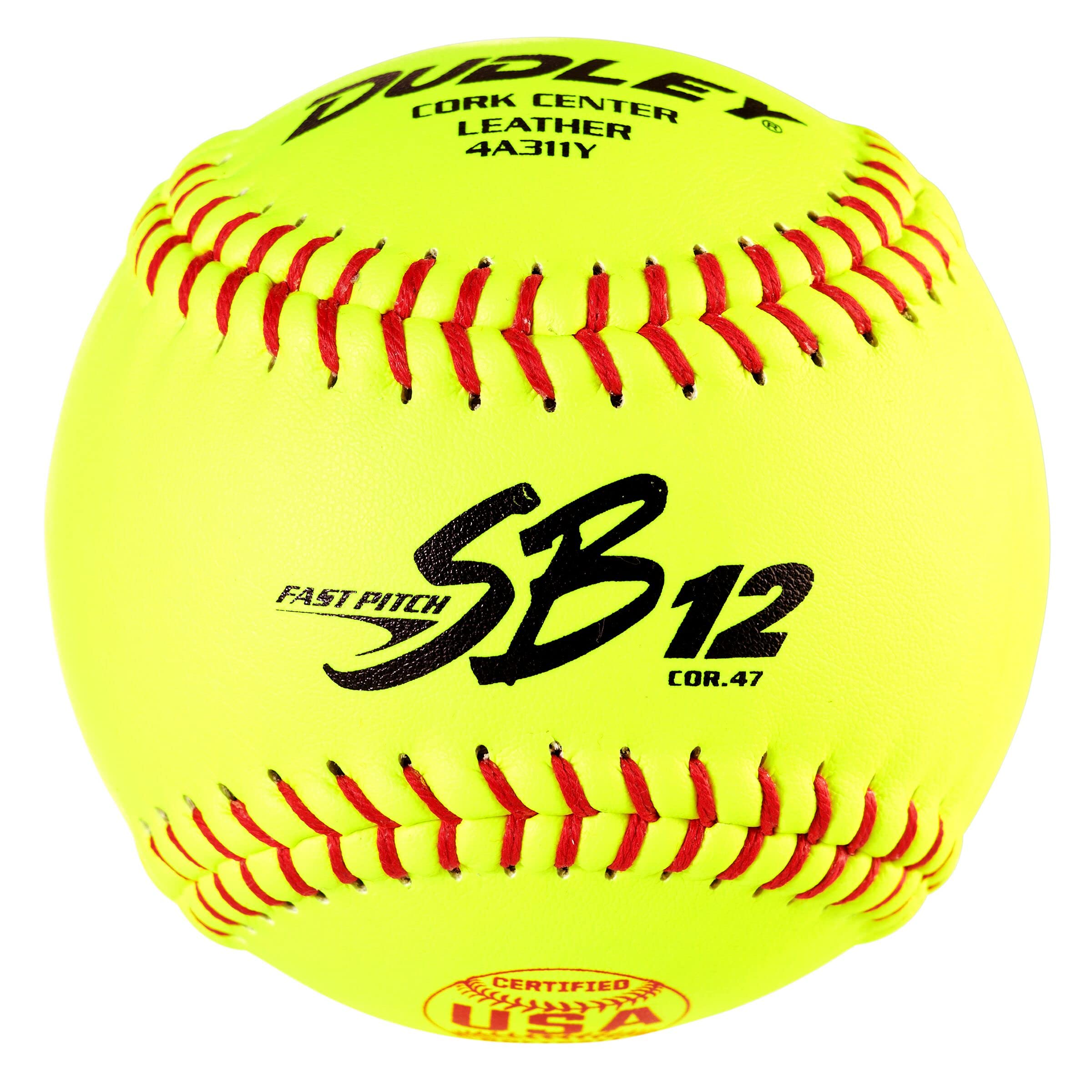
Dudley’s USASB fastpitch ball is the premium choice for serious teams. The granulated cork center is denser than standard cork, giving a firmer feel at contact and better energy transfer. Pitchers specifically request this model for its consistent raised seam height that makes grip and release repeatable drill after drill.
With ratings of 0.47 COR and 375 lbs compression, it meets USAB, USSSA, and NFHS certification. The leather cover is noticeably thicker than budget alternatives, holding up after 150–200 hits per day in practice rotations. Several 16U coaches reported their pitchers refuse to throw anything else.
The trade-off is the premium price point, but durability justifies the investment for teams that practice daily. If you need a ball that feels alive off the bat and keeps your pitchers happy, this is the top-tier option.
Why it’s great
- Granulated cork center for maximum pop and durability
- Triple-certified: USAB, USSSA, NFHS
- Thick leather cover resists tearing through 1000+ hits
Good to know
- Price is the highest in this comparison
- Too firm for very young beginners
3. Wilson ASA Synthetic Leather Polycore Softballs (1 Dozen)

Wilson’s Polycore construction is engineered specifically for slowpitch durability. The compression-controlled center doesn’t break down as quickly as traditional cork, making these balls last significantly longer in high-use team environments. The synthetic leather cover is bonded to the core, preventing cover delamination that plagues cheaper balls.
The Super Seam technology raises the stitches 20% higher than standard ASA balls, giving pitchers and fielders a more tactile grip. For slowpitch, higher seams also help infielders read spin off the bat for quicker reactions. The .47/375 lbs compression is ASA approved for league play.
Note that these are 11-inch, not 12-inch, so they are best suited for youth ASA leagues (10U–12U) or players transitioning from smaller balls. Adults expecting a full 12-inch ball should confirm size before purchase.
Why it’s great
- Polycore center outlasts standard cork in durability tests
- 20% higher seams improve grip and fielding reads
- ASA approved for official slowpitch games
Good to know
- Ball is 11 inches, not 12 inches
- Synthetic leather wears faster than genuine leather
4. Jugs Sting-Free Dimpled Softballs (One Dozen)

If you own a Jugs pitching machine, these dimpled softballs are designed to feed flawlessly and minimize stinger vibrations. The dimple pattern reduces friction through the machine’s wheels, preventing melting at moderate speeds (40–45 mph recommended). The composite leather cover with cork and rubber core feels nearly identical to a real leather ball when struck.
Users report these balls hold up well over multiple seasons when rotated through dozens. The sting-free design is a genuine advantage for younger players or cold-weather practices where hand comfort matters. The balls also maintain their dimpled texture longer than smooth balls because the raised bumps absorb impact rather than wearing flat.
Running these through the machine above 50 mph can cause surface melting, so stick to moderate machine speeds. For tee work and fielding drills, they are excellent all-rounders.
Why it’s great
- Dimpled design feeds smoothly through pitching machines
- Sting-free core reduces hand pain on mis-hits
- Composite leather cover feels like game-ball leather
Good to know
- Not suitable for high-speed machine settings above 50 mph
- Dimples can wear down after extensive use on rough surfaces
5. MacGregor Safe/Soft Training Softballs (One Dozen)
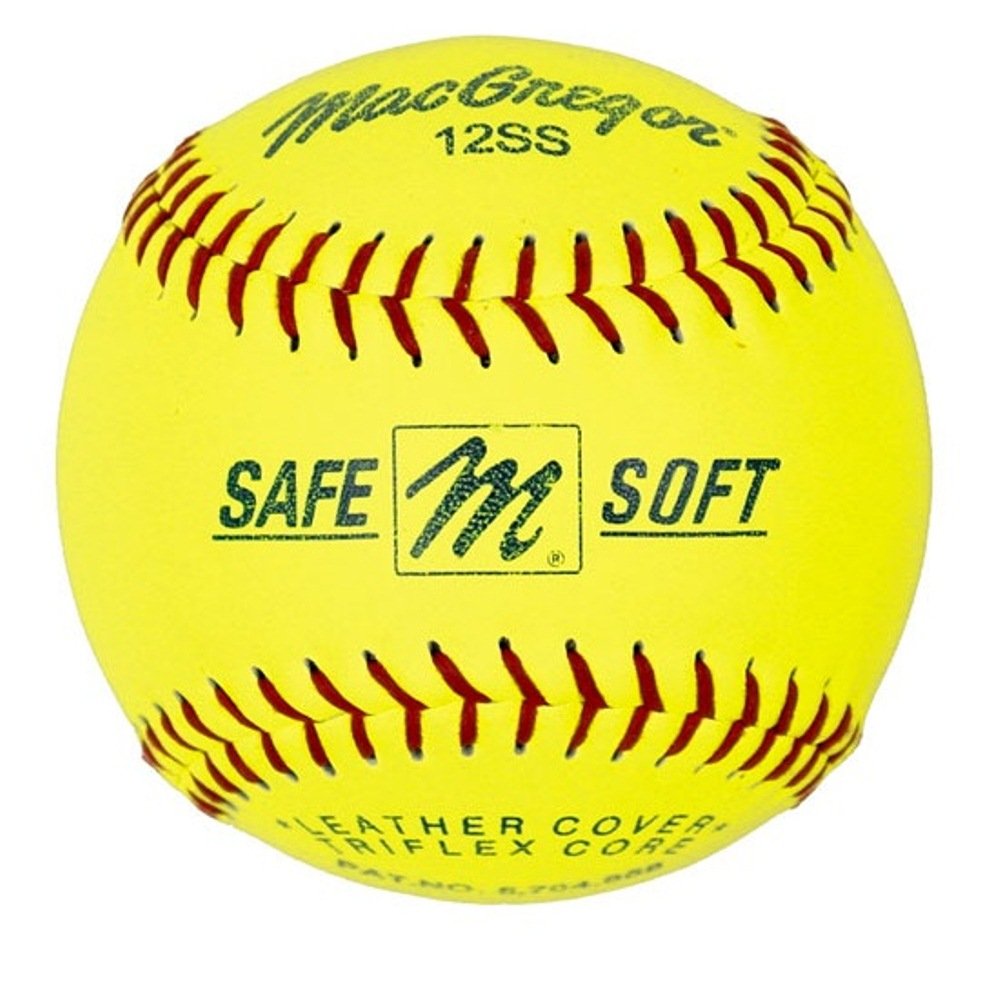
This is the perfect bridge ball for young players scared of hard fastpitch balls. The Tri-Flex safety core absorbs a significant portion of impact energy, reducing sting and fear without being a useless sponge. It’s still a 12-inch leather-covered ball, so it teaches proper fielding mechanics and bat path timing.
Coaches and parents report these are excellent for indoor gym drills, pitching practice, and beginning fielding. The softer feel also makes them popular for muscle rolling recovery—athletes use them to release adhesions in larger muscle groups. The leather cover holds up well through two seasons, though the yellow dye does fade in direct sunlight.
The main limitation is the reduced ball speed off the bat, which makes livelier hitting practice less realistic. But for building confidence and technique, this is the most effective training tool on the list.
Why it’s great
- Tri-Flex core reduces sting by 40–50% vs standard balls
- Leather cover for realistic grip and durability
- Great for overcoming fear of the ball in beginners
Good to know
- Deadens bat sound and exit velocity
- Color fades after extended sun exposure
6. Tebery 6 Pack Sports Practice Softballs, 12-Inch

For the price of a single premium ball, you get six Tebery practice softballs in a reusable mesh bag. They are official size (12-inch) and weight (7 oz), making them perfectly fine for basic throwing, catching, and tee work. The flat seams reduce drag for longer throws, and the optic yellow cover stays visible in low light.
These are great for youth teams needing a large volume of balls for drills, or for casual backyard practice where losing a ball in the bushes is a real risk. The synthetic cover is not as durable as leather—expect scuffing after a few sessions on dirt or asphalt.
One reviewer noted the covering wears out faster than expected, so these are not game-day balls. But for the price per unit, they serve their purpose as disposable practice rounds.
Why it’s great
- Best value per ball for large-volume practice sessions
- Optic yellow cover easy to see in low light
- Mesh bag included for convenient storage and transport
Good to know
- Synthetic cover scuffs and wears faster than leather
- Flat seams limit pitcher grip for spin development
7. OMYOPY Official Size 12″ Fastpitch Practice Softballs

These OMYOPY softballs offer a similar budget proposition to the Tebery pair but with a slightly different construction. The cork and synthetic cover combination feels close to the Tebery option, but the unmarked surface allows for custom logo work or autographs, which teams sometimes prefer for giveaways or team branding.
Customers note these are virtually indistinguishable from official balls in weight and feel during regular practice, but the seams are described as “not great for pitching.” The flat seam profile means pitchers looking for spin development will struggle. For basic fielding, hitting off the tee, and beginner fastpitch drills, they serve their purpose well.
Some reviewers have also creatively repurposed these for muscle rolling therapy, citing the slightly abrasive synthetic surface provides good grip against skin without being harsh. If your priority is the lowest-cost 12-inch ball that looks and feels close to the real thing, these deliver.
Why it’s great
- Unmarked surface great for custom logos or autographs
- Weight and size match official specs for realistic practice
- Cork core holds shape well for light to moderate use
Good to know
- Flat seams limit effectiveness for pitching practice
- Faux leather cover wears faster game-level pounding
FAQ
What compression and COR do I need for USSSA league play?
Can I use leather softballs in a pitching machine?
What is the difference between dimpled and smooth softballs?
Final Thoughts: The Verdict
For most users, the best 12 inch softballs overall are the MacGregor NFHS Fast Pitch because they combine league-legal compression with raised seams that actually help players improve. If you want a premium ball with max pop and durability for high-level fastpitch, grab the Dudley USASB Fastpitch. And for teams on a budget who still need official size and weight for practice, the Tebery 6-Pack gives you the most value per ball.