
That unsightly gap where the floor meets the baseboard or the tub meets the wall is a magnet for dust, debris, and moisture. Standard wood quarter-round molding demands precise angle cuts, a miter saw, and patience you probably don’t have. The solution is a flexible, peel-and-stick trim that conforms to curves, hides imperfections, and installs in minutes without a single power tool.
I’m Min — the co-founder and writer behind Gadgets Feed. I’ve spent hours researching the material science, adhesive strength, and dimensional tolerances of flexible trim options to find the ones that actually stay put and look professional.
This guide breaks down the best options for filling gaps and finishing edges, helping you choose the right 1/4 round molding for your specific project without wasting money on products that peel off or look cheap.
How To Choose The Best 1/4 Round Molding
Not all quarter-round is created equal, especially when you’re looking at flexible, self-adhesive options. The material, size, and adhesive backing will determine whether your trim looks like a pro install or a sticky mess in six months.
Material: Silicone vs. Rubber vs. Polyurethane
Each material has a different flexibility profile and surface texture. Silicone is the most flexible and waterproof but has a glossy finish. Rubber (often aviation-grade or medical-grade) offers a balance of pliability and a more matte look, though it can attract dust. Polyurethane is the stiffest and most durable, allowing you to paint or stain it to match your woodwork, but it requires construction adhesive and nails — not peel-and-stick installation.
Profile Size: Matching the Gap
Trim profiles vary from 0.5” x 0.5” up to 0.86” in height. For small gaps between LVP flooring and baseboards, a 0.5” profile is usually sufficient. For larger gaps, uneven edges, or where you need a more substantial visual presence, a 0.75” or 0.86” profile provides better coverage. Measure the height of the gap you need to fill before purchasing.
Adhesive Backing: The Make-or-Break Feature
For peel-and-stick trims, the 3M tape or self-adhesive layer is the most critical component. In high-humidity areas like bathrooms and kitchens, a weak adhesive will fail, leaving a gap that defeats the purpose. Look for reviews mentioning long-term hold in wet conditions, and be prepared to add a bead of caulk or extra construction adhesive at the joints for the most reliable seal.
Quick Comparison
On smaller screens, swipe sideways to see the full table.
| Model | Category | Best For | Key Spec | Amazon |
|---|---|---|---|---|
| FlexTrim #WM105 | Polyurethane | Paintable curved trim | 0.75″ x 0.75″ x 96″ | Amazon |
| FlexTrim #WM108 | Polyurethane | Tight radius bends | 0.5″ x 0.5″ x 96″ | Amazon |
| FlexTrim #WM126 | Polyurethane | Base shoe / stairs | 0.5″ x 0.75″ x 96″ | Amazon |
| Risunpet Classic (Product 3) | Rubber | Larger gap coverage | 0.75″ x 0.75″ x 120″ | Amazon |
| Risunpet Mini (Product 5) | Rubber | Small gaps / tub edges | 0.5″ x 0.5″ x 118″ | Amazon |
| Hzetuu Silicone (Product 1) | Silicone | Renter-friendly fix | 0.6″ Thick x 78″ | Amazon |
| Risunpet Tall (Product 2) | Rubber | Taller visual profile | 0.7″ x 0.86″ x 78″ | Amazon |
In‑Depth Reviews
1. FLEXTRIM #WM105: 3/4″ x 3/4″ Flexible Quarter Round Molding – 8′ feet Long

This is the trim you want when the job demands a finish that looks like real wood because, functionally, it’s the closest you’ll get. The FlexTrim #WM105 is a 0.75″ x 0.75″ polyurethane molding with a light oak grain texture that accepts paint and gel-based stain beautifully. It’s made in the USA and will flex to a 6-inch radius, making it suitable for curved stairs, columns, and bullnose walls where traditional wood would require steaming or kerf-cutting.
Installation requires construction adhesive and 18-gauge brad nails — this is not a peel-and-stick product. Users report that heating the trim slightly with a hair dryer helps it conform to tight curves. Once installed, caulked, and painted, it blends seamlessly into the surrounding woodwork. Its durability and water resistance make it suitable for both interior and exterior applications.
The main trade-off is the installation effort. You’ll need a miter saw for clean angled cuts and a helper for longer runs. However, for a permanent, high-end result on curved surfaces, this is the only flexible quarter-round that delivers a true wood-like texture and structural integrity for years. It is the standard by which other flexible trims are measured.
Why it’s great
- Realistic wood grain texture accepts paint and gel stain perfectly
- Bends to a tight 6-inch radius without kinking
- Waterproof and durable for both interior and exterior use
Good to know
- Requires construction adhesive and brad nails for installation
- Needs a hair dryer or heat gun for tight bends
- More expensive and labor-intensive than peel-and-stick options
2. FLEXTRIM #WM108: 1/2″ x 1/2″ Flexible Quarter Round – 8′ feet Long
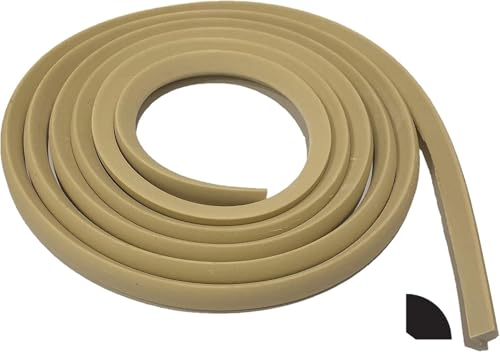
When you need a smaller profile that can handle the tightest curves, the FlexTrim #WM108 is the right choice. At 0.5″ x 0.5″, this polyurethane molding is slightly smaller than a standard quarter-round, but it can flex to a minimum radius of just 4 inches. That makes it the best option for circular windows, boat windshields, and curved cabinet edges where other trims would crack or bulge.
Like the larger #WM105, this is a paintable product with a subtle wood grain texture. It can be installed with a Brad nailer or construction adhesive, and it responds well to heat for extreme bends. Users specifically highlight its success on exterior curved windows and as a replacement gasket material for boat windshields due to its durable, non-rotting polyurethane composition.
The primary limitation is its size — 0.5″ may not cover larger gaps between flooring and baseboards. Measure your gap first. Also, because it’s only available in 8-foot lengths, you’ll need to join sections for longer runs, which requires careful miter cuts. For small, detail-oriented projects requiring extreme flexibility, this trim is unmatched.
Why it’s great
- Bends to a super tight 4-inch radius for complex curves
- Polyurethane construction is waterproof and won’t rot
- Paintable and stainable for a custom finish
Good to know
- 0.5″ profile may be too small for larger floor gaps
- Best installed with construction adhesive and brad nails
- Not a peel-and-stick product; requires tools for installation
3. FlexTrim #WM126: 1/2″ x 3/4″ Flexible Base Shoe Molding – 8′ feet Long

FlexTrim’s #WM126 occupies a specific niche: it’s a base shoe molding, not a true quarter-round. Its 0.5″ width and 0.75″ height give it a taller, more slender profile that sits flush against baseboards while covering the gap at the floor. For curved staircases and rounded returns, this is the molding that delivers a professional, finished look without the custom woodworking bill.
The polyurethane material bends to a 5-inch radius and can be stained with gel-based stains to match existing wood floors. Users report excellent results on 100-year-old stair returns and curved steps, using small finish nails for a clean install. The texture mimics oak grain, so once stained, it blends well with real wood. It’s also waterproof, making it suitable for areas near exterior doors.
The learning curve is that staining polyurethane requires a gel stain and some patience — it doesn’t absorb like wood. A few users noted the stain took longer to dry. Also, the 8-foot length means you’ll need to plan seams carefully for longer runs. For curved base shoe applications where wood simply won’t bend, this is the only product that delivers a comparable aesthetic.
Why it’s great
- Taller profile (0.75″) pairs perfectly with standard baseboards
- Accepts gel stain for a custom wood-matched finish
- Waterproof and won’t warp or crack over time
Good to know
- Slightly narrower (0.5″) than standard quarter-round trim
- Requires gel stain; standard liquid stain won’t work
- Installation needs construction adhesive and pin nails
4. 3/4 Inch Flexible Quarter Round Molding, Peel and Stick (Risunpet Classic)

If you need to cover larger gaps without the labor of nailing and gluing, this 0.75″ x 0.75″ rubber quarter-round from Risunpet is a solid mid-range choice. It comes in a 10-foot roll with a self-adhesive backing, so you can peel, stick, and trim with a utility knife. The rubber material is flexible enough to handle most curves and corners without kinking.
The thickness provides strong visual coverage for uneven edges, making it a good fit for shower bases, bathtub edges, and LVP floor transitions. Users report that it works well when placed carefully — once the adhesive backing touches the surface, it’s difficult to reposition. A few reviews mention that the adhesive can be inconsistent in wet areas, so adding a bead of caulk at the joints is recommended for long-term waterproofing.
One downside is the rubber material’s static charge — it attracts dust and pet hair, which can make the surface look dirty over time. For low-traffic, dry areas, this is less of an issue. For bathrooms, be prepared to wipe it down regularly. For the price and ease of installation, it’s a capable product for DIYers who want a quick gap fix.
Why it’s great
- 0.75″ profile offers excellent coverage for larger gaps
- Peel-and-stick installation is fast and tool-free
- Flexible rubber bends easily around curves and corners
Good to know
- Rubber material attracts dust and pet hair
- Adhesive can fail in high-humidity areas without caulk reinforcement
- Glossy finish may not match matte baseboards or flooring
5. Flexible Quarter Round Molding, Mini Peel and Stick (Risunpet 0.5″)

This is the miniaturized version of the Risunpet rubber trim, measuring just 0.5″ x 0.5″ with a 118-inch length. It’s designed for small gaps — think the junction between a vinyl plank floor and a brick wall, or the edge of a curved bathtub. Its smaller size makes it less visually intrusive, which is exactly what you need when you want the gap gone without the trim itself becoming a design feature.
The self-adhesive backing uses dual strips for a stronger hold. Users have installed it on curved tubs, around stained glass panels, and in basements between flooring and uneven masonry. The rubber is soft enough to cut with scissors and flexible enough to follow tight curves. The matte finish looks clean and subtle, which is a plus over some glossier alternatives.
The main risk is adhesive quality control — one review reported the red backing peeling off with the adhesive strip, ruining a section. It’s worth inspecting the backing before starting your installation. For small jobs and narrow gaps where a full 0.75″ trim looks oversized, this mini profile is a good fit. Just be ready to add a drop of super glue if you encounter a defective strip.
Why it’s great
- Slim 0.5-inch profile blends into tight spaces without looking bulky
- Dual adhesive strips provide a secure hold on smooth surfaces
- Easy to cut with scissors for a custom fit
Good to know
- Inconsistent adhesive backing reported on some units
- 0.5-inch profile may not cover standard floor-to-baseboard gaps
- Rubber material can attract lint and dust in dry areas
6. Flexible Quarter Round Molding Trim – 78in Waterproof Silicone (Hzetuu)

For budget-conscious DIYers or renters who need a temporary solution, this silicone quarter-round from Hzetuu is an entry-level option worth considering. At 0.6 inches thick and 78 inches long, it’s made entirely of silicone, making it the most flexible trim in this lineup. It can bend around rounded staircases and uneven walls with ease, and it’s completely waterproof for bathroom and kitchen use.
The peel-and-stick installation is genuinely tool-free — just clean the surface, peel the backing, and press. Users love it for its ease of use, especially those without carpentry skills. The silicone material is also safe for homes with children and pets, featuring rounded edges that won’t cause injury. It removes cleanly without residue, which is a major plus for rental properties.
The downside is the glossy finish, which several users note looks a bit cheap compared to matte trim. If you want a seamless, paint-matched look, this isn’t the right choice. The 78-inch length also means you’ll need multiple pieces for larger rooms. For quick, low-stakes fixes in bathrooms or around curved tubs, it gets the job done without fuss.
Why it’s great
- Extremely flexible silicone bends around tight curves without kinking
- Removes cleanly without residue — perfect for renters
- Tool-free peel-and-stick installation saves time and effort
Good to know
- Glossy finish looks plasticky and doesn’t match paint well
- 78-inch length requires joining multiple pieces for larger rooms
- Not paintable or stainable for a custom finish
7. Flexible Quarter Round Molding, Peel and Stick (Risunpet Tall 0.86″)

When a standard 0.75″ trim doesn’t quite reach the gap, this taller profile from Risunpet offers a 0.86-inch height and 0.7-inch width. The extra height makes it ideal for situations where the floor has pulled away from the baseboard, or around door frames where a taller trim provides a better visual ratio. It ships as a 78-inch length with a self-adhesive backing.
Users have used it successfully in RVs to trim curved door frames and in bathrooms to replace wood trim that was cracking from moisture. The rubber material is durable and flexible, and it can be cut cleanly with a utility knife. Several reviews note that the adhesive requires careful placement — once it touches, it’s very difficult to pull back. For bathtub edges, a few users found the adhesive didn’t hold perfectly over time without additional caulk.
The finish is decent for a rubber product, with a semi-gloss look that some describe as a cross between matte and shiny. Like other rubber trims, it attracts dust and hair. For its specific tall profile, it fills a unique need for larger gaps that standard quarter-round can’t cover. It’s a specialized tool for a common problem.
Why it’s great
- Taller 0.86-inch profile fills larger gaps standard trim can’t reach
- Flexible rubber conforms to curved surfaces and irregular edges
- Peel-and-stick backing allows for quick, adhesive-based installation
Good to know
- Adhesive may need reinforcement with caulk in wet zones
- Narrow 0.7″ width can look thinner relative to its height
- Attracts dust and pet hair to its surface
FAQ
Will flexible 1/4 round molding work on a rounded staircase?
Can I paint flexible quarter-round molding to match my baseboards?
How do I cut flexible 1/4 round molding for inside and outside corners?
Will the adhesive on peel-and-stick quarter round hold in a bathroom or kitchen?
What size gap can a 0.75-inch flexible quarter round cover?
Final Thoughts: The Verdict
For most users, the best 1/4 round molding winner is the FLEXTRIM #WM105 because it combines a real wood-like texture with the flexibility to bend around curved surfaces, and it can be painted or stained to match your existing trim perfectly. If you want a quick, tool-free installation, grab the Risunpet Classic Peel and Stick. And for a tight-bending, paintable trim that handles 4-inch radius curves, nothing beats the FlexTrim #WM108.