
You’ve mounted the antenna, aimed it at the tower, and run the coax. Yet your screen still breaks into blocks of frozen color, or channels you know exist simply refuse to appear. That signal dropout isn’t a reception problem upstream—it’s a distribution problem you’re trying to solve with passive splitters that silently eat your signal strength. An antenna amplifier booster doesn’t magically create signal where none exists; it compensates for the real loss caused by splitting, long cable runs, and the inherent noise floor of your TV tuner.
I’m Min — the co-founder and writer behind Gadgets Feed. I’ve spent countless hours comparing noise figures, gain specs, and filtering topologies across the most popular distribution amplifiers and preamplifiers to separate what actually cleans up your picture from what just adds more noise to the line.
This guide focuses strictly on the hardware that gives you clean, usable signal at the end of the line, whether you’re feeding one TV or five. After reviewing dozens of models, I’ve narrowed it down to the units that actually deliver measurable gain without overloading your tuner or amplifying interference. This is the definitive breakdown of the best antenna amplifier booster for your specific setup and budget.
How To Choose The Best Antenna Amplifier Booster
The single biggest mistake buyers make is assuming any amplifier will fix every weak-signal problem. In reality, you need to know exactly where in your signal chain the loss happens. Is the antenna itself in a poor location, or is the signal degrading because you’ve split it to four TVs using a passive splitter? The answer determines whether you need a mast-mounted preamplifier or a distribution amplifier at the head-end of your splitter.
Distribution Amplifier vs. Preamplifier
A distribution amplifier sits after the antenna, typically in your attic or utility closet, and its job is to overcome the signal loss caused by splitting the signal to multiple TVs. A preamplifier mounts right at the antenna mast and boosts the weakest signals before any cable loss occurs. If you’re within 35 miles of broadcast towers and need to feed multiple rooms, a distribution amplifier is the right tool. If you’re in a fringe area more than 50 miles out, a preamplifier is what you need to overcome cable attenuation before the signal ever reaches your splitter.
Gain in dB and Noise Figure
Gain is measured in decibels (dB), and for most home installations, 7 to 16 dB per port is sufficient. Too little gain and you don’t overcome splitter loss; too much gain and you overload the TV tuner, causing the very pixelation you were trying to fix. The noise figure, usually between 3 and 5 dB for a quality unit, tells you how much noise the amplifier itself adds to the signal. A lower noise figure means cleaner amplification, especially on weak channels.
LTE and 5G Filtering
Cellular towers operating in the 600-700 MHz range are the most common source of interference in modern over-the-air TV reception. A built-in LTE or 5G filter blocks these signals before they enter the amplifier circuit, preventing overloading and ensuring that the only thing amplified is the broadcast TV signal you actually want.
Quick Comparison
On smaller screens, swipe sideways to see the full table.
| Model | Category | Best For | Key Spec | Amazon |
|---|---|---|---|---|
| Televes 552380 | Distribution Amp | Adjusting gain per room | 5 outputs, 0-15 dB per port | Amazon |
| Channel Master CM-3424 | Distribution Amp | Stable multi-room OTA | 17-31 dB adjustable gain | Amazon |
| Antronix MRA4-8 | Distribution Amp | Cable TV + HDTV combo | +7.5 dB per port, 6 kV surge | Amazon |
| Lindsay LSA84 | Distribution Amp | Simple cable signal fix | 8 dB gain, 4-port | Amazon |
| ClearStream JUICE4 | Distribution Amp | Compact 4K/8K distribution | 1.2 GHz, 4 outputs | Amazon |
| ClearStream Juice Plus | Preamplifier | Fringe-area OTA reception | Weatherproof, LTE/5G filter | Amazon |
| Televes 560483 TForce | Preamplifier | Combining two antennas | Dual input, AGC, 5G filter | Amazon |
In‑Depth Reviews
1. Televes 552380 Indoor Distribution Amplifier
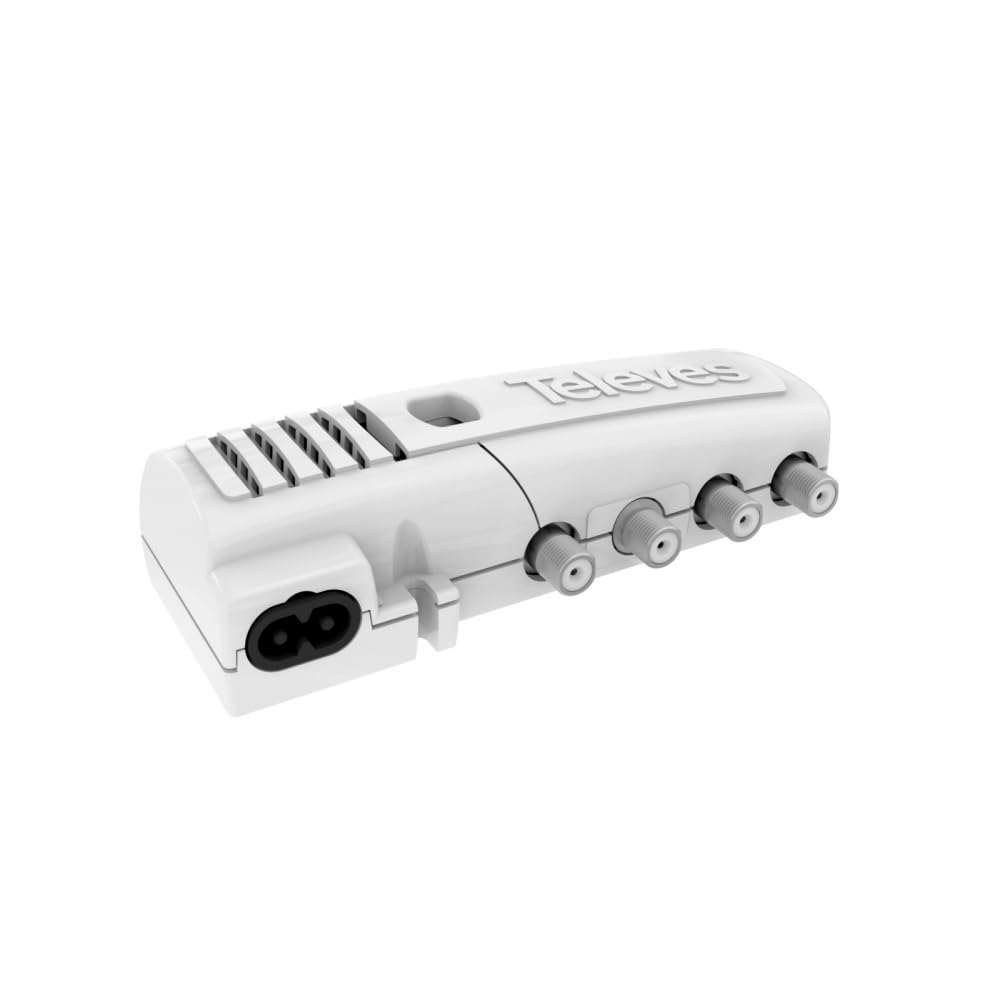
The Televes 552380 is the most flexible distribution amplifier on this list, and that flexibility is what earns it the top spot. It provides five outputs — one with 12 dB gain for the nearest TV and four with 16 dB gain for longer cable runs — but the killer feature is the independent 0-15 dB manual gain regulation on every single port. That means you can dial down the gain for a TV two feet from the amp and crank it up for the one 75 feet away, all without overloading any tuner in the house.
The built-in LTE filter blocks cellular interference above 608 MHz, which is critical if you live anywhere near a cell tower. The metal chassis provides professional-grade electromagnetic shielding, and the low power consumption draws 50% less energy than most competing distribution amps. For a home with multiple TVs running different cable lengths to each room, this unit eliminates the need for additional attenuators or trial-and-error splitters.
One note for complex setups: if you’re pairing this with a mast-mounted preamplifier from Televes (like the TForce series), the 552380 is designed to work downstream to compensate for distribution loss, not to power the preamp. It’s strictly a distribution tool, which makes it perfect for homes already running a strong antenna with no mast amp.
Why it’s great
- Per-port gain adjustment prevents tuner overload
- Five outputs cover more rooms than any other unit here
- LTE filter and metal chassis offer excellent interference rejection
Good to know
- Does not power mast-mounted preamplifiers
- Wall-wart power adapter is bulky for crowded outlets
2. Channel Master CM-3424 4-Port Distribution Amplifier

Channel Master has been in the antenna game since 1949, and the CM-3424 shows exactly why that experience matters. This 4-port distribution amplifier delivers 7.5 dB of gain per port and is housed in a heavy-duty weatherproof enclosure that can be installed indoors, outdoors, or in an attic without concern. The built-in LTE filter is tuned specifically for OTA frequencies, so you get clean signal free from cellular noise.
One of the most practical features is the adjustable gain range — you can set it between 17 and 31 dB depending on your signal profile. In real-world use, owners in rural areas have reported jumping from fewer than 10 pixelated channels to over 70 clean channels after installing this amp behind a good attic antenna. That kind of delta comes from the low noise figure and the fact that this amp is designed exclusively for TV antenna signals, not cable or satellite.
It’s worth noting that this is not a preamplifier. If you’re in a deep fringe area more than 50 miles from towers, you’ll be better served by Channel Master’s dedicated preamp line. But for the vast majority of suburban and even semi-rural homes feeding three or four TVs, this is the sweet spot of price and performance.
Why it’s great
- Weatherproof housing allows attic or outdoor installation
- Adjustable gain dial lets you match your signal strength
- LTE filter built in, no extra parts needed
Good to know
- Not compatible with cable or satellite TV signals
- Gain adjustment is a physical dial, not per-port
3. Antronix MRA4-8 Reliable Cable 4-Port Amplifier

The Antronix MRA4-8 is built like a piece of infrastructure rather than a consumer gadget, and that’s precisely its appeal. With a passive return path and +7.5 dB gain per port, it’s specifically engineered for both digital cable TV and OTA antenna distribution. The nickel-plated housing resists corrosion, and the 6 kV surge protection on every port means lightning strikes near your cable drop won’t fry your entire home network.
The 3 dB noise figure is excellent for a distribution amplifier in this class, meaning it adds very little noise to the signal while amplifying it. Users have reported fixing intermittent pixelation on Comcast and other cable systems simply by replacing the standard passive splitter with this powered unit. The included PTC short-circuit protected power adapter adds an extra layer of safety that most budget amplifiers skip entirely.
One constraint to be aware of: this amp is not compatible with systems that already have an amplifier or preamplifier installed upstream. If you have a cable modem in the house, the passive return path helps maintain upload speeds, but you shouldn’t chain this with another booster.
Why it’s great
- Corrosion-resistant housing for long-term durability
- 6 kV surge protection on all ports
- Passive return path works with cable internet modems
Good to know
- Not for use with existing amplifiers or preamps
- 4-port limit, no expansion options
4. Lindsay LSA84 4-Port Distribution Amplifier

The Lindsay LSA84 is closely related to the Antronix above, sharing the same component DNA and SCTE compliance, but it offers a slightly different gain profile with 8 dB per port and a 6 kV ring wave surge design. The key differentiator is its operating temperature range of -40 to +60 °C and a 15 PSI weather-tight seal, making it a better choice for unconditioned attics or outdoor enclosures in extreme climates.
Real-world feedback from users consistently highlights how this amp fixed pixelation issues that Comcast technicians couldn’t solve without expensive rewiring. On the antenna side, it’s been used to go from 60 to 140 OTA channels simply by replacing a passive 2-way splitter with this powered 4-way unit. The caveat is that it’s not compatible with MoCA networks, so if you use coax-based ethernet adapters, this isn’t the amp for you.
Installation is straightforward, but the unit requires you to supply your own RG6 cable for power insertion, which is a minor annoyance. The box includes two 75-ohm terminators, so unused ports won’t cause signal reflection.
Why it’s great
- Extreme temperature tolerance for outdoor use
- Proven fix for cable TV pixelation
- Low noise, high gain for OTA channel hunting
Good to know
- Not MoCA compatible
- Power cable not included, must use own RG6
5. Antennas Direct ClearStream JUICE4 Distribution Amplifier
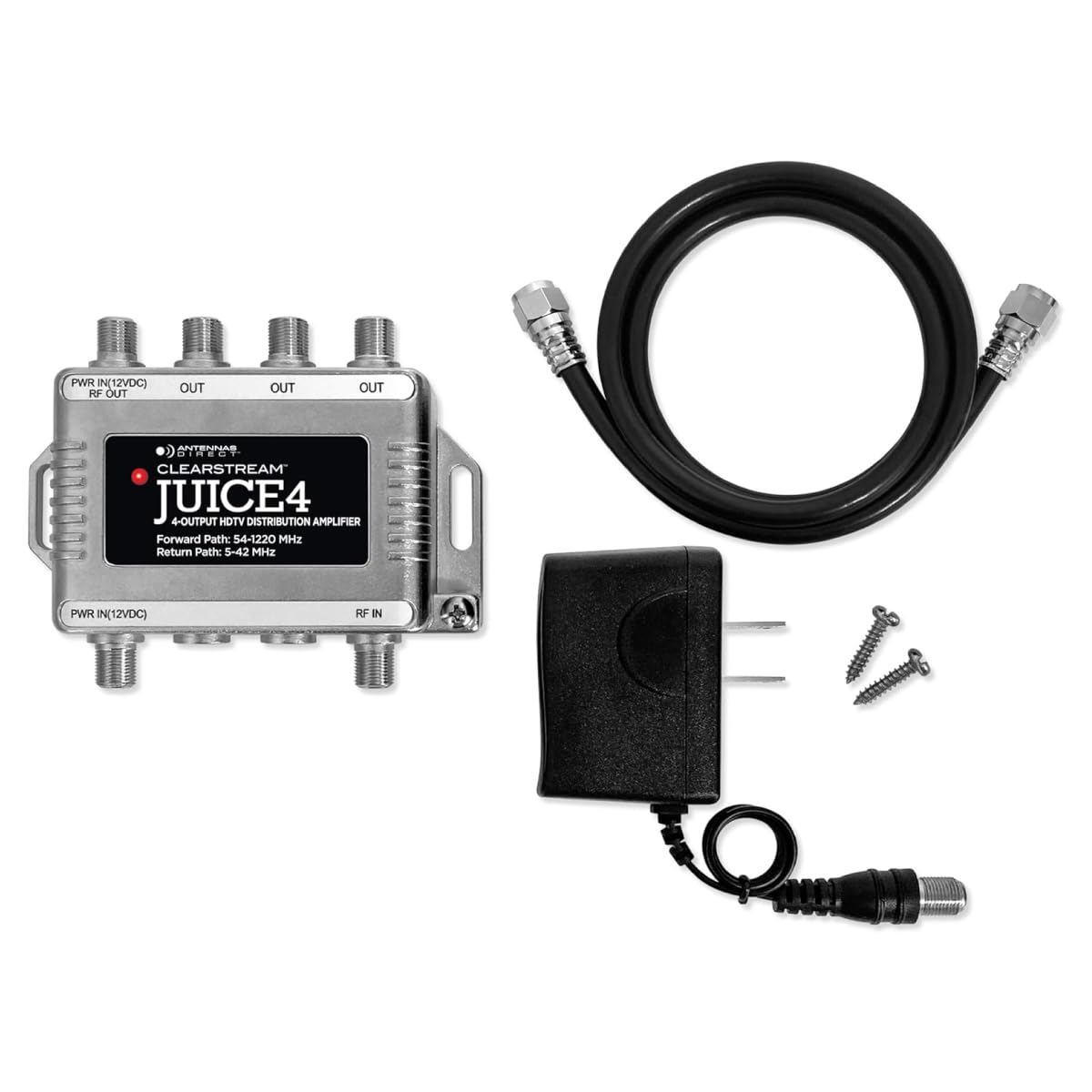
The ClearStream JUICE4 is the smallest distribution amplifier in this roundup at just 3.8 x 1 x 3.5 inches, yet it offers the widest frequency range at 1.2 GHz. That extended bandwidth makes it one of the few units here fully prepared for legacy CATV systems alongside ATSC 3.0 NEXTGEN TV and 4K/8K UHD signals. The precision machine-sealed zinc diecast housing provides serious electrostatic discharge protection and weather resistance when used outdoors with the included termination caps.
Users have reported that the JUICE4 successfully pushed a clean signal through at least 50 feet of RG6 to a distant TV, fixing the skip and spidering issues that plague marginal channels. The 4-port output is ideal for homes with three or four TVs, and the compact size means it tucks neatly behind an entertainment center without creating cable management headaches.
The single pain point reported is a small number of units failing after a few days of use, which suggests some batch consistency issues. Given the warranty policy directs buyers through third-party sellers on Amazon, the return process can be more friction than buying direct from Antennas Direct.
Why it’s great
- 1.2 GHz bandwidth covers CATV and next-gen OTA
- Zinc diecast housing for excellent shielding
- Ultra-compact size for tight installations
Good to know
- Some units have reported early failure
- Warranty support requires dealing with third-party seller
6. Antennas Direct ClearStream Juice Plus Preamplifier
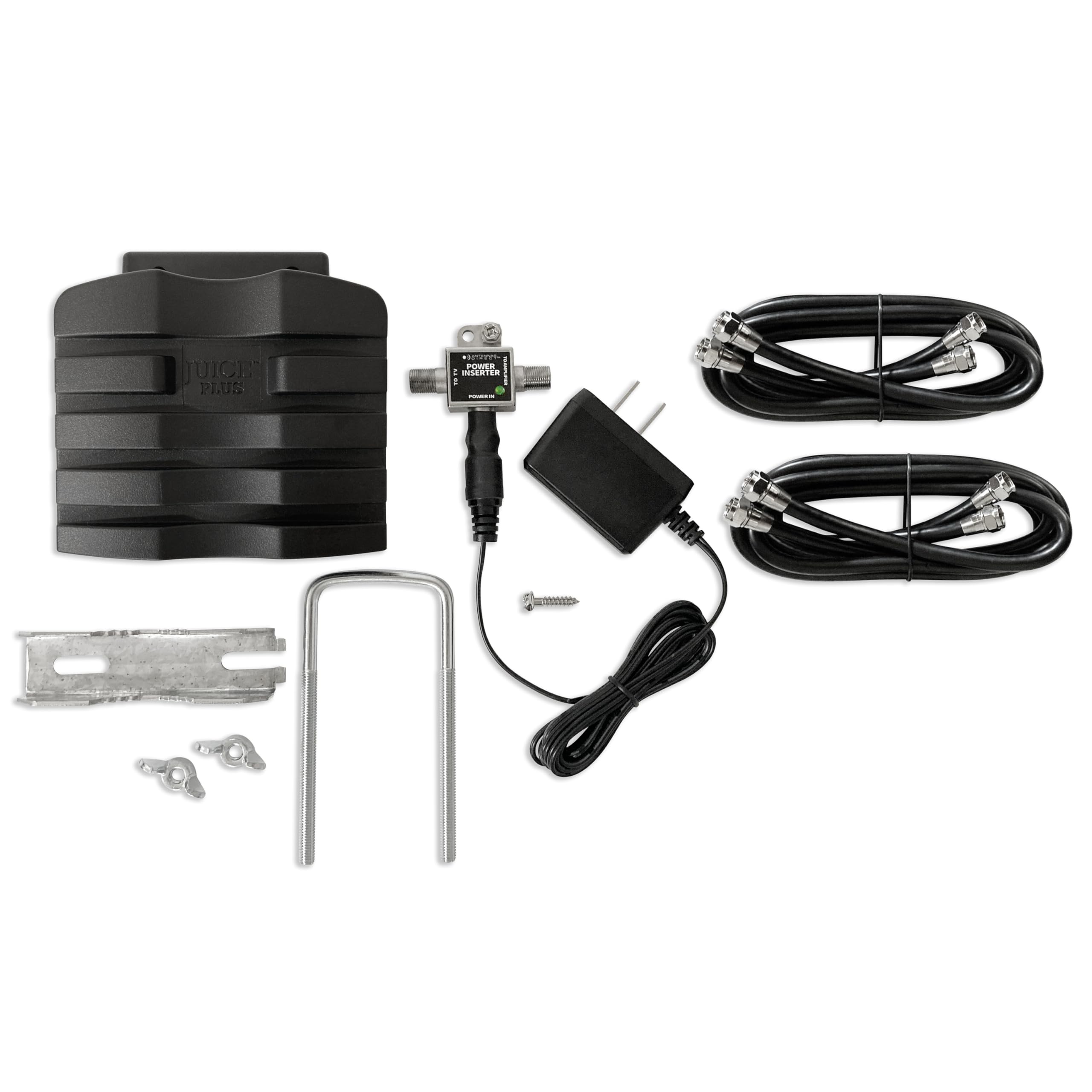
This is the first dedicated preamplifier on our list, which means its job is different from the distribution amps above. The Juice Plus mounts directly at the antenna mast and boosts UHF, VHF, and FM signals before they travel down the coax to your TVs. The weatherproof housing is cleverly designed with a tilt mechanism that allows easy coaxial cable connection even in tight attic or mast spaces.
The critical spec here is the true 5G filter positioned before the amplification circuit. This prevents LTE and 5G cellular signals from overloading the amplifier, which is the most common cause of reception dropouts in suburban and urban fringe areas. Users 35 miles from towers have gone from 35 to over 80 major channels after installation, and those 50+ miles out report crystal-clear reception through snow and high winds.
The Juice Plus is ATSC 3.0 compatible out of the box, so it won’t need an upgrade when broadcasters fully transition to NextGen TV. However, it only covers a single antenna line — if you need to combine two antennas, the Televes TForce below is the better tool.
Why it’s great
- True preamplifier solves fringe-area reception
- 5G filter prevents cell tower overload
- Weatherproof housing with easy cable connection
Good to know
- Single antenna input only
- 90-day warranty is shorter than industry average
7. Televes 560483 TForce Mast Preamplifier
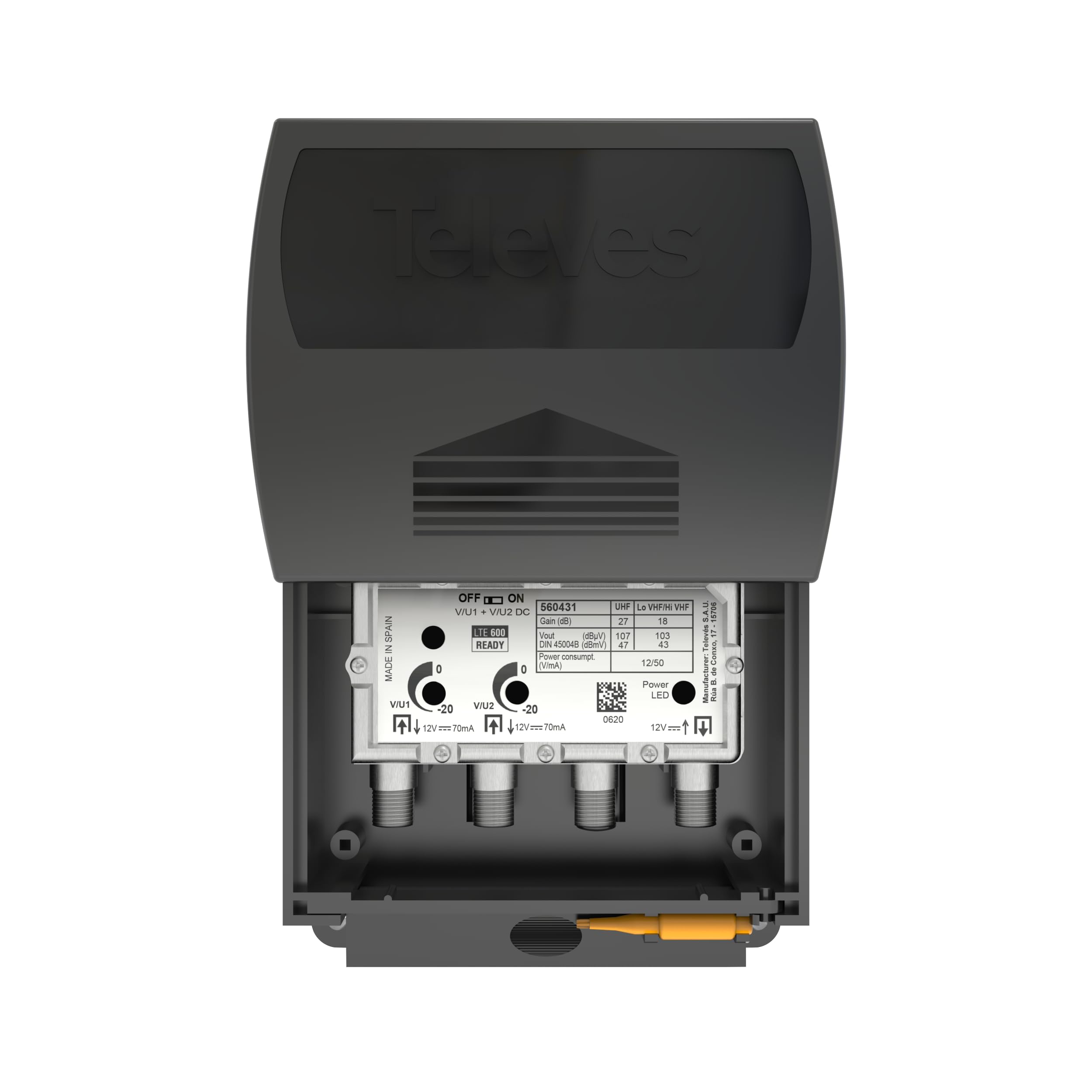
The Televes 560483 TForce is the most advanced unit in this roundup, designed for complex installations that need to combine two separate antennas. It provides two independent broadband inputs covering Low VHF, High VHF, and UHF, letting you point one antenna at one market and another at a different set of towers. The proprietary TForce technology continuously monitors and self-adjusts amplification independently across VHF and UHF bands.
The built-in filtering is the most comprehensive here: precision filters block FM radio, LTE, and 5G signals above 608 MHz before they ever reach the amplifier circuit. Manual input-level regulation of 0-20 dB per input gives you fine control over the balance between the two antennas, preventing one strong signal from overwhelming the other. The IP23-rated cast metal and ABS housing is designed for permanent outdoor mast mounting.
Users between two markets have reported pulling in over 100 channels by combining antennas, with rock-solid lock on stations that used to flicker in and out. The trade-off is complexity: this is not a plug-and-play device. You need to understand your antenna placement and use the DC pass switch correctly to power active antennas upstream.
Why it’s great
- Dual input combines two antennas for maximum channel count
- Automatic gain control prevents band imbalance
- Comprehensive 5G/LTE/FM filtering
Good to know
- Complex installation requires careful planning
- Plastic case lid may not seal with larger coaxial connectors
FAQ
Should I place the amplifier before or after the splitter?
Will an amplifier make my antenna pull in more channels from farther away?
Final Thoughts: The Verdict
For most users, the best antenna amplifier booster winner is the Televes 552380 because its per-port gain adjustment lets you tune each TV line independently, eliminating the trial-and-error that plagues fixed-gain amps. If you need a reliable weatherproof distribution amp for an attic installation, the Channel Master CM-3424 delivers proven results at a reasonable cost. And for fringe-area setups combining two antenna directions, nothing beats the Televes 560483 TForce.