
Altitude masks are not about restricting oxygen—they force your diaphragm to work harder by increasing the resistance on each inhale and exhale, effectively weightlifting your respiratory muscles. The result is a measurable improvement in VO₂ max and breath control that carries directly into running, cycling, MMA, and HIIT sessions.
I’m Min — the co-founder and writer behind Gadgets Feed. My analysis of this segment included cross-referencing dozens of verified buyer experiences and tearing down the technical specs of seven distinct models to identify which resistance systems, seal designs, and material builds actually hold up under real sweat sessions.
This guide ranks the seven most compelling products on the market today to help you find the absolute best altitude mask for your specific training goals and face shape.
How To Choose The Best Altitude Mask
The altitude mask market splits cleanly on three axes: resistance adjustability, seal integrity, and material breathability. A mask that ticks all three boxes at your intensity level will outperform a premium-priced model that gets one of these wrong. Here is what to benchmark before buying.
Resistance Level Range
This is the single most important spec. Entry-level models offer 16 resistance settings by swapping disc inserts, while mid-range units jump to 24 combinations, and premium masks like the Training Mask 2.0 deliver 36 on-the-fly adjustments via a rotating valve. More levels mean a finer progression from warm-up to all-out exertion, preventing the “plateau” effect where one setting becomes too easy and the next feels suffocating.
Seal and Strap Architecture
Altitude masks rely on a closed seal to create the resistance loop. The most secure designs use a double-layer silicone flange that conforms to the face contour, paired with a tri-strap or hook-and-loop head harness that distributes tension away from the ears. Masks that slip during dynamic movement — a common complaint with budget nylon-strap models — effectively lose resistance and defeat the purpose of the device.
Quick Comparison
On smaller screens, swipe sideways to see the full table.
| Model | Category | Best For | Key Spec | Amazon |
|---|---|---|---|---|
| TRAININGMASK 2.0 Turn Flow | Premium | Serious athletes wanting fine control | 36 adjustable resistance levels | Amazon |
| TRAININGMASK Elevation 2.0 Blackout | Premium | Combined training plus hygiene kit | 36 levels + spray cleaner | Amazon |
| Sparthos High Altitude Mask | Mid-Range | Newcomers seeking a proven entry point | 16 breathing levels | Amazon |
| Solofit Training Mask | Mid-Range | Users wanting a durable neoprene build | 24 resistance levels | Amazon |
| RZ Mask RZM3 | Specialty | Dual-use filtration & resistance | Carbon filter + 360° seal | Amazon |
| YUMIOER High Altitude Mask | Budget | Cost-conscious runners and cyclists | 24 resistance combinations | Amazon |
| coher Workout Mask | Budget | Budget entry for short training sessions | Silicone + nylon head strap | Amazon |
In‑Depth Reviews
1. TRAININGMASK 2.0 Turn Flow

The Training Mask 2.0 Turn Flow is the gold standard in the category for a simple reason: its patented flux valve system lets you dial through 36 resistance levels without removing the mask. Competitive athletes and combat sports practitioners consistently cite the snug silicone face seal as superior to neoprene alternatives — it maintains negative pressure even during lateral head movement, which is a common failure point on cheaper models.
Clinical backing separates this unit from most rivals. The design is referenced in a peer-reviewed study published in the International Journal of Environmental Research and Public Health that demonstrated improved ventilatory efficiency and respiratory muscle strength after a training cycle. The hook-and-loop head strap keeps tension off the ears, solving the earbud-displacement issue reported on many head-strap designs.
On durability, multiple reviews confirm the silicone flange and Turn Flow valves hold their shape through months of daily sweat sessions. The single potential drawback is nose bridge pressure for users with higher nasal bridges — tolerable but noticeable during extended wear. Overall, this is the unit pro athletes trust because the resistance curve is genuine and repeatable.
Why it’s great
- 36 on-the-fly resistance levels for micro-adjustments mid-set
- Clinically studied efficacy in respiratory muscle conditioning
- Silicone seal stays locked during dynamic movement
Good to know
- Nose bridge can press uncomfortably on high-bridged faces
- Head strap may interfere with some over-ear headphones
2. TRAININGMASK Elevation 2.0 Blackout + Spray Clean

The Elevation 2.0 Blackout shares the same core valve architecture as the Turn Flow model — 36 resistance levels, silicone seal, and clinical study backing — but sweetens the package with a dedicated Spray Clean solution and a storage case. For athletes who train daily, the spray cleaner extends the silicone’s life by preventing salt buildup inside the valve chambers.
Practical feedback from college-level wrestlers and long-distance runners highlights the mask’s ability to simulate high-exertion breathing conditions that mirror competition environments. The adjustable resistance valves allow a gradual ramp from level one to max across a training block, which is critical for respiratory adaptation without injury risk. One reviewer noted the mask produces a noticeable oxygen saturation drop of roughly 2% during mild activity, confirming it creates genuine hypoxic stimulus.
The only shortfall is identical to the Turn Flow: nose bridge pressure on narrower faces. The included Spray Clean is a genuine value-add since standard soap-and-water cleaning can degrade silicone over time. For anyone who values hygiene convenience alongside performance, this bundle edges ahead of the standalone unit.
Why it’s great
- Same 36-level valve system with added hygiene kit
- Verified hypoxic effect in customer O₂ saturation tests
- Comes with storage case and cleaning spray
Good to know
- Same nose bridge pressure as Turn Flow model
- Some buyers did not receive the spray in all batches
3. Sparthos High Altitude Mask

Sparthos occupies the sweet spot for first-time altitude mask buyers who want proven performance without the premium price tag. Its 16 resistance levels are achieved through interchangeable disc inserts — a less convenient system than the Training Mask’s rotating valve, but more than adequate for users who set a level and stick with it for an entire session.
Customer feedback consistently highlights the mask’s durability and the noticeable improvement in diaphragm strength after the first few uses. The neoprene outer shell is lighter than the full-silicone construction of premium models, which some users prefer for long steady-state cardio sessions. The one-size design fits most adult males but runs large for smaller female faces, so sizing is worth verifying before committing.
Where it falls short is the clamp-style resistance discs — switching levels mid-workout requires removing the mask and physically swapping inserts. This is a non-issue if you set your intensity pre-workout, but it limits the dynamic adjustment that more advanced athletes need. For the price, the build quality and reported gains make it the smart gateway pick.
Why it’s great
- Proven diaphragm conditioning with 16 resistance options
- Lightweight neoprene construction for cardio sessions
- Strong build quality relative to price tier
Good to know
- Disc swap system requires mask removal to change levels
- One size may be too large for smaller faces
4. Solofit Training Mask

The Solofit mask distinguishes itself with 24 resistance levels and a layered neoprene-nylon composite that feels more substantial than the all-neoprene shells on some budget competitors. The elastic strap closure system offers a customizable fit, and several long-term reviews confirm it resists tearing at seam points even after months of high-intensity interval training.
Users report a “bane mask” aesthetic that appeals to the tactical-training crowd, but the real story is the resistance range. The dual air paths each have four adjustment levels, and the two additional soft valves bring the total to 24 combinations — enough granularity for most non-professional athletes to progress through a training cycle. The silicone border helps prevent the side air leakage that plagues cheaper masks during lateral movements.
The main complaint from multiple reviewers is that the mask runs large — several women and smaller men found it too big to seal properly, requiring a return. The strap system also exhibits some slippage during high-speed running, forcing mid-run adjustments. These two issues make it a better fit for gym-based resistance training than track work.
Why it’s great
- Sturdy neoprene-nylon composite resists seam tearing
- 24 resistance combinations for gradual progression
- Aggressive styling resonates with tactical athletes
Good to know
- Large sizing excludes smaller-faced users
- Strap can slip during fast running movements
5. RZ Mask RZM3
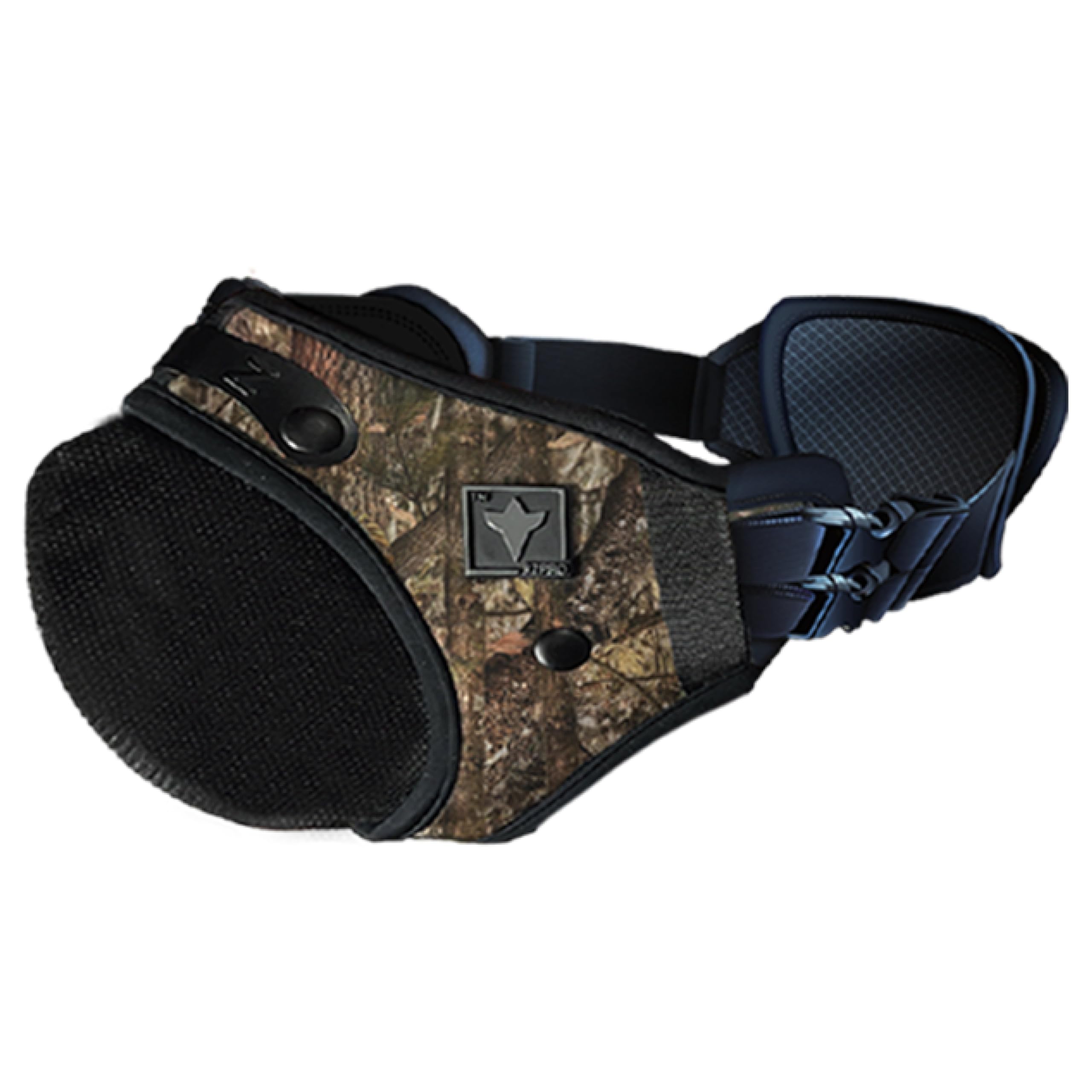
The RZ Mask RZM3 occupies a different niche from the rest of this list: it is primarily a high-filtration respirator with carbon filters that block 99.9% of airborne particles, but its tight seal and configurable strap system make it useful as a breathing resistance device for maintenance work. It does not offer graduated resistance levels like altitude-specific masks, so it is not a direct swap for true altitude training.
Where it shines is versatility. The three-strap harness allows a customized tension distribution that accommodates ponytails and different head shapes, and the foam nose bridge eliminates fogging — a genuine advantage for athletes who wear glasses or sunglasses during outdoor sessions. Customer reviews from maintenance workers, hobbyists dealing with fumes, and allergy sufferers confirm the seal integrity is superior to standard N95 designs.
It is not designed for progressive respiratory muscle loading, so athletes specifically chasing VO₂ max gains should look at the Training Mask or Sparthos units instead. For users who want a single mask that handles workshop tasks and provides mild breathing resistance during warm-ups, the RZM3 is a clever hybrid.
Why it’s great
- Carbon filtration blocks 99.9% of particles
- Three-strap system fits diverse head shapes without slippage
- Anti-fog design works reliably with eyewear
Good to know
- Not designed for progressive altitude-style resistance training
- Can feel warm and stuffy in high-heat environments
6. YUMIOER High Altitude Mask
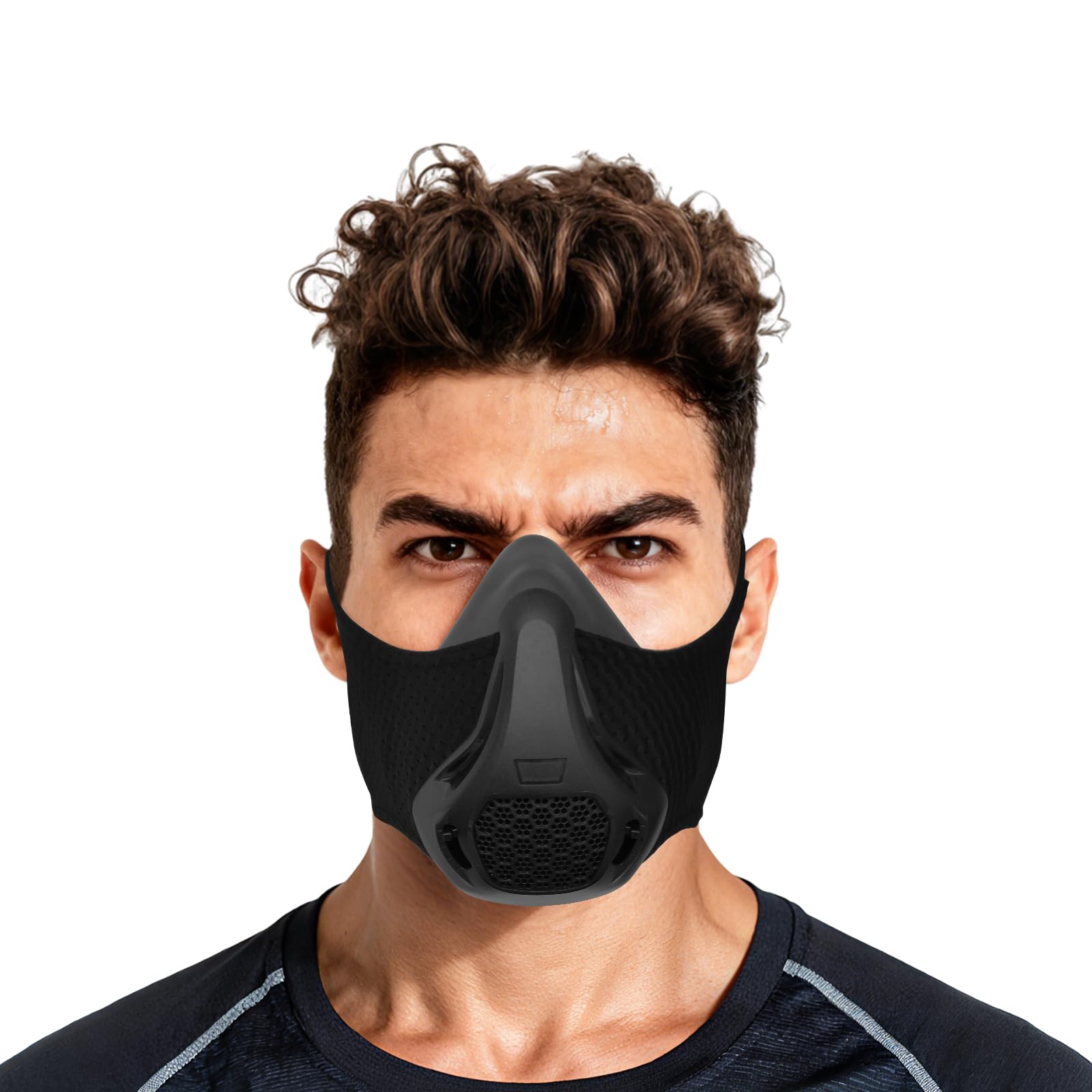
YUMIOER outpaces its price point by delivering 24 resistance combinations through a dual-air-path system with two additional soft valves. For under thirty dollars, you get the same resistance count as the mid-range Solofit mask, making this the value leader for budget-conscious runners and cyclists. Multiple verified buyers reported noticeable oxygen saturation drops during use, confirming genuine hypoxic stimulus despite the low cost.
The mask includes extra filters and valves in the box, which extends its usable life since resistance discs wear out over time. Long-distance runners specifically noted improvements in endurance after training with the mask and then competing without it — a clear sign of respiratory adaptation. The head strap uses nylon webbing with an adjustable buckle, which works fine for steady-state efforts.
The recurring complaint is strap slippage during dynamic movement — the nylon webbing does not grip like silicone or hook-and-loop systems, so the mask migrates downward during runs. It is also not the most breathable material, causing some heat buildup during extended sessions. For the price, these are acceptable trade-offs.
Why it’s great
- 24 resistance levels at an aggressive price point
- Includes spare filters and valves for extended use
- Verified hypoxic effect improves race-day endurance
Good to know
- Nylon strap slips during running and high-movement exercises
- Material can trap heat during long cardio sessions
7. coher Workout Mask

The coher mask is the purest entry-level option on this list — a simple silicone breathing mask with a nylon head strap that provides basic respiratory resistance without the complexity of interchangeable valves or graduated discs. It is best suited for beginners who want to test whether altitude-style training fits their routine before investing in a multi-level system.
Verified buyers confirmed it holds up for daily 2-to-5-mile runs over several months, though the fabric component starts to droop and lose tension around the three-mile mark. The silicone construction is easy to clean and does not absorb sweat odors like neoprene alternatives. Several scuba divers reported using it effectively for pre-dive breath training, citing the diaphragmatic workout as directly transferable.
The lack of adjustable resistance levels is the critical limitation — once your diaphragm adapts to the fixed resistance, the training stimulus flatlines. It also lacks the side-seal gasket found on mid-range and premium models, so air leakage is possible during heavy exertion. It is a functional entry point, not a long-term training tool.
Why it’s great
- Lowest barrier to entry for testing altitude-style training
- Silicone body resists sweat odor and is easy to clean
- Holds up for moderate daily running sessions
Good to know
- No adjustable resistance levels limit progression
- Fabric droops and loses tension after ~3 miles
- Side air seal is less effective than premium models
FAQ
Do altitude masks actually simulate high altitude?
How many resistance levels do I need as a beginner?
Will an altitude mask fit over a beard?
Final Thoughts: The Verdict
For most users, the best altitude mask winner is the TRAININGMASK 2.0 Turn Flow because its 36-level rotating valve system delivers the finest intensity control and its silicone seal maintains resistance during dynamic movement. If you want bundled hygiene extras and a storage case, grab the TRAININGMASK Elevation 2.0 Blackout. And for a budget-friendly entry that still offers 24 resistance levels, nothing beats the YUMIOER High Altitude Mask.